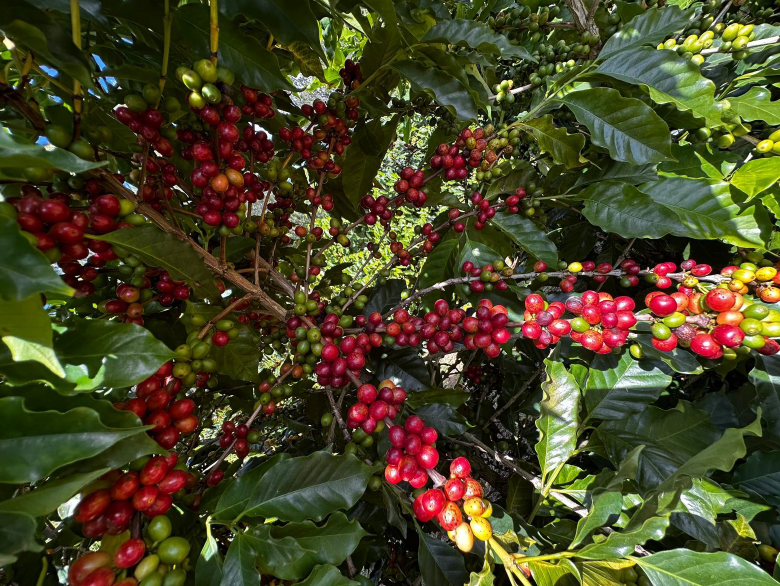
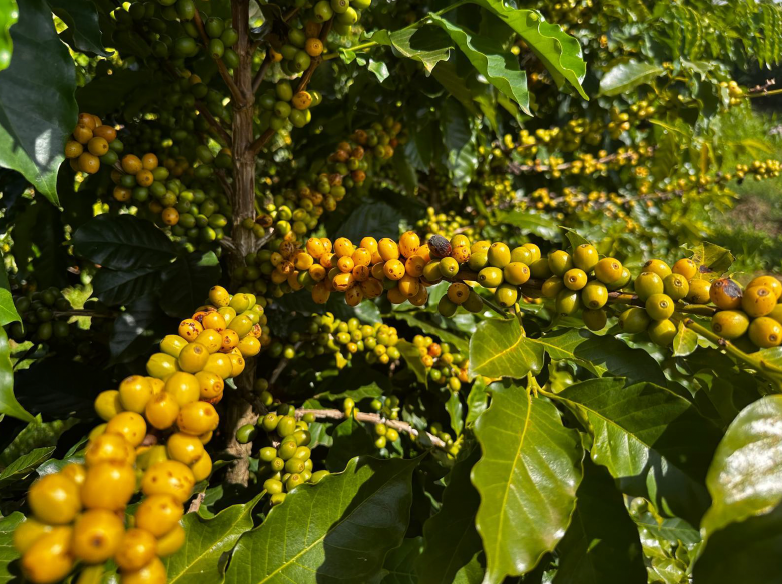
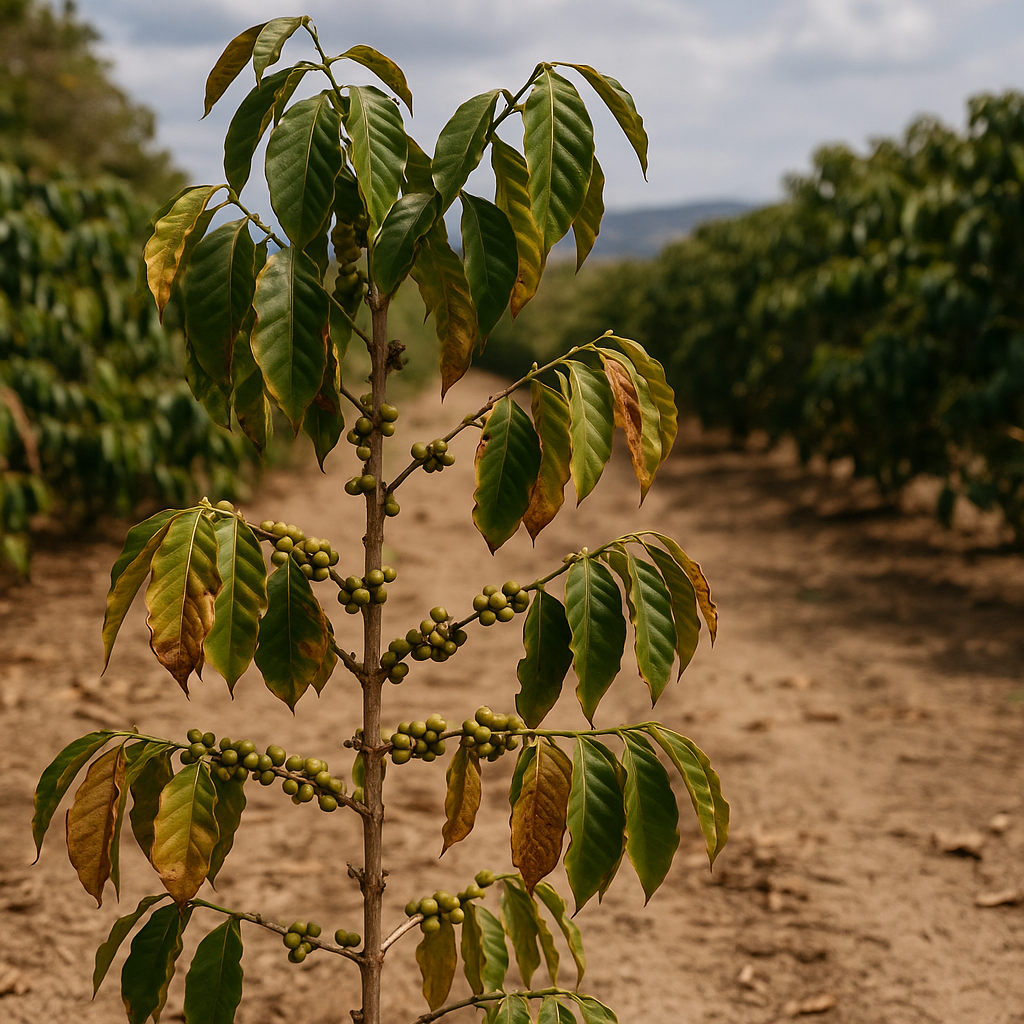
Myanmar has unveiled an ambitious plan to expand coffee cultivation to 100,000 acres nationwide within the next two years, as part of efforts to boost agricultural exports and enhance rural incomes. The initiative, announced by the Department of Agriculture and reported by state media, includes support for farmers through the provision of seeds, seedlings, and technical assistance.
According to the department, Myanmar currently has about 63,226 acres under coffee cultivation. Two main varieties are being grown: Arabica, which dominates higher-altitude regions, and Robusta, cultivated in lowland areas. Expansion will target key regions including Nay Pyi Taw, Mandalay, Bago, Ayeyarwady, Mon, Tanintharyi, Sagaing, and Magway.
The short-term goal is part of a broader strategy first outlined in 2022, when authorities announced plans to increase total coffee acreage to 300,000 acres over five years. That earlier plan divided cultivation between 200,000 acres of Arabica across four highland zones and 100,000 acres of Robusta across three lowland zones. The latest 100,000-acre target is seen as a first step toward that larger ambition.
Evidence from the regions shows momentum on the ground. In Tanintharyi Region, the Agriculture Department expanded coffee cultivation by nearly 1,874 acres in fiscal year 2024–2025, bringing the total to over 3,000 acres. Officials there aim to add another 1,000 acres in 2025–2026 and have distributed around 170,000 seedlings to farmers alongside technical training.
Coffee has long been considered a promising export crop for Myanmar, though infrastructure and market access remain challenges. A report in 2023 estimated the country’s annual output at more than 9,000 tonnes, with Arabica accounting for nearly 7,000 tonnes and Robusta the remainder. Shan State and other upland regions remain the backbone of production.
Industry observers note that while the government’s targets are ambitious, coffee trees typically require three to five years to reach maturity, meaning today’s plantings will not immediately translate into export growth. Experts also highlight the need for investments in processing facilities, transport infrastructure, and international market linkages to ensure Myanmar’s coffee can compete globally.
Myanmar’s drive to rapidly scale up coffee cultivation underscores its determination to diversify exports and support rural communities. Yet the gap between announced acreage goals and independently verified progress remains significant, leaving questions about how quickly the sector can meet international demand.
Dubai, September 18, 2025 – (Qahwa World) – Global coffee markets faced a sharp downturn on Wednesday as prices tumbled amid forecasts of long-awaited rainfall in Brazil, the world’s largest coffee producer. December arabica futures (KCZ25) closed down -33.70 cents, a steep -8.23%, marking a one-week low. November ICE robusta futures (RMX25) also plunged by -331 points, or -6.92%.
The sudden reversal came just a day after arabica reached a contract high and robusta hit a three-week peak, driven by drought conditions. Forecasts now indicate showers in Brazil’s key coffee-growing regions beginning next week, triggering heavy long liquidation in the market.
Brazil’s Cooxupe cooperative, the largest in the country, announced that the harvest among its members was 98.9% complete as of September 12, adding further bearish pressure. The completion of the harvest, coupled with improved weather outlooks, weighed heavily on investor sentiment.
Yet underlying fundamentals remain tense. Earlier this month, Brazil’s crop forecasting agency Conab revised its 2025 arabica production estimate down by -4.9% to 35.2 million bags, while total coffee output was trimmed to 55.2 million bags. Global supply challenges also persist: the International Coffee Organization (ICO) reported that July exports fell -1.6% year-on-year, while cumulative exports from October to July slipped -0.3%.
On the demand side, U.S. buyers continue to face supply strain due to 50% tariffs on Brazilian coffee, effectively tightening the American market, where one-third of unroasted coffee imports come from Brazil. Meanwhile, ICE-monitored inventories continue to dwindle, with arabica stocks dropping to a 16.5-month low of 659,949 bags and robusta inventories falling to a 1.5-month low of 6,551 lots.
Vietnam, the world’s second-largest coffee producer, is also under scrutiny. Severe drought reduced the 2023/24 crop by -20% year-on-year to 1.472 million metric tons, the smallest harvest in four years. Exports in 2024 declined -17.1%, though shipments from January to August 2025 were up +7.8% year-on-year, showing signs of recovery.
Looking ahead, the USDA’s Foreign Agriculture Service projects global coffee production in 2025/26 will reach a record 178.68 million bags, up +2.5% year-on-year, supported by strong robusta output. However, research firm Volcafe warns that arabica will face a deficit of -8.5 million bags in 2025/26, the fifth consecutive year of shortage.
For now, rain forecasts in Brazil have calmed fears of immediate supply disruption, but the broader picture of tightening inventories, tariffs, and shifting climate risks ensures that volatility will remain a defining feature of the global coffee market.
DUBAI, 16 September 2025 (Qahwa -World) – Coffee is no longer just a daily beverage. It has become a cultural experience, a marker of taste, and a symbol of identity. Around the world, the specialty coffee sector is witnessing unprecedented growth, transforming the industry and reshaping global trade patterns. In its latest Future of Trade Agri Series report, the DMCC Coffee Centre emphasizes that this boom in specialty coffee is creating new opportunities but also deep challenges for producers, roasters, and supply chains.
From a simple drink to a global culture
Over the past decade, consumer behavior has shifted dramatically. Younger generations, particularly millennials and Gen Z, are no longer satisfied with a standard cup of coffee. They are seeking quality, transparency, and stories behind their brew. Today’s consumers want to know where their beans come from, how they were cultivated, and the social and environmental impact of the farms that produced them. This demand for authenticity and excellence has fueled explosive growth in the specialty coffee sector, which is expanding at a pace far faster than the commercial coffee market.
According to the report, demand for specialty coffee in Asia alone has surged by 30% over the past five years. Cities such as Shanghai, Tokyo, and Seoul have become leading destinations for coffee culture, rivaling long-established centers in Europe and North America. In the Middle East, Dubai has emerged as a hub for specialty coffee, where entrepreneurs, importers, and consumers converge in a market that views coffee as more than a drink—it is a lifestyle, a cultural statement, and a shared experience.
Yet behind this expansion lies a paradox. While specialty coffee commands premium prices in consumer markets, smallholder farmers—who account for about 80% of global production—struggle to secure a fair share of that value. The DMCC Coffee Centre report highlights the growing disconnect between international futures market pricing and the specialty coffee segment. Futures contracts may indicate falling prices, but specialty beans often continue to rise, placing roasters and consumers under pressure and leaving farmers in a vulnerable position.
Garfield Kerr, President of the Specialty Coffee Association and founder of Dubai’s “Mokha 1450,” describes the situation: “The gap between traditional pricing mechanisms and the real specialty market is destabilizing. We need systems that reward quality fairly and ensure that farmers share in the added value created by specialty coffee.”
The report also underscores the role of technology in supporting this sector. Tools such as blockchain and artificial intelligence are becoming essential for verifying sustainability claims and ensuring traceability from farm to cup. These innovations build consumer trust while giving farmers a platform to demonstrate the authenticity of their practices. With regulatory frameworks such as the European Union’s anti-deforestation law, transparency is no longer optional but a requirement for accessing major markets.
Meanwhile, emerging regions like the Gulf are helping shape new patterns of demand. In cities like Dubai, Riyadh, and Doha, specialty coffee has become integral to modern lifestyle and self-expression, placing the Middle East firmly on the global coffee map as both a consumer base and a trade hub.
Dubai’s role is especially significant. The DMCC Coffee Centre not only provides world-class infrastructure for storage, roasting, and packaging but also offers pay-as-you-go services that lower barriers for small producers in Africa and Latin America. By connecting them directly to international buyers, Dubai positions itself as a stabilizing force in a rapidly shifting specialty coffee economy.
Looking ahead, the future of specialty coffee appears both bright and complex. Growth projections estimate annual expansion of over 7% in the coming decade, signaling strong demand. Yet challenges remain. Farmers must invest in training, innovation, and resilience to maintain quality, while roasters and traders must navigate volatile pricing and rising logistics costs.
The DMCC Coffee Centre’s report concludes that the specialty coffee boom is not simply a trend but a structural transformation of the global coffee market. Success will depend on the industry’s ability to balance demand with sustainability, fairness, and transparency. If achieved, specialty coffee will not only be a product of distinction but also an economic and cultural cornerstone capable of redefining global trade—and reinforcing Dubai’s role as a hub at the heart of this transformation.
São Paulo – September 16, 2025 – Qahwa World (EFICO’s Coffee Bean Scene) – There is an old saying in the coffee world: “When Brazil sneezes, the rest of the coffee world catches a cold.” The phrase remains true today. With the upcoming Brazil Coffee Harvest 2025/2026, accounting for nearly 40% of global production, Brazil continues to dictate the rhythm of supply, prices, and the flavor profiles that reach consumers around the globe. At times, it offers stability; at others, it sparks volatility across the market. In fact, the Brazil Coffee Harvest 2025/2026 will likely dominate coffee sector discussions for the coming year.
The past has proven this influence repeatedly. The frost of 1975 sent international prices soaring, while the droughts of 2014 and 2021 created deep uncertainty for exporters. Currency swings have only added to the turbulence, reshaping contracts and global trade dynamics. Brazil remains, without doubt, the heartbeat of the coffee industry, especially as we anticipate the results of the Brazil Coffee Harvest 2025/2026.
Harvest Progress and Outlook
By the end of August, Brazil’s 2025 harvest was virtually complete, with 100% of robusta and 98% of arabica collected. Rainfall—up to 50mm in arabica areas and 30mm in robusta regions—did little to damage bean development. Average bean size is larger than last year, and mild winter conditions extended the processing season, allowing more washed and semi-washed coffees to enter the market. Light frosts in June caused only localized impact, with no major losses.
The 2025/26 crop is now projected at 62.3 million bags—down 3.4% from earlier estimates and 5.4% compared to last year. Arabica is expected at 36.5 million bags, a sharp decline of 18.4% year-on-year, while robusta will rise to 25.8 million bags, a gain of nearly 22%. Strong vegetation growth after harvest suggests excellent potential for the 2026/27 cycle, with nurseries already sold out and farmers reinvesting in renewal and expansion. Notably, Brazil Coffee Harvest 2025/2026 will be closely watched for its impact on these numbers and future cycles.
Regional Insights
South Minas Gerais, the world’s largest coffee region with 500,000 hectares under cultivation, continues to showcase both challenges and innovation. Cities like Varginha, Três Pontas, Poços de Caldas, and Guaxupé remain central hubs. While productivity averages 25 bags per hectare, EFICO’s field visits revealed stark differences between farms. Yet one constant was clear: investment in innovation, from modern warehouses to irrigation projects that allow precise fertilization and improved yields. As a result, Brazil Coffee Harvest 2025/2026 outcomes will be partially driven by the ongoing modernization in these regions.
The Cerrado, often referred to by EFICO Brazil director João Marcos Crespo as “The Factory,” demonstrates a more industrialized approach. With 250,000 hectares—more than half irrigated—its productivity averages 35 bags per hectare, producing nearly 6 million bags annually. Regenerative agriculture is widely adopted here, both for cost savings and soil health. Farmers are also installing new high-capacity mechanical dryers, doubling efficiency compared to traditional models.
Market Dynamics
Despite decent production levels, commercialization has slowed to its lowest point in five years. Producers are financially stable and releasing coffee in small volumes, waiting for favorable prices. The introduction of a 50% U.S. import duty on Brazilian coffee in August has added further uncertainty to the market. Exporters are now carefully balancing procurement and sales strategies while watching international flows closely.
Overall, Brazil’s 2025 harvest stands between 60 and 62 million bags. While arabica output has dropped, robusta is filling part of the gap, and investments in quality continue to push screen sizes above last year’s levels. Market volatility is expected to persist at least through October, as the flowering season and rainfall patterns will set the tone for the 2026 crop.
Final Note
From the innovation-driven Cerrado to the tradition-rich farms of South Minas, Brazil’s coffee sector remains both resilient and deeply influential. As the new harvest begins arriving in early October, one thing is certain: when Brazil sneezes, the entire coffee world feels it. Ultimately, only time will reveal the full implications of the Brazil Coffee Harvest 2025/2026 for the global industry.
Dubai, 15 September 2025 ( Qahwa World) – Coffee, the world’s second most traded commodity after oil and a cultural staple for billions, is entering a critical stage in its global journey. The threats facing the industry are no longer confined to climate change alone. Increasingly, they include mounting supply chain disruptions and escalating tariffs that are reshaping the economics of one of the most vital agricultural products on earth. In its latest report, released as part of the Future of Trade Agri Series, the DMCC Coffee Centre warns that unless urgent measures are taken, the future of the global coffee trade may be defined by instability, rising costs, and deep uncertainty.
For decades, coffee has been regarded as a model commodity for international trade thanks to its durability and storability as green beans. But according to the report, this traditional advantage is no longer sufficient. Shipping costs have risen sharply amid ongoing global supply chain disruptions, compounded by geopolitical tensions across key trade corridors such as the Red Sea and the Panama Canal. Even a 1% increase in transport costs, the report notes, can result in months of accumulated price hikes for coffee worldwide. What was once a relatively resilient supply chain has become a fragile lifeline vulnerable to external shocks.
The situation has been further aggravated by protectionist trade policies. Most notably, the United States recently imposed tariffs of up to 50% on coffee imports from Brazil, the world’s largest exporter. While this may appear to offer short-term relief for American markets, it has shaken investor confidence and created uncertainty for Brazilian producers who rely heavily on exports. Many growers now face the prospect of cutting back production or seeking alternative markets, both of which come with risks of their own.
Mike Butler, Assistant Director for Coffee at DMCC, described the dilemma: “Large buyers often have the option of stockpiling coffee to protect themselves against price swings, but this strategy is not available to everyone. Smallholder farmers and specialty roasters remain the most exposed, as they lack the resources to hedge or hold inventories for long periods.”
The pricing system itself is also under strain. For decades, futures markets like the Intercontinental Exchange (ICE) provided reliable benchmarks for coffee. But the DMCC report highlights how these benchmarks are increasingly detached from reality. Futures contracts may show declines, while specialty coffee prices remain elevated, squeezing small and medium-sized roasters who cannot reconcile speculative market prices with real-world sourcing costs. Garfield Kerr, President of the Specialty Coffee Association and founder of Dubai’s “Mokha 1450,” summed it up: “The futures market has become more speculative and no longer reflects the actual value of high-quality coffee.”
Adding to this pressure is the rapid transformation of consumption patterns. Across Asia—in countries like China, Japan, and the Philippines—demand for coffee is accelerating, particularly among younger generations seeking premium quality and unique experiences. This growth, while promising, makes these markets especially vulnerable to global supply shocks. A shipping delay in Brazil or a tariff dispute in the U.S. can now ripple instantly into cafés and supermarkets in Beijing or Manila, underscoring the fragility of today’s interconnected coffee economy.
Amid these challenges, Dubai is positioning itself as a stabilizing hub. The DMCC Coffee Centre offers a pay-as-you-go model for storage, roasting, packaging, and logistics, lowering barriers for producers and small exporters to access global markets. Its geographic location at the crossroads of Africa, Asia, and Latin America allows Dubai to act as a natural bridge, absorbing shocks and keeping trade flows alive even in turbulent times. This strategic advantage, the report argues, could prove decisive as volatility becomes the new normal.
Still, the outlook remains precarious. Global production is expected to reach a record 178.7 million bags in the 2025/26 season. But without meaningful reforms, these volumes may not translate into market stability. Tariffs, freight costs, and speculative pricing continue to weigh heavily on the system, leaving more than 25 million smallholder farmers—who form the backbone of global coffee production—on the edge of economic survival.
The DMCC Coffee Centre’s report concludes with a stark choice. Either the industry embraces international cooperation, reforms outdated pricing mechanisms, and invests in supply chain infrastructure, or it risks plunging into prolonged volatility. Coffee, long celebrated as a symbol of connection and culture, could instead become a mirror of global trade’s fragility. But with decisive action, from fairer pricing models to transparent trade systems and collaborative investment, the industry has the tools to safeguard coffee’s future as a unifying global commodity.
DUBAI – September 2025 – Qahwa World – Coffee is more than a beverage. It is a lifeline for over 25 million smallholder farmers, a $200 billion industry, and a cultural anchor with more than two billion cups consumed daily. Yet today, the global coffee sector faces one of the greatest challenges in its long history, according to the DMCC Coffee Centre, part of the Dubai Multi Commodities Centre (DMCC).
In its latest report, released under the Future of Trade Agri Commodities Series, the DMCC Coffee Centre published a special edition on coffee, warning that lands where coffee has thrived for centuries may no longer be suitable for cultivation in the coming decades.
According to the report, coffee’s vulnerability to climate change is stark. Unlike many other crops, coffee can only be cultivated in limited geographical zones, often at specific altitudes and within narrow temperature ranges. Any disruption in this balance — whether through droughts, frosts, or fungal diseases such as coffee leaf rust — can devastate entire harvests. Recent years have offered a preview of this future. In Vietnam, prolonged drought cut production by 20% and exports by 10% in the 2023/24 season. In Brazil, the world’s largest producer, one of the worst droughts in history pushed Arabica prices up by more than 80% in 2024. These are not isolated events but warning signals of a changing climate destabilizing a vital crop.
Research cited in the report projects that by 2050, half of today’s coffee-growing land may become unsuitable. Arabica, which accounts for 60–70% of global production and is prized for its quality, is the most at risk. Dependent on cooler climates with clearly defined wet and dry seasons, Arabica is highly sensitive to even modest increases in temperature. Robusta, known for its greater heat tolerance, may also face challenges under worsening climate conditions.
“The reality is that producers often have customers who have pre-booked volumes months in advance,” said Mike Butler, Associate Director of Coffee at DMCC. “If crops fail, they cannot deliver. This puts enormous pressure on farmers and traders, making climate volatility the new normal.”
Mike Butler, Associate Director of Coffee at DMCC
These pressures are already reshaping market dynamics. When Arabica prices surge, major brands increasingly turn to Robusta to fill the gap, often blending higher proportions into espresso and instant products. But as Garfield Kerr, President of the Specialty Coffee Association (SCA) and founder of Mokha1450 in Dubai, explains: “Specialty coffee consumers will notice the difference. While efforts are underway to develop specialty-grade Robusta, its flavor profile remains distinct.” This divergence could redefine what consumers drink, as well as where and how coffee is cultivated in the decades ahead.
The effects of climate change extend beyond farms to disrupt the global trade system. Shortages in Brazil or Vietnam ripple across supply chains, triggering price spikes and reshaping import decisions worldwide. Exchange-based pricing, once a reliable benchmark for roasters, is increasingly disconnected from the realities of specialty markets. Butler notes: “We are in a complex situation. Exchange pricing has become speculative and detached from the actual market, especially in premium segments.”
For smallholder farmers — who produce 80% of the world’s coffee — volatility is a fight for survival. Most lack the resources to withstand failed harvests or price shocks. When yields collapse, so too does income, jeopardizing education, healthcare, and food security for millions of families. The DMCC Coffee Centre report stresses the urgent need for investment in climate adaptation strategies that enable farmers to continue producing under increasingly hostile conditions.
Among the most promising solutions is agroforestry, where coffee is cultivated alongside trees and diverse crops to shield plants from heat, improve soil fertility, conserve water, and diversify incomes. Developing drought-resistant coffee varieties is another frontier. Kerr highlights Yemen as a potential leader, where farmers have for centuries produced resilient coffees in arid, high-temperature conditions. “I expect Yemen to become an industry leader in producing drought-resistant coffees,” he says, “because its farmers and agronomists already grow coffee in hotter climates with less water.”
The urgency of innovation extends beyond agriculture. International institutions and trade hubs must foster collaboration, data-sharing, and investment to support producers. The International Coffee Organization, in partnership with the International Trade Centre, has launched a Coffee Sustainability Support Database cataloguing more than 400 climate and sustainability initiatives worldwide. From training farmers in composting techniques to supporting cooperative-led climate projects, such efforts highlight the collective action required to build resilience.
Still, adaptation alone may not suffice without broader systemic change. Consumers increasingly demand proof that their coffee is produced sustainably and ethically, and regulators are responding with measures such as the European Union Deforestation Regulation. Compliance requires end-to-end traceability, raising costs but also creating opportunities for new technologies like blockchain and AI-powered monitoring to ensure that sustainability commitments are verifiable.
The DMCC Coffee Centre concludes that the global coffee sector stands at a crossroads. Climate change is already disrupting production, and risks are intensifying. While forecasts suggest that production could reach a record 178.7 million 60-kg bags in 2025/26, long-term threats loom over both supply and the livelihoods of millions of farmers. At the same time, solutions — from agroforestry to resilient varieties, from digital transparency to circular economy models — are emerging. The question is not whether the industry will change, but whether it can adapt quickly enough to safeguard coffee’s future.
For an industry that spans continents and cultures, the message is clear: without urgent action, climate volatility could reshape the coffee world beyond recognition. But through innovation, cooperation, and resilience, coffee can remain what it has always been — not just a drink, but a global connector, an economic pillar, and a cultural force.
Dubai, September 12, 2025 – Qahwa World – Global coffee markets surged sharply on Friday, with December arabica futures climbing +10.75 cents (+2.78%) to a four-month high and November robusta futures rising +$80 (+1.77%) to a one-and-a-half-week peak.
The rally is being driven primarily by ongoing drought in Brazil, the world’s largest coffee producer. Weather agency Somar Meteorologia reported that Minas Gerais, Brazil’s largest arabica-producing state, received no rainfall during the week ending September 6 — a critical period just ahead of the flowering stage for coffee trees.
A stronger Brazilian real added further bullish momentum, rallying to a 15-month high against the US dollar on Friday. A stronger real typically discourages coffee exports, as producers are less incentivized to sell abroad.
In the United States, concerns over tighter supplies are mounting as buyers cancel new contracts for Brazilian beans following the imposition of 50% tariffs on imports. Roughly one-third of America’s green coffee supply comes from Brazil, making the tariffs a significant disruptor for the US market.
Tightness in ICE-monitored inventories has also supported prices. Arabica stocks fell to a 16-month low of 669,251 bags, while robusta inventories declined to a two-week low of 6,557 lots.
Adding to the bullish outlook, Brazil’s crop forecasting agency Conab cut its 2025 arabica production estimate by -4.9% to 35.2 million bags from its May forecast of 37 million. Total Brazilian coffee output for 2025 was also revised lower by -0.9% to 55.2 million bags.
On the trade side, the International Coffee Organization (ICO) reported that global exports in July fell -1.6% year-on-year to 11.6 million bags. Cumulative exports from October to July slipped -0.3% year-on-year to 115.6 million bags.
Brazil’s July shipments added more pressure to the supply side. The Trade Ministry reported that unroasted coffee exports dropped -20.4% year-on-year to 161,000 metric tons. Exporter group Cecafe confirmed a steeper fall, with green coffee exports plunging -28% to 2.4 million bags. Arabica exports dropped -21% while robusta exports plunged -49%. Cecafe added that total July shipments fell -28% to 2.7 million bags, while cumulative January–July exports fell -21% to 22.2 million bags.
Meanwhile, Brazil’s harvest is nearly complete. Cooxupé, the country’s largest coffee cooperative, reported that 97% of its members’ harvest was completed by September 5. Separately, consultancy Safras & Mercado noted that the national 2025/26 harvest reached 99% by August 20, including 100% completion of robusta and 98% of arabica.
In Vietnam, the world’s second-largest producer, 2023/24 coffee output fell -20% year-on-year to 1.47 million metric tons, the smallest crop in four years. Exports in 2024 fell -17.1% to 1.35 million metric tons. However, the General Statistics Office reported that January–August 2025 exports rose +7.8% to 1.14 million metric tons.
Looking ahead, the USDA’s Foreign Agricultural Service (FAS) projected on June 25 that global coffee production in 2025/26 will rise +2.5% year-on-year to a record 178.68 million bags. The forecast includes a -1.7% decline in arabica to 97.02 million bags and a +7.9% increase in robusta to 81.65 million bags. Brazil’s 2025/26 crop is expected to rise +0.5% to 65 million bags, while Vietnam’s production is forecast to grow +6.9% to 31 million bags, a four-year high. Global ending stocks are forecast to rise +4.9% to 22.8 million bags, up from 21.7 million in 2024/25.
However, trader Volcafe has issued a more cautious outlook, projecting a global arabica deficit of -8.5 million bags in 2025/26, compared with a -5.5 million bag deficit in 2024/25. This would mark the fifth consecutive year of deficits for arabica, underscoring structural supply concerns.
The combination of Brazil’s drought, lower exports, shrinking inventories, and global trade pressures highlights the fragility of the balance between supply and demand — setting the stage for further volatility in one of the world’s most important agricultural commodities.
Dubai, September 4, 2025 (Qahwa World) – The International Coffee Organization’s (ICO) August 2025 report has revealed a sharp decline in global coffee stocks, falling to their lowest level since April 2024. The drop in inventories comes just weeks after prices reached a historic high, highlighting a fragile market caught between soaring demand and tightening supply.
According to the ICO, certified Arabica stocks held at the New York Exchange dropped 7.9% to 0.77 million bags, marking a 16-month low. Robusta inventories at the London Exchange also fell by 4.6%, standing at 1.13 million bags. The simultaneous reduction across both major coffee types signals a broad squeeze on available supply.
Why Stocks Are Falling
Analysts point to several reasons behind the decline:
Weaker export flows – Global green coffee exports fell for the sixth consecutive month in July 2025, tightening supplies into key markets.
Crop concerns – Brazil, the world’s top producer, reported larger bean sizes but weaker density, which reduced overall yield estimates.
Climate risks – A frost in Brazil earlier this year damaged an estimated half a million bags.
Regulatory pressure – European roasters have been stockpiling ahead of the EU Deforestation Regulation (EUDR) that comes into force at the end of 2025, drawing beans out of certified warehouses into private storage.
Connection to Soaring Prices
The fall in stocks coincided with a dramatic rise in prices. In August, the ICO Composite Indicator Price (I-CIP) climbed 14.6% to 297.05 US cents per pound, the highest since 2024. With inventories shrinking, the likelihood of further price volatility is increasing, especially if supply disruptions persist.
Regional Dynamics
South America posted the steepest decline, with exports down 18.5%, driven by a 28.6% fall in Brazil.
Asia & Oceania moved in the opposite direction, growing exports 22.7%, led by Vietnam (+29.4%) and Indonesia (+20.4%).
Africa also contributed positively, with exports rising 4.4%, thanks to strong performance in Uganda (+51.4%) and Ethiopia (+12.5%).
Mexico & Central America recorded moderate growth of 7.2%, helping to diversify global supply, though not enough to offset South America’s losses.
What It Means for the Market
Industry experts warn that the current drawdown in stocks leaves the coffee market more vulnerable to external shocks. Further weather events in Brazil or Vietnam could deepen the supply gap, while the EUDR may slow exports to Europe. Rising shipping and labor costs add another layer of pressure on the supply chain, feeding into higher costs for roasters and consumers alike.
Outlook
The ICO emphasized that stock levels will remain a critical indicator for the market in the coming months. Any further declines could trigger another round of price surges, prolonging uncertainty for producers, traders, and consumers. With prices already at historic highs and inventories at multi-year lows, coffee is entering one of its most volatile periods in recent memory
Dubai, 4 September 2025 (Qahwa World) – Coffee prices closed higher on Wednesday amid tightening global supplies, with both arabica and robusta contracts gaining momentum. December arabica futures (KCZ25) rose by +3.30 cents (+0.89%), while November robusta (RMX25) advanced by +55 USD (+1.25%), bouncing back from a recent 1.5-week low.
The International Coffee Organization (ICO) reported that global coffee exports in July dropped -1.6% year-on-year to 11.6 million bags, while cumulative exports for October to July slipped -0.3% to 115.6 million bags. This contraction, combined with falling exchange-monitored inventories, supported the market. ICE-monitored robusta inventories fell to a 1-month low of 6,552 lots, while arabica stocks declined to a 1.25-year low of 686,863 bags.
Concerns about tighter U.S. coffee supplies also added support, as American buyers canceled contracts for Brazilian coffee following the 50% tariffs imposed on Brazilian exports to the U.S. Since Brazil supplies about a third of unroasted coffee to the American market, the move is further tightening availability.
In Brazil, above-average rainfall has eased crop concerns ahead of the crucial flowering period. Somar Meteorologia reported that Minas Gerais, the country’s largest arabica-growing area, received 163% of the historical average rainfall during the last week of August. Meanwhile, the harvest is nearly complete, with Cooxupé, Brazil’s largest cooperative, announcing that 94.9% of its members’ harvest was done by August 29, while Safras & Mercado estimated the national harvest at 99% complete as of August 20. Despite this, export data reflects a slowdown, with Brazil’s Ministry of Trade reporting that July unroasted coffee exports plunged -20.4% y/y to 161,000 MT, and exporter group Cecafé noting that green coffee shipments fell -28% y/y to 2.4 million bags, including a -49% drop in robusta exports.
Vietnam, the world’s leading robusta producer, continues to face drought-related challenges. Production for the 2023/24 crop fell -20% y/y to 1.47 MMT, the smallest in four years, while 2024 exports declined -17.1% y/y to 1.35 MMT. The Vietnam Coffee and Cocoa Association has revised its 2024/25 production outlook downward to 26.5 million bags, though the National Statistics Office reported a +6.9% y/y increase in January–July 2025 exports, reaching 1.05 MMT.
Looking ahead, the USDA’s Foreign Agriculture Service projects that world coffee production in 2025/26 will climb +2.5% y/y to a record 178.7 million bags. This includes a -1.7% decline in arabica output to 97 million bags and a +7.9% increase in robusta to 81.6 million bags, with ending stocks expected to rise +4.9% to 22.8 million bags. However, trader Volcafé forecasts a global arabica deficit of -8.5 million bags for 2025/26, deeper than the -5.5 million bag deficit recorded in 2024/25, marking the fifth consecutive year of arabica shortfalls despite stronger robusta production.
Dubai, September 3, 2025 (Qahwa World) – The International Coffee Organization (ICO) in its August 2025 report revealed unprecedented shifts in the global coffee market, with the ICO Composite Indicator Price (I-CIP) rising by 14.6% to 297.05 US cents per pound – its highest level since 2024 and 24.3% higher year-on-year. At the same time, the report highlighted that global green coffee exports continued to contract for the sixth consecutive month, underscoring the dual pressure of soaring prices and shrinking supplies.
Historic Price Surge According to the ICO, all coffee groups recorded strong gains. Robusta led the surge with a 19.1% increase to 199.13 US cents per pound, while Colombian Milds, Brazilian Naturals, and Other Milds rose between 12% and 14%. Futures prices also jumped sharply, with New York contracts up 13.6% and London contracts up 18.2%, signaling broad-based upward momentum.
Market Drivers The report identified multiple factors fueling the rally:
The United States’ 50% tariff on Brazilian coffee, slowing down commercialization.
Brazil’s government support through the Funcafé fund, allocating BRL 6.8 billion (USD 1.29 billion) to finance the 2025/26 harvest.
Reports of lower bean density in Brazil despite large screen size, reducing crop estimates.
European roasters stockpiling ahead of the EU’s Deforestation Regulation (EUDR) deadline in December 2025.
A minor frost in Brazil damaging up to half a million bags.
Roasters increasing long positions in futures markets to hedge against further price hikes.
Export Downturn The ICO report also showed global green coffee exports reaching 10.3 million bags in July 2025, down 0.7% from July 2024. South America posted the steepest decline (-18.5%), driven by Brazil’s 28.6% fall in shipments.
Regional Contrasts
Asia & Oceania exports surged by 22.7%, led by Vietnam (+29.4%) and Indonesia (+20.4%).
Africa’s exports rose 4.4%, with Uganda (+51.4%) and Ethiopia (+12.5%) as key contributors.
Mexico & Central America posted a moderate increase of 7.2%.
Looking Ahead The ICO emphasized that the combination of rising prices and falling exports places the global coffee market in a volatile phase. With the EUDR coming into effect by year-end and climate-related risks looming over major producers, coffee is set to remain one of the most vulnerable agricultural commodities to both economic and environmental shocks.
Dubai, September 3, 2025 (Qahwa World) – While global coffee prices are falling due to heavy rainfall in Brazil and the near completion of the harvest, consumers in the world’s largest producer and exporter are facing the opposite reality: higher prices for roasted and instant coffee in the domestic market.
December arabica futures fell 3.44%, while November robusta dropped 3.28% to a one-week low. Weather data from Somar Meteorologia showed that Minas Gerais, Brazil’s largest arabica-producing region, received 10.1 mm of rain in the week ending August 30 – 163% of the historical average.
Meanwhile, Cooxupé, Brazil’s biggest coffee cooperative, reported that its members’ harvest was 94.9% complete as of August 29. Safras & Mercado confirmed that Brazil’s 2025/26 harvest was 99% finished by August 20, with robusta fully harvested and arabica 98% complete.
In contrast, roasters 3 Coracoes and Melitta announced fresh price hikes in Brazil starting September 1. 3 Coracoes raised roasted and ground coffee prices by 10% and instant coffee by 7%, while Melitta increased prices by 15%. These hikes follow earlier rises: 11% in January and 14.3% in March by 3 Coracoes, and a 25% increase by Melitta last December.
This creates a striking paradox in Brazil’s coffee market: while international prices are easing thanks to favorable weather and ample harvests, local consumers are paying more, driven by climate volatility, a 50% U.S. tariff on Brazilian coffee imports, and rising raw bean costs.
Global arabica prices have already climbed more than 20% this year after a 70% surge in 2024. With tariffs in place, U.S. roasters have been tapping existing stockpiles, adding further pressure.
The Brazilian Coffee Industry Association (ABIC) noted a brief drop in retail prices in August as futures eased from record highs, but warned that the trend would reverse once tariffs took effect — and that reversal is now underway. Major roasters are struggling to balance costs as consumers shift toward cheaper supermarket brands.
Looking ahead, the U.S. Department of Agriculture projects global coffee production to rise 2.5% in 2025/26 to a record 178.7 million bags. Yet trader Volcafe forecasts a widening global arabica deficit of 8.5 million bags — the fifth straight year of shortages. This contradiction — falling global prices alongside rising domestic costs in Brazil — sets the stage for continued turbulence in the coffee market.
Dubai, August 27, 2025 (Qahwa World) – Coffee markets staged a sharp turnaround by Wednesday’s close, with both arabica and robusta futures rallying strongly as dwindling ICE inventories and tightening export flows outweighed harvest pressure from Brazil. The rebound highlights the volatility gripping global coffee trade, where supply constraints and policy shifts continue to drive rapid intraday price swings.
On the ICE exchange, December arabica coffee (KCZ25) jumped +13.00 (+3.49%), while November robusta (RMX25) surged +188 (+4.01%), with robusta touching a three-month high. The rally came just hours after arabica futures had slipped on harvest pressure, underscoring how quickly sentiment is shifting.
ICE-monitored stocks remain a key bullish driver. Arabica inventories fell to a 1.25-year low of 716,578 bags, while robusta dropped to a one-month low of 6,611 lots. Traders say the tightening certified stockpiles are providing strong underlying support, particularly for robusta. At the same time, Brazil’s harvest is almost complete. Cooxupé, the country’s largest cooperative, reported members were 91.3% finished by August 22, while Safras & Mercado estimated 99% of the crop complete, with robusta fully harvested and arabica at 98%. This progress has been weighing on prices, yet the bullish impact of falling inventories and weaker exports is increasingly dominant.
July export figures underline this trend. Brazil’s Trade Ministry reported a 20.4% year-on-year decline in unroasted coffee exports, totaling 161,000 metric tons. Cecafé confirmed a broader contraction, citing a 28% fall in green coffee exports to 2.4 million bags. Arabica exports dropped 21%, while robusta plunged 49%. Shipments for the first seven months of 2025 are down 21% at 22.2 million bags.
Outside Brazil, fundamentals remain tight. Vietnam’s 2023/24 crop fell 20% year-on-year to 1.47 million metric tons due to drought, the smallest in four years. Exports in 2024 declined 17%, though shipments this year have rebounded, rising 6.9% between January and July. At the global level, the International Coffee Organization (ICO) reported June exports up 7.3% year-on-year to 11.69 million bags, though cumulative shipments since October are slightly lower at -0.2%.
Looking ahead, the USDA’s Foreign Agricultural Service (FAS) projects record global production of 178.68 million bags in 2025/26, driven by robusta’s 7.9% expansion. Arabica output is expected to contract by 1.7% to 97 million bags. Despite this, Volcafé forecasts a deepening arabica deficit of 8.5 million bags, widening from this year’s 5.5 million, marking the fifth consecutive annual shortfall.
The market’s day-to-day volatility highlights the tension between short-term harvest pressure and long-term structural supply constraints. With U.S. buyers canceling contracts following 50% tariffs on Brazilian coffee, and inventories at multi-year lows, analysts warn the coming months could bring continued turbulence for global coffee prices.