GCP opens 30‑day public consultation on Coffee Sustainability Reference Code and Equivalence Mechanism review

Author: Ali Alzakary – Dubai. This article discusses the GCP public consultation Coffee SR Code 2026 and its relevance for stakeholders.

Event: GCP webinar, 19 May 2026
Source: Global Coffee Platform (GCP) public consultation launch materials and webinar

Stakeholders across the coffee value chain invited to review proposed updates and provide feedback by 19 June 2026. Surveys available in five languages.

Dubai, 19 May 2026 — The Global Coffee Platform (GCP) today officially opened a 30‑day public consultation on the review of its Coffee Sustainability Reference Code (Coffee SR Code) and the Equivalence Mechanism (EM). The consultation, launched during a live webinar hosted by GCP Sustainable Sourcing Manager Gabriel Chavez, runs from 19 May to 19 June 2026 and invites stakeholders from across the coffee sector to help shape the next generation of these critical sustainability tools.

The Coffee SR Code was developed as a common language for baseline sustainable coffee production, centered on economic prosperity, social well‑being, and environmental stewardship. The Equivalence Mechanism recognises sustainability schemes that align with the Code, supporting comparability and mutual understanding across the sector. Both tools are being reviewed together to ensure coherence and continued relevance.

“We welcome the participation of stakeholders from across the coffee value chain and from around the world to bring their experience and expertise to this process,” said Gabriel Chavez, GCP Manager Sustainable Sourcing. “A rich diversity of voices will help ensure these tools are fit‑for‑purpose, modernised and relevant.”

Why the review matters now

The coffee sector faces increasingly complex challenges: climate change, evolving regulatory frameworks such as the EU Deforestation Regulation (EUDR), rising market expectations, and the need for greater alignment across sustainability initiatives. Since the tools were first launched, 33 schemes have been recognised under the Equivalence Mechanism (four third‑party and 29 second‑party). Sustainable coffee purchases recorded under GCP’s framework have grown from about 639,000 tonnes in 2018 to 1.73 million tonnes in 2024, according to data shared during the webinar.

“If we look at where we are now, there are no fewer than 33 schemes which are currently recognised under the equivalence mechanism,” said Jeremy Laforet, Chair of the GCP Technical Committee. “The purchases of sustainable coffee recorded have risen from about 639,000 tons in 2018 up to 1.73 million tons in 2024, which is a tremendous sign of the seriousness with which our industry takes coffee sustainability.”

The review follows GCP’s regular five‑year cycle, aligned with the ISEAL Code of Good Practice. The combined review of the Coffee SR Code and EM was mandated by the GCP Board to improve alignment across the sustainable sourcing approach and reduce stakeholder fatigue by avoiding separate parallel processes.

“Now it’s over to you, it’s over to the wider membership as a whole to ensure that these two tools – the SR Code and the equivalence mechanism – remain practical, relevant and credible.” – Jeremy Laforet, Chair, GCP Technical Committee

Key proposed updates

The review process has been informed by a comprehensive assessment phase that included 55 survey responses, 8 stakeholder interviews, two workshops with the International Trade Centre, and detailed analysis of 33 recognised schemes. The proposed updates focus on refinement rather than redesign.

For the Coffee SR Code, proposed highlights include a stronger emphasis on continuous improvement, maintaining a risk‑based and context‑driven approach, and reinforcing alignment with due diligence logic (risk assessment → action → monitoring). The Code remains positioned as a shared baseline for sustainable coffee, not a prescriptive certification standard.

For the Equivalence Mechanism, updates are more pronounced. They include improved clarity and structure, strengthened governance, transparency, and data integrity, clearer expectations on disclosure and accountability, and a reinforced risk‑ and due diligence‑based methodology that moves beyond “tick‑box” compliance.

“The overall approach of this review has been focused on refinement rather than redesign,” Chavez explained. “We are not aiming to fundamentally change the intent or the scope, but rather to strengthen and improve based on implementation experience, stakeholder feedback, and evolving sector expectations.”

How to participate

GCP has prepared a consultation toolkit available on its website. Stakeholders can access a summary of proposed changes (available in English, Spanish, Portuguese, Bahasa Indonesia, and Vietnamese), a full consultation draft of the Coffee SR Code (English only), and two online surveys.

The main survey consists of 25 required questions covering high‑level feedback and key substantive changes. It is available in English, Spanish, Portuguese, Bahasa Indonesia, and Vietnamese. A separate technical survey (English only) allows stakeholders to provide detailed, requirement‑specific input on individual requirements. Both surveys will remain open until 19 June 2026.

All responses are confidential and will be anonymised. A summary of consultation results will be published on the GCP website in the second half of July 2026.

Next steps

Following the public consultation, GCP will consolidate and analyse all stakeholder feedback, identify key themes, and develop revised drafts. These will go through further technical discussion and validation with the Technical Committee, the Advisory Task Force, and the GCP Board. The final updated tools are expected to be published by the end of 2026, together with clear implementation and transition pathways for scheme owners and users across the sector.


ICO Coffee Market Report April 2026: Global prices fall 2.7% as supply outlook outweighs Strait of Hormuz disruption

Author: Qahwa World – London

Source: International Coffee Organization (ICO) – Coffee Market Report, April 2026
Report number: N/A (monthly market report)
Date: May 2026

ICO Composite Indicator Price averages 266.24 US cents/lb; Robusta drops 6.9% (fifth consecutive monthly decline); certified stocks remain at historically low levels.

LONDON, May 2026 — The International Coffee Organization (ICO) Composite Indicator Price (I‑CIP) averaged 266.24 US cents per pound in April 2026, a 2.7 percent decrease from March 2026. The market balanced two opposing forces: the closure of the Strait of Hormuz since 4 March, which pushed crude oil prices up by 55.8 percent and shipping freight costs by 43.6 percent between 27 February and 30 April, against a continued improvement in the global supply outlook. On balance, the supply‑side factor outweighed the geopolitical disruption, erasing most of March’s gains.

All coffee groups recorded losses in April, with Robusta suffering the steepest decline. The ICO report highlights that since the end of coffee year 2024/25, Robusta prices have dropped 21.9 percent, while the I‑CIP fell 18.0 percent and the three Arabica groups declined by an average of 16.9 percent. The sharper downturn in Robusta is attributed to improved supply availability — Robusta green bean exports rose 16.7 percent in the first half of 2025/26 — and a 4.5 percentage point increase in its share of total green exports.

Key takeaway: The market has largely priced in the war, while fundamentals (supply and demand) are now driving prices downward. The I‑CIP dropped 2.7% in April, compared to a 2.3% increase in March when geopolitical fears dominated.

Price performance by group and futures markets

The Colombian Milds and Other Milds both contracted by 0.9 percent in April, averaging 334.56 and 331.32 US cents/lb respectively. Brazilian Naturals fell 2.1 percent to 313.76 US cents/lb. Robusta declined 6.9 percent to 164.64 US cents/lb. At the futures level, the London ICE Robusta market dropped 7.0 percent to 150.65 US cents/lb, while New York ICE Arabica fell 1.9 percent to 284.63 US cents/lb.

IndicatorMarch 2026April 2026ChangeICO Composite (US cents/lb)273.70266.29-2.7%Colombian Milds337.45334.52-0.9%Other Milds334.34331.52-0.8%Brazilian Naturals320.51314.29-1.9%Robustas176.77164.17-7.1%New York ICE (Arabica)290.18284.75-1.9%London ICE (Robusta)161.91150.19-7.2%

Strait of Hormuz blockage: a lasting impact on input costs

Since 4 March 2026, shipping flows through the Strait of Hormuz have remained disrupted. Around one‑fifth of the world’s oil supply passes through this corridor. Between 27 February and 30 April, Brent crude rose from US$73.23/bbl to US$114.09/bbl, an increase of 55.8 percent. The Containerized Freight Index climbed from 1,331.1 to 1,911.4 points, a 43.6 percent rise. Fertilizer urea price jumped 47 percent from US$465/t to US$682/t over the same two‑month period. The Gulf region is a major fertilizer producer; Qatar Fertiliser Company alone accounts for about 14 percent of global urea production. The ICO notes that the increase in urea prices will hit high‑input coffee origins most severely, especially producers who have not secured fertilizers in advance for the main nitrogen application period supporting flowering for the next harvest.

Global supply outlook improves – market forecasts point to larger crops

Throughout March and April, several market players released optimistic projections. On 18 March, Scaufina projected Brazil’s 2026/27 crop to be up 15.5 percent year‑on‑year. On 19 March, Marex Group projected a 14.3 percent increase. On 2 April, StoneX projected global 2026 production at 182.5 million bags, an increase of 9.6 percent over the previous year, and forecast world stocks to rise to 48.2 million bags from 38.3 million in 2025.

These fundamentals gained the upper hand in April, as the market appeared to have already factored in the war. The I‑CIP’s 2.7 percent decline reversed the 2.3 percent increase seen in March, when geopolitical shocks dominated.

Price differentials and arbitrage

The Colombian Milds–Other Milds differential widened slightly from 3.12 to 3.34 US cents/lb. The Colombian Milds–Brazilian Naturals differential grew 22.7 percent to 20.8 US cents/lb. The arbitrage between New York and London futures markets increased 4.5 percent to 133.99 US cents/lb in April, the second consecutive monthly increase. The arbitrage ratio (New York/London) stood at 1.89, above the historical average of 1.75 (January 2018 to May 2025). The ratio has remained above the historic average for 11 of the past 12 months, indicating a return to more typical arbitrage levels.

Volatility declines across all indicators

Intra‑day volatility of the I‑CIP averaged 9.0 percent in April, down 0.8 percentage points from March. Colombian Milds volatility fell to 8.5 percent, Other Milds to 8.8 percent, Brazilian Naturals to 9.7 percent, and Robustas to 10.7 percent. New York futures volatility decreased to 10.0 percent, London to 11.0 percent.

Certified stocks remain at historic lows

London certified Robusta stocks fell 5.5 percent month‑on‑month to 0.65 million bags in April. US certified Arabica stocks dropped 10.1 percent to 0.55 million bags. Stock levels have stabilized in the last six months but remain at historically very low levels. From January 2010 to December 2021, average total ICE stocks were 4.87 million bags. Since the end of 2021, total certified stocks have stayed below 3.0 million bags. Calculated as months of EU and US consumption, current stocks represent just 0.22 months’ worth, compared to an average of 0.91 months between 2010 and 2021.

Green bean exports: mixed performance by group

Global green bean exports in March 2026 rose 0.8 percent to 11.7 million bags. Robusta exports surged 24.0 percent to a record 5.52 million bags, driven by Vietnam (up 30.3 percent to 3.67 million bags) and supported by Brazil and India. Colombian Milds exports fell 33.8 percent to 0.88 million bags, the fifth consecutive monthly decline, as Colombia’s exports dropped 37.4 percent due to falling local supply. Other Milds exports edged up 0.9 percent to 2.59 million bags, led by Honduras (+19.3%). Brazilian Naturals exports declined 16.8 percent to 2.71 million bags, marking the 13th consecutive month of negative growth, driven primarily by Brazil.

Total Arabica exports fell 13.6 percent to 6.18 million bags in March 2026. As a result, Arabica’s share of total green bean exports for the first six months of 2025/26 fell to 59.6 percent from 64.5 percent a year earlier.

Coffee group March 2025 (million bags) March 2026 (million bags) Change
Robustas 4.45 5.52 +24.0%
Colombian Milds 1.33 0.88 -33.8%
Other Milds 2.57 2.59 +0.9%
Brazilian Naturals 3.26 2.71 -16.8%

Total exports by region (all forms of coffee)

Global exports of all forms of coffee increased 1.6 percent to 13.59 million bags in March 2026. Asia & Oceania led growth with a 13.1 percent rise to 5.82 million bags, driven by Vietnam’s 25.1 percent increase to 4.3 million bags – the country’s largest‑ever March export volume and second‑highest monthly volume on record. This was partly offset by Indonesia, whose exports fell an estimated 47.6 percent to 0.45 million bags.

Africa’s exports fell 14.7 percent to 1.4 million bags, led by Ethiopia (down 29.7% to 0.44 million bags). South America’s exports declined 8.3 percent to 4.07 million bags, with Colombia down 28.5 percent to 0.9 million bags – the fourth consecutive monthly downturn. The Caribbean, Mexico & Central America rose 7.1 percent to 2.3 million bags, led by Honduras (+19.3%).

Exports by form: soluble coffee up 6.6%

Green beans accounted for 85.23 percent of total exports in the first half of 2025/26, soluble coffee 14.21 percent, and roasted coffee 0.56 percent. Soluble coffee exports rose 6.6 percent to 1.82 million bags in March 2026, with Vietnam (0.56 million bags), Brazil (0.4 million), and India (0.28 million) as the largest shippers. Roasted bean exports increased 21.0 percent to 0.07 million bags.

Global supply/demand balance

According to ICO data, 2023/24 world production reached 177.5 million bags, up 5.2 percent from the previous year. Arabica production rose 4.5 percent to 102.1 million bags, Robusta 6.2 percent to 75.4 million bags. Consumption in 2023/24 was 175.1 million bags, up 1.4 percent, resulting in a positive balance of 2.44 million bags – the first surplus after three consecutive deficits.

Frequently Asked Questions

  • What was the ICO Composite Indicator Price in April 2026?
The I‑CIP averaged 266.24 US cents per pound, a 2.7 percent decrease from March 2026.
  • How much have Robusta prices fallen since the end of coffee year 2024/25?
Robusta prices have dropped 21.9 percent since the end of coffee year 2024/25, while the I‑CIP fell 18.0 percent and the three Arabica groups declined by an average of 16.9 percent.
  • How did the Strait of Hormuz closure affect shipping and fertilizer costs?
The Containerized Freight Index rose 43.6 percent and urea prices jumped 47 percent between 27 February and 30 April 2026.
  • What are market analysts forecasting for Brazil’s 2026/27 crop?
Scaufina projected a 15.5 percent increase, and Marex Group projected a 14.3 percent increase year‑on‑year.
  • How much green Robusta coffee was exported in March 2026?
Robusta green bean exports reached 5.52 million bags, a 24.0 percent increase from March 2025, the largest ever monthly volume on record.
  • What is the current level of certified stocks compared to historical averages?
Current certified stocks represent just 0.22 months of EU and US consumption, compared to an average of 0.91 months between 2010 and 2021.
Source: International Coffee Organization (ICO) – Coffee Market Report, April 2026 (published May 2026). All figures and analysis are strictly based on the original report. No external data has been added.

Related Stories:

March 2026 Coffee Market Report: Global Prices Rebound Amid Geopolitical Tension

ICO February 2026 Report: Has the Inflationary Wave Receded?

Global Coffee Market Roadmap—January 2026

ICO Releases Global Coffee Market Report – December 2025


GCP Launches 2026 Review of Coffee Sustainability Framework and Equivalence Mechanism

Author: Qahwa World
Source: Global Coffee Platform (GCP) official documentation
Date: May 19, 2026This article offers a GCP sustainability review based on the most recent official documentation.
Executive Summary:

  • The Global Coffee Platform (GCP) has initiated a five year review of its Coffee Sustainability Reference Code and Equivalence Mechanism in 2026.
  • The Equivalence Mechanism assesses sustainability schemes against the Coffee SR Code to ensure credibility and alignment.
  • GCP currently recognizes 33 sustainability schemes, including both third party and second party assurance systems.
  • Third party systems include 4C, Fairtrade, Rainforest Alliance. Second party systems include Nespresso AAA, Sucafina IMPACT, and Volcafe Verified.
  • The Coffee SR Code covers three dimensions: economic, social, and environmental, with 12 principles and 39 practices.
  • Five non-negotiable practices include elimination of child labor, forced labor, deforestation, prohibited pesticides, and continuous improvement.
  • The review follows ISO and ISEAL best practices and will run throughout 2026.

The Global Coffee Platform, a multi-stakeholder association dedicated to coffee sustainability, has begun a comprehensive five year review of its two core tools: the Coffee Sustainability Reference Code and the Equivalence Mechanism. The review, which started in early 2026, aims to ensure these frameworks remain relevant, practical, and aligned with evolving expectations across the coffee sector.

The Equivalence Mechanism serves as a benchmark. It evaluates existing sustainability schemes against the Coffee SR Code, which defines baseline principles for sustainable coffee production and primary processing. Schemes that meet the requirements become eligible for inclusion in GCP’s Collective Reporting on Sustainable Coffee Purchases, helping companies align their sourcing strategies with globally recognized standards.

How the Equivalence Mechanism Works

GCP evaluates sustainability schemes against the Coffee Sustainability Reference Code using operational criteria that cover governance, standard setting, assurance systems, data management, and claims requirements. The assessment process is conducted in partnership with the International Trade Centre, which independently evaluates schemes to ensure integrity and credibility.

The current recognition round, which closed in November 2025, marked the end of the Equivalence Mechanism 2.0 cycle. The 2026 review follows ISO and ISEAL best practices and will update both the Coffee SR Code and the Equivalence Mechanism. Stakeholders can follow updates through GCP’s website, newsletters, and social media channels.

33 Recognized Sustainability Schemes

GCP currently recognizes 33 sustainability schemes as equivalent to the Coffee SR Code. These are divided into two categories: third party assurance systems and second party assurance systems.

Third party assurance systems include independent oversight of audit competency and impartiality. Recognized schemes in this category include 4C, Fairtrade International Small Producer Organization and Coffee Standard, Fair Trade USA Agriculture Production Standard, and the Rainforest Alliance Sustainable Agriculture Standard.

Second party assurance systems are generally verification based programs managed by companies or organizations. These include Agri Evolve’s ACE, Comexim’s Green Trace, Coocacer’s Café Sustentável, Cooxupé’s Gerações, COFCO’s CROP, ECOM’s SMS Verified, Enveritas Green, Expocacer’s ECO, Exportadora de Café Guaxupé’s Guaxupé Planet, HACOFCO’s CONNECT, illycaffé’s Responsibillyty, Louis Dreyfus Company’s Responsible Sourcing Program Advanced, Minasul’s LEGACY Protocol, MITSUI’s VSS Midori Protocol, Montesanto Tavares Group’s GMT Green, Nespresso AAA Sustainable Quality Program, Neumann Kaffee Gruppe’s NKG BLOOM and NKG Verified, ofi’s AtSourceV and AtSourcePlus, Perhusa’s ARTS, Racafé’s CRECER, 3E by RGC Coffee, Sucafina’s IMPACT, Sucden Coffee Verified, Touton’s PACT, Volcafe Verified and Volcafe Excellence, and Westrock Coffee Company’s RAÍZ Sustainability.

Second Party vs Third Party Assurance

Second party assurance systems are commonly referred to as verification systems, while third party assurance systems are typically certification systems. The key difference is that third party systems include independent oversight of auditors and assessment bodies to ensure impartiality, competency, and effectiveness. They are also managed independently from buyers, certificate holders, or audit firms. Other differences include chain of custody models, transparency, stakeholder engagement, and claims verification processes.

Key Components of the Equivalence Mechanism

The Equivalence Mechanism framework includes 3 governance criteria, 4 standard setting criteria, 10 assurance criteria, 6 data criteria, and 4 claims criteria. These cover areas such as transparency, traceability, stakeholder engagement, continuous improvement, remediation, data quality, and substantiation of sustainability claims.

The Coffee Sustainability Reference Code

The Coffee SR Code was published in 2021 as a sector wide framework defining baseline principles and practices for sustainable coffee production and primary processing. It provides a common language that helps farmers, producer organizations, companies, NGOs, governments, financial institutions, and donors align their sustainability efforts.

The code addresses economic sustainability, social well being, environmental stewardship, climate change, and diversity, equity, and inclusion. It also emphasizes shared responsibility across the supply chain, encouraging downstream actors to support and incentivize farmers in implementing sustainable practices.

The Coffee SR Code includes three sustainability dimensions: economic, social, and environmental. Under these dimensions, it contains 12 principles, 39 practices, and 93 expected results. The economic dimension covers business management, agricultural services, and business integrity. The social dimension addresses the right to childhood, human rights, working conditions, and community well being. The environmental dimension covers biodiversity, pest and weed management, resource conservation, pollution prevention, and climate action.

Five Critical Non Negotiable Practices

The Coffee SR Code identifies five non negotiable sustainability practices: elimination of the worst forms of child labor, elimination of forced labor, no deforestation, no use of prohibited pesticides, and continuous improvement. These practices are considered essential for any credible sustainability program.

Evolution of the Code and Pesticides Action Group

The framework has evolved significantly over time. Key milestones include the launch of the Common Code for the Coffee Community (4C) in 2004, the start of 4C Association operations in 2007, a major revision of the 4C Code in 2015, the transition of the 4C verification system to Coffee Advisory Services in 2016, the formation of the Global Coffee Platform in 2016, publication of the Coffee Sustainability Reference Code in 2021, publication of Equivalence Mechanism 2.0 in 2022, and the current 2026 review.

GCP’s Pesticides Action Group brings together experts from producing and consuming countries across the coffee value chain. The group works to identify harmful pesticides, promote best practices, explore feasible alternatives, support transitions to less hazardous substances, and inform sustainability programs and farmer support initiatives.

Key Data Summary

Indicator Value
Recognized sustainability schemes 33
Governance criteria in EM 3
Standard setting criteria 4
Assurance criteria 10
Data criteria 6
Claims criteria 4
Sustainability dimensions in Coffee SR Code 3
Principles in Coffee SR Code 12
Practices in Coffee SR Code 39
Expected results 93

Looking Ahead

The Coffee Sustainability Reference Code and the Equivalence Mechanism are designed to strengthen alignment across the coffee sector, reduce fragmentation, and support continuous improvement in sustainability performance. Together, they provide a common language and shared foundation to advance a thriving and sustainable coffee sector for future generations. Stakeholders are encouraged to participate in the 2026 review process and contribute to shaping the next generation of coffee sustainability tools.

Frequently Asked Questions (FAQ)

1. What is the GCP Equivalence Mechanism?

It is a framework developed by the Global Coffee Platform to assess whether sustainability schemes align with the Coffee Sustainability Reference Code, ensuring credibility and baseline sustainability requirements.

2. How many sustainability schemes does GCP currently recognize?

GCP recognizes 33 sustainability schemes as equivalent to the Coffee SR Code, including both third party and second party assurance systems.

3. What is the Coffee Sustainability Reference Code?

It is a sector wide framework published in 2021 that defines baseline principles and practices for sustainable coffee production and primary processing across economic, social, and environmental dimensions.

4. What are the five non negotiable practices?

Elimination of worst forms of child labor, elimination of forced labor, no deforestation, no use of prohibited pesticides, and continuous improvement.

5. When will the 2026 review be completed?

The five year review cycle for both the Coffee SR Code and the Equivalence Mechanism will take place throughout 2026. Stakeholders should follow GCP channels for updates.

6. What is the difference between second party and third party assurance?

Third party assurance includes independent oversight of auditors and assessment bodies (certification). Second party assurance is typically verification based programs managed by companies or organizations.

Qahwa World – Based on official documentation from the Global Coffee Platform.
Published: May 19, 2026

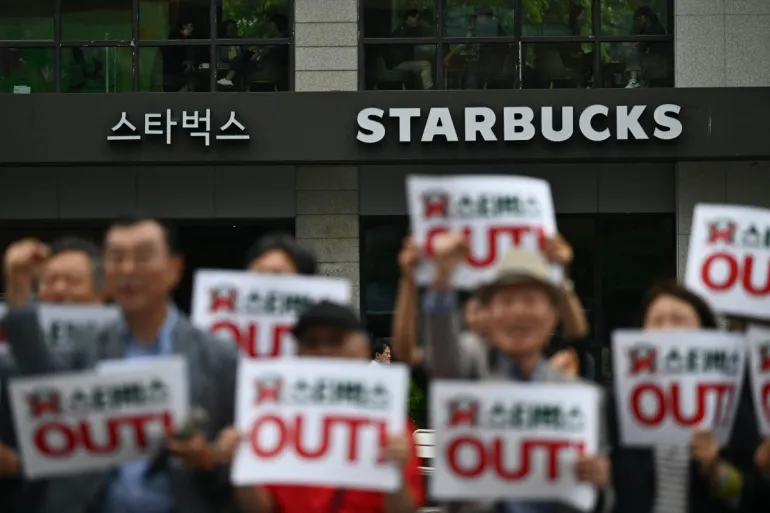
Starbucks Korea Head Fired After Tank Day Promotion Sparks Public Outrage

Author: Qahwa World
Source: Reuters (Heejin Kim)
Date: May 19, 2026. This article discusses why the Starbucks Korea head fired Tank Day, which is the main subject of this article.

Executive Summary:

  • Starbucks Korea head Sohn Jeong-hyun was fired after a marketing campaign called “Tank Day” sparked public outrage.
  • The campaign promoted a line of tumblers with the tagline “put it on the table with a sound of ‘Tak’.”
  • The promotion coincided with Democratisation Movement Day, which commemorates the 1980 Gwangju Uprising.
  • Hundreds of people were killed or went missing when the military dictatorship cracked down on pro-democracy protesters in May 1980.
  • South Korean President Lee Jae Myung said he was “enraged” and called the campaign the act of a “degenerate peddler.”
  • Shinsegae Group, which licenses Starbucks in South Korea, dismissed Sohn and issued a public apology.
  • Starbucks Global launched an investigation and promised stronger internal controls.

Starbucks Korea head Sohn Jeong-hyun was fired on May 19, 2026, after a marketing campaign triggered public anger by evoking painful memories of a military crackdown on pro-democracy protesters in 1980. The campaign, called “Tank Day,” was launched on Monday to promote a line of tumblers with the tagline “put it on the table with a sound of ‘Tak’.”

The promotion coincided with Democratisation Movement Day, which commemorates the student-led Gwangju Uprising of May 1980. Hundreds of people are estimated to have died or gone missing when the military dictatorship of Chun Doo-hwan deployed troops and tanks to suppress the protests. The timing of the campaign drew immediate and fierce criticism across South Korea.

The Controversy Behind the Campaign

Critics also questioned the use of the word “tak” in the tagline. According to local media reports, South Korean police in 1987 used the same sound to explain the death of a student protester who was later found to have been tortured. Police at the time said the student died after investigators struck a desk making a “tak” sound. This connection deepened public anger toward Starbucks Korea.

Shinsegae Group, the retail conglomerate that licenses and manages Starbucks in South Korea, announced that it had dismissed Sohn Jeong-hyun for carrying out what it called “inappropriate marketing.” Reuters was unable to reach Sohn for comment. Starbucks Korea declined to make him available, stating that he had already left the company. The campaign was withdrawn.

Political and Corporate Reactions

South Korean President Lee Jae Myung expressed his anger on social media platform X on Monday. He said the campaign “tarnished the bloody protests of Gwangju citizens and the victims of the protests.” He demanded that Starbucks apologize to the families of those killed during the uprising and called the marketing the act of a “degenerate peddler.”

Shinsegae Group Chairman Chung Yong-jin issued a public apology. “I deeply bow in apology as the representative of the group,” Chung said. He admitted that the marketing “deeply hurt the public, the bereaved families, and the victims of the May 18 demonstration.” Starbucks Korea also posted a statement on its website apologizing for the promotion.

Starbucks Global issued a statement on Tuesday expressing regret and announcing that an investigation had begun. A spokesperson said, “We sincerely apologize to the people of Gwangju, to those impacted by this tragedy, and to our customers and communities.” The spokesperson added that leadership accountability actions had been taken and that stronger internal controls, review standards, and company-wide training would be implemented to prevent a recurrence.

Key Data and Impact

Indicator Details
Fired executive Sohn Jeong-hyun, CEO of Starbucks Korea
Campaign name Tank Day
Controversial tagline “Put it on the table with a sound of ‘Tak'”
Historical event referenced Gwangju Uprising (May 1980)
Estimated casualties Hundreds killed or missing
Starbucks Korea owner Shinsegae Group (through SCK Company)
E-Mart share change (May 19) Down 5.5 percent

Frequently Asked Questions (FAQ)

1. Why was Starbucks Korea head fired?

Sohn Jeong-hyun was fired for carrying out a marketing campaign called Tank Day that sparked public outrage by evoking painful memories of the 1980 Gwangju Uprising.

2. What was the Tank Day campaign?

The campaign promoted a line of tumblers with the tagline “put it on the table with a sound of ‘Tak’.” It launched on Democratisation Movement Day.

3. What is the Gwangju Uprising?

It was a student-led pro-democracy protest in May 1980. The military dictatorship under Chun Doo-hwan used troops and tanks to suppress it, killing or causing the disappearance of hundreds of people.

4. How did South Korean President react?

President Lee Jae Myung said he was “enraged” and called the campaign the act of a “degenerate peddler.” He demanded an apology to the victims’ families.

5. What actions did Starbucks take?

Starbucks Korea fired its CEO and withdrew the campaign. Starbucks Global launched an investigation and promised stronger internal controls and training.

6. How did Shinsegae Group respond?

Shinsegae Group Chairman Chung Yong-jin issued a public apology, saying the marketing deeply hurt the public and the victims’ families.

Qahwa World – Based on Reuters reporting by Heejin Kim.
Published: May 19, 2026

Indonesian Coffee Output Drops 8% to 11.38 Million Bags

Author: Qahwa World – Jakarta
Source: USDA Foreign Agricultural Service – Jakarta Office
Report Number: ID2026-0021
Date: May 15, 2026

Executive Summary
• Indonesian coffee production for MY 2026/27 is forecast at 11.38 million 60-kg bags, down 8% from the previous year.
• Robusta output falls to 10 million bags, a drop of 1 million bags, due to excessive rains in southern Sumatra and Central Java.
• Arabica production for 2025/26 is revised down to 1.37 million bags following Typhoon Sinyar floods in Aceh and North Sumatra.
• Farmgate prices: Robusta down 16% from 2025 peaks; Arabica down 14% since October 2025.
• Exports are forecast at 7 million bags in 2026/27, down 11% due to lower supplies and strong domestic demand.
• European imports of Indonesian coffee jumped 72% to 2.4 million bags in 2025/26.
• Domestic consumption is projected at 4.83 million bags, driven by soluble coffee and the kopi susu trend.
• Some Arabica plantations in Aceh may require 2-3 years to fully recover from flood damage.

1. Overview: Indonesia in the Global Coffee Market

Indonesia is the world’s fourth-largest coffee producer, after Brazil, Vietnam, and Colombia, and ahead of Ethiopia and Uganda. Approximately 75 percent of Indonesian coffee production is exported. Robusta accounts for nearly 88 percent of total output, making Indonesia the largest Robusta producer in Asia and a key supplier to European and US markets.

According to the USDA FAS report from the Jakarta office, Indonesia’s coffee sector faces significant climate-related challenges. Excessive rainfall during the flowering and fruit development phases in late 2025 and early 2026 has severely damaged Robusta crops in southern Sumatra and Central Java. Meanwhile, Arabica-growing areas in Aceh and North Sumatra are still recovering from floods and landslides caused by Typhoon Sinyar in November 2025.

Key insight: Robusta dominates Indonesian coffee production at 88 percent. Smallholders farming 1-2 hectares represent about 98 percent of total coffee area, making the sector highly vulnerable to weather shocks and infrastructure disruptions.

2. Production Forecast: MY 2026/27

FAS Jakarta forecasts Indonesian coffee production for MY 2026/27 at approximately 11.38 million 60-kg bags (682,800 metric tons), comprising 1.38 million bags of Arabica (82,800 tons) and 10.00 million bags of Robusta (600,000 tons). This represents an 8 percent decline from the revised 2025/26 estimate of 12.37 million bags.

Table 1: Indonesian Coffee Production (million 60-kg bags)

Category 2021/22 2022/23 2023/24 2024/25 2025/26 Revised 2026/27 Forecast
Arabica 1.30 1.40 1.40 1.40 1.37 1.38
Robusta 9.30 10.50 6.80 9.30 11.00 10.00
Total 10.60 11.90 8.20 10.70 12.37 11.38

3. Climate Challenges: Rains and Typhoon Damage

The main driver of Indonesia’s production decline is abnormal rainfall during flowering and fruit development. In mid-2025, excessive rains disrupted Robusta flowering in the southern Sumatra highlands. In Central Java, farmers reported heavy rains that caused flowers to drop and pollen to wash away, interrupting pollination and reducing fruit set.

In Aceh and North Sumatra, Arabica areas continue to suffer from flooding caused by Typhoon Sinyar in late November 2025. As of April 2026, infrastructure recovery remains incomplete, keeping transport costs high. Several processing facilities and warehouses were also damaged. Some Arabica plantations may need 2-3 years to recover. The main harvest in Aceh, normally from October to November, was delayed into early 2026.

Looking ahead, Indonesia’s National Weather Agency (BMKG) projects that the 2026 dry season will be significantly drier and longer than average due to a weak El Niño expected to strengthen to moderate levels in the second half of 2026. In Sumatra, the dry season will begin in April-May 2026, starting in Aceh and North Sumatra, then spreading to Lampung and South Sumatra, peaking around August 2026. El Niño conditions typically increase drought risk, which can further disrupt flowering.

Table 2: Rainfall Impact on Key Regions (2025-2026)

Region Event Impact Recovery Timeline
Southern Sumatra Highlands Excessive rains (mid-2025) Disrupted Robusta flowering Lower yields in 2026/27
Central Java Heavy rains, pollen washout Poor fruit development Lower harvest expected
Aceh & North Sumatra Typhoon Sinyar floods (Nov 2025) Damaged Arabica farms, destroyed infrastructure 2-3 years

4. Yield Projections

For MY 2026/27, Robusta yields are expected to decline due to rainfall disruptions, though the report did not provide specific yield per hectare figures. Historically, Indonesian Robusta yields remain below one metric ton per hectare and vary significantly by region. Arabica yields in Aceh and North Sumatra are expected to stay low until infrastructure and farms recover.

Adoption of improved, higher-yielding seedlings remains limited because most farmers rely on locally sourced planting material. Government distribution of subsidized seedlings and farmer training programs also remain limited in geographic coverage.

5. Price Dynamics: Decline from 2025 Peaks

Farmgate and spot prices for both Robusta and Arabica have declined significantly from their 2025 highs. According to spot price data from Lampung (Robusta) and Medan (Arabica), prices have moderated due to improved global supply expectations and weaker demand from some roasteries.

Robusta spot prices in Lampung peaked above 104,000 IDR/kg in February 2025 but fell to around 66,661 IDR/kg by April 2026, a drop of roughly 36 percent from the peak. Year-on-year (April 2025 to April 2026), Robusta prices fell 32 percent. Compared to October 2025 (84,128 IDR/kg), the decline is about 21 percent.

Arabica spot prices in Medan peaked above 229,835 IDR/kg in November 2025 but fell to around 174,162 IDR/kg by April 2026, a drop of roughly 24 percent from the peak. Compared to October 2025 (219,802 IDR/kg), the decline is about 21 percent.

Table 3: Robusta Spot Prices in Lampung (IDR/kg) – Selected Months

Month 2024 2025 2026 Change (Oct 2025 to Apr 2026)
January 56,069 94,724 78,595 -21%
February 55,854 104,371 70,862
March 59,018 102,373 69,785
April 72,712 98,659 66,661

6. Export Outlook: Lower Supplies, Stronger European Demand

FAS forecasts green bean exports for 2026/27 at 7 million bags, down 11 percent from 2025/26, due to lower exportable supplies and continued strong domestic demand. Total exports (including roasted and soluble) are forecast at 8.05 million bags.

Despite the overall decline, shipments to European markets rose 72 percent to 2.4 million bags in 2025/26 compared to the previous year. This reflects renewed demand for Indonesian beans, particularly from Belgium and Germany, supported by recovered supplies, competitive pricing, and EUDR compliance readiness.

The United States remains among Indonesia’s top five destinations, with steady demand between 680,000 and 950,000 bags over the past five years. In 2025/26, shipments to the US ranked third at 797,000 bags. These shipments typically consist of 60-80 percent Arabica beans, mostly exported through the Port of Belawan in North Sumatra.

Table 4: Indonesian Green Bean Exports by Destination (1,000 60-kg bags, 2025/26)

Rank Destination Volume (1,000 bags) Share
1 Europe (total) 2,400 ~30%
2 United States 797 ~10%
3 Others ~3,800 ~60%

7. Trade Agreements and Policy Environment

Unlike India, Indonesia has no newly ratified free trade agreements specifically targeting coffee exports to Europe. However, the country continues to benefit from existing Generalized System of Preferences (GSP) facilities. Exporters have reported higher freight costs and shipping delays linked to the Middle East conflict in the last quarter of 2025/26, which affected some shipments.

Rupiah depreciation against the US dollar supported stronger demand toward the end of 2025/26. Prices for lower-grade Arabica strengthened through March 2026 as access improved, though transport costs reportedly doubled in affected areas.

8. Domestic Consumption: A Growing Market

FAS forecasts domestic consumption for 2026/27 at 4.83 million bags (289,800 metric tons), up 20,000 bags from the previous year, supported by continued demand from roasteries and processors. Local roasteries have faced squeezed margins as green bean prices rose since 2024, and weaker purchasing power in 2025/26 shifted some demand toward low- to medium-grade coffee. With green bean prices easing in early 2026, demand from roasteries should remain strong.

At the consumer level, low-priced coffee sold by street vendors remains popular among workers and low- to middle-income consumers. Coffee outlets in public venues serve higher-end consumers, including Gen-Z. Kopi susu (coffee with milk) remains a popular entry-level drink, widely available in coffee shops and ready-to-drink products.

Table 5: Indonesian Domestic Consumption (million 60-kg bags)

Category 2024/25 2025/26 2026/27 Forecast
Roast & Ground Domestic 3.343 3.270 3.280
Soluble Domestic 1.530 1.540 1.550
Total Domestic Consumption 4.873 4.810 4.830

9. Long-Term Vision and Recovery Outlook

Indonesia has no publicly stated long-term production target comparable to India’s 2047 vision. However, the government and the Coffee Board of Indonesia (under the Ministry of Agriculture) have promoted sustainability programs and EUDR compliance support. The BMKG’s El Niño forecast for the second half of 2026 poses additional risks. Recovery for Arabica plantations in Aceh is expected to take 2-3 years, while Robusta areas may rebound in 2027/28 if normal rainfall returns.

10. Imports: Filling the Gap

FAS forecasts green bean imports for 2026/27 at 1.42 million bags (85,200 metric tons), up slightly from 1.415 million bags in 2025/26. Indonesian green bean imports are closely tied to production and local demand, jumping from around 230,000 bags in 2020/21 to a peak of 942,000 bags in 2023/24, then dropping to around 372,000 bags in 2025/26. The 2023/24 spike reflects weak domestic supply and strong demand for specialty beans and the growing ready-to-drink sector.

Green beans account for approximately 94 percent of total imports and are primarily sourced from Nicaragua, Vietnam, Brazil, and Kenya for processing and re-export.

11. Key Challenges Facing Indonesian Coffee Sector

  • Climate variability: Excessive rains during flowering (mid-2025) followed by El Niño drought (late 2026) create extreme weather shocks.
  • Infrastructure damage: Typhoon Sinyar destroyed roads, bridges, processing facilities, and warehouses in Aceh and North Sumatra. Recovery remains incomplete as of April 2026.
  • Smallholder vulnerability: 98 percent of coffee area is farmed by smallholders with limited access to credit, improved seedlings, or crop insurance.
  • Fertilizer costs: Rising input costs and fertilizer supply uncertainty continue to pressure farmer margins.
  • Freight disruptions: The Middle East conflict has increased shipping costs and caused delays, affecting export competitiveness.
  • Limited replanting programs: No major replanting or expansion programs have been implemented recently, leaving aging trees in place.

12. Opportunities

  • EUDR preparedness: Indonesian exporters have prepared for EU deforestation regulations, potentially gaining market share in Europe.
  • Growing domestic market: Rising coffee culture among Gen-Z and the popularity of kopi susu and ready-to-drink products.
  • Soluble coffee demand: Domestic soluble consumption is projected to remain strong at 1.55 million bags.
  • Rupiah depreciation: A weaker rupiah supports export competitiveness despite lower prices.
  • Recovery potential: Once infrastructure is rebuilt and rainfall normalizes, Indonesian Robusta production can rebound quickly.

Frequently Asked Questions

  • How much coffee will Indonesia produce in 2026/27?

According to the USDA FAS report, Indonesia is forecast to produce 11.38 million 60-kg bags (approximately 682,800 metric tons) in MY 2026/27, comprising 1.38 million bags of Arabica and 10.00 million bags of Robusta. This is an 8 percent decrease from the previous year.

  • Why is Robusta production expected to decline?

Robusta production is projected to fall by 1 million bags (to 10 million bags) due to excessive rains in mid-2025 that disrupted flowering in southern Sumatra highlands and heavy rains in Central Java that caused flowers to drop and pollen to wash away, interrupting pollination.

  • What happened to Arabica production in Aceh and North Sumatra?

Typhoon Sinyar in late November 2025 caused severe floods and landslides, damaging Arabica plantations, processing facilities, and infrastructure. Recovery is expected to take 2-3 years. The main harvest in Aceh was delayed into early 2026.

  • How have coffee prices changed in Indonesia?

Robusta spot prices in Lampung fell from a peak above 104,000 IDR/kg in February 2025 to around 66,661 IDR/kg in April 2026 (down 36% from peak). Arabica spot prices in Medan fell from above 229,835 IDR/kg in November 2025 to around 174,162 IDR/kg in April 2026 (down 24% from peak).

  • What are Indonesia’s main coffee export markets?

Europe is the largest destination, with shipments rising 72 percent to 2.4 million bags in 2025/26, led by Belgium and Germany. The United States ranks third at 797,000 bags. Other markets include Japan, Canada, and the Middle East.

  • How much coffee does Indonesia consume domestically?

Domestic consumption is forecast at 4.83 million bags in 2026/27, with soluble coffee accounting for about 1.55 million bags. Kopi susu (coffee with milk) remains a popular entry-level drink.

Author: Qahwa World – Jakarta
Source: USDA Foreign Agricultural Service – Report ID2026-0021
Date: May 15, 2026
Report Availability: The full USDA report can be accessed through the USDA PSD Online Advanced Query system.

Similar stories:

USDA Report: India’s Coffee Sector Faces Climate Challenges and Historic Trade Opportunities

Mexico Coffee Production Forecast to Reach 4.1 Million Bags in 2026/2027

Honduran coffee production surges to 5.53 million bags

Coffee Prices Decline as Expectations of Ample Brazilian Crop Weigh on Market

Author: Qahwa World
Source: Barchart (Rich Asplund)
Date: May 18, 2026 Coffee prices decline ample supplies is the main story as the market experiences significant changes.
Executive Summary:

  • July arabica coffee fell to a 1.5 year low on Monday, closing down 1.01 percent. July robusta posted a 4 week low, closing down 1.75 percent.
  • The Coffee Trading Academy projects Brazil’s 2026/27 harvest will increase 12 percent year on year to 71.4 million bags.
  • Marex Group and StoneX both forecast record Brazilian crops exceeding 75 million bags for 2026/27.
  • StoneX projects the 2026 global coffee surplus will expand to 10 million bags, the largest in six years.
  • Vietnam coffee exports rose 15.8 percent in the first four months of 2026 compared to the same period last year.
  • ICE robusta inventories fell to a two year low last Friday, while arabica inventories dropped to a 2.75 month low.
  • The closure of the Strait of Hormuz continues to disrupt global coffee supplies, supporting prices.

Coffee prices extended their sharp losses from last Friday on May 18, 2026. July arabica coffee futures closed down 1.01 percent, reaching a one and a half year low. July robusta coffee fell 1.75 percent, hitting a four week low. The declines were driven largely by expectations of a larger Brazilian coffee crop and surging exports from Vietnam.

Market analysts are forecasting a record harvest in Brazil for the 2026/27 season. On May 7, the Coffee Trading Academy projected Brazil’s crop would increase 12 percent year on year to 71.4 million bags. Earlier forecasts from Marex Group and StoneX were even higher. Marex projected a record 75.9 million bags, while StoneX raised its estimate to 75.3 million bags. StoneX also predicted that the global coffee surplus would expand from 1.8 million bags in 2025 to 10 million bags in 2026, the largest surplus in six years.

Vietnam, the world’s largest robusta producer, is also adding to supply pressure. According to Vietnam’s National Statistics Office, coffee exports in the first four months of 2026 rose 15.8 percent year on year to 810,000 metric tons. For the full year 2025, Vietnam’s coffee exports jumped 17.5 percent to 1.58 million metric tons. Production for the 2025/26 season is projected to climb 6 percent to a four year high of 1.76 million metric tons, equivalent to 29.4 million bags.

Inventories and Supply Disruptions

ICE coffee inventories have trended lower over the past two months, which typically supports prices. ICE robusta inventories fell to a two year low of 3,631 lots last Friday. ICE arabica coffee inventories dropped to a 2.75 month low of 462,777 bags on Monday. Despite these declines, the broader supply outlook remains bearish.

Meanwhile, smaller exports from Brazil are providing some support. On May 12, Cecafe reported that Brazil’s April green coffee exports fell 1.3 percent year on year to 2.76 million bags. Additionally, the ongoing closure of the Strait of Hormuz has disrupted global coffee supplies. The closure has increased shipping rates, insurance costs, fertilizer and fuel prices, raising costs for coffee importers and roasters. This factor remains bullish for prices.

Key Market Data

Indicator Value
July arabica coffee close (May 18) Down 1.01% to 1.5 year low
July robusta coffee close (May 18) Down 1.75% to 4 week low
Brazil 2026/27 crop forecast (Coffee Trading Academy) 71.4 million bags (+12% y/y)
Brazil 2026/27 crop forecast (Marex Group) 75.9 million bags (record)
Brazil 2026/27 crop forecast (StoneX) 75.3 million bags (record)
Projected 2026 global coffee surplus 10 million bags (largest in 6 years)
Vietnam coffee exports (Jan-Apr 2026) 810,000 MT (+15.8% y/y)
ICE robusta inventories (May 15) 3,631 lots (2 year low)
ICE arabica inventories (May 18) 462,777 bags (2.75 month low)

Global Export and Production Outlook

On November 7, the International Coffee Organization reported that global coffee exports for the current marketing year (October to September) fell 0.3 percent year on year to 138.658 million bags. This decline is a bearish factor for prices.

The USDA Foreign Agriculture Service released a bi-annual report on December 18 projecting that world coffee production in 2025/26 would increase 2.0 percent year on year to a record 178.848 million bags. Within that total, arabica production is expected to decrease 4.7 percent to 95.515 million bags, while robusta production is forecast to rise 10.9 percent to 83.333 million bags. The USDA also forecast that Brazil’s 2025/26 coffee production would decline 3.1 percent to 63 million bags, while Vietnam’s output would rise 6.2 percent to a four year high of 30.8 million bags. Ending stocks for 2025/26 are projected to fall 5.4 percent to 20.148 million bags from 21.307 million bags in 2024/25.

Frequently Asked Questions (FAQ)

1. Why are coffee prices falling?

Coffee prices are under pressure mainly due to expectations of a larger Brazilian coffee crop for 2026/27 and surging exports from Vietnam, which point to a global surplus.

2. How low did arabica coffee prices go?

July arabica coffee futures fell to a one and a half year low on May 18, 2026, closing down 1.01 percent.

3. What is the projected Brazilian coffee crop for 2026/27?

Forecasts vary, but the Coffee Trading Academy projects 71.4 million bags, while Marex Group and StoneX project record crops above 75 million bags.

4. How much did Vietnam’s coffee exports increase?

Vietnam’s coffee exports rose 15.8 percent in the first four months of 2026 compared to the same period last year, reaching 810,000 metric tons.

5. What is the expected global coffee surplus for 2026?

StoneX projects the 2026 global coffee surplus will expand to 10 million bags, the largest surplus in six years.

6. How does the Strait of Hormuz closure affect coffee prices?

The closure disrupts global coffee supplies by increasing shipping rates, insurance, and fuel costs, which is a bullish factor supporting prices.

Qahwa World – Based on market reports from Barchart by Rich Asplund.
Published: May 18, 2026

JDE Coffee Bondholders Approve Amendments to Six Euro Note Series

Author: Qahwa World
Source: Official press release from JDE Coffee B.V.
Date: May 18, 2026
Executive Summary:

  • JDE Coffee B.V. (formerly JDE Peet’s N.V.) secured approval from bondholders for proposed amendments to six series of euro notes.
  • The total outstanding nominal amount across all six note series is 3.45 billion euros.
  • Noteholders’ meetings were held on May 18, 2026, and all necessary resolutions were passed.
  • The amendments reflect the new corporate structure of the Maple Group following an acquisition and separation.
  • Guarantors will be introduced to guarantee payment obligations under the notes starting May 21, 2026.
  • An early consent fee of 0.10 percent will be paid on May 22, 2026, to eligible noteholders.

JDE Coffee B.V., the company formerly known as JDE Peet’s N.V., announced on May 18, 2026, that bondholders have approved proposed amendments to six series of its outstanding euro notes. The approval came during separate meetings held earlier that day for each series.

The amendments are designed to reflect the new corporate structure of the Maple Group following a recent acquisition and separation. Key changes include the introduction of guarantors who will guarantee the payment obligations of the issuer under the notes.

The total outstanding nominal amount of the six note series is 3.45 billion euros. The notes mature between December 2027 and January 2034.

Details of the Six Note Series

Series Name Maturity Date Outstanding Amount (EUR)
2027 Notes (Floating Rate) December 11, 2027 600,000,000
2028 Notes (0.625% Fixed) February 9, 2028 600,000,000
2029 Notes (0.500% Fixed) January 16, 2029 750,000,000
2030 Notes (4.125% Fixed) January 23, 2030 500,000,000
2033 Notes (1.125% Fixed) June 16, 2033 500,000,000
2034 Notes (4.500% Fixed) January 23, 2034 500,000,000

Key Approvals and Timeline

According to the announcement, the necessary quorum was achieved for each series. All extraordinary resolutions were passed. The issuer has satisfied the eligibility conditions and the resolution inter-conditionality.

The implementation of the amendments will follow a clear timeline. On May 21, 2026, the issuer and relevant agents will execute the supplemental agency agreement for each series. On the same day, the issuer and the relevant guarantors will execute the deed of guarantee. The proposed amendments will take effect from May 21, 2026.

The early consent fee payment date is set for May 22, 2026. Eligible noteholders will receive an early consent fee of 0.10 percent of the nominal amount of their notes.

Background of the Solicitation

On April 24, 2026, the issuer announced separate invitations for noteholders to consent to modifications of the terms and conditions. The purpose was to make amendments reflecting the new corporate structure of the Maple Group following an acquisition and separation. The issuer proposed introducing guarantors to guarantee payment obligations under the notes.

The consent solicitation memorandum containing the full terms and conditions was issued on April 24, 2026. The announcement does not include the full text of the proposed amendments, which are available in that memorandum.

The solicitation agents for the process included Deutsche Bank Aktiengesellschaft, Goldman Sachs Bank Europe SE, and Morgan Stanley Europe SE. The tabulation agent was Kroll Issuer Services Limited.

Frequently Asked Questions (FAQ)

1. What did JDE Coffee bondholders approve?

Bondholders approved amendments to the terms and conditions of six euro note series to reflect the new corporate structure of the Maple Group following an acquisition and separation.

2. When were the noteholder meetings held?

The meetings for each series of notes were held on May 18, 2026.

3. What is the total outstanding amount of the notes?

The total outstanding nominal amount across all six series is 3.45 billion euros.

4. When will the amendments take effect?

The proposed amendments will take effect on May 21, 2026, following the execution of the deed of guarantee and supplemental agency agreements.

5. What is the early consent fee?

Eligible noteholders will receive an early consent fee of 0.10 percent of the nominal amount of their notes. The payment date is May 22, 2026.

6. Why is JDE Peet’s now called JDE Coffee B.V.?

The company changed its name as part of a broader corporate restructuring following an acquisition and separation related to the Maple Group structure.

Qahwa World – Based on an official press release from JDE Coffee B.V. dated May 18, 2026.
Published: May 18, 2026

Youth Academy Applications Open in Malaysia, UK, and UAE for 2026

Author: Qahwa World Dubai
Source: Official announcement
Date: May 18, 2026

Executive Summary:

  • Applications for Youth Academy are now open in Malaysia, the United Kingdom, and the United Arab Emirates.
  • Malaysia deadline is June 7, 2026, with interviews on June 18 and 19, and winners announced June 30.
  • UK deadline is June 14, 2026, with interviews on June 22 and 23, and winners announced June 29.
  • UAE deadline is June 21, 2026, with interviews from June 29 to July 10, and winners announced July 27.
  • Applicants should complete their Coffee Knowledge Hub profile before applying.
  • Strong applications are authentic, specific, and use real examples from coffee experiences.
  • Shortlisted candidates will be invited for an interview focused on conversation and genuine curiosity.

Applications for Youth Academy are now open in Malaysia, the United Kingdom, and the United Arab Emirates. If you plan to apply, this is the right time to get organized. Understanding the timeline, preparing your profile, and allowing enough time to submit a thoughtful application are essential steps.

Youth Academy is more than a scholarship program. It is also a community. When applying, think not only about what you hope to gain, but also about what you can contribute to the coffee community. Your attitude, your willingness to share knowledge, your local coffee scene, and the way you support others as you grow all matter.

Key Dates by Country

Country Applications Close Interviews Winners Announced
Malaysia June 7, 2026 June 18–19, 2026 June 30, 2026
United Kingdom June 14, 2026 June 22–23, 2026 June 29, 2026
UAE June 21, 2026 June 29 – July 10, 2026 July 27, 2026

Before You Apply

Start by completing your Coffee Knowledge Hub profile. Use your real first and last name, upload a clear photo, and ensure your profile reflects the information in your application. It does not need to be long. It just needs to feel genuine and current.

Read the application process carefully. Each country has its own application page and process. Take time to read the instructions properly before starting your answers.

Give your application direction. Strong applications are rarely the ones trying to sound perfect. The best applications are focused, specific, and authentic. Use real examples. Keep your answers consistent with your profile. Avoid leaving everything until the final day.

Concrete Examples Matter

Rather than simply saying you are passionate about coffee, show it through your actions. Mention cupping sessions you have attended, cafés or roasteries you visited to learn, routines you developed for practice, mentors who influenced you, and projects or events you contributed to. Small experiences still matter when they are real and meaningful.

Preparing for the Interview

If you are shortlisted, you will be invited for an interview. The best way to approach it is as a conversation rather than a test. Before the interview, think clearly about a challenge you faced in coffee and what it taught you, a moment that made you want to go deeper into the industry, and a few genuine questions you would like to ask about the program. Curiosity is part of the learning journey. Strong interviews usually come from candidates who are honest, engaged, and present, not from those trying to perform.

It Is Not Only About What You Want to Learn

Youth Academy is more than a scholarship program. It is also a community. When applying, think not only about what you hope to gain, but also about what you can contribute to the coffee community. Consider your attitude, your willingness to share knowledge, your local coffee scene, and the way you support others as you grow.

If you are applying in Malaysia, the United Kingdom, or the UAE, take your time. Review your profile carefully and write an application that genuinely reflects who you are.

Frequently Asked Questions (FAQ)

1. When is the application deadline for Malaysia?

The application deadline for Malaysia is June 7, 2026. Interviews will be held on June 18 and 19, and winners will be announced on June 30.

2. When is the application deadline for the UK?

The UK deadline is June 14, 2026. Interviews take place on June 22 and 23, with winners announced on June 29.

3. When is the application deadline for the UAE?

The UAE deadline is June 21, 2026. Interviews run from June 29 to July 10, and winners will be announced on July 27.

4. What should I do before applying?

Complete your Coffee Knowledge Hub profile with your real name and a clear photo. Read the application process for your country carefully and prepare authentic answers with concrete examples from your coffee experience.

5. How should I prepare for the interview?

Think of the interview as a conversation. Prepare to discuss a challenge you faced in coffee, a moment that deepened your interest in the industry, and genuine questions about the program. Honesty and engagement are more important than performing.

6. What is Youth Academy looking for in applicants?

Youth Academy seeks applicants who are not only eager to learn but also willing to contribute to the coffee community. Your attitude, knowledge sharing, support for others, and connection to your local coffee scene are all important.

Qahwa World Dubai – Based on an official announcement regarding Youth Academy applications for 2026.
Published: May 18, 2026

Coffee Farming in Hong Kong: A Bold Experiment in the Shadow of a Metropolis

Author: Coffee World
Source: CNN/ctvnews
Date: May 17, 2026
Executive Summary:

  • Hong Kong, a city of 7.5 million people, has begun growing coffee on Lantau Island despite urban conditions.
  • Ringo Lam, a former tech entrepreneur, started the project after bringing 100 coffee seeds from Panama six years ago.
  • About 80 of the 100 seeds sprouted, and now 25 farmers nurture approximately 400 coffee trees on Lantau.
  • The 2026 harvest yielded 10 kilograms of coffee cherries, nearly ten times the first harvest in 2023.
  • Hong Kong sits at 22 degrees north of the equator, within the global coffee belt, but lacks altitude for complex flavors.
  • Local coffee tastes smooth but less complex than specialty brews from traditional growing regions.
  • Farmers aim to raise awareness about sustainable farming and fair pay rather than compete with major producers.

A coffee roaster hums like an idling train in the attic of LCC Roastery on Hong Kong‘s Lantau Island. Owner Ringo Lam proudly displays a jar labeled “Lantau Bean,” which represents a daring dream: growing coffee in the shadow of a metropolis. For decades, Hong Kong has imported nearly all its food and beverages. But a small group of farmers and enthusiasts is proving that coffee can indeed thrive on this densely populated island.

Ringo Lam, 55, previously worked as a tech entrepreneur. He now collaborates closely with farmers on Lantau, an island known for its greenery and relaxed lifestyle. The island sits just a 30 minute ferry ride from Hong Kong’s bustling city center. Lam’s goal is to cultivate the city’s own coffee beans and change public perception about what is possible in urban agriculture.

The Coffee Belt and Hong Kong’s Position

Asia produces some of the world’s finest coffee, mainly in the southeastern part of the continent. Countries like Vietnam and Indonesia benefit from tropical climates. In East Asia, coffee consumption has grown rapidly over the past decade. However, less favorable conditions, including annual periods of extreme cold, have limited crop development in countries such as Japan and China. Only a few high-altitude areas like Yunnan in mainland China or the Alishan Mountain Range in Taiwan can grow premium Arabica coffee.

Hong Kong, a Chinese city with 7.5 million residents, has more than 700 cafes. Yet it has never been seen as an ideal location for coffee cultivation. The city has a stronger cultural attachment to tea. Exorbitant land prices make it more logical to import almost all food rather than grow it. Despite these challenges, Lam’s project has succeeded.

Katie Chick, an arboriculture instructor involved in running a coffee farm linked to the University of Hong Kong, explains that coffee trees thrive within the so called “coffee belt,” approximately 25 degrees north and south of the equator. Hong Kong sits at 22 degrees north, placing it just inside that band. “Geographically speaking, Hong Kong is fit to grow. We just lack a bit of altitude,” Chick said.

From Panama Seeds to Lantau Harvest

Lam’s journey began six years ago during a trip to Panama. He visited farmers to study the coffee industry and received 100 coffee seeds to take home. Not every seed will sprout, and coffee plants often take two to three years to bear fruit. “Out of all those 100 seeds, about 80 something came out,” Lam said. He called every farmer he knew on Lantau Island, asking them to take in the seedlings.

Initially, five farmers agreed. More joined later through trial and error. Today, 25 farmers nurture about 400 coffee trees on Lantau Island. Earlier this year, they harvested their largest batch of coffee cherries yet, measuring 10 kilograms. That amount is nearly ten times their first yield in 2023. An annual gathering now brings together local coffee farmers to brainstorm ways to refine their techniques.

Limited Yields and Commercial Viability

Despite this success, these farmers are not seeking to compete with Latin America or Southeast Asia. The high costs of production make large scale coffee farming hardly commercially viable in Hong Kong. The record 10 kilogram harvest would not fill a single 60 kilogram bag, which is the industry’s basic unit of trade. By comparison, farmers in Brazil, the world’s largest coffee grower, produced 63 million of those bags last year according to the United States Department of Agriculture.

CNN sampled two separate Hong Kong grown coffees. The taste was smooth and easy to drink, though lacking the complexity of specialty coffee from traditional regions. This forces local producers to innovate. They experiment with different wash processes and hold workshops to build awareness, hoping to maximize the value and impact of their home grown crops.

Key Data: Hong Kong Coffee Farming

Indicator Value
Coffee trees on Lantau Island 400
Number of farmers involved 25
2026 harvest (cherries) 10 kg
First harvest (2023) 1 kg (approx)
Hong Kong latitude 22 degrees north
Coffee belt range 25 degrees north to 25 degrees south
Farmer income per kg of beans 2 to 3 US dollars

Building Awareness and Fair Pay

Mike Sim, founder of Seed to Cup, a group that promotes local coffee, has rented a farm in Fanling, northern Hong Kong. He works to perfect his beans while running educational workshops. Last year, he partnered with a barista in a coffee making contest to showcase a batch he grew, mixed with Colombian varietal. They did not win, but Sim called it a big step forward. “We showed people that there are farms in Hong Kong now working with baristas,” he said.

Chan Fung-ming, one of Lam’s Lantau farmers, quit her job as a social worker to take over her family’s farm. Specializing in horticultural therapy, she advocates using gardening to improve well being. She hopes to use coffee to introduce farming to young people. “I think it’s a medium to bring people into the world of planting,” she said.

Lam runs a workshop that lets participants pick coffee cherries and process them from scratch. He says this offers visitors a taste of the hard work that farm workers in distant regions endure every day. For every kilogram of beans, which can produce about 44 cups of coffee, farmers receive only 2 to 3 US dollars. Lam believes that after attending his workshop, people become more willing to pay a fair price for coffee.

Frequently Asked Questions (FAQ)

1. Can coffee really grow in Hong Kong?

Yes. Hong Kong sits at 22 degrees north, within the global coffee belt. Farmers on Lantau Island have successfully grown coffee trees, with a harvest of 10 kilograms of cherries in 2026.

2. How did the Hong Kong coffee project start?

Ringo Lam brought 100 coffee seeds from Panama six years ago. About 80 sprouted, and he distributed them to farmers on Lantau Island. Today, 25 farmers grow about 400 trees.

3. How does Hong Kong grown coffee taste?

According to CNN samples, Hong Kong coffee is smooth and easy to drink, but less complex than specialty coffee from traditional high altitude regions.

4. Why doesn’t Hong Kong produce coffee commercially?

Land is extremely expensive, production costs are high, and yields are very small. The entire 2026 harvest was only 10 kilograms, far below commercial scale.

5. What is the goal of these coffee farmers?

They aim to raise awareness about sustainable farming, fair pay for workers, and reconnect city dwellers with the origins of their coffee, not to compete with major producers.

6. How much do coffee farmers earn per kilogram?

Farmers typically receive about 2 to 3 US dollars per kilogram of beans. One kilogram produces approximately 44 cups of coffee.

Coffee World – Report based on CNN/ctvnews coverage of Hong Kong coffee farming.
Published: May 17, 2026

SCA Announces World Barista Championship Rules and Regulations Changes for 2026

Source: Specialty Coffee Association (SCA)
Author: Qahwa World – Dubai
Date: May 18, 2026

Executive Summary

  • The Specialty Coffee Association (SCA) released updated rules for the 2026 World Barista Championship (WBC) in Panama from October 22 to 25.
  • Changes include adjustments to water served to judges and clarified language on espresso shot quantities for the signature beverage.
  • A new option allows competitors to override the drink evaluation protocol for espresso and milk courses by not serving spoons.
  • Grinder regulations updated: Ceado provides standardized equipment with two approved models: REV Zero and E37Z-Naked.
  • Competitors may use up to two grinders, either provided or personal, as long as personal grinders match approved models with original parts only.
  • All grinders will be inspected and sealed by Ceado prior to competition.

Event Date and Location

The Specialty Coffee Association (SCA) has released updated rules and regulations for the 2026 World Barista Championship (WBC). The championship will take place from October 22 to 25, 2026, at World of Coffee Panama.

These updates aim to improve competition fairness and keep pace with specialty coffee industry developments. The new rules clarify several technical points raised in previous editions and enhance transparency in the judging process.

Key Changes to Judging Rules

The latest round of updates introduces three main changes. First, changes have been made to the water served to judges. Water is a critical element in coffee quality evaluation, and this adjustment aims to standardize tasting conditions for all competitors. Second, the language around the number of espresso shots competitors must prepare for the signature beverage has been clarified, removing any previous ambiguity in rule interpretation.

Third, the new rules allow competitors to override the drink evaluation protocol for the espresso and milk beverage courses by not serving spoons to judges. This change gives competitors greater flexibility in how they present their drinks, leaving them the choice between traditional spoon-based evaluation or alternative presentation.

New Grinder Regulations and Ceado’s Role

The grinder regulations for this year’s championship have seen important updates. Qualified sponsor Ceado will provide all competitors with standardized equipment, offering two approved grinder models: the REV Zero and the E37Z-Naked. Competitors may use up to two grinders and may choose between provided equipment or their personal grinders, as long as personal grinders are the same approved models with original parts only.

All grinders – both provided by the sponsor and personal ones – will be inspected and sealed by Ceado prior to competition. This procedure ensures a level playing field and prevents unauthorized modifications that could give an unfair advantage. Competitors can review full details on grinder selection, inspection procedures, modification rules, and equipment specifications in the supplemental Grinder Procedures document.

Item Details
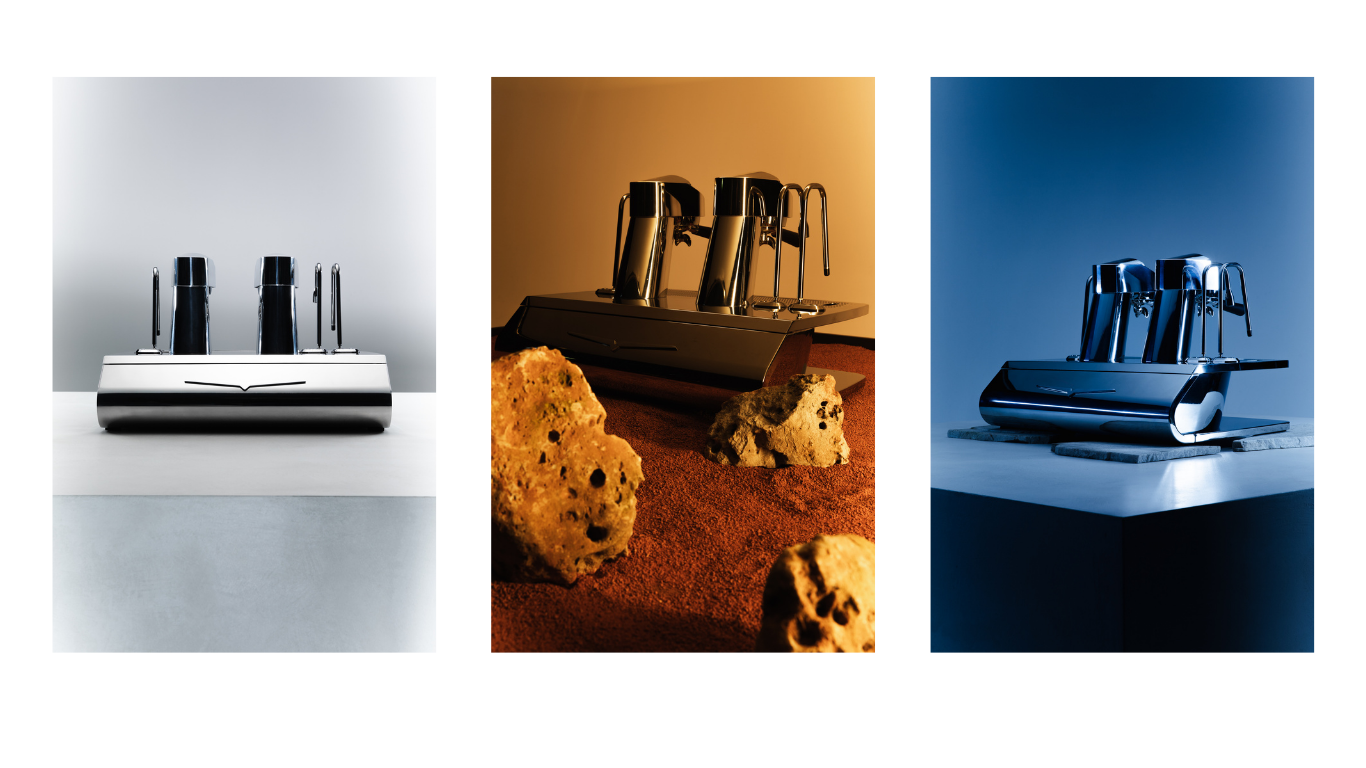
Qualified Espresso Machine STORM “Barista Attitude”, Tempesta Espresso Machine
Qualified Espresso Grinder Ceado REV Zero and E37Z-Naked Grinders
Qualified Water Filtration Sponsor BWT water+more

Available Documents and Sponsors

The SCA announced that rules documents, summaries of changes, and scoresheets are now available on the World Coffee Championships website: wcc.coffee/rules-regulations. Competitors, coaches, and judges can download these documents and review full details before October.

The 2026 World Barista Championship features major sponsors for essential equipment. The qualified espresso machine is the STORM “Barista Attitude” and Tempesta Espresso Machine. The qualified espresso grinder is provided by Ceado as mentioned. The qualified water filtration sponsor is BWT water+more. The World Coffee Championships team looks forward to welcoming competitors, judges, and coffee professionals to Panama this October.

Frequently Asked Questions (FAQ)

1. When and where will the 2026 World Barista Championship take place?

The championship will take place from October 22 to 25, 2026, at World of Coffee Panama.

2. What are the main changes to the judging rules?

Changes include adjustments to water served to judges, clarified language on espresso shot quantities for the signature beverage, and the option to override the evaluation protocol by not serving spoons.

3. What grinder models are approved by Ceado?

The two approved models are the REV Zero and the E37Z-Naked. Competitors may use up to two grinders.

4. Can competitors use their own personal grinders?

Yes, provided they are the same approved models with original parts only. All grinders will be inspected and sealed by Ceado before competition.

5. Where can I find the complete rules documents?

On the official World Coffee Championships website: wcc.coffee/rules-regulations

6. Who are the main sponsors of the championship?

Espresso machines by STORM and Tempesta, grinders by Ceado, and water filtration by BWT water+more.

Author: Qahwa World – Dubai  |
Source: Specialty Coffee Association (SCA)  |
Publication date: May 18, 2026

Fabricio Scocco Fioravante: Incremental Progress on a Regulation That Needed Recalibration

Netherlands – Ali Azakary | Qahwa World

On May 4, the European Commission published its “simplification” package for the Deforestation Regulation. Some saw it as genuine relief. Others called it cosmetic.

Qahwa World concludes its interview series with industry experts. After Dr. Steffen Schwarz, Kim Thompson, Burke Campbell, John Seroney, and Michael Trung, our sixth and final guest is Fabricio Scocco Fioravante, founder of Takumi Collective in the Netherlands.

Fabricio is a specialty coffee importer and roaster who works directly with smallholder producers in Latin America and Africa. He represents the voice of the European importer dealing with micro-lots and direct trade relationships, offering a different perspective from his more critical counterparts.

Here is what he said.

  • What is your overall take on the EU simplification decision? Does it truly reduce the burden, or is it mostly cosmetic?

Fabricio Scocco Fioravante: I think it’s a step in the right direction, but honestly, it’s incremental progress on a regulation that was already overdue for recalibration.

The burden reduction for small operators is real and welcome. But the structural complexity hasn’t disappeared. For those of us working with micro-lot and direct-trade supply chains, traceability was already part of how we operate. The issue was never the principle. It was the bureaucratic weight that falls unevenly across the chain.

  • Who benefits the most from this simplification in your opinion?

Fabricio Scocco Fioravante: Interestingly, large companies with compliance infrastructure absorb this more easily than anyone else. Small independent roasters and importers like us still face disproportionate administrative overhead relative to our volume.

The biggest real-world benefit goes to low-risk country exporters and small producers who now have clearer, lighter obligations. That part I genuinely welcome.

  • Soluble coffee is now fully covered, after being excluded before. How do you see this affecting coffee traders and roasters worldwide?

Fabricio Scocco Fioravante: This closes a loophole that was always philosophically inconsistent. If the regulation is about deforestation risk in the supply chain, soluble coffee was never exempt from that risk. It was just exempt from the paperwork.

Including it levels the playing field and forces industrial processors to operate under the same traceability logic that specialty roasters were already working towards. Long overdue.

  • Is the global coffee supply chain truly ready for the December 30, 2026 deadline? If not, which part of the industry will take the biggest hit?

Fabricio Scocco Fioravante: No, not fully. The geolocation requirement is technically sound but practically uneven.

In well-organized origins like Colombia or parts of Ethiopia, this is manageable. In fragmented smallholder landscapes – certain regions of Uganda, the Democratic Republic of Congo, parts of Asia – plot-level geolocation is still a serious challenge.

The part of the industry that will take the biggest hit is mid-tier importers working with aggregated lots from complex origins who don’t have direct farm relationships. Direct-trade and specialty channels are better positioned, but even we feel the pressure.

Qahwa World – With this, we conclude our six-part interview series. Thank you for following.

Read the related stories:

Michael Trung: EUDR Simplification Offers No Real Value – Just a Compliance Tax

John Seroney: The Real Cost is Farm Mapping and Digital Registration

Burke Campbell – “European Simplification is Cosmetic. The Burden Exported to Honduras Has Not Changed”

Kim Thompson: Sustainability Rules Must Not Punish the Producers Who Need Market Access Most

Dr. Steffen Schwarz: EUDR Simplification Remains an Administrative Monster

EUDR Simplification: Six Voices from the Coffee Industry Speak

European Commission Simplifies Deforestation Regulation.. What’s New?


Kazakhstan Coffee Culture: Rising Consumption and Health Effects

Author: Coffee World
Source: El.kz
Date: May 17, 2026
Executive Summary:

  • Coffee consumption in Kazakhstan rose by approximately 24 percent over the past year.
  • In the capital Astana, sales increased by 31 percent, while Almaty recorded a 16 percent rise.
  • The most coffee-consuming age group is between 18 and 40 years old.
  • Cappuccino and latte account for 77 percent of coffee shop sales.
  • The average price of a cappuccino is now 1160 tenge, an 8 percent increase from last year.
  • Scientific studies suggest coffee may protect against chronic diseases by interacting with NR4A1 receptors.
  • Doctors warn against excessive coffee consumption due to effects on sleep and the nervous system.

Coffee culture in Kazakhstan has seen a notable shift in recent years, becoming part of the daily routine for residents of major cities. Data indicates a rise in coffee consumption of nearly 24 percent over the past year, with even higher figures in major cities. In the capital Astana, sales increased by about 31 percent, while Almaty saw a 16 percent rise, making the capital one of the country’s most active coffee markets.

According to industry sources, a significant portion of urban residents choose coffee daily, especially those between 18 and 40 years old. Many buy at least one cup per day, and some consume several cups. Kazakhs often order coffee in the morning and the first half of the day when they need to focus on work and maintain concentration.

Shifts in Kazakhstan’s Coffee Culture

Coffee shop owners note that the primary audience consists of young and active citizens up to 35 or 40 years old. Drinks are often purchased on the way to work, during working hours, or in the evening after the day ends.

Classic milk-based drinks remain the most popular. Cappuccino and latte sales account for about 77 percent of total sales. Americano and black coffee hold a smaller share, but interest in filter coffee and alternative brewing methods is gradually growing.

Coffee experts confirm that many customers have become regular visitors. People increasingly return to the same coffee shops at specific times, whether in the morning, at lunchtime, or after work.

Coffee Prices in Kazakhstan

Drink prices in coffee shops have increased by about 8 percent over the past year. The average price of a cappuccino is currently about 1160 tenge, while a latte costs approximately 1200 tenge, and an Americano costs about 880 tenge.

Despite the price increase, the number of customers has not decreased. Industry insiders explain this by noting that coffee has become part of many people’s daily rhythm. Even with rising prices, people continue to buy their usual drinks, though some may choose smaller sizes or more affordable establishments.

Coffee from a Scientific Perspective

Interest in coffee from researchers is also growing. Scientists are studying how compounds in coffee can help the body fight age-related changes.

Research suggests that coffee may provide protective effects through interaction with the NR4A1 receptor, a protein associated with stress, inflammation, and cell regeneration. It was previously known that moderate coffee consumption is linked to a lower risk of chronic diseases, but the exact mechanism of this effect remained unclear for a long time.

Researchers at the Texas A&M University College of Veterinary Medicine and Biomedical Sciences have proven that polyphenols and chlorogenic acid can influence processes related to aging and inflammation. However, specialists emphasize that the effect depends on individual characteristics and is not universal.

Doctors remind about the importance of moderation. In small amounts, coffee can aid concentration and reduce fatigue, but excessive consumption can cause sleep problems, anxiety, and increased stress on the nervous system.

Most Popular Drinks in Kazakhstan

Drink Sales Rank Approximate Price (tenge)
Cappuccino First 1160
Latte Second 1200
Americano Third 880

Classic milk-based drinks remain at the forefront in Kazakhstan. Cappuccino holds first place, followed by latte, then Americano, which is preferred by lovers of strong flavors.

Coffee experts note that Americano is especially popular in the morning. Customers often order it to go on their way to work or during short breaks.

Women tend to choose milk-based drinks and seasonal offerings, while men prefer stronger options like Americano and espresso. At the same time, tastes are gradually diversifying, with a growing number of customers trying filter coffee, cold drinks, and alternative brewing methods.

Frequently Asked Questions (FAQ)

1. How much did coffee consumption increase in Kazakhstan over the past year?

Coffee consumption in Kazakhstan rose by approximately 24 percent, with a 31 percent increase in Astana and a 16 percent increase in Almaty.

2. What is the most coffee-consuming age group?

The age group from 18 to 40 years old consumes the most coffee in Kazakhstan.

3. What are current coffee prices in Kazakhstan?

The average price of a cappuccino is about 1160 tenge, a latte is 1200 tenge, and an Americano is 880 tenge, an 8 percent increase from last year.

4. What are the potential health benefits of coffee?

Studies suggest coffee may protect against chronic diseases by interacting with the NR4A1 receptor, a protein associated with stress, inflammation, and cell regeneration.

5. What are the harms of excessive coffee consumption?

Excessive coffee consumption can cause sleep problems, anxiety, and increased stress on the nervous system, so doctors recommend moderation.

6. Which drinks do women prefer and which do men prefer?

Women prefer milk-based drinks and seasonal offerings, while men prefer stronger drinks like Americano and espresso.

Qahwa World – Report based on data from the El.kz.Published: May 17, 2026