Moscow’s Top Coffee Shops for a Long Stroll

Perfect spots to warm up or recharge any time of year

Dubai – Qahwa World

The website Discover Moscow has published a list of what it calls the best coffee shops in the Russian capital — places perfect for warming up or recharging during a long stroll through the city, whatever the season.

The site begins its list by affirming that Moscow truly deserves the title “Coffee Capital.” Wherever you go across its neighborhoods, you’ll find specialty coffee from all over the world and local roasters who master the art of roasting and extraction with remarkable precision.

It then goes on to highlight the city’s top coffee spots as follows:

OMG Coffee
A charming café in the heart of the city on Kuznetsky Most, offering a wide selection of desserts and seasonal pastries that change throughout the year. Guests can enjoy “cube croissants” filled with cream and berries, all-day breakfasts, and coffee drinks that look like works of art — topped with whipped cream and fragrant sprinkles.
Addresses: Rozhdestvenka Street 6/9/20с1 | Yermolayevsky Lane 7

Skuratov Coffee
Originally from Omsk, Skuratov brought its own coffee culture to Moscow. Its cafés open early at 6:55 a.m., quickly filling with laptop users. With more than ten branches across the city, Skuratov serves excellent coffee and fresh pastries — and its roasted beans make a great souvenir or gift.
Addresses: Bolshoy Ovchinnikovsky Lane 16 | Myasnitskaya Street 13с2 | Stoleshnikov Lane 11 | Kalashny Lane 5 | Bolshaya Sadovaya Street 14с10

Flight Coffee
A must-visit for aviation enthusiasts, this café issues receipts that look like boarding passes and names its signature drinks after travel routes. The menu is divided into four “journeys” — Asia, Europe, the East, and Russia. Highlights include coffee with halva, Vietnamese tea, a Belgian flat white, and the “Siberian Express.”
Address: Rozhdestvenskiy Boulevard 5/7с1

AAARK
Tucked near Pokrovka Street and Chistoprudny Boulevard, AAARK features minimalist interiors of dark wood and white tiles. It’s ideal for early mornings, serving specialty coffee from Fauno roasters, fresh focaccia, and hearty sandwiches. Don’t miss the Italian maritozzi and Swedish cardamom buns — rare finds in Moscow. The café has a creative, pet-friendly atmosphere.
Address: Chaplygina Street 20с7

Rockets Coffee
Run by expert roasters, Rockets offers several concepts — from the stylish “Concept Store” cafés perfect for lunch or remote work, to smaller “Cappuccino Kids” outlets for coffee on the go. Each branch has its own character but shares the same high-quality coffee and delicious pastries.
Addresses: Tverskoy Boulevard 3 | Sadovnicheskaya Street 82с2 | Valovaya Street 35Б | Timura Frunze Street 11к2


Surf Coffee
Perhaps the most popular coffee chain in Russia, Surf Coffee is known for its warm, inviting vibe and creative seasonal drinks. Every branch has a unique design and menu, often with plant-based milk options. Outside the city center, you’ll even see locals dropping in with their dogs for a morning coffee.
Addresses: 2nd Ostankinskaya Street 3 | Mira Avenue 40 | Neglinnaya Street 14с1А | Novokuznetskaya Street 6 | Pushechnaya Street 7/5с2 | Bolshoy Cherkasskiy Lane 2/10

Aeroplan
A small but promising brand with two branches inspired by the theme of flight — “Aeroplan Blue” on Bolotny Island and “Aeroplan Green” on Pyatnitskaya Street. Both are cozy and welcoming, offering hand-brewed black coffee, creamy cortados, breakfast options, and light meals.
Addresses: Pyatnitskaya Street 65/10 | Sadovnicheskaya Street 80

Coffeemania
A well-known Moscow brand with branches across the city — from Kutuzovsky Avenue to major shopping malls. It’s a reliable choice for a long, relaxed coffee break, offering a full menu of coffee and tea drinks, breakfasts, and desserts. During the holidays, its themed sweets are especially popular.
Addresses: Pokrovka Street 18/18с3 | Kutuzovsky Avenue 17 | Maliy Cherkasskiy Lane 2 | Bolshaya Nikitskaya Street 13 | Trubnaya Square 2 | Noviy Arbat Street 19

Coffee Eleven
Located inside the century-old Khudozhestvenny cinema, Coffee Eleven combines art, culture, and comfort. You don’t need to watch a film to enjoy the atmosphere — just sit back with a pastry and a cup of coffee and watch the city pass by. The menu includes signature drinks, matcha, cocktails, wine, and a selection of breakfast dishes and desserts.
Address: Arbatskaya Square 14с1

ABC Coffee Roasters
A respected specialty chain known for precision and creativity. Purists can enjoy black coffee brewed with methods like Chemex or Aeropress, while adventurous drinkers can try lattes flavored with palo santo or tonka beans. Their beans also make perfect take-home souvenirs.
Addresses: Bolshaya Nikitskaya Street 19/16с1 | Pokrovka Street 7/9-11к1 | Milyutinsky Lane 3 | Ordynsky Blind Alley 4А

Mama Varit Kofe (Mum Makes Coffee)
Founded in Ufa, this brand has expanded to Moscow with spacious cafés featuring separate work areas, cozy tables, and a vibrant social atmosphere. The drinks menu includes filter coffee, cocoa, matcha, teas, lemonades, and unique in-house specials.
Address: Stremyanniy Lane 2

Niqa Pâtisserie & Café
Just a few steps from Teatralnaya Square, Niqa brings a touch of Parisian elegance to central Moscow. The patisserie offers French-style desserts, fresh salads and soups, Dammann teas, and specialty coffee — all made with natural ingredients. The warm, refined setting even allows you to order an XXL cup of coffee for sharing.
Addresses: Teatralny Drive 5с1 | Tverskoy Boulevard 14с5 | Ostozhenka Street 27к3
Manama to Host the Bahrain Coffee Festival 2025 This December

Manama Qahwa World

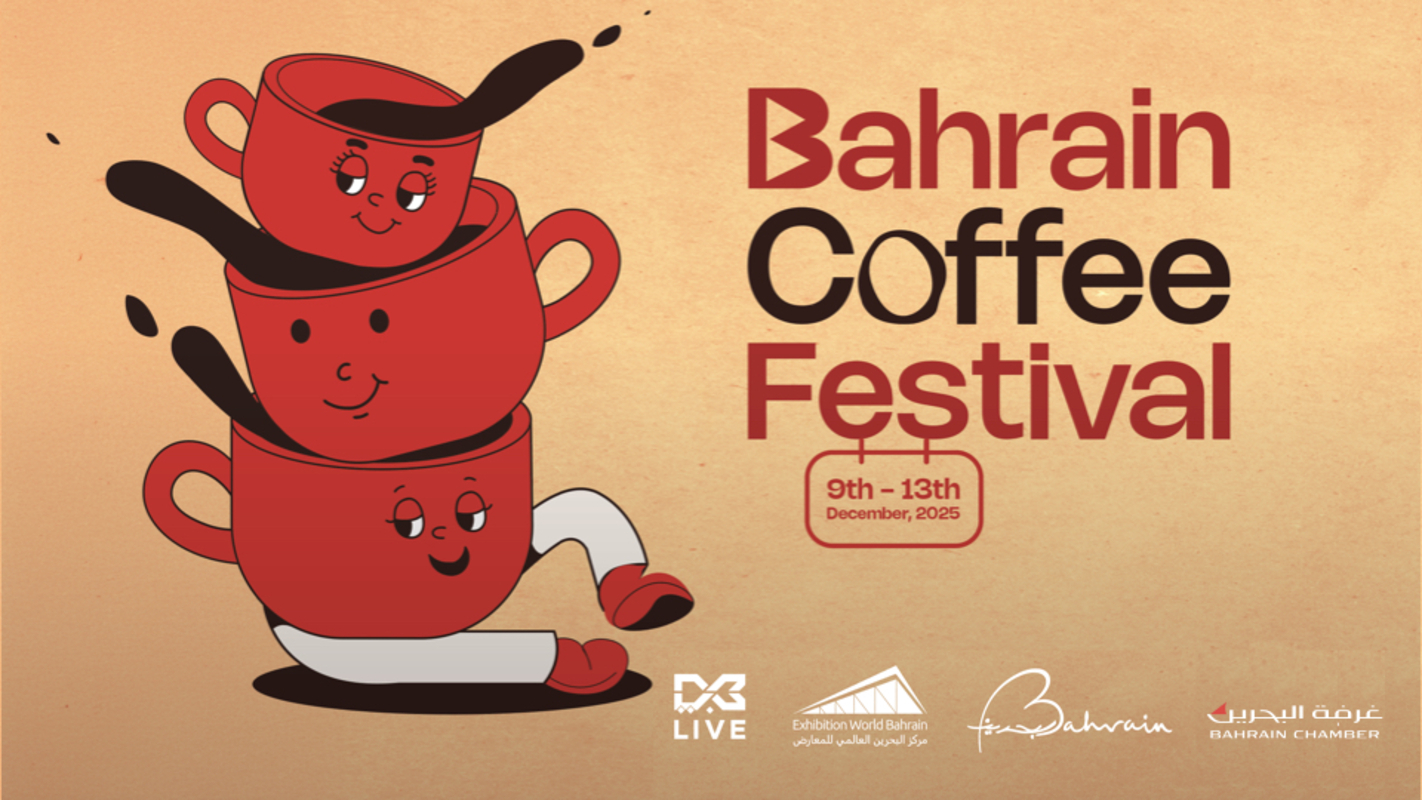
DXB LIVE, the executive arm of the Dubai World Trade Centre, will organize the Bahrain Coffee Festival 2025 in its first edition, from December 9 to 13, 2025, at the Bahrain International Exhibition Center.

During the festival, the Bahraini capital, Manama, will become a lively destination for coffee lovers and industry professionals from across the region and the world.

Celebrating Coffee Culture

The festival serves as an experience that brings together both the business and consumer sectors, offering visitors the opportunity to immerse themselves in the world of coffee through live brewing demonstrations, workshops, competitions, and interactive activities.

It aims to engage all segments of the local community from families and coffee enthusiasts to café owners and local roasters while highlighting emerging Bahraini coffee brands and linking them to the global specialty coffee scene.

The festival also seeks to strengthen Bahrain’s position as a regional hub for specialty coffee and innovation, with positive economic impacts on the tourism, hospitality, and retail sectors.

It offers companies opportunities to expand their visibility among a wide audience of coffee lovers, showcase their latest products, and establish new partnerships.

Meanwhile, individuals will find a space for learning and exchange through workshops, tastings, and educational sessions led by professional baristas and experts from various countries.

Competitions and Educational Programs

The main program of the festival will include a mix of demonstrations, competitions, and educational sessions, featuring:

Latte Art Competition

Tasting Challenge

Barista Speed Race

Home Brewers Challenge

Best Coffee with Milk

Additionally, a number of specialized workshops will be organized, covering:

Pour-over techniques (V60)

AeroPress Championship-style brewing

Barista Basics and Beginner Latte Art

Professional Tasting and Aroma Analysis

Roasting Fundamentals and the Role of Water

Branding and Packaging for Cafés

Steps to Establish a Coffee Shop in Bahrain

Visitors will also enjoy interactive and artistic experiences, such as coffee and dessert pairing sessions, creative coffee drinks, an art corner, a mini exhibition on the history of coffee, a music lounge, and film screenings documenting coffee’s journey across the world.

The festival will also shed light on the future of coffee and sustainability, through initiatives such as recycling coffee waste and converting it into eco-friendly charcoal.

A Cultural and Community Platform

The Bahrain Coffee Festival is not merely a commercial event but a cultural and social platform that brings together coffee enthusiasts and creatives in an atmosphere that reflects Bahrain’s authentic hospitality.

Through its diverse activities, the event contributes to enhancing the local specialty coffee scene and reinforces Bahrain’s image as a destination that celebrates creativity, diversity, and innovation in the coffee world.

DXB LIVE: The Organizer

Founded in 2005, DXB LIVE is one of the leading event-service providers in the region, responsible for organizing exhibitions, conferences, festivals, national celebrations, and private events.

The company organizes more than 100 events annually, with a production area exceeding 500,000 square feet across various parts of the world.

As the official organizer of World of Coffee Dubai, DXB LIVE brings extensive experience in creating platforms that connect communities and industries through world-class events that combine creativity and professional execution.

Event Details

📍 Venue: Bahrain International Exhibition Center Manama

📅 Dates: December 913, 2025

Time: 5:00 PM 10:00 PM (Tuesday & Wednesday) | 10:00 AM 10:00 PM (Thursday to Saturday)

Organizer: DXB LIVE Dubai World Trade Centre

🌐 Website: www.dxblive.com

Top 10 U.S. Cities Thriving in Coffee Culture

Dubai – Qahwa World

Portland, Oregon, alongside several cities in Florida and California, has been named among the top destinations for coffee enthusiasts, according to new research by WalletHub. The study, released ahead of National Coffee Day on September 29, compared the 100 largest U.S. cities across 12 key metrics, from the number of cafés and coffee shops per capita to household spending and average coffee prices.

Coffee remains the most popular beverage among American adults after bottled water. A recent report from the National Coffee Association (NCA) revealed that 66% of U.S. adults drink coffee daily, consuming nearly three cups per person on average.

Portland Leads the Nation

Portland ranked first overall, thanks to what WalletHub described as “an extremely high number of affordable coffee shops rated at least 4.5 out of 5 stars.” The city also placed eighth for coffee shops per capita offering free Wi-Fi. On average, Portland households spend $192 annually on coffee, ranking 20th nationwide. Nearly a quarter of residents own an electric grinder, while 27% have single-cup brewing machines.

Orlando, Long Beach, Miami, and Seattle in the Top Five

Orlando, Florida, claimed second place with households spending more than $154 annually on coffee and a vibrant schedule of coffee events. The city also has the highest number of donut shops per capita, reinforcing its reputation as a hub for caffeine and sweet pairings.

Long Beach, California, came in third, driven by an active café scene and strong consumer interest in coffee searches online. Residents spend about $171 per year on coffee, and the city ranks high in ownership of espresso machines and grinders.

Miami, Florida, and Seattle, Washington, rounded out the top five, highlighting the diversity of coffee cultures across different regions of the country.

Broader Coffee Trends Across the U.S.

Pittsburgh, Pennsylvania, was noted for having the most cafés per capita, while New York City had the fewest. Other cities including Las Vegas, Honolulu, San Diego, and San Francisco tied for first in terms of affordable, highly rated coffee shops per capita.

Industry experts said the findings reflect not just availability but also deeper cultural shifts. John Surdyk, director at the Wisconsin School of Business, highlighted how higher quality beans, improved roasting, and drink customization have transformed coffee into a premium cultural product. He also pointed to the influence of social media and the pandemic in reinforcing at-home coffee habits.

Erick P.C. Chang, associate professor at Arkansas State University, added that younger generations increasingly view coffee and tea as healthier alternatives to sugary soft drinks, with lower alcohol consumption trends further driving demand. He noted that the rise of Starbucks, ready-to-drink products, and single-serve machines like Keurig and Nespresso has brought café-quality coffee into homes nationwide.

Top 10 U.S. Cities for Coffee Lovers

  • Portland, Oregon
  • Orlando, Florida
  • Long Beach, California
  • Miami, Florida
  • Seattle, Washington
  • Tampa, Florida
  • San Francisco, California
  • Austin, Texas
  • Oakland, California
  • Pittsburgh, Pennsylvania

Source: WalletHub study of the 100 largest U.S. cities across 12 coffee-related metrics.

U.S. Top 100 Coffee Shops for 2025

Dubai – Qahwa World 

Yelp has unveiled its Top 100 Coffee Shops in America for 2025, ranking the most celebrated cafés across the nation. The list reflects the depth of U.S. coffee culture, highlighting everything from innovative roasteries to family-owned shops known for unique drinks and warm community spirit.

At number one, Yaw Farm Coffee Roaster in Las Vegas earned the crown as the best coffee shop in America. Owned by Jillian and Ian, this small but mighty roastery focuses on careful bean sourcing, expert pour-over techniques, and creative syrups such as its signature blackberry blend. Despite offering no seating or Wi-Fi, it has built a devoted fanbase, with 95% of its Yelp reviews rated five stars.

Coffee Trends on the Rise

The 2025 ranking highlights how American coffee drinkers are increasingly embracing creative drinks. Searches for “banana bread latte” surged by more than 6,000% this summer, giving Cassel Earth Coffee in Irvine, California, national attention for its banana latte. Viennese-style einspanners, topped with sweet cream, are also rising in popularity, featured at cafés such as Markario Coffee Roasters in Everett, Washington.

“More than ever, people want coffee that blends flavor, quality, and a sense of connection,” said Tara Lewis, Yelp’s trend expert. “It’s about making the daily ritual something special.”

The Full Top 100 Coffee Shops in the U.S. for 2025

  1. Yaw Farm Coffee Roaster – Las Vegas, Nevada
  2. 1022 Cafe & Gelateria – Oceanside, California
  3. Rainbeau Jo’s – Lihue, Kauai, Hawaii
  4. Mate Conmigo – Los Angeles, California
  5. Makua Banana Bread – Oahu, Hawaii
  6. Cassel Earth Coffee – Irvine, California
  7. Pangolin Café – Reno, Nevada
  8. Makario Coffee Roasters – Everett, Washington
  9. St. Pat’s Coffeehouse – New Orleans, Louisiana
  10. A.T. Oasis Coffee & Tea Shop – Phoenix, Arizona
  11. Classy Hippie Tea – Sacramento, California
  12. Mission Blue – San Francisco, California
  13. Tatiana’s Coffee and Tea – Ventura, California
  14. Elevated Coffee and Confections – Lemon Grove, California
  15. Window Coffee Bar – Phoenix, Arizona
  16. Pursue Coffee – Redondo Beach, California
  17. Acurrucame Cafe – Los Angeles, California
  18. Wolfe Club Coffee Roasters – Tacoma, Washington
  19. Family Cafe – Beaverton, Oregon
  20. The Horn – Nashville, Tennessee
  21. Tim Is Making Great Coffee – San Juan Capistrano, California
  22. Nic and Luc – Longwood, Florida
  23. Medieno Coffee Shop and Roaster – Danville, California
  24. Blue Corn Cafe and Bakery – Glendale, Arizona
  25. Castle Coffee – Albuquerque, New Mexico
  26. Hot ‘n’ Sweet Coffee and Donut Shop – Page, Arizona
  27. Sweet Oven Bakery – Sacramento, California
  28. Koana – Mountain View, Hawaii (Big Island)
  29. Uptown Cafe – Chantilly, Virginia
  30. Afro Joe’s Coffee and Tea – Chicago, Illinois
  31. Mr. Bee’s Coffee and Teas – Santa Rosa, New Mexico
  32. Enderly Coffee Co. – Charlotte, North Carolina
  33. Resurrection Cup Coffee – Fort Lauderdale, Florida
  34. Howlin Hounds Coffee – Omaha, Nebraska
  35. Kaffe Crepe – Reno, Nevada
  36. Jake’s Ice Cream on Siesta Key – Sarasota, Florida
  37. Whistle and Fizz – New York City, New York
  38. Rocklin Donuts and Cinnamon – Rocklin, California
  39. The Early Bird Cafe East Meadow – East Meadow, New York
  40. Dolce Vita – Oxnard, California
  41. Desta Ethiopian Cafe – Oakland, California
  42. Slow Rush – Paso Robles, California
  43. Cinnamon’s Bakery – Estes Park, Colorado
  44. Macadon’s – Renton, Washington
  45. Mad Dogs and Englishmen – Carmel-by-the-Sea, California
  46. Convo Coffee House – Las Vegas, Nevada
  47. Rock Stop – Orderville, Utah
  48. Dog Bar – Brunswick, Maine
  49. Local Coffee – Montclair, New Jersey
  50. Theory Coffee Company – San Antonio, Texas
  51. The Foundry Bakery – Maryland Heights, Missouri
  52. Gathered Grounds Surprise – Surprise, Arizona
  53. K Dessert Cafe – Tampa Bay, Florida
  54. Cafe Porche and Snowbar – New Orleans, Louisiana
  55. Duck Donuts – Irvine, California
  56. Mr. Burro Cafe – Fairplay, Colorado
  57. Matt Robbs Biscuits – Knoxville, Tennessee
  58. J Presso – Atlanta, Georgia
  59. Ginger Beard Coffee – Tampa, Florida
  60. Butteriffic Bakery and Cafe – Memphis, Tennessee
  61. Cutbow Coffee Roastology – Albuquerque, New Mexico
  62. La Perlita – Portland, Oregon
  63. Cafe Zio – Edison, New Jersey
  64. Deltina Coffee Roasters – Oceano, California
  65. Red Captain Coffee Company – Tucson, Arizona
  66. Hole Hot Doughnuts and Fresh Coffee – Asheville, North Carolina
  67. The Red Bud Cafe – Daytona Beach, Florida
  68. Dig It Coffee – Las Vegas, Nevada
  69. Joyful Noise Coffee – Menifee, California
  70. Fraise Cafe – Fullerton, California
  71. Tokyo Premium Bakery – Denver, Colorado
  72. Cream Sugar Coffeehouse – Cincinnati, Ohio
  73. A Special Blend – Greensboro, North Carolina
  74. ICI Macarons and Cafe – Philadelphia, Pennsylvania
  75. Neil’s Donuts – Wallingford, Connecticut
  76. The Bull Shack Coffee and Smoothies – Livingston, Texas
  77. Haan Coffee – Orlando, Florida
  78. White Duck Espresso – New Port Richey, Florida
  79. Recreo Coffee and Roasterie – West Roxbury, Massachusetts
  80. Billie Joe Coffee – Grand Prairie, Texas
  81. Voila French Cafe – Greer, South Carolina
  82. Elephantine Bakery – Portsmouth, New Hampshire
  83. Cali Coffee – Hollywood, Florida
  84. Out There Coffee – Cape May, New Jersey
  85. First Wave Coffee – Maui, Hawaii
  86. Bitty and Beau’s Coffee – Savannah, Georgia
  87. Side Track Coffee – Opelika, Alabama
  88. Roastd Coffee – Fort Lee, New Jersey
  89. Black Coffee Lounge – Cincinnati, Ohio
  90. Amarin Coffee USA – Chincoteague, Virginia
  91. Esteamed Coffee – Cary, North Carolina
  92. Dawn Donuts – Houston, Texas
  93. Hidden Grounds Coffee – Wilmington, North Carolina
  94. Coffee Cove – Hauula, Honolulu, Hawaii
  95. Canon Coffee – Apopka, Florida
  96. The Baker – New Bedford, Massachusetts
  97. Homage Coffee House – Glendale, Arizona
  98. Polcaris Coffee – Boston, Massachusetts
  99. Greenwell Farms – Kealakekua, Hawaii (Big Island)
  100. Cafe Flore – Fort Myers, Florida

A Nation of Coffee Lovers

From creative latte art in California to traditional Ethiopian coffee in Oakland, the 2025 rankings highlight just how diverse and dynamic America’s café scene has become. With demand for unique drinks and community-focused spaces continuing to rise, coffee in the U.S. is more than a beverage — it’s a cultural movement.

International Coffee Day: How It Started and Why the World Celebrates

Dubai – Qahwa World

The International Coffee Organization (ICO) has launched its global campaign to celebrate International Coffee Day (ICD), observed every year on October 1. The theme for 2025 is “Embracing Collaboration More Than Ever.” The ICO emphasized that this celebration is an opportunity to underline the vital role of collaboration across the coffee value chain — from farmers and cooperatives to traders, roasters, baristas, and consumers — ensuring sustainable livelihoods, shared prosperity, and resilient communities.

Vanúsia Nogueira, Executive Director of the ICO, stated: “Coffee is a product of many hands and many hearts. When farmers, cooperatives, researchers, roasters, traders, baristas and consumers work together, we create opportunities for income, resilience and environmental stewardship. This year’s campaign calls for practical collaboration that delivers real benefits along the whole chain.”

On this occasion, Qahwa World has prepared a comprehensive research report on International Coffee Day — its origins, history, economic and cultural significance, and its importance for the global coffee industry. This research is presented to highlight why this day is not just a celebration of a beverage, but a recognition of coffee’s role as a cultural, social, and economic force worldwide.

Origins and Establishment of International Coffee Day

International Coffee Day was officially established in 2014 during the International Coffee Council meeting in Milan, aligned with Expo 2015. The first official ICD celebration was held on October 1, 2015.

Objectives of the Day:

To unite coffee lovers around the world.

To honor and recognize coffee farmers whose livelihoods depend on this crop.

To raise global awareness about sustainability, fair trade, and challenges in the coffee sector.

To strengthen the sense of community among all participants in the coffee chain.

Historical Roots of Coffee

The history of coffee stretches back centuries, connecting continents and cultures:

Ethiopia: Coffee’s origins are often traced to Ethiopia, where wild coffee plants grew in the forests of Kaffa. Legends suggest its stimulating effects were first observed there.

Yemen: In the 15th century, coffee cultivation spread to Yemen. Sufi monks began preparing coffee as a beverage to help them stay awake during prayers, making Yemen the cradle of coffee culture.

Arab World: By the 16th century, coffee spread throughout Mecca, Cairo, Damascus, and Istanbul. Coffeehouses (qahveh khaneh) became centers of social, cultural, and intellectual life.

Europe: Coffee reached Venice in the early 17th century. It spread rapidly through Europe despite religious controversies and bans. Coffeehouses in London, known as “penny universities,” became hubs of debate and knowledge.

Asia and the Americas: By the 18th century, colonial powers introduced coffee cultivation to Asia (notably Indonesia) and Latin America (notably Brazil and the Caribbean), shaping the global coffee industry we know today.

Technological and Industrial Evolution

In the 19th century, industrialization revolutionized coffee. The invention of large-scale roasting machines and improved grinders allowed for mass production and consistent quality.

In the 20th century, new innovations such as soluble (instant) coffee emerged, led by companies like Nestlé in the 1930s. This changed global consumption patterns and made coffee more accessible.

Today, technological advances extend to specialty coffee roasting, precision brewing methods, and sustainable farming practices, reflecting the balance between tradition and innovation in the coffee world.

Celebration Dates Worldwide

Although October 1 is the official ICO date, different countries observe coffee days at varying times:

October 1: International Coffee Day (official ICO recognition, celebrated globally).

September 29: National Coffee Day in the USA, Canada, Austria, and a few other countries.

Other Coffee Days in the USA:

November 8: National Cappuccino Day

November 23: National Espresso Day

February 11: National Latte Day

These variations highlight the universal love for coffee across cultures.

Traditions and Activities

International Coffee Day is marked by a variety of events and initiatives:

ICO Campaigns: Every year, the ICO sets a central theme. In 2025, the focus is collaboration.

Coffeehouses and Roasters: Businesses worldwide host tastings, workshops, and awareness campaigns.

Social Media: Hashtags like #InternationalCoffeeDay and #ICD2025 amplify global participation, encouraging people to share their coffee experiences.

Awareness Programs: NGOs, cooperatives, and coffee associations use ICD to shed light on sustainability, fair income for farmers, and climate-related challenges.

Economic Impact of Coffee

Coffee is not just a cultural icon but also an economic powerhouse:

Consumption: Over 3 billion cups are consumed daily worldwide.

Production (2023, ICO): Approximately 170 million 60-kg bags of coffee are produced annually.

Top Producers (2023):

Brazil – 37% of global production

Vietnam – 17%

Colombia – 8%

Indonesia – 7%

Ethiopia – 5%

The Coffee Belt: Coffee production is concentrated in a tropical zone known as the Coffee Belt, spanning Latin America, Africa, and Asia-Pacific.

Trade Value: Coffee is the second most traded commodity globally after crude oil.

Social and Environmental Dimensions

The day also highlights the challenges and responsibilities facing the global coffee community:

Farmer Livelihoods: Coffee supports the livelihoods of over 125 million people worldwide, including around 25 million smallholder farmers directly dependent on it. Yet many live below the poverty line due to fluctuating prices and market instability.

Climate Change: Rising temperatures, pests such as coffee leaf rust, and deforestation threaten production worldwide.

Sustainability Efforts: Certifications such as Fairtrade, Rainforest Alliance, and organic standards are promoted during ICD to encourage responsible production and consumption.

Cultural and Social Significance

Coffee has always been more than a drink — it has been a catalyst for culture and community:

In the Arab world, early cafés became places for music, chess, storytelling, and poetry.

In Europe, coffeehouses were breeding grounds for intellectual movements, journalism, and political debate.

Today, cafés remain spaces for creativity, networking, and cultural exchange.

Interesting Facts About Coffee

Coffee trees can live up to 100 years, though their most productive years are between 7 and 20.

Coffee faced multiple bans in history — in Mecca, Istanbul, and even in 18th-century Prussia — but it always returned stronger.

One of the most expensive coffees in the world is Ospina (Colombia), valued at $1,700 per pound in 2024.

The term “penny university” reflected the role of 17th-century English coffeehouses, where intellectual discussion was accessible for the price of a cup.

Conclusion

International Coffee Day is not simply about celebrating a beloved beverage — it is about recognizing the centuries-long journey of coffee from Ethiopia and Yemen to the rest of the world, and the millions of people whose lives are intertwined with it.

By establishing ICD in 2014, the ICO created a platform for uniting coffee lovers, supporting farmers, and promoting sustainability. In 2025, under the theme “Embracing Collaboration More Than Ever,” the ICO reminds us that coffee is more than a drink — it is a shared commitment to resilience, sustainability, and global cooperation.

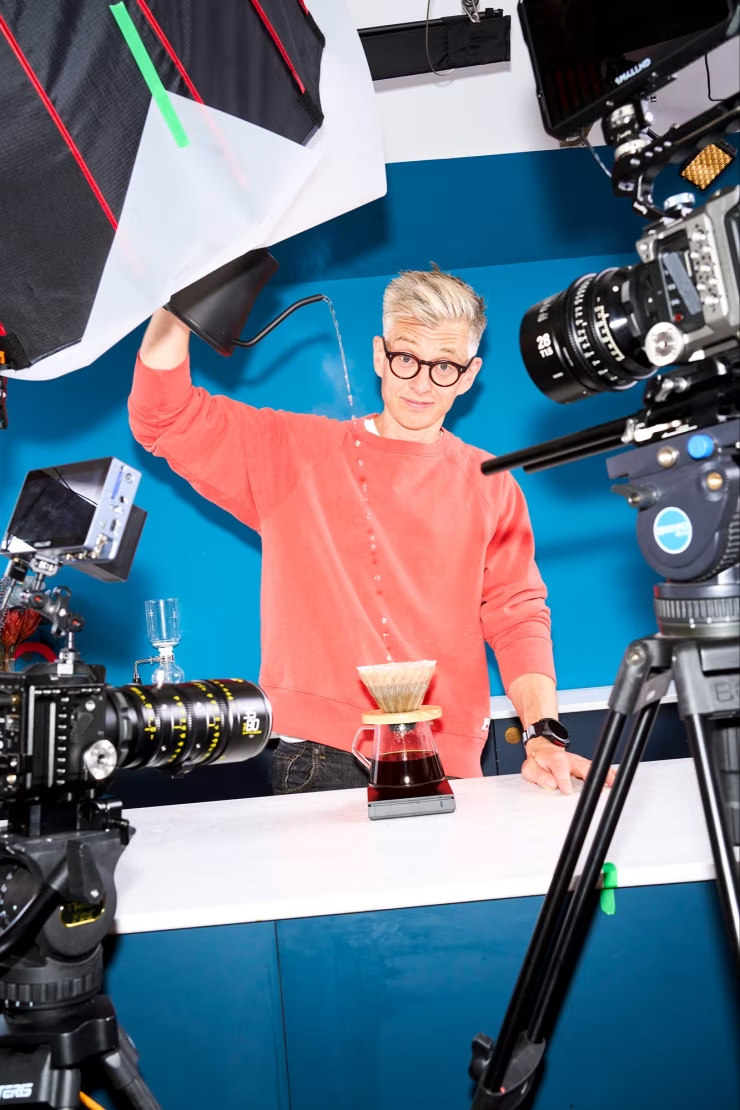
James Hoffmann: From Coffee Hater to One of Its Global Icons

Dubai — Qahwa World

On September 20, 2025, the Financial Times published an in-depth feature tracing the extraordinary journey of James Hoffmann, who began his career hating coffee but went on to become one of its most recognized global figures. The story details how he rose from reluctant beginnings to world champion barista, YouTube celebrity, author, and one of the most influential voices in the specialty coffee movement.

From Rejection to Passion

In his early life, Hoffmann was anything but a coffee enthusiast. He worked as a casino employee in Leeds before moving to London, where he joined espresso machine companies such as Gaggia and La Spaziale. During quiet hours he experimented with the machines, discovering how small adjustments in grind or pressure could change the taste. He still disliked the drink, but his curiosity was triggered by the realization that some cups were “less bad” than others.

The turning point came in 2005, when Hoffmann tasted a Kenyan coffee from a small estate. It shocked him: the flavor resembled blackcurrant juice, a revelation that convinced him coffee could be something extraordinary. Just two years later, after refining his skills and delegating tasting duties to a coach, he was crowned World Barista Champion in Tokyo 2007.

In 2008, together with award-winning taster Anette Moldvaer, Hoffmann founded Square Mile Coffee Roasters in London. It became one of the country’s first specialty roasters and helped transform the UK market from generic blends to single origins and traceable coffees. His rise was framed within the broader “waves of coffee”: the first wave of mass consumption, the second wave of café culture through chains like Starbucks, the third wave of artisanal, single-origin appreciation, and now the debated “fourth wave,” which emphasizes science, sustainability, and scalability — a movement in which Hoffmann is seen as a key figure.

From Barista Champion to YouTube Star

Hoffmann’s influence didn’t stop at cafés or roasteries. In 2016, he launched a YouTube channel to share simple coffee content. By 2020, when the pandemic forced millions to brew at home, his videos became the go-to guide worldwide. From equipment reviews to quirky experiments like tasting 1930s Harrods coffee, Hoffmann turned home brewing into a global hobby.

Today his channel has over two million subscribers and generates up to £200,000 annually. Yet his success isn’t just about numbers. He resonates with both beginners and experts: never mocking casual drinks like Frappuccinos, but always nudging his audience toward specialty coffee with patience and authority.

Hoffmann is also known for obsessive precision. He has CT-scanned espresso pucks, used lab-grade particle size analyzers, and tested milk foams with food additives. Even April Fool’s videos meant as jokes sometimes led to practical discoveries. Inspired by this scientific mindset, thousands of hobbyists now document their brews in apps like BEANCONQUEROR and debate mineral ratios on Reddit and Discord.

The “home barista” wave even pushed brands such as Breville (Sage) and La Marzocco to create professional-grade equipment for consumers. Hoffmann’s influence has therefore reshaped not only enthusiasts’ kitchens but the entire specialty coffee industry.

Challenges and Future Mission

Despite his success, Hoffmann remains wary of coffee’s future. He recalls how London’s coffeehouses thrived in the 17th century only to vanish decades later. Climate change is shrinking suitable land for arabica, while rising costs may drive farmers to switch to more profitable crops like macadamia or avocado.

For Hoffmann, the solution lies in consumer awareness and willingness to pay fairer prices that sustain farmers. He is preparing the third edition of his landmark World Atlas of Coffee, aiming to educate, inspire, and elevate appreciation of coffee worldwide.

The paradox of Hoffmann’s story is striking: from someone who once despised coffee to a world champion, author, and educator shaping global taste. Balanced between inclusivity and rigor, he has persuaded millions to move from stale supermarket grounds toward vibrant specialty beans.

Today James Hoffmann stands as a cultural icon of modern coffee — where craft meets science and community. Through his roastery, his books, and his YouTube channel, he continues a mission to keep coffee alive as a shared art, science, and culture for generations to come.

Coffee Gadgets: A Guide to Finding Your Perfect Brewing Method

Dubai – Qahwa World

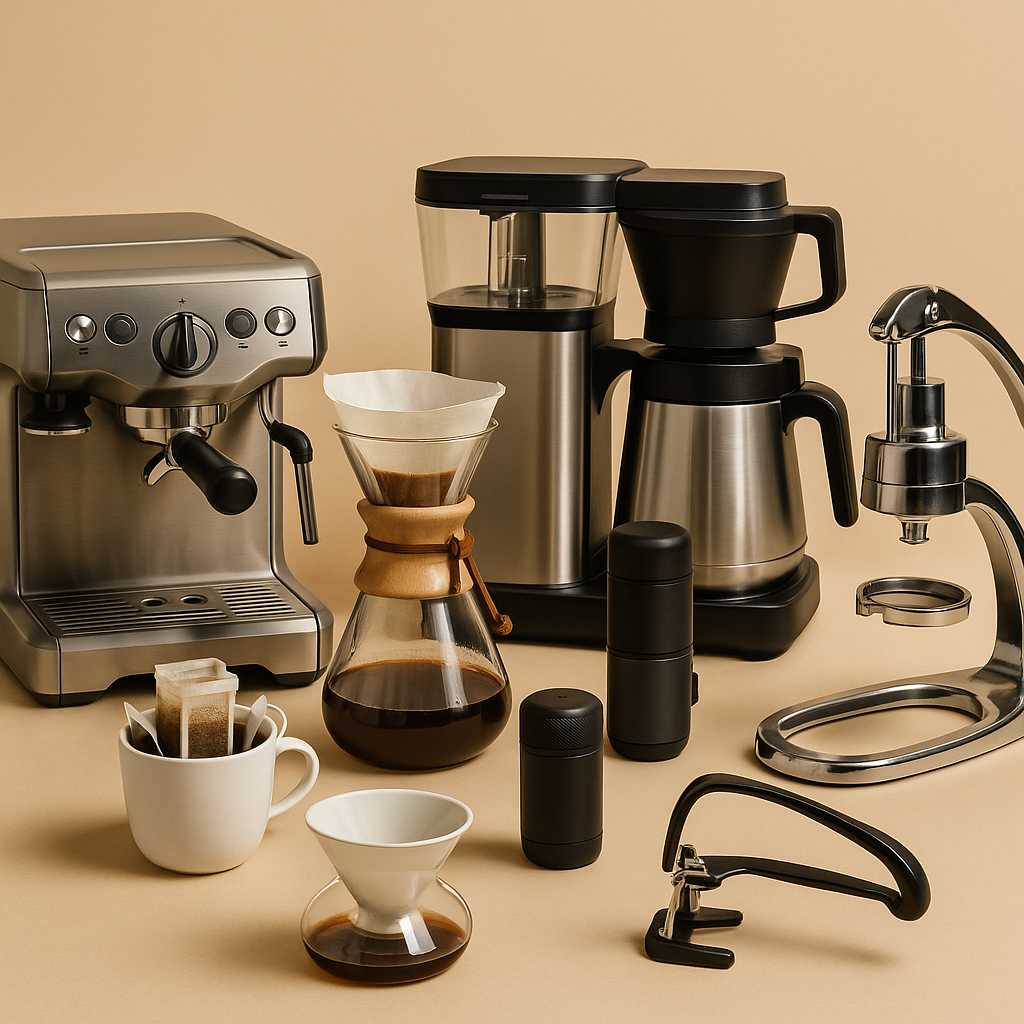
Coffee preparation has become more than just a morning ritual; it is a pursuit of precision, design, and personal preference. Across the world, enthusiasts choose from a wide variety of brewing devices, each catering to different needs — from quick convenience to meticulous craftsmanship. This guide offers a structured overview of the most notable coffee gadgets, their features, and how to identify which one might be best suited to your lifestyle.

Choosing the Right Gadget

A simple question often helps narrow the choices: Are you making coffee for lots of people?

Yes

If you prefer the ease of automation, an Espresso Machine or Sage Precision Brewer may be ideal.

If you value design and group brewing, the Chemex is a strong candidate.

For portable brewing with larger capacity, consider the Giant AeroPress.

No

If automation is important, a Bean-to-Cup machine offers a seamless experience.

For simplicity, the Coffee Bag provides a quick option.

For those who enjoy measuring and fine-tuning, the V60 Pourover is a classic.

If experimentation excites you, the Picopresso or Syphon provide unique experiences.

For mechanical elegance and complete control, the Lever Espresso stands out.

Coffee Bag

Single-use drip bags offer convenience and portability, functioning like a tea bag but designed for better water contact with coffee grounds. They are ideal for pre-portioned, ready-ground coffee when simplicity is the goal.
Example: Ueshima Pour Over Coffee Bag (~£5).

V60 Pourover

A cone-shaped brewer with a global following, the V60 is inexpensive but requires additional tools — grinder, gooseneck kettle, and scales — for precision. It is popular among those who enjoy the ritual of measured brewing.
Example: Hario V60 Coffee Dripper (~£6).

Chemex

Designed in the 1940s, the Chemex combines glass, wood, and leather in an iconic brewer. Its thicker paper filters produce a “cleaner” cup, though the slower percolation makes it less practical for quick brewing. Larger sizes make it well-suited for groups.
Example: 10-Cup Chemex (~£65).

Giant AeroPress

Known for portability and ease of cleaning, the AeroPress steeps coffee in a sealed chamber before plunging. The larger model caters to groups, while the standard version remains a gateway device for new enthusiasts.
Example: AeroPress XL (~£80).

Syphon

Also called a vacuum pot, the syphon is both functional and theatrical. Water is heated in a lower chamber, rises to mix with coffee in an upper chamber, then filters back down. While fragile and demanding to clean, it produces a distinct cup and serves as a centerpiece for coffee demonstrations.
Example: Hario Technica Coffee Syphon (~£125).

Picopresso

A compact, handheld espresso maker designed for experimentation. It appeals to those who want to test techniques outside of traditional machines while keeping portability in mind.

Sage Precision Brewer

A programmable filter brewer that delivers consistency for larger batches. Its thermal carafe preserves flavor better than hotplates, and the auto-brew function allows preparation in advance.
Example: Sage Precision Brewer Thermal (~£250).

Lever Espresso

A spring- or piston-driven machine that emphasizes manual control. Pulling the lever compresses water through the coffee puck, giving full oversight of extraction variables. Quiet and mechanical, it requires patience but rewards with mastery.
Example: Flair Pro 3 (~£325).

Espresso Machine

Countertop espresso machines allow variety, from straight espresso to milk-based drinks with latte art. They are essential for anyone who prioritizes serving café-style beverages at home, though they require significant space and investment.
Example: Sage Dual Boiler (~£1,250).

Bean-to-Cup

These machines automate the entire process, from grinding beans to extraction, often controlled through digital displays. They provide luxury and convenience, though at the cost of reduced manual experimentation.
Example: Jura Giga 10 (~£3,800).

Conclusion

The diversity of coffee gadgets reflects the diversity of coffee drinkers. Whether one values speed, design, experimentation, or tradition, there is a tool to match. For some, a simple coffee bag suffices. For others, the precision of a lever espresso machine or the indulgence of a bean-to-cup system becomes part of daily life. Understanding each device’s strengths helps not only in choosing the right gadget but also in appreciating the culture of coffee innovation.

illycaffè Honors Robert Wilson with Final Art Collection for Barcolana 2025

Dubai, 17 September 2025 (Qahwa World) – illycaffè has unveiled a new illy Art Collection designed by the late American artist Robert Wilson to celebrate the 57th edition of Barcolana, Trieste’s historic international sailing regatta. This collection holds profound significance, as it represents Wilson’s final creation for the brand and the city, marking the culmination of a long-standing artistic relationship.

For both the Barcolana 2025 poster and espresso cup, Wilson employed a dramatic composition where light plays the leading role. Using bold primary graphic elements, he transformed blue into sky, sea, and sails—capturing the essence of the regatta and reflecting the deep bond between Trieste and the Adriatic. The design draws inspiration from Susan Sontag’s reimagined line in Lady from the Sea: “And so there are people who think they belong to the sea.”

Wilson’s collaboration with illycaffè spans over a decade. In 2014, he worked with young talents from the Watermill Center to create an illy Art Collection, and in 2017, he directed The Dish Ran Away with the Spoon in Venice to mark the collection’s 25th anniversary. This final project continues his legacy of fusing art, light, and storytelling into everyday objects.

Cristina Scocchia, CEO of illycaffè, emphasized the emotional value of this year’s initiative:
“Supporting Barcolana again this year, in its 57th edition, carries an even deeper meaning for us. Celebrating it through the poster and a special illy Art Collection designed by Robert Wilson means paying tribute to his extraordinary talent and continuing to give voice to his vision, even after his passing.”

The new illy Art Collection by Robert Wilson is available at a retail price of €26.90 in illy Caffè and illy Shops, online at www.illy.com, and in dedicated Barcolana spaces.

Founded in Trieste in 1933, illycaffè continues to blend coffee, art, and sustainability. Today, its 100% Arabica blend is served in over 140 countries, with more than 10 million cups enjoyed daily. The company, certified as a B Corp since 2021, reported revenues of €630 million in 2024 and operates 157 branded stores across 28 countries

Kadıköy Becomes the Capital of Coffee as the 11th Istanbul Coffee Festival Kicks Off

Istanbul, September 14, 2025 (Qahwa World) – Türkiye’s largest celebration of coffee culture, the Türk Telekom Prime Istanbul Coffee Festival, has officially opened in Kadıköy for its 11th edition, transforming the outdoor grounds of Tepe Nautilus into a meeting point for thousands of coffee lovers, professionals, and music enthusiasts. The event, which runs from September 11 to 14, has already drawn crowds eager to explore a world of flavors, innovation, and tradition, making it one of the most anticipated gatherings in the global coffee calendar.

This year’s festival spans an impressive 10,000 square meters and brings together more than 200 brands from Türkiye and abroad, offering visitors free tastings of over 100 varieties of coffee beans sourced from around the world. From the earthy tones of Latin America to the floral complexity of East Africa, the diversity on display highlights both the global reach of coffee and the growing appreciation of specialty brewing among Turkish consumers. Festival founder and Dream Sales Machine Chairman Alper Sesli emphasized the cultural depth of the occasion, noting that while Türkiye is not traditionally a coffee-producing country, coffee has been part of daily life and local identity for nearly five centuries through the unique tradition of Turkish coffee. He explained that this year, discussions have also turned toward the emerging prospect of domestic coffee cultivation, with industry stakeholders, growers, and organic farmers contributing to conversations about production and sustainability.

Alongside tastings, the festival has introduced cutting-edge innovation that points to the future of coffee service. The debut of X BARISTA, an artificial intelligence–powered coffee station created by Thude Robotics, has drawn particular attention. CEO Önder Akyazıcı described the system as a “fourth-generation coffee experience”, blending the artistry of specialty coffee with the precision and consistency of robotics. Developed entirely in Türkiye in both software and hardware, X BARISTA uses sensors to replicate the movements of professional baristas, preparing intricate beverages such as lattes with remarkable accuracy. Akyazıcı underlined that the goal is not to replace human baristas but to improve efficiency, sustainability, and accessibility, and revealed that international orders have already begun.

The atmosphere in Kadıköy reflects the spirit of a growing community. Award-winning barista and Niji Coffee Co. co-founder Alireza Razzaghzadeh praised the festival for its accessibility and inclusivity, pointing out that its location and design allow more people to participate and experience the richness of specialty coffee. He stressed that the Istanbul Coffee Festival plays a central role in promoting the industry, connecting local consumers with global coffee practices, and encouraging professional growth among Turkish baristas.

While coffee remains at the heart of the festival, the event extends beyond the cup to become a celebration of culture, art, and music. The program features live concerts each evening, with performances by beloved artists such as Levent Yüksel, Ceza, Madrigal, and Haluk Levent, drawing large crowds and adding to the festive mood. Workshops and seminars give visitors opportunities to deepen their knowledge of coffee preparation and culture, while interactive tastings provide a chance to compare beans and brewing methods. The blend of education and entertainment makes the festival a dynamic experience that appeals to both seasoned professionals and newcomers to the world of coffee.

For the first time in its history, the festival has also introduced a Türk Telekom Children’s Area, offering family-friendly activities designed to make the event inclusive for all ages. Meanwhile, the Türk Telekom Prime Lounge has become a hub for relaxation and interaction, offering refreshments, competitions, and opportunities for visitors to engage with coffee culture in new and playful ways.

From the aroma of freshly ground beans rising above Kadıköy to the sight of a robotic barista preparing precise pours, the Istanbul Coffee Festival 2025 captures the tension between heritage and innovation that defines today’s coffee world. It is a space where traditional Turkish coffee brewed in hot sand meets futuristic AI-driven technology, where music and community blend with workshops and serious industry discussions, and where the joy of discovery fuels both conversation and culture. Eleven years after its founding, the festival has not only grown into a major international event but also strengthened Istanbul’s position as a regional hub for coffee appreciation and creativity.

Specialty Coffee Consumption in the United States Reaches Record High

Washington, September 9, 2025 (Qahwa World) – The Fall 2025 National Coffee Data Trends report, published by the National Coffee Association, shows that specialty coffee consumption in the United States has reached its highest level on record. Fifty-seven percent of Americans reported drinking specialty coffee at least once in the past week, a figure that matches the highest level ever recorded and confirms that specialty coffee has become a central part of everyday life across the country.

The report also highlights the strong role of younger generations, with forty-six percent of Americans between the ages of 18 and 24 saying they consumed specialty coffee on the day before the survey was conducted, the highest daily rate since 2020. Analysts attribute this trend to the integration of younger consumers into modern coffee culture, their preference for higher quality and innovative experiences, and the growing popularity of coffee-related social events that encourage sharing and discovery.

The study notes that new preparation methods are fueling this growth. Cold brew consumption rose to seventeen percent, an increase of three percentage points compared with the start of the year, while ready-to-drink coffee beverages reached nineteen percent, up four points. These figures reflect the American consumer’s attraction to options that combine convenience and freshness, particularly during warmer months.

Industry observers say the expansion of specialty coffee consumption opens new opportunities but also presents challenges. Large chains are benefiting from the growth of app-based orders and drive-thru services, while independent cafés and roasters are finding their strength in providing higher quality products, origin transparency, and stories of sustainability. This balance between convenience and authenticity is expected to shape the future of the U.S. coffee market.

The significance of this growth is underscored by the size of the overall industry, valued at 343 billion dollars. Specialty coffee is no longer just a matter of personal taste or social trend but a powerful economic sector in its own right. With rising consumer awareness of origin, production methods, and environmental certifications, specialty coffee is expected to continue strengthening its position both domestically and internationally.

The findings suggest that the United States has moved beyond the so-called third wave of coffee, which focused on artisanal preparation, and is entering a new phase that blends quality with convenience and social experience. For a new generation of consumers, coffee is no longer simply a morning beverage but an evolving lifestyle choice that reflects broader shifts in consumer culture.

Turkish Coffee: From UNESCO Heritage to Istanbul Coffee Festival 2025

Turkish coffee is more than just a drink—it is history in a cup. Once at the heart of the Ottoman Empire, this centuries-old tradition is now making a global comeback, captivating coffee lovers far beyond Turkey’s borders.

When we think of coffee today, it might be an espresso, a latte on the go, or a cold brew. But the story of coffee begins with something older, richer, and far more ritualistic: Turkish coffee. It is not just a beverage but a 500-year-old tradition, a cultural bridge, and even honored by UNESCO as part of humanity’s living heritage.

Turkish coffee is about sharing moments. While it can be enjoyed alone, its essence lies in conversation and connection. Coffee’s story began in 15th-century Yemen among Sufi mystics, who drank it to stay awake during long prayers. The Turkish coffee method later took shape in 16th-century Istanbul, where it spread from Ottoman coffeehouses across the world.

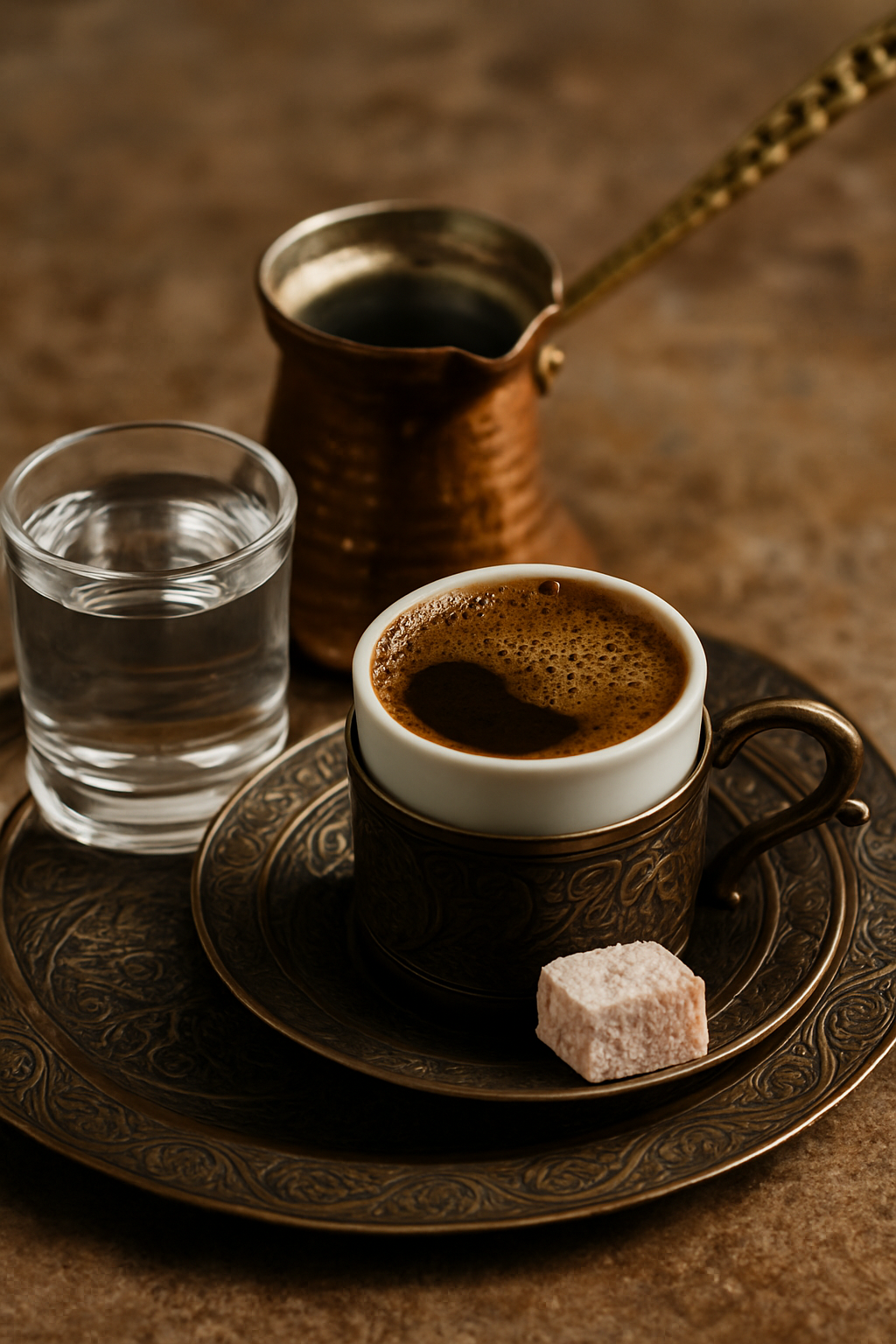
A debate still lingers: some claim Turkish coffee is the same as Greek coffee, but many see it as an Ottoman legacy. What makes it unique is the method. It isn’t brewed but cooked slowly in a small copper pot called a cezve, then served in tiny cups alongside water and Turkish delight. The experience doesn’t end with the last sip—coffee grounds are often used for fortune readings, a playful way to share hopes and laughter.

Even today, Turkish coffee is tied to tradition. In some households, a bride-to-be serves her suitor a salty cup to test his patience before marriage. While it never reached the global fame of espresso, Turkish coffee is finding new admirers, from workshops in London to fortune readings in New York.

UNESCO Recognition

In 2013, UNESCO inscribed “Turkish coffee culture and tradition” on the Representative List of the Intangible Cultural Heritage of Humanity. The recognition celebrated not only the brewing method but also the rituals of hospitality, storytelling, and cultural identity associated with this practice. The listing confirmed Turkish coffee’s role as more than a drink: it is a living heritage passed down through families and communities.

Istanbul Coffee Festival 2025

This September, the conversation about Turkish coffee gains renewed momentum with the 11th Istanbul Coffee Festival, held from September 11–14, 2025, in Kadıköy on the Asian side of the city. The festival has become a landmark event in global coffee culture, bringing together roasters, baristas, brands, artists, and coffee enthusiasts from across the world.

Amid tastings, workshops, and cultural performances, Turkish coffee will take center stage. Organizers often highlight its UNESCO heritage status as part of the festival narrative, reminding visitors that this is not just a drink but a tradition recognized as part of humanity’s collective memory. From demonstrations of the cezve technique to fortune-reading sessions, the event celebrates Turkish coffee as both a timeless custom and a modern attraction.

More Than Caffeine

Ultimately, Turkish coffee is not about the caffeine kick—it is about slowing down, connecting with others, and savoring a shared ritual. As Istanbul hosts thousands of visitors this September, the festival becomes more than an exhibition: it is a living showcase of a heritage that continues to evolve while staying true to its roots.

Five centuries after its birth, Turkish coffee remains what it has always been: a story waiting to be discovered at the bottom of a cup.