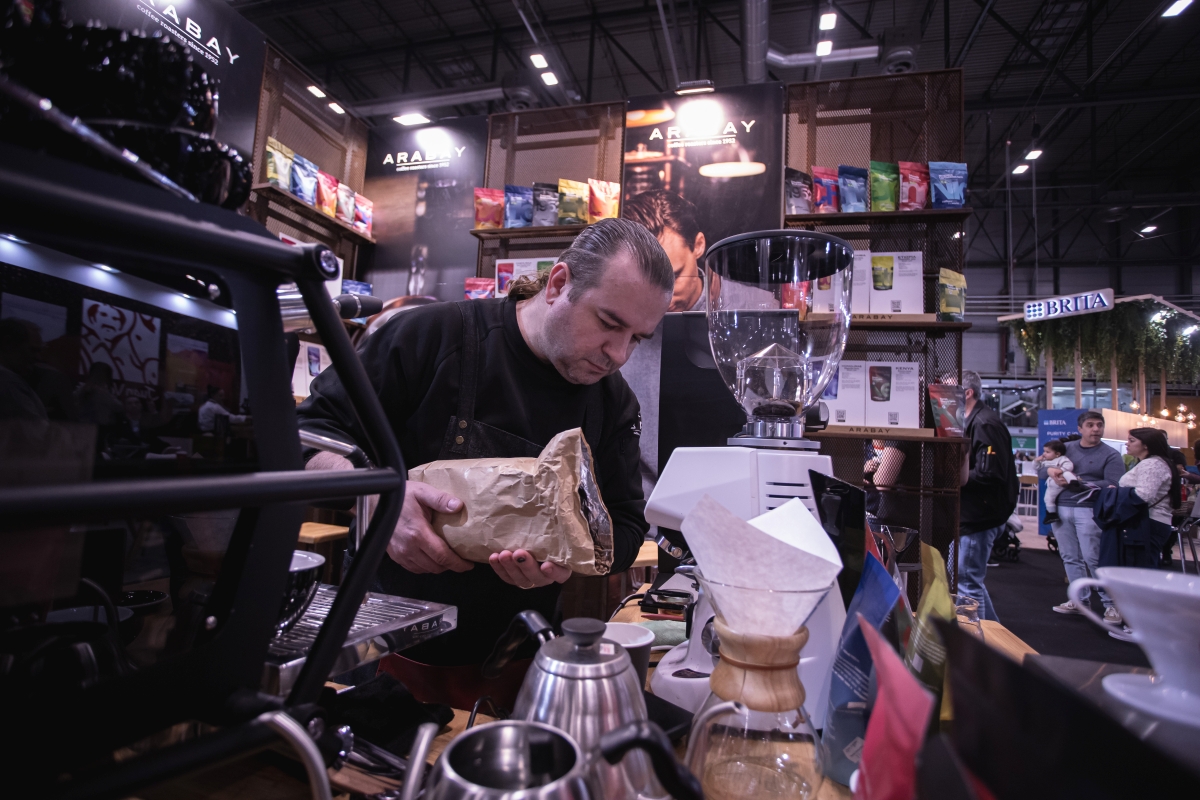
Madrid celebrates Valentine’s weekend with CoffeeFest 2026

Madrid brews love, business and global coffee energy

Madrid – Qahwa World & Buna Kurs: Media Partners

Madrid is celebrating Valentine’s weekend with more than flowers and romance this year. From February 14–16, the Spanish capital has transformed into Europe’s beating heart of specialty coffee as CoffeeFest Madrid 2026 takes over IFEMA Madrid.

With more than 250 brands, a 40% expansion in exhibition space, and thousands of professionals and enthusiasts gathering under one roof, CoffeeFest has once again positioned Madrid as a continental capital of quality coffee and hospitality trends.

While couples filled the city’s streets on February 14, inside Hall 14 it was clear: coffee was the real love story.

  • A European hub with global reach

Founded and directed by César Ramírez of NEO Drinks, CoffeeFest Madrid has rapidly evolved into one of Europe’s most influential coffee gatherings. The 2026 edition reflects a sector that is more professionalized, more innovative, and more connected to gastronomy and sustainability than ever before.

This year’s program features internationally recognized voices, including World Barista Champion Jack Simpson and educator and roaster Kat Melheim (RoasterKat), alongside a strong lineup of European and global experts shaping the future of coffee.

Beyond specialty coffee, the festival expands into tea, matcha, cacao, bean-to-bar chocolate, and boutique pastry—reinforcing how coffee culture is increasingly interwoven with broader premium hospitality experiences.

  • The World’s 100 Best Coffee Shops gala returns

One of the most anticipated moments of the weekend is the second edition of The World’s 100 Best Coffee Shops international gala, taking place on February 16.

The ranking has quickly become a benchmark for global coffee excellence, celebrating cafés that combine quality, service, design, innovation, and community impact. The Madrid stage once again becomes the epicenter of global recognition in the coffee world.

  • Competition, origin and industry momentum

CoffeeFest also hosts Spain’s Specialty Coffee Association (SCA) championships, including the Spanish Barista Championship, Brewers Cup, and Coffee Roasting Championship—platforms that spotlight technical precision, creativity, and craft at the highest level.

A major highlight remains the international green coffee auction, showcasing exceptional lots from producing countries and emphasizing traceability, direct trade, and social responsibility. The auction reinforces a growing commitment within the European market to origin transparency and long-term producer relationships.

  • CoffeeFest as a trend thermometer

More than a trade show, CoffeeFest has become a living laboratory of emerging coffee trends—from sustainability innovation to digitalization, new brewing formats, and evolving consumer behavior.

On Valentine’s weekend, Madrid is not just celebrating romance. It is celebrating a global industry built on connection, culture, and craft.

As coffee professionals, roasters, producers, and brands gather from across Europe and beyond, one message is clear:

Coffee is not just in the cup. It is in the air.
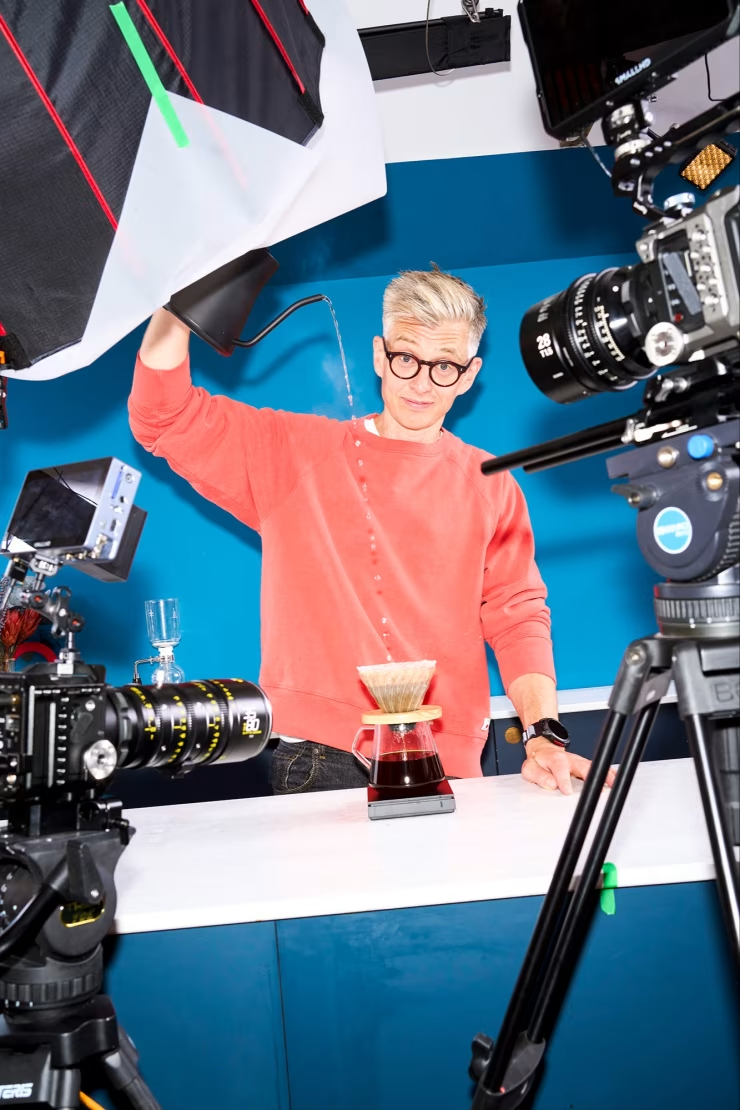
James Hoffmann: From Coffee Hater to One of Its Global Icons

Dubai — Qahwa World

On September 20, 2025, the Financial Times published an in-depth feature tracing the extraordinary journey of James Hoffmann, who began his career hating coffee but went on to become one of its most recognized global figures. The story details how he rose from reluctant beginnings to world champion barista, YouTube celebrity, author, and one of the most influential voices in the specialty coffee movement.

From Rejection to Passion

In his early life, Hoffmann was anything but a coffee enthusiast. He worked as a casino employee in Leeds before moving to London, where he joined espresso machine companies such as Gaggia and La Spaziale. During quiet hours he experimented with the machines, discovering how small adjustments in grind or pressure could change the taste. He still disliked the drink, but his curiosity was triggered by the realization that some cups were “less bad” than others.

The turning point came in 2005, when Hoffmann tasted a Kenyan coffee from a small estate. It shocked him: the flavor resembled blackcurrant juice, a revelation that convinced him coffee could be something extraordinary. Just two years later, after refining his skills and delegating tasting duties to a coach, he was crowned World Barista Champion in Tokyo 2007.

In 2008, together with award-winning taster Anette Moldvaer, Hoffmann founded Square Mile Coffee Roasters in London. It became one of the country’s first specialty roasters and helped transform the UK market from generic blends to single origins and traceable coffees. His rise was framed within the broader “waves of coffee”: the first wave of mass consumption, the second wave of café culture through chains like Starbucks, the third wave of artisanal, single-origin appreciation, and now the debated “fourth wave,” which emphasizes science, sustainability, and scalability — a movement in which Hoffmann is seen as a key figure.

From Barista Champion to YouTube Star

Hoffmann’s influence didn’t stop at cafés or roasteries. In 2016, he launched a YouTube channel to share simple coffee content. By 2020, when the pandemic forced millions to brew at home, his videos became the go-to guide worldwide. From equipment reviews to quirky experiments like tasting 1930s Harrods coffee, Hoffmann turned home brewing into a global hobby.

Today his channel has over two million subscribers and generates up to £200,000 annually. Yet his success isn’t just about numbers. He resonates with both beginners and experts: never mocking casual drinks like Frappuccinos, but always nudging his audience toward specialty coffee with patience and authority.

Hoffmann is also known for obsessive precision. He has CT-scanned espresso pucks, used lab-grade particle size analyzers, and tested milk foams with food additives. Even April Fool’s videos meant as jokes sometimes led to practical discoveries. Inspired by this scientific mindset, thousands of hobbyists now document their brews in apps like BEANCONQUEROR and debate mineral ratios on Reddit and Discord.

The “home barista” wave even pushed brands such as Breville (Sage) and La Marzocco to create professional-grade equipment for consumers. Hoffmann’s influence has therefore reshaped not only enthusiasts’ kitchens but the entire specialty coffee industry.

Challenges and Future Mission

Despite his success, Hoffmann remains wary of coffee’s future. He recalls how London’s coffeehouses thrived in the 17th century only to vanish decades later. Climate change is shrinking suitable land for arabica, while rising costs may drive farmers to switch to more profitable crops like macadamia or avocado.

For Hoffmann, the solution lies in consumer awareness and willingness to pay fairer prices that sustain farmers. He is preparing the third edition of his landmark World Atlas of Coffee, aiming to educate, inspire, and elevate appreciation of coffee worldwide.

The paradox of Hoffmann’s story is striking: from someone who once despised coffee to a world champion, author, and educator shaping global taste. Balanced between inclusivity and rigor, he has persuaded millions to move from stale supermarket grounds toward vibrant specialty beans.

Today James Hoffmann stands as a cultural icon of modern coffee — where craft meets science and community. Through his roastery, his books, and his YouTube channel, he continues a mission to keep coffee alive as a shared art, science, and culture for generations to come.