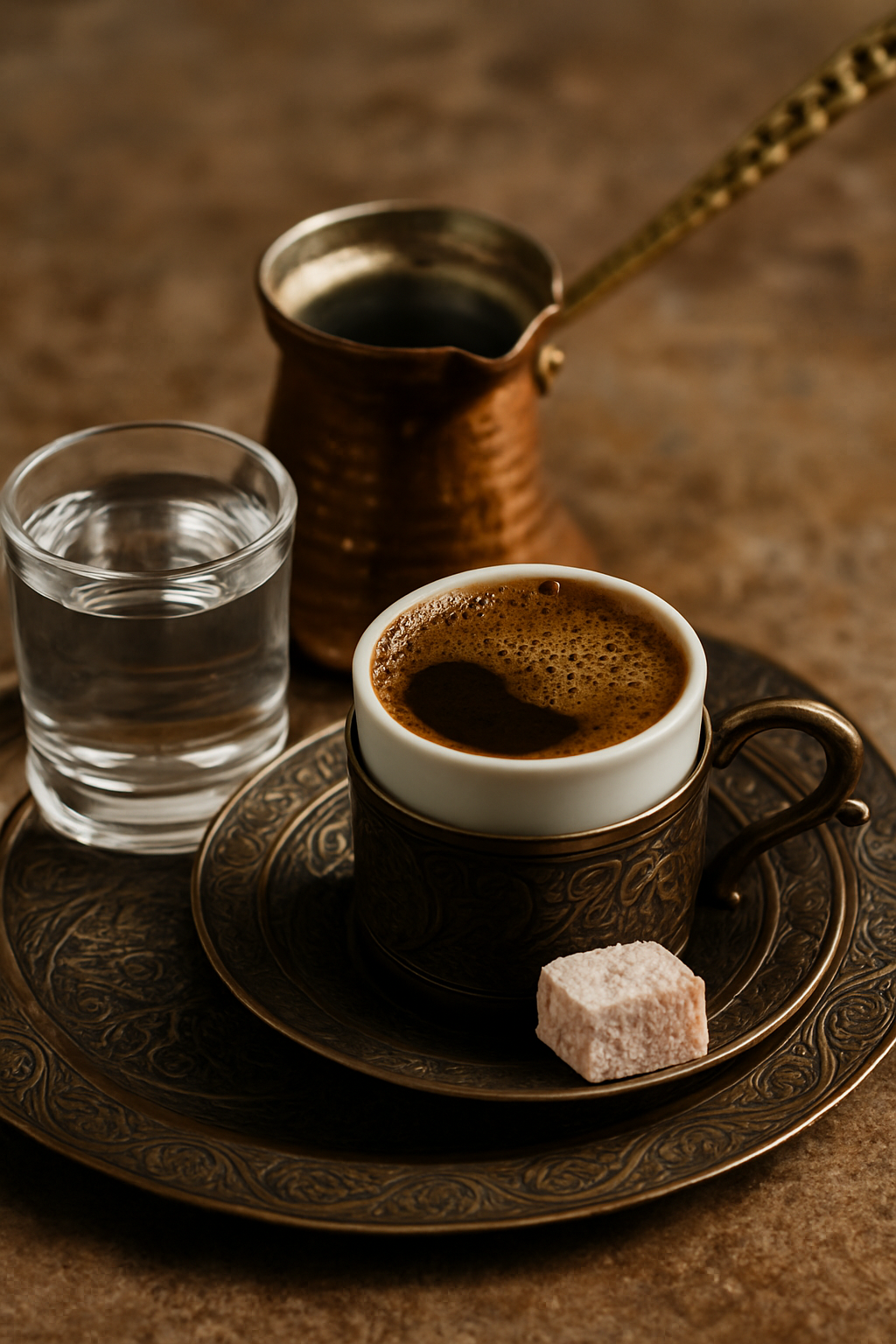
Turkish Coffee: From UNESCO Heritage to Istanbul Coffee Festival 2025

Turkish coffee is more than just a drink—it is history in a cup. Once at the heart of the Ottoman Empire, this centuries-old tradition is now making a global comeback, captivating coffee lovers far beyond Turkey’s borders.

When we think of coffee today, it might be an espresso, a latte on the go, or a cold brew. But the story of coffee begins with something older, richer, and far more ritualistic: Turkish coffee. It is not just a beverage but a 500-year-old tradition, a cultural bridge, and even honored by UNESCO as part of humanity’s living heritage.

Turkish coffee is about sharing moments. While it can be enjoyed alone, its essence lies in conversation and connection. Coffee’s story began in 15th-century Yemen among Sufi mystics, who drank it to stay awake during long prayers. The Turkish coffee method later took shape in 16th-century Istanbul, where it spread from Ottoman coffeehouses across the world.

A debate still lingers: some claim Turkish coffee is the same as Greek coffee, but many see it as an Ottoman legacy. What makes it unique is the method. It isn’t brewed but cooked slowly in a small copper pot called a cezve, then served in tiny cups alongside water and Turkish delight. The experience doesn’t end with the last sip—coffee grounds are often used for fortune readings, a playful way to share hopes and laughter.

Even today, Turkish coffee is tied to tradition. In some households, a bride-to-be serves her suitor a salty cup to test his patience before marriage. While it never reached the global fame of espresso, Turkish coffee is finding new admirers, from workshops in London to fortune readings in New York.

UNESCO Recognition

In 2013, UNESCO inscribed “Turkish coffee culture and tradition” on the Representative List of the Intangible Cultural Heritage of Humanity. The recognition celebrated not only the brewing method but also the rituals of hospitality, storytelling, and cultural identity associated with this practice. The listing confirmed Turkish coffee’s role as more than a drink: it is a living heritage passed down through families and communities.

Istanbul Coffee Festival 2025

This September, the conversation about Turkish coffee gains renewed momentum with the 11th Istanbul Coffee Festival, held from September 11–14, 2025, in Kadıköy on the Asian side of the city. The festival has become a landmark event in global coffee culture, bringing together roasters, baristas, brands, artists, and coffee enthusiasts from across the world.

Amid tastings, workshops, and cultural performances, Turkish coffee will take center stage. Organizers often highlight its UNESCO heritage status as part of the festival narrative, reminding visitors that this is not just a drink but a tradition recognized as part of humanity’s collective memory. From demonstrations of the cezve technique to fortune-reading sessions, the event celebrates Turkish coffee as both a timeless custom and a modern attraction.

More Than Caffeine

Ultimately, Turkish coffee is not about the caffeine kick—it is about slowing down, connecting with others, and savoring a shared ritual. As Istanbul hosts thousands of visitors this September, the festival becomes more than an exhibition: it is a living showcase of a heritage that continues to evolve while staying true to its roots.

Five centuries after its birth, Turkish coffee remains what it has always been: a story waiting to be discovered at the bottom of a cup.

In Turkey, Coffee Is More Than a Drink — It’s a Cultural Ritual

Turkish coffee is not simply a drink. It is a ritual, a social bond, and a cultural heritage that dates back nearly five centuries. Recognized by UNESCO on its Intangible Cultural Heritage of Humanity list, the Ottoman tradition of preparing coffee in a cezve has become a symbol of identity for generations in Turkey and beyond.

From Yemen to the Ottoman Empire

As CNN reports, the story begins in 15th-century Yemen, where Sufi mystics consumed coffee to remain awake during long nights of prayer. When Sultan Süleyman the Magnificent annexed Yemen in 1538, coffee entered the Ottoman Empire and soon reached Istanbul. By the 1550s, the city witnessed the rise of its first kahvehane (coffeehouses), which quickly became central to cultural and political life.

Prepared slowly in a copper pot, Turkish coffee differs from most brewing methods: it is “cooked” in water to produce a strong, unfiltered drink topped with foam. Coffeehouses spread rapidly but often drew suspicion from rulers, who feared they encouraged dissent. Similar anxieties later emerged in England, where King Charles II tried unsuccessfully to close London’s coffeehouses in the 17th century.

A Ritual of Hospitality

CNN highlights that in Turkey, coffee represents community. Guests are traditionally offered coffee with water and lokum (Turkish delight). The drink is consumed slowly, giving grounds time to settle — setting the stage for the playful ritual of coffee-cup reading, where the shapes left behind are interpreted for fun as signs of fortune, journeys, or good news.

Turkish coffee even plays a role in marriage traditions: during courtship, a bride-to-be serves coffee to the groom’s family. As a test, she may add salt instead of sugar to his cup, with his reaction taken as a measure of patience and maturity.

From Istanbul to London and Beyond

The influence of Turkish coffee extended far beyond the empire. CNN recounts how in 1652, London’s first coffeehouse opened in St. Michael’s Alley, introduced by a merchant from İzmir and his servant Pasqua Rosée. For a penny, patrons could drink freely while debating news and politics in what became known as “penny universities.”

Despite this reach, Turkish coffee never achieved the global recognition of espresso. Some scholars, CNN notes, believe this is due to generational shifts: for many young people in Turkey, it has become a drink associated with parents rather than innovation.

Tradition and Modern Revival

Others argue that innovation is vital. Turkish coffee ambassadors are working worldwide to showcase the ritual. In London, workshops teach traditional preparation, while in New York, the “Turkish Coffee Room” blends performance, storytelling, and tasseography to captivate new audiences.

Back home in Istanbul, authentic experiences remain easy to find. CNN recommends iconic spots such as Hafız Mustafa, Mandabatmaz on İstiklal Street, and Nuri Toplar in the Egyptian Bazaar. For a modern twist, Hacı Bekir in Kadıköy offers creative interpretations.

A Living Heritage

As CNN concludes, Turkish coffee endures as a living cultural symbol — one that connects history with hospitality, ritual with storytelling. Whether served in a historic Istanbul café, a family home in Safranbolu, or a workshop abroad, every cup carries with it a taste of heritage and a story waiting to be told.

This article is adapted from a feature originally published by CNN Travel. All rights remain with the original publisher. Qahwa World republishes it here for educational and cultural purposes.