Ahmed Bin Sulayem Highlights Expansion Plans at DMCC Coffee Centre

Dubai — Qahwa World

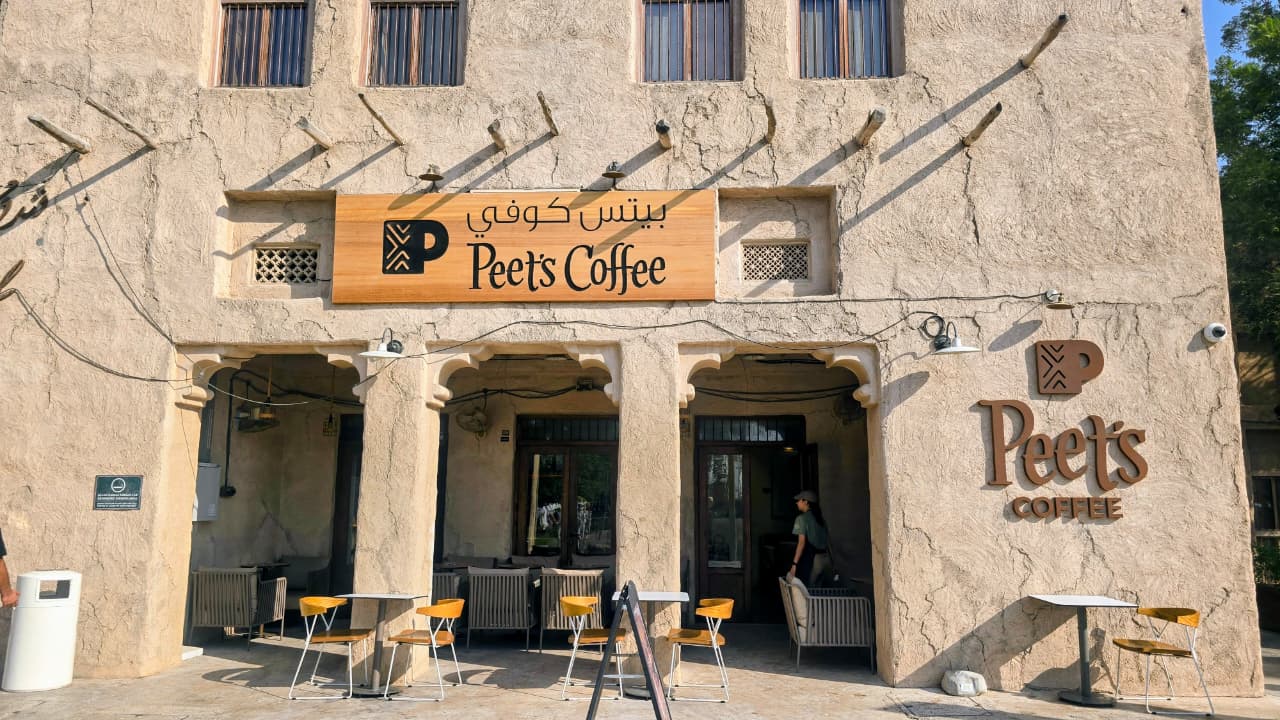
Ahmed Bin Sulayem, Executive Chairman and Chief Executive Officer of DMCC, announced new initiatives aimed at strengthening the regional coffee ecosystem and supporting emerging coffee entrepreneurs through the DMCC Coffee Centre.

Speaking about the Centre’s future plans, Bin Sulayem said the organization is exploring the launch of a community co-roasting space designed to support the next generation of coffee entrepreneurs. At the same time, plans are underway to develop a coffee wholesale facility that would further improve market access for the diverse network of producers and traders operating within the DMCC Coffee Centre.

You may like: DMCC Coffee Centre: Specialty Coffee Redefines the Global Market

According to Bin Sulayem, the DMCC Coffee Centre has handled more than 30,000 metric tonnes of green coffee since its establishment, working with over 30 coffee origins worldwide. In addition, the facility has completed more than 1,000 metric tonnes of value-added processing, serving both the United Arab Emirates’ growing domestic market and over 50 major re-export destinations.

As the coffee sector in the UAE and the wider region continues to expand, the Centre has maintained close engagement with the local coffee community. Through partnerships and industry collaboration, DMCC has supported several major regional events, including World of Coffee Dubai.

DMCC has also launched a number of initiatives aimed at strengthening the specialty coffee sector. These include the Dubai Coffee Auction by DMCC, organized in collaboration with M-Cultivo, an initiative focused on supporting next-generation coffee farmers. The organization also introduced the UAE AeroPress Championship, which forms part of the global World AeroPress Championship.

Read Also: DMCC Coffee Centre: Supply Chain Pressures and Tariffs Threaten Global Coffee Trade

Bin Sulayem added that, in support of growing coffee brands, DMCC has introduced a JLT collection point, enabling members of the Coffee Centre and their customers to conveniently collect roasted coffee.

These initiatives reflect the Centre’s ongoing role in developing Dubai’s position as a growing hub for the global coffee trade and specialty coffee community.

Exhibitor Registrations Open for World of Coffee Dubai 2027

Dubai — Qahwa World

DXB Live, the organizer of World of Coffee Dubai, has announced the opening of registrations for World of Coffee Dubai 2027, following the strong results achieved by the 2026 edition. Organizers confirmed that 50% of the exhibition space has already been reserved, prompting exhibitors to secure their participation early in what is considered the MENA region’s leading specialty coffee exhibition.

The fifth edition of the exhibition, World of Coffee Dubai 2026, recorded significant participation from across the global coffee sector. The event covered 20,000 square meters at the Dubai World Trade Centre, bringing together companies, producers, and industry professionals in a platform dedicated to trade, innovation, and partnerships.

Organizers reported more than 20,000 visits during the three-day event, with participation from over 2,100 brands and companies representing the international coffee industry. The exhibition also hosted more than 75 coffee producers from over 80 countries, alongside nine national pavilions, including first-time participation from Kenya and Peru.

During the event, 14 memorandums of understanding (MOUs) were signed, reflecting growing cooperation between companies and institutions operating in the specialty coffee sector.

You may like: World of Coffee Dubai 2026 concludes its fifth edition with a record 20,000 visits

The exhibition program included four international championships covering the Barista, Latte Art, Roasting, and International Cevze/Ibrik categories. The competitions brought together professional competitors from different countries and highlighted the technical skills associated with specialty coffee preparation.

The event also featured three specialized auctions that connected buyers with selected micro-lot coffees and professional coffee equipment. In addition, the Producer Village included 14 dedicated spaces presenting coffee cultivation practices from different producing regions.

The next edition, World of Coffee Dubai 2027, is scheduled to take place January 26–28, 2027, at the Dubai World Trade Centre, across Za’abeel Halls 1, 2, 4, 5, and 6.

Organizers indicated that preparations for the upcoming edition include expanding the exhibition space by more than 5,000 square meters, a step aimed at accommodating the continued growth of the coffee sector and the increasing demand for participation from companies and producers.

The 2026 edition received support from a number of industry partners, including DMCC Coffee Centre, IRM Flavour Design, Alpro, Gold-Pood, Mokha, Sulalat, The Rompeplan, and Tasteful.

Coffee Prices Rise Amid Surging Shipping Costs

Dubai – Qahwa World

Coffee markets saw gains on Wednesday, with May arabica (KCK26) climbing +3.10 (+1.09%) and May robusta (RMK26) rising +29 (+1.78%).

Analysts attribute the rebound to supply-side concerns. The ongoing conflict in Iran has disrupted shipping through the Strait of Hormuz, driving up global freight rates, insurance costs, and fuel expenses—factors that are expected to push costs higher for coffee importers and roasters.

Meanwhile, favorable weather in Brazil is supporting the country’s coffee crop but is acting as a bearish influence on prices. Somar Meteorologia reported that Minas Gerais, Brazil’s largest arabica-growing region, received 78 mm of rainfall in the week ending February 20, 131% of the historical average.

You may read: War Redraws Global Shipping Map and Pressures Coffee Supply Chains

Despite this, coffee prices had sharply declined over the past five weeks, with arabica hitting a 15-month low last Tuesday and robusta dropping to a 6.75-month low last Monday. Brazil’s crop forecasts show strong production ahead: the national agency Conab predicts 2026 coffee output will reach a record 66.2 million bags, up +17.2% year-on-year. Arabica production is expected at 44.1 million bags (+23.2% y/y), and robusta at 22.1 million bags (+6.3% y/y).

On a global scale, Rabobank projects coffee production in 2026/27 to hit 180 million bags, an increase of 8 million bags from the previous year.

Vietnam, the largest robusta producer, is also contributing to market pressure. January coffee exports surged +38.3% y/y to 198,000 metric tons, while total 2025 exports jumped +17.5% y/y to 1.58 MMT. Vietnam’s 2025/26 production is projected to reach 1.76 MMT (29.4 million bags), a four-year high.

Inventory dynamics are mixed. ICE-monitored arabica stocks, which fell to a 1.75-year low of 396,513 bags on November 18, have rebounded to a four-and-three-quarter-month high of 528,028 bags. Robusta inventories also recovered to a 3.25-month high of 4,721 lots after hitting a 14-month low in December.

Brazilian exports, however, fell sharply in January, with 141,000 MT shipped (-42.4% y/y), while Colombia’s smaller output supports price levels. The National Federation of Coffee Growers reported that January arabica production fell -34% y/y to 893,000 bags.

The International Coffee Organization noted a slight global export decline for the marketing year (Oct-Sep) of -0.3% y/y to 138.658 million bags. USDA forecasts for 2025/26 show total world coffee production rising +2.0% y/y to a record 178.848 million bags. Arabica output is expected to fall -4.7% to 95.515 million bags, while robusta climbs +10.9% to 83.333 million bags. Brazil’s production is projected at 63 million bags (-3.1%), and Vietnam’s at 30.8 million bags (+6.2%). Ending stocks are forecast to decline -5.4% to 20.148 million bags.

War Redraws Global Shipping Map and Pressures Coffee Supply Chains

Dubai – Qahwa World

A fresh escalation in the Middle East at the end of February has sent new shockwaves through global logistics, adding to an already fragile maritime environment shaped by two years of Red Sea disruption and intensifying geopolitical risk.

  • Strait of Hormuz Slowdown Raises Cost Fears

As of 28 February, commercial traffic through the Strait of Hormuz — one of the world’s most critical energy chokepoints — has slowed dramatically amid heightened security risks. Several carriers, including CMA CGM, have introduced Emergency Conflict Surcharges to offset rising insurance premiums and security-related operating costs.

While coffee shipments do not transit the Strait directly, the knock-on effects are significant. Gulf producers account for roughly 20% of global crude oil supply, and oil prices hovering around $70 per barrel are widely expected to face upward pressure. With bunker fuel representing about 40% of vessel operating costs, further increases in Bunker Adjustment Factors appear likely.

Higher fuel bills, combined with longer routings already in place, are expected to weigh on transit times, vessel availability and global freight rates. For coffee traders, that translates into longer sailing schedules, potential equipment imbalances, reduced schedule reliability and renewed upward pressure on ocean freight costs.

  • The situation remains fluid.

Red Sea: A Crisis Entering Its Third Year

More than two years after the first Houthi missile struck a commercial vessel in the Red Sea, the industry continues to absorb the consequences of one of the most disruptive trade shocks in decades.

The crisis began in November 2023, when Houthi forces seized the Galaxy Leader and launched a sustained campaign targeting merchant vessels transiting the Bab el-Mandeb Strait. At its peak, more than 100 ships were targeted. Traffic volumes through the Red Sea fell by roughly 60%, forcing carriers to divert around the Cape of Good Hope.

Those diversions added between 10 and 14 sailing days, absorbed global capacity and destabilized schedules across major East–West trade lanes.

A Gaza ceasefire toward the end of 2025 briefly encouraged hopes of normalization. Some carriers began adjusting fleet plans in anticipation of a return to Suez routings. However, renewed escalation in the Middle East and fresh Houthi threats have reversed those plans. All major carriers are currently continuing voyages around the Cape of Good Hope.

  • Carrier Responses

Maersk has confirmed that its Middle East–India–U.S. East Coast (MECL) service, originally intended to transit the Red Sea, will be cancelled and rerouted around Africa.

CMA CGM, which had initially led efforts to resume Suez transits, has since withdrawn from most crossings and reverted to previous sailing patterns.

Across the Asia–Europe trade, most services remain diverted, with carriers unwilling to recommit until sustained security assurances emerge.

Roughly 12% of global seaborne trade depends on the Suez Canal — an exposure that underscores the structural vulnerability of the system. Industry leaders now emphasize improved data, faster decision-making and scenario planning as essential tools in a landscape defined by prolonged uncertainty.

  • Hapag-Lloyd Moves to Acquire Zim in $4.2 Billion Deal

Amid the geopolitical turbulence, consolidation continues.

Hapag-Lloyd has agreed to acquire Israeli carrier Zim in a $4.2 billion cash deal, offering $35 per share — a 58% premium to Zim’s share price as of 20 February. The transaction would elevate the Frankfurt-listed group to the world’s fifth-largest container shipping line.

Chief executive Rolf Habben Jansen said the combined network would significantly strengthen services across the Transpacific, Intra-Asia, Atlantic, Latin America and East Mediterranean trades.

To address Israeli government concerns — it holds a golden share in Zim and considers it a strategic asset — Hapag-Lloyd will carve out a separate Israel-focused operator owned by FIMI, launching with 16 vessels.

The transaction is expected to close in late 2026, subject to shareholder, government and regulatory approval.

  • U.S. Maritime Plan Revives Port Fee Debate

In Washington, the Trump administration has unveiled a long-awaited Maritime Action Plan (MAP), reviving a controversial proposal to levy fees on foreign-built vessels calling at U.S. ports.

The 36-page plan outlines a four-pillar strategy aimed at rebuilding U.S. shipbuilding capacity, modernizing maritime training, protecting industrial infrastructure and strengthening national security.

At its core is a proposed per-kilogram fee on imported cargo discharged by foreign-built ships. Modeled between $0.01 and $0.25 per kilogram, the levy could generate approximately $66 billion over a decade at the low end — and up to $1.5 trillion at the high end — significantly exceeding the short-lived port fees introduced in 2025.

President Donald Trump framed the initiative as central to industrial revival, calling for hundreds of billions of dollars in new investment in American shipyards.

Carriers and trade partners, however, have warned that such measures would increase landed costs, distort routing economics and potentially trigger retaliation.

The plan also references bridge strategies, including limited foreign construction tied to U.S. investment commitments, and financing mechanisms such as Title XI and Capital Construction Funds. No firm execution timeline has been announced.

  • Freight Rates: Market Turns Softer in Early 2026

The Shanghai Containerized Freight Index (SCFI) reading of 1,251.46 on 13 February 2026 reflects a market transitioning toward lower and more volatile rates.

Spot rates for 40-foot high cube containers from Asia to the U.S. West Coast are projected to decline by 30–35% compared with 2025 levels. Although first-quarter seasonality — including pre-Lunar New Year rate increases — has returned, persistent capacity growth and uncertainty surrounding Red Sea developments are expected to keep pressure on spot markets.

  • Schedule Reliability Slips Again

Global schedule reliability fell to 62.8% in December 2025, marking the second-lowest reading since May of that year.

European port congestion remains the primary driver, compounded by rerouting challenges linked to the Red Sea crisis.

Cancelled sailings surged 122% in February 2026 compared with January, tightening effective capacity around the Lunar New Year period.

Although overall reliability has improved relative to 2024, performance remains uneven. Maersk and Hapag-Lloyd ranked among the most reliable carriers in late 2025, while others reported on-time rates between 50% and 60%.

  • Trade Lane Snapshot

APAC to Global: Capacity stable; spot rates declining.

India to Global: Tight capacity; slight upward rate trend.

Brazil to Global: Manageable capacity; continued port congestion and gate window constraints; occasional rollovers; rates stable.

Central America to Global: Tight capacity; container shortages (20’ and 40’) reported in Honduras and Nicaragua.

East Africa to Global: Capacity available; severe congestion at Mombasa.

Port Delays Widen

Operational bottlenecks persist across major gateways:

Antwerp (Belgium): 3-day delay

New York (USA): 4-day delay

London Gateway (UK): 5-day delay

Buenaventura (Colombia): 4-day delay

Santos (Brazil): 5-day delay

India (major ports): 4-day delay

Vietnam: 4-day delay

Mombasa (Kenya): 10-day delay

Australia (major ports): 3-day delay

With vessels queuing at multiple hubs and geopolitical risk layered on top of structural capacity shifts, 2026 is shaping up as another year in which resilience — rather than efficiency — defines the global shipping narrative.

Historic Colombian Coffee Harvests Face Labour Shortages

Líbano, Colombia – Qahwa World

The Guardian has reported on a striking paradox in Colombia’s coffee industry: even amid record-breaking global coffee prices, farmers are struggling to find enough pickers to harvest their crops.

In Líbano, Tolima, Mary Luz Pérez Arrubla and her brother Rodrigo, fourth-generation coffee growers, experienced one of the best harvests in recent memory in 2025. Prices soared as U.S. tariffs on Brazil and Vietnam, coupled with poor harvests in those countries, boosted Colombia’s high-altitude regions. Yet labour shortages meant that up to 10% of the crop was left on the ground.

“Every week, for two-and-a-half months, we worked from dawn to dusk. I had to collect coffee from the floor—it seemed there was more there than on the branches,” Mary said. Wilder Gomez, the farm manager, echoed her frustration: “Even offering higher wages doesn’t solve the problem. People move from farm to farm chasing the best daily harvest.”

The challenges reflect a decades-long rural exodus. Violence, economic inequality, and urban job opportunities have pulled workers away from Colombia’s coffee-growing regions, leaving an ageing workforce. The National Coffee Growers Federation reports that the proportion of workers over 60 has more than doubled, while the overall workforce has shrunk by a quarter.

Unlike Brazil, where flat plantations allow mechanised harvesting, Colombia’s steep Andean slopes prevent widespread machine use. “Every slope is different,” said agronomist Yinson Javier Díaz. Mechanisation is further limited by the uneven ripening of cherries, a common trait in Colombian coffee regions.

Emerging technologies could help. Eco-friendly mills reduce labour needs, AI-powered sorting machines separate ripe beans from spoiled ones, and drones can apply pesticides precisely. Yet fewer than 5% of farmers can afford these innovations, with costs starting at 22 million pesos (£4,150).

Climate change compounds the difficulties. Average mountain temperatures have risen 1.2°C since the 1980s, sunlight hours have dropped by nearly 20%, and pests and diseases are increasingly frequent. Experts predict that by 2041–2060, low-altitude yields may fall while high-altitude production could rise, prompting shifts in cultivation practices.

Despite Colombia’s central role in global coffee production, most of the profits bypass small farmers. Half a million coffee-growing families cultivate an average of just 1.4 hectares each, while industrial estates in Brazil often span hundreds or thousands of hectares. Only around 10% of coffee profits reach these small producers, even as global consumption continues to grow, with an estimated three billion cups consumed daily.

The Guardian’s report underscores a stark reality: record harvests and soaring prices cannot compensate for labour shortages, climate instability, and economic inequality, leaving Colombia’s coffee sector at a critical juncture.

JDE Peet’s EGM adopts all resolutions in relation to KDP Offer

Amsterdam – Qahwa World

JDE Peet’s N.V. announced that its Extraordinary General Meeting has approved all agenda items connected to the recommended public offer submitted by Kodiak BidCo B.V., an indirectly wholly owned subsidiary of Keurig Dr Pepper Inc., to acquire all issued and outstanding shares in the company’s capital.

The approved resolutions include the post-closing restructuring measures, the appointment of the nominated board members effective as of the settlement date, amendments to the company’s articles of association, and the granting of full and final discharge to the resigning non-executive directors.

You may like JDE Peet’s Reports. 15.3% Growth: A New Era in Global Coffee

Following the adoption of the post-offer restructuring resolutions, the acceptance threshold required to complete the transaction has been reduced from 95% to 80% of the company’s outstanding capital as of the tender closing date.

The company stated that the voting results of the Extraordinary General Meeting will be published on its website, while draft minutes of the meeting will be made available no later than three months after its conclusion.

The offer period is set to expire on March 27, 2026, at 17:40 CET, unless extended. Shareholders who wish to tender their shares are advised to contact their financial intermediaries to confirm the applicable deadlines, which may fall earlier than the official expiration time.

Read Also: Keurig Dr Pepper Launches €31.85-Per-Share Offer for JDE Peet’s

The company emphasised that the information contained in the announcement does not constitute an offer to sell or a solicitation to purchase securities. Any transaction will be conducted strictly in accordance with the approved offer memorandum and the dedicated transaction webpage.

Brazil Crop Expectations Pressure Global Coffee Prices

Dubai – Qahwa World

Coffee futures closed lower at the end of the week as expectations of stronger global production continued to weigh on sentiment. The market reaction reflects growing confidence that supply conditions may improve in the upcoming seasons, particularly with Brazil at the center of the outlook.

A recent projection from Rabobank indicates that global coffee production could reach 180 million bags in the 2026/27 season, potentially marking a record and representing an increase of around 8 million bags compared with the previous year. The forecast has reinforced a broader shift in market expectations after months dominated by tight supply concerns.

In Brazil, fresh estimates from Conab point to a significant rebound in output for 2026. The agency projects total production at 66.2 million bags, up 17.2% year-on-year. Arabica output is expected to rise more sharply, increasing 23.2% to 44.1 million bags, while robusta production is forecast to grow 6.3% to 22.1 million bags.

Weather conditions have contributed to the improved outlook. Data from Somar Meteorologia show that Minas Gerais, Brazil’s largest arabica-producing region, received rainfall above the historical average during mid-February. Adequate moisture during key crop development stages has strengthened expectations for higher yields, adding pressure to prices that have already retreated from recent highs.

Vietnam has also played a role in easing supply concerns. As the world’s leading robusta producer, the country reported a sharp year-on-year increase in coffee exports in January, according to official statistics. Full-year 2025 exports also recorded solid growth. Production for the 2025/26 season is projected to reach approximately 1.76 million metric tons, or about 29.4 million bags, reflecting a four-year high. The expansion in Vietnamese output continues to influence the robusta segment in particular.

Exchange-monitored inventories have shown signs of recovery as well. Certified arabica stocks tracked by ICE have risen from their lows reached late last year, while robusta inventories have also moved higher after touching multi-month troughs. The increase in available certified stocks signals improved short-term supply availability.

At the same time, some supply-side developments have provided limited support. Brazil’s Trade Ministry reported a year-on-year decline in January coffee exports. In Colombia, the National Federation of Coffee Growers announced that January production fell sharply compared with the same month last year, tightening availability in the washed arabica segment.

On the global level, the International Coffee Organization has reported a slight decline in coffee exports for the current October–September marketing year. However, the broader outlook remains shaped by expectations of higher output. The USDA Foreign Agricultural Service projects world coffee production in 2025/26 at nearly 179 million bags, with robusta output increasing while arabica production is forecast to decline modestly. Ending stocks are expected to ease compared with the previous season.

Overall, improved crop prospects in Brazil, expanding robusta production in Vietnam, and recovering inventories are collectively reshaping the global coffee balance, placing downward pressure on prices as the market reassesses supply risks.

Ethiopia Launches Strategic New Phase for Tea Development

Addis Ababa – Qahwa World

In the Jimma Zone of Oromia, a major tea development initiative has been launched under the leadership of Dr. Meles Mekonnen and Dr. Adonya Debela, with participation from senior government officials, aiming to enhance national agricultural productivity.

Prime Minister Dr. Abiy Ahmed highlighted that this initiative represents a strategic effort to elevate Ethiopia’s tea production, strengthening the national economy and expanding domestic and international market reach.

Dr. Adonya Debela, Director General of the sector, noted that over 13,000 hectares are currently planted with tea, with plans to expand to 30,000 hectares in the near future, focusing on fertile lands in Oromia and southwestern Ethiopia.

You may like: Coffee Interpretation Center Inaugurated in Ethiopia

Officials emphasized that the project leverages natural resources and local human capacity, supported by continuous monitoring from the regional agriculture office, ensuring high productivity and quality.

Gitu Gemechu, head of Oromia’s Agriculture Bureau, added that tea development receives “strategic priority,” and the expansion will not only increase production but also enhance product quality and the region’s role in local and global markets.

Overall, the Jimma project marks a transition from traditional farming practices to organized industrial development, reflecting Ethiopia’s ambition to strengthen its position as a leading global tea producer, while engaging investors and farmers to secure long-term sustainability and economic success.

Saudi Arabia: 1.3 Million Coffee Trees Produce More Than 870 Tons Annually

Dubai – Qahwa World

Saudi Arabia’s Ministry of Environment, Water and Agriculture has announced that the Kingdom is home to more than 1.3 million productive coffee trees, with annual output exceeding 870 tons of green coffee. The trees are concentrated across the southern and southwestern regions of the country.

According to the ministry’s data, coffee cultivation is spread across Jazan, Asir, Al Baha, Makkah, and Najran. The mountainous highlands in these regions provide favorable growing conditions, supported by suitable climate patterns and fertile soil, contributing to the quality of the harvest.

You may like:Saudi Arabia’s Coffee Renaissance: Tradition Meets Specialty Cafe Boom

Jazan leads in the number of productive coffee trees, with more than 966,000 trees generating over 642 tons annually. Asir follows with more than 243,000 productive trees, producing upwards of 175 tons per year.

In Al Baha, the number of productive coffee trees stands at around 72,000. Makkah region accounts for more than 12,000 productive trees, yielding over 10 tons annually, while Najran hosts more than 9,000 productive trees with output exceeding 7 tons per year.

The ministry described Saudi coffee as one of the country’s key national crops, highlighting its cultural and social significance, particularly in traditional hospitality and during Ramadan, when preparation methods vary across regions.

Read also: Saudi Arabia Announces First-Ever Detection of Coffee Rust Epidemic in Jazan

The figures were released as part of the ministry’s “خير أرضنا” (“The Goodness of Our Land”) campaign, aimed at promoting local agricultural products, supporting farmers, and strengthening food security in line with Saudi Vision 2030 objectives.

The ministry also encouraged consumers to support locally produced coffee, noting that increased demand contributes to rural development and the long-term sustainability of the agricultural sector.

World’s 100 Best Coffee Shops to Present Continental Rankings at World of Coffee

DUBAI – Qahwa World × Buna Kurs

The World’s 100 Best Coffee Shops has entered into a strategic agreement with the Specialty Coffee Association (SCA) to present its continental Top 100 rankings during upcoming World of Coffee exhibitions starting in 2026.

Under the agreement, the continental rankings will be officially unveiled as part of the World of Coffee program, integrating the recognition initiative into one of the specialty coffee industry’s most influential global trade platforms.

The collaboration will debut at World of Coffee San Diego (April 10–12, 2026), where the Top 100 coffee shops for North America, Central America, and the Caribbean will be announced. The program will then continue at World of Coffee Brussels (June 25–27, 2026), featuring the presentation of Europe’s Top 100 coffee shops.

You may like: Six Middle East Coffee Shops Enter The World’s Top 100 List 2026

Integration into the Global Specialty Coffee Platform

Developed by Neodrinks, The World’s 100 Best Coffee Shops forms part of a broader international recognition framework that includes global, continental, and national rankings. The selection system combines evaluations from industry professionals with public voting to identify coffee shops contributing to excellence and innovation within specialty coffee.

By incorporating the continental announcements into official SCA programming, the rankings will gain direct exposure to producers, roasters, baristas, retailers, and equipment manufacturers attending World of Coffee events.

César Ramírez, founder of the initiative, described the agreement as a natural step in the platform’s evolution, positioning the rankings within the sector’s leading professional forums.

SCA CEO Yannis Apostolopoulos stated that the collaboration provides an opportunity to celebrate specialty coffee professionals and coffee shops shaping the industry’s future during World of Coffee gatherings.

Read also: The World’s 100 Best Coffee Shops 2026 Unveiled in Madrid

Strengthening International Visibility

Organized by the Specialty Coffee Association, World of Coffee rotates annually across major global cities and is widely regarded as one of the most important trade events in the specialty coffee sector. The exhibitions typically feature large-scale trade shows, educational programs, competitions, and professional networking forums.

The integration of continental rankings into these events marks a significant milestone in the international consolidation of The World’s 100 Best Coffee Shops initiative, reinforcing its global visibility and institutional alignment within the specialty coffee ecosystem.

Additional continental announcements are expected as the 2026 World of Coffee calendar progresses.

ICO Launches 2026 Global Campaign: Coffee is Part of the Solution

London – QAHWA WORLD

The International Coffee Organization (ICO) has launched its 2026 global communications campaign under the theme “Coffee is Part of the Solution,” highlighting the sector’s role in addressing major global challenges.

Coffee provides income for approximately 12.5 million farming families worldwide and plays a central role in socio-economic development across producing regions and their communities.

Through this campaign, the ICO aims to reinforce the sector’s contribution to tackling pressing issues, including inequality, livelihoods, sustainability, climate resilience and inclusive development.

You may like: Bridging the Gap: An Exclusive Dialogue with Vanusia Nogueira on the Global Coffee Crisis and the Path to 2026

Beyond its economic value, coffee contributes in many regions to rural development, carbon sequestration, environmental sustainability, cultural heritage preservation, inclusive infrastructure and innovation. It also strengthens ties between producing and consuming countries, as well as between public and private stakeholders.

The campaign seeks to spotlight these contributions while encouraging collective action across the entire coffee value chain.

Throughout 2026, the ICO will present evidence, strategies and initiatives demonstrating how collaboration among producers, governments, the private sector, financial institutions and civil society can amplify coffee’s positive impact in addressing global challenges.

“Coffee has always been more than a commodity. It is a catalyst for development, dialogue and cooperation,” said Vanusia Nogueira, Executive Director of the ICO. “Through this campaign, we want to show that when the sector works together, coffee can support resilience, improve livelihoods and contribute meaningfully to solutions.”

The initiative also invites the global coffee community to share examples of impact-driven projects using the hashtag #CoffeeIsPartOfTheSolution, illustrating how collaboration can deliver measurable results on the ground.

As the intergovernmental body representing both coffee-exporting and importing countries, and convening public and private stakeholders, the ICO will continue to mobilize trusted data, dialogue, finance, knowledge and innovation. The campaign will be rolled out across the organization’s digital platforms throughout 2026, supported by institutional videos, data insights and engagement with members and partners worldwide.

The International Coffee Organization is the only intergovernmental organization dedicated to enhancing the sustainability of the coffee sector for both exporting and importing countries. It serves as a high-level platform for public and private stakeholders, provides official statistics on global coffee production, trade and consumption, and facilitates the development and funding of technical cooperation projects and public-private partnerships to advance the coffee industry.

Coffee Prices Consolidate Amid Mixed Signals in Global Market

DUBAI – QAHWA WORLD

Coffee prices settled mixed on Wednesday, consolidating recent losses after a period of significant pressure. May Arabica coffee (KCK26) closed slightly lower at -0.65 (-0.23%), while May Robusta coffee (RMK26) rose +63 (+1.73%).

Arabica and robusta prices had tumbled earlier this month, with arabica reaching a 15-month low on Tuesday and robusta falling to a 6.5-month low on Monday, driven by expectations of a record Brazilian crop. Brazil’s crop forecasting agency, Conab, projected on February 5 that 2026 coffee production will rise +17.2% year-on-year to 66.2 million bags. Arabica production is expected to increase +23.2% to 44.1 million bags, while robusta will climb +6.3% to 22.1 million bags.

Wednesday’s losses were limited due to a stronger Brazilian real, which rose to a 1.75-year high against the U.S. dollar, discouraging export sales. Additionally, adequate rainfall in Brazil is supporting crop prospects. Somar Meteorologia reported that Minas Gerais, the country’s largest arabica-growing region, received 62.8 mm of rain during the week ending February 13, or 138% of the historical average.

Vietnam, the world’s largest robusta producer, is also influencing the market. January coffee exports surged 38.3% year-on-year to 198,000 metric tonnes, while total 2025 exports increased 17.5% to 1.58 million metric tonnes. Vietnam’s 2025/26 production is projected to rise 6% to a four-year high of 1.76 million metric tonnes (29.4 million bags).

ICE coffee inventories have shown signs of recovery, adding pressure to prices. Arabica stocks monitored by ICE rose to a 3.75-month high of 461,829 bags on January 7 after falling to a 1.75-year low in November. Similarly, ICE robusta inventories recovered to a 2.75-month high of 4,662 lots on January 26.

On the positive side, Brazil’s Trade Ministry reported that January exports fell -42.4% year-on-year to 141,000 metric tonnes, while lower supplies from Colombia, the world’s second-largest arabica producer, supported prices after January production dropped -34% to 893,000 bags.

Globally, the International Coffee Organization reported that total coffee exports for the current marketing year (October–September) declined slightly by -0.3% to 138.658 million bags. The USDA Foreign Agriculture Service projected in December that world coffee production in 2025/26 will reach a record 178.848 million bags, with arabica falling -4.7% to 95.515 million bags and robusta rising +10.9% to 83.333 million bags. Brazil’s production is expected to decline by 3.1% to 63 million bags, while Vietnam’s output will increase by 6.2% to 30.8 million bags. Ending stocks for 2025/26 are forecast to fall -5.4% to 20.148 million bags.

Overall, the coffee market faces mixed signals, with strong Brazilian supply forecasts and Vietnamese robusta exports exerting downward pressure, while lower production in Colombia and supply constraints in certain markets provide support for prices.