Saudi Coffee A Symbol of Generosity That Shapes Cultural Identity

From Makkah to the Desert Majlis Hospitality Traditions and Heritage Flavors in a Special Report by Sayidaty

Dubai – Qahwa World

Sayidaty magazine published a special report highlighting Saudi coffee as one of the most prominent symbols of hospitality and generosity in the Kingdom. The report emphasizes its role as a cultural element that reflects the social and historical identity of Saudi society.

The report explains that Saudi coffee is not simply a traditional drink but a deeply rooted cultural practice connected to authentic hospitality rituals. Its aroma, blended with cardamom and incense, represents the first expression of welcome offered to guests. It also notes that this cultural heritage is included in UNESCO’s list of intangible cultural heritage.

According to the report, engineer Abdullah bin Kalib, an expert in coffee heritage, stated that coffee was not originally the primary beverage of hospitality. Earlier traditions included milk and broth before coffee became central to Arab hospitality culture, particularly in the Arabian Peninsula. He added that coffee first appeared in urban centers, especially Makkah, before spreading to desert communities and becoming part of their social and cultural life.

The report highlights that coffee gatherings known as majlis are more than seating areas. They function as social and cultural spaces where values are transmitted, younger generations learn hospitality practices, and communities exchange news, poetry, and conduct social and commercial discussions.

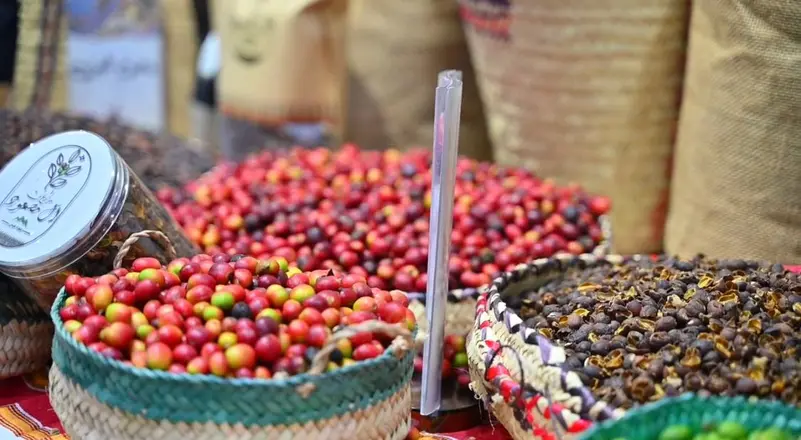
It also discusses the diversity of Saudi coffee in types and preparation methods, including global varieties such as Arabica and Robusta, as well as the rare Khawlani coffee grown in Jazan, known for its distinctive nutty flavor. Regional differences in roasting and preparation contribute to a wide range of taste profiles across the Kingdom.

The preparation process includes roasting, grinding using the traditional mortar, boiling, and adding spices such as cardamom, saffron, ginger, and cloves before serving it in the traditional dallah according to established hospitality customs.

Serving traditions are also highlighted, where coffee is typically offered starting with the eldest guest or from the right side, reflecting respect and social etiquette deeply rooted in majlis culture.

The report concludes by noting the traditional pairing of coffee with dates, along with modern developments such as electric coffee makers and instant coffee. These innovations have helped expand its use while maintaining its cultural significance, ensuring Saudi coffee remains a living symbol of heritage, identity, and hospitality.

Saudi Arabia: 1.3 Million Coffee Trees Produce More Than 870 Tons Annually

Dubai – Qahwa World

Saudi Arabia’s Ministry of Environment, Water and Agriculture has announced that the Kingdom is home to more than 1.3 million productive coffee trees, with annual output exceeding 870 tons of green coffee. The trees are concentrated across the southern and southwestern regions of the country.

According to the ministry’s data, coffee cultivation is spread across Jazan, Asir, Al Baha, Makkah, and Najran. The mountainous highlands in these regions provide favorable growing conditions, supported by suitable climate patterns and fertile soil, contributing to the quality of the harvest.

You may like:Saudi Arabia’s Coffee Renaissance: Tradition Meets Specialty Cafe Boom

Jazan leads in the number of productive coffee trees, with more than 966,000 trees generating over 642 tons annually. Asir follows with more than 243,000 productive trees, producing upwards of 175 tons per year.

In Al Baha, the number of productive coffee trees stands at around 72,000. Makkah region accounts for more than 12,000 productive trees, yielding over 10 tons annually, while Najran hosts more than 9,000 productive trees with output exceeding 7 tons per year.

The ministry described Saudi coffee as one of the country’s key national crops, highlighting its cultural and social significance, particularly in traditional hospitality and during Ramadan, when preparation methods vary across regions.

Read also: Saudi Arabia Announces First-Ever Detection of Coffee Rust Epidemic in Jazan

The figures were released as part of the ministry’s “خير أرضنا” (“The Goodness of Our Land”) campaign, aimed at promoting local agricultural products, supporting farmers, and strengthening food security in line with Saudi Vision 2030 objectives.

The ministry also encouraged consumers to support locally produced coffee, noting that increased demand contributes to rural development and the long-term sustainability of the agricultural sector.

Saudi Arabia’s Coffee Renaissance: Tradition Meets Specialty Cafe Boom

By: Soumya Gayatri

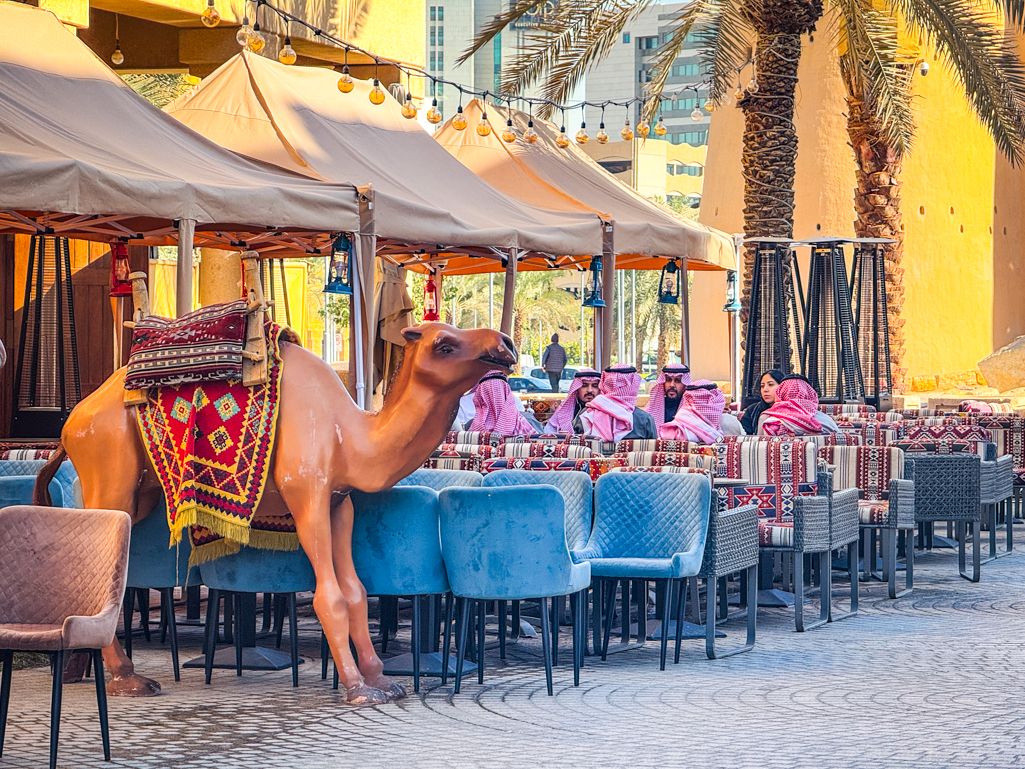
On a winter morning in Riyadh’s historic AlSafat Square, Qaysariat Al-Kitab — a traditional book cafe adorned with Najdi architectural motifs — offers more than coffee. It provides a setting where heritage, literature and conversation intersect, reflecting a broader transformation underway in Saudi Arabia’s coffee landscape.

Coffee in the kingdom has long been embedded in rituals of hospitality. Brewed in a long-spouted dallah and poured into small handleless cups known as finjan, Saudi coffee is served according to established social codes. The sequence of serving, the amount poured and the guest’s gestures all carry meaning. In many households, this ceremonial practice remains a daily custom, reinforcing coffee’s role as a cultural and moral obligation rather than a simple refreshment.

Historically, coffee traveled from Ethiopia to Yemen in the 15th century before spreading across the Arabian Peninsula through trade routes. In what is now southern Saudi Arabia — particularly the mountainous regions of Jazan, Al-Baha and Asir — cultivation took root. Jazan’s highlands are known for producing Khawlani beans, while associated agricultural traditions have received recognition as intangible cultural heritage by UNESCO.

You may like: How Ramadan’s Coffee Economy is Reshaping Global Supply Chains

As coffee spread, public coffeehouses emerged along caravan routes and in urban centers, serving as spaces for discussion, poetry and debate. Today, that social function is being revived amid what observers describe as a Saudi coffee renaissance — a period marked by expanding specialty cafes, growing domestic production and strong government support aligned with Vision 2030.

Saudi Arabia’s coffee market is currently valued between $1.3 and $1.9 billion annually, with more than 36 million cups consumed daily. Industry projections indicate the number of coffee outlets could exceed 5,350 by 2027, positioning the kingdom as the largest branded coffee shop market in the Middle East.

In 2022, the Saudi Coffee Company was launched to promote sustainable cultivation and global marketing of Khawlani coffee. Initiatives include planting hundreds of thousands of trees, training farmers in post-harvest handling and introducing modern irrigation and agricultural management systems to enhance productivity and quality.

Alongside these efforts, local specialty chains have expanded rapidly, responding to growing consumer interest in origin, roasting techniques, flavor profiles and ethical sourcing. Rather than displacing traditional practices, modern coffee culture has integrated with them. It is increasingly common to see consumers move from a traditional evening coffee gathering to a contemporary cafe serving craft beverages.

Read Also: Invisible Gravity in Coffee

Today’s cafes are also reclaiming their historical role as cultural hubs. Book readings, poetry evenings and creative workshops are regularly hosted in coffee spaces across Riyadh and other cities. These venues function as “third places” — environments beyond home and work — where community interaction, creativity and dialogue flourish.

As Saudi Arabia’s coffee culture evolves, it is reconnecting with its roots. The renewed emphasis on shared experience — once central to historic coffeehouses — suggests that in the kingdom, coffee remains as much about the space and the social exchange as it is about the drink itself.

Saudi Arabia Announces First-Ever Detection of Coffee Rust Epidemic in Jazan

Riyadh Qahwa World

The National Center for the Prevention of Plant Pests and Animal Diseases and their Control (WEQAA) has announced the detection of the “Coffee Rust” pest in the Jazan region. The Center confirmed that this disease is being recorded for the first time inside the Kingdom after its discovery in the southeastern governorates, posing a new challenge to local agricultural production.

Coffee rust is considered a recent disease in the Kingdom, having appeared in the Jazan region. It is also an invasive disease present in neighboring and African countries, and it primarily targets coffee trees as its sole host.

Conditions for Spread and Symptom Identification

The Center clarified that the fungus causing the disease finds an ideal environment for growth in weather conditions that combine moderate temperatures and high relative humidity. This aligns with the climate of some agricultural sites in the region currently, necessitating the raising of field preparedness levels.

WEQAA identified initial signs that enable farmers to detect the infection early. These begin with the appearance of small, pale yellow spots on the upper surfaces of the leaves, which are quickly followed by dusty, orange pustules on the lower side. Experts warned that the escalation of the condition without intervention leads to the drying of the spot centers and their conversion into tissue necrosis, which generally weakens the tree and critically damages its economic productivity.

Transmission Routes and Preventive Measures

In a related context, the Center pointed out that the infection of this epidemic is transmitted through multiple routes, including: wind-borne spores, migrating insects, and the planting of infected seedlings from nurseries. Furthermore, dense cultivation and contact between infected and healthy coffee trees play a major role in accelerating the pace of spread.

WEQAA stressed that the first line of defense lies in considering sound and reliable agricultural practices as the lifeline for the crop. It directed urgent calls to farmers to adhere to the following:

Acquisition of Seedlings: Do not purchase seedlings except from reliable and trusted nurseries to ensure they are free of infection.

Pruning and Cleaning: The necessity of good pruning of trees to reduce shade and excessive humidity, along with the importance of cleaning fields of weeds that may serve as a bridge for the pest.

The Center concluded its directives by stressing the need to resort to chemical control programs only when absolutely necessary, provided it is under specialized technical supervision to ensure control over the pest and protect the future of Saudi coffee.

Saudi Arabia Aims to Increase Coffee Production Tenfold Through “Saudi Rural” Program

Dubai – Qahwa World

Saudi Arabia is set to significantly boost its domestic coffee industry through the launch of the first subprogram focused on transforming coffee into a major cash crop, under the Sustainable Rural Agricultural Development initiative known as “Saudi Rural.”

The program is being implemented in collaboration with the Food and Agriculture Organization of the United Nations (FAO), aiming to develop all stages of the coffee value chain in the Kingdom — from production to processing and marketing.

Coffee is one of eight agricultural programs supported by Saudi Rural, which seeks to enhance food security, diversify crops, and improve livelihoods for farmers and small producers in rural areas.

The program targets an increase in annual coffee production from 800 tons to 7,000 tons by year-end — nearly a tenfold rise — while raising the self-sufficiency rate from 0.5% to 4.4%, in line with Saudi Vision 2030 goals.

Majid Al-Buraikan, the official spokesperson for Saudi Rural, highlighted that the program aims to integrate coffee into the agricultural crop structure as a key cash crop and to enhance production diversity. The initiative also seeks to reduce coffee imports, increase value addition through diversified processing and marketing, improve incomes for small farmers, and create job opportunities for youth in production areas and along the coffee value chain.

Previously, Saudi Rural set targets to plant 50,000 coffee seedlings and increase the productivity of existing crops by 30% by the end of 2025.

Registration Opens for the Saudi AeroPress Championship 2025

Riyadh, September 7, 2025 (Qahwa World) – Sulalat Coffee has officially opened registration for the 9th edition of the Saudi AeroPress Championship, set to take place in October 2025. The competition is expected to attract a wide field of coffee enthusiasts and professionals from across the Kingdom.

This year’s poster design draws inspiration from outer space, symbolizing ambition, exploration, and the pursuit of new horizons. Just as Saudi Arabia aspires to lead globally in space sciences, the championship aims to place the Kingdom firmly on the world coffee map—where passion meets skill and creativity meets innovation.

Qualifiers and Final

The qualifiers will begin on October 4, 2025, across eight Saudi cities:

  • Riyadh: Sulalat

  • Jeddah: Kaffa

  • Khobar: Sloop

  • Jubail: Latte Works

  • Buraidah: Caffeine Club

  • Madinah: Kaffa

  • Abha: Khotwat Jaml

  • Tabuk: C&B

The official coffee of the competition will be roasted by Edmi Roastery, while the final will take place on October 11, 2025, at Piccolo Roastery in Riyadh, where the new Saudi Champion will be crowned and earn the honor of representing the Kingdom at the World AeroPress Championship.

Saudi Arabia entered the global AeroPress stage in 2016, when Mohammed Alghamdi became the country’s first champion and represented the Kingdom at the world finals in Dublin. Since then, the Saudi AeroPress Championship has grown into a highly anticipated annual event, showcasing national talent and fostering a thriving specialty coffee culture.

In the most recent edition in 2024, Mohammed Aldakhilallah claimed the national title, joining the ranks of Saudi champions who have proudly carried the Kingdom’s name onto the international stage.

The Saudi AeroPress Championship has become a key platform for discovering local talent and propelling them to the global arena. Known for its spirit of creativity and innovation, the competition allows participants to craft unique recipes and flavors using the AeroPress. The judging process relies on blind tasting, ensuring fairness, transparency, and that victory is based solely on taste and quality.

Through this championship, Saudi Arabia continues to strengthen its position in the global coffee community—not only as a consumer nation but also as a stage for competition, innovation, and excellence in specialty coffee.

Coffee Boom: Saudis Consume 36 Million Cups Daily

Dubai, August 21, 2025 (Qahwa World) – Saudi Arabia’s coffee market is witnessing unprecedented growth, positioning the Kingdom among the world’s top consumers of caffeine. According to the Saudi Restaurants and Cafés Association, Saudis consume around 36 million cups of coffee every day, roughly equivalent to one cup per person. The local market is valued at between $1.3 and $1.9 billion annually, reflecting strong demand and a broad consumer base. Projections also suggest that the coffee market across the Middle East and North Africa could reach $11.7 billion by 2027, with Saudi Arabia making a major contribution thanks to the rising popularity of specialty coffee.

The Ministry of Commerce has issued more than 61,000 café licenses across the country, including 27,000 licenses for traditional neighborhood cafés that serve Arabic coffee and heritage products. This surge underscores how cafés have evolved into vibrant social and economic hubs that now compete with restaurants in both customer traffic and revenue. International chains such as Starbucks and Tim Hortons sit alongside fast-rising Saudi brands like Eksiir Al Bun (Elixir Bunn), Khutwat Jaml (Camel Step), and Barn’s, offering innovative experiences inspired by local culture. Technology has also played a vital role in transforming the café landscape, with online ordering apps, digital payment systems, and even the use of robot baristas in advanced outlets.

According to Ahmed Al-Qashqari, CEO of the Saudi Restaurants and Cafés Association, cafés now account for 16% of the Kingdom’s food service sector, compared to a time when restaurants dominated. He noted that the sector is expanding at an annual growth rate of more than 5%, driving job creation and diversifying income streams in line with Vision 2030, which seeks to establish a sustainable, diversified economy. Beyond their economic role, cafés have also become important community spaces, providing ideal environments for networking, creativity, and entrepreneurship, particularly among young Saudis who make up the majority of the population and lead many successful ventures in this sector.

Saudi Arabia has also invested around $320 million to boost domestic coffee cultivation, particularly in the regions of Jazan, Al-Baha, and Asir, which produce the premium Khoulani Arabica beans renowned for their global quality. This investment is designed to significantly increase production and transform Saudi coffee from a cultural tradition into a competitive economic product with strong export potential. The initiative also strengthens the Kingdom’s standing in the global coffee industry. Meanwhile, events such as the Saudi Coffee Festival continue to promote local products and enhance cultural tourism, further solidifying coffee’s strategic role in the national economy.

Despite this remarkable growth, the sector faces challenges, including high operating costs, fierce competition among brands, and the need to continuously train baristas and staff to ensure a world-class experience. Reliance on imports for certain coffee varieties also remains an obstacle to full self-sufficiency. Nevertheless, ongoing investments in local production, combined with technological innovation and consumer-focused strategies, point toward a bright future for Saudi Arabia’s coffee industry, which is fast becoming one of the most dynamic economic and cultural drivers in the region.

Saudi Shada Mountains’ Timeless Coffee Legacy: A Fragrant Brew from 150-Year-Old Trees

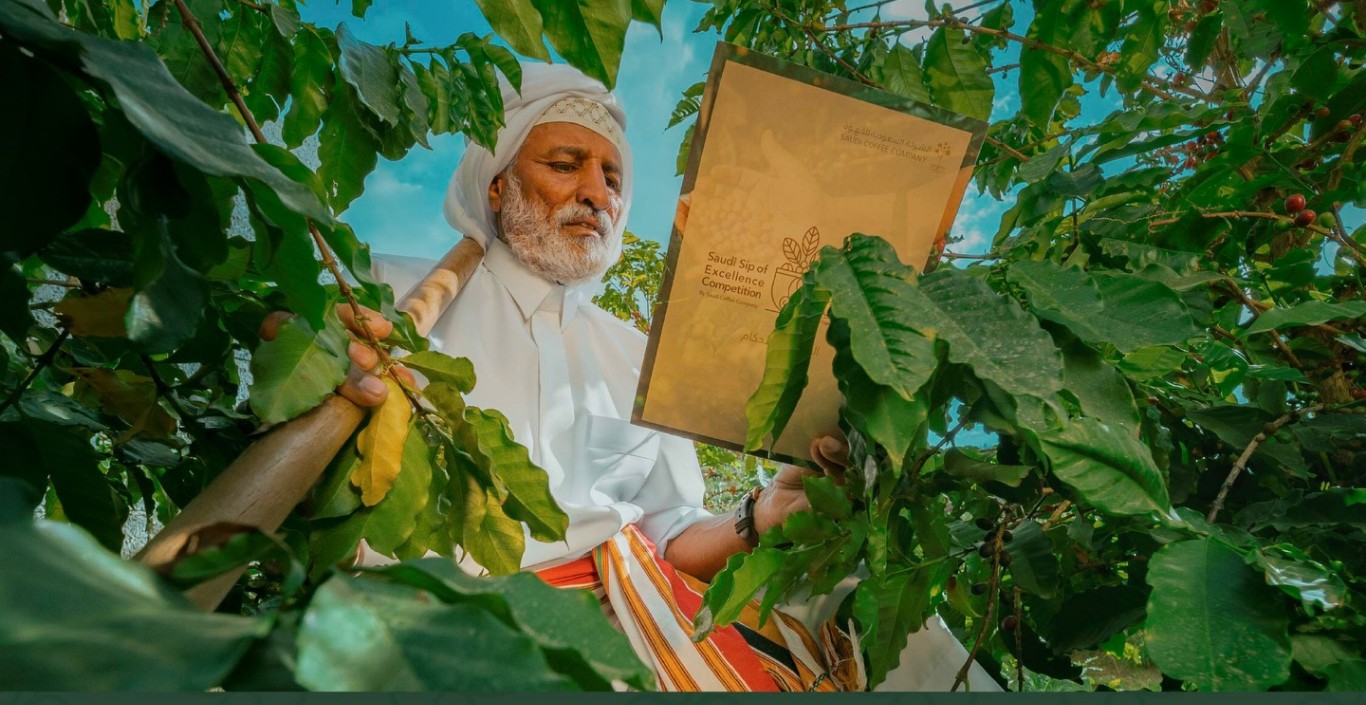
In the highlands of Al-Baha, the Shada mountains enchant with the captivating aroma of coffee wafting through the air. Nestled on Shada Al-Asfal and Shada Al-Ala, coffee shrubs yield a distinct bean that has become a highly sought-after commodity in the country.

These mountains host farms boasting over 54,000 trees, collectively producing more than 12 tons of coffee annually. In this thriving enterprise, over 280 farmers contribute to the cultivation, according to statistics from the Ministry of Environment, Water, and Agriculture branch in Baha.

As part of a mountain range surrounded by low plains and valleys, the twin peaks of Shada Al-Ala and Shada Al-Asfal stand as the highest in the Tihama plain. Reaching elevations of 2,200 meters and 1,500 meters, respectively, these mountains serve as the backdrop for the cultivation of various crops, with coffee reigning as the primary one.

The care for the coffee trees is remarkable, employing innovative methods such as collecting rainwater in hollow rocks strung together to resemble tanks, as highlighted by Ali Al-Ghamdi, the owner of a farm on Shada Al-Asfal mountain, where 700 Shada coffee trees thrive under meticulous care.

Shada coffee, priced between SR100 ($26) and SR150 per kilogram, bridges tradition and modernity, with trees that have stood for over 150 years still yielding coffee. Abdullah Al-Shadawi tends to around 300 of these ancient trees, following in the farming footsteps of his ancestors, emphasizing the significant yield due to the fertile soil.

Fahad Al-Zahrani, director of the ministry’s Baha region, underscores the government’s substantial support for farmers, distributing 80 liters of insecticides annually and implementing a reclamation project for agricultural terraces on both mountains. With 125 agricultural terrace reservoirs established, the ministry’s Coffee City project in the north of Baha covers 1.6 million square meters, aiming to create 1,000 jobs and ensure the cultivation of 300,000 coffee trees. The Shada Mountains stand not just as a geographic marvel but as a testament to a timeless coffee legacy.


Saudi Ministry of Culture Approves 20 Research Papers for “Saudi Coffee Research” Grant

In a significant development, the Saudi Ministry of Culture has formally endorsed the acceptance of 20 research papers submitted from both domestic and international researchers for the prestigious “Saudi Coffee Research” grant. Launched in December 2022 in collaboration with the Saudi Coffee Company, a key entity under the Public Investment Fund umbrella, the grant is specifically designed for researchers and specialists with a keen interest in diverse facets of coffee.

Successful researchers will receive comprehensive financial and scientific support throughout the research process, extending to the publication of scientific papers. This initiative aims to enrich cultural research output pertaining to Saudi coffee, acknowledged as an intangible cultural heritage, thereby playing a pivotal role in advancing the national cultural product.

The grant encompasses three principal tracks. The first track focuses on coffee in the Arabian Peninsula, delving into its historical roots, manufacturing evolution, and dissemination within the Kingdom. The second track is dedicated to exploring the intangible cultural heritage associated with Saudi coffee, including the examination of knowledge, skills, social traditions, practices, and cultural handicrafts intertwined with it. The third track seeks to elevate and advance local content by supporting Saudi coffee production, thereby enhancing its competitiveness and contributing to the Kingdom’s transition towards a sustainable economy.

This initiative was strategically included within the framework of the “Year of Saudi Coffee 2022” initiative, spearheaded by the Ministry of Culture with the backing of the Quality of Life Program—a key component of the Kingdom’s Vision 2030. In collaboration with the Culinary Arts Authority, the initiative aims to scrutinize the Saudi coffee market, preserve national cultural legacies and values, underscore the intangible heritage linked with Saudi coffee, bolster national identity, and promote Saudi coffee culture on the global stage.

Applications for the “Saudi Coffee Research” grants were opened on December 18, 2022. This initiative underscores a concerted effort to enhance cultural production through research endeavors focused on Saudi coffee, aligning with its status as an intangible cultural heritage intertwined with natural heritage and traditional culinary arts. The grants target a diverse range of researchers and specialists, both within the Kingdom of Saudi Arabia and abroad, fostering a collaborative and inclusive approach to advancing knowledge in various coffee-related fields.