ADERE-MG Continues Fight Against Forced Labour in Brazil’s Coffee Sector

Source: Business and Human Rights Centre and industry reports

Author: Qahwa World

Date: May 16, 2026

  • A new report highlighted forced labour risks in Brazil’s coffee sector.
  • Investigators found indicators of abuse in every worker interview.
  • Workers described poor housing and abusive recruitment practices.
  • Many exploitation cases reportedly remain undetected.
  • Industry groups and government bodies issued public responses.
  • ADERE-MG said the struggle against forced labour continues.
  • The findings renewed pressure on coffee supply chain transparency.

New human rights reports have renewed attention on labour conditions in Brazil’s coffee sector after investigations revealed continuing signs of forced labour during the 2025 harvest season.
The findings followed the release of the latest food and beverage benchmark by the KnowTheChain Project in February 2026.

The benchmark warned that many global companies remain unprepared to address climate-related forced labour risks across agricultural supply chains.
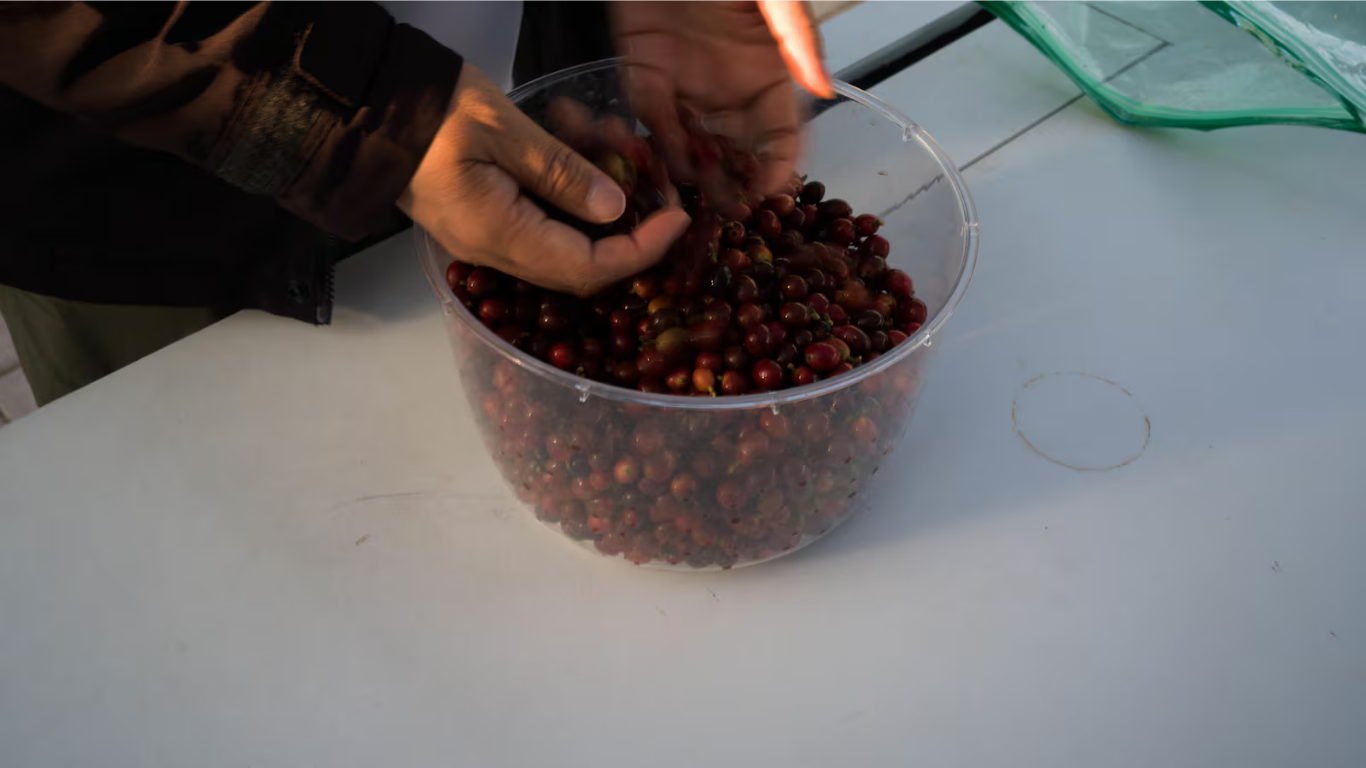
In parallel, field investigations conducted in Minas Gerais revealed recurring labour violations on coffee plantations.

Field Investigations Reveal Labour Abuses

KnowTheChain partnered with the Articulation of Rural Employees of the State of Minas Gerais, known as ADERE-MG, to investigate working conditions on Brazilian coffee farms.
According to the report, investigators identified indicators of forced labour in every interview conducted with workers.

Workers described abusive recruitment methods and degrading living conditions.
They also reported a lack of transparency regarding the companies purchasing the coffee they harvested.
As a result, workers struggled to seek remedies or accountability.

The report stated that Brazilian labour authorities sanctioned some plantations during the 2025 harvest.
However, many additional cases reportedly remained undetected because of limited enforcement resources and weak corporate action.

Government and Industry Responses

The findings generated strong reactions across Brazil’s coffee sector.
The National Coffee Council and Brazilian government representatives issued statements reaffirming their commitment to decent work and efforts to combat forced labour.

In response, ADERE-MG published a separate statement stressing that serious labour challenges remain unresolved.
The organization argued that existing measures still fail to address widespread exploitation in parts of the coffee supply chain.

The Business and Human Rights Centre also released a statement responding to comments made by government officials and coffee industry representatives.

Date Organization Content Type Main Topic
May 14, 2026 Business and Human Rights Centre NGO Response Response to government and industry statements
May 14, 2026 ADERE-MG NGO Response Continued fight against forced labour
April 17, 2026 National Coffee Board Article Commitment to decent work and labour protections
March 23, 2026 National Coffee Council Article Rejection of generalizations about coffee farming

Supply Chain Pressure Continues

Brazil remains one of the world’s largest coffee producers.
Therefore, labour conditions in its coffee industry attract significant international attention from buyers, regulators, and human rights groups.

Analysts say supply chain transparency remains a major challenge.
Companies face growing pressure to improve traceability and verify labour conditions across coffee-producing regions.

In addition, climate pressures and seasonal labour shortages continue to increase concerns about worker exploitation in agricultural industries worldwide.

FAQ

What is ADERE-MG?
ADERE-MG is an organization representing rural workers in the Brazilian state of Minas Gerais.

What did the investigation find?
Investigators reported indicators of forced labour in all worker interviews conducted during the study.

What labour issues were identified?
Workers described abusive recruitment practices, poor living conditions, and limited transparency.

Did authorities take action?
Brazilian labour authorities sanctioned some plantations during the 2025 harvest season.

How did the coffee sector respond?
Industry representatives said they remain committed to decent work and labour protections.

Why is the issue important globally?
Brazil’s coffee industry plays a major role in international coffee supply chains and exports.


Author: Qahwa Worls

Source: Business and Human Rights Centre and industry reports

Date: May 16, 2026

Ethiopia to Host 4th G-25 African Coffee Summit in Addis Ababa in 2027

Author: Qahwa World – Dubai
Source: Official announcement
Date: May 16, 2026

Executive Summary

  • Ethiopia signed a host country agreement with the Inter-African Coffee Organization to host the 4th G-25 African Coffee Summit in 2027
  • The agreement also establishes IACO first country office in Ethiopia
  • The summit aligns with African Union Agenda 2063 recognizing coffee as a strategic commodity
  • Africa currently contributes only 12 percent of global coffee production despite being the birthplace of coffee
  • Ethiopia aims to become one of the world leading coffee exporters by 2033
  • The African Union recently designated IACO as a specialized agency

Ethiopia has signed a host country agreement with the Inter-African Coffee Organization to establish the organization first country office in Ethiopia and to host the 4th G-25 African Coffee Summit in Addis Ababa in 2027.

The agreement was signed between State Minister of Foreign Affairs Ambassador Hadera Abera and IACO Secretary-General Ambassador Solomon Rutega.

According to officials, the agreement aligns with the African Union Agenda 2063, which recognizes coffee as a strategic commodity for the continent economic transformation.

Africa coffee production challenges

Speaking at the signing ceremony, Ambassador Hadera noted that although Africa is the birthplace of coffee, the continent currently contributes only 12 percent of global coffee production. This low share persists due to several challenges including low productivity, value chain imbalances, and climate-related pressures.

He stated that the partnership will support Ethiopia ambition to become one of the world leading coffee exporters by 2033. He added that the agreement creates a stronger framework for continental cooperation and sectoral transformation.

Historic milestone for IACO

IACO Secretary-General Ambassador Solomon Rutega described the agreement as a historic milestone. He said it reconnects the organization with the origin of coffee while advancing efforts to improve the livelihoods of millions of coffee-dependent households across Africa.

He also recalled the African Union recent decision to designate the 66-year-old IACO as a specialized agency. This recognition further strengthens the organization mandate to promote African coffee on the global stage.

Context: The G-25 African Coffee Summit is a high-level gathering of Africa top coffee-producing nations. It aims to address challenges facing the continent coffee sector and promote sustainable development.

Strategic importance

The agreement marks a significant step in Ethiopia efforts to strengthen its position in the global coffee market. As the birthplace of coffee, Ethiopia holds a unique cultural and historical connection to the beverage. The establishment of IACO first country office in Addis Ababa reinforces this connection.

The 4th G-25 African Coffee Summit in 2027 is expected to draw participants from across the continent. It will focus on boosting productivity, improving value chains, and building climate resilience in the African coffee sector.

Frequently Asked Questions

What is the G-25 African Coffee Summit?
The G-25 African Coffee Summit is a high-level meeting of Africa major coffee-producing nations. It addresses challenges facing the continent coffee sector and promotes cooperation among member states.

When and where will the 4th summit take place?
The 4th G-25 African Coffee Summit will be held in Addis Ababa, Ethiopia, in 2027. Specific dates have not yet been announced.

What is the Inter-African Coffee Organization?
IACO is a 66-year-old specialized agency of the African Union. It works to promote and develop the coffee sector across Africa.

Why is Ethiopia hosting the summit and IACO office?
Ethiopia is the birthplace of coffee and aims to become a leading global coffee exporter by 2033. Hosting the summit aligns with these ambitions.

How much coffee does Africa produce globally?
Despite being the birthplace of coffee, Africa currently produces only 12 percent of the world coffee supply due to productivity, value chain, and climate challenges.

What is African Union Agenda 2063?
Agenda 2063 is the African Union strategic framework for the continent socio-economic transformation. It recognizes coffee as a strategic commodity.


Author: Qahwa World – Dubai
Source: Official announcement
Date: May 16, 2026

John Seroney: The Real Cost is Farm Mapping and Digital Registration

Kenya – Ali Azakary | Qahwa World

On May 4, the European Commission published its “simplification” package for the Deforestation Regulation. Some saw it as genuine relief. Others called it cosmetic.

Qahwa World continues its interview series with industry experts. After Dr. Steffen Schwarz from Germany, Kim Thompson from Dubai, and Burke Campbell from Honduras, our fourth guest is John Seroney.

John is a Kenyan coffee entrepreneur, global trade advocate, and sustainability leader. As Founder and CEO of Sumseron Coffee, he has built a purpose-driven specialty coffee enterprise connecting smallholder farmers and cooperatives in Kenya directly to international markets while championing sustainable and inclusive coffee trade. Under his leadership, Sumseron Coffee has expanded across Africa, Europe, Asia, the Middle East, and North America. John is internationally recognized for his voice on global coffee policy, sustainability, and traceability, and has worked closely with farmers, cooperatives, women, and youth in agriculture to create sustainable economic empowerment at origin. His vision is to build globally respected African coffee brands that empower farmers, transform communities, and create sustainable impact from farm to cup.

Here is what he said.

  • What is your overall take on the EU simplification decision? Does it truly reduce the burden, or is it mostly cosmetic?

John Seroney: Overall, the EU simplification package is a positive step, but I would say it only partially reduces the burden. The administrative clarification helps, especially for operators already investing in traceability systems, but the core compliance requirements remain very demanding for producing countries.

The real challenge is not paperwork alone. It is the cost of farm mapping, farmer registration, digital traceability, satellite verification, and continuous monitoring across fragmented smallholder systems. For many African coffee origins, implementation is still expensive and technically challenging.

  • Who benefits the most from this simplification in your opinion?

John Seroney: In my opinion, the biggest beneficiaries are larger companies and well-organized supply chains that already have compliance infrastructure in place. Multinational traders and larger exporters can adapt faster because they have resources, technology partners, and direct compliance teams.

Small producers may benefit indirectly in the long term if they are integrated into organized value chains, but many still face financial and technical barriers. Low-risk countries also gain some operational advantage, although maintaining geolocation requirements means compliance pressure still exists.

  • Soluble coffee is now fully covered, after being excluded before. How do you see this affecting coffee traders and roasters worldwide?

John Seroney: The inclusion of soluble coffee is very significant. It closes an important loophole and means that all parts of the coffee industry will now be expected to demonstrate traceability and deforestation-free sourcing.

This will increase pressure on traders, roasters, and soluble manufacturers to strengthen supply chain transparency. It could also reshape sourcing behavior, with buyers prioritizing origins and exporters that can provide verified traceability data consistently.

  • Is the global coffee supply chain truly ready for the December 30, 2026 deadline? If not, which part of the industry will take the biggest hit?

John Seroney: Honestly, I do not believe the global coffee supply chain is fully ready yet, especially among smallholder-driven origins in Africa and parts of Asia.

While some exporters and cooperatives have made strong progress, many farmers still lack proper digital records, polygon mapping, or awareness of EUDR requirements. The biggest impact will likely fall on smallholder farmers, small exporters, and smaller cooperatives that may struggle with compliance costs and technical capacity.

Without financial support, training, and practical implementation partnerships from buyers and governments, there is a real risk that smaller producers could be excluded from the European market despite producing high-quality coffee sustainably for generations.

At the same time, EUDR can become an opportunity if implemented collaboratively. It has the potential to strengthen transparency, improve farm-level data systems, and reward sustainable coffee production, but only if origin countries are treated as true partners in the transition process.

Qahwa World – Episode Five tomorrow with Michael Trung from Vietnam.

Read the related stories:

Burke Campbell: “European Simplification is Cosmetic. The Burden Exported to Honduras Has Not Changed”

Kim Thompson: Sustainability Rules Must Not Punish the Producers Who Need Market Access Most

Dr. Steffen Schwarz: EUDR Simplification Remains an Administrative Monster

EUDR Simplification: Six Voices from the Coffee Industry Speak

European Commission Simplifies Deforestation Regulation.. What’s New?


WCR CEO Dr. Vern Long: The best coffee in the world hasn’t been grown yet

Qahwa World – Dubai |
May 15, 2026 |
4 min read

Dr. Jennifer “Vern” Long, CEO of World Coffee Research, said in two simultaneous messages – one in the organization’s annual report and another in an Instagram video – that “the best coffee in the world hasn’t been grown yet. It’s coming soon.” She confirmed that the innovative “coopetition” model between competing companies and governments has produced elite coffee genetics now growing in research fields on 4 continents.

In her annual report message, Long explained that WCR’s member companies built something unprecedented when they created World Coffee Research – a global collaborative organization that is creating the genetic infrastructure of the 200 billion dollar coffee industry. Genetics are the foundation of coffee’s future, she said, and the next generation of climate-resilient, high-quality varieties advancing through this system will expand what coffee agriculture can deliver.

Long described WCR’s collaborative networked nature as unparalleled. Governments that historically did not share directly with each other contributed their unique genetics and scientific knowhow to a single shared pool. Companies that compete in the marketplace banded together and contributed patient capital to drive the work forward, understanding that tree breeding operates on 10 to 15 year cycles. This coopetition model has delivered: elite genetics are now in research fields on 4 continents.

Regarding next steps, Long said WCR will explore what it takes to scale up and deploy these trees to farmers’ fields. The organization will continue innovating, using the same collaborative spirit that built the global genetics pipeline to design a model capable of ensuring last-mile distribution to farmers and sustaining research in perpetuity. “Better plants are coming. We’ll be ready,” she concluded.

In a separate Instagram video featuring Long’s voice, she said WCR continued in 2025 to create the future of coffee by uniting the global coffee industry to drive science-based agricultural solutions. “The future of coffee is arriving. The entire coffee sector is built from the harvest of the plant itself. When we get the plant right, everything else multiplies,” she said.

Long highlighted WCR’s work areas including coffee breeding networks, trial sites, improved seed systems, and global leadership programs. She invited the public to explore the report’s highlights and be part of WCR’s ongoing effort to create the future of coffee.

“The best coffee in the world hasn’t been grown yet. It’s coming soon. Our members and partners make it happen, and will help us define what comes next.”

— Dr. Vern Long, CEO of World Coffee Research

Source: World Coffee Research Annual Report 2025 + WCR official Instagram account
Prepared by: Qahwa World – Dubai
Publication date: May 15, 2026


Burke Campbell – “European Simplification is Cosmetic. The Burden Exported to Honduras Has Not Changed”

Dubai – Ali Azakary | Qahwa World

On May 4, the European Commission published its “simplification” package for the Deforestation Regulation. Some saw it as genuine relief. Others called it cosmetic.

Qahwa World continues its interview series with industry experts. After Dr. Steffen Schwarz from Germany and Kim Thompson from Dubai, our third guest is Burke Campbell.

Burke is a Canadian of Cree-Métis heritage who left the Alberta oil sands to work in coffee farms in Honduras. His journey connects resource extraction, economic sovereignty, and sustainable development. From his personal awakening to the parallel between Indigenous communities in Canada and coffee farmers in Honduras, through his pioneering work connecting Yemen’s ancient coffee heritage to modern markets, Burke’s story is one of resilience, vision, and an uncompromising pursuit of justice.

Here is what he said.

  • What is your overall take on the EU simplification decision? Does it truly reduce the burden, or is it mostly cosmetic?

Burke Campbell: Cosmetic. The real problem is who pays the documentation tax, and the May package left that architecture in place.

The Commission missed its own statutory April 30 deadline by four days, then released four instruments on May 4. They did not reopen the regulation. They cleaned up the paperwork around it.

The 75 percent compliance cost reduction announced by Commissioner Roswall was largely legislated on December 18, 2025, when the Council and Parliament shifted the due diligence filing burden away from EU traders and onto whoever first places the product on the market. The May package recycles that and adds a few line items. Soluble coffee in. Leather out.

Read the line the Commission used about its own simplified regime. The Commission itself admits that the SME and primary operator route covers close to one hundred percent of farmers and foresters in the EU. Brussels has functionally exempted itself from a regulation it is still asking a Honduran cooperative, an Ethiopian farmer, and a Ugandan smallholder to comply with. They simplified the part of the regulation that touched them. The rest stands.

I write this from Copán Ruinas, Honduras. An Alliance Bioversity and CIAT estimate places around 85 percent of producers in this country in the at-risk category for EU market exclusion, and more than half of our coffee leaves through European ports. The May package did nothing for them. Brussels reduced the burden it was carrying. The burden Brussels exported is unchanged.

  • Who benefits the most from this simplification?

Burke Campbell: Big companies. Not small producers, and not low-risk exporting countries.

Small producers do not benefit. Outside the EU they do not get the simplified declaration relief that European primary operators receive. They build the polygons themselves and pay every line of the cost.

Low-risk exporting countries get a label, not relief. A Vietnamese exporter still owes geolocation. A Colombian cooperative still owes geolocation. The “low-risk” classification means simplified due diligence. You skip the formal risk assessment step. The polygon is still required. The compliance vendor still gets paid. The country gets a sticker on the file.

Look at where the money actually lands. All of it north.

The compliance technology sector. The Mannheim platform that Goldman Sachs bought into for 120 million dollars in 2024 runs the books for more than 1,300 customers. The two billion euros in residual annual compliance cost the Commission says is left in the system after simplification is structurally allocated to this sector. Goldman bought in early so it could collect.

The big trader-roasters. They have already absorbed the cost. The downstream operator architecture means smaller importers behind them just collect reference numbers, not run their own due diligence. The supply chain runs through the platforms the big traders own. The moat is real.

The European farmer and forester. Through the small and micro primary operator route they receive a one-time simplified declaration, a postal address instead of a polygon, and in many cases a national database the member state authority will pre-fill for them.

Who pays. Smallholder cooperatives in Honduras, Ethiopia, Uganda, Colombia, Indonesia, Peru. Mid-size specialty importers in Europe without proprietary platforms. The two billion does not stay in the countries that grew the coffee. It moves north.

  • Soluble coffee is now fully covered, after being excluded before. How do you see this affecting coffee traders and roasters worldwide?

Burke Campbell: The loophole was real. If you processed non-compliant green coffee outside the EU and brought the finished instant in as an extract, you had not technically placed deforestation-linked coffee on the market. Closing it on the law’s own terms was correct.

For green coffee traders the change is administrative. The major traders already polygon-trace the green beans they handle. They add a line to their books for soluble extracts and concentrates. The systems exist. The marginal cost is low. They will absorb it.

For roasters the picture splits. A specialty roaster importing green coffee and roasting it in Hamburg or Milan was never in the soluble category. Their position is unchanged. The companies whose position changes are the integrated roaster-processors. Their soluble lines now sit inside the same chain of custody architecture as their green portfolio. Mass balance accounting gets harder under EUDR rules. Each component has to be deforestation-free and individually polygon-mapped. You cannot blend a non-compliant lot into a compliant one and call the result compliant. The whole batch has to be clean.

For origin processors the change is structural. Vietnam exports about 3.3 million bags of soluble and roasted in green bean equivalent, with 60 percent bound for Europe. Nestlé is putting another 75 million dollars into its Dong Nai plant. Trung Nguyen 75 million into Đắk Lắk. Highlands Coffee 20 million into Bà Rịa-Vũng Tàu. Food Empire 80 million into a freeze-dry facility in Bình Định. Those facilities will absorb plot-level traceability cost on top of green bean traceability cost. The shipper exporting unprocessed green to Hamburg now carries a lighter compliance load than the country that processes its own beans before they leave.

That is the deeper point. The regulation now taxes origin processing. Vertical integration. Value retained in producing countries. The pathway out of green bean dependence is processing at origin. The Commission has just made that pathway more expensive than green bean export.

  • Is the global coffee supply chain truly ready for the December 30, 2026 deadline? If not, which part of the industry will take the biggest hit?

Burke Campbell: No.

One thing first about the premise. The “except small producers” exemption you mentioned is an EU internal rule. A primary operator inside an EU member state, classified small or micro, can submit a one-time declaration through a cooperative, use a postal address instead of a polygon, and in many cases have the member state authority pre-fill the document from a national database that already exists. None of this is on offer to a small producer in Vietnam, India, Colombia, Honduras, Ethiopia, or anywhere else outside the Union. The exemption is for European small producers. Foreign smallholders in low-risk countries still build the polygons themselves and pay every line of the cost.

That single clause is the asymmetry.

The deadline is locked. December 30, 2026 for large and medium operators. June 30, 2027 for most micro and small operators outside timber. The Commission’s own information system was on limited operability from February 16 until mid-April because it could not handle the submissions it was designed to receive. It reopens in stages from June. Six months of integration time for several hundred thousand operators globally.

The polygon is the regulation’s central instrument. Once you have drawn it, your land is recorded in the EU’s traceability system, attached to every shipment that originates there.

Biggest hits, in order. African and Central American smallholder cooperatives without national traceability infrastructure. Ethiopia has approximately four million smallholders, mostly half-hectare plots, mostly shade grown, mostly unmapped. Honduras has, by Alliance Bioversity and CIAT’s estimate, around 85 percent of producers in the at-risk category, and more than half of its coffee export revenue going to Europe. Uganda has spent $9.15 million on its national register and will probably make the deadline. Then mid-size European specialty importers without proprietary platforms. Then Vietnamese and Indian instant processors, newly in scope after the soluble inclusion.

Effectively immune. The major traders with proprietary infrastructure. Nestlé, JDE Peet’s, NKG, Volcafe, Sucafina, ECOM, Olam, Louis Dreyfus, Touton, Lavazza, illycaffè. The Italian leather lobby that got leather pulled from the list. The carve-outs go to lobbies that can write back. The architecture stays where there is no lobby on the other side.

The supply chain is not ready. The architecture decides who gets to be ready.

They built a green wall. The farmers it claims to protect have been on the other side of green walls for 400 years. The trick is not to climb over. The trick is to stop accepting that the wall is the only door.

Qahwa World – Episode Four tomorrow with John Seroney from Kenya.

Read the related stories:

Kim Thompson: Sustainability Rules Must Not Punish the Producers Who Need Market Access Most

Dr. Steffen Schwarz: EUDR Simplification Remains an Administrative Monster

EUDR Simplification: Six Voices from the Coffee Industry Speak

European Commission Simplifies Deforestation Regulation.. What’s New?


World Coffee Research releases 2025 annual report


Qahwa World – Dubai |
May 14, 2026 |
7 min read |
Source: WCR Annual Report 2025

Executive Summary

  • World Coffee Research released its 2025 annual report covering January 1 to December 31, 2025
  • Innova Global Coffee Breeding Network named a TIME Best Invention of 2025
  • Network expands to include robusta coffee with six partner countries producing 64% of global robusta
  • 11 countries now in Innova network, producing 40% of world’s coffee supply
  • WCR aims to reduce breeding timeline from 30 years to 8 years using genetic markers
  • 10-year IMLVT trial results: Up to half of arabica land could become unsuitable by 2050 due to climate change
  • $4.96 million in industry contributions; $9.85 million total financial position
  • Seed system expansions in Peru, Uganda, Guatemala, Honduras to produce millions of new trees annually
  • WCR helped secure $175 million in U.S. funding for agricultural R&D including coffee

World Coffee Research (WCR) announced the release of its 2025 annual report on December 31, 2025, detailing the expansion of its TIME-recognized Innova Global Coffee Breeding Network into robusta coffee, new data showing that half of current arabica land could become unsuitable by 2050, and seed system expansions across four producing countries.

The report, which covers the period between January 1, 2025 and December 31, 2025, confirmed that WCR’s Innova network has expanded to include Coffea canephora (robusta) breeding, adding Vietnam and Ghana as new national partners. Six countries now participate in robusta breeding: Vietnam, Ghana, India, Indonesia, Rwanda, and Uganda, which together produce 64 percent of the world’s robusta supply. Overall, 11 countries make up the Innova network, producing 40 percent of global coffee supply.

An independent panel of global breeding experts commissioned by WCR’s board of directors reviewed the organization’s breeding programs in early 2025 and described the approach as a “radical step forward” that sets a new bar for coffee breeding worldwide. The Innova network was subsequently named a TIME Best Invention of 2025. The robusta breeding program combines multiple genetic groups, including a collection provided by French research institute CIRAD. Propagation began in 2025, and starting in 2027 each robusta partner will receive 1,000 unique new trees from WCR.

The report detailed that WCR is working to reduce coffee breeding timelines from the traditional 30 years to just 8 years. In 2025, the organization initiated a collaboration with Cenicafe, one of the world’s leading national coffee research institutions, and the U.S. Department of Agriculture Tropical Agricultural Research Station (USDA TARS) in Puerto Rico to develop low-cost genetic markers for Coffee Leaf Rust (CLR), the world’s most economically devastating coffee disease. In 2026, WCR will expand this work to cover Coffee Berry Disease (CBD), Coffee Fruit Rot (CFR), and Coffee Berry Borer (CBB). Once validated between 2025 and 2028, these markers will be publicly released through scholarly publication.

According to the report, 10-year results from the International Multilocation Variety Trial (IMLVT), launched in 2015 with 31 arabica varieties shared by 11 breeding programs, confirmed that coffee leaf rust resistance depends on both genetics and environment. A 2015 study by WCR and CIAT that guided site selection for the trial network identified that up to half of today’s arabica land could become unsuitable for coffee production by 2050. The IMLVT has identified high-performing varieties with strong rust resistance and stable yields. In 2026, WCR will launch CafeClima, a free online platform integrating climate modeling with IMLVT variety performance data to help farmers make data-driven replanting decisions.

WCR installed 10,000 F1 hybrid plantlets across 10 trial sites in Peru, Guatemala, and Costa Rica, planted directly in farmers’ fields through member-led trials. The report also detailed seed system expansions across four countries. In Peru, 10 new arabica seed lots were installed with 8 cooperatives, targeting 15 seed lots by 2028 producing up to 6 million seeds annually. In Uganda, 11 mother gardens for disease-resistant robusta were installed or expanded with national coffee institute NaCORI, targeting over 40 mother gardens by 2028 producing 560,000 trees per year. In Guatemala and Honduras, 12 new seed lots will be installed in 2026, producing 5.4 million seeds annually starting in 2029.

The report highlighted advocacy wins including $175 million secured in FY26 “hard earmarks” for international agricultural R&D through coordinated advocacy by U.S. member companies, with a legal requirement that a portion support coffee research. A separate coalition mobilized $850,000 for Uganda’s coffee future from UNIDO, JDE Peet’s, Lavazza Foundation and The J.M. Smucker Co.

According to the financial section of the report, total contributions earned from the coffee industry in 2025 was $4,962,000. The total year-end financial position reached $9,852,000. Figures are pre-audit. WCR confirmed the commitment of its 194 member companies from 30 countries, with 59 additional companies and individuals providing financial support in 2025. WCR’s knowledge products, including the Coffee Varieties Catalog, Sensory Lexicon, and nursery manuals, were viewed 239,722 times in 195 countries during 2025. The organization also installed a small-batch processing facility at its research farm in El Salvador, custom-designed for breeding programs to process samples from thousands of individual trees.

Frequently Asked Questions

What is the Innova Global Coffee Breeding Network?

It is the most ambitious and globally coordinated coffee breeding program in history, bringing together 11 countries to transform coffee breeding and create enhanced genetics at an accelerated pace.

What recognition did WCR receive in 2025?

The Innova network was named a TIME Best Invention of 2025, and an expert panel described WCR’s breeding approach as a “radical step forward” for coffee.

How will climate change affect coffee production according to the report?

A 2015 study by WCR and CIAT that guided the IMLVT trial network found that up to half of today’s arabica land could become unsuitable by 2050.

Which countries are part of the Innova robusta breeding program?

Vietnam, Ghana, India, Indonesia, Rwanda, and Uganda — which together produce 64 percent of the world’s robusta.

How many member companies does WCR have?

194 member companies from 30 countries, with 59 additional companies and individuals providing financial support in 2025.

What is CafeClima?

A free online platform launching in 2026 that integrates climate modeling with variety performance data to help farmers make data-driven replanting decisions.

Source: World Coffee Research Annual Report 2025
Report period: January 1, 2025 – December 31, 2025
Author: Qahwa World – Dubai
Publication date: May 14, 2026


Mexico Coffee Production Forecast to Reach 4.1 Million Bags in 2026/2027

Author: Qahwa World – Dubai
Source: USDA Foreign Agricultural Service – Mexico City Office
Report Number: MX2026-0026
Date: May 14, 2026
Executive Summary

  • Mexico coffee production forecast at 4.1 million green bean equivalent bags for MY 2026/2027
  • Production expected to increase 1 percent year-over-year driven by robusta expansion
  • Mexican coffee consists of 85 percent arabica and 15 percent robusta
  • Chiapas, Veracruz, and Puebla account for more than 80 percent of national production
  • Domestic consumption projected to rise 1 percent to 3.2 million bags
  • United States remains primary destination for Mexican coffee exports
  • Soluble coffee covers approximately 60 percent of domestic consumption

The USDA Foreign Agricultural Service forecasts Mexico coffee production for marketing year 2026/2027 at 4.1 million green bean equivalent bags, a 1 percent increase from the previous year. This marginal growth is driven by sustained investment following two years of favorable market prices and the continued expansion of robusta production.

Mexican coffee production consists of 85 percent arabica and 15 percent robusta. The three main producing states are Chiapas, Veracruz, and Puebla, which together account for more than 80 percent of national output.

Production outlook by region

Chiapas is forecast to remain the top coffee-producing state by volume in MY 2026/2027. Puebla is expected to have the highest yields at 13 green bean equivalent bags per hectare, more than double the national average. This exceptional performance is due to favorable soil conditions, investments in leaf-rust resistant plants, and infrastructure near major cities. Veracruz ranks as the second highest yielding state.

Despite a decline from 2025 peaks, coffee prices in early 2026 continue to trend well above historical averages. According to the International Coffee Organization, arabica prices averaged 331 US cents per pound as of March 2026, which is 40 percent above the ten-year average.

This extended period of profitability has enabled producers in Chiapas, Veracruz, and Puebla to reinvest in farm management. Growers have increased plant density, input application, and quality control measures. The adoption of new varieties resistant to coffee leaf rust is forecast to continue growing the sector without expanding planted area.

Key insight: Following years of widespread coffee leaf rust outbreaks, Mexican producers have gradually transitioned toward replanting arabica rust-resistant varieties. These plants are currently in their early growth stages and have yet to fruit, but they are expected to lay the foundation for a more resilient and productive sector in the coming years.

Robusta expansion

Mexico is expanding robusta production due to its resilience against disease, ability to thrive in lower-altitude climates, and demand from large soluble coffee processors. According to industry contacts, large-scale processors have prioritized local sourcing. They provide robusta farmers with contract agreements and price stability. The main producer of robusta is Chiapas, followed by Veracruz, Puebla, and Oaxaca.

For MY 2025/2026, production is estimated at 4 million green bean equivalent bags, a 4 percent increase over the previous year. This growth is driven by recovery from heat waves that affected robusta fields in MY 2024/2025. Increased investment in both robusta and arabica management, enhanced pre- and post-harvest practices, and selective harvesting to secure higher quality and market premiums have also contributed.

Domestic consumption trends

Coffee consumption is forecast at 3.2 million green bean equivalent bags for MY 2026/2027, an increase of 1 percent from the previous year. This slight growth is attributed to expansion in retail coffee shops and chains, as well as changing consumption habits favoring premium coffee.

Convenience stores are increasing the availability of ready-to-drink coffee. Caffeine, a coffee company in northern Mexico, has entered a partnership with OXXO, the largest convenience store chain in Mexico. Caffeine produces, roasts, and supplies coffee for nearly all OXXO stores in Mexico and Colombia, ensuring high quality and fast coffee service across the chain network.

Mexico is also Starbucks’ largest market in Latin America and the Caribbean, and its seventh largest globally. With an expansion of approximately 70 new stores annually, the company plans to reach 1,000 stores in the country during 2026.

Major urban areas in Mexico are showing higher demand for high-quality, single-origin coffee. This has created new markets for premium coffee products such as capsules, cold brew, and specialty offerings. Microlots are growing in popularity to meet demand for unique sensory profiles and limited editions.

Online platforms in Mexico are increasing access to specialty coffee brands, single-origin beans, and subscription programs. This online channel enables small roasters to reach customers throughout the country, allowing customers to discover artisanal and responsibly sourced coffee products.

Despite growth in the premium sector, soluble coffee remains more practical and economical, covering approximately 60 percent of domestic consumption. Coffee tricycles, common in Mexico City and other cities, offer café de olla (roasted coffee prepared with cinnamon and sweetened), soluble coffee, and hot chocolate as an affordable and traditional alternative to coffee shops.

Export and import trends

Coffee exports for MY 2026/2027 are forecast at 3.4 million green bean equivalent bags, a decrease of 1 percent from the previous year. Gains in production are expected to satisfy domestic consumption, slightly reducing export volumes.

The United States remains the primary destination market for Mexican coffee in all forms. Exports to the United States reached 2.6 million green bean equivalent bags in 2025. Mexico primarily exports green bean and soluble coffee to the US market.

Coffee imports are forecast at 2.4 million green bean equivalent bags for MY 2026/2027, a decrease of 4 percent. This trend is driven by a forecasted rise in local robusta production, reducing the need for imported green beans. In 2025, the private sector announced various investment programs aimed at increasing coffee production capacity. As a result, Mexico is substituting soluble coffee imports with domestically manufactured products.

Government support programs

Mexico’s Secretariat of Agriculture and Rural Development operates several coffee-specific producer support programs. Production for Wellbeing provides direct financial support of 388 US dollars per producer per year. In 2026, a total of 181,364 producers participated, covering an area of 216,306 hectares.

Fertilizers for Wellbeing delivered 53,542 tons of fertilizer to 151,253 producers in 2026, benefiting an area of 165,984 hectares. This initiative seeks to enhance soil fertility and boost productivity among coffee growers and is expected to expand in scope for 2026.

Café Bienestar, managed by the Secretariat of Wellbeing, aims to distribute affordable coffee through the country network of Bienestar stores. The program buys coffee from producers in Chiapas, Oaxaca, Puebla, Veracruz, and Guerrero and processes it. This program is estimated to represent 3 to 4 percent of the total soluble coffee market.

Frequently Asked Questions

How much coffee will Mexico produce in 2026/2027?
The USDA forecasts Mexico coffee production at 4.1 million green bean equivalent bags for MY 2026/2027, a 1 percent increase from the previous year.

Which states produce the most coffee in Mexico?
Chiapas, Veracruz, and Puebla are the three main coffee-producing states, together accounting for more than 80 percent of national production. Chiapas remains the top producer by volume.

What is the breakdown between arabica and robusta in Mexico?
Mexican coffee production consists of 85 percent arabica and 15 percent robusta. Robusta production is expanding due to its disease resistance and demand from soluble coffee processors.

How is coffee leaf rust affecting Mexican production?
Following years of widespread coffee leaf rust outbreaks, producers have gradually transitioned to replanting arabica rust-resistant varieties. These plants are in early growth stages and are expected to create a more resilient sector.

What is the coffee consumption trend in Mexico?
Domestic consumption is forecast at 3.2 million bags, a 1 percent increase. Soluble coffee covers approximately 60 percent of consumption, while premium and specialty coffee segments are growing rapidly.

Who is the primary buyer of Mexican coffee?
The United States remains the primary destination market for Mexican coffee exports, receiving 2.6 million green bean equivalent bags in 2025.


Author: Qahwa World – Dubai
Source: USDA Foreign Agricultural Service – Mexico City Office
Report Number: MX2026-0026
Date: May 14, 2026

Nuova Simonelli Technicians Competition Returns for 2026  

Author: Qahwa World – Dubai
Source: Industry announcement
Date: May 14, 2026
Executive Summary

  • The Nuova Simonelli Technicians Competition is back after its first edition in France
  • The 2026 edition expands to new international stages in Paris, London, and the Middle East
  • The competition begins with an online technical quiz that selects 8 finalists
  • Finalists then face hands-on practical challenges on espresso machines
  • Judges evaluate speed, precision, machine knowledge, and safety practices
  • The event celebrates technicians who work behind the scenes in the coffee industry

The Nuova Simonelli Technicians Competition is returning in 2026. After its first edition in France, the event is now expanding to new international markets including Paris, London, and the Middle East.

The competition focuses on espresso machine technicians. These professionals typically work behind the scenes. Yet they play a vital role in coffee quality, equipment reliability, and cafe performance.

Origins of the competition

The competition first launched in France. Organizers created it to showcase the skills, experience, and professionalism of coffee machine technicians. These workers often remain unseen by customers. Nevertheless, they maintain the equipment that baristas rely on every day.

Nuova Simonelli, the Italian espresso machine manufacturer, organizes the event. The company aims to highlight the strategic importance of technicians in delivering quality service and reliable products.

What sets this competition apart

The Nuova Simonelli Technicians Competition stands out for its hands-on, practical approach. It tests real-world skills that technicians use daily.

The competition begins with an online technical quiz. From this stage, organizers select eight technicians who qualify for the final round.

In the final stage, participants face practical challenges on espresso machines. These include simulated malfunctions, adjustments, and real technical interventions. The tasks mirror everyday work scenarios in coffee shops and service centers.

Speed, precision, machine knowledge, and operational efficiency all go under evaluation. Technical judges assess performance based on workplace safety, organization, technical expertise, and the ability to maintain excellent coffee quality.

Expansion to new markets in 2026

In the coming weeks, the competition will launch new international stages. The confirmed locations include Paris, London, and the Middle East.

This expansion confirms the global nature of the initiative. Nuova Simonelli aims to create real opportunities for exchange, professional growth, and knowledge sharing across key international markets.

Industry context: Coffee machine technicians play a critical role across the entire supply chain. Their work ensures operational continuity, consistent quality, and customer satisfaction in cafes worldwide.

Celebrating the technicians

Through this initiative, Nuova Simonelli celebrates the crucial role technicians play. They provide baristas with reliable, high-performing, and long-lasting equipment. Their work supports operational continuity, consistent quality, and end-customer satisfaction.

The event is more than just a competition. Organizers describe it as a platform for training, networking, and showcasing technical expertise.

How to participate

Technicians ready to join the next editions of the competition can apply through dedicated registration pages. Separate application links are available for the Dubai and United Kingdom editions.

Frequently Asked Questions

What is the Nuova Simonelli Technicians Competition?
It is an international competition for espresso machine technicians. Participants demonstrate their skills in diagnosing and repairing coffee equipment under timed conditions.

Where will the competition take place in 2026?
The competition will take place in Paris, London, and the Middle East. Specific venues and dates are available through the official registration pages.

How does the competition work?
Participants first complete an online technical quiz. The top eight scorers advance to a final round of hands-on practical challenges on espresso machines.

What skills are tested?
Judges evaluate speed, precision, machine knowledge, operational efficiency, workplace safety, organization, and the ability to maintain coffee quality.

Who can participate?
The competition is open to espresso machine technicians. Interested candidates should apply through the official registration pages for their region.

Why is this competition important?
Technicians play a crucial but often invisible role in the coffee industry. They ensure equipment remains reliable and performs well, which directly affects coffee quality and customer satisfaction.


Author: Qahwa World – Dubai
Source: Industry announcement
Date: May 14, 2026

South Korea Tightens Regulations on Decaffeinated Coffee

Dubai – Qahwa World

South Korea’s Ministry of Food and Drug Safety has announced stricter regulations for decaffeinated coffee products, stating that products will only be allowed to carry the “decaffeinated” label if they contain no more than 0.1% residual caffeine in the coffee beans.

The new labeling standards are set to take effect on January 1, 2028.

Under the current rules, at least 90% of the caffeine must be removed from coffee for it to be classified as decaffeinated. However, existing regulations do not specify the final amount of caffeine that may remain in the product. The term “decaffeinated” also does not necessarily mean that the coffee is completely caffeine-free, which can lead to consumer misunderstanding.

The ministry explained that some decaffeinated coffee products may still contain relatively high levels of residual caffeine, especially when made from naturally high-caffeine coffee beans. This, officials said, conflicts with consumer expectations that decaffeinated coffee should contain little to no caffeine.

To reduce confusion, the updated standards will focus on the amount of caffeine remaining in the beans, aligning South Korea’s regulations more closely with international standards, including those used in the United States.

In a related move, the ministry also strengthened labeling requirements for alcoholic beverages amid a rise in collaborative products featuring alcohol brands packaged in designs resembling ordinary food products.

Ukrainian Authorities Uncover Large-Scale Counterfeit Coffee Operation Near Kyiv

Author: Qahwa World – Dubai
Source: Korrespondent.net
Date: May 14, 2026Authorities recently uncovered a counterfeit coffee operation in Kyiv, Ukraine in 2026.

Executive Summary

  • Ukrainian authorities discovered an illegal coffee production facility in the Kyiv region
    Counterfeit products appeared under internationally known brand names
    Suspects allegedly continued using the brand illegally after their contract ended in 2021
    The fake coffee underwent no quality or safety controls, which posed consumer risks
    Authorities conducted 22 searches and seized assets worth nearly UAH 20 million
    The investigation remains ongoing under Criminal Code Article 229 for trademark violation
    A similar operation emerged in July 2025 with an organizer and five accomplices

The Bureau of Economic Security of Ukraine uncovered a large-scale underground operation near Kyiv. This facility produced counterfeit coffee products under internationally known brand names.

Investigators discovered illegal production facilities inside warehouse premises. Workers roasted, packaged, and labeled coffee at these locations. They used trademarks of major global coffee brands without permission.

  • How the counterfeit scheme operated

The scheme involved individuals registered under fictitious businesses. These entities processed payments and supported the distribution network. Therefore, authorities had to trace multiple financial transactions.

Suspects had previously cooperated officially with the trademark owner. However, they allegedly continued using the brand illegally after their contract ended in 2021. As a result, the company lost significant revenue.

Social media platforms and messaging applications helped promote the counterfeit products. Postal and courier delivery services distributed orders across Ukraine. Consequently, the fake coffee reached many unsuspecting customers.

  • Consumer safety risks

The fake coffee products underwent no quality or safety controls. Therefore, they may have posed serious health risks to consumers. Authorities warn buyers to remain vigilant.

Detectives conducted 22 searches during the investigation. They seized industrial production equipment, packaging materials, and printing supplies. In addition, they confiscated thousands of finished coffee packages, raw coffee materials, vehicles, cash, and financial documentation.

The seized assets hold an estimated value of nearly 20 million Ukrainian hryvnia.

  • Legal proceedings

The pre-trial investigation remains ongoing. Authorities filed the case under Part 3 of Article 229 of the Criminal Code of Ukraine. This article covers the illegal use of trademarks that causes particularly large financial damages.

  • Growing challenge of counterfeit food products

This case highlights a growing challenge for the coffee industry. Counterfeit food and beverage products threaten both consumers and legitimate coffee companies. Rising coffee prices continue to increase pressure across global supply chains. Therefore, counterfeit operations may become more common.

In July 2025, authorities announced suspicions against an organizer and five alleged accomplices. Those individuals operated another underground coffee manufacturing network in the Kyiv region. They also used internationally recognized brand names illegally.

Context: The Bureau of Economic Security of Ukraine continues to investigate illegal trademark violations in the food and beverage sector. Consumers should purchase coffee products only from authorized retailers.

Frequently Asked Questions

Where did authorities discover the counterfeit coffee operation?

The illegal production facility operated in the Kyiv region of Ukraine. Workers roasted, packaged, and labeled fake coffee inside warehouse premises.

Which brands did the operation counterfeit?

The operation used internationally known coffee brand trademarks. However, authorities have not publicly disclosed specific brand names due to the ongoing investigation.

How long did the illegal operation continue?

Suspects had an official contract with the trademark owner that ended in 2021. After that, they allegedly continued using the brand illegally.

What is the value of the seized assets?

Authorities seized assets worth nearly 20 million Ukrainian hryvnia. These include industrial equipment, packaging materials, finished coffee products, vehicles, and cash.

Are the counterfeit products dangerous?

Yes. The fake coffee underwent no quality or safety controls, so it may pose health risks to consumers.

Is this the only such case in Ukraine?

No. In July 2025, authorities announced suspicions against an organizer and five accomplices in another underground coffee manufacturing network in the same region.

Author: Qahwa World – Dubai
Source: Korrespondent.net
Date: May 14, 2026
Reference: Bureau of Economic Security of Ukraine, Criminal Code of Ukraine Article 229

Coffee Prices Supported by Shrinking ICE Inventories as Supply Tightens

Author: Qahwa World – Dubai. This article reviews ICE coffee inventories and coffee prices projections for 2026.

Executive Summary

  • July arabica coffee gained 0.21%, while July robusta rose 2.24% to a seven-week high
  • ICE robusta inventories fell to a two-year low of 3,642 lots
  • ICE arabica stocks dropped to a 2.5-month low of 471,831 bags
  • Brazil April green coffee exports declined 1.3% year-over-year to 2.76 million bags
  • Vietnam January-April coffee exports surged 15.8% to 810,000 metric tons
  • Global coffee surplus projected to reach 10 million bags in 2026, largest in six years

Coffee futures settled higher in Wednesday trading as shrinking exchange inventories continued to provide market support, with robusta prices climbing to their highest level in nearly two months.

July arabica coffee on the New York exchange rose 0.60 points, or 0.21 percent, while July robusta coffee on the London exchange advanced 78 points, or 2.24 percent, reaching a seven-week peak.

Tightening stocks on the Intercontinental Exchange remained the primary bullish factor for the market. Robusta inventories fell to a two-year low of 3,642 lots on Wednesday, while arabica stocks dropped to a two-and-a-half-month low of 471,831 bags earlier in the week.

Reduced shipments from Brazil also provided price support. The country’s April green coffee exports declined 1.3 percent compared to the same period last year, totaling 2.76 million bags, according to industry data.

Disruptions in key shipping routes have raised concerns over global coffee supply chains, contributing to higher costs for freight, insurance, fertilizers, and fuel for importers and roasters.

On the bearish side, rising shipments from Vietnam, the world’s largest robusta producer, continued to weigh on the market. Vietnamese coffee exports during the first four months of 2026 increased 15.8 percent year-over-year to 810,000 metric tons. The country’s total coffee exports for 2025 also rose 17.5 percent to 1.58 million metric tons.

Supply outlook: Vietnam coffee production for the 2025/2026 season is projected to increase 6 percent to 1.76 million metric tons (29.4 million bags), which would mark a four-year high for the Southeast Asian producer.

Expectations of a larger Brazilian harvest are also placing downward pressure on prices. Recent projections indicate Brazil 2026/2027 coffee harvest could rise 12 percent year-over-year to 71.4 million bags.

Several trading firms have issued forecasts pointing to record production levels. A major commodities brokerage projected Brazil 2026/2027 crop at 75.9 million bags, while another trading firm raised its estimate to a record 75.3 million bags.

The global coffee surplus in 2026 could expand to 10 million bags, compared with 1.8 million bags in 2025, which would represent the largest surplus in six years, according to industry analysts.

Global coffee exports for the current October-September marketing year slipped 0.3 percent year-over-year to 138.66 million bags, based on data from the International Coffee Organization.

Looking further ahead, the United States Department of Agriculture Foreign Agricultural Service projects that global coffee production in 2025/2026 will rise 2 percent year-over-year to a record 178.85 million bags. The agency forecasts arabica production to decline 4.7 percent to 95.52 million bags, while robusta production is expected to increase 10.9 percent to 83.33 million bags.

Brazil production for 2025/2026 is forecast to fall 3.1 percent to 63 million bags, while Vietnam output is projected to rise 6.2 percent to a four-year high of 30.8 million bags.

The USDA also expects ending stocks for the 2025/2026 season to decline 5.4 percent to 20.15 million bags, down from 21.31 million bags in the previous season.

Frequently Asked Questions

Why did coffee prices rise recently?
Coffee prices moved higher primarily due to shrinking ICE inventories. Arabica stocks fell to a 2.5-month low, while robusta inventories dropped to a two-year low, tightening available supply.

How did Brazil coffee exports perform in April?
Brazil April green coffee exports declined 1.3 percent year-over-year to 2.76 million bags, providing some support to coffee prices.

What is happening with Vietnam coffee exports?
Vietnam coffee exports surged 15.8 percent in the first four months of 2026 to 810,000 metric tons, which has weighed on prices due to increased supply from the world largest robusta producer.

What is the global coffee surplus forecast for 2026?
The global coffee surplus in 2026 could expand to 10 million bags, up from 1.8 million bags in 2025, marking the largest surplus in six years.

What does the USDA forecast for global coffee production?
The USDA projects global coffee production will reach a record 178.85 million bags in 2025/2026, a 2 percent increase year-over-year, with robusta driving the growth.

How are Strait of Hormuz disruptions affecting coffee prices?
Disruptions in the Strait of Hormuz have raised concerns over global coffee supply chains, increasing shipping, insurance, fertilizer, and fuel costs for importers and roasters, which supports higher coffee prices.


Kim Thompson: Sustainability Rules Must Not Punish the Producers Who Need Market Access Most

Dubai – Ali Azakary | Qahwa World

On May 4, the European Commission published its “simplification” package for the Deforestation Regulation. Some saw it as genuine relief. Others called it cosmetic.

Qahwa World continues its interview series with industry experts. After Dr. Steffen Schwarz from Germany, our second guest is Kim Thompson, Co-Founder of RAW Coffee Company in Dubai. Kim is one of the pioneers of specialty coffee in Dubai, with real contributions to supporting smallholder farmers, especially in several producing and low-income countries.

Here is what she said.

  • What is your overall take on the EU simplification decision? Does it truly reduce the burden, or is it mostly cosmetic?

Kim Thompson: Our overall take is that the simplification helps, but only around the edges. It reduces some paperwork and gives smaller primary operators a more realistic route in, but it does not remove the biggest pressure point: traceability back to farm level.

The EU says the package could reduce annual compliance costs by around 75 percent, but geolocation, legality checks, and responsibility still sit heavily in the supply chain.

Our view is simple: the intention is right, but implementation has to be practical, fair, and producer focused. Traceability is important. Protecting forests is important. But if compliance becomes a paperwork race won only by the biggest players, then the coffee industry has not solved the problem. It has just moved the burden further down the chain.

  • Who benefits the most from this simplification in your opinion?

Kim Thompson: The biggest winners are not necessarily the smaller farmers and cooperative groups who are our direct trade partners. The real advantage goes to larger organizations and companies, and to origins that already have digital traceability systems, mapped farms, organized exporters, and strong documentation.

Low-risk countries get some relief on risk assessment, but they still need geolocation data, so it is not a free pass.

  • Soluble coffee is now fully covered, after being excluded before. How do you see this affecting coffee traders and roasters worldwide?

Kim Thompson: Logically, it makes sense. If green coffee is covered, soluble coffee should not sit outside the system. Otherwise, the industry risks moving deforestation exposure into a different product category rather than solving it.

But this will affect traders, instant coffee manufacturers, private label suppliers, and roasters using soluble ingredients, because they now need the same confidence in origin data and documentation.

  • Is the global coffee supply chain truly ready for the December 30, 2026 deadline? If not, which part of the industry will take the biggest hit?

Kim Thompson: Is the global coffee supply chain ready by December 30, 2026? Honestly, no. Not even close.

Larger companies are much closer. The vulnerable part is the smallholder end: farmers, collectors, cooperatives, and exporters in fragmented supply chains where coffee changes hands many times before export.

These people may be producing responsibly, but if they cannot prove it in the format the EU wants, they risk being excluded. That is the real concern for us: sustainability rules must not end up punishing the very producers who need market access the most.

Qahwa World – Episode Three tomorrow with Burke Campbell from Honduras.

Read the related stories:

Dr. Steffen Schwarz: EUDR Simplification Remains an Administrative Monster

EUDR Simplification: Six Voices from the Coffee Industry Speak

European Commission Simplifies Deforestation Regulation.. What’s New?