Indian Coffee in April: 4 Key Shifts Shaping the Global Market

Dubai – Qahwa World

The Indian coffee market has experienced significant movement in recent weeks. Data through April 21, 2026, reveals record-breaking export figures and a strategic pivot in global demand. Here are the four primary shifts currently defining the sector:

  • 1. Record-Breaking Export Momentum

India’s coffee exports have reached a historic milestone, surpassing $2.1 billion for the 2025–26 fiscal year. Early data from January 1 to April 21 shows total provisional exports of 159,325 metric tonnes, a substantial increase from the 127,024 tonnes recorded during the same period last year. This surge is driven by a combination of higher global realizations and a robust appetite for Indian origins.

  • 2. Robusta Dominance and Value-Add Growth

Robusta continues to anchor the export volume, particularly the “Robusta Cherry” variety, which saw shipments exceed 68,000 tonnes. Notably, there is a clear structural transition toward value-added products. Instant coffee now accounts for approximately 35–40% of total export volume, signaling India’s successful push to be recognized as a manufacturer of processed coffee rather than just a raw commodity supplier.

  • 3. Price Correction vs. Supply Tightness

Arabica prices have undergone a short-term correction, trading near 289 USc/lb—a decline of roughly 5–6% from recent highs. Conversely, Robusta prices remain firm due to tight global supply. This price gap has led many international buyers to lock in Indian Robusta positions early, utilizing it as a high-quality, cost-effective balancing origin for global blends.

  • 4. Strategic Shift Toward Premium GI Origins

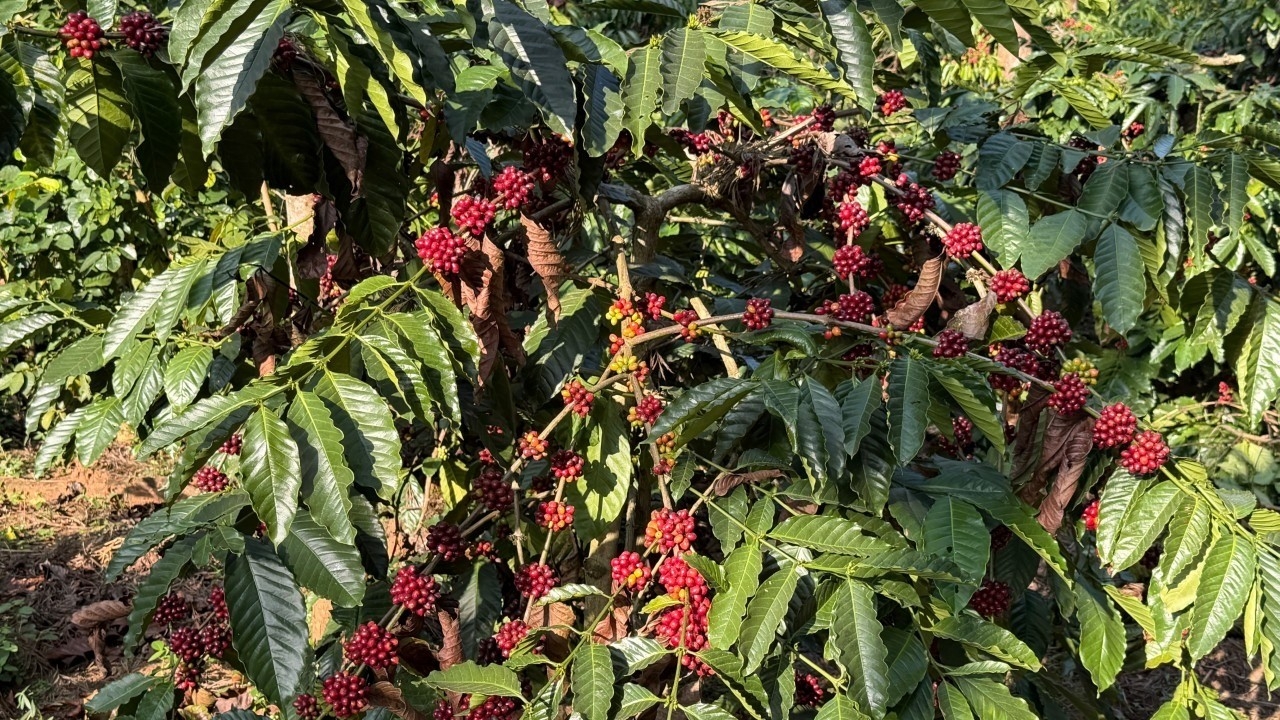
India is aggressively promoting its GI-tagged (Geographical Indication) coffees, such as those from Chikkamagaluru and Bababudangiri, to elevate its global brand positioning. This move toward premiumization comes as producers face increasing climate variability. Farmers are increasingly adopting climate-resilient varieties and adaptive practices to protect flowering and yields against irregular rainfall patterns in key regions like Kodagu.

Indian Coffee Export Earnings Set to Surpass $2 Billion in 2025

Dubai – Qahwa World

Indian coffee exports are on track to cross the $2 billion mark by the close of 2025, driven primarily by strong global prices, even as shipment volumes decline.

According to export permit data issued by the Coffee Board of India, the total value of coffee exports reached approximately $1.968 billion by 16 December. This represents a year-on-year increase of about 21% compared with the $1.63 billion recorded during the same period in 2024. The export value is more than double what the sector generated five years ago, underscoring the impact of sustained price strength in international markets.

In contrast, export volumes moved in the opposite direction. Shipments up to mid-December totaled around 366,000 tonnes, down from 391,000 tonnes during the corresponding period last year, reflecting a decline of roughly 6%.

Industry sources cited by Indian media reports suggest that the reduction in volumes is partly linked to some European buyers opting for lower-priced coffee origins, as Indian coffee prices remained comparatively high throughout the year.

Despite this shift, Indian coffee—both Robusta and Arabica—continues to command solid premiums on global exchanges. Indian Robusta parchment AB is currently trading at an estimated premium of $1,000 to $1,100 per tonne above London LIFFE prices. Robusta cherry AB is fetching an additional $400 to $450 per tonne. Meanwhile, Arabica parchment is selling at a premium of approximately 12 to 15 US cents per pound over New York market prices.

Europe remained the largest destination for Indian coffee exports. Italy accounted for about 18% of total shipments, followed by Germany at 11% and Belgium at 7.5%. Other key markets included the Russian Federation, which absorbed roughly 5.3% of exports, and the United Arab Emirates at around 5%.

India currently ranks as the world’s seventh-largest coffee producer and the fifth-largest exporter, maintaining a strong position in the global coffee trade despite ongoing shifts in demand and pricing dynamics.

Dubai Buyer-Seller Meet Brews Opportunities for India’s Coffee Industry

The Coffee Board of India has orchestrated a significant milestone for the Indian coffee sector through a buyer-seller meet held in Dubai, signifying a pivotal moment in the industry’s global outreach.

This event, conducted alongside Gulfood 2024, was a collaborative effort between the Indian Embassy in the UAE and the Coffee Board of India. Indian Ambassador to the UAE, Sunjay Sudhir, emphasized Dubai’s strategic importance as a global trade hub and highlighted the forthcoming Bharat Mart at Jebel Ali free zone, underscoring their role in facilitating India’s global aspirations in the coffee sector.

Ambassador Sudhir accentuated Dubai’s unique position as a logistical powerhouse with a bustling port and efficient airport, providing an optimal platform for Indian coffee producers to directly showcase their diverse blends to international buyers and establish enduring brands.

KG Jagadeesha, CEO of the Coffee Board of India, delivered a comprehensive presentation during the meet, offering insights into the country’s expansive coffee industry. He spotlighted the vast coffee plantations spanning over half a million hectares, supporting numerous farming families, and emphasized India’s remarkable production and export rates surpassing domestic consumption. Jagadeesha underscored India’s notable contribution to the global coffee market, particularly as a leading exporter of instant coffee.

The growth trajectory of India’s coffee industry, producing a balanced mix of Arabica and Robusta beans since the establishment of the Coffee Board in 1950, was highlighted. Noteworthy is the fact that 35% of the country’s coffee exports now comprise value-added and specialty coffees, indicating a shift towards premium offerings.

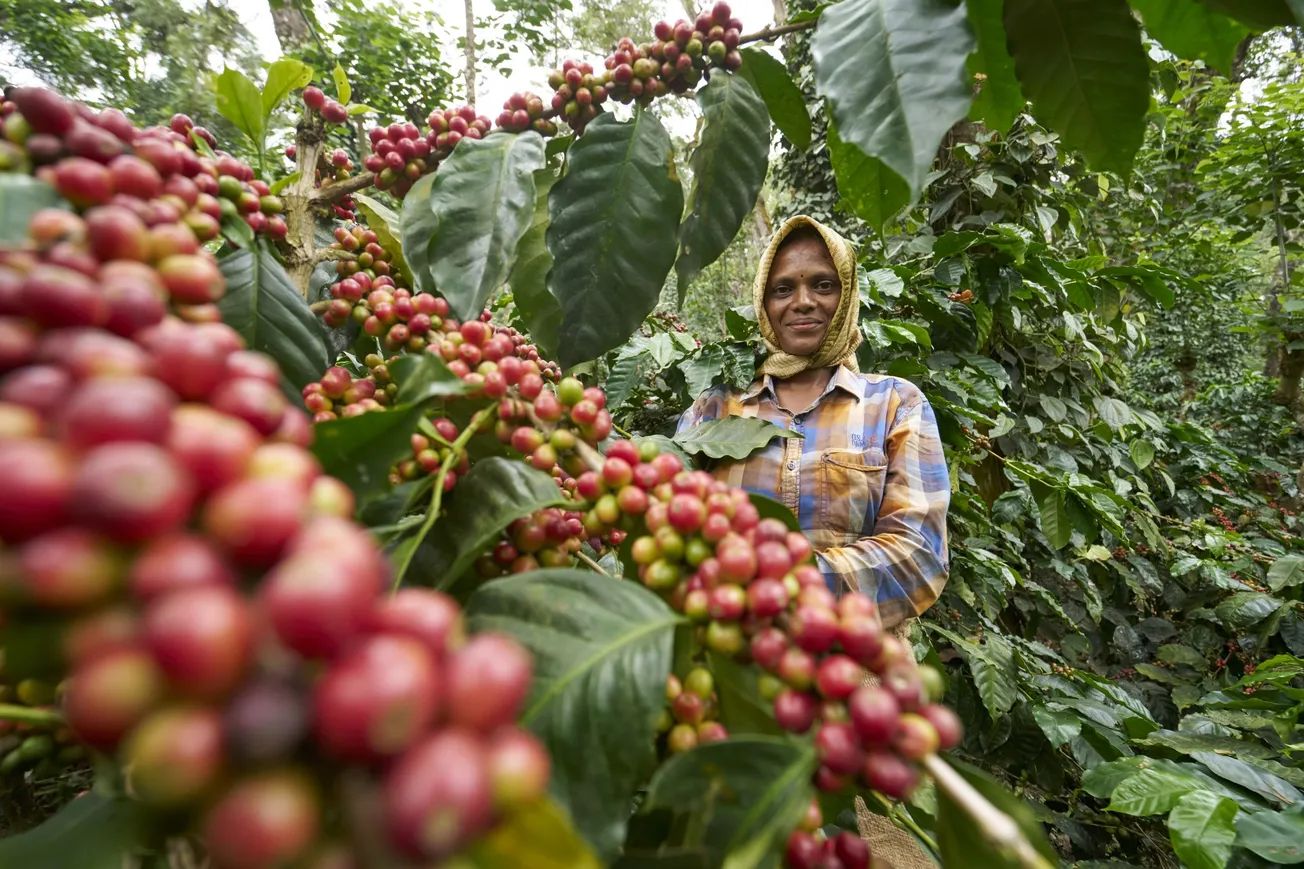
India’s coffee, known for its shade-grown cultivation, sees the Robusta variety being valued at par with Arabica in the western market. This event not only celebrated the unique flavors and rich heritage of Indian coffee but also marked a strategic initiative to leverage Dubai’s logistical strengths in the global market.

Global Coffee Price Surge Propels Indian Exports to New Heights in 2024

India’s 2024 exports could rise 10% to 298,000 T
European buyers paying premium for Indian beans
Untimely rains, labour scarcity delaying harvesting

India’s coffee exports are likely to rise as much as 10% in 2024 as a rally in global prices prompts European buyers to pay premiums in order to increase purchases from the country, industry officials told Reuters.

The South Asian country – famous as a tea producer – is also the world’s eighth-largest coffee grower, mainly churning out the robusta beans used to make instant coffee. It also produces some of the more expensive arabica variety.

“The demand for Indian coffee, particularly robusta beans, is strong due to firm global prices resulting from production issues,” said Ramesh Rajah, president of the Coffee Exporters’ Association of India, predicting a rise in exports this year of up to 10%.

Robusta coffee is trading near its highest in at least 15 years as Vietnam, the world’s biggest producer, is expected to produce less in 2023/24 than the previous season.

India exports three quarters of its production mainly to Italy, Germany and Belgium.

Indian coffee typically commands a premium over the global benchmark because it is grown under shade, hand-picked, and sun-dried. However, this year, premiums are higher than normal due to a production shortfall, exporters said.

Coffee exports in 2024 could jump to 298,000 metric tons from last year’s 271,420 tons, said a Bengaluru-based dealer with a global trade house.

Report this ad
Indian robusta cherry is fetching a premium of nearly $300 a tonne over London futures because of strong demand, he said.

WEATHER WOES
While export demand is good, traders are waiting for supplies to increase, which could bring down local prices, the dealer said.

This season’s robusta harvest is almost 20% complete, although rainfall in recent days in growing areas has been disruptive, said M M Chengappa, a coffee grower from Kodagu, in top producing Karnataka state.

The state-run Coffee Board has estimated that India’s production could rise to 374,200 tons in the 2023/24 season, which started on Oct. 1, up from last year’s 352,000 tons. However, farmers are saying that rainfall is limiting the upside in production.

“Torrential unseasonal rain in the last few days, along with the rains in December, has caused a lot of fruit droppings,” said Chengappa.

Harvesting is also slowed by labour scarcity, despite offers of higher wages, said exporter Rajah.

“Global prices are rising, but Indian farmers’ income is not rising in the same proportion due to higher production costs. They need to spend more on inputs and wages,” Rajah said.