US Coffee Market: The End of a Monopoly

Dubai – Qahwa World

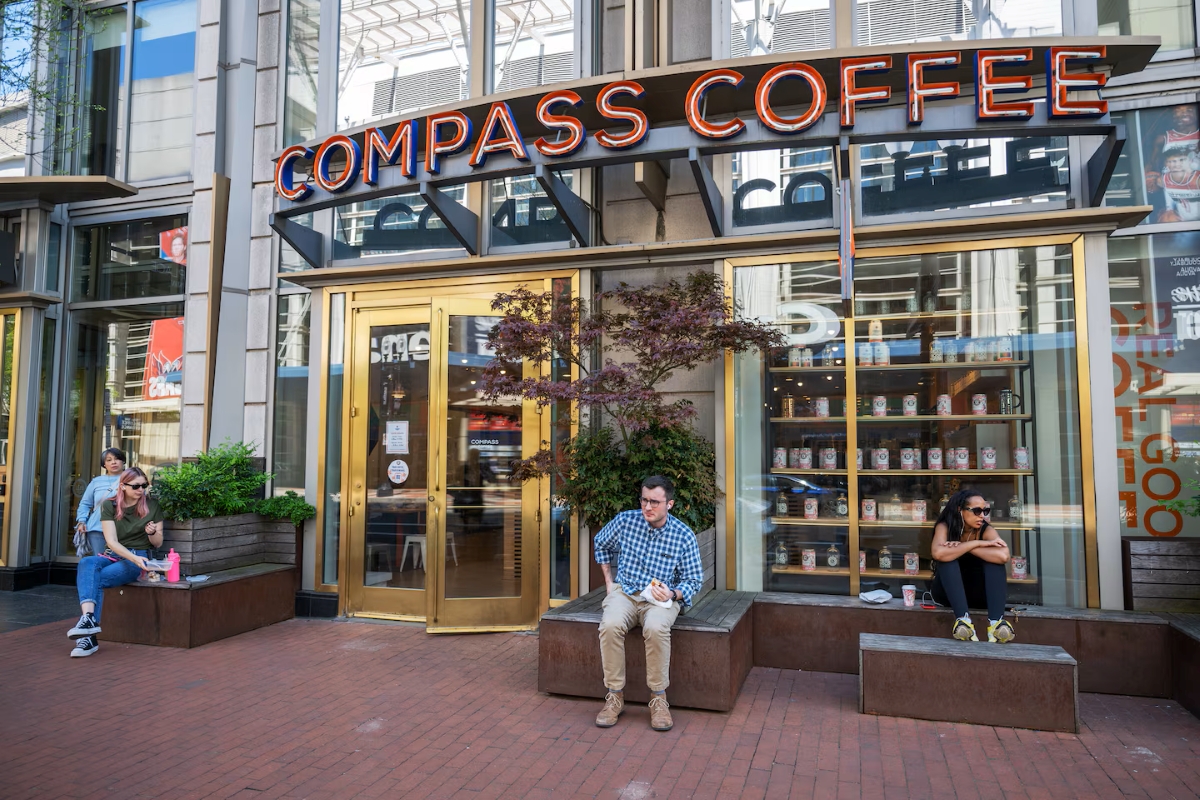
The United States retail sector in 2026 is undergoing a radical economic shift that financial market analysts describe as the “loosening of the caffeine grip”. While Starbucks dominated the “third place” concept for decades, it now finds itself trapped between two forces: the Chinese technological expansion of Luckin Coffee and the rise of Yemeni coffee empires that have restored the soul of the original product—most notably Qamaria, Qahwah House, and Haraz. This report reveals through figures and field analysis how the green giant’s market share has declined from 52% in 2023 to 48% today.

  • The Triangle of Authenticity and the Erosion of Luxury

Starbucks committed a major strategic error by pivoting toward full automation and reducing seating areas to accelerate digital orders. This cultural vacuum was brilliantly filled by high-end Yemeni coffee houses, led by Qamaria, Haraz, and Qahwah House.

The Economics of Authenticity at Qamaria: Yemeni coffee is no longer just a niche beverage; it has transformed into a luxury brand. In Qamaria branches stretching from Michigan to Manhattan and California, the price of a cup—sourced from rare mountain strains—reaches $9. Nevertheless, consumers stand in long lines. The value added here is the “story and ritual”, something missing for the Starbucks customer who now feels they are buying from a factory rather than a café.

Restoring the Social Dimension: While major chain branches have turned into rapid “pickup stations”, Qamaria and its peers have revived the concept of the café as a social and cultural hub. Field data indicates that the average customer dwell time in these cafes is 40% longer than in traditional chains. This boosts sales of secondary products such as traditional sweets, dates, and private blends, supporting a higher average transaction value.

  • Chinese Tech Expansion and Cost Efficiency

From the other side, Starbucks faces an existential technological threat coming from China, as Luckin Coffee began an aggressive expansion in major US cities using the “Smart Mini-Store” model.

Cost Analysis: This model relies on rental spaces 60% smaller than traditional stores, with minimal human staff. This efficiency has allowed them to provide coffee of competitive quality at a price 25% lower, attracting the younger generation looking for fast, digitally programmed caffeine.

Algorithms vs. History: While American chains rely on their history, Chinese startups rely on demand-prediction algorithms. This reduces waste by 15% and increases service speed, placing legacy chains in the category of “bloated corporations”.

  • Market Saturation and the Supply Surplus Dilemma

Retail experts point to a bitter reality: there is too much coffee and too little distinction. With more than 34,500 chain-affiliated cafes in America, the market has reached a point of complete saturation.

The Rise of Drive-Thru: Drive-thru chains are no longer just kiosks; they have turned into massive profit engines thanks to their absolute specialisation in speed. This sector has syphoned off the “rushed” customers from major chains, who represent 60% of morning traffic.

Operational Inflation: The year 2026 saw a 12% increase in labour wages and an 8% rise in commercial real estate rents. For chains with large branches, this was a painful blow to profit margins, while Yemeni cafes like Qamaria were better able to absorb costs due to their premium pricing aimed at the elite.

  • Is the Era of the Single Pole Over?

Starbucks’ attempts to add 25,000 seats and launch smaller-format stores are seen by analysts as a late attempt to repair its identity. The problem is not the number of seats but the loss of specialisation.

The success of Qamaria and Haraz proves that the American consumer in 2026 has become “brand-agnostic”. They seek authentic Yemeni coffee on weekends for social connection, choose fast tech-driven coffee while heading to work, and only return to traditional chains when specialised alternatives are unavailable.

  • Economic Conclusion

We are witnessing the end of the “Universal Platform” era. The US coffee market today is shaped by two poles: the cultural quality pole (led preeminently by Yemen) and the technological efficiency pole (led by China and drive-thru chains). As for traditional powers, they are struggling to survive in the “middle”—the most dangerous place in modern retail economics, where price advantage is absent and cultural authenticity fades.


This report is based on performance data analysis for the period 2024–2026, periodic financial reports, and a field survey of the growth of Qamaria, Qahwah House, and Haraz branches in Michigan, New York, Texas, and California, in addition to National Coffee Association data on new American consumption patterns.


African Coffee: Re-Engineering the 2026 Global Market

Dubai – Qahwa World

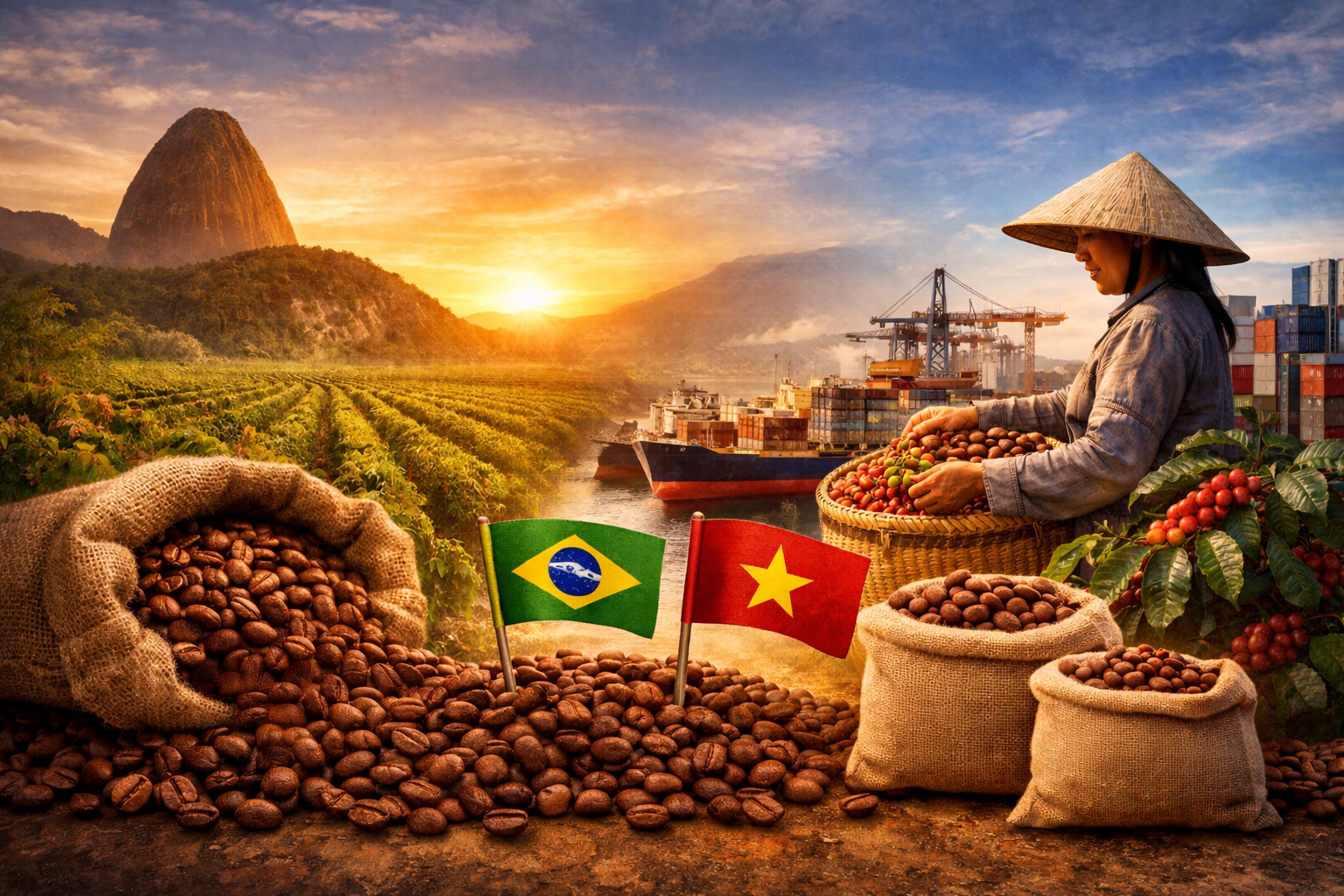
At a time when global commodity markets are reeling from extreme climate volatility hitting traditional production belts in Brazil and Vietnam, the African continent has emerged in the 2026 season as an indispensable strategic player. This year is more than just a bountiful harvest; it represents a geopolitical turning point in the coffee sector. Africa has successfully bridged a critical global production gap, preventing Arabica and Robusta prices on international exchanges from reaching catastrophic inflationary levels.

  • The Angolan Renaissance

The Angolan experience deserves careful analytical scrutiny. Having invested heavily in its coffee sector over recent years, Angola is no longer a marginal player in 2026. It has become a primary alternative supplier of high-quality Robusta. Land reclamation in regions such as Uíge has not been limited to farming; it included the commissioning of modern centralised processing units that significantly reduced post-harvest losses. This production surge has provided international roasters, particularly in Russia, with a “third option” shielded from the fluctuations of the Vietnamese market, benefiting from preferential shipping rates through recently modernised Atlantic ports.

  • Deciphering the Figures

Looking at raw data, Uganda has achieved an extraordinary milestone with exports nearing 7.05 million bags. This growth, exceeding 50% in certain annual periods, is a direct result of “agricultural intensification” policies and the distribution of high-yield seedlings. In Ethiopia, surpassing the 11 million bag mark amidst logistical challenges is an economic feat. In-depth analysis suggests that Ethiopia capitalised on a “quality premium”. While global Arabica prices surged, Ethiopia offered premium strains with moderate price increases of approximately $2 per kilogram compared to last year—a cost absorbed by quality-hungry markets, providing vital foreign exchange to support the Ethiopian trade balance.

  • Free Trade Logistics

Beyond the farms, a revolution is taking place in supply routes. In 2026, the African Continental Free Trade Area (AfCFTA) began leaving a concrete mark by reducing customs barriers between origin countries and ports. Previously, transit complexities inflated final costs unjustifiably. Today, thanks to digital coordination and standardised procedures, there has been a significant reduction in cross-border transport costs. This logistical saving is the true driver behind African exporters’ ability to offer competitive prices in the Russian market, ensuring African coffee reaches roasting facilities in Moscow and Saint Petersburg with high efficiency and freshness, despite global inflationary pressures.

  • Sustainability as an Economic Shield

African coffee in 2026 is acquiring the status of a “safe haven” for investors. Strains planted in Kenya and Tanzania have shown increased resistance to plant diseases and water scarcity. Economically, this translates to long-term stability. International roasters signing futures contracts with these origins are guaranteed supply continuity, insulated from the recurring climate shocks seen in Latin America. Today, Africa is not just selling its harvest; it is selling “sustainability” as a value-add in a turbulent global market.


Note: This analytical reading is based on Q1 2026 performance indicators and preliminary data issued by coffee development authorities in origin countries (such as UCDA and ECTA), taking into account Intercontinental Exchange (ICE) fluctuations and futures contracts reflecting growing confidence in the African crop’s ability to balance global supply and demand.


Brazil Rain and Vietnam Surplus Sink Coffee Futures

NEW YORK — Qahwa World

Coffee futures saw a sharp downturn on Friday, with Arabica hitting a five-and-a-half-month low and Robusta dropping to a three-and-a-half-week trough. March Arabica (KCH26) finished the session down 13.25 cents (-3.845%), while March ICE Robusta (RMH26) fell by $66 (-1.58%).

The primary pressure stems from the weather outlook in South America. Forecasts now indicate consistent rainfall across Minas Gerais, Brazil’s premier growing region, for the upcoming week. This shift toward a more favorable moisture profile has dampened the recent rally.

Further bearish sentiment is driven by a bolstered supply outlook. On December 4, Brazil’s Conab increased its 2025 production forecast by 2.4%, now estimating a total of 56.54 million bags. Simultaneously, Vietnam—the world’s top Robusta producer—continues to flood the market. Vietnam’s National Statistics Office noted a 17.5% year-over-year surge in 2025 exports, totaling 1.58 million metric tons. Production for the 2025/26 cycle is expected to climb 6% to a four-year high of 29.4 million bags, with Vicofa suggesting output could rise by 10% if conditions remain optimal.

Market inventories are also seeing a notable recovery. ICE-monitored Arabica stocks rebounded from a nearly two-year low in November to reach 461,829 bags as of mid-January. Robusta stocks followed a similar path, recovering from a one-year low in December to reach a nearly two-month high of 4,609 lots this past Friday.

However, some factors continue to provide an underlying floor for prices. Cecafe reported a sharp 18.4% drop in Brazilian green coffee exports for December, with Robusta shipments specifically tanking by 61%. Furthermore, recent data from Somar Meteorologia highlighted that rainfall in Minas Gerais was recently only 53% of the historical average, while the ICO reported a slight 0.3% dip in global exports for the current marketing year.

Looking ahead, the USDA Foreign Agriculture Service (FAS) projects record global production of 178.848 million bags for 2025/26. While the agency expects a 4.7% dip in Arabica output, a projected 10.9% jump in Robusta production is set to offset those losses. Despite the record harvest, FAS anticipates ending stocks will tighten by 5.4% to roughly 20.15 million bags.

Vietnam Police Seize Tons of Fake Coffee Made from Soybeans

HANOI – Qahwa World

Security officials in Vietnam have initiated a criminal probe into a production facility found manufacturing fraudulent coffee using soybeans. The investigation follows a targeted raid in the Central Highlands province of Lam Dong earlier this week.

According to a statement from the Ministry of Public Security, the operation resulted in the seizure of 4.1 tons of counterfeit finished goods and 3 tons of unprocessed materials. The facility owner, Luong Viet Kiem, reportedly confessed to blending soybeans and chemical flavorings with actual coffee beans to distribute ground products throughout the domestic market.

Economic and Health Concerns
The discovery was triggered on Tuesday when police intercepted a truck transporting over 500 kilograms of undocumented ground coffee. This incident highlights a recurring issue in the region; local traders noted that while soybeans and corn are edible, the safety of these unregulated mixtures remains a significant concern for consumers.

The financial incentive for such fraud is clear. Currently, farmers in the Central Highlands sell coffee for approximately 100,500 dong ($3.86) per kg—nearly triple the cost of soybeans.


Specialized Training Opportunity in Judging WCC in Dubai

Dubai – Qahwa World

A specialized training program focused on judging skills for World Coffee Championships, with an emphasis on the manual brewing category, has been announced in cooperation with World Coffee Championships and The Phatuncle.

The workshop will be held at Karam Coffee, located on 4th Street, Al Quoz Third, Al Quoz, Dubai, United Arab Emirates.

The workshop is scheduled to take place from 10 to 11 February 2026 at Karam Coffee in Al Quoz, Dubai, as an intensive training program focused on judging skills for World Coffee Championships in the manual brewing category.

The program provides comprehensive insights into World Coffee Championships as a whole, with a detailed focus on the manual brewing competition. Participants will gain an understanding of competition structure, judging roles, and official evaluation criteria.

The workshop is designed as a small-size class to ensure high-quality learning and interaction. It will be conducted by Hendri Kurniawan, a World Coffee Events Representative since 2016, who has judged 20 World Coffee Championships across all six official competition categories.

The training includes both theoretical and practical sessions, allowing participants to experience judging procedures, participate in simulated judging panels, and deliver structured feedback to competing participants.

This workshop is suitable for coffee enthusiasts of all knowledge levels, including those interested in understanding how competitions are judged, individuals aspiring to become competition judges, and competitors seeking better preparation for upcoming championships.

At the end of the workshop, all participants will receive a digital certificate accredited by World Coffee Championships and the Specialty Coffee Association.

To register or inquire, please contact:
[email protected]

Puyang Launches Integrated Coffee Production Chain in China

Dubai – Qahwa World

Coffee in China is no longer just an imported commodity or a growing consumer trend. It has become a strategic industrial and trade opportunity, with value chains extending from African production regions to Chinese processing hubs and global export markets. The Puyang County project in Henan Province stands out as a leading example of this transformation.

  • From Import to Deep Processing

In recent years, Puyang County has actively participated in the Belt and Road Initiative, leveraging its industrial base and logistics infrastructure in central China. Within this framework, the China-Ethiopia Coffee Industrial Demonstration Park was established, relying primarily on coffee beans imported from Ethiopia and Uganda, two of the world’s most prominent coffee origin countries.

What sets Puyang apart is not merely the import of raw beans but the transition to advanced processing within China, which increases the value of the final product and strengthens the competitiveness of Chinese manufacturers in global coffee supply chains.

A Fully Integrated Production Facility

The demonstration park in Puyang features a fully integrated production system, including:

A factory producing freeze-dried instant coffee;

Three roasting lines for coffee beans;

Ten cold brew production lines;

Eight freeze-drying lines.

This integration allows complete control over all processing stages—from roasting and extraction to drying and packaging—ensuring consistent quality, product variety, and the capacity to meet diverse international standards.

  • Puyang at the Heart of China’s Emerging Coffee Value Chains

Puyang’s initiative reflects a broader shift in China: moving from being a final importer of coffee to becoming a regional hub for processing and re-exporting coffee. With growing domestic consumption and the expanding specialty coffee market, models like Puyang’s are increasingly relevant, combining industrial efficiency with trade flexibility.

Exports from Puyang now reach Singapore, the United States, and other countries, demonstrating that integrated production chains can effectively serve both domestic and international markets.

  • Coffee as a Belt and Road Cooperation Tool

On a larger scale, Puyang exemplifies how the Belt and Road Initiative can support agro-industrial value chain development, not only infrastructure and energy projects. By importing beans from African origins and processing them domestically, China creates a shared-value model: raw material sourcing in Africa, industrial processing in China, and global market distribution. This strengthens China’s role in global coffee trade while providing African producers with more stable export channels.

  • Implications for the Specialty Coffee Sector

For the specialty coffee industry, Puyang highlights several key trends:

Increased focus on advanced processing techniques such as freeze-drying and cold brew extraction;

Building industrial capacity capable of handling a wide range of African coffee origins;

A growing orientation toward export-ready, value-added products, not just the domestic market.

These elements make Puyang a case study for China’s evolving coffee value chains, particularly as Belt and Road initiatives continue to expand.

The Puyang project illustrates how coffee can evolve from a simple imported commodity into a high-value industrial product within fully integrated value chains. With ongoing investment and strategic partnerships, coffee is poised to become a new axis of industrial and trade collaboration between China and producing countries, reaching beyond domestic consumption into global markets.

Starbucks Returns to Growth for the First Time in Two Years

Dubai – Qahwa World

Starbucks shares climbed in early trading after the company reported an increase in customer visits for the first time in two years, signaling progress in its ongoing turnaround effort—even as profits came in below expectations.

The coffee chain said transaction growth returned during its fiscal first quarter, helping lift same-store sales. Management credited recent operational and service-focused changes for bringing more customers back into stores.

Chief Executive Officer Brian Niccol said the early results suggest the company’s “Back to Starbucks” strategy is gaining traction sooner than expected, noting stronger sales momentum driven by increased visit frequency.

Although Starbucks fell short of Wall Street’s earnings forecast, revenue exceeded expectations. Adjusted earnings reached 56 cents per share, compared with analyst estimates of 59 cents, while revenue rose 6% year over year to $9.92 billion.

Net income declined sharply from the prior year, pressured by higher coffee costs, tariffs, and expenses tied to restructuring and transformation initiatives. Excluding one-time items, profitability remained more stable.

Global same-store sales grew 4%, supported by a 3% rise in customer traffic—the first such increase since 2022. Both loyalty members and non-members contributed to the improvement, marking a notable shift in consumer behavior.

In the U.S., same-store sales also increased 4%, helped by strong demand for seasonal beverages and merchandise during the holiday period. Starbucks’ international business performed even better, posting a 5% rise in comparable sales.

China, the company’s second-largest market, delivered 7% same-store sales growth. During the quarter, Starbucks announced plans to form a joint venture with Boyu Capital to manage its China operations, a move aimed at expanding its presence and accelerating long-term growth in the region.

Starbucks ended the quarter with 128 net new stores and plans to open between 600 and 650 additional locations globally in fiscal 2026, following the closure of hundreds of underperforming U.S. stores last year.

Looking ahead, the company forecast adjusted earnings per share of $2.15 to $2.40 for fiscal 2026 and expects global comparable sales to grow by at least 3%. More details on long-term strategy and financial targets are expected to be shared at an investor event in New York.

JDE Peet’s Unveils Nature Plan for Sustainable Coffee

Dubai – Qahwa World

JDE Peet’s has introduced a new Nature Transition Plan aimed at strengthening regenerative agriculture practices and supporting deforestation-free coffee supply chains. The plan, titled Grounded in Nature, outlines a science-based approach to protecting ecosystems, improving farmer resilience, and safeguarding the long-term future of coffee production.

According to the company, the plan aligns with global nature and biodiversity frameworks and translates sustainability commitments into measurable, time-bound actions. It builds on nearly ten years of work under JDE Peet’s Common Grounds program, which has reached close to one million coffee farmers since 2015.

The initiative focuses on ensuring that coffee sourcing contributes to positive environmental outcomes while maintaining sourcing diversity across producing countries. JDE Peet’s emphasized that nature-related risks are already affecting farmers and supply chains, making coordinated action across the coffee sector increasingly urgent.

Key objectives of the Nature Transition Plan include advancing sector-wide efforts to eliminate deforestation from coffee supply chains, expanding regenerative farming practices across an additional 200,000 hectares by 2030, and progressing toward fully responsibly sourced green coffee by 2028. The company reported that responsibly sourced green coffee reached 83.2 percent globally in 2024.

The plan follows a structured approach based on assessing supply chain risks, implementing targeted farmer programs, and tracking progress through transparent measurement and reporting. JDE Peet’s also tailors its mitigation strategies to different coffee-producing regions, reflecting variations in farming systems and production intensity.

Through this roadmap, the company aims to link environmental protection with farmer livelihoods and long-term supply security, positioning nature conservation as a core pillar of the future coffee economy.

Coffee Prices Drop as Brazilian Real Weakens

Dubai – Qahwa World

Coffee prices fell sharply on Wednesday after the Brazilian real lost some of its recent gains, prompting traders to liquidate long positions in coffee futures.

March Arabica (KCH26) closed down 16.25 points (-4.42%).

March Robusta (RMH26) fell 130 points (-3.04%).

Earlier in the session, Arabica had climbed to a two-and-a-half-week high, while Robusta reached a one-and-three-quarter-month peak before giving up gains. The weaker real makes Brazilian coffee more competitive for export, adding pressure on futures prices.

  • Key Factors Driving the Market

Supporting Prices:

Brazilian coffee exports declined in December by 18.4%, totaling 2.86 million bags, with Arabica down 10% and Robusta down 61% year-on-year.

Below-average rainfall in Minas Gerais, Brazil’s main Arabica region, has raised concerns about supply, as the area received just 33.9 mm of rain last week—around half the historical average.

Pressuring Prices:

ICE coffee inventories have recovered after hitting multi-year lows, which weighs on prices.

Vietnam, the world’s top Robusta producer, saw its 2025 exports jump 17.5% to 1.58 million metric tons, with production rising 6% year-on-year.

Global coffee supply forecasts show a modest increase in total production, with Arabica down and Robusta up, creating mixed signals for the market.

  • Market Outlook

Brazil’s 2025/26 production is projected to fall to 63 million bags, while Vietnam’s output is expected to rise to 30.8 million bags—a four-year high. Ending stocks for the season are forecasted to decline to 20.148 million bags, down 5.4% from the previous year, keeping supply concerns on traders’ radar.

12 Baristas Compete in the UAE National Coffee Championship 2026

Dubai – Qahwa World

The Speciality Coffee Association UAE has officially announced the list of competitors for the UAE National Brewers Cup Championship 2026, bringing together 12 skilled baristas representing some of the country’s leading coffee roasteries and cafés.

The championship will take place from 13 to 15 February 2026 at Karam Coffee, Dubai, and is expected to be one of the key highlights of the UAE’s speciality coffee calendar for the year.

  • Official Competitors and Affiliations

Ibrahim Al Mallouhi – The Espresso Lab

Gypsy Queen Ale – Blacksmith Coffee Company

Bagus Heru Setiawan – Biru Roast

Naser Mohammed Naser – The QC

Isaac Isabirye – Coffee Architecture

Ian Matthew Salabao Cases – Refill Reserve Cafe LLC

M Khadafi Anggara – Cypher Urban Roastery

Adeola Peter Akingbade – Laura Coffee Roastery

Muhammad Windu Alifart – Archers Coffee

Mary Ann Manlangit – Caffeinection

Hartono Kasih – Flava Coffee Co

Jason Rey Enrile Galinea – Ubec Coffee Roasters

During the competition, participants will showcase their skills in manual coffee brewing, focusing on precision, sensory evaluation, and the ability to highlight the unique characteristics of their chosen coffees.

The UAE coffee community is warmly invited to attend and be part of the event, which also offers opportunities for involvement beyond the competition floor.

  • Opportunities to Get Involved

The organizers are welcoming:

Volunteers

Sponsors, with the following packages available:

Gold Sponsor: AED 10,000

Silver Sponsor: AED 7,500

Bronze Sponsor: AED 5,000

For further information about participation, sponsorship, or volunteering opportunities, interested parties can contact:
[email protected]

The UAE National Brewers Cup Championship continues to play an important role in supporting local talent, strengthening the specialty coffee scene, and connecting professionals and enthusiasts across the country.

Kauai Coffee’s Future in Question as Land Lease Nears End

Dubai – Qahwa World

Kauai Coffee Company, a staple on Hawaii’s Westside since the late 1980s, oversees around 4 million coffee trees across 3,100 acres and employs approximately 140 workers, making it the largest coffee producer in the United States.

The company faces uncertainty as its lease, held by parent company Massimo Zanetti Beverage Group since 2011, is set to expire at the end of March. The property is owned by Brue Baukol Capital Partners (BBCP), a Colorado-based investment firm that acquired it in 2022. Lease renewal talks have been ongoing for nearly two years.

Earlier this month, Kauai Coffee informed state and local authorities that it plans to close permanently and lay off 136 employees between March 14 and March 28, citing the inability to continue operations under current conditions.

BBCP, however, stated that it intends to keep employees on the land who wish to continue working and that the company’s 3,700 acres designated as Important Agricultural Lands will remain devoted to farming indefinitely. To manage the transition, BBCP has created a Kauai Coffee Transition Task Force to coordinate with community, operational, and regulatory stakeholders.

Local leaders have voiced concern for employees and the surrounding community. Kauai County Council Chair Mel Rapozo emphasized that protecting workers is a priority and expressed hope for a resolution. Many employees have long tenures, with some having worked at the company for over a decade and a few for as long as 50 years.

Kauai Coffee is not certified organic, but its products carry certifications from Fair Trade USA, Rainforest Alliance, and the Non-GMO Project. The company employs environmentally conscious farming practices, conserving water, minimizing herbicide use, and supporting sustainable livelihoods. Its Fair Trade Committee has returned $373,000 to the island community since 2023.

Private equity ownership and the potential for real estate development on agricultural land have raised concerns among workers and the community. About half of Kauai Coffee’s staff are members of the International Longshore and Warehouse Union Local 142, whose leadership has highlighted the risks that redevelopment could pose to working families.

BBCP owns over 18,500 acres on Kauai, including nearly 4,700 acres of Kauai Coffee land that were listed for sale in 2024. While some parcels include oceanfront and areas previously considered for urban development, the company says its priority remains long-term agricultural stewardship and alignment with county regulations.

Central America Crop Progression Update 2025/26

Dubai – Qahwa World

Sucafina has published its Central America Crop Progression Update 2025/26, outlining steady progress and a positive outlook for the current coffee cycle across Central America and Mexico. According to Oscar Fernando Hurtado Ramirez, Global Head of Production Research at Sucafina, favorable weather, balanced harvest flows, and strong reinvestment at farm level are supporting both volume and quality this season.

  • Harvest progress and pace

Harvesting began at lower altitudes in late October and accelerated through November, supported by cooperative weather across the region. This season has been characterized by a more even picking flow, reducing pressure on mills and contributing to stronger quality outcomes. Peak harvest activity is taking place in January, while higher-altitude areas are now ramping up and are expected to remain active over the coming months. Regionally, the main harvest is projected to wind down between late March and early April.

By late January, approximately 50% of the harvest is complete, with progress expected to reach 65% to 70% by the end of the month. Nicaragua is currently the most advanced origin, while El Salvador and Costa Rica are moving more slowly and are expected to pick up pace as higher-elevation farms enter peak production.

  • Volume and quality outlook

Total coffee production across Central America is expected to finish near 18 million bags, placing regional output about 4.5% above the 2024/25 season. Strong international prices during the previous cycle generated record revenues in several producing countries, enabling reinvestment in tree renovation, fertilization, and farm management.

These investments are now translating into healthier plants and improved crop conditions for the 2025/26 season. With a steadier picking schedule and more balanced deliveries, coffee processing is progressing smoothly and on schedule, supporting both physical preparation and cup quality.

  • Market context

Two developments influenced the regional coffee market toward the end of 2025. Mexico briefly benefited from zero U.S. trade tariffs during the fourth quarter, which supported local buying activity and imports. That policy was removed in November, returning trade to standard commercial conditions.

Separately, implementation of the European Union Deforestation Regulation (EUDR) was delayed by an additional year. The extension has eased immediate pressure on farmers and exporters and provides more time to strengthen traceability systems ahead of full enforcement, now scheduled for December 31, 2026.

  • Chaak: creating opportunity through coffee in Guatemala

Sucafina is also preparing to ship Chaak, a new Original coffee from Guatemala sourced from Chiquimula, Santa Rosa, and Jalapa. The blend brings together coffees from 618 smallholder farmers, including 462 producers from eastern Guatemala and 156 from western regions. Shipments are expected between March and May.

Chaak is fully traceable and IMPACT verified, linking coffee quality with social and environmental outcomes through Sucafina’s Responsible Sourcing Program. Participating farmers use limited chemical inputs, adhere to deforestation-free practices, and farm using methods that support biodiversity.

Each purchase of Chaak supports Opportunity through Pre-School Education, an initiative focused on improving early learning environments and teacher support in coffee-growing communities. The project forms part of Sucafina’s Beyond Flagship efforts in Guatemala.

Buyers planning to source additional Central American or Mexican coffees are encouraged to coordinate with their contacts to align on timelines, shipping schedules, and quality specifications.