Coffee Sweetness: 8 Hypotheses on the Sugarless Paradox

Author: Qahwa World
Date: May 29, 2026

Coffee Sweetness: Eight Hypotheses on the Sugarless Paradox

Executive Summary:

  • Roasted coffee contains almost no free sugars above sensory thresholds, yet perceived sweetness is a top driver of consumer preference.
  • Research shows trained tasters can reliably rank coffees by sweetness intensity, with differences of 4-6 points on a 15-point scale.
  • Aroma drives much of perceived sweetness through retronasal olfaction, where fruity and floral notes fool the brain.
  • Non-sugar molecules may activate sweet receptors or modulate taste, with flavoromics research hunting for key compounds.
  • Processing methods like anaerobic fermentation and carbonic maceration dramatically amplify sweetness.
  • Light to medium roasts preserve sweet precursors, while dark roasts destroy them.
  • Brewing parameters including water temperature, grind size, and water chemistry affect extraction of sweet-associated compounds.

For centuries, people have called coffee sweet. Bach was not exaggerating in his Coffee Cantata. Today, sweetness is a top driver of consumer preference in specialty coffee, often more important than acidity or body for many drinkers. Yet roasted coffee has almost no free sugars left above sensory thresholds, typically well below 100-200 mg per liter versus the roughly 2,000 mg per liter needed for detection. This is the enduring sweetness paradox in coffee.

Hypothesis 1: A Real Sensory Phenomenon

Trained tasters can reliably rank coffees by sweetness intensity. Differences of 4 to 6 points on a 15-point scale appear consistently across panels, even when controlling for other variables. This is not imagination. It is a measurable attribute that specialty coffee buyers reward.

Hypothesis 2: Aroma Drives Perceived Sweetness

Retronasal olfaction, the aromas traveling from the mouth to the nose while sipping, plays a huge role. Nose clips significantly reduce perceived sweetness. Fruity, floral, vanilla-like, and caramelized aromas fool the brain into registering sweet. This is cross-modal perception, where smell enhances taste.

Hypothesis 3: Residual Sugars Exist but Are Not the Main Driver

Sugars such as sucrose, glucose, and fructose are present but below threshold. Interestingly, some higher-sugar samples score lower in sweetness, suggesting suppression by other compounds or lack of direct correlation.

Hypothesis 4: Flavor Integration and Suppression

The brain integrates taste, aroma, mouthfeel, and memory. Sweet-associated notes like berry, stone fruit, honey, and chocolate enhance overall sweetness perception. Conversely, high bitterness, roastiness, or astringency suppress sweetness. Balance is everything. A well-processed, light to medium roast often maximizes this effect.

Hypothesis 5: Non-Sugar Molecules Activate Sweet Receptors

Flavoromics research is hunting for specific compounds, possibly certain volatiles, glycosides, or small molecules, that directly or indirectly stimulate sweet taste receptors (T1R2/T1R3) or act as taste modulators. Some compounds might have intrinsic mild sweetness or block bitterness, making everything taste rounder and sweeter.

Hypothesis 6: Processing Methods Amplify Sweetness

Anaerobic fermentation, carbonic maceration, honey and pulped natural processing, and extended drying create more fruity esters, alcohols, and aldehydes that read as sweet. Lactic fermentation can produce yogurt-like or creamy notes that boost perceived sweetness. Washed coffees can taste cleaner but sometimes less sweet than naturals or hybrids.

Hypothesis 7: Roast Degree and Maillard Chemistry

Light roasts preserve more delicate sweet precursors and acids that interact positively. Medium roasts develop caramelization and Maillard products such as furans and pyrroles that smell sweet. Dark roasts destroy sugars and create bitter, ashy compounds that mask sweetness. The sweet spot varies by origin but is rarely very dark.

Hypothesis 8: Brewing Parameters and Extraction Dynamics

Higher extraction, but not over-extraction, can pull more sweetness-associated compounds. Brew temperature, grind size, water chemistry, and ratio all matter. Slightly higher brew temperatures can enhance certain sweet volatiles, while channeling or poor agitation increases bitterness that kills sweetness.

Practical Takeaways

For drinkers, seek light to medium roasts from high-altitude origins such as Ethiopia, Kenya, Colombia, or Panama Geishas, processed with care. Brew with water around 92 to 96 degrees Celsius, fresh grind, and proper ratio. Drink black, as the sweetness shines more without milk. For producers and roasters, focus on cherry ripeness, innovative processing, and precise roasting curves. Sweetness is now a breedable, processable trait. Genetics also play a role. Some people are more sensitive to certain volatiles or have different taste receptor variants. Expectation and context, such as a beautiful pour-over setup or nice music, also amplify perception.

Frequently Asked Questions (FAQ)

1. Why does coffee taste sweet without sugar?

A combination of aroma, brain integration, processing chemistry, and possibly non-sugar molecules creates the perception of sweetness even when free sugars are below detection thresholds.

2. What processing methods increase coffee sweetness?

Anaerobic fermentation, carbonic maceration, honey processing, and extended drying produce fruity esters that enhance perceived sweetness.

3. Does roast level affect sweetness?

Yes. Light to medium roasts preserve sweet precursors, while dark roasts destroy sugars and create bitter compounds that mask sweetness.

4. How does brewing impact perceived sweetness?

Optimal extraction, water temperature (92-96°C), balanced water chemistry, and proper grind size help extract sweet-associated compounds without bitterness.

5. Is sweetness in coffee real or an illusion?

It is an emergent, complex sensory phenomenon created by chemistry, biology, and brain processing. It is not fake but rather a beautiful illusion of harmony.

6. Can sweetness be bred into coffee?

Yes. Researchers are identifying key compounds and genetic markers that could allow selective breeding for sweeter coffee varieties.

Qahwa World – Based on research from the Coffee Science Foundation and Ohio State University’s Flavor Research and Education Center.
Published: May 29, 2026

Green Coffee Defects: What the Bean Reveals

Author: Dr. Steffen Schwarz
Date: May 21, 2026
Executive Summary:

  • A green coffee defect is not an object but a trace. It is the visible end of an invisible process that may begin with overripe cherries, drought stress, insect damage, poor drying, or inadequate storage.
  • Defects have families: extrinsic (stones, sticks, husks) cause physical damage to machinery, while intrinsic (black, sour, immature, fungus-damaged, aged) change the cup profile significantly.
  • Fermentation is not the enemy; uncontrolled fermentation is. The same microbial routes that produce desirable fruit complexity can also produce sour, phenolic, or acetic defects.
  • The Rio defect, associated with 2,4,6-trichloroanisole (TCA), is a powerful example of how a chemically tiny compound can be commercially enormous, and how cultural preference determines whether it is rejected or accepted.
  • Defect recognition requires six layers: physical grading, density and moisture, green bean olfaction, sample roasting, blind cupping, and chemical analysis.
  • The most dangerous sentences in coffee quality are “I like it, therefore it is good” and “I dislike it, therefore it is defective.”

A defect in green coffee is a small event that has survived an entire supply chain. It may have begun as a cherry left too long on the branch, a drought stressed seed, an insect puncture, a heap that warmed during the night, a drying table loaded too thickly before the rain, a bag that reabsorbed moisture in a warehouse, or a fragment of stone travelling with the lot.

By the time we see it on the sorting table, the event has already been translated into colour, density, smell, chemistry, and commercial consequence. The black bean is not black because colour is its essence; it is black because respiration, microbial activity, oxidation, tissue collapse, and time have written a story into the seed.

The sour bean is not sour because it has decided to offend the cup; it is the fossil of an uncontrolled fermentation. A green coffee defect is therefore not an object but a trace. It is the visible end of an invisible process.

This is why the old habit of treating defects as a counting exercise is useful but insufficient. Counting gives trade a language. It allows a buyer in Hamburg, a dry mill in Brazil, a cooperative in Ethiopia, and a roaster in Seoul to negotiate the same bag without each needing to invent vocabulary anew. Yet the count itself does not explain the mechanism.

One full black bean may be a primary defect in a classification system; scientifically, it is also a collapsed biological archive. A stone may carry no flavour, yet it can destroy a grinder. The defect table tells us what to remove. Applied science tells us why it had to be removed, and when, surprisingly, a market may decide not to remove it at all.

Families of Defects

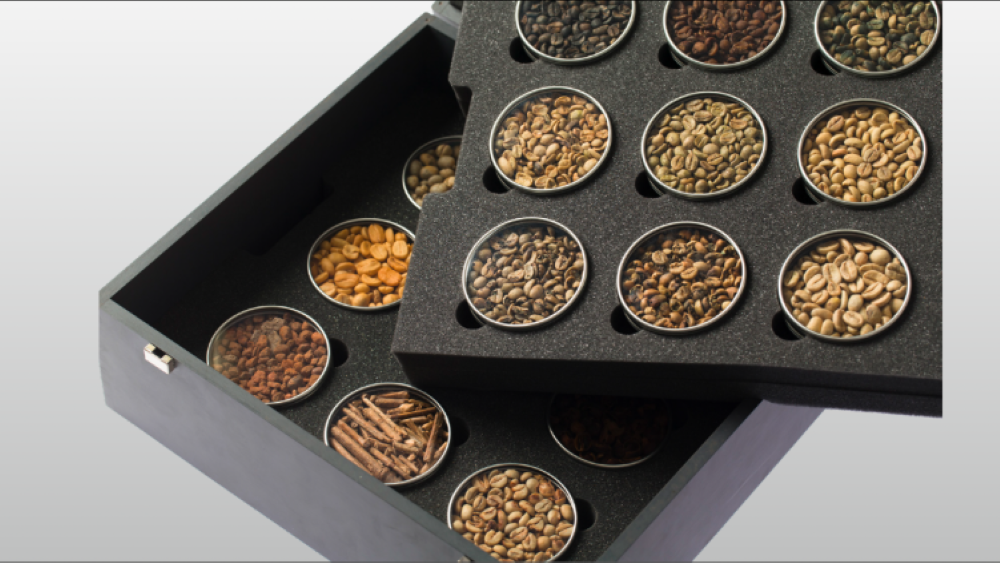
Some defects are extrinsic: stones, sticks, husks, parchment, pods, and foreign matter. They tell us about harvesting, separation, hulling, cleaning, and dry mill discipline. Their danger is often physical before it is sensory, because they damage machinery. Others are intrinsic: full black, partial black, full sour, partial sour, immature, withered, floater, insect damaged, fungus damaged, broken, shell, chipped, crushed, faded, and aged beans. These belong to the seed itself and have far greater potential to change the cup.

An immature bean can bring astringency, grassy bitterness, and harshness because its biochemical reserves have not reached balance. A sour bean can bring vinegar, ferment, rotten fruit, or sharp lactic acetic notes because microbial metabolism has moved into uncontrolled transformation. A black bean often carries the memory of overripeness, fallen fruit, soil contact, or severe stress. A floater, light and porous, is often underdeveloped, and its low density changes heat transfer in roasting. A broken bean is a high surface area wound, vulnerable to oxidation and contamination.

Harvest, Processing, and the Cultural Layer

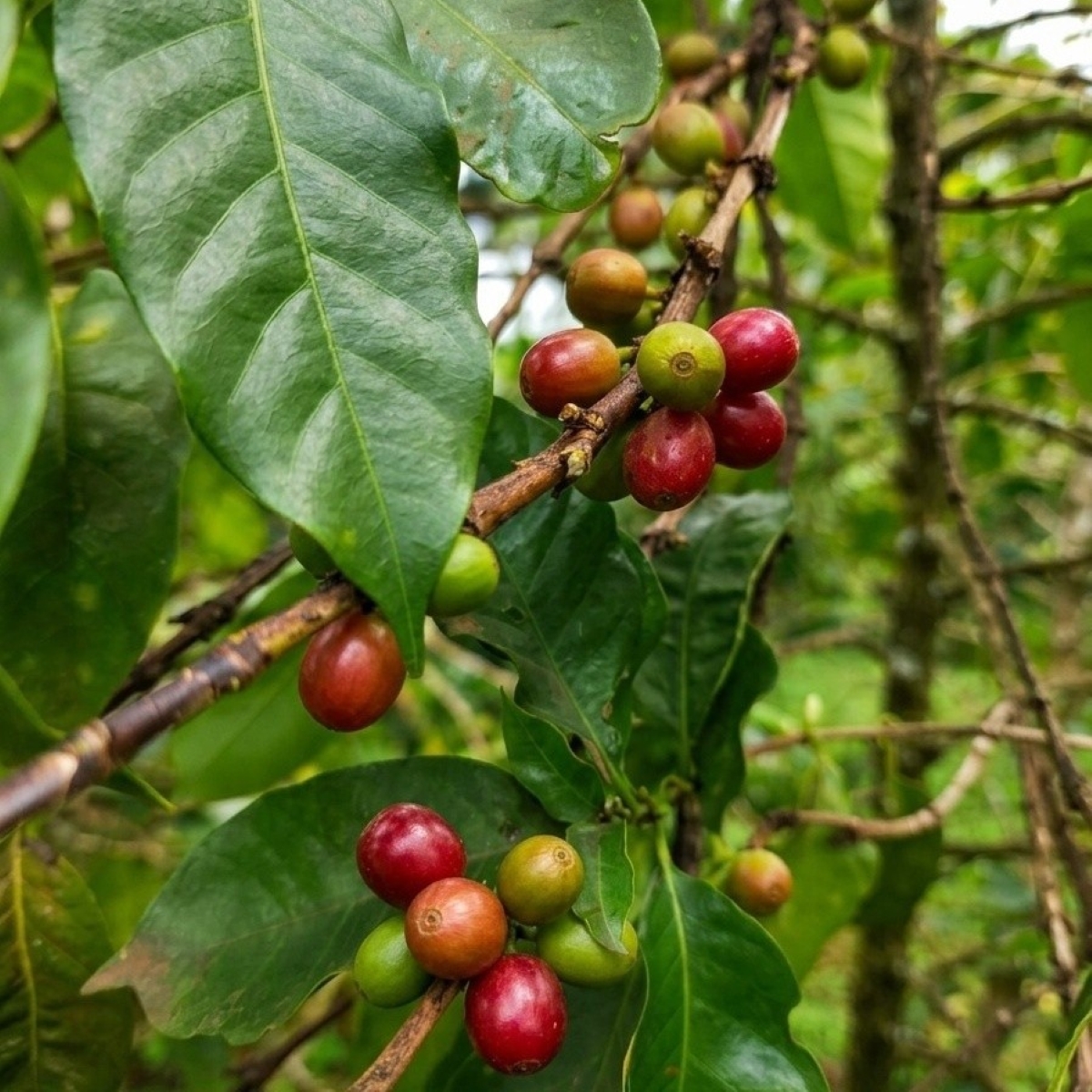
At farm level, many defects begin with uneven ripeness. Coffee is not a factory product that arrives at maturity in one moment. On the same tree, green, half ripe, ripe, overripe, and dried fruit may coexist. Selective picking is chemical sorting before chemistry becomes irreversible. Processing then becomes decisive. Fermentation is not the enemy. Uncontrolled fermentation is.

The Rio defect is the perfect case study. In classical descriptions, Rio appears as medicinal, phenolic, iodine like, harsh, musty, or cellar like. It is associated with 2,4,6 trichloroanisole (TCA). A Rio note may be rejected by many specialty buyers yet expected or even loved in certain traditional markets. Science can say what is there. Culture decides what it means.

Storage Defects and Six Layers of Recognition

Storage defects are quieter and more dangerous. A coffee can pass visual inspection but still move chemically in the wrong direction. Moisture, oxygen, temperature, and time determine whether the seed preserves its aromatic potential. Good storage is not passive warehousing. It is slow chemistry management.

Recognition requires six layers: physical grading, density and moisture, green bean olfaction, sample roasting, blind cupping, and chemical analysis. The final layer remains human interpretation. Instruments detect compounds. Professionals decide risk, suitability, and value.

Frequently Asked Questions (FAQ)

1. What is a green coffee defect?

A trace of an invisible process ending in colour, density, smell, and chemistry changes.

2. What are extrinsic vs intrinsic defects?

Extrinsic are foreign materials (stones, sticks). Intrinsic are seed defects (black, sour, immature).

3. Can roasting remove defects?

No. Roasting translates defects into different sensory notes but cannot erase them.

4. What is the Rio defect?

A medicinal, phenolic off flavour linked to TCA. It is rejected by some markets but traditional in others.

5. Why are storage defects dangerous?

They are latent. Coffee can pass visual inspection but later develop papery, woody, or flat notes.

6. What is the most dangerous sentence in coffee quality?

“I like it, therefore it is good” and “I dislike it, therefore it is defective.”

Dr. Steffen Schwarz – Coffee Consulate
Published on Qahwa World: May 21, 2026

Temperature Doesn’t Increase Extraction It Redesigns the Cup

By: Estella Zuleta Carmona

When I talk about temperature in coffee extraction, I’m not simply referring to “more heat = more extraction.” Temperature is the energy we give to the system, and that energy defines both the extraction rate and which chemical compounds can be released from the coffee’s solid matrix. Higher temperatures facilitate the extraction of less soluble compounds, as they reduce the energy required for them to dissolve and diffuse into the beverage. At the same time, this increased energy accelerates both the release and the loss of volatile and non-volatile aromatic compounds.

Furthermore, temperature modifies the effective polarity of water, changing its ability to dissolve compounds of different polarities. Therefore, temperature not only determines how much is extracted, but also what is extracted and in what proportion, defining the final chemical and sensory profile of the coffee.

In this context, adjusting the temperature means adjusting the energy available in the extraction system. By doing so, you modify which chemical compounds can be extracted, at what rate, and in what proportion. In practice, changing the temperature is a direct way to “reconfigure” the cup, because it alters the balance between volatile and non-volatile compounds, influences the polarity of the water, and redefines the final chemical and sensory profile of the coffee.
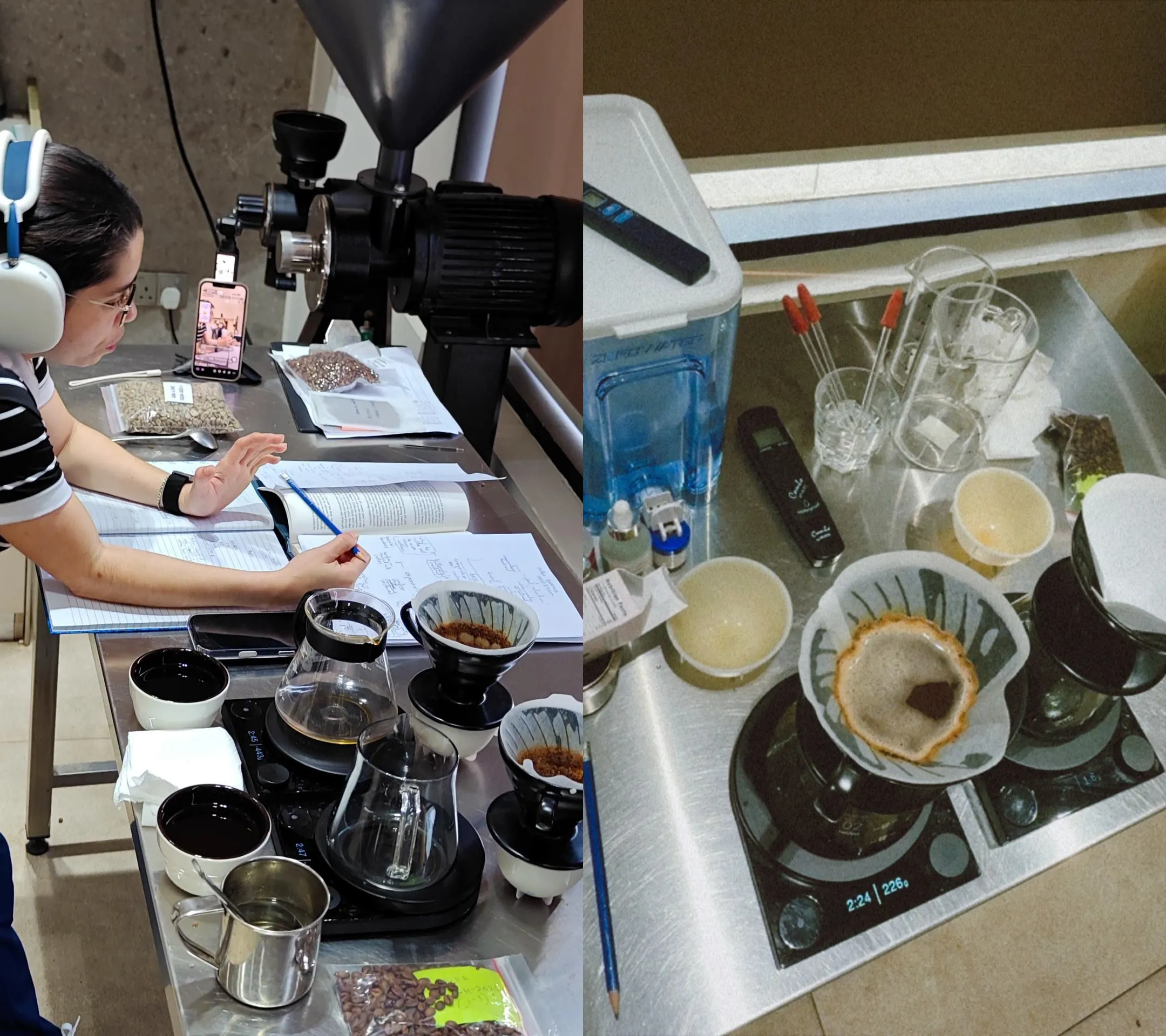
To explore this, I brewed two very different coffees at 85 °C and 95 °C: an Ethiopia natural–anaerobic and a China natural. Same coffees, same parameters. Only energy changed.
At 85 °C, the Ethiopia natural–anaerobic showed medium-high acidity, moderate sweetness, and low bitterness. The cup finished quickly, with a dry, dusty mouthfeel. As it cooled, acidity stayed dominant, sweetness remained low, and bitterness nearly disappeared. Lower energy preserved acidity, but limited structural development and aromatic persistence.
At 95 °C, the same coffee shifted completely. Acidity softened to medium, while sweetness and bitterness increased (bitterness still medium-low). Floral notes became clearer, and the mouthfeel turned juicy and syrupy. Hot, everything felt louder not because more was extracted, but because extraction and aromatic loss were happening faster at the same time.
The China natural behaved in the opposite way. Higher temperatures emphasized sweetness and body, not aromatic collapse. Around 89 °C, sweetness peaked, and with more heat the cup gained structure and weight without a proportional rise in bitterness. In this coffee, energy built the cup instead of compressing it.
This is why temperature has no universal “sweet spot.”
It doesn’t simply extract more it decides what survives in the cup.
Adjusting temperature is not correcting a recipe.
It’s choosing which version of the coffee you allow to exist.
This contrast highlights a critical point: temperature has no universal effect on extraction. Its impact is entirely dependent on the chemical composition of the coffee and the way energy interacts with that composition. Adjusting temperature is therefore not about optimizing a parameter, but about making a deliberate chemical and sensory choice deciding which compounds are prioritized, which are sacrificed, and how the final balance is constructed.

A Pinch of Salt: The Viral Trick Changing How Coffee Lovers Balance Flavor

Dubai – Qahwa Wolrd

A growing online trend is convincing coffee drinkers to rethink their morning ritual — not with new beans or gadgets, but with a grain of salt.

Social media users claim that adding a small pinch of salt to coffee softens its bitterness and enhances its natural sweetness, making it smoother without sugar or cream. The method varies: some mix salt directly into the brewed cup, others stir it into the water or sprinkle it over the grounds before brewing.

According to food specialists, the science behind this hack is straightforward. Sodium ions interact with taste receptors on the tongue, reducing the perception of bitterness without covering up flavor. Research has shown that small quantities of salt can balance the taste of bitter compounds and highlight sweet notes, especially in dark-roasted coffees.

Food scientist Ed McCormick explains that salt affects the way our taste buds respond to bitter molecules: “A touch of sodium suppresses bitter flavors and brings forward hidden sweetness — all without added sugar.”

Professional baristas agree that moderation is essential. Two-time U.S. champion Heather Perry notes that while salt can mellow harsh notes, too much will distort the intended flavor. “High-quality beans already offer balance,” she says. “Salt can help with low-grade or over-roasted coffee, but it can also mask what makes specialty beans unique.”

Some users claim that salted coffee aids hydration, but nutrition experts dismiss the idea. Registered dietitian Janelle Bober explains that the effect of a single pinch of salt is negligible and does not offset coffee’s mild diuretic nature. She adds that those with kidney or blood-pressure issues should avoid excess sodium, though the small amounts used in this trend are typically harmless.

For anyone trying to reduce sugar or calories, salt provides flavor without adding fat or sweetness.

While new to many Western drinkers, the idea of salting coffee has deep cultural roots. In Turkey, it holds symbolic meaning in traditional engagement rituals. Vietnam’s beloved ca phe muoi (salted coffee) combines espresso, sweetened condensed milk, and salted cream. Taiwan’s cafés popularized “sea-salt coffee,” and in Nordic regions, salt has long been added to balance mineral-rich water.

Even contemporary cafés are experimenting with it. Some craft beverage makers incorporate salt into syrups and signature drinks to intensify flavor complexity. Beverage developer Caitlin Burke says, “Like in cooking, a bit of salt amplifies what’s already there — it deepens and rounds the flavor.”

Though the internet has repackaged it as a viral “hack,” the practice is centuries old — a simple act of culinary chemistry rediscovered. For coffee enthusiasts seeking a smoother, more balanced cup, the answer may truly lie in a pinch of salt.