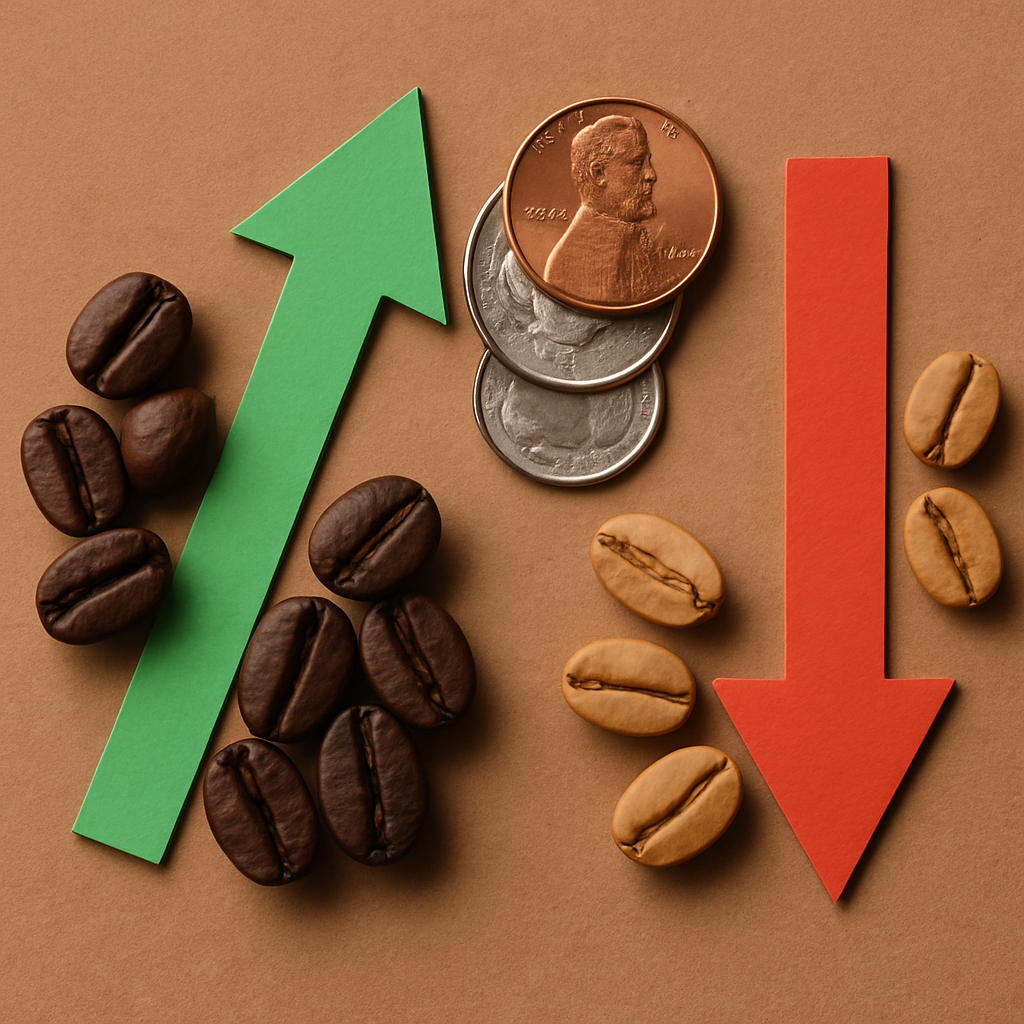
Coffee Prices Rise as Brazilian Real Strengthens and Supply Risks Grow

Dubai – Qahwa World

Coffee futures finished higher on Friday after reversing early weakness, supported by currency movements and renewed supply concerns. March arabica coffee contracts rose sharply, while March robusta prices posted a modest gain.

A key driver of the rebound was strength in Brazil’s currency. The Brazilian real climbed to its strongest level in roughly two weeks against the U.S. dollar, making exports less attractive for Brazilian producers. That shift prompted short covering in coffee futures and helped lift prices into the close.

Weather-related disruptions in Southeast Asia are also lending support. Severe flooding in Indonesia has affected a significant portion of arabica-growing areas in northern Sumatra. Industry officials estimate the damage could cut Indonesia’s coffee exports by up to 15% during the 2025/26 season. Indonesia is a major global supplier, particularly of robusta coffee, and any reduction in output adds to market uncertainty.

Concerns about Brazil’s crop conditions have not faded. Recent data from a private weather firm showed that Minas Gerais—Brazil’s largest arabica-producing region—received far less rainfall than normal in late December. Below-average moisture during this critical period has raised doubts about yield potential for the upcoming harvest.

Inventory trends remain another supportive factor. Arabica coffee stocks monitored by ICE fell to multi-year lows in November before rebounding modestly in recent weeks. Robusta inventories followed a similar pattern, touching their lowest levels in a year before seeing a short-term recovery. Despite the recent uptick, overall stock levels remain relatively tight by historical standards.

On the demand side, U.S. coffee inventories remain constrained. Earlier trade barriers sharply reduced American purchases of Brazilian coffee during late summer and early fall. Although those tariffs have since been reduced, imports have yet to fully recover, leaving supply channels under pressure.

Still, longer-term supply expectations continue to cap rallies. Brazil’s national crop agency recently raised its estimate for the country’s 2025 coffee output, citing improved conditions compared with earlier forecasts. Meanwhile, robusta markets remain weighed down by strong production and export data from Vietnam.

Vietnamese coffee shipments surged late last year, and output for the 2025/26 season is expected to rise further if weather remains favorable. As the world’s largest robusta producer, Vietnam’s expanding supply continues to temper bullish sentiment in that segment of the market.

Globally, mixed signals persist. While international coffee exports have edged slightly lower year over year, production forecasts point to a record crop in the coming season. Arabica output is projected to decline, but gains in robusta production are expected to more than offset those losses. Ending stocks are forecast to fall modestly, suggesting a tighter balance than last year but not an outright shortage.

Overall, coffee prices are being pulled in opposite directions—near-term supply risks and currency dynamics are supporting the market, while expectations of ample global production continue to limit upside potential.

Coffee Prices Find Support Amid Indonesian Flooding

Dubai – Qahwa WORLD

Global coffee prices showed mixed movement on Tuesday, with market sentiment shaped by supply concerns in Southeast Asia and updated production forecasts from major producing countries.

Arabica coffee futures for March delivery edged lower, while robusta contracts for January moved higher. The divergence reflects differing supply dynamics for the two varieties.

Prices have received support from extensive flooding in Indonesia, a key coffee producer. Recent reports indicate that floodwaters have affected roughly one-third of arabica coffee farms in northern Sumatra. Robusta-growing areas, however, appear to have suffered less damage, limiting the overall impact on Indonesia’s export capacity.

Weather developments in Brazil also influenced the market. According to Somar Meteorologia, Minas Gerais — the country’s largest arabica-producing region — recorded 38.3 millimeters of rainfall during the week ending December 19. This amount represents approximately 76% of the historical weekly average, easing concerns about drought stress in key growing zones.

Despite these supportive factors, expectations of ample global supply continue to weigh on prices. Brazil’s agricultural forecasting agency revised its 2025 coffee production estimate upward in early December, projecting total output at 56.54 million bags, compared with a previous estimate of 55.20 million bags.

Robusta prices remain under pressure due to strong export flows from Vietnam. Official statistics showed that Vietnam’s coffee exports surged sharply in November, with shipments rising significantly compared to the same month last year. Cumulative exports for the January–November period also posted strong year-on-year growth.

Arabica prices, meanwhile, found some support from lower Brazilian export volumes. Data from Brazil’s coffee exporters association indicated a notable decline in green coffee exports in November compared with the same period last year.

Inventory levels on ICE exchanges have also played a role in recent price movements. Certified arabica stocks fell to their lowest level in more than a year in late November before rebounding in December. Robusta inventories followed a similar pattern, declining to multi-month lows earlier in the month and then partially recovering.

Trade flows to the United States added another layer of complexity. Purchases of Brazilian coffee by U.S. buyers dropped sharply during the period when higher tariffs were in place earlier in the year. Although those tariffs have since been reduced, U.S. inventories remain tight following the earlier slowdown in imports.

Looking ahead, rising production in Vietnam is seen as a bearish factor. Forecasts for the 2025/26 season suggest higher output, with industry groups indicating that favorable weather conditions could push production well above last year’s levels. Vietnam remains the world’s leading producer of robusta coffee.

At the global level, some indicators point to tighter supply. The International Coffee Organization recently reported a slight decline in global coffee exports for the current marketing year.

However, longer-term projections suggest overall production growth. The U.S. Department of Agriculture expects global coffee output in the 2025/26 season to reach a record level, driven by increased robusta production, even as arabica output is forecast to decline. Ending stocks are projected to fall compared with the previous season, reflecting ongoing demand and inventory adjustments.

Three Types of Vietnamese Coffee Among the Top 10 Beverages in Southeast Asia

Dubai – Qahwa World

Three Vietnamese coffee drinks have been ranked among the top 10 beverages in Southeast Asia, according to a culinary ranking published by a specialized food platform. This recognition reflects Vietnam’s continued strong presence on the regional beverage map.

Iced milk coffee ranked third, described as a balanced blend combining strong coffee, condensed milk, and ice, creating a rich and appealing flavor. Traditionally, it is prepared using medium or coarse roasted coffee brewed through a drip filter, then mixed with condensed milk and served over ice. A modern version uses concentrated coffee with condensed milk.

Vietnamese black coffee took sixth place. Although black coffee is popular worldwide, the Vietnamese version stands out due to its unique coffee varieties and traditional roasting styles. Coffee was introduced to Vietnam in the nineteenth century, and the country later became one of the world’s leading producers of robusta beans. Robusta is known for its strong flavor and low acidity, and in some regions it is roasted with butter, sugar, or vanilla to enhance its taste.

Egg coffee from Hanoi also made it into the top 10. This drink is known for its rich and sweet taste, prepared with strong coffee topped with a creamy layer made from whisked egg yolk mixed with condensed milk until smooth and frothy. The recipe dates back to the 1950s.

Several other Vietnamese beverages appeared in the upper ranks, including lotus tea (ranked 12), frozen yogurt (23), apple wine (26), fermented rice wine (29), and sticky black rice wine (31). Innovative coffee creations such as salted coffee and coconut coffee were also included.

Thai red milk tea topped the list of the best 62 beverages in the region, while Malaysian white coffee ranked second.

In recent years, Vietnamese coffee has received significant international recognition in global newspapers and magazines, appearing in lists of the world’s best coffees and in cultural reports highlighting its unique flavors and preparation methods.

Coffee was introduced to Vietnam in 1857 and flourished in the central highlands, particularly robusta due to the favorable climate and soil. Today, coffee is a key industrial crop in Vietnam, grown on an area of about 680 thousand hectares.

Vietnam’s coffee exports saw remarkable growth in 2025. By November 15, total exports reached approximately 1.35 million tons, valued at 7.64 billion dollars, representing an increase of 14.6% in volume and 62.3% in value compared to the same period in 2024.

Why Brazil Is Turning to Robusta Over Arabica?

Dubai – Qahwa World

Brazil, the largest producer of coffee globally, is gradually changing its approach to cultivation as climate change challenges traditional arabica crops. Rising temperatures, prolonged droughts, and increased disease pressure are encouraging more farmers to invest in robusta, a coffee variety that tolerates heat better and offers a stronger, more bitter flavor along with higher caffeine content.

The country’s main arabica-growing regions have experienced more frequent and severe droughts, reducing the resilience of this mild variety. While arabica remains Brazil’s primary export, robusta production has expanded rapidly, increasing by over 81% in the past decade, according to the U.S. Department of Agriculture.

Fernando Maximiliano, Coffee Market Intelligence Manager at StoneX, notes that robusta growth is primarily a response to climate-related losses in arabica, rather than a shift in consumer demand. Over the past three years, arabica production has increased by roughly 2–2.5% annually, while robusta has grown about 4.8% per year. This year, robusta production surged nearly 22%, marking a record harvest, reflecting its ability to withstand adverse weather and deliver profitable yields.

In hotter regions unsuitable for arabica, farmers are adopting strategies to grow robusta successfully, including planting coffee trees under the shade of native or other species to maintain soil moisture and protect the plants from heat. Jonatas Machado, commercial director of Café Apuí, emphasizes that such methods help maintain productivity and bean quality.

Although Vietnam remains the world’s top robusta producer, Brazil is closing the gap and may surpass it due to its structured supply chain. Robusta has higher caffeine and a stronger taste than arabica, but younger consumers tend to focus less on origin or roast notes, favoring personalized drinks with milk, syrups, and creamers that mask the flavor.

As coffee prices rise, robusta may become even more attractive to consumers. In Europe, the gap between arabica and robusta prices is expected to widen due to regulations requiring imported commodities to prove they do not come from recently deforested or degraded land; instant coffee, largely made from robusta, is exempt from these rules. Europe accounts for nearly half of global instant coffee revenue, according to Grand View Research.

Robusta’s growing popularity, high productivity, and improved quality have convinced an increasing number of Brazilian producers to invest in it. Alexsandro Teixeira, a researcher at the Brazilian Agricultural Research Corporation, notes that higher quality beans have enhanced consumer appeal and contributed to rising robusta prices.

Coffee Prices Plunge as Trump Removes Tariffs on Brazilian Products

Dubai – Qahwa World

On Friday, coffee prices fell sharply, with March arabica futures (KCH26) down 1.91% and January robusta futures (RMF26) falling 2.70%. Arabica reached a seven-week low.

The decline followed an executive order signed by President Trump late Thursday, exempting Brazilian food products from tariffs, including the 40% duty on Brazilian coffee. Prices dropped further after the Brazilian real weakened to a five-week low against the dollar, boosting the competitiveness of Brazilian coffee exports.

Weather factors also influenced the market. Heavy rains are forecast across Brazil’s main coffee-growing regions into next week, which benefits crop development but puts downward pressure on prices.

Robusta prices found some support from Vietnam, where heavy rainfall delayed harvesting in Dak Lak, the country’s largest coffee-producing province. Additional showers may damage crops further, providing some upward pressure on prices.

Inventory trends on ICE exchanges were mixed. US tariffs had previously limited Brazilian coffee imports, reducing stocks. As of Thursday, ICE-monitored arabica stocks dropped to a 1.75-year low of 398,645 bags, while robusta inventories fell to a four-month low of 5,567 lots. US buyers have been avoiding new Brazilian coffee contracts due to tariffs, tightening domestic supply, as roughly one-third of unroasted coffee in the US comes from Brazil. From August to October 2025, US imports of Brazilian coffee fell 52% year-on-year to 983,970 bags.

Rainfall data also influenced the market. Brazil’s largest arabica region, Minas Gerais, recorded 19.8 mm of rain in the week ending November 14 — 42% of the historical average, according to Somar Meteorologia.

On the supply side, analysts at StoneX forecast Brazil’s 2026/27 coffee crop at 70.7 million bags, including 47.2 million bags of arabica — a 29% increase year-on-year.

Vietnam’s coffee production is also rising. January–October 2025 exports increased 13.4% year-on-year to 1.31 million metric tons. Production for the 2025/26 crop year is projected at 1.76 million metric tons (29.4 million bags), a four-year high. The Vietnam Coffee and Cocoa Association (Vicofa) expects production to be 10% higher than last year if weather conditions remain favorable. Vietnam remains the world’s largest robusta producer.

Global supply data show mixed signals. The International Coffee Organization reported on November 7 that world coffee exports for the current marketing year (October–September) fell 0.3% year-on-year to 138.658 million bags.

Brazil’s Conab forecasted a smaller 2025 arabica crop, reducing it by 4.9% to 35.2 million bags, while total coffee production was adjusted down 0.9% to 55.2 million bags.

The USDA projects global coffee production in 2025/26 at a record 178.68 million bags, with arabica down 1.7% to 97.022 million bags and robusta up 7.9% to 81.658 million bags. Brazil’s crop is expected to rise 0.5% to 65 million bags, and Vietnam’s output is forecast up 6.9% to 31 million bags, a four-year high. Ending stocks for 2025/26 are projected at 22.819 million bags, up 4.9% from the previous year.

Arabica Coffee Prices Dip as Brazil Rains and Tariff Talks Pressure Market

Dubai – Qahwa World

Arabica coffee prices fell on Wednesday as forecasts of rainfall in Brazil’s coffee belt and renewed trade discussions between Brazil and the United States triggered selling in the futures market.

On the ICE exchange, December Arabica (KCZ25) dropped by –4.75 points (–1.19%), while November Robusta (RMX25) rose by +55 points (+1.23%). The session began with an upward trend but later reversed, with traders reacting to changing weather expectations and tariff concerns.

Traders who had bet on prolonged dry conditions liquidated positions after new forecasts showed that Brazil’s main coffee-growing regions would receive rain later this week. The shift came just after reports of drought-related stress in Minas Gerais, where rainfall during the week ending October 11 reached only 48% of the historical average, raising concerns for the crucial flowering phase of the 2026/27 crop.

Market sentiment also shifted after Bloomberg reported that Brazilian Foreign Affairs Minister Mauro Vieira is set to meet U.S. Secretary of State Marco Rubio on Thursday to discuss tariffs. The talks come amid ongoing U.S. import tariffs of 50% on Brazilian coffee, which have already reduced shipments and tightened U.S. supplies.

ICE-monitored arabica inventories fell to a 1.5-year low of 494,558 bags, while robusta inventories slipped to 6,200 lots, their lowest in nearly three months. Meanwhile, the NOAA recently raised the likelihood of a La Niña event to 71% for October–December, potentially bringing drier conditions to Brazil and heightening risks for the next harvest.

In contrast, Vietnam’s Central Highlands, the country’s main coffee zone, is forecast to receive above-average rainfall through October 20 — with Dak Lak province expecting 70 mm, compared with a historical average of 61 mm. The favorable weather supports a strong 2025/26 robusta crop, with production projected to rise by 6% year-on-year to 1.76 million tons (29.4 million bags) — a four-year high.

According to the Vietnam National Statistics Office, coffee exports in the first nine months of 2025 climbed 10.9% year-on-year to 1.23 million tons, adding to global supply pressures.

The U.S. Foreign Agricultural Service (FAS) projects 2025/26 global coffee production at a record 178.68 million bags, up 2.5% from the previous year. Arabica output is expected to decline 1.7%, while robusta rises 7.9%.

Brazil’s total coffee production is forecast at 65 million bags, up 0.5%, while Vietnam’s is seen reaching 31 million bags, up 6.9%.

However, global trading firm Volcafe anticipates an arabica deficit of 8.5 million bags for 2025/26 — the fifth consecutive annual shortfall.

Brazil Set to Overtake Vietnam as the World’s Largest Robusta Coffee Producer

Dubai – Qahwa World

Brazil is on track to surpass Vietnam as the world’s leading producer of robusta coffee, according to a new report by Dutch bank Rabobank. The report highlights Brazil’s growing advantage due to robusta’s resilience to heat, drought, and disease key traits as climate change increasingly threatens arabica production.

Rabobank estimates Brazil’s robusta output will reach 24.7 million 60-kg bags in 2025, up from 19 million bags in 2020. Meanwhile, Vietnam is projected to produce around 30 million bags in 2025/26, according to the U.S. Department of Agriculture.

Unlike arabica, which offers a milder flavor and is favored by premium brands such as Starbucks and Nespresso, robusta has a stronger taste and higher caffeine content. It is mainly used in instant coffee, espresso blends, and iced beverages.

Over the past five decades, temperatures in Brazil’s key coffee regions have risen by 1.3 to 1.6°C, while rainfall has decreased by up to 211 millimeters. To adapt, Brazilian farmers have increasingly relied on irrigation — now covering 71% of robusta farms — with this figure projected to reach 363,800 hectares by 2040.

Although the initial investment in robusta plantations is high (around $15,700 per hectare), its productivity is 170% higher per hectare than arabica, enabling cost recovery in about four years, Rabobank said.

The report also noted that Brazil has about 28 million hectares of degraded pastureland suitable for deforestation-free agricultural expansion, creating significant room for robusta growth.

Additionally, the EU’s exemption of instant coffee from deforestation regulations could boost global demand for robusta-based products, further accelerating Brazil’s rise in production.

August Export and Market Update

In August 2025, Brazil exported 3.1 million bags (60kg) of coffee — down 17.5% year-on-year (YOY) but up 14.3% compared to July, according to data from Cecafé. Despite the monthly recovery, exporters continue to face difficulties due to adverse weather conditions affecting the arabica harvest and the 50% U.S. tariff introduced in August. Moreover, even with a good harvest pace, coffee has been taking longer to reach exporters this year.

Exports to the United States dropped 46% YOY and 26% from July, totaling 301,000 bags. Despite the sharp decline, the U.S. remained Brazil’s second-largest destination, behind Germany, and continues to be the world’s top coffee importer in 2025.

The barter ratio — the amount of coffee needed to purchase one metric ton of fertilizer — improved significantly in August. Only 1.2 bags (60kg) were required to buy one ton of fertilizer (blend 20-05-20), down 29% from August 2024 (1.7 bags) and 26% from July (1.6 bags). The improvement was driven by rising coffee prices and falling fertilizer prices, particularly for urea, boosting producer profitability.

After several months of decline, coffee prices rebounded sharply in August, with arabica up 31% and conilon (robusta) up 32%. The price rally was fueled by slower Brazilian exports and low global inventories, while the new U.S. tariffs added further volatility. The move has prompted U.S. roasters to seek alternative supply sources. In the short term, the U.S. industry is expected to rely on existing inventories while awaiting potential tariff renegotiations. One immediate workaround has been the use of bonded warehouses, which allow coffee storage without immediate tariff payments. Since the tariff announcement on July 9, certified stocks in New York have fallen by 157,000 bags.

The EU Deforestation Regulation (EUDR) has also influenced trade flows. Anticipating compliance challenges, European buyers increased imports early in 2024, and a similar pattern is expected in the second half of 2025. Data shows that European coffee inventories have been building in recent months.

Weather conditions in August were seasonally dry, which supported the near-complete harvest. However, frost affected some arabica-producing regions, particularly in Cerrado Mineiro, where local cooperatives estimate potential losses of around 412,000 bags for the 2026 crop. While this raises concerns for the next harvest, analysts say the 2026/27 arabica and conilon cycle remains positive overall. In the coming weeks, market attention will turn to rainfall and flowering, as any threat to crop potential could further support coffee price gains.

Coffee Prices Mixed as Robusta Surges and Arabica Faces U.S. Tariff Pressure

Dubai – Qahwa World

Coffee futures ended Monday in mixed territory as robusta prices climbed on concerns over heavy rains in Vietnam, while arabica remained under pressure from uncertainty surrounding U.S. tariff policy and ongoing harvest progress in Brazil. December arabica (KCZ25) fluctuated during the session and ultimately closed down -1.50 (-0.41%), while November robusta (RMX25) gained +121 (+2.93%).

The sharp rise in robusta was fueled by forecasts of heavy rainfall across Vietnam’s Central Highlands, the country’s key growing area, which could damage cherries entering their final stage of development before harvest. Vietnam, the world’s largest producer of robusta, continues to play a decisive role in global market movements. Despite the short-term weather risks, the country is still expected to deliver a bumper crop, with 2025/26 production projected to climb 6% year-on-year to 1.76 million metric tons, or 29.4 million bags, the highest level in four years. Export momentum remains strong as well, with shipments from January to August up 7.8% compared with the previous year, reaching 1.141 million metric tons.

Arabica, meanwhile, faced renewed selling pressure linked to the policy debate in Washington, where lawmakers are considering a bill that would exempt coffee imports from tariffs. The United States currently maintains a 50% tariff on Brazilian imports, a measure that has disrupted traditional trade flows and forced buyers to cancel contracts. This has tightened U.S. supplies significantly, with ICE-monitored arabica inventories falling to a 17-month low of 643,341 bags. Robusta inventories also dropped to a 1.75-month low of 6,464 lots. The trade impact is considerable, since Brazil accounts for roughly one-third of America’s unroasted coffee imports.

While tariffs weigh on demand for arabica, supply-side pressures in Brazil are offering a degree of support. Somar Meteorologia reported that Minas Gerais, Brazil’s largest arabica-producing state, received only 10.5 millimeters of rain during the week ending September 20, representing just 73% of the historical average. September is a critical flowering month for coffee trees, and any shortage of rain could compromise the next crop cycle. Earlier this month, Brazil’s crop agency Conab cut its forecast for the 2025 arabica harvest by 4.9% to 35.2 million bags and lowered total coffee production to 55.2 million bags, reinforcing concerns about supply.

Globally, the balance remains tight despite expectations of record output. The USDA’s Foreign Agriculture Service projects that world coffee production will increase by 2.5% in 2025/26 to reach 178.68 million bags. Arabica output, however, is forecast to decline 1.7% to 97 million bags, while robusta is expected to rise by nearly 8% to 81.6 million bags. This uneven growth underlines the structural imbalance in the market. Commodity trader Volcafe has warned that the arabica deficit will widen to 8.5 million bags in 2025/26, compared with 5.5 million bags in the previous cycle, marking the fifth consecutive year of shortfalls.

Export figures add further weight to bullish sentiment. The International Coffee Organization reported earlier this month that global shipments in July fell 1.6% year-on-year to 11.6 million bags, while cumulative exports for the first ten months of the current season declined 0.3%. Brazil’s shipments saw particularly sharp declines. Data from the Trade Ministry showed that unroasted coffee exports in July plunged 20.4% to 161,000 metric tons, while exporter group Cecafe reported green coffee shipments down 28% to 2.4 million bags. Robusta exports collapsed by nearly half. In total, Brazil’s shipments between January and July dropped 21% to 22.2 million bags.

In the short term, harvest pressure continues to weigh on arabica prices. Brazil’s Cooxupe cooperative, the country’s largest exporter group, reported that its members had completed 98.9% of the harvest by September 12, signaling that near-term supply remains ample. Yet market participants remain cautious about the months ahead, with the National Oceanic and Atmospheric Administration forecasting a 71% chance of La Niña developing between October and December. Such a weather pattern could intensify drought conditions in Brazil and place the 2026/27 crop at risk.

The global coffee market thus finds itself pulled in opposite directions. On one side, robusta prices are supported by immediate weather risks in Vietnam, while arabica is weighed down by trade policy uncertainty and harvest dynamics in Brazil. On the other, tightening inventories, shrinking exports, and the prospect of continued arabica deficits provide a strong bullish undertone. With weather volatility and geopolitical trade policies both in play, analysts expect price swings to remain a defining feature of the market for months to come.

Vietnam Coffee Industry Poised to Benefit from Global Price Surge

HANOI – August 30, 2025 (Qahwa World) — Vietnam’s coffee industry is moving to capitalize on soaring global prices, with exports recording strong growth and experts urging greater investment in processing and branding to ensure long-term sustainability.

According to the Ministry of Agriculture and Environment, Vietnam’s coffee export turnover reached more than $560 million in July, bringing the total export value for the first seven months of 2025 to $3.6 billion. This represents a 20 percent year-on-year increase and underscores the industry’s ability to leverage favorable international conditions.

The growth comes amid a rally in global coffee prices. A study by the Food and Agriculture Organization reported that prices rose globally by about 40 percent in 2024, driven by unfavorable weather conditions linked to climate change. Production declines in Brazil, Colombia, and Indonesia reduced global supply, while demand in Europe, the United States, and Asia continued to expand.

A strong market position
Vietnam is the world’s largest exporter of Robusta coffee, accounting for around 40 percent of the global market. This dominance, combined with stable supply, gives the country a competitive edge at a time when many producers are struggling with weather disruptions.

Nguyen Nam Hai, president of the Vietnam Coffee and Cocoa Association, emphasized that “the international coffee market has never been as favorable as it is now. With high prices, strong demand, and Vietnam’s reliable supply, the industry is in an advantageous position.”

However, Hai and other experts caution that to take full advantage of these conditions, Vietnam must expand into deep processing and value-added products instead of relying primarily on raw bean exports.

Processing gap remains wide
While exports are rising in value, the structure of Vietnam’s coffee trade remains heavily skewed toward raw beans. Deep-processed coffee, including roasted, instant, and specialty products, currently accounts for just 12–15 percent of total exports. This is significantly lower than in Brazil and Colombia, where processed coffee represents 30–40 percent of total shipments.

Industry leaders say this gap leaves Vietnam vulnerable to fluctuations in global commodity prices. Le Hoang Diep Thao, founder and chief executive of King Coffee, told local media that investing in processing allows companies to “multiply the value of their products significantly.”

But she acknowledged that the financial barriers are steep. Instant coffee production technology alone requires capital investments running into hundreds of billions of dong, which many small and medium-sized enterprises cannot afford. In addition to high costs, technological limitations and branding weaknesses continue to slow progress.

Technology and branding challenges
Large enterprises such as Vinacafe, Trung Nguyen, and Nestlé have invested in processing facilities, but many smaller businesses lack the technological capacity to compete. The industry’s processing base remains uneven, particularly in the specialty coffee and instant coffee segments.

Branding is another critical challenge. Internationally, Vietnam is recognized for its export volume, but its consumer brands have yet to achieve significant recognition. Global buyers often associate coffee with well-known international names such as Starbucks from the United States, Lavazza from Italy, or Nestlé from Switzerland. This lack of global brand presence makes it harder for Vietnamese processed coffee to compete in premium markets.

Agricultural economist Dinh Van Thanh warned that “if Vietnam continues to depend mainly on raw exports, it will remain only an ingredient supplier for large multinational corporations.” He stressed the need for a long-term national strategy to boost processing capacity and to build a recognized coffee brand that can stand alongside global competitors.

Positive signals from the industry
Despite these challenges, signs of progress are emerging. Trung Nguyen Legend has been expanding its instant coffee exports to markets in the Middle East and Eastern Europe. Vinacafe has shifted focus toward developing sales within the ASEAN region. Meanwhile, several start-ups in Lam Dong and Gia Lai are working to establish specialty coffee brands targeting premium consumers in Japan and South Korea.

Rather than exporting raw beans, some of these start-ups are partnering with international buyers to roast and process coffee locally before shipping it abroad. According to Thao, this model doubles the selling price compared to raw beans while also ensuring farmers receive higher incomes.

Strategic recommendations
Industry specialists believe that to maintain momentum and secure its place in the global market, Vietnam must adopt a three-pronged strategy.

First, investment in deep processing technology must be accelerated. Government support through preferential credit policies could play a crucial role in enabling businesses to acquire the necessary machinery and production lines for instant and specialty coffee.

Second, Vietnam must prioritize the development of a strong national coffee brand. Experts point to models such as Thailand’s Jasmine rice and Colombia’s Arabica coffee, both of which have achieved global recognition. A similar effort in branding would enhance Vietnam’s visibility and competitiveness on the international stage.

Third, attention should be directed toward emerging markets such as the Middle East, South Asia, and Eastern Europe, where demand for coffee is growing rapidly. These regions present opportunities for processed Vietnamese coffee to establish new distribution channels and expand market share.

At a turning point
With international coffee prices at record highs and global consumption continuing to rise, Vietnam’s coffee sector stands at a turning point. The ability to move beyond raw exports and build a stronger international identity could define its future role in the global coffee trade.

As industry experts stress, Vietnam now faces a critical choice: remain a bulk supplier of raw beans, or transform into a producer of high-value, branded coffee products that command a stronger position in world markets.
Arabica Coffee Slips as Brazil’s Harvest Nears Completion

Dubai, August 27, 2025 (Qahwa World) – Arabica coffee futures fell on Tuesday as pressure from Brazil’s near-complete harvest weighed on the market, while robusta prices gained on tightening supply signals. On the ICE exchange, December arabica coffee (KCZ25) closed down 1.44% at -5.45, while November robusta (RMU25) climbed 0.86% (+40). The divergence reflects the complex forces shaping global coffee markets at the end of August.

Brazil’s influential Cooxupé cooperative announced that as of August 22, its members had completed 91.3% of their 2025/26 harvest, signaling an abundant flow of fresh beans into the market. Independent consultancy Safras & Mercado reported even higher progress, noting 99% of Brazil’s harvest complete, including 100% of robusta and 98% of arabica. Such rapid progress has increased selling pressure, pushing arabica futures lower despite ongoing concerns about weather damage in Minas Gerais, the country’s top arabica-growing region. Somar Meteorologia reported no rainfall in the week ending August 23, following frost damage earlier in the month.

Counterbalancing the harvest pressure, exchange-monitored stocks remain tight. ICE arabica inventories dropped to a 1.25-year low of 717,113 bags, while robusta inventories fell to a one-month low of 6,614 lots, underpinning prices. Additional upward pressure stems from U.S. market disruptions, where buyers are canceling contracts for Brazilian coffee following the imposition of 50% tariffs on Brazilian exports. With Brazil supplying nearly one-third of unroasted beans to the U.S., the restrictions are tightening American supplies.

Brazil’s July export data highlighted another bullish element. The Trade Ministry reported a 20.4% year-on-year decline in unroasted coffee exports to 161,000 metric tons. Exporter group Cecafé confirmed the trend, citing a 28% fall in green coffee exports to 2.4 million bags. Arabica shipments dropped 21%, while robusta exports plunged 49% compared to July 2024. For the first seven months of 2025, Cecafé recorded a 21% decline in Brazil’s overall coffee exports, totaling 22.2 million bags.

Global indicators, however, showed a mixed picture. The International Coffee Organization reported that global June exports rose 7.3% year-on-year, reaching 11.69 million bags, although October–June cumulative exports slipped slightly by 0.2%. In Vietnam, drought weighed heavily on 2023/24 production, which fell 20% to 1.47 million metric tons, the smallest crop in four years. Exports also slumped 17% in 2024, though this year’s January–July shipments rose 6.9%.

Looking ahead, the USDA’s Foreign Agricultural Service projects record global coffee production in 2025/26 at 178.68 million bags, led by a 7.9% increase in robusta output. Arabica production, however, is expected to decline by 1.7% to 97 million bags. Despite this, traders remain cautious, as Volcafé forecasts an arabica deficit of 8.5 million bags in 2025/26, marking the fifth consecutive year of supply shortfalls, compared with a 5.5 million bag deficit in the current cycle.

Coffee Prices Soar to New 2-Month Highs Amid Brazil Frost and Falling Exports

Dubai, August 16, 2025 (Qahwa World) – Coffee prices surged to their highest levels in two months on Friday, driven by frost concerns in Brazil, declining exports, and tightening global inventories. The rally pushed September Arabica coffee (KCU25) up 4.64% to close at +15.15, while September Robusta coffee (RMU25) gained 2.86% at +117. Over the week, Arabica rose +10.4% and Robusta +18%, marking one of the strongest weekly rallies of the year.

Brazil Frost Sparks Market Tensions

Early this week, a light frost was reported in Cerrado Mineiro, one of Brazil’s key Arabica-producing regions. While crop damage was limited, the event renewed market fears over frost risks during Brazil’s winter season. Weather events in Brazil remain a critical factor in global coffee price volatility.

Sharp Decline in Brazilian Exports

Brazil, the world’s largest coffee exporter, reported a 20.4% year-on-year drop in July unroasted coffee exports to 161,000 MT, according to its Trade Ministry. Exporter group Cecafe confirmed a steep decline, with green coffee exports down 28% y/y to 2.4 million bags. Within this, Arabica exports fell -21%, while Robusta exports plunged -49%.
From January to July, Brazil shipped 22.2 million bags, down -21% compared with last year.

Inventories at Multi-Year Lows

Declining ICE warehouse stocks further fueled bullish momentum. Arabica inventories hit a 1.25-year low of 726,661 bags on Thursday before rebounding slightly to 731,739 on Friday. Robusta inventories fell to a three-week low of 6,907 lots, below the recent two-year high of 7,029 lots reached in late July.

U.S. Tariffs Add Uncertainty

The market is awaiting clarity on U.S. trade policy, as President Trump has yet to exempt coffee from the proposed 50% tariff on Brazilian exports. Such a move could raise domestic inventories in Brazil while reshaping global trade flows.

Weather and Harvest Update

Above-average rainfall in Minas Gerais, Brazil’s largest Arabica region, brought 4.8 mm of precipitation last week, or 109% of the historical average, easing dryness concerns but weighing slightly on prices.
Meanwhile, Brazil’s 2025/26 harvest is nearing completion. Safras & Mercado reported 94% progress as of August 6, ahead of last year’s 92%. Cooxupe, Brazil’s largest cooperative, said its members had completed 80.4% of the harvest by August 8.

Global Coffee Exports and Vietnam Outlook

On the supply side, the International Coffee Organization (ICO) noted that global coffee exports rose +7.3% y/y in June to 11.69 million bags. However, cumulative exports from October to June dipped slightly by -0.2% y/y at 104.14 million bags.

Vietnam, the world’s second-largest producer, continues to face challenges. The country’s 2023/24 output fell 20% y/y to 1.472 million MT, the lowest in four years, due to drought. Exports in 2024 dropped -17.1% to 1.35 million MT. However, from January to July 2025, Vietnam’s shipments rose 6.9% y/y to 1.05 million MT, offering partial recovery.

USDA and Volcafe Projections

The USDA’s Foreign Agriculture Service (FAS) expects world coffee production to hit a record 178.68 million bags in 2025/26, up 2.5% year-on-year. Robusta output is forecast to surge by +7.9% to 81.65 million bags, while Arabica is projected to decline -1.7% to 97.02 million bags.
Despite this, Volcafe projects a widening global Arabica deficit of -8.5 million bags for 2025/26 – the fifth straight year of supply shortfalls – compared with a -5.5 million bag deficit last season.

Côte d’Ivoire Coffee Week Showcases Africa’s Shift to Sustainable, Value-Added Coffee

The International Trade Centre (ITC) and the International Coffee Organization (ICO) reaffirmed their commitment to inclusivity and sustainability during Coffee Week in Abidjan, Côte d’Ivoire.

Historically, with the exception of Ethiopia, much of Africa has viewed coffee primarily as an export commodity rather than a drink enjoyed locally. Coffee culture has remained limited in many countries, with minimal value addition or internal trade. However, this is changing. A new movement is emerging across the continent, where African countries are reclaiming ownership of coffee—adding value at origin, trading regionally, and cultivating domestic appreciation and consumption.

Côte d’Ivoire’s Coffee Week symbolizes this transformation, signaling Africa’s rise as both a producer and a dynamic coffee market.

As part of their ongoing collaboration under the Alliances for Action initiative, ITC and ICO co-hosted activities to strengthen value chains, promote investment, and build technical capacity—particularly in robusta-producing regions. The event was organized in partnership with Côte d’Ivoire’s Conseil Café-Cacao, the Robusta Coffee Agency of Africa and Madagascar (ACRAM), the Specialty Coffee Association (SCA), and other partners.

Key activities included:

  • Barista and cupper training aligned with SCA standards, training 25 entrepreneurs in professional tasting and preparation techniques.

  • International seminar on coffee genetic resources with Crop Trust and the National Centre for Agronomic Research (CNRA), attended by 29 participants from 16 countries.

  • Press conference featuring leaders from ITC, ICO, Crop Trust, and Côte d’Ivoire’s Permanent Representative for Commodities, Ambassador Aly Touré.

  • Launch of ITC’s Agribusiness Investment Promotion Approach, with a workshop introducing 40 participants to ITC’s agro-investment methodology and providing targeted training to 15 attendees on investment readiness.

“This is about giving producing countries the tools, knowledge, and platforms to lead coffee transformation on their own terms,” said ICO Executive Director Vanusia Nogueira. “We’re here to make quality coffee education more accessible—especially in robusta-producing countries.”

Sahande Mamadou, Director of Elima Torréfaction, noted the value of the training: “This deepened my understanding of sensory analysis and specialty coffee cupping. We now see the importance of improving roasting techniques and sampling for our clients.”

ITC’s Côte d’Ivoire Coffee Coordinator, Mory Diawara, emphasized the importance of value addition and regional markets, saying it would bring greater returns to local producers and processors.

The week also reinforced the ICO–ITC–SCA partnership to professionalize African youth in the coffee sector, in line with the DACBA initiative (Drink African Coffee, Build Africa) led by the Inter-African Coffee Organization.

Côte d’Ivoire’s Minister of Agriculture, ICO’s Executive Director, and Ambassador Aly Touré participated in high-level discussions, highlighting the sector’s strategic importance. The event concluded with calls for expanded capacity building and equipment support to strengthen the sector further.

The investment readiness workshop, supported by ITC’s Alliances for Action, provided a platform for small businesses to engage with financial service providers, understand investor requirements, and explore opportunities—focusing on unlocking investments and increasing domestic value addition for long-term resilience.

Through inclusive partnerships, technical training, and investment facilitation, ITC and ICO aim to position producing countries not only as exporters but also as global leaders in shaping the future of sustainable coffee.

About the Project:
The ACP Business-Friendly Programme is funded by the European Union and the Organisation of African, Caribbean and Pacific States (OACPS) and jointly implemented by ITC’s Alliances for Action, the World Bank, and UNIDO. It supports agribusiness competitiveness in ACP countries, promoting inclusive and sustainable value chains that benefit all stakeholders.