Coffee Market Weekly: Arabica Futures Fall as Macro Volatility and Origin Risks Intensify

Dubai – Qahwa World

Coffee markets ended the week under renewed pressure, with Arabica futures retreating sharply after multiple failed attempts to break above key technical resistance levels. Broader macroeconomic volatility, shifting geopolitical sentiment, and emerging supply risks from origin countries combined to shape a turbulent trading environment across both Arabica and Robusta markets.

Arabica Futures: Failure Above 300 Triggers Selloff

The July 2026 Arabica contract (KCN26), which remained the most active benchmark during the reporting period, opened the week on a volatile but broadly stable footing. Early trading on Monday saw prices rally from an opening level of 294.60 cents per pound, briefly pushing above the psychologically significant 300 cents per pound threshold. However, the move quickly lost momentum, with the market failing to establish sustained trading above this level.

By Tuesday, modest gains of 1.35 cents per pound were recorded, supported by tightening short-term supply conditions. Market sentiment was further underpinned by export data from Cecafe, which indicated a 10 percent year-on-year decline in Brazilian coffee exports for March 2026, reinforcing concerns over near-term availability.

Wednesday marked the third consecutive session in which the market attempted and failed to sustain levels above 300 cents per pound. The inability to hold above this technical resistance level contributed to a gradual deterioration in sentiment, although the market still closed marginally higher on the day.

The tone shifted decisively on Thursday. Following a strengthening US dollar and a lack of buying interest above the 300 level, Arabica futures broke sharply lower, falling below 290 cents per pound within the first two hours of trading. The market reached an intraday low of 287.10 cents per pound before recovering slightly into the close.

However, selling pressure persisted into Friday, with no meaningful rebound in sentiment. The week concluded with Arabica futures settling at 284.25 cents per pound, marking a clear downside move and a rejection of recent resistance levels.

Currency Markets: Geopolitics Drive Volatility in FX

Foreign exchange markets were heavily influenced by developments surrounding US–Iran relations, with shifting geopolitical signals driving volatility across major currency pairs.

At the start of the week, both GBP/USD and EUR/USD weakened following the breakdown of US–Iran negotiations over the weekend. Sterling opened at 1.34, while the euro began at 1.16, reflecting a broad-based strengthening of the US dollar amid heightened geopolitical uncertainty.

Midweek sentiment improved after reports emerged suggesting that diplomatic discussions between the United States and Iran had resumed. This development supported a recovery in risk appetite, pushing GBP/USD above 1.35 and EUR/USD above 1.18. During this period, the US Dollar Index (DXY) eased to just above 98, reflecting a temporary shift away from safe-haven assets.

However, sentiment reversed again towards the end of the week. Markets reacted to the announcement that the Strait of Hormuz had been fully reopened to commercial shipping for the duration of the ceasefire. The news reduced concerns over supply disruption risks and encouraged a renewed rotation into risk assets.

As a result, the US dollar weakened further, with the DXY falling back below 98, approaching a seven-week low. Currency markets remained sensitive to ongoing geopolitical developments, with volatility expected to persist.

Origin Markets: Climate and Supply Risks Build

Colombia: Weather Disruption Reduces Output Expectations

In Colombia, coffee production is expected to decline compared with both 2024 and 2025 levels. Persistent and excessive rainfall has disrupted key stages of crop development, including flowering, cherry maturation, and bean formation.

Southern growing regions have been particularly affected, with reduced sunlight hours compounding the impact of heavy rainfall. While a natural production correction was anticipated following a strong prior year, current climatic conditions are increasingly viewed as a key downside risk to output.

Vietnam and Indonesia: El Niño Risk Intensifies

In Vietnam and parts of Indonesia, market attention is increasingly focused on the potential development of a stronger El Niño event during the current cycle.

According to the US National Oceanic and Atmospheric Administration (NOAA), there is a 25 percent probability that the ENSO positive phase could reach “super” intensity. Such an event is defined by central-equatorial Pacific sea surface temperatures at least two degrees Celsius above average.

Historically, only three super El Niño events have been recorded in the past 40 years, with the most recent occurring in 2015–2016.

For key coffee-producing regions such as Vietnam and Indonesia, El Niño conditions typically bring drier weather patterns. A stronger event could result in prolonged drought, elevated temperatures, and water stress, all of which would materially impact coffee production.

Vietnam, as the world’s largest producer of Robusta coffee, is particularly exposed to these risks. Any significant reduction in output would likely tighten global supply conditions and could provide upward support to LIFFE Robusta futures.

Conclusion

The coffee market enters the new reporting period with a softer technical outlook for Arabica, heightened sensitivity to macroeconomic and geopolitical developments, and increasing attention on weather-related supply risks across key origin regions. While short-term price action remains driven by dollar strength and risk sentiment, medium-term fundamentals continue to be shaped by production uncertainty in South America and Asia.


Coffee Markets Decline as Supply Fears Subside

Dubai – Qahwa World

Coffee futures moved lower at the end of the week, with both arabica and robusta contracts posting notable losses. Arabica dropped to its lowest level in about a week, while robusta also weakened.

The decline was linked in part to improving conditions in global shipping. Iran’s announcement that the Strait of Hormuz has reopened helped calm earlier concerns about disruptions, suggesting smoother trade flows and reducing anxiety over supply constraints.

Earlier in the week, arabica had already been under pressure, touching a one-month low as expectations grew for a strong harvest in Brazil. Several industry forecasts point toward a record crop in the 2026/27 season, with estimates clustering above 75 million bags. Some analysts also anticipate a significant expansion in the global coffee surplus, potentially reaching its highest level in several years.

Meanwhile, Vietnam continues to play a major role on the supply side. The country, the leading producer of robusta coffee, has reported rising export volumes. Shipments in the first quarter increased compared to the same period last year, and full-year exports have also shown solid growth. Production in the current season is expected to climb to a multi-year high, adding further pressure to prices.

Despite this broader supply outlook, some factors are offering limited support. Inventories of robusta monitored by the ICE exchange have declined to their lowest level in over a year, indicating tighter availability in certified stocks.

In Brazil, export data has been mixed. Recent figures show a drop in shipments compared to last year, which may lend some support to prices. Weather is also being closely watched, as below-average rainfall in key growing regions like Minas Gerais could affect crop yields.

On the global stage, export volumes have edged slightly lower in the current marketing year, according to international data. However, overall production is still expected to rise in the 2025/26 season, driven by gains in robusta output despite a projected decline in arabica production.

Looking ahead, forecasts suggest Brazil’s total production may ease slightly, while Vietnam’s output is likely to increase. At the same time, global ending stocks are expected to shrink, reflecting ongoing shifts in supply and demand dynamics.

Brazil Export Decline Supports Coffee Prices

Dubai – Qahwa World

Coffee prices moved higher midweek, with both arabica and robusta futures posting gains. Robusta led the advance, reaching its strongest level in roughly one and a half weeks, supported by tightening near-term supplies.

A key factor behind the upward movement is reduced export activity from Brazil. Recent figures indicate that shipments of green coffee declined in March compared to the same month last year. Broader trade data also shows a sharp drop in overall coffee exports, reinforcing concerns about limited supply from the world’s leading producer.

In the robusta segment, falling inventories have added to the bullish sentiment. Exchange-monitored stockpiles have dropped to their lowest levels in more than a year, highlighting ongoing supply tightness in the physical market.

Weather conditions are also contributing to price support. Brazil’s main arabica-growing region, Minas Gerais, has received significantly less rainfall than usual in recent weeks. Reduced precipitation during key crop development stages may affect yields, adding uncertainty to future supply.

However, the broader outlook remains complex. Earlier projections of a large upcoming Brazilian crop continue to weigh on market sentiment. Several forecasts point to record production in the 2026/27 season, with global supply potentially expanding into a sizeable surplus.

At the same time, rising certified inventories for arabica have recently pressured prices, reflecting improved availability in some segments of the market.

Global logistics challenges are adding another layer of influence. Disruptions to major shipping routes have increased freight, insurance, and fuel costs, raising expenses for importers and roasters and contributing to overall market volatility.

Meanwhile, Vietnam continues to strengthen its position in the robusta sector. Strong export performance and expectations of increased production could help offset supply constraints from Brazil.

Earlier in the year, coffee prices declined sharply amid expectations of abundant global output. Forecasts suggest that worldwide production could reach record levels in the coming seasons, driven largely by Brazil and Vietnam.

Even so, global stock levels are expected to edge lower, with ending inventories projected to decline compared to the previous season. This balance between strong production and tightening stocks underscores the mixed and evolving outlook for the global coffee market.


Coffee Prices Rise as Iran Conflict Disrupts Global Shipping

Dubai – Qahwa World

Coffee prices climbed on Thursday as escalating tensions in the Middle East raised concerns about global supply chains and shipping routes.

May arabica coffee futures increased by 6.75 points (2.35%), while May robusta contracts gained 82 points (2.31%), reflecting market reactions to geopolitical developments affecting maritime trade.

The rise follows reports that the Strait of Hormuz, a critical global shipping corridor, could face disruption due to the ongoing conflict involving Iran. Statements from Iranian leadership suggested the strategic waterway could be used as leverage, while defense officials in the United Kingdom indicated evidence that mines may be placed in the strait.

The potential closure of the route has pushed up global shipping rates, insurance costs, and fuel expenses, increasing operational costs for coffee importers, traders, and roasters worldwide.

You may read: Global Coffee Exports Surge Amid Asian Growth and Latin American Decline

However, gains in coffee prices remain limited due to favorable weather conditions in Brazil. Forecasts indicate rainfall in major coffee-growing regions, which could support crop development and ease supply concerns.

Adding further pressure on prices, commodity analytics firm StoneX raised its forecast for Brazil’s 2026/27 coffee production to a record 75.3 million bags, compared with its previous estimate of 70.7 million bags.

Meteorological data from Somar Meteorologia also showed that Brazil’s largest arabica-producing region, Minas Gerais, received 14.9 mm of rainfall last week, equivalent to about 35% of the historical average.

Meanwhile, Brazilian export data offered some support to the market. According to Cecafe, Brazil’s green coffee exports fell 27% year-on-year in February, while the country’s Trade Ministry reported a 17.4% annual decline, bringing total shipments to 142,000 metric tons.

Inventory movements are also shaping market sentiment. Stocks of arabica monitored by the Intercontinental Exchange (ICE) recently reached a five-month high of 564,626 bags before easing slightly to 552,192 bags. Robusta inventories also rose to a 3.5-month high earlier this month before declining modestly.

Read also: ICO February 2026 Report: Has the Inflationary Wave Receded?

Earlier in February, coffee prices dropped sharply amid expectations of a strong Brazilian crop. Brazil’s agricultural supply agency Conab projected the country’s 2026 coffee production at 66.2 million bags, including 44.1 million bags of arabica and 22.1 million bags of robusta.

On a global scale, Rabobank estimates coffee production could reach 180 million bags in the 2026/27 season, an increase of roughly 8 million bags compared with the previous year.

Vietnam, the world’s largest robusta producer, continues to influence market dynamics. Government statistics show Vietnam’s coffee exports rose 14% year-on-year in January–February 2026 to 366,000 metric tons, while exports in 2025 climbed 17.5% to 1.58 million metric tons. Production in the 2025/26 season is projected to reach 1.76 million metric tons, the highest level in four years.

Read Also: Coffee Prices Drop on Brazil Weather and Rising Stocks

Despite these supply signals, the International Coffee Organization (ICO) reported that global coffee exports for the current marketing year have declined 0.3% year-on-year to 138.658 million bags.

Looking ahead, the USDA’s Foreign Agricultural Service forecasts global coffee production in 2025/26 at 178.848 million bags, with arabica output expected to decline 4.7% and robusta production projected to increase 10.9%. Ending global stocks are expected to fall 5.4% to 20.148 million bags.

Market analysts say the coffee sector remains caught between geopolitical risks affecting trade routes and expectations of strong global production, creating a volatile outlook for prices in the months ahead.

Vietnam’s Coffee Crisis Could Disrupt Global Supply Chains

Dubai – Qahwa World

A report published by BeverageDaily warns that challenges facing coffee production in Vietnam could trigger new volatility in global coffee markets, potentially affecting supply chains and prices in the coming years.

Although global coffee prices have recently shown signs of easing, the difficulties confronting Vietnamese coffee farmers may reverse that trend if production declines continue.

  • Vietnam’s Key Role in the Global Coffee Market

Vietnam is the world’s second-largest coffee producer after Brazil and the leading global producer of Robusta coffee. This variety accounts for more than forty percent of global production and plays a central role in commercial coffee blends widely used by major manufacturers such as Nestlé.

You may like: Exclusive: Tobbi Vu on Launching Dubai’s First Vietnamese Specialty Coffee

According to figures cited in the report, Vietnam exports more than 1.5 million metric tons of coffee annually. In 2025, the country’s coffee exports reached approximately 8.92 billion dollars, representing a 58.8 percent increase compared with 2024, largely driven by high Robusta prices.

  • Climate Pressures and Rising Land Costs

Coffee production in Vietnam’s Central Highlands has been increasingly affected by extreme weather conditions. Severe floods and prolonged rainfall last year reduced yields and created concerns among traders, given Vietnam’s central role in global Robusta supply.

At the same time, rising land prices in coffee-growing regions are adding further pressure. Infrastructure development and expanding investment in agriculture have pushed land values higher, encouraging some farmers to sell their farms rather than continue production under tightening profit margins.

Industry observers say coffee farmers today must simultaneously manage climate risks, financial pressures and rising production costs, making the sustainability of farming operations more difficult.

  • Tax Policy Changes

The report also highlights regulatory challenges faced by the Vietnamese coffee sector during 2025 after the introduction of a five-percent value-added tax on certain semi-processed agricultural products, including coffee beans.

Exporters argued that the measure complicated trade procedures and tied up cash flow because exported green coffee is typically zero-rated. Vietnamese authorities later amended the legislation, and the previous tax treatment was restored starting in early 2026.

  • Smaller Roasters May Feel the Impact First

According to the report, disruptions in Vietnam’s coffee sector may initially affect smaller and medium-sized roasters, particularly in Europe, Asia and Australia, which rely heavily on stable supplies of affordable green coffee.

Yoc also read: How Vietnam Turned Coffee Into a Way of Life?

Large multinational companies generally have greater flexibility through diversified sourcing and long-term contracts. Nevertheless, price increases may eventually reach consumers, often with a delay ranging from twelve to twenty-four months.

  • A Possible Shift Toward Higher Value Production

With climate and land constraints limiting expansion in production volume, Vietnam’s coffee industry may increasingly focus on quality improvement and value-added activities.

Some producers may expand into roasting and semi-processed coffee products rather than exporting raw beans alone, a development that could diversify global supply chains over time.

Read also: Brazil Rain and Vietnam Surplus Sink Coffee Futures

The report also notes growing international interest in high-quality Robusta coffees, sometimes referred to as fine Robusta, as climate pressures make Arabica production more vulnerable in certain regions.

  • Investments to Strengthen the Supply Chain

Major coffee companies, including Nestlé, continue to invest in Vietnam’s coffee sector in an effort to strengthen supply chains and promote sustainable farming practices.

Programs supporting drought-resistant coffee seedlings, farm renovation and regenerative agriculture aim to improve productivity and resilience among thousands of farmers in Vietnam’s Central Highlands.

Despite these initiatives, the report suggests that the global coffee industry may still face recurring supply pressures if climate challenges and production costs continue to rise in key producing countries.

Coffee Prices Rise on Supply Concerns

Dubai – Qahwa World

Global coffee prices moved higher on Thursday as renewed concerns about supply disruptions supported the market. Arabica futures climbed to their highest level in about two weeks, while robusta contracts also posted modest gains.

Market sentiment was influenced by fresh export data from Brazil. The country’s Ministry of Trade reported that Brazilian coffee exports in February declined by 17.4 percent compared with the same month a year earlier, totaling about 142,000 metric tons. The drop raised questions about near-term supply availability from the world’s largest coffee producer.

Shipping conditions in global trade routes also contributed to the cautious mood in the market. Disruptions affecting shipping lanes through the Strait of Hormuz have increased transportation costs, including higher freight rates, insurance premiums and fuel expenses. These factors are expected to add pressure to import costs for coffee traders and roasters.

Despite the upward move in prices, a stronger U.S. dollar limited the extent of the gains. A firmer dollar generally makes dollar-denominated commodities such as coffee more expensive for buyers using other currencies.

Weather developments in Brazil continue to play an important role in shaping market expectations. Recent rainfall has improved soil moisture conditions in Minas Gerais, the country’s main arabica-producing region. According to meteorological data, the area received significantly above-average precipitation during the week ending February 20, helping improve crop prospects.

Coffee prices have experienced notable volatility in recent weeks. Earlier in the month, both arabica and robusta futures fell sharply amid expectations of a large Brazilian harvest. Brazil’s national crop supply agency projected that the country’s coffee output in 2026 could reach a record 66.2 million bags, driven by stronger arabica production and a moderate increase in robusta volumes.

Global supply forecasts have also pointed to expanding production. Banking sector estimates suggest worldwide coffee output may reach around 180 million bags in the 2026/27 season, an increase of roughly eight million bags compared with the previous year.

Meanwhile, Vietnam continues to expand its presence in the robusta market. Official data show the country recorded strong export growth at the start of the year, with shipments rising sharply compared with the same period last year. Vietnam remains the world’s largest producer of robusta coffee, and its production is expected to grow further in the current crop cycle.

Coffee inventories monitored by the Intercontinental Exchange have also shown signs of recovery after reaching multi-month lows late last year. Higher stock levels can weigh on prices because they signal improved supply availability in the market.

At the same time, production trends in other origins remain mixed. Colombia, the world’s second-largest arabica producer, recently reported a significant decline in January coffee output compared with the previous year, a factor that provided some support to global prices.

Overall, the coffee market continues to balance opposing forces: concerns over logistics and regional production setbacks on one side, and expectations of larger global harvests on the other. Traders are closely watching weather conditions, export flows and shipping developments for further direction in the weeks ahead.

Coffee Prices Slide on Improved Supply Outlook

Dubai – Qahwa World

Coffee prices extended their week-long decline on Wednesday, pressured by signs of improving global supply. March arabica coffee (KCH26) closed down 8.45 cents (-2.66%), while March ICE robusta coffee (RMH26) fell 49 points (-1.29%).

Arabica prices dropped to a 5.75-month low, and robusta touched a six-week low. The market has been weighed down by favourable weather and rising production expectations, particularly in Brazil and Vietnam.

Above-average rainfall in Brazil has eased concerns about dryness in key growing regions. Somar Meteorologia reported that Minas Gerais—the country’s largest Arabica-producing state—received 69.8 mm of rain in the week ended January 30, or 117% of the historical average.

Brazil’s supply outlook also turned more bearish after Conab, the country’s crop forecasting agency, raised its 2025 coffee production estimate by 2.4% to 56.54 million bags, up from 55.20 million bags projected in September.

Robusta prices have been further pressured by strong export and production prospects in Vietnam, the world’s largest robusta producer. Vietnam’s National Statistics Office reported that 2025 coffee exports rose 17.5% year over year to 1.58 million metric tonnes. Meanwhile, Vietnam’s 2025/26 coffee production is projected to increase 6% year over year to 1.76 million metric tonnes (29.4 million bags), a four-year high. The Vietnam Coffee and Cocoa Association has also said output could rise 10% from the previous season if weather conditions remain favourable.

Rising exchange inventories have added to bearish sentiment. ICE-monitored Arabica inventories rebounded to 461,829 bags on January 7, a 3.25-month high, after falling to a 1.75-year low in mid-November. ICE robusta inventories also recovered, climbing to a two-month high of 4,662 lots after reaching a 13-month low in December.

Some factors have provided limited support. Brazil’s coffee exports declined sharply in December, according to Cecafe. Total green coffee exports fell 18.4% year over year to 2.86 million bags, with Arabica exports down 10% and Robusta exports down 61%.

The International Coffee Organization reported that global coffee exports for the current October–September marketing year slipped 0.3% year over year to 138.66 million bags, signalling tighter trade flows.

Looking ahead, the USDA’s Foreign Agriculture Service projects global coffee production in 2025/26 will rise 2.0% year over year to a record 178.85 million bags. Arabica production is forecast to fall 4.7% to 95.52 million bags, while robusta output is expected to jump 10.9% to 83.33 million bags. Brazil’s production is projected to decline 3.1% to 63 million bags, while Vietnam’s output is forecast to rise 6.2% to a four-year high of 30.8 million bags. Global ending stocks are expected to fall 5.4% to 20.15 million bags.

Coffee Prices Jump as Brazilian Real Strengthens

Dubai – Qahwa World

Coffee futures moved sharply higher on Tuesday, supported by a strong Brazilian real that reduced export incentives from the world’s largest coffee-producing country.

March arabica coffee futures climbed more than 3 percent, reaching their highest level in two weeks, while March robusta contracts also posted solid gains. Market participants pointed to currency movements and tightening export flows from Brazil as key drivers behind the rally.

  • Brazilian Real Boosts Coffee Markets

The Brazilian real strengthened to its highest level in roughly 20 months against the U.S. dollar, making coffee exports less attractive for Brazilian producers. As a result, exporters slowed sales, reducing supply availability on global markets and lifting futures prices.

Brazil remains the dominant supplier of arabica coffee, and shifts in its currency often have an immediate impact on international prices.

  • Exports Decline in Brazil

Recent export data added further support to prices. Brazil’s coffee exporters reported a sharp drop in green coffee shipments in December, with total exports falling more than 18 percent compared with the same period last year.

Arabica exports declined by double digits, while robusta shipments saw an even steeper year-over-year drop, signaling tighter short-term supply from Brazil.

  • Weather Concerns Add Support

Below-average rainfall in Brazil’s key growing regions also helped underpin prices. Minas Gerais, the country’s largest arabica-producing state, received significantly less rainfall than normal during mid-January, raising concerns about crop development during a critical period.

  • Inventory Recovery Caps Gains

Despite the bullish momentum, rising exchange-monitored inventories limited upside potential. Arabica stockpiles tracked by the exchange have rebounded from multi-year lows seen in November, while robusta inventories have also increased from recent lows.

The recovery in inventories suggests that near-term supply conditions may be less constrained than previously feared.

  • Global Supply Outlook Remains Mixed

Looking ahead, expectations of ample global production continue to weigh on longer-term price prospects. Brazil’s crop agency recently raised its forecast for the country’s 2025 coffee harvest, while Vietnam reported strong export growth and rising production estimates.

Vietnam, the world’s leading producer of robusta coffee, is projected to increase output further in the upcoming season, assuming favorable weather conditions persist.

At the same time, international data points to signs of tightening global availability. Worldwide coffee exports have edged lower during the current marketing year, and global ending stocks are forecast to decline despite record production levels.

  • Market Balance Still Fragile

Analysts note that coffee markets remain highly sensitive to currency movements, weather developments, and export flows. While supply projections appear comfortable on paper, any disruption in Brazil or Vietnam could quickly reignite volatility.

For now, strength in the Brazilian real and slowing exports have given coffee prices fresh upward momentum.


Coffee Prices Climb as Rain Forecasts in Brazil Remain Low

Dubai – Qahwa World

Coffee futures rebounded today following early declines, buoyed by weather forecasts signaling limited rainfall in Brazil’s key coffee-producing regions over the coming week. March arabica (KCH26) gained +1.40 points (+0.39%), while March ICE robusta (RMH26) rose +52 points (+1.31%).

Earlier in the session, arabica fell to a 1.5-week low, pressured by a stronger U.S. dollar, as the DXY index reached a six-week high.

Last week, arabica prices surged to a one-month high amid below-average precipitation in Brazil, the world’s largest arabica coffee exporter. Data from Somar Meteorologia showed that Minas Gerais, Brazil’s main arabica-growing state, received just 26.5 mm of rainfall during the week ending January 9 — only 29% of the historical average.

Shrinking inventories on ICE exchanges are also lending support to prices. Arabica stocks tracked by ICE dropped to a 1.75-year low of 398,645 bags on November 20, before climbing to a 2.5-month high of 461,829 bags last Wednesday. Robusta inventories fell to a one-year low of 4,012 lots on December 10 but recovered to a five-week high of 4,278 lots later in December.

However, a strong supply outlook remains a headwind. Brazil’s crop agency Conab raised its 2025 coffee production estimate by 2.4% in December to 56.54 million bags, up from the September projection of 55.20 million bags.

Vietnam, the largest robusta producer, is also expanding its output, which pressures robusta prices. Its 2025 coffee exports jumped 17.5% year-on-year to 1.58 million metric tons, according to the country’s National Statistics Office. Vietnam’s coffee production for 2025/26 is forecast to rise 6% year-on-year to 1.76 MMT (29.4 million bags), marking a four-year high, with the Vietnam Coffee and Cocoa Association projecting a potential 10% increase if weather conditions remain favorable.

Global coffee supply data show a mixed picture. The International Coffee Organization (ICO) reported November 7 that world coffee exports declined 0.3% year-on-year to 138.658 million bags for the current marketing year (October–September). Meanwhile, the USDA’s Foreign Agriculture Service predicted a 2% increase in global coffee production in 2025/26 to 178.848 million bags, driven by a 10.9% jump in robusta output to 83.333 million bags, despite a 4.7% drop in arabica production to 95.515 million bags. The report also projected Brazil’s production would fall 3.1% to 63 million bags, while Vietnam’s output rises 6.2% to a four-year high of 30.8 million bags. Ending stocks are expected to decline 5.4% to 20.148 million bags from 21.307 million bags in 2024/25.

Drier Conditions in Brazil Lift Arabica Coffee Prices

Dubai – Qahwa World

Arabica coffee futures moved higher on Wednesday, reaching their strongest level in about four weeks, while robusta prices weakened. March arabica contracts gained modestly, supported by weather concerns in Brazil and currency movements, whereas robusta futures declined amid ample supply from Vietnam.

Lower-than-normal rainfall across key Brazilian growing regions is providing support to arabica prices. Recent data from Somar Meteorologia showed that Minas Gerais—Brazil’s largest arabica-producing state—received significantly less rainfall than usual in late December, raising concerns about crop development. Brazil is the world’s top producer of arabica coffee, making weather conditions there especially influential for global prices.

Additional support came from a firmer Brazilian real, which reached its strongest level in roughly a month against the US dollar. A stronger currency tends to slow export selling, as Brazilian producers receive fewer local-currency returns from dollar-based coffee sales.

In contrast, robusta prices are under pressure due to strong export volumes from Vietnam, the world’s largest robusta supplier. Official figures indicate that Vietnam’s coffee exports rose sharply in 2025, adding to near-term supply availability.

Inventory trends remain a key focus for traders. Arabica stocks monitored by ICE had previously fallen to their lowest level in nearly two years before rebounding slightly in recent weeks. Robusta inventories also declined to a one-year low earlier in December but have since shown signs of recovery.

Demand patterns have also influenced the market. Earlier US tariffs on Brazilian imports reduced American purchases of Brazilian coffee, leading to tighter inventories in the United States. Although those tariffs have since been reduced, buying activity has not yet fully recovered.

Looking ahead, expectations of larger global supplies are limiting further price gains. Brazil’s crop agency recently raised its forecast for the country’s 2025 coffee output, citing improved conditions. Vietnam is also expected to increase production in the upcoming season, with industry groups projecting strong output if favorable weather continues.

On the global stage, export data suggest some tightening, as shipments declined slightly year over year. However, longer-term projections from the USDA point to record world coffee production in 2025/26, driven by growth in robusta output that more than offsets a decline in arabica production. Ending global coffee stocks are forecast to fall modestly, keeping supply concerns on the radar despite higher overall production.

How Vietnam Turned Coffee Into a Way of Life?

Dubai – Qahwa World

National Geographic has published an in-depth report examining Vietnam’s coffee culture, describing it as one of the most dynamic and inventive in the world—where a once-colonial crop has evolved into a powerful symbol of identity, community, and creativity.

According to the magazine, coffee in Vietnam is far more than a daily stimulant. While many cultures consume coffee quickly or in passing, Vietnamese coffee is typically enjoyed slowly, in social settings that encourage conversation, reflection, and a shared sense of place.

From Colonial Introduction to Global Powerhouse

As reported by National Geographic, coffee was first introduced to Vietnam in 1857 by French missionaries. Early cultivation focused on Arabica beans, which struggled in the country’s climate. Farmers eventually shifted to Robusta, a hardier variety that thrived in the Central Highlands and southern regions.

Following the Vietnam War, coffee became a cornerstone of the country’s economic recovery. Government investment in the 1980s helped transform Vietnam into a major producer, and today it stands as the world’s second-largest coffee exporter after Brazil, the magazine notes.

Innovation Shaped by Scarcity

The report highlights how periods of scarcity fueled Vietnam’s most distinctive coffee traditions. During the 1940s, when fresh milk was difficult to obtain, condensed milk became a staple ingredient. The same era saw the creation of Vietnam’s iconic egg coffee, made by whisking egg yolks with sugar into a rich, creamy topping.

National Geographic also points to the phin filter—a simple metal brewing device—as a defining feature of Vietnamese coffee culture, producing a bold, concentrated brew that reflects both practicality and craftsmanship. Coconut coffee, meanwhile, emerged from the country’s abundance of tropical resources.

Coffee as a Social Ritual

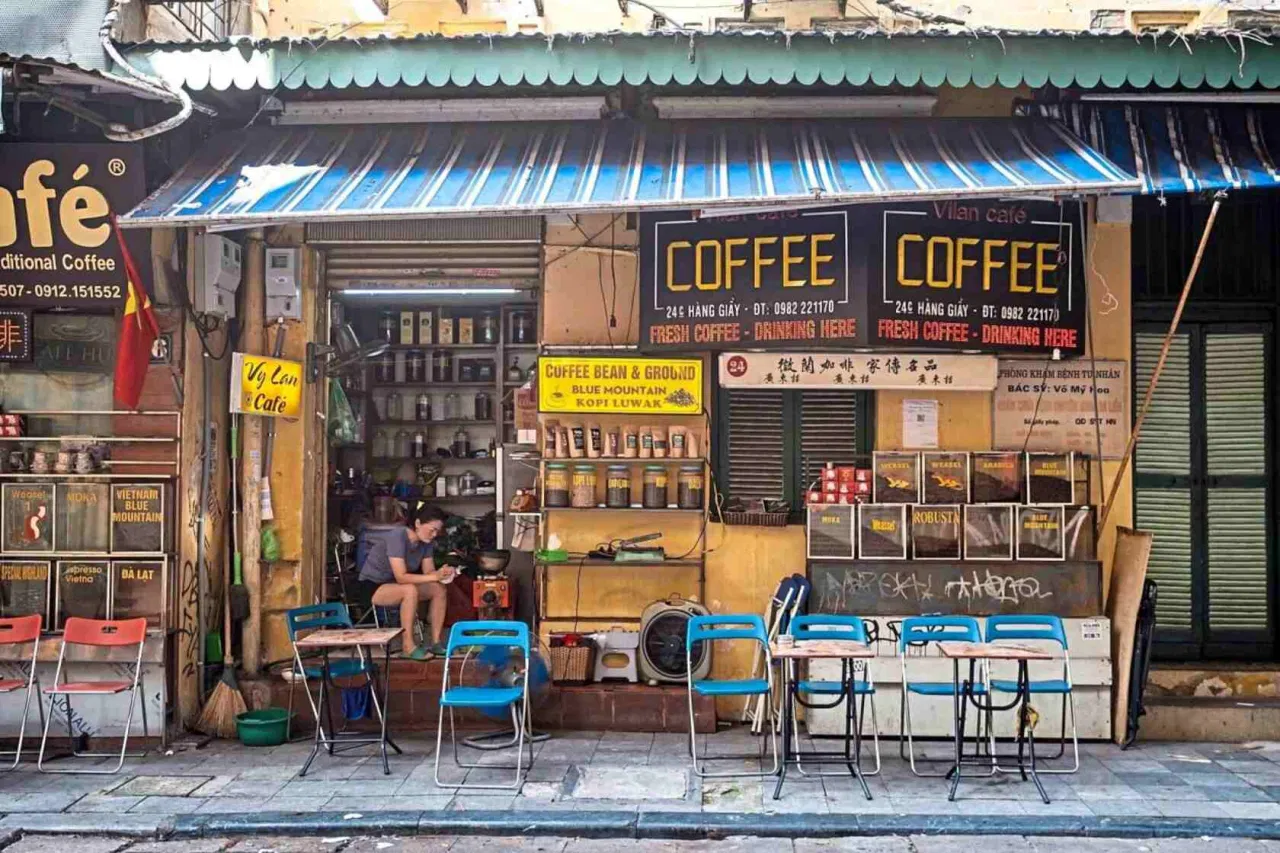
According to voices cited by National Geographic, coffee in Vietnam functions as a social rhythm rather than a rushed habit. From street-side stools in Ho Chi Minh City to neighborhood cafés in Hanoi, coffee drinking is deeply embedded in everyday life.

The magazine reports that this communal approach has increasingly attracted travelers, while younger generations of Vietnamese entrepreneurs are reshaping the industry—focusing on quality, traceability, and thoughtful café experiences that elevate local beans to global standards.

A New Era of Coffee Experiences

National Geographic notes that cities such as Hanoi, Da Nang, and Hoi An now offer a wide spectrum of coffee experiences. Traditional cafés coexist with specialty shops, luxury hotels, and curated tasting programs that introduce visitors to Vietnam’s diverse coffee terroirs.

The report also highlights the growing presence of coffee-based cocktails and modern mixology, where Vietnamese Robusta beans are used to add depth and structure to innovative drinks, reflecting the country’s evolving culinary creativity.

A Living Cultural Legacy

In conclusion, National Geographic emphasizes that Vietnam’s relationship with coffee mirrors the nation’s broader history—shaped by colonial influence, hardship, and adaptation, yet ultimately defined by ownership and pride.

As the magazine observes, drinking Vietnamese coffee today is not simply about flavor, but about experiencing a collective memory of resilience, reinvention, and hope.

Coffee Prices Mixed as Brazil Rainfall Lags and Vietnam Exports Surge

Dubai – Qahwa World

Coffee futures ended mixed on Monday, January 5, with arabica prices settling higher while robusta declined to a one-week low. March arabica coffee rose about 0.6%, supported by below-normal rainfall in Brazil and a stronger Brazilian real, while March robusta fell between 1% and 2.5% under pressure from rising Vietnamese supplies.

Arabica prices drew support after Somar Meteorologia reported that Minas Gerais—Brazil’s largest arabica-growing region—received just 47.9 millimeters of rain in the week ending January 2, only 67% of the historical average. Weather concerns remain important for Brazil, the world’s largest arabica producer. Additional support came from the Brazilian real strengthening to a three-week high against the U.S. dollar, which discourages Brazilian growers from selling coffee into export markets.

In contrast, robusta prices weakened as supply concerns eased. Vietnam’s National Statistics Office reported that 2025 coffee exports surged 17.5% year over year to 1.58 million metric tons. Vietnam is the world’s largest robusta producer, and expectations for higher output continue to weigh on prices. Production for the 2025/26 season is projected to rise about 6%, with industry groups suggesting output could climb as much as 10% if weather remains favorable.

Inventory trends remain mixed but generally supportive. ICE-monitored arabica inventories fell to a 1.75-year low in November before rebounding modestly in late December, while robusta inventories also recovered slightly after hitting a one-year low earlier in the month. Meanwhile, U.S. coffee stocks remain tight after American buyers sharply reduced Brazilian purchases last fall due to temporary import tariffs, which caused U.S. imports from Brazil to drop more than 50% year over year during that period.

Longer-term supply expectations continue to pressure the market. Brazil’s crop agency Conab recently raised its 2025 production estimate to 56.54 million bags. Globally, the USDA projects world coffee production in 2025/26 will rise 2% to a record level, driven by strong growth in robusta output despite a projected decline in arabica production. Ending stocks are expected to fall modestly, offering some offsetting support.

Overall, the coffee market remains caught between near-term weather and currency support for arabica and ample robusta supplies led by Vietnam, keeping prices volatile and direction mixed.