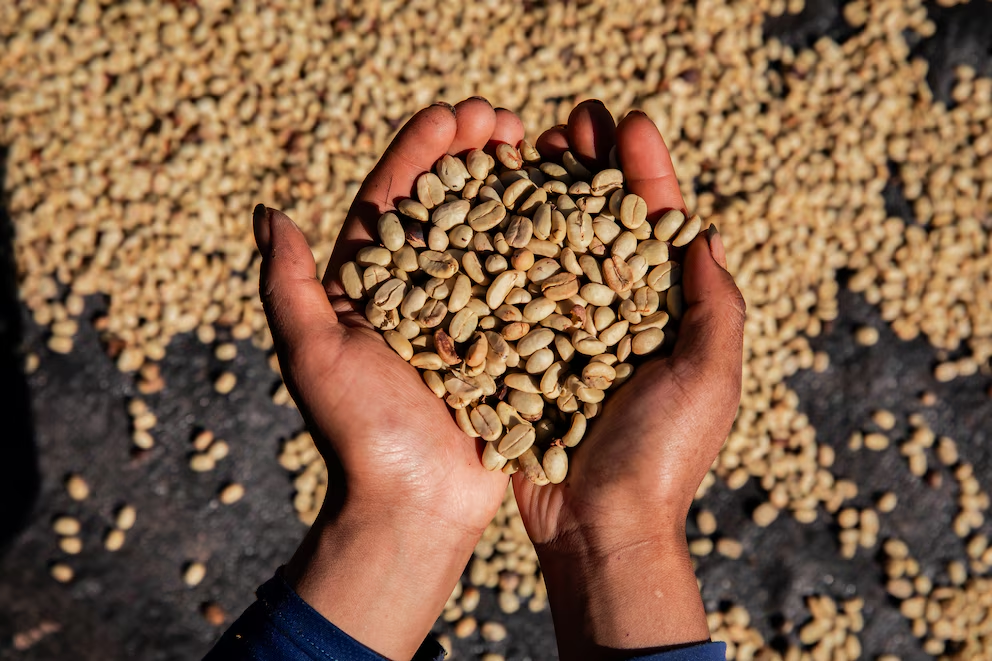
Think Twice Before Ordering Coffee on a Flight, New Study Warns

Dubai – Qahwa World

For many travelers, a cup of coffee is the first comfort requested after takeoff. But a new U.S. study suggests that the water used to brew that inflight coffee may not always meet the same standards passengers expect on the ground.

An independent review of airline drinking water practices has found wide differences in how U.S. airlines manage the water used for onboard beverages, raising fresh questions about the safety of coffee and tea served during flights.

  • Why inflight coffee is under scrutiny

Unlike bottled drinks, coffee served onboard is typically made using water drawn from an aircraft’s internal tank system. That same system supplies water to lavatory sinks and galleys, making its cleanliness critical.

The findings come from the 2026 Airline Water Study, produced by the nonprofit Center for Food as Medicine and Longevity, which analyzed water testing and compliance data from 21 airlines operating in the United States.

Researchers reviewed three years of data, covering late 2022 through 2025, submitted to the U.S. Environmental Protection Agency (EPA) under federal aircraft drinking water regulations.

  • Not all airlines perform the same

The study ranked airlines using a composite Water Safety Score that reflects bacterial test results, maintenance practices, and regulatory violations across each carrier’s fleet.

According to the results, Delta Air Lines and Frontier Airlines ranked among the strongest performers, suggesting more consistent water safety management. Alaska Airlines also placed near the top.

At the lower end of the rankings, American Airlines and JetBlue recorded the weakest scores among major carriers. Several regional airlines scored even lower, with the study identifying higher rates of bacterial indicators in some regional aircraft water systems.

  • What the tests revealed

Across more than 35,000 water samples analyzed in the study, a small but notable percentage tested positive for total coliform bacteria — organisms that are not necessarily harmful themselves but can indicate conditions that allow other pathogens to grow.

While E. coli was detected far less frequently, its presence was treated as the most serious warning sign. The study documented more than 30 E. coli-related regulatory violations, which significantly affected airline rankings.

Because inflight coffee is prepared using this same water supply, the authors argue that beverage service deserves closer attention.

  • Regulation exists — but concerns remain

U.S. airlines are required to follow the Aircraft Drinking Water Rule, which mandates routine testing and regular disinfection of onboard water systems. Airlines must take corrective action when contamination is detected, including repeat testing or shutting down affected systems.

However, the study argues that regulatory compliance does not always translate into consistently clean water. The researchers also raised concerns about enforcement, noting that penalties for violations appear to be rare.

  • Why aircraft coffee water is hard to control

Aircraft water tanks are filled at airports using ground equipment such as hoses and service carts, often drawing from different water sources. According to the study, contamination can be introduced during servicing and persist if tanks and pipes are not thoroughly cleaned — particularly on aircraft used for frequent short-haul flights.

Once onboard, that water may be heated for coffee and tea, but heat alone does not guarantee the elimination of all contaminants.

  • What passengers who love coffee should know

The study does not claim that inflight coffee is unsafe across the board, nor does it assess individual flights. Still, for passengers who want to reduce risk, the authors recommend simple precautions.

These include choosing sealed bottled beverages, opting for canned coffee or espresso-based drinks made with bottled water, or waiting until after landing for a fresh cup brewed on the ground.

For many travelers, inflight coffee will remain a routine part of flying. But as this latest research suggests, what’s in your cup may depend more on the airline than you realize.

Espresso Prices in Ukraine: Regional Trends and Cost Changes

Kiev – Qahwa World

The price of a single cup of espresso in Ukraine continues to rise, reflecting broader shifts in the country’s coffee market. As espresso forms the base of most coffee drinks, changes in its cost directly influence café pricing nationwide.

Data published by Opendatabot shows that in December 2025, the average price of an espresso reached 41 hryvnias. This marks a 17% increase compared to the same period last year, while prices have almost doubled since the beginning of the full-scale war.

Price differences between regions remain noticeable. The Lviv region currently records the highest average price, with a cup of espresso costing 47 hryvnias, up 19% year on year. This is the first time in several years that the region has topped the national price ranking.

The Odesa region follows closely, where espresso is sold for an average of 45 hryvnias per cup.

At the opposite end of the scale, the Khmelnytskyi region offers the lowest prices, with espresso costing around 33 hryvnias, despite an 18% annual increase. Prices remain relatively moderate in the Zaporizhzhia and Kirovohrad regions, where a cup averages 35 hryvnias.

The sharpest annual rise was recorded in the Sumy region, located near the frontline. There, espresso prices increased by 26% over the year, bringing the average cost to approximately 36 hryvnias.

The Espresso Index is commonly used as an economic benchmark, tracking the price of a standard espresso to compare living costs, purchasing power, and inflation trends across different regions and countries.

In related commodity news, global cocoa prices previously hit a record high, with New York futures reaching USD 11,578 per metric ton. By the end of April, however, cocoa bean prices fell by 26% within just two days.

Coffee Prices Rise Amid Brazilian Heatwave and Supply Pressures

Dubai – Qahwa World

Coffee markets are seeing an upward shift in prices, driven by weather events in key production regions and tightening global supplies.

March arabica futures rose 1.26%, while ICE robusta for January had previously gained 1.06% before the holiday closure. The Brazilian coffee belt is experiencing a heatwave forecasted to last through Monday, putting pressure on crops and supporting prices.

Additional factors are influencing the market. In Indonesia, recent floods have affected roughly one-third of northern Sumatra’s arabica plantations, potentially cutting the nation’s coffee exports by up to 15% in the 2025-26 season. Robusta production has been less impacted. Indonesia remains the third-largest robusta producer worldwide.

Meanwhile, Brazil’s Minas Gerais region received rainfall during the week ending December 19 that was below average, according to Somar Meteorologia. Reduced precipitation in key growing areas can add bullish pressure on arabica coffee.

Coffee inventories also play a role in market dynamics. ICE-tracked arabica stocks hit a 1.75-year low of 398,645 bags in November before rising to 456,477 bags recently. Robust a inventories similarly fell to near 12-month lows before modest recovery.

US demand for Brazilian coffee remains restrained. Tariffs previously imposed on imports led to a 52% drop in purchases from August to October compared to the previous year. Although tariffs have since eased, US stock levels remain limited.

On the supply side, Brazil’s national crop agency Conab raised its 2025 production estimate to 56.54 million bags, up from 55.20 million in September, signaling an ample supply outlook.

Robusta coffee faces downward pressure amid expectations of strong output. Vietnam’s coffee exports surged 39% year-on-year in November and 14.8% from January to November, according to government statistics. Total production in 2025/26 is projected to rise 6% to 1.76 million metric tons, a four-year high.

Globally, the International Coffee Organization reported a slight decline of 0.3% in coffee exports for the current marketing year, supporting price stability. The USDA projects world coffee output for 2025/26 to reach a record 178.85 million bags, with arabica falling 4.7% and robusta rising 10.9%. Brazil’s production is expected to decrease by 3.1%, while Vietnam’s output could rise 6.2% to a four-year high. Ending stocks are projected to decline by 5.4% to 20.15 million bags.

Overall, a combination of adverse weather in Brazil, flooding in Indonesia, and fluctuating inventories is contributing to upward momentum in coffee prices, even as abundant output in some regions, particularly Vietnam, applies downward pressure on robusta markets.

Historic Sale at Cerrado Mineiro: Coffee Bag Fetches $38,500

Patrocínio, Brazil – Qahwa World

A bag of specialty coffee from Brazil’s Cerrado Mineiro region has reached a record price of US$38,500 at the 13th Cerrado Mineiro Regional Award in Uberlândia, Minas Gerais. The lot, winning the Pulped Cherry category, was cultivated by Eduardo Pinheiro Campos of Fazenda Dona Nenem in Presidente Olegário and purchased by a consortium led by Expocacer, in collaboration with Veloso Green Coffee, Marex, and Nucoffee.

The runner-up bid of US$19,250 went to Louis Dreyfus Company for the champion of the Natural category. The strong competition reflects growing worldwide interest in Cerrado Mineiro coffees.

The Cerrado Mineiro Coffee Growers Federation confirmed that this is the highest amount ever paid for a coffee bag at an auction in Brazil. The auction raised a total of US$108,500 across nine lots, averaging US$12,000 per bag.

Eduardo Pinheiro Campos commented: “This achievement honors our hardworking team. It reflects years of dedication, awards, and excellence. Over the thirteen editions of this competition, we have reached the podium eleven times, showing consistent quality and commitment.”

Simão Pedro, President of Expocacer, added: “When buyers compete at this level, it demonstrates the global recognition of our quality, sustainability, and innovation. Expocacer is proud to lead Brazil’s coffee sector, proving that our specialty coffee sets benchmarks internationally.”

The 13th Cerrado Mineiro Regional Award showcased the best coffees of the 2025–2026 harvest in four categories: Natural, Pulped Cherry, Fermented, and Sweet Cerrado Mineiro. Expocacer members won first place in Pulped Cherry and shared first place in Sweet Cerrado Mineiro.

Forty percent of the auction proceeds (US$43,400) will benefit the Escola de Atitude project, which supports youth education and personal development in coffee-growing communities.

Highlights of Expocacer at the 13th Cerrado Mineiro Regional Award

Eduardo Pinheiro Campos – First place, Pulped Cherry (90.59 points)

Maria Soraia Guimarães – Third place, Pulped Cherry (89.18 points)

Guima Café – First place (shared), Sweet Cerrado Mineiro

About Expocacer
Founded in 1993 in Patrocínio, Minas Gerais, Expocacer is a cooperative of coffee producers supporting over 740 members. With modern facilities, including warehouses holding over one million coffee bags, the cooperative exports specialty coffee to more than 35 countries while promoting social and environmental initiatives.

Coffee as Destination: Positioning Ethiopia’s Origins for Experiential Tourism

An interview with Musa Kedir CEO, Tourism Attraction and Product Development, Ministry of Tourism – Ethiopia

By Qahwa World × Buna Kurs

Coffee has long been Ethiopia’s most visible global export, yet its potential as a tourism experience remains largely untapped. While several coffee-producing countries have successfully transformed farms, processing sites, cupping rituals, and café culture into immersive visitor journeys, origin countries themselves have often underutilized this experiential dimension.

Ethiopia, the birthplace of Coffea arabica, holds a rare advantage. Coffee here is not only an agricultural product but a living culture—woven into daily life, social rituals, landscapes, and identity. Translating this depth into structured and sustainable tourism experiences represents one of the most promising frontiers for destination development.

During the Coffee Origins Trip (COT 2) organized by Kerchanshe and Oromia Tourism Commission, a diverse group of international buyers, roasters, social media storytellers, tourism executives, and sector leaders came together to experience Ethiopia’s coffee landscape firsthand. As part of this journey, Qahwa World and Buna Kurs sat down with CEO, Tourism Attraction and Product Development, Ministry of Tourism – Ethiopia, to discuss how coffee tourism fits into the national tourism agenda and what it will take to elevate coffee into a globally competitive tourism product.

Qahwa × Buna: How does the Ministry currently position coffee within the wider national tourism development agenda, and what opportunities do you see for formalizing coffee as a structured tourism product?

Musa Kedir: The Ministry has already recognized coffee as a key element within Ethiopia’s national tourism brand, “Land of Origins,” which positions the country as the birthplace of Coffea arabica. This recognition is also reflected in the revised National Tourism Development Policy, which explicitly emphasizes the development of niche tourism products.

Within this framework, coffee is viewed both as a core special-interest tourism product and as a supplementary experience that can enhance broader travel itineraries. This policy foundation creates strong opportunities to formalize coffee tourism through structured products, packages, and destination planning.

Qahwa × Buna: From a destination development perspective, what gives Ethiopia a unique competitive edge in coffee tourism compared to other producing countries?

Musa Kedir: Ethiopia’s advantage lies not only in having given the world Arabica coffee, but in the deep cultural attachment to coffee itself. Coffee in Ethiopia is an integral part of daily life.

The way Ethiopians prepare, serve, and share coffee reflects a living culture rather than a staged experience. This cultural intimacy is something no other coffee-producing country can replicate, and it provides Ethiopia with a uniquely authentic foundation for coffee tourism.

Qahwa × Buna: Which parts of the coffee value chain do you believe hold the strongest potential for experience design—farm level, processing, culture, heritage, gastronomy, trade, or a combination?

Musa Kedir: A combination of farm-level experiences, processing, culture, heritage, and gastronomy offers the strongest potential overall. Together, these elements allow visitors to understand coffee as a complete journey rather than a single moment.

Among these, a well-organized and customized combination of farm-level and processing experiences holds particularly strong appeal due to its uniqueness and attraction. These stages allow visitors to witness the transformation of coffee firsthand, which is central to meaningful tourism experiences.

Qahwa × Buna: Is the Ministry working on national guidelines, standards, or policy frameworks to support the growth of coffee tourism experiences such as farm tours, cupping sessions, processing visits, or heritage trails?

Musa Kedir: Based on the recognition of coffee as a potential niche tourism product, the Ministry has previously organized coffee-focused familiarization trips for media outlets and diplomatic communities.

More recently, recognizing the need for deeper strategizing, the Ministry has begun working with partners such as the Japan International Cooperation Agency (JICA) to identify Ethiopia’s major coffee-producing corridors. This work will support the development of well-organized coffee tour packages at the national level.

The Ministry also plans to organize a national coffee tourism awareness seminar that will bring together key stakeholders across the value chain, and it is working on comprehensive tourism destination and product development guidelines aligned with the revised tourism policy.

Qahwa × Buna: How does the Ministry view the role of major private-sector actors like Kerchanshe in shaping the future landscape of coffee tourism?

Musa Kedir: The Ministry has a strong belief in the vital role played by private-sector actors affiliated with the coffee industry.

This is why the Ministry collaborated in the recent coffee tour organized jointly by the Oromia Tourism Commission and Kerchanshe. Moving forward, the Ministry has also scheduled consecutive meetings with key coffee sector actors to facilitate brainstorming and discussions focused specifically on developing coffee for tourism.

Qahwa × Buna: What kinds of cross-sector collaborations are needed between tourism, agriculture, culture, trade, and regional governments to build a unified coffee tourism platform?

Musa Kedir: Because the coffee value chain is cross-sectoral by nature, it is critical for all stakeholders to reach a similar level of understanding in order to succeed in positioning coffee for tourism.

The Ministry is taking a catalyst role by creating platforms that bring stakeholders together and laying the foundation for strong collaborations that can endure into the future.

Qahwa × Buna: From what you have observed on this field visit so far, what strengths, innovations, or community stories stand out as directly translatable into tourism offerings?

Musa Kedir: The visit revealed that there are exemplary companies, such as Kerchanshe, that are aligned with national priorities to make coffee one of Ethiopia’s competitive tourism advantages.

These actors are taking the lead in showcasing meaningful experiences within their capacity. However, the visit also highlighted the need to further strengthen local community participation, improve readiness among local authorities, and better organize resources at the local level.

A shared understanding and collaboration among stakeholders is essential for the sustainable creation of a strong national coffee tourism culture.

Qahwa × Buna: How can coffee tourism support local community development, regional economies, and job creation across key coffee districts like Guji, Sidama, Yirgacheffe, Jimma, and Kaffa?

Musa Kedir: At present, coffee primarily serves its traditional commercial role. However, recent familiarization trips—particularly those led by Visit Oromia—have shown how tourism can be developed alongside existing coffee systems.

These initiatives can help create permanent economic advantages through tourism, including job creation and income diversification in key coffee-producing regions.

Qahwa × Buna: What narratives or storylines should Ethiopia prioritize when positioning itself internationally as the birthplace of coffee and a unique tourism destination?

Musa Kedir: It is critical to firmly engage in leveraging Ethiopia’s identity as the birthplace of coffee. Beyond that, creativity is required to transform everyday coffee culture into compelling tourism experiences.

Coffee culture in Ethiopia is deeply rooted and diverse across the country. Interpreting this heritage in a way that resonates with international travelers—both as a special-interest experience and as a complementary offering—is essential.

Narratives should focus on Ethiopia’s local coffee cultures and on organizing their interpretation into well-designed tourism products.

Qahwa × Buna: How does the Ministry plan to ensure that coffee tourism grows in an environmentally and culturally sustainable way?

Musa Kedir: The Ministry has only recently begun to systematically structure programs that position coffee for tourism. To ensure sustainability, it is preparing a comprehensive National Tourism Destination Development and Management Plan.

This plan will guide tourism development across the entire value chain, including coffee-related experiences, and will ensure environmental and cultural sustainability.

Qahwa × Buna: What level of investment or infrastructure development is required to elevate selected coffee-producing areas into international-standard tourism sites?

Musa Kedir: Most coffee corridors are already accessible, but as coffee tourism becomes more competitive, it will require basic infrastructure such as improved access within farms, accommodation facilities, and structured community collaboration.

While coffee farms are well organized for production, additional effort is needed to convert them into tourism experiences. This can best be achieved through collaboration among farm owners, government institutions, and tourism organizations.

Qahwa × Buna: What immediate next steps does the Ministry envision after this trip, and how might these insights shape upcoming MOT programs or national campaigns related to coffee?

Musa Kedir: The Ministry has already begun planning around coffee tourism and similar niche potentials. To ensure long-term and sustainable use, it will focus on redesigning model tourism packages that integrate coffee as both a special-interest experience and a complementary tourism offering.

These insights will directly inform upcoming Ministry programs and national tourism campaigns.

Lablibell Crowned UAE Lavazza Barista Champion

Dubai – Qahwa World

Lablibell has been crowned the UAE Lavazza Barista Champion for this year, achieving a well-deserved victory that qualifies her to represent the nation at the Lavazza World Barista Championships in Italy in February 2026.

The finals were held on Thursday, December 11th, at the Grosvenor House Hotel in Dubai Marina, where the competition showcased the talent and passion of the nation’s top baristas.

Lablibell impressed the judges with her signature drink titled “Beyond Times,” inspired by her professional journey and continuous development in the art of coffee preparation. The champion used the distinguished Lavazza Kafa Forest Beans as the base for her espresso, presenting a winning cup that combined heritage, passion, and high skill.

The champion expressed her delight and deep gratitude to everyone who contributed to supporting her throughout the intense competition journey. Lablibell affirmed that the road to the title was filled with challenges and learning, which only deepened her passion for the craft she loves. She also commended the strong spirit of competition among all participants, appreciating their creativity and commitment.

This victory is the culmination of significant effort. Lablibell extended her thanks to everyone who assisted her in training and refining her skills, highlighting the support received from the local coffee community and the competition organizers.

Global Coffee Market: Collapsing Inventories and a Fragile Price Truce

Dubai – Qahwa World

The global coffee market is currently resting in a precarious calm, according to the International Coffee Organization’s (ICO) November 2025 Market Report. Despite major geopolitical and climatic events, the ICO Composite Indicator Price (I-CIP) showed only a marginal rise of 1.2%, averaging 330.44 US cents/lb.

This unexpected stability is not a sign of market health, but rather the result of a dramatic “offsetting effect” between two powerful, opposing forces: a historical US decision to soften tariffs on Brazilian coffee imports (a bearish signal), and devastating floods that struck Vietnam’s Central Highlands (a bullish factor).

  • The Damp Squib of US Tariff Relief

The most significant political event of the month was the US administration’s move to phase out the additional 40% tariff previously imposed on Brazilian coffee imports. This action should have triggered a sharp price correction downward, given Brazil’s status as the world’s largest producer.

The Professional Read: The market reaction was surprisingly muted. The I-CIP did dip to its monthly low (320.39 cents/lb) following the announcement, but the effect dissipated within three days. Analysts concur that the market had “priced in” the removal of the tariffs beforehand, drastically reducing the impact.

Compounding the lack of immediate bearish pressure, Brazil’s export performance remains subdued. Exports of Brazilian Naturals declined by 8.2% in October, marking the eighth consecutive month of negative growth for this key group, highlighting underlying challenges linked to the Arabica production cycle and not just trade barriers.

  • Vietnam’s Catastrophe: The Unlikely Price Stabilizer

As the US news failed to exert sustained downward pressure, a major climatic shock in Asia provided the necessary counter-balance. Severe flooding hit Vietnam’s Central Highlands, the global nucleus for Robusta coffee production.

• Destruction Estimates: Initial reports from Dak Lak indicated that an estimated 10% to 15% of the 2025/26 coffee crop, which was already harvested and undergoing the drying process, was significantly damaged.
• Price Resilience: This dire news provided crucial support, preventing Robusta coffee prices from sliding (they contracted only a negligible 0.1%). Furthermore, the supply concerns emanating from Asia helped push all Arabica groups (including Brazilian Naturals and Colombian Milds) higher, with increases ranging from 1.4% to 1.8%, contributing strongly to the overall I-CIP stability.

  • The Red Flag: Global Inventory Collapse

The most alarming data point in the ICO report is the state of exchange-certified stocks, which are rapidly depleting and indicate a severe structural vulnerability in the global supply chain.

• Robusta Stocks Crash: Certified Robusta coffee stocks at the London exchange plunged by a dramatic 28.3% in November, settling at a precarious 0.73 million bags.
• Arabica Drawdown: Arabica stocks in New York also drew down by 5.9%.

This inventory collapse means the market is quickly losing its buffer capacity. It is becoming almost entirely reliant on continuous, smooth flows of new harvests, making it exceptionally sensitive to any disruptions (like the future fallout from the Vietnam floods) and highly susceptible to sharp, upward price spikes.

  • Shifting Tides: The Decline of Latin American Dominance

While total global green coffee exports saw a slight rise of 1.9% in October 2025, the geographical distribution reveals a critical strategic shift.

• South America Retreats: Exports from South America (driven mainly by Brazil) declined by 13.0%, marking the eleventh consecutive month of negative growth for the region.
• Africa and Asia Surge: This gap was aggressively filled by other origins: Asia and Oceania exports jumped 23.9% (fueled by Vietnam), and African exports soared by 21.9% (led by Ethiopia and Uganda).
• Arabica Share Shrinks: The total share of Arabica coffee in green exports fell to 68.8% from 70.2% the previous year, underscoring the market’s increasing dependence on Robusta coffee to meet overall global demand.

  • The Bottom Line

The price stability observed in November was a fluke, a result of powerful forces cancelling each other out. The true economic background—collapsing exchange inventories and the sustained export decline from the world’s largest producer—suggests the market is in a highly precarious state of “active waiting.

The coffee sector is now dangerously exposed. Any further negative climate report or logistical disruption will likely shatter the current equilibrium, immediately unleashing a sharp, acute wave of price volatility. Buyers should prepare for potential supply shocks and the associated upward pricing pressure in the coming months.


Swiss Study: Coffee Reduces Sleep Duration But Enhances Its Quality

Dubai -Qahwa World

The impact of coffee on our nightly rest has long been a fiercely debated topic in scientific circles. However, groundbreaking new research from Swiss scientists at the University of Zurich is redefining this relationship, unveiling a sophisticated and surprising adaptation mechanism employed by the human brain when faced with chronic caffeine consumption. The study, published in the Journal of Psychopharmacology, confirms a dualistic paradox: while heavy daily coffee intake slightly reduces sleep time, it simultaneously increases the depth and quality of the restorative phase.

  • Unveiling the Compensatory Mechanism

The key finding reached by the research team, led by scientist Benjamin Stucky, was a precise measurement of this paradoxical effect. Individuals with high habitual consumption—defined as four or more caffeinated beverages per day—experienced a small, specific decrease in total night sleep duration, averaging just 11 to 13 minutes per night.

Crucially, this reduction in time was counterbalanced by a significant increase in quality. Objective brain recordings, taken via Polysomnography, showed stronger activity in the Delta frequency range (the slow, high-amplitude brain waves). These Delta waves are the hallmark of the deepest, most restorative stage of non-rapid eye movement (NREM) sleep.

Scientists interpret this finding as evidence of a compensatory mechanism or homeostatic regulation in the brain. The central nervous system essentially works harder to compress the process of recovery and maximize the efficiency of the available sleep time, resulting in deeper, higher-quality rest.

  • Methodological Rigor and Robust Findings

The study achieved its high degree of certainty by moving beyond simple observational data. The researchers combined two massive datasets: genetic and behavioral information from nearly half a million participants (the UK Biobank), and objective sleep measurements from over 1,700 individuals in Switzerland.

To firmly establish a causal link, the team utilized advanced statistical techniques, including Mendelian Randomization and Causal Matching. These methods were essential for isolating the effect of caffeine from other potentially confounding lifestyle factors, lending unparalleled robustness to the conclusions.

Stucky explained that this adaptive response explains why heavy consumers did not report feeling significantly less rested, despite their slightly shorter sleep time.

  • The Cautionary Note on Sleep Debt

Despite these fascinating insights, the researchers stressed that their findings should not be misinterpreted as an endorsement for heavy consumption. While the study dispels the notion of “very detrimental consequences for sleep quality,” scientists cautioned that the increased depth could potentially reflect an “ongoing sleep debt,” meaning the body is constantly struggling to catch up. Such continuous striving for recovery might lead to strain on the nervous system over the long term.

Therefore, general health advice remains critical: experts continue to recommend limiting coffee intake to no more than three cups per day, and maintaining the optimal sleep duration of seven to nine hours for overall adult health and cognitive function.

Drinkit CEO Announces Sub-40 Month Payback Period for Dubai Coffee Shops

DUBAI Qahwa World

Drinkit, the rapidly growing coffee shop chain, has achieved a significant milestone in one of the world’s most competitive F&B environments, announcing an impressive average payback period for its retail network in Dubai.

In a statement released by CEO Katerina Borodich, the company confirmed that five out of six established Drinkit locations in the emirate have demonstrated an average payback period of just 31.6 months (approximately 2.6 years). Including the strategic, high-investment Mirdif flagship—opened intentionally as an image-focused brand strengthener—the overall portfolio average stands at 39 months (3.25 years).

Note: the payback period is calculated based on Store Level EBITDA.

The CEO underscored the achievement’s importance, noting that the results are “not a theoretical benchmark, but backed by real numbers from our own stores.”

The announcement positions Drinkit’s model as resilient and confident within the fiercely contested Dubai market, which hosts nearly every major global coffee chain.

Significant Upside Projected

Despite the strong performance, Borodich emphasized that the company is only beginning to unlock its full commercial potential. Drinkit has recently initiated several major growth levers that are expected to further compress the payback timeline and increase profitability:

  • Menu and Pricing Optimization: Refining product offerings and adjusting pricing strategies across the network.
  • City-wide Marketing Activation: Scaling marketing efforts across Dubai to drive brand awareness and foot traffic.
  • Delivery Scaling: Launching and scaling partnerships with all major aggregators to capture the growing off-premise market share.

“In one of the most competitive F&B markets in the world… Drinkit demonstrates a confident, resilient business model,” Borodich stated. “The upside is significant, and we’re only beginning to execute our full optimization strategy.”

The CEO concluded the announcement by congratulating the Drinkit team and franchise partners, recognizing their role in achieving these results, and extending an invitation to prospective partners for international expansion.

Coffee Consumption Significantly Lowers Risk of Multiple Sclerosis

Dubai – Qahwa World

Multiple Sclerosis (MS), a severe and currently incurable autoimmune disease of the central nervous system, may have a new mitigating factor: coffee.

A rigorous systematic review and meta-analysis of multiple prior studies—combining data from over 4,500 participants—has found that individuals who regularly consume coffee are 22% less likely to develop MS compared to non-drinkers. This finding, published recently in the journal Neurodegenerative Disease Management, suggests a significant association between this common beverage and reduced risk for the debilitating condition.

  • Understanding the Disease

MS is defined by the immune system mistakenly attacking the protective myelin sheath surrounding nerve fibers in the brain and spinal cord. This damage disrupts communication between the brain and the rest of the body, leading to a host of symptoms including chronic fatigue, vision problems, numbness, and severe mobility issues.

While the precise cause of MS remains unknown, researchers believe it involves a complex interplay of genetic predisposition and environmental/lifestyle factors, such as smoking, diet, and Vitamin D deficiency. This new research suggests that simple dietary choices may play a crucial role in prevention.

  • The Strength of the Evidence

The meta-analysis, which combined the results of numerous papers, included a cohort of 2,193 individuals with MS and 2,344 people in the control group. Of the participants diagnosed with MS, 1,072 were identified as regular coffee drinkers.

Researchers suggest the neuroprotective effects of coffee—particularly the compounds found within—could be the mechanism behind the correlation. These compounds have been demonstrated to:

  1. Reduce systemic inflammation, a key driver of autoimmune attacks.
  2. Limit oxidative stress, protecting neural tissues from cellular damage.
  3. Decrease the activation of immune cells within the brain, potentially slowing the autoimmune response.
  • Important Caveats for Readers

Despite the compelling 22% reduction figure, the authors of the study urge caution in interpretation. They noted that the individual studies included in their review had heterogeneous results—some showing benefits, others showing no effect, and a few suggesting negative associations.

Therefore, while the pooled data suggests a strong protective link, it is impossible to draw generalized, causal conclusions at this time. The researchers stressed that more targeted, prospective research is essential to establish a definitive cause-and-effect relationship or to determine the optimal consumption levels for risk mitigation.

Nonetheless, these results align with a growing body of evidence linking the consumption of coffee to positive health outcomes in conditions where chronic inflammation is a major contributing factor.


Vietnam: The Journey of Coffee Cultivation and Processing Knowledge Towards Global Recognition

Dubai – Qahwa World

The World Coffee Museum in Buon Ma Thuot, Dak Lak province, Vietnam, hosted the activities of the 2025 International Scientific Conference and Forum from December 5 to 6.

The conference was held under the theme: “Global Coffee Industry Value Chain – Global, Local, and Sustainable Development,” jointly organized by the Dak Lak Department of Culture, Sports and Tourism, Ho Chi Minh City University of Culture, UNESCO, and Yunnan University (China), and sponsored by the Trung Nguyen Group. The event attracted dozens of local and international experts, scientists, and managers.

In his opening speech, Associate Professor Dr. Lam Nhan, President of Ho Chi Minh City University of Culture, emphasized that coffee represents a strategic industrial crop and a source of pride for the people of Dak Lak and the Central Highlands. He noted its sensitivity to climate change and the necessity of transitioning from expanding cultivated areas to raising quality, increasing value, developing processing technologies, and managing the value chain.

The workshop is not limited to the scientific dimension; it represents a step toward formulating a new vision for developing Vietnamese coffee within the global value chain, through discussions on coffee heritage—from agricultural knowledge and processing to the culture of enjoyment—in addition to topics of technology, branding, environmental responsibility, and sustainable development.

The workshop also contributes to the preparation of the file on the “Knowledge of Coffee Cultivation, Processing, and Enjoyment in the Central Highlands,” to be submitted to UNESCO for inclusion in the List of Good Safeguarding Practices of Intangible Cultural Heritage.

  • Dak Lak… The Center of the Vietnamese Coffee Industry

Tran Hong Tien, Director of the Dak Lak Department of Culture, Sports and Tourism, stated that Buon Ma Thuot is the core of the coffee industry in Vietnam, noting that Dak Lak Robusta coffee is not just an agricultural crop, but a deeply rooted cultural symbol among the ethnic communities in the Central Highlands, preserved across generations.

The province aims to enhance the value of coffee heritage by integrating sustainable agriculture, the green economy, agri-tourism and cultural tourism, and creative industries, in line with UNESCO’s philosophy of community preservation and heritage-based development.

  • Practical Steps Towards UNESCO Listing

Tran Hong Tien mentioned that the Ministry of Culture, Sports and Tourism submitted a request to the Prime Minister for permission to prepare a scientific file on the intangible cultural heritage related to the “Knowledge of Dak Lak Coffee Cultivation and Processing.” The workshop is the first step in preparing this file, supported by 67 research presentations covering economics, society, culture, anthropology, heritage, coffee technologies, value chains, and sustainable development.

  • Indigenous Knowledge… Memory, Identity, and Culture

Delegates discussed axes including: cultural exchange through coffee, localization practices during integration periods, the role of coffee heritage in socio-economic and tourism development, and solutions for preserving and enhancing local knowledge in cultivation, processing, and drinking culture.

Experts believe that the knowledge of coffee cultivation and processing in Dak Lak goes beyond inherited traditional skills; it represents a shared system of values and identity that strengthens social bonds, supports sustainability, and provides livelihoods.

  • Towards a Community-Based Heritage Model

Associate Professor Dr. Le Thi Ngoc Diep from the University of Social Sciences and Humanities assessed that the coffee heritage in Buon Ma Thuot is developing in the unique context of Dak Lak’s central position in the Vietnamese coffee industry. She considered integrating coffee with the concepts of “heritage” and “local identity” an effective strategy to enhance value in the global market. She emphasized the necessity of a community-based heritage model that ensures local residents’ participation in managing and investing in heritage while maintaining a balance between tourism and authenticity.

  • Notable Success and Broad Cultural Participation

The workshop concluded with participants commending the outcomes. Tran Hong Tien affirmed that the event constituted a first step in preparing the file for UNESCO heritage listing and contributed to presenting new visions for globally promoting the status of Dak Lak coffee as a symbol of living heritage and a sustainable green economy.

The event featured Zén coffee tasting sessions, visits to coffee farms, and an introduction to the three coffee civilizations: Ottoman, Roman, and Zén, alongside a tour of the World Coffee Museum.

  • Dak Lak on the Global Heritage and Creativity Map

This forum represents a bridge between heritage and contemporary creativity, enhancing the position of Dak Lak – “Vietnam’s Coffee Capital” – on the map of world cultural heritage and creative industries.

Brazilian Real Firming Lifts Arabica Coffee as Market Signals Remain Mixed

Dubai – Qahwa World

March arabica coffee (KCH26) rose slightly by +0.15 (+0.04%) on Tuesday, while January ICE robusta (RMF26) slipped -15 (-0.34%), hitting a 1.5-week low. The day’s movements reflect a split market, with arabica gaining support from a stronger Brazilian real, now at a two-week high against the US dollar. The firmer currency is discouraging export sales from Brazil’s growers, helping arabica prices edge upward.

Robusta, however, is under pressure. The Vietnam Coffee and Cocoa Association reported that around 10% of the country’s robusta harvest is now complete and forecasted that expected drier weather will accelerate harvesting through the month. Vietnam is the world’s largest robusta producer, and signs of increased output continue to weigh on prices.

Weather conditions in Brazil are offering some support to the market. Somar Meteorologia noted that Minas Gerais—Brazil’s main arabica-producing region—received only 20.4 mm of rain in the week ending November 28, equivalent to 39% of the historical average.

Coffee inventories monitored by ICE continue to tighten. US tariffs on coffee imports from Brazil triggered a sharp drawdown in stocks. ICE-certified arabica inventories reached a 1.75-year low of 398,645 bags on November 20, while robusta inventories fell today to an 11-month low of 4,115 lots. American buyers have cancelled new Brazilian coffee contracts due to the tariffs, tightening domestic supply. US imports of Brazilian coffee from August to October fell 52% year-on-year to 983,970 bags.

On the policy side, the outlook for ample supply strengthened after the European Parliament approved a one-year delay to the European Union’s anti-deforestation law (EUDR). The postponement allows EU members to continue importing agricultural commodities—including coffee—from regions in Africa, Indonesia, and South America where deforestation remains a concern.

Several supply signals are weighing on the market. StoneX recently projected Brazil’s 2026/27 crop at 70.7 million bags, including 47.2 million bags of arabica, a 29% year-on-year increase. Vietnam’s supply outlook also remains heavy: its Jan–Oct exports rose 13.4% year-on-year to 1.31 MMT, and 2025/26 production is expected to grow by 6% to 1.76 MMT (29.4 million bags), a four-year high. Vicofa additionally suggested that Vietnam’s 2025/26 output could rise by 10% if favorable weather continues.

Some indicators continue to signal tightening global supply. The International Coffee Organization reported that global exports for the current Oct–Sep cycle slipped 0.3% year-on-year to 138.658 million bags. In Brazil, Conab cut its 2025 arabica estimate by 4.9% in September, lowering the projection to 35.2 million bags. Total Brazilian coffee output was trimmed to 55.2 million bags.

Longer-term forecasts from the USDA’s Foreign Agriculture Service expect global production to rise 2.5% in 2025/26 to a record 178.68 million bags. The outlook includes a 1.7% decline in arabica output to 97.022 million bags, alongside a 7.9% increase in robusta to 81.658 million bags. Ending stocks are projected to rise 4.9% to 22.819 million bags.