
April 1st Instant Coffee Day.. What Do We Know About It?

Dubai – Qahwa World

On April 1st, while many are busy with April Fools’ pranks, coffee lovers celebrate a more grounded occasion: Instant Coffee Day. The date is no coincidence,it marks the launch of Nescafé in 1938, a breakthrough that turned a luxury ritual into a global household staple.

The Evolution of a Quick Cup

While the first patents for “coffee essence” date back to Britain in 1771, the modern history of the drink began in earnest in 1901 when Japanese-American chemist Satori Kato invented the first stable soluble powder.

However, the real turning point came during the Great Depression. The Brazilian government had a massive surplus of coffee beans and asked Nestlé to find a way to preserve them. Chemist Max Morgenthaler spent years perfecting the method, eventually creating a product that dissolved instantly while retaining the beans’ natural oils. Today, whether through spray-drying or the premium freeze-drying method, instant coffee has evolved from a wartime ration into a versatile tool for modern baristas and home cooks alike.

Pro Tip: The “Golden Temperature”

To avoid the bitterness often associated with instant coffee, never use boiling water.

The Secret: Let your water cool for a minute to about 80–85°C. This prevents the coffee crystals from “scorching,” resulting in a much smoother, creamier profile.

Two Cozy Recipes for Your Coffee Break

1. Salted Caramel Cloud Latte

A decadent, layered drink that balances sweetness with a sophisticated savory finish.

  • Ingredients:

    • 2 tsp instant coffee

    • 1 tsp brown sugar

    • 150 ml milk (dairy or oat works best)

    • A pinch of sea salt

    • Caramel syrup

  • Instructions: In your favourite mug, dissolve the coffee, sugar, and salt in 2 tablespoons of hot water. Stir until fully smooth. Steam or froth your milk until it has a light, velvety foam. Pour the milk into the coffee base and finish with a drizzle of caramel. The salt acts as a flavour enhancer, making the coffee taste richer and the caramel more intense.

2. Spiced Orange Iced Mocha

A refreshing, dessert-like drink that pairs the acidity of citrus with the depth of cocoa.

  • Ingredients:

    • 1.5 tsp instant coffee

    • 1 tsp cocoa powder

    • 100 ml cold milk

    • Orange zest and a slice of orange

    • Ice cubes

  • Instructions: Mix the coffee and cocoa with a tiny splash of hot water to create a thick paste. Add cold milk and whisk until combined. Fill a glass with ice, pour the mixture over it, and garnish with fresh orange zest. The citrus oils brighten the coffee, creating a sophisticated “Jaffa” chocolate flavour profile.

Why We Love It

Instant coffee is no longer just a “quick fix”. It is a culinary multitasker, essential for baking (perfect for tiramisu or chocolate cakes) and a reliable companion for travellers. This April 1st, take a moment to appreciate the simplicity of the soluble bean proof that great pleasure can often be found in the smallest, fastest things.
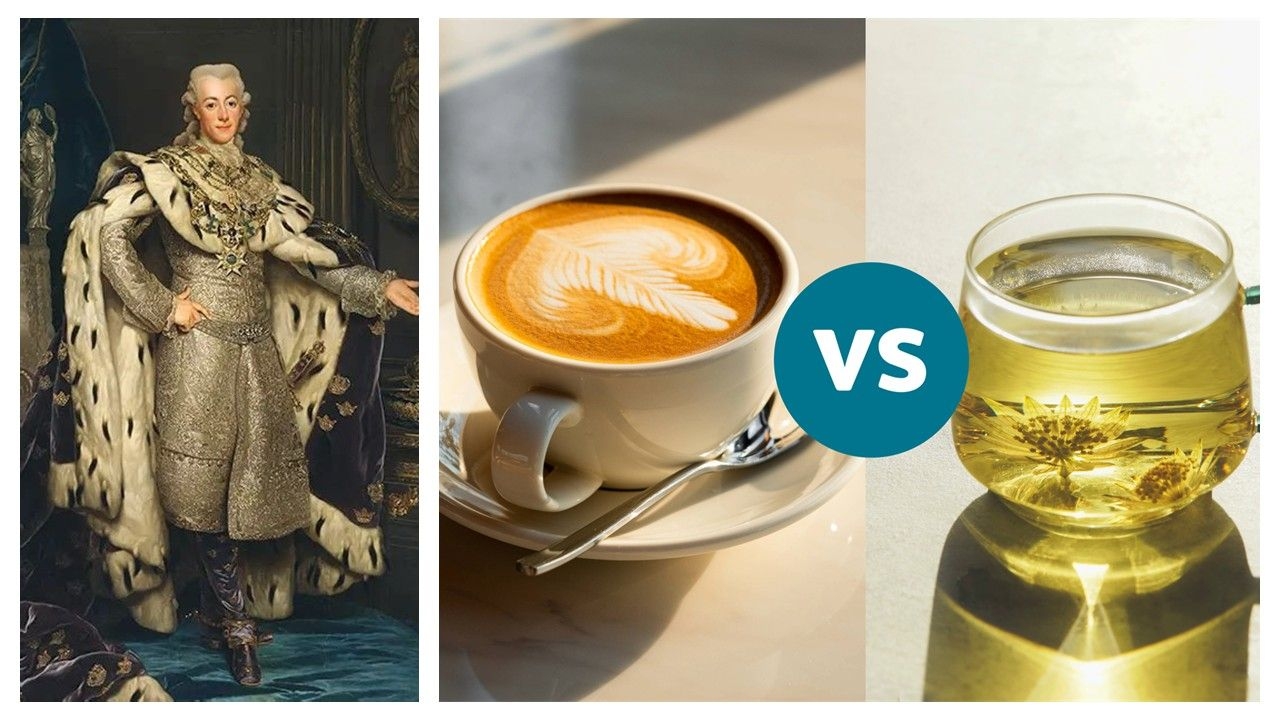
COFFEE vs. TEA: A Funny Anecdote from Sweden

The Swedish “Clinical Trial” Myth: Coffee vs. Tea. And the Winner Is…

By Ennio Cantergiani

Legend has it that King Gustav III of Sweden (reigned 1771–1792) wanted to prove that coffee was harmful. According to the tale, he allegedly took two condemned identical twins, commuted their death sentences, and subjected them to a “scientific” experiment using extreme doses:

Twin A: three pots of coffee per day

Twin B: three pots of tea per day

Two physicians supposedly supervised the experiment and reported the results to the king. Ironically, the tea twin died first—at age 83 (!). Meanwhile, the king was assassinated before seeing the final outcome, and so coffee was declared the “winner.”

That’s the meme. But here’s the uncomfortable truth: the documentation is thin to nonexistent.

  • The Historical Context

Sweden did have multiple periods of coffee restriction and prohibition. Coffee was considered a luxury import and a potential moral and economic threat. Enforcement created a lively underground coffee culture, with Stockholm police records documenting hundreds of cases involving illegal coffee selling, preparation, and consumption.

And yes, Gustav III is a real, well-documented historical figure.

But the specifics of the twin experiment raise many red flags:

No names of the twins

No prison identified

No surviving protocol

No contemporary debate traceable

It’s unusual for such a sensational “first clinical trial” to leave no trace. Even Uppsala University treats the story as unproven, explicitly noting:

“The truth of the story has not been proven.”

COFFEE vs. TEA: A Funny Anecdote from Sweden

  • Where the Story Likely Came From

The oldest description historians have located is not from the 18th century at all—it appeared in 1937, in Science News, via a claim that a museum curator found the experiment in 18th-century records.

This suggests that the story may be a 20th-century packaging of older anti-coffee sentiment, rather than a genuinely documented 18th-century experiment.

Yet, the anecdote is frequently retold in medical-history literature, often without primary evidence. Secondary sources can give the illusion of historical certainty, even when the original records are missing.

  • Why the Myth Persists

The tale is irresistibly viral:

It dramatizes moral panic around coffee

It has a deliciously ironic twist: tea loses

It includes story candy: assassination, doctors, royal hubris

It flatters modern coffee lovers: “coffee was right all along”

All while piggybacking on a kernel of truth: Sweden really did restrict coffee and police its consumption.

Bottom line: The twin experiment is almost certainly a myth—but it’s a charming, cautionary story that shows how coffee culture, historical myth, and human imagination blend into one unforgettable anecdote.