A Coffee Journey Across Europe’s Best Cities

Dubai – Qahwa World

In its latest issue, National Geographic published a beautiful report on Europe’s best cafés, titled: “Sip your way across Europe’s best cities for coffee.”

The magazine begins its report by saying: “From Turin’s distinctively named coffees to Vienna’s historic salons, Europe offers a rich experience for coffee lovers, blending long-standing traditions with modern brewing techniques.”

According to the magazine, coffee may have originated in Ethiopia, but Europe is where it matured culturally. It traveled from Africa to Yemen during the Middle Ages, reached Turkey in the 16th century, and spread across the continent in the 17th century through Ottoman diplomats and merchants coming to Venice. Cafés soon flourished, becoming social hubs for artists and thinkers.

The magazine emphasizes that coffee remains an essential part of European life today, where historic cafés coexist with modern specialty coffee roasters, creating a diverse and ever-evolving scene.
It then highlights seven cities where coffee lovers can explore this world, as follows:

  • 1. Vienna

Vienna is one of Europe’s foremost coffee cities, known for its opulent cafés dating back to the 19th century, designed in architectural styles such as Neo-Renaissance and Neo-Baroque. The city’s café culture has been inscribed on UNESCO’s Intangible Cultural Heritage list.

Start with a Wiener Melange at Café Frauenhuber, Vienna’s oldest café. Then head to Café Central to try an Einspänner, an espresso topped with whipped cream, in surroundings of marble columns and vaulted ceilings.

For dessert lovers, Café Demel offers a variety of pastries and Kaiserschmarrn served with flavored coffee. Café Landtmann, once frequented by Sigmund Freud, is famous for its apple strudel served with a Brauner—espresso with milk on the side. For a modern experience, coffee experts offer workshops and serve cold brews and coffee cocktails.

  • 2. Copenhagen

Copenhagen is known for its light roasting style common in Nordic countries, where beans are roasted at lower temperatures for shorter durations, preserving fruity flavors and natural acidity.

Visitors can learn about these techniques in local coffee roastery workshops. Specialty cafés offer a wide range of coffee types and brewing methods.

In cafés that combine bakery and roastery, pastries are a key part of the experience. Try an almond croissant or custard-filled pastry with drinks such as espresso tonics or cold brews.

  • 3. Paris

Paris would be unimaginable without its cafés, which are integral to its cultural and literary history.

Left Bank cafés are among the most famous destinations, frequented by renowned writers and philosophers. Here, you can order a café au lait, a traditional coffee made with brewed coffee instead of espresso.

The city’s oldest cafés evoke the Enlightenment era and are associated with major thinkers. Modern specialty cafés offer high-quality, locally roasted beans for coffee enthusiasts.

  • 4. Istanbul

Coffee culture in Istanbul dates back to the 16th century when the Ottoman Sultan embraced it and established the office of the Chief Coffee Maker. This tradition has been listed on UNESCO’s Intangible Cultural Heritage list.

Turkish coffee is made from very finely ground beans and slowly brewed in a small pot, giving it a thick and rich texture. It is served unfiltered, leaving grounds that are later used for fortune-telling.

For a traditional experience, visit historic cafés serving coffee with Eastern sweets. Modern cafés offer innovative drinks, including cold brews and spiced coffee beverages.

  • 5. Madrid

Café con leche is Madrid’s defining coffee drink, a 50/50 mix of espresso and hot milk.

Historic cafés dating back to the 19th century coexist with artistic venues reflecting the city’s past.

A distinctive feature of Spanish coffee is the torrefacto roasting method, where sugar is added during roasting, producing dark beans with a smoky, caramelized flavor. For purer coffee, specialty cafés offer beans roasted using modern methods.

  • 6. Stockholm

In Stockholm, coffee is part of a daily tradition known as fika, a social coffee and cake break.

Popular options include cinnamon rolls, cardamom buns, and sponge cakes filled with cream and jam. The rise of specialty coffee has refined the fika experience, with cafés sourcing carefully selected beans and roasting them in small batches.

Some roasters provide detailed brewing guides, while bakeries offer fresh bread ideal for breakfast.

  • 7. Trieste

Trieste is one of Italy’s most important coffee cities. As a major port in the Austro-Hungarian Empire, coffee trade thrived after taxes were abolished in the 18th century.

Its historic cafés feature luxurious décor and classic atmospheres reflecting the city’s heritage.

Trieste also has its own coffee terminology: espresso served in a small glass with frothed milk is called “Capo in B,” while a simple espresso is known as “Nero.” Coffee is often paired with traditional local pastries to complete the experience.

KDP Acquires JDE Peet’s, Names Oliveira Coffee CEO

BURLINGTON, Mass., FRISCO, Texas and AMSTERDAM  — Qahwa World

Keurig Dr Pepper Inc. (KDP) said it has acquired 96.22% of JDE Peet’s N.V., advancing its strategy to build a global coffee business alongside its North American beverage operations.

The deal combines JDE Peet’s global coffee platform with KDP’s Keurig system, bringing together established brands, distribution networks, and category expertise. The company said integration efforts are underway, focusing on operations, cost synergies, andorganisationall alignment.

KDP reiterated plans to split into two publicly traded U.S. companies after an interim period:

a North America-focused beverage business, and
a standalone global coffee company.

You may like: Keurig Dr Pepper Seals $15.7 Billion JDE Peet’s Deal as 96% of Shares Tendered

As part of the move, KDP appointed Rafael Oliveira as CEO of its coffee unit and future head of the planned Global Coffee Co. Oliveira, who has led JDE Peet’s since 2024, will join KDP’s executive leadership team and report to CEO Tim Cofer, who is expected to lead the beverage company post-separation.

KDP Chair Pam Patsley said Oliveira was selected following a comprehensive review process, citing his experience in global markets and recent performance at JDE Peet’s. Cofer said the combination and leadership structure position the company to scale its coffee operations globally.

Oliveira said the combined business aims to operate across all coffee segments and markets, leveraging global reach and local expertise.

The company said it is targeting operational readiness for the separation by the end of 2026, subject to market conditions and internal milestones.

A post-closing acceptance period for remaining shareholders runs through April 13, 2026. With KDP now holding more than 95% of shares, JDE Peet’s will be delisted from Euronext Amsterdam, with the last trading day set for April 29 and delisting expected on April 30.

Italian Coffee Giants Unite to Launch Mazzer x Slayer Grinder

New collaboration brings precision-focused innovation to professional coffee grinding

Milan – Qahwa World

Two leading names in Italy’s coffee equipment industry have joined forces to introduce a new grinder designed for professional use, marking a notable collaboration in the speciality coffee sector.

The partnership between Cimbali Group and Mazzer has resulted in the Mazzer x Slayer grinder, unveiled during the Grind Chronicles. The project represents the first tangible outcome of their combined efforts.

The grinder has been developed to enhance the interaction between barista and equipment, with a focus on design, usability, and precision. Drawing inspiration from the Slayer espresso machine experience, the new model aims to extend that same level of control and attention to detail to the grinding stage.

Presented as a prototype, the machine operates at low speed and incorporates a grind-by-weight system, making it suitable for medium- to high-volume coffee environments. It features an integrated load cell and 69 mm conical burrs, designed to deliver consistent and accurate dosing across different working conditions.

The design also reflects elements associated with Slayer machines, offering a cohesive workflow from grinding through to extraction. This approach is intended to support baristas in maintaining consistency while optimising daily operations.

Frédéric Thil, managing director of Cimbali Group, stated that the collaboration brings together complementary expertise to develop reliable, high-performance solutions for coffee professionals. He emphasised the importance of precision, consistency, and control in elevating both workflow and cup quality.

Giovanni Mazzer, President of Mazzer, described the partnership as a meaningful collaboration between companies that share common values and a strong connection to espresso heritage. He noted the potential to deliver advanced technological solutions alongside a high standard of service.

The final version of the Mazzer x Slayer grinder is expected to be officially introduced to the market at the London Coffee Festival 2026 in May 2026.

EFICO GROUP: A Century of Responsible Coffee – 2025 Report

Brussels – Qahwa World

EFICO GROUP has officially published its 2025 Communication on Progress (CoP), reaffirming its commitment to the ten principles of the United Nations Global Compact. The report highlights how the company integrates human rights, labour standards, environmental responsibility, and anti-corruption practices into operations, partnerships, and decision-making across the global coffee value chain.

  • Sustainability at the Core

For EFICO, sustainability is central to its identity. As a specialist in green coffee since 1926, the company embeds responsible practices at every stage — from sourcing and supplier engagement to efficient internal operations. EFICO ensures a consistent supply of high-quality, fully traceable coffee while creating lasting positive impact for producers, communities, and stakeholders.

You may Like: EU’s New Organic Regulation Reshapes Coffee Value Chains Worldwide

In 2025, EFICO strengthened its focus on traceable and sustainable sourcing, collaborating directly with farmers, cooperatives, and local exporters to promote economic resilience and environmental stewardship. By prioritising verified and certified coffees, the group supports practices that protect biodiversity, conserve natural resources, and improve livelihoods in coffee-growing regions.

  • Transparency: The Foundation of Trust

Transparency guides EFICO’s operations. The 2025 CoP provides clear insights into practices, measurable progress, ongoing initiatives, and areas targeted for improvement. By openly sharing successes and challenges, the company ensures decisions are informed, accountable, and aligned with the expectations of partners, clients, and civil society.

You may like: Brazil Coffee Harvest 2025/2026: A Decent Crop Amid Market Volatility

  • The Power of Partnerships

Meaningful change requires collaboration. EFICO maintains long-term relationships with coffee producers, cooperatives, roasters, traders, institutional partners, and civil society organisations. These partnerships deliver practical solutions that empower communities, strengthen the coffee sector, and support environmental protection. Joint projects, knowledge sharing, and co-developed programmes help address challenges like climate change, market volatility, and social inequalities in coffee-growing regions.

  • Walking the Talk: Action and Impact

EFICO emphasises measurable action. The 2025 CoP highlights the company’s approach to monitoring outcomes, reviewing performance indicators, and adapting strategies based on results. This cycle drives improvements in product quality, service excellence, operational efficiency, and sustainability performance. Through transparent reporting, EFICO ensures commitments translate into tangible benefits — from better farming practices and reduced environmental footprints to stronger community development.

  • Celebrating 100 Years and Looking Ahead

2026 marks 100 years of EFICO GROUP in the coffee industry. A century of experience, trusted partnerships, and deep market knowledge has enabled EFICO to consistently deliver high-quality, traceable coffee while supporting producers and communities.

Read Also: Harvesting Coffee and Carbon: A New Chapter in Sustainable Coffee Production

Entering its second century, EFICO remains committed to responsible sourcing, ethical trading, and long-term positive impact. Lessons from the past, combined with forward-looking innovation, position the company to navigate future challenges and opportunities in the evolving coffee landscape.

The full EFICO Group 2025 Communication on Progress is available in English, French, and Spanish. Stakeholders worldwide can access the detailed report to explore the company’s sustainability, transparency, and partnership-driven initiatives.

🔗 Access the report: EFICO 2025 Communication on Progress

  • About EFICO Group

EFICO, along with CUPRIMA, the EFICO Foundation, and SEABRIDGE, forms a dynamic group dedicated to responsible practices in the global coffee industry. Quality, sustainability, and meaningful long-term impact define every aspect of its operations — from green coffee trading and roasting solutions to community-focused projects and efficient logistics.

By combining nearly a century of heritage with a progressive vision, EFICO Group strives to build a sustainable, equitable, and resilient coffee sector for generations to come.

Lablibell Bajarias Wins Lavazza Barista Challenge 2026

Turin – Qahwa World

The international final of the Lavazza Barista Challenge 2026 concluded in Turin with a standout victory for Lablibell Bajarias of the United Arab Emirates, who secured the top title among competitors representing 20 countries.

The prestigious competition brought together leading coffee professionals from around the world, each showcasing a high level of expertise across multiple disciplines. Participants were evaluated on technical extraction skills, the creation of innovative signature beverages, presentation, and their ability to deliver exceptional customer engagement.

Hosted in Turin, a city synonymous with Italy’s rich coffee heritage, the event served as both a celebration of tradition and a platform for modern innovation. Competitors demonstrated not only precision in brewing techniques but also creativity in crafting unique coffee experiences that reflect evolving consumer expectations.

You may read: Lablibell Crowned UAE Lavazza Barista Champion

Bajarias’ performance stood out for its balance of technical mastery and creativity, earning recognition from the panel of judges and securing the United Arab Emirates a prominent place on the global coffee stage.

The Lavazza Barista Challenge continues to highlight the growing importance of education, craftsmanship, and innovation within the international coffee community. This year’s edition reinforced the industry’s dynamic nature, where tradition meets forward-thinking approaches to coffee preparation and service.

As the competition concludes, it leaves a clear message: the future of coffee lies in the hands of skilled professionals who are redefining excellence through passion, precision, and innovation.

CQI CEO Michael Sheridan Highlights Strong Q1 2026 Momentum

Dubai — Qahwa World

Coffee Quality Institute (CQI) CEO Michael Sheridan has shared an inspiring update with the global coffee community, showcasing a highly active and productive first quarter of 2026 focused on education, innovation, and international outreach.

In his message, Sheridan noted: “It is hard to believe March is almost over. The first quarter of the year has gone by in a flash, partly because we have been so busy improving and expanding our offerings to better serve you and advance our mission.”

You may read: Michael Sheridan in an Exclusive Interview with Qahwa World

  • Post-Harvest Processing Program Expands Globally

A key highlight is the bi-annual Post-Harvest Processing Expert course, now training 25 outstanding coffee professionals from around the world. CQI’s PHP educators have already delivered content in 14 countries this year, with more activities planned.

The organization is also completing a major review and update of its professional course curriculum with input from seasoned instructors while developing new content to cover a wider range of topics.
New Initiatives Launched in Q1

You may like: Coffee Quality Institute CEO Delivers Key Message to Global Coffee Community

  • CQI introduced two significant programs this quarter:

The CQI Insider program, offering dedicated members exclusive access to expert insights and networking.

The Matching Grant program is designed to double the impact of project investments through partnership funding.

Sheridan also highlighted recent in-person engagements with the community in Dubai, Addis Ababa, and Tampa.

  • Ambitious Plans Ahead

The momentum continues into the rest of 2026, with two new initiatives scheduled for rollout in Q2 and Q3, plus upcoming travels to San Diego, Bangkok, Lima, Brussels, and other destinations.
“I look forward to seeing you!” Sheridan concluded.

Read Also:Coffee Quality Institute Launches New CQI Insider Membership Program

  • Advancing Coffee Quality Worldwide

These developments reinforce CQI’s mission to elevate coffee quality and support producers through world-class education and impactful partnerships. Under Michael Sheridan’s leadership, the institute continues to strengthen its role as a global leader in coffee processing knowledge and professional development.

The full message is available to CQI community members, with more details on courses and programs on the official CQI website.

Read this story also: Coffee Quality Institute Announces 2026 Global Coffee Fund Details

Roseville’s Coffee Passport brews community and business growth

Dubai – Qahwa World

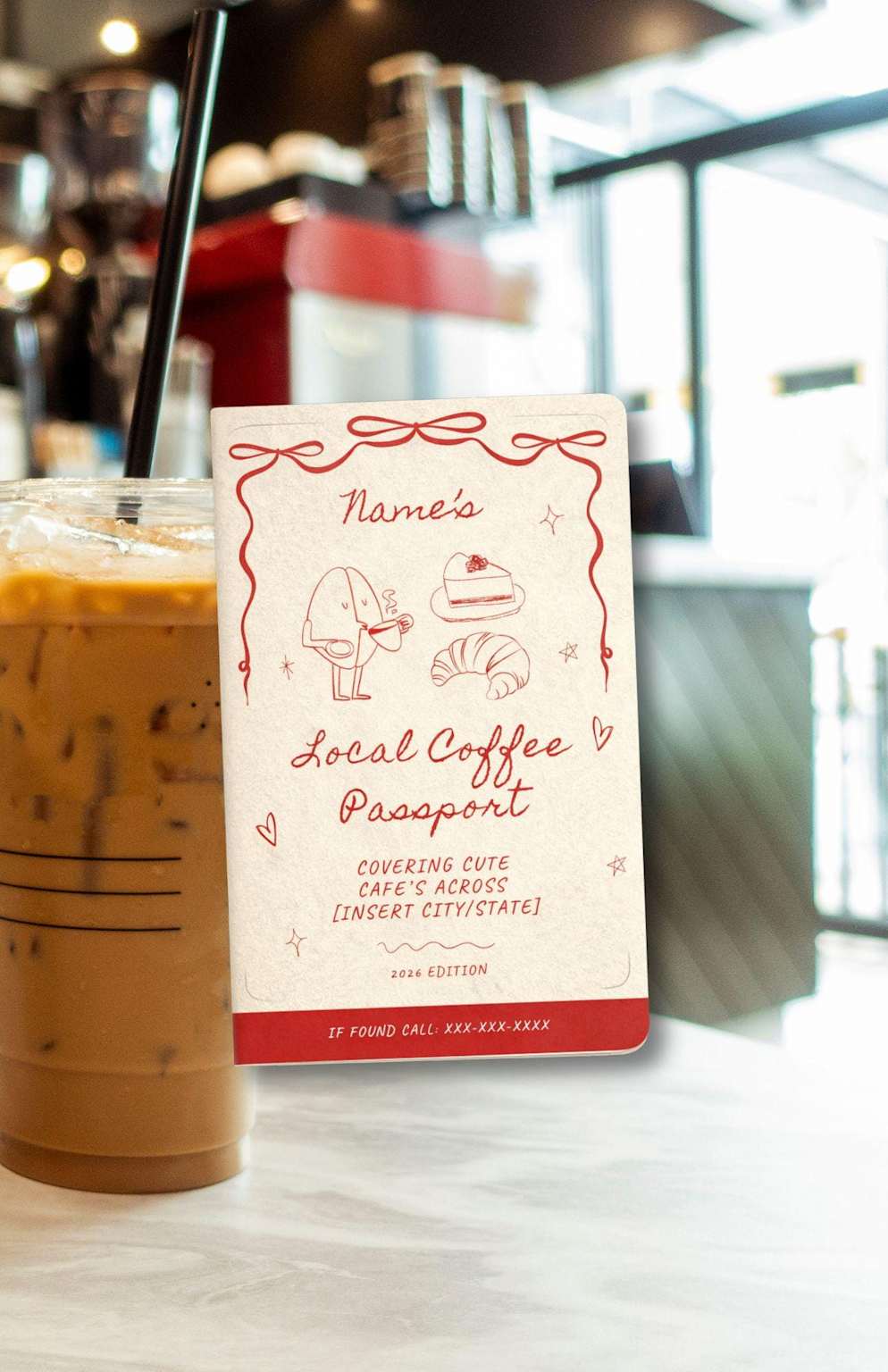
The Roseville Area Chamber of Commerce is putting local coffee on the map with the launch of its first-ever Coffee Passport, a program created to spotlight the region’s rapidly expanding café scene and connect residents with independently owned coffee businesses across Placer County. Introduced in March 2026, the Coffee Passport transforms everyday coffee runs into a curated tour of local shops, inviting people to discover new spaces, flavors, and stories while supporting the small businesses that give Roseville its character.

Unveiled to a wider audience during a segment on FOX40’s Studio40 Live, the Coffee Passport was presented as both a fun local “guidebook” and a serious economic development tool. Chamber representatives explained that 13 coffee companies are featured in the inaugural edition, noting that there are even more coffee businesses in the area than could fit into the first run, a sign of just how quickly the local coffee landscape has grown. From neighborhood roasters to community-focused coffee bars, each participating business becomes a stop in the passport, giving residents a reason to explore beyond their usual go‑to spot.

The mechanics are simple and accessible by design. Coffee lovers can pick up a Passport and start visiting participating cafés, where they receive a mark or check‑in for each shop they experience. The Chamber’s promotional materials emphasize that the Coffee Passport places participating businesses directly in front of 20+ coffee shops’ customer bases as well as roughly 750 engaged Chamber members, amplifying exposure far beyond what most small cafés could achieve on their own. For shop owners, it is both a marketing boost and a chance to be part of a shared regional story about quality coffee and community connection.

​Community is at the heart of the initiative. Chamber leaders describe coffee shops as modern “third places” where people meet friends, hold informal business meetings, study, and work remotely at nearly any hour of the day. By weaving individual cafés into a single Coffee Passport experience, the Chamber hopes to strengthen ties between residents and local businesses, encouraging people not only to buy a drink, but to get to know the people behind the counter and the neighborhoods they serve. Spotlight features on member cafés—such as recent highlights of local roasting companies—reinforce that the Passport is also about telling the stories of the people who make and serve the coffee.

The Coffee Passport does not stand alone; it is integrated into a broader calendar of Roseville Area Chamber programming. The Chamber’s event calendar shows a year-round lineup of breakfasts, bootcamps, and networking sessions, many of which already incorporate a coffee element to “caffeinate and collaborate” local professionals. The Passport extends that culture into the wider community, creating an everyday touchpoint that complements larger business events and helps keep Chamber-member cafés consistently visible.

Looking ahead, the Coffee Passport is set to tie into one of Roseville’s signature events, SPLASH!, the long-running food-and-drink celebration co‑presented by the Chamber and the City of Roseville. SPLASH! 2026, the 30th annual edition, will take place on September 12 and is expected to feature the area’s top wineries, breweries, restaurants, and entertainment for an evening of unlimited tasting and live music. By connecting the Passport to SPLASH!, the Chamber positions coffee alongside wine and beer as part of Roseville’s broader culinary identity and creates a natural moment to recognize Passport participants and highlight the cafés that have helped anchor the program throughout the year.

For local businesses, the Coffee Passport represents a coordinated marketing platform at a time when independent cafés face increasing competition and rising costs. For residents and visitors, it is a low‑cost, high‑enjoyment way to explore their city differently: one latte, cold brew, or espresso at a time. And for the Roseville Area Chamber of Commerce, it is a visible example of how creative, community‑minded programs can simultaneously support small business growth and deepen pride of place in a fast‑growing region.

If you tell me your target channel (press release, news website, magazine-style feature, LinkedIn article, etc.), I can now trim or reformat this story to match word count, headline style, and tone.

Indonesia’s Top 9 Coffees in 2026

New ranking highlights leading producers and coffee traditions

Dubai – Qahwa World

A newly updated ranking published on March 18, 2026 by TasteAtlas highlights nine of the most notable coffees and producers across Indonesia, offering a snapshot of one of the world’s most diverse coffee landscapes.

Spanning regions such as Sumatra, Bali, Java, and Sulawesi, the list reflects a wide range of production methods, flavor profiles, and traditions—from high-end civet coffee to everyday robusta staples.

The Top 9 Indonesian Coffees

1. Gayo Kopi – Wild Kopi Luwak (Sumatra)
Topping the list is Gayo Kopi, known for its wild-sourced Kopi Luwak from the highlands of northern Sumatra. The coffee is often associated with a smooth texture and reduced bitterness, with deep, earthy flavor characteristics.

2. Akasa Coffee – Honey Process (Bali)
From the Kintamani region, Akasa Coffee focuses on full control over production. Its honey-processed Arabica is typically described as balanced, with gentle sweetness, floral notes, and a clean finish.

3. Wahana Estate – Sidikalang (North Sumatra)
Situated at elevations between 1,300 and 1,500 meters, Wahana Estate is recognized for its focus on experimentation and variety development, contributing to layered and complex flavor profiles.

4. Seven Bika Coffee – Java Preanger
This brand draws from several Indonesian coffee regions, offering both single-origin Arabica and blends. Its small-batch approach aims to preserve the character of each origin.

5. Toarco Toraja – Sulawesi
Produced in the Toraja Highlands, this coffee is processed using washed methods that highlight clarity and balance, often resulting in a refined and structured cup.

6. Puntang Coffee – Arabica Wine Process (West Java)
Grown on Mount Puntang, these coffees benefit from volcanic soil and high elevations. The use of experimental processing methods contributes to fruit-forward and aromatic profiles.

7. El’s Coffee – Lampung
Based in southern Sumatra, this brand focuses on locally grown beans, including robusta from Lampung, known for its full body and strong flavor.

8. Kopi Luwak Coffee – Central Java
A long-established producer of civet-processed coffee, offering cups commonly associated with smoothness and notes of chocolate and caramel.

9. Mandailing Estate Coffee – Sumatra
Originating from northern Sumatra, this coffee reflects a traditional profile with a full body and flavors often described as dark chocolate, spice, and dried fruit.

Traditional Coffee Styles Still Shape the Culture

Alongside these producers, Indonesia’s coffee culture remains deeply connected to traditional preparation methods.

Kopi luwak continues to attract global attention for its unique processing method. Kopi tubruk remains a daily staple, prepared by mixing ground coffee directly with hot water and allowing it to settle in the cup. In Yogyakarta, kopi joss is known for its unusual preparation involving hot charcoal, while kopi terbalik from Aceh is served upside down as part of a distinctive local ritual. Ginseng coffee represents a more modern variation, blending coffee with herbal elements.

A Snapshot of a Changing Industry

The ranking reflects broader developments in Indonesia’s coffee sector, where traditional practices continue to coexist with modern approaches to cultivation and processing. Specialty Arabica is gaining international attention, while robusta remains essential to local consumption and identity.

TasteAtlas notes that its rankings are based on audience ratings, with systems designed to identify reliable input and reduce bias. The list is intended to highlight notable local products and encourage exploration, rather than serve as a definitive global classification.

Source

This article is adapted from a ranking published by TasteAtlas (March 18, 2026):
https://www.tasteatlas.com/best-rated-coffees-in-indonesia

FAO Welcomes UN Resolution Establishing International Coffee Day on October 1

Dubai – Qahwa World

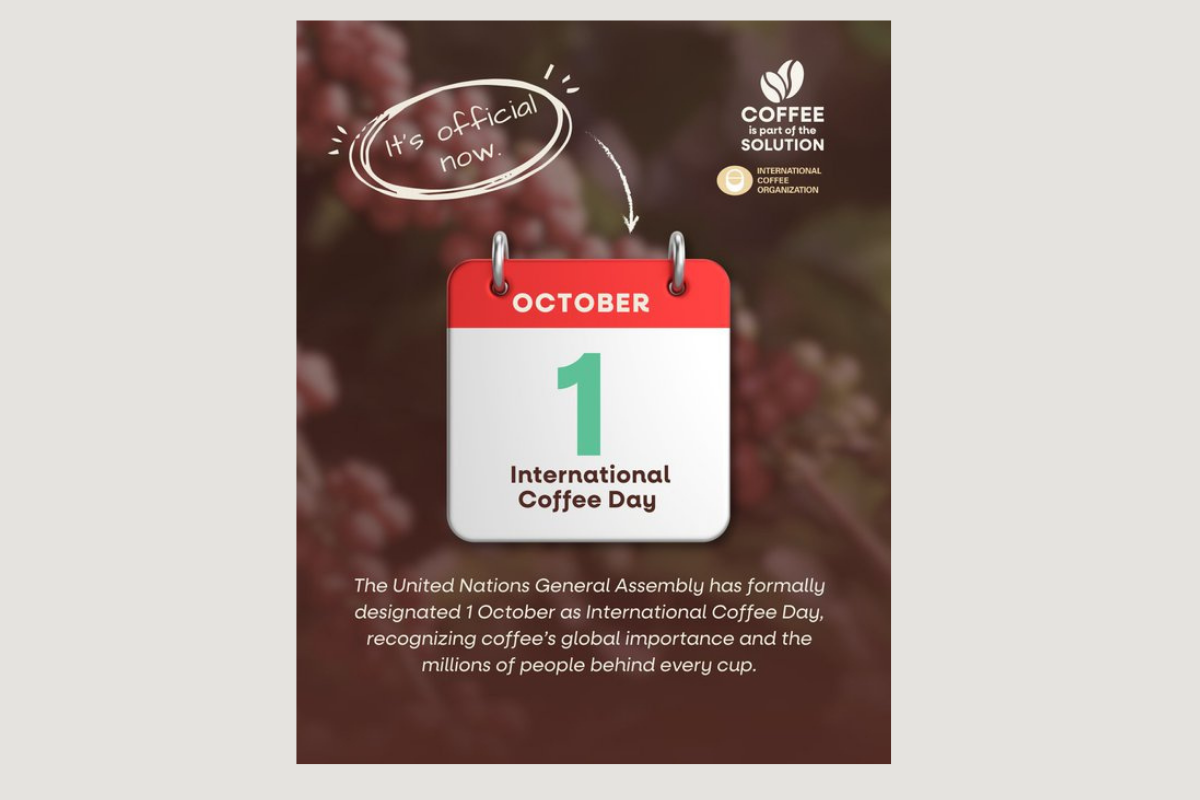
The Food and Agriculture Organization of the United Nations has welcomed a new resolution adopted by the United Nations General Assembly proclaiming October 1 as International Coffee Day, marking a significant step toward recognizing coffee’s global economic, social, and cultural importance.

The resolution, approved on 10 March 2026 in New York, highlights the historical and cultural role of coffee and its lasting influence on societies worldwide. It acknowledges that coffee has evolved from its origins into a globally traded agricultural commodity that sustains communities while also serving as a symbol of social interaction, cultural identity, and everyday tradition across generations.

You may Read: UN Officially Designates 1 October as International Coffee Day 

  • Coffee and global development

The United Nations resolution underscores the contribution of the coffee sector to several key global development priorities. Among them are ending hunger, reducing extreme poverty, empowering women, and promoting decent work and economic growth, all of which are central to the United Nations Sustainable Development Goals.

According to Qu Dongyu, coffee represents far more than a popular beverage.

“Coffee is more than a drink; it is a globally traded commodity—from beans to coffee service—that sustains the livelihoods of millions of farming households and connects rural communities to markets around the world,” he said. “Recognizing the value of the coffee sector will raise awareness of its socio-economic importance and strengthen its contribution to eradicating poverty.”

You may read: International Coffee Day: How It Started and Why the World Celebrates 

  • A sector supporting millions

Coffee remains one of the most widely consumed beverages worldwide. Global per-capita consumption has grown by about 1.2 percent annually over the past decade, reflecting steady demand across international markets.

The sector supports the livelihoods of around 25 million coffee farmers, while employment extends across the entire value chain—from cultivation and processing to trading, roasting, and retail. Altogether, the global coffee industry generates more than 200 billion dollars in annual revenue.

Coffee also ranks among the world’s most traded agricultural commodities. In 2024, global production surpassed 11 million tonnes, with approximately 8 million tonnes traded internationally. That same year, the estimated value of global coffee production reached nearly 25 billion dollars, while international trade in coffee beans totaled about 34 billion dollars.

Read also: International Coffee Day: A Beverage’s Journey from Yemen to the World 

  • Vital exports for developing economies

For many low-income countries, coffee exports remain a critical source of foreign currency earnings.

In 2024, coffee accounted for 27.9 percent of total merchandise exports in Ethiopia, 20.1 percent in Uganda, and 19.5 percent in Burundi. In both Ethiopia and Uganda, revenues from coffee exports exceeded national food import bills, while in Burundi they represented nearly one-fifth of the country’s food import costs.

During the same year, Brazil and Viet Nam were the world’s leading coffee exporters, while the European Union and the United States remained the largest import markets.

  • FAO’s role in strengthening the coffee sector

FAO works with coffee-producing countries through a range of initiatives designed to strengthen sustainability, productivity, and farmer livelihoods.

One of the organization’s priorities is helping producers adapt to the growing impacts of climate change. Through programs such as Farmer Field Schools, FAO supports pest management strategies and the conservation of traditional coffee systems, including projects in Panama. Additional initiatives promote agroforestry systems and climate-resilient coffee varieties in East Africa, while cooperative development programs are helping strengthen rural economies in countries such as Cuba.

You may like:Coffee Industry on International Coffee Day: Production, Consumption, and Future Challenges 

The organization is also assisting producers in responding to evolving market requirements. As international buyers increasingly demand traceability and compliance with sustainability standards, FAO is working with governments and producers in countries including Honduras, Guatemala, and Uganda to establish stronger traceability systems and align national policies with global frameworks. These efforts aim to mobilize investment benefiting more than 200,000 smallholder farmers.

Through its Investment Centre and initiatives such as the Hand-in-Hand Initiative, FAO is also supporting financing mechanisms that improve efficiency and increase farmer incomes. Projects in Brazil, Costa Rica, and Honduras, implemented with partners including the World Bank, are helping strengthen the long-term resilience of coffee farming systems. In El Salvador, FAO has supported the development of a comprehensive national coffee strategy.

  • A global platform for the coffee community

With the establishment of International Coffee Day under the UN system, FAO has been invited to coordinate the annual observance in collaboration with relevant organizations, particularly the International Coffee Organization.

The new international day is expected to serve as a global platform for dialogue, cooperation, and knowledge-sharing across the coffee value chain. By highlighting both the opportunities and the challenges facing producers, the initiative aims to strengthen international commitment to a sustainable, inclusive, and resilient coffee sector that contributes to rural development and global food security.


UN Officially Designates 1 October as International Coffee Day

Dubai – Qahwa World

The International Coffee Organization has announced what it described as “a historic moment for the global coffee community” after the United Nations General Assembly formally designated 1 October as International Coffee Day.

According to the announcement, the decision recognizes coffee’s profound importance to global economies, cultures, and livelihoods, highlighting the role the beverage plays across producing and consuming nations alike.

The milestone follows the adoption of Resolution A/80/L.44 by the United Nations General Assembly on 10 March 2026. The resolution, introduced by Brazil, received 150 votes in favor, with one vote against from the United States and one abstention from Canada.

United Nations Officially Declares 1 October International Coffee Day

Under the resolution, 1 October will now be officially recognized every year as International Coffee Day, and all countries, United Nations bodies, and relevant stakeholders are invited to organize activities that highlight the economic, social, and environmental significance of coffee.

The resolution also invites the Food and Agriculture Organization of the United Nations to lead the annual observance in cooperation with the International Coffee Organization.

  • Elevating an existing global celebration

International Coffee Day has already been observed globally on 1 October since 2015, when the initiative was first launched by the International Coffee Organization during Expo 2015 Milan.

The new United Nations designation elevates the observance to an official international day within the UN system, giving the coffee sector broader global recognition and strengthening the visibility of the millions of people who depend on coffee for their livelihoods.

United Nations Officially Declares 1 October International Coffee Day

In its statement, the International Coffee Organization noted that the decision reflects the collective efforts of its member countries, institutional partners, and international organizations, including the Food and Agriculture Organization, to raise awareness of the coffee sector’s importance.

  • Supporting farmers and sustainability

Coffee remains one of the world’s most widely traded agricultural commodities and supports millions of farmers, workers, traders, and communities across Africa, Asia, and Latin America.

The International Coffee Organization and the Food and Agriculture Organization see the UN recognition as an opportunity to strengthen global attention to the sector’s key challenges and opportunities, including sustainability, farmer livelihoods, and climate-related risks affecting coffee production.

Qu Dongyu welcomed the decision, stating that the new international day will help raise awareness of coffee’s socio-economic importance and reinforce its role in supporting efforts to reduce poverty worldwide.

United Nations Officially Declares 1 October International Coffee Day

For the global coffee community—from smallholder farmers to exporters, roasters, and consumers—the recognition marks a significant step toward greater international acknowledgment of the industry’s cultural and economic impact.

With the adoption of the UN resolution, International Coffee Day on 1 October is expected to gain even broader global participation, as governments, organizations, and coffee professionals organize events and initiatives celebrating the beverage and the people behind every cup.

World’s 100 Best Coffee Shops to Present Continental Rankings at World of Coffee

DUBAI – Qahwa World × Buna Kurs

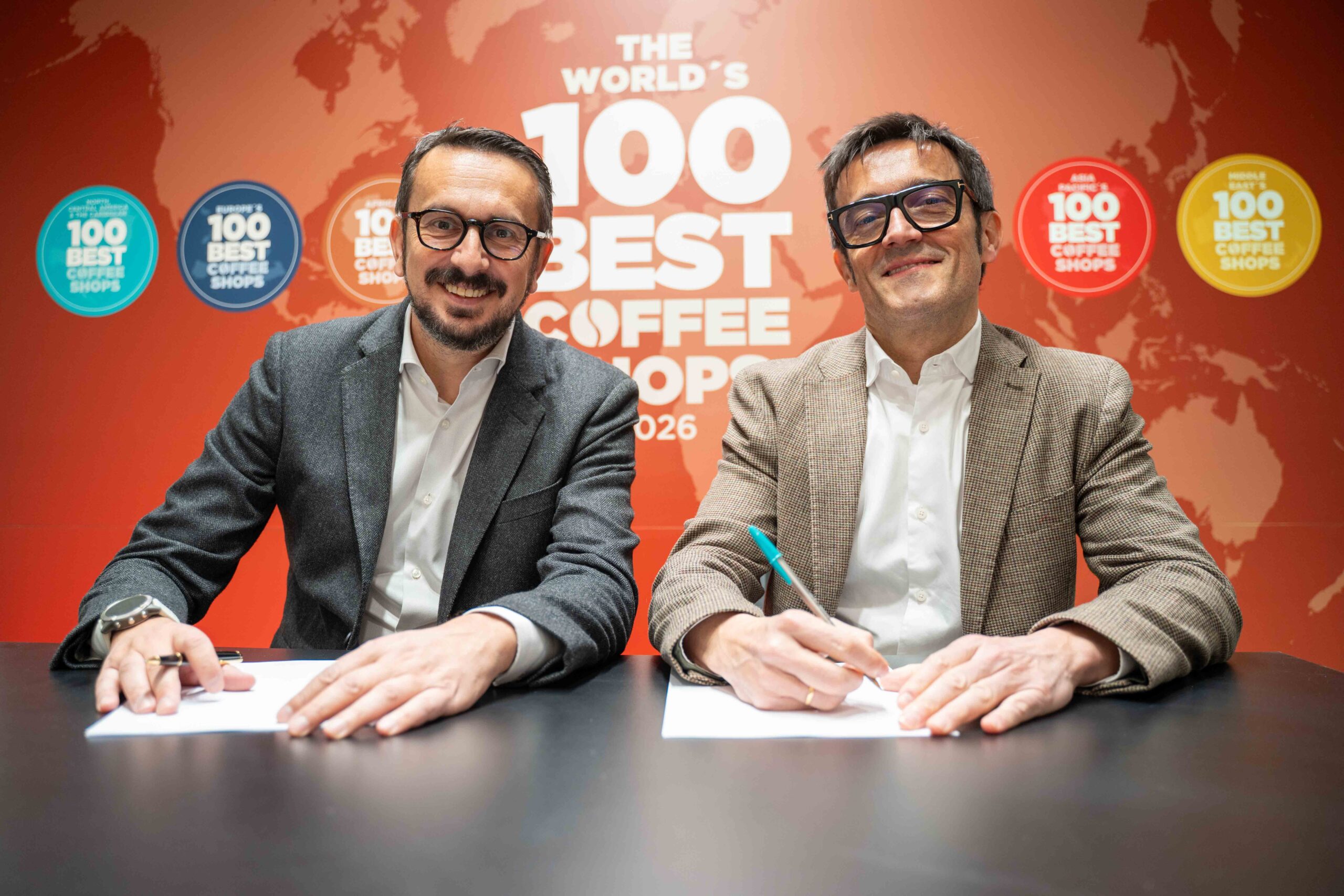
The World’s 100 Best Coffee Shops has entered into a strategic agreement with the Specialty Coffee Association (SCA) to present its continental Top 100 rankings during upcoming World of Coffee exhibitions starting in 2026.

Under the agreement, the continental rankings will be officially unveiled as part of the World of Coffee program, integrating the recognition initiative into one of the specialty coffee industry’s most influential global trade platforms.

The collaboration will debut at World of Coffee San Diego (April 10–12, 2026), where the Top 100 coffee shops for North America, Central America, and the Caribbean will be announced. The program will then continue at World of Coffee Brussels (June 25–27, 2026), featuring the presentation of Europe’s Top 100 coffee shops.

You may like: Six Middle East Coffee Shops Enter The World’s Top 100 List 2026

Integration into the Global Specialty Coffee Platform

Developed by Neodrinks, The World’s 100 Best Coffee Shops forms part of a broader international recognition framework that includes global, continental, and national rankings. The selection system combines evaluations from industry professionals with public voting to identify coffee shops contributing to excellence and innovation within specialty coffee.

By incorporating the continental announcements into official SCA programming, the rankings will gain direct exposure to producers, roasters, baristas, retailers, and equipment manufacturers attending World of Coffee events.

César Ramírez, founder of the initiative, described the agreement as a natural step in the platform’s evolution, positioning the rankings within the sector’s leading professional forums.

SCA CEO Yannis Apostolopoulos stated that the collaboration provides an opportunity to celebrate specialty coffee professionals and coffee shops shaping the industry’s future during World of Coffee gatherings.

Read also: The World’s 100 Best Coffee Shops 2026 Unveiled in Madrid

Strengthening International Visibility

Organized by the Specialty Coffee Association, World of Coffee rotates annually across major global cities and is widely regarded as one of the most important trade events in the specialty coffee sector. The exhibitions typically feature large-scale trade shows, educational programs, competitions, and professional networking forums.

The integration of continental rankings into these events marks a significant milestone in the international consolidation of The World’s 100 Best Coffee Shops initiative, reinforcing its global visibility and institutional alignment within the specialty coffee ecosystem.

Additional continental announcements are expected as the 2026 World of Coffee calendar progresses.

ICO Launches 2026 Global Campaign: Coffee is Part of the Solution

London – QAHWA WORLD

The International Coffee Organization (ICO) has launched its 2026 global communications campaign under the theme “Coffee is Part of the Solution,” highlighting the sector’s role in addressing major global challenges.

Coffee provides income for approximately 12.5 million farming families worldwide and plays a central role in socio-economic development across producing regions and their communities.

Through this campaign, the ICO aims to reinforce the sector’s contribution to tackling pressing issues, including inequality, livelihoods, sustainability, climate resilience and inclusive development.

You may like: Bridging the Gap: An Exclusive Dialogue with Vanusia Nogueira on the Global Coffee Crisis and the Path to 2026

Beyond its economic value, coffee contributes in many regions to rural development, carbon sequestration, environmental sustainability, cultural heritage preservation, inclusive infrastructure and innovation. It also strengthens ties between producing and consuming countries, as well as between public and private stakeholders.

The campaign seeks to spotlight these contributions while encouraging collective action across the entire coffee value chain.

Throughout 2026, the ICO will present evidence, strategies and initiatives demonstrating how collaboration among producers, governments, the private sector, financial institutions and civil society can amplify coffee’s positive impact in addressing global challenges.

“Coffee has always been more than a commodity. It is a catalyst for development, dialogue and cooperation,” said Vanusia Nogueira, Executive Director of the ICO. “Through this campaign, we want to show that when the sector works together, coffee can support resilience, improve livelihoods and contribute meaningfully to solutions.”

The initiative also invites the global coffee community to share examples of impact-driven projects using the hashtag #CoffeeIsPartOfTheSolution, illustrating how collaboration can deliver measurable results on the ground.

As the intergovernmental body representing both coffee-exporting and importing countries, and convening public and private stakeholders, the ICO will continue to mobilize trusted data, dialogue, finance, knowledge and innovation. The campaign will be rolled out across the organization’s digital platforms throughout 2026, supported by institutional videos, data insights and engagement with members and partners worldwide.

The International Coffee Organization is the only intergovernmental organization dedicated to enhancing the sustainability of the coffee sector for both exporting and importing countries. It serves as a high-level platform for public and private stakeholders, provides official statistics on global coffee production, trade and consumption, and facilitates the development and funding of technical cooperation projects and public-private partnerships to advance the coffee industry.