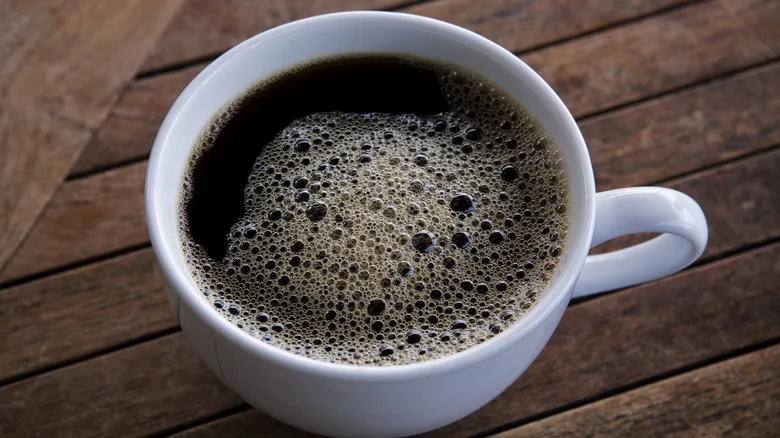
Top 5 US Most Expensive Cities for Coffee

Dubai – Qahwa World

Coffee is never just a daily habit. It reflects place, culture, and the real cost of bringing coffee from farm to cup.

Across the United States, the price of a standard coffee varies widely. On average, a regular hot coffee costs between $3.50 and $3.65. In Hawaii, that same cup often exceeds $5, while cold brew can reach nearly $6.75.

Recent data from coffee shop systems places Hawaii firmly at the top, with a median price of about $5.23 for hot coffee and $6.74 for cold brew.

Why Hawaii Leads

Hawaii is one of the only regions in the United States where coffee is grown commercially, most notably Kona coffee. Here, coffee is cultivated on volcanic soil and shaped by a unique climate.

Producing coffee in Hawaii is expensive. Labor costs are high, farms are smaller, and production requires careful handling.

The islands’ remote location adds further pressure. Supplies such as milk, equipment, and packaging must be shipped across the ocean. High rents and an elevated cost of living also push prices higher.

The result is a cup of coffee that reflects both premium quality and the realities of island economics.

You may like to read: The 10 Most Expensive Cappuccino Cities in 2025

The Top 5 Most Expensive U.S. Cities for Coffee

1. Honolulu, Hawaii, around $5.23
Honolulu combines local production with high operating costs. Coffee here carries the full weight of island life and tourism demand.

2. Los Angeles, California, around $4.99
Coffee is part of lifestyle and culture in Los Angeles. High demand and expensive real estate keep prices elevated.

3. San Francisco, California, around $4.92
A strong focus on craftsmanship and quality drives coffee culture in San Francisco, alongside high business costs.

4. Seattle, Washington, notably high with strong recent increases
Seattle remains a central hub for coffee culture in the United States. Rising wages and demand continue to push prices upward.

5. New York, New York, around $4.80 to $5.00
In New York, coffee supports a fast-paced lifestyle. High rents and constant demand make it one of the most expensive markets.

You may also read: Coffee Etiquette in 2026: 12 Rules for an Elegant and Mindful Café Experience

A Cup That Tells a Story

While these cities lead in price, more affordable coffee can be found in states like Mississippi and West Virginia, where a cup costs closer to $3.

From Kona coffee grown on Hawaiian soil to a simple cup served in smaller towns, every price reflects a broader story of geography, cost, and culture.

Coffee, in the end, is not just about what is in the cup, but everything behind it.

The Kona Coffee Fraud: When Geochemistry Exposed the Truth and Restored Authenticity

Dubai – Qahwa World

In early October 2025, U.S. federal authorities uncovered one of the largest coffee fraud cases in recent history. Prosecutors charged 66-year-old businesswoman Patricia Johnson, from Kona, Hawaii, for her alleged involvement in selling massive quantities of counterfeit coffee marketed as “100% Kona.”

According to court documents published by Hawaii News Now on October 2, 2025, Johnson imported approximately 88 metric tons (about 194,000 pounds) of low-cost coffee from South America over more than a decade, repackaging and selling it in the United States as genuine “Kona Coffee.” The operation generated millions of dollars in illegal profits, deceiving consumers and damaging the reputation of authentic Kona growers.

Kona coffee is among the most distinguished varieties in the world, cultivated on the fertile slopes of Mauna Loa in Hawaii, where young volcanic soils and a tropical microclimate produce a rich, balanced, and subtly fruity cup. Its exclusivity and premium prices have long made it a target for counterfeiters seeking to capitalize on its global prestige. Over the years, the market saw a growing influx of products labeled as “Kona” being sold at unusually low prices, prompting suspicion and triggering a scientific investigation unlike any the coffee world had seen before.

Back in 2020, researchers from the University of Utah, led by Bitter and colleagues, published a groundbreaking study in Food Chemistry 320 demonstrating that roasted coffee beans retain a stable mineral fingerprint that reflects the geochemical makeup of the soil where they were grown. Using Inductively Coupled Plasma Mass Spectrometry (ICP-MS), the team measured 44 trace elements in roasted Arabica coffees from 21 countries, focusing not on absolute concentrations—which roasting can alter—but on elemental ratios such as Rb/Ni, Mn/Sr, and Ce/Yb. These ratios remain consistent even after roasting, serving as precise geochemical markers for verifying a coffee’s origin.

When U.S. investigators applied this scientific method to samples from the suspected Kona coffee, the results were conclusive: the mineral profile did not match the known geochemical signature of Kona’s young basaltic soils. Instead, it matched that of continental South American soils, confirming that the coffee was falsely labeled. The findings became the forensic cornerstone of the case, offering irrefutable proof that “the soil never lies.”

This case went far beyond a simple commercial dispute — it became a defining moment in how agricultural authenticity is protected worldwide. Experts say the integration of geochemical fingerprinting in food forensics represents a turning point for both science and trade. It not only exposed a decade-long fraud but also reinforced the principle of traceability through science, ensuring that terroir and truth can once again align in every cup.

The Kona scandal also highlighted how cutting-edge analytical chemistry can serve as a guardian of transparency and fairness. For producers, it protects geographical indications and guarantees fair recognition for genuine coffee growers. For scientists, it validates the power of multi-element and isotopic analysis in authenticating food origins. And for consumers, it restores confidence that when they buy coffee labeled as Kona, Yirgacheffe, or Tarrazú, they are tasting the true essence of that land.

The Kona Coffee Fraud proved that while marketing can deceive, the soil cannot. Through science, justice, and data, geochemistry has given authenticity its voice back — one that speaks, quite literally, from the ground beneath the roots.