Russia’s Green Coffee Market Records Historic Growth in 2026

Mocow-QahwaWorld

Russia’s green coffee market posted significant growth in 2026, supported by rising global prices and sustained domestic demand, according to a recent analysis by ROIF Expert. The expansion reflects not only higher market value but also increased import volumes and consumption levels, reinforcing Russia’s position as a key destination for global coffee exporters.

Market Value Jumps by 92 Billion Rubles

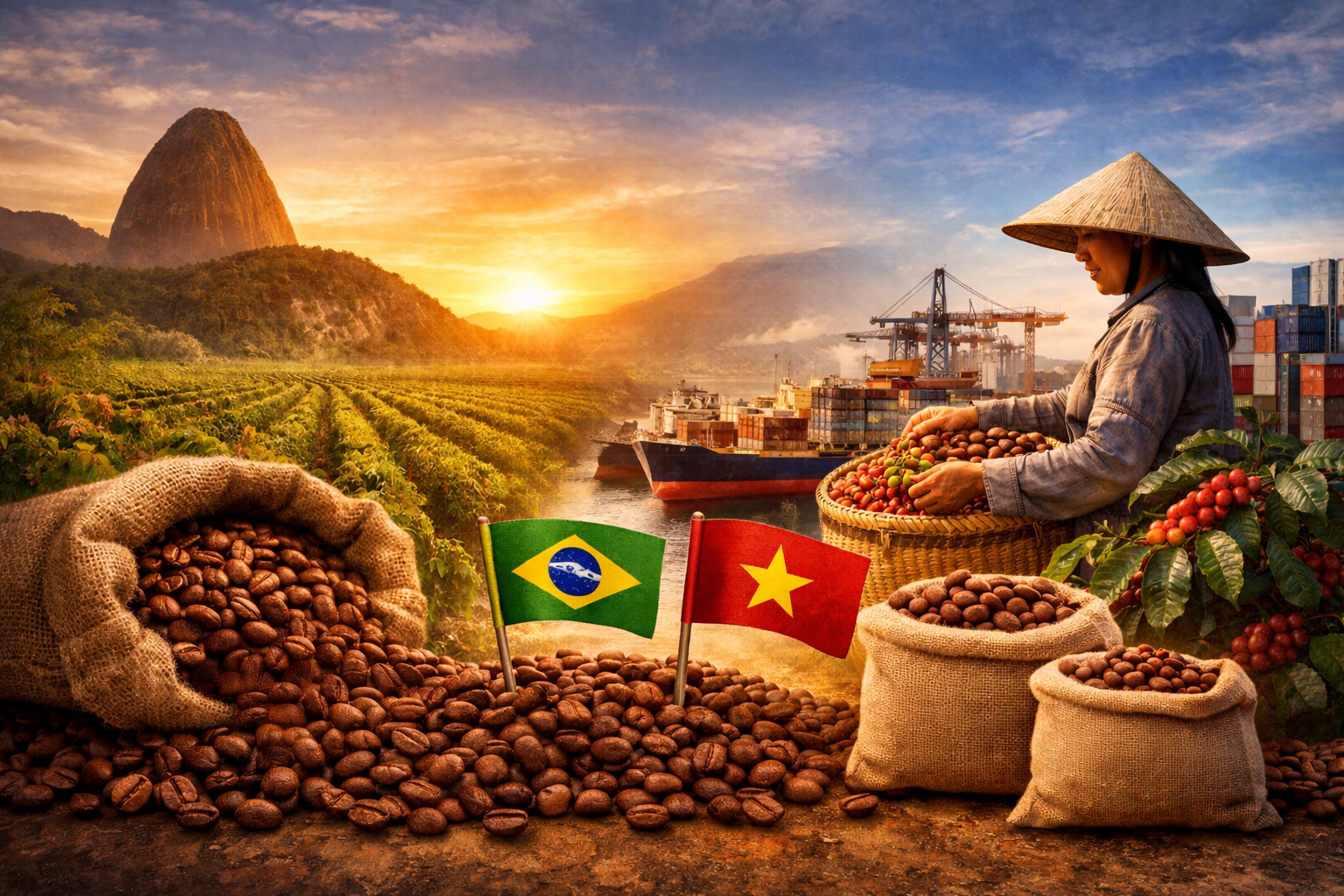
The market value of green coffee increased by approximately 92 billion rubles between its lowest and highest recent levels, marking one of the strongest gains in the sector. The growth is largely attributed to higher global coffee prices, influenced by weather-related challenges in major producing countries such as Brazil and Vietnam.

While import volumes continued to rise, value growth outpaced physical expansion, reflecting sustained price pressure across global supply chains.

Imports Remain the Core Driver

Russia relies almost entirely on imports to meet its green coffee demand. Between 2025 and 2026, total import volumes reached around 286,000 tons.

  • Import value increased by 45.5% in the first nine months of 2025, reaching $924.7 million
  • Vietnam recorded a 1.5x increase in exports
  • Brazil nearly doubled its export volumes
  • Indonesia strengthened its position among top suppliers with 1.6x growth

Despite ongoing sanctions, supply flows remained stable. The primary challenge involved payment restrictions, prompting companies to adapt through alternative channels, including intermediary countries such as Turkey, China, and the UAE, as well as increased direct shipping routes.

Consumption Reaches Record Levels

Consumption indicators show continued growth, with per capita coffee consumption reaching its highest recorded levels. Approximately 70% of the population consumes coffee daily, while a majority consider it an essential part of their routine.

Home consumption is expected to grow by 15% by the end of 2026, alongside increasing demand for specialty coffee and whole beans.

Shifts in Supply Chains

Supply chains are gradually shifting toward Asian producers, particularly Vietnam and Indonesia, while overall trade flows remain relatively stable. At the same time, the market continues to face pricing pressures and logistical risks linked to geopolitical factors.

Outlook Through 2033

The baseline scenario outlined in the report suggests steady growth over the coming years, supported by consistent demand and expanding import activity.

  • Projected annual growth between 3% and 5.5%
  • Moderate increase in global price levels
  • Continued rise in per capita consumption
  • Further diversification of import sources

The market is expected to maintain positive momentum, demonstrating resilience in the face of external pressures.

Implications for Industry Stakeholders

The Russian market offers strong opportunities for global exporters, given its full dependence on imports. Domestic players are increasingly focused on higher-quality offerings and cost management, while consumers benefit from a broader range of products.

From an investment perspective, the sector shows the ability to convert price pressures into growth drivers, enhancing its medium-term appeal.

Conclusion

Russia’s green coffee market in 2026 reflects a mature and resilient sector. The sharp increase in market value and sustained demand indicate a continued upward trajectory, with growth expected to extend through the end of the decade.

 

Strength in the Brazilian Real Boosts Coffee Prices

Dubai – Qahwa World

Coffee futures moved higher on Friday, supported by currency strength and supply dynamics. May arabica coffee (KCK26) rose by +6.40 points (+2.18%), while May ICE robusta coffee (RMK26) gained +14 points (+0.42%).

Arabica prices reached a one-week high, while robusta rebounded from its lowest level in 8.5 months in nearby futures. The rally was largely driven by the appreciation of the Brazilian real, which climbed to a two-year high against the US dollar. A stronger real tends to discourage export selling by Brazilian producers, tightening global supply.

Supply Trends and Inventory Movements

Tight robusta supplies continue to support prices. ICE-monitored robusta inventories declined to 3,977 lots, marking a 1.25-year low. In contrast, arabica inventories have increased, limiting price gains. ICE arabica stocks rose to 585,621 bags on March 18, the highest level in more than six months.

Shipping Disruptions Impact Global Trade

The closure of the Strait of Hormuz has disrupted global shipping routes, tightening coffee supplies worldwide. The disruption has increased freight rates, insurance costs, and fuel expenses, raising overall costs for coffee importers and roasters.

Weather Conditions in Brazil Support Prices

Weather conditions in Brazil are also providing support. Somar Meteorologia reported that Minas Gerais, the country’s largest arabica-growing region, received 11.7 mm of rainfall last week, representing only 47% of the historical average. Below-normal rainfall may affect crop development and support prices.

Record Crop Expectations Weigh on Market Sentiment

Despite current support factors, expectations of a record Brazilian coffee crop continue to pressure the market. On March 19, Marex Group Plc projected Brazil’s 2026/27 coffee production at 75.9 million bags, exceeding Sucafina’s estimate of 75.4 million bags and marking a 15.5% year-on-year increase.

On March 12, StoneX raised its forecast to 75.3 million bags, up from a previous estimate of 70.7 million bags. The firm also expects the global coffee surplus to expand to 10 million bags in 2026, compared to 1.8 million bags in 2025, representing the largest surplus in six years.

Vietnam Export Growth Pressures Robusta

Rising exports from Vietnam, the world’s largest robusta producer, are weighing on prices. Vietnam’s National Statistics Office reported that coffee exports in the first quarter of 2026 increased by 14% year-on-year to 585,000 metric tons.

In 2025, exports rose by 17.5% to 1.58 million metric tons. Production for the 2025/26 season is expected to increase by 6% to 1.76 million metric tons (29.4 million bags), reaching a four-year high.

Decline in Brazilian Exports Offers Support

Recent export data from Brazil provided additional support to prices. Cecafe reported that green coffee exports in February fell by 27% year-on-year to 2.3 million bags. Meanwhile, Brazil’s Trade Ministry reported a 31% decline in March exports to 151,000 metric tons.

Recent Price Trends and Global Outlook

Coffee prices declined sharply in February, with arabica falling to a 16.75-month low on February 24 due to expectations of strong Brazilian supply.

Brazil’s crop agency Conab projected on February 5 that 2026 coffee production would rise by 17.2% year-on-year to a record 66.2 million bags. Arabica output is expected to increase by 23.2% to 44.1 million bags, while robusta production is forecast to grow by 6.3% to 22.1 million bags.

Rabobank reported on March 4 that global coffee production for the 2026/27 season is expected to reach a record 180 million bags, about 8 million bags higher than the previous year.

Global Trade and Production Forecasts

The International Coffee Organization (ICO) reported on November 7 that global coffee exports for the current marketing year (October to September) declined by 0.3% year-on-year to 138.658 million bags.

The USDA’s Foreign Agriculture Service (FAS) projected in its December 18 report that global coffee production for 2025/26 will increase by 2.0% to a record 178.848 million bags. Arabica production is expected to decline by 4.7% to 95.515 million bags, while robusta output is forecast to rise by 10.9% to 83.333 million bags.

FAS also estimates that Brazil’s 2025/26 coffee production will fall by 3.1% to 63 million bags, while Vietnam’s production will increase by 6.2% to 30.8 million bags. Ending stocks for the 2025/26 season are projected to decline by 5.4% to 20.148 million bags, down from 21.307 million bags in 2024/25.

Brazil Crop Expectations Weigh on Coffee Prices

Dubai – Qahwa World

Coffee prices remain under pressure as the market continues to digest expectations of a large upcoming crop in Brazil. May arabica coffee declined by 0.65%, while May robusta slipped 0.69%, extending recent losses.

Arabica futures recently touched a three-week low, while robusta fell to its weakest nearby level in eight months. The downward trend is largely driven by forecasts pointing to record production in Brazil. Estimates from multiple analysts suggest the 2026/27 crop could reach between 75.3 and 75.9 million bags, representing a significant year-on-year increase.

At the same time, projections indicate a widening global coffee surplus. Estimates suggest the surplus could expand to 10 million bags in 2026, up sharply from 1.8 million bags in 2025, marking the largest surplus in six years.

Additional pressure is coming from Vietnam, the world’s leading robusta producer. Coffee exports from Vietnam rose 14% year-on-year in the first quarter, reaching 585,000 metric tons. Full-year exports in 2025 increased by 17.5%, while production for the 2025/26 season is expected to rise 6% to a four-year high.

Despite these bearish factors, some elements are offering support to prices. Weather conditions in Brazil remain a concern, with below-average rainfall in key growing regions such as Minas Gerais. Recent data shows rainfall at just 47% of the historical average, raising questions about crop development.

Supply dynamics are also mixed. Robusta inventories have tightened, with exchange-monitored stocks falling to a 15-month low. In contrast, arabica inventories have increased, reaching their highest level in over six months, adding further pressure to that segment of the market.

Export data from Brazil has provided some price support. Green coffee exports fell 27% year-on-year in February, while March exports dropped 31%, indicating a slowdown in shipments.

Looking back, coffee prices already experienced a sharp selloff in February, when arabica dropped to a 16.75-month low amid early signs of a strong Brazilian crop. Brazil’s official crop agency has projected a substantial increase in production, while global output is also expected to reach record levels in the 2026/27 season.

On a broader scale, global coffee production is forecast to rise modestly in 2025/26, driven by strong growth in robusta output, particularly from Vietnam. However, ending stocks are expected to decline, suggesting that supply tightness could still emerge in certain segments of the market.

Top Coffee Producers 2026

Dubai Qahwa World

As of April 2026, the global coffee market is undergoing a pivotal shift. Data from the International Coffee Organization (ICO) and the USDA show that the 2025/26 coffee year (October 2025–September 2026) has delivered record global supply, easing the extreme price pressures seen in 2024 and early 2025. World production is forecast at 178.8 million 60-kg bags (up 2% or +3.5 million bags year-on-year), while consumption reaches a record 173.9 million bags (+1.3%). Ending stocks remain tight at approximately 20.1 million bags, marking the fifth consecutive decline. Nevertheless, improved supply has caused ICO Composite Indicator Prices to drop sharply in early 2026 (February average: 267.57 US cents/lb, -9.9% month-on-month).

This supply surplus is driven by strong recoveries in Vietnam and Indonesia, record Ethiopian output, and steady performance in Brazil, despite drought impacts on key Arabica regions. National updates, including Brazil’s Conab first survey in February 2026, indicate an even stronger 2026 harvest, which could push global supply higher for 2026/27.

Top 10 Coffee-Producing Countries (2025/26 Forecast)

Data primarily from USDA December 2025 report, cross-verified with national sources and market analyses. Figures are green coffee equivalents. Percentages approximate global share.

Rank Country Production (M bags) % Global Main Variety YoY Change Key Notes
1 Brazil 63.0 ~35% Arabica (60%), Robusta/Conilon (40%) -2.0M (drought offset by Robusta gains) Record Robusta; Arabica hit by weather
2 Vietnam 30.8 ~17% Robusta (~95%) Recovery (+ higher yields) Fertilizer investment boosted output
3 Colombia 13.8 ~8% Arabica (100%, washed) -1.0M (excess rain/rust risk) Disease-resistant varieties helped
4 Indonesia ~12.5 ~7% Robusta (dominant) +1.7M (Robusta) Smallholder-dominated; favorable weather
5 Ethiopia 11.6 ~6.5% Arabica (specialty) Record (+0.5M) New varieties and pruning
6 Uganda ~6.9 ~3.9% Robusta Steady growth African Robusta leader
7 Honduras ~5.5–6.0 ~3% Arabica Part of Central America rebound Strong regional contributor
8 India ~5–6 ~3% Robusta (65%), Arabica (35%) Stable Specialty and organic focus
9 Peru ~4.2–5 ~2.5% Arabica (specialty/organic) Steady Premium export growth
10 Mexico / Guatemala ~3.8 each ~2% each Arabica Modest Central America/Mexico rebound

Total top 5: ~131.7M bags (~74% of world production). Latin America dominates Arabica; Asia leads Robusta.

Country Profiles: Drivers, Challenges, and 2026 Outlook

Brazil – World Leader (~35% of Global Supply)

Brazil remains the top producer. The 2025/26 crop saw Arabica decline to ~38M bags due to drought and high temperatures in Minas Gerais and São Paulo. Robusta surged to a record ~25M bags in Espírito Santo and Bahia thanks to better rainfall. Exports are forecast at ~37M bags.

  • Trends: Biennial cycle plus large-scale production with technology and irrigation. Funcafé funding supports the sector.
  • Challenges: Climate volatility, water stress, and EU Deforestation Regulation (EUDR) compliance.
  • 2026 Outlook: Conab’s February 2026 survey projects a record 66.2M bags (+17.1% YoY): Arabica +23.3% to 44.1M, Robusta +6.4% to 22.1M. This would surpass the 2020/21 record harvest.

Vietnam – Robusta Powerhouse

Nearly all output is Robusta, used in instant coffee and blends. Production rebounded due to favorable weather and higher input spending. Exports projected at 24.6M bags (+2.3M).

  • Trends: Export-oriented, rapid post-1990s expansion.
  • Challenges: Climate vulnerability in highlands; past dry spells.
  • 2026 Outlook: Continued recovery expected; early 2026 data shows strong export growth.

Colombia – Premium Arabica Specialist

100% washed Arabica. 2025/26 saw a modest decline due to excessive rains and cloud cover affecting flowering and rust risk. Disease-resistant varieties, such as Castillo, mitigated losses. Exports ~11.5M bags.

  • Trends: Focus on quality; yield improvements ongoing.
  • Challenges: Weather cycles, labor costs, altitude sensitivity.
  • 2026 Outlook: Rebound likely under normal conditions; key supplier to specialty markets.

Indonesia – Diverse Robusta and Specialty

Robusta dominates Sumatra and Java; small Arabica areas in the north. Production rose due to favorable weather and labor availability. Smallholder plots average 1 ha. Exports: green coffee +1.7M to 7.8M bags.

  • Trends: Stable land area (~1.2M ha), significant soluble coffee exports.
  • Challenges: Minimal fertilizer use, climate extremes.
  • 2026 Outlook: Stable supply to EU, US, and emerging markets expected.

Ethiopia – Africa’s Specialty Arabica Leader

Record 11.6M bags driven by adoption of higher-yielding varieties and pruning. Exports ~7.8M bags.

  • Trends: Natural and semi-washed processing; heirloom varieties remain globally sought.
  • Challenges: Smallholder fragmentation, highland climate variability, infrastructure limits.
  • 2026 Outlook: Growth likely if variety upgrades continue; specialty segment driver.

Emerging/Other Notable Producers

Uganda, Honduras, India, Peru, Mexico, and Guatemala produce the remaining ~25%. They are critical for Robusta (Uganda) and specialty/organic Arabica (Peru, India, Honduras). Central America/Mexico region rebounded +1.1M bags. India emphasizes premium niches (Monsoon Malabar, organic). All face smallholder and climate challenges but benefit from growing specialty demand.

Broader Trends Shaping 2026 and Beyond

  • Climate Change & Resilience: Droughts and excessive rains highlight vulnerability. By 2050, suitable coffee land may shrink significantly without adaptation.
  • Sustainability & Regulation: EUDR deadlines pressure exporters on traceability. Certifications (Fairtrade, organic, Rainforest Alliance) are growing, especially in Ethiopia, Colombia, and Peru.
  • Market Dynamics: High prices in 2024–25 spurred investment and supply recovery. Robusta exports surged in early 2025/26. Specialty demand remains robust.
  • Economic Impact: Coffee supports ~12.5 million farming households. Brazil and Vietnam dominate exports. Smallholders remain most vulnerable to volatility.
  • 2026/27 Outlook: Early forecasts indicate potential production above 180M bags if Brazil’s record harvest occurs and recoveries hold. Emerging markets will continue driving consumption growth.

Summary

2026 marks a transition from shortage-driven high prices to a more balanced, though still tight-stocks, market. Brazil’s dominance is set to strengthen, while Vietnam, Indonesia, and Ethiopia solidify their positions in Robusta and specialty segments. Long-term success depends on climate adaptation, sustainability, and innovation in varieties and processing. Opportunities abound in premium positioning and supply-chain resilience amid record availability.

This report draws on official forecasts as of early 2026. Data may be refined with subsequent national surveys, including Conab updates. Customized analysis, including by variety, export flows, or price scenarios, can be provided upon request.


Coffee Prices Fall as Supply Outlook Improves

Dubai – Qahwa World

Coffee futures declined sharply on Tuesday, with both arabica and robusta posting significant losses. Arabica reached its lowest level in about three weeks, while robusta dropped to its weakest nearby level in roughly eight months.

The recent downward trend is mainly linked to expectations of a large coffee harvest in Brazil. Updated projections for the 2026 to 2027 season indicate production exceeding 75 million bags, marking a strong increase compared to earlier estimates and last year’s output.

Global supply expectations are also shifting. Forecasts indicate a widening surplus in 2026, with estimates rising sharply from the previous year and pointing to the largest surplus in several years.

Vietnam, the world’s leading robusta producer, is adding further pressure on prices. Export volumes have increased notably, including strong growth in the first quarter of 2026 compared to the same period last year. Annual export data for 2025 also showed solid gains. Production is expected to rise as well, reaching the highest level in about four years.

Shipping disruptions linked to the Strait of Hormuz have created additional challenges for the market. Higher freight costs, insurance expenses, and fuel prices are raising costs for importers and roasters despite the overall improvement in supply expectations.

Weather conditions in Brazil are providing some support to prices. Key growing regions such as Minas Gerais have received less rainfall than usual, which may affect crop development if dry conditions continue.

Inventory data shows mixed signals. Robusta stock levels have declined to multi month lows, suggesting tighter short term availability. In contrast, arabica inventories have increased, adding pressure on prices.

Brazil’s export performance has also shown some weakness. Shipments of green coffee fell significantly in February compared to the previous year, and total exports also recorded a noticeable decline.

Earlier in the year, coffee prices had already come under pressure. Arabica dropped sharply in February, reaching its lowest level in more than a year as expectations for strong production increased. Official forecasts in Brazil indicate higher output for both arabica and robusta.

At the global level, production is expected to reach a record in the 2026 to 2027 season, increasing by several million bags compared to the previous year.

Despite the overall bearish outlook, some tightening factors remain. Global export data shows a slight decline during the current marketing year, while ending stocks are expected to decrease modestly by the end of the 2025 to 2026 season.

The coffee market remains driven by the balance between strong supply expectations and localized constraints, with attention focused on weather conditions, export trends, and inventory levels.

Vietnam Sets the Stage for a Record-Breaking Coffee Export Year

Dubai – Qahwa World

Vietnam has entered 2026 with remarkable momentum, signaling a potential record year for coffee exports. Early data from Vietnam Customs points to a rapid acceleration in shipments of green coffee, processed products, and various bean varieties, surpassing activity from the same period last year. Export values have also climbed sharply, solidifying coffee as one of Vietnam’s top agricultural earners and highlighting the country’s growing influence in the global coffee market.

The surge is driven not only by higher volumes but also by expanding international demand. Key markets, including Germany, Spain, Italy, Algeria, and Japan, have reported stronger imports in the early weeks of the year. Vietnam’s coffee is increasingly recognized across Europe, North Africa, and Asia as an essential supplier, with both import value and volume showing steady growth.

Within Vietnam’s export portfolio, robusta remains the backbone of the trade, generating substantial earnings. Arabica, though a smaller portion of production, has seen notable gains due to rising global interest in specialty origins and Vietnam’s strategic focus on diversifying its offerings. Meanwhile, processed coffee products are showing strong performance, reflecting a shift toward value-added exports. Industry experts view this as evidence that Vietnam is moving beyond commodity-based trade toward a more vertically integrated model capable of competing in premium markets.

You mat read this: Vietnam Suspends Decree 46, Easing Coffee Trade

The strong start to 2026 builds on an already exceptional 2025, when Vietnam achieved its highest-ever coffee export volumes and revenues. The Vietnam Coffee and Cocoa Association predicts that the current harvest could exceed these records, aided by improved growing conditions, increased investment in farm inputs, and higher market prices—all contributing to stronger yields and production potential.

International observers echo this optimism. The U.S. Department of Agriculture (USDA) projects substantial growth in Vietnam’s coffee production, citing farmers’ responsiveness to global price increases and enhanced crop management practices. USDA forecasts also point to rising exports across multiple categories, including roasted and soluble coffee, with Asian markets expected to drive significant demand.

According to the USDA’s December revision, Vietnam’s 2025/26 coffee exports are expected to reach 27.3 million bags GBE, up 8% from the previous year. Early customs data indicate actual shipments of green beans, roasted, and soluble coffee may already be higher, supported by increased sales to international tourists.

You may like: Vietnam’s Coffee Crisis Could Disrupt Global Supply Chains

Global trends, however, are shaping a more competitive landscape. Analysts warn that supply may increase across traditional coffee-producing regions, potentially pressuring prices. Vietnam’s efficiency, productivity, and diversified product offerings, along with investments in quality control and traceability, position its coffee sector to navigate these shifts with resilience.

Taken together, the early 2026 developments suggest Vietnam is entering a defining phase in its coffee-export story. Strong demand, recognition in global markets, expansion into processed coffee, and robust domestic and international support all point to a landmark year ahead. If these trends continue, Vietnam is poised to reinforce its position as a global coffee powerhouse while setting new benchmarks for high-volume, value-added exports.

Dollar Strength and Brazil Crop Pressure Coffee Prices

Dubai – Qahwa World

Coffee prices moved lower as a stronger dollar and expectations of a record Brazilian crop continued to weigh on the market, while a mix of supply, weather, and trade factors shaped overall sentiment.

May arabica coffee fell by 0.95 points, or 0.32%, while May robusta declined by 48 points, or 1.36%, reflecting pressure linked to currency strength and improving supply expectations.

The outlook for Brazil’s next crop remains a central driver. Marex Group projected the country’s 2026 and 2027 coffee production at a record 75.9 million bags, exceeding Sucafina’s estimate of 75.4 million bags, which represents a 15.5% increase year on year. Earlier in the month, StoneX raised its forecast to 75.3 million bags, up from a previous estimate of 70.7 million bags.

Despite this pressure, tight supplies of robusta coffee provided some support. Inventories monitored by the exchange fell to 4,093 lots, the lowest level in three and a half months. In contrast, arabica inventories rose to 585,621 bags, marking a six and a quarter month high and adding further downward pressure on prices.

Global logistics disruptions added complexity to the market. The closure of the Strait of Hormuz has affected shipping flows, increasing freight rates, insurance costs, and fuel expenses, raising costs for importers and roasters while tightening supply chains.

Weather conditions in Brazil also played a role. Rainfall in Minas Gerais, the country’s largest arabica-producing region, reached 11.7 millimeters last week, or 47% of the historical average, according to Somar Meteorologia. Below-normal rainfall typically supports prices, though this effect has been offset by broader supply expectations.

Trade data provided mixed signals. Brazil’s green coffee exports in February fell by 27% year on year to 2.3 million bags, according to Cecafe. Meanwhile, the country’s Trade Ministry reported that total coffee exports declined by 17.4% over the same period to 142,000 metric tons, offering some underlying support.

Earlier this year, coffee prices had already faced significant pressure. In February, arabica dropped to a 16.25-month low as expectations of a large Brazilian crop strengthened the global supply outlook. Brazil’s crop agency Conab said production in 2026 is expected to rise by 17.2% year on year to a record 66.2 million bags, including a 23.2% increase in arabica to 44.1 million bags and a 6.3% rise in robusta to 22.1 million bags.

At the global level, Rabobank projected that coffee production will reach a record 180 million bags in the 2026 and 2027 season, up by about 8 million bags from the previous year.

Vietnam, the world’s largest producer of robusta coffee, added to bearish sentiment. The country reported a 14% increase in exports during the first two months of 2026 to 366,000 metric tons. Exports for 2025 rose by 17.5% to 1.58 million metric tons, while production for the 2025 and 2026 season is expected to increase by 6% to a four-year high of 29.4 million bags.

Additional data from the International Coffee Organization showed that global coffee exports for the current marketing year edged down by 0.3% to 138.658 million bags.

Meanwhile, the U.S. Department of Agriculture’s Foreign Agriculture Service projected that global coffee production for the 2025 and 2026 season will increase by 2% to a record 178.848 million bags. The report also indicated a 4.7% decline in arabica production to 95.515 million bags and a 10.9% increase in robusta output to 83.333 million bags.

The agency expects Brazil’s production for the same season to fall by 3.1% to 63 million bags, while Vietnam’s output is forecast to rise by 6.2% to 30.8 million bags. Ending stocks are projected to decline by 5.4% to 20.148 million bags, down from 21.307 million bags in the previous season.

Together, these factors highlight a market caught between rising global supply expectations and ongoing logistical disruptions, weather concerns, and shifting inventory levels, leaving coffee prices under continued pressure.

Coffee Slides on Supply Surge Signals

London – Qahwa World

Coffee futures dropped notably, with arabica hitting its lowest level in about a week and robusta sinking to a multi-month low. The decline comes as expectations grow for a significantly larger global supply, led by Brazil.

Forecasts from multiple analysts point to a record-breaking Brazilian harvest in the 2026/27 season, with estimates clustering around the mid-70 million bag range—marking a strong year-over-year increase. This optimistic outlook has weighed heavily on prices in recent sessions.

The downturn intensified as the U.S. dollar strengthened to its highest level in over ten months, adding further pressure to commodity markets, including coffee.

You may like: CQI CEO Michael Sheridan Highlights Strong Q1 2026 Momentum

Despite the broader bearish tone, some factors are offering support—particularly for robusta. Exchange-monitored inventories have tightened recently, signaling short-term supply constraints.

Logistical challenges have also emerged as shipping disruptions in key global routes have pushed up freight, insurance, and fuel costs, indirectly impacting coffee trade flows and pricing dynamics.

Weather conditions in Brazil remain another point of concern. Key growing regions have received less rainfall than usual, which could affect crop development if dryness persists.

On the inventory front, Arabica stocks tracked by exchanges have been rising, contributing to downward pressure on prices.

Read also: Roseville’s Coffee Passport brews community and business growth

Export data adds a mixed picture. Brazil reported a sharp decline in green coffee shipments in February compared to last year, alongside a broader drop in total coffee exports.

Earlier in the year, prices had already come under pressure following projections of a bumper crop in Brazil. Government and private forecasts have consistently pointed to strong production growth, especially in arabica output.

Globally, coffee supply is expected to expand further. Estimates suggest total production could reach new highs in the upcoming season, supported by gains in both Brazil and Vietnam.

Vietnam, the leading robusta producer, continues to boost exports, with shipments rising in the early months of the year. Production is also expected to increase, adding to global availability.

Meanwhile, some international data indicates only a slight dip in global exports so far this season, while overall production forecasts remain strong. However, ending stock levels are expected to tighten modestly, reflecting steady demand.

Coffee Prices Rise on Supply Concerns

Dubai – Qahwa World

Coffee futures rose on Monday, recovering from earlier losses as concerns over global supply disruptions supported the market.

May arabica gained 2.52 percent, rising 7.20 points, while May robusta edged up 0.46 percent, adding 16 points.

The rebound followed reports that the Strait of Hormuz has been closed, disrupting a key global shipping route. The development has pushed up freight rates, insurance costs, and fuel prices, increasing pressure on coffee importers and roasters worldwide.

You may Like: Coffee Prices Rise as Iran Conflict Disrupts Global Shipping

Earlier in the session, prices had moved lower as improved weather conditions in Brazil eased concerns about crop stress. Rainfall in Minas Gerais, the country’s main arabica-growing region, reached 57.7 millimeters last week, about 139 percent of the historical average.

Expectations of a large Brazilian harvest also continue to weigh on the market. StoneX recently raised its forecast for Brazil’s 2026 to 2027 coffee production to a record 75.3 million bags, up from 70.7 million.

Export data, however, provided some support. Figures from Cecafé showed Brazil’s green coffee exports fell 27 percent year on year in February to 2.3 million bags. Data from the country’s Trade Ministry also showed total coffee exports declined 17.4 percent to 142,000 metric tons.

Read also: Coffee Markets Rise Amid Middle East Shipping Disruptions

At the same time, rising inventories continue to weigh on prices. Arabica stocks monitored by Intercontinental Exchange climbed to 572,004 bags last week, the highest level in five and a half months. Robusta inventories also reached a three and a half month high earlier this month before easing slightly.

Coffee markets have been under pressure in recent weeks. In February, arabica fell to its lowest level in more than 15 months, while robusta dropped to a seven month low, largely due to expectations of a strong Brazilian crop.

Brazil’s crop agency Conab estimates 2026 production will rise 17.2 percent to 66.2 million bags. Arabica output is expected to increase 23.2 percent, while robusta production may grow 6.3 percent.

You may read: Kim Thompson: Coffee on the Edge of Disruption

Globally, Rabobank projects coffee production will reach a record 180 million bags in the 2026 to 2027 season, up by around 8 million bags from the previous year.

Strong supply from Vietnam has also added pressure to the market. Coffee exports from the country rose 14 percent in the first two months of 2026 to 366,000 metric tons, while full-year 2025 exports increased 17.5 percent. Production is expected to rise 6 percent to 1.76 million metric tons.

According to the International Coffee Organization, global coffee exports for the current season edged down 0.3 percent to 138.66 million bags. Meanwhile, the USDA Foreign Agricultural Service forecasts global production will increase 2 percent to a record 178.85 million bags, even as ending stocks are expected to decline by 5.4 percent to 20.15 million bags.

Vietnam’s Coffee Crisis Could Disrupt Global Supply Chains

Dubai – Qahwa World

A report published by BeverageDaily warns that challenges facing coffee production in Vietnam could trigger new volatility in global coffee markets, potentially affecting supply chains and prices in the coming years.

Although global coffee prices have recently shown signs of easing, the difficulties confronting Vietnamese coffee farmers may reverse that trend if production declines continue.

  • Vietnam’s Key Role in the Global Coffee Market

Vietnam is the world’s second-largest coffee producer after Brazil and the leading global producer of Robusta coffee. This variety accounts for more than forty percent of global production and plays a central role in commercial coffee blends widely used by major manufacturers such as Nestlé.

You may like: Exclusive: Tobbi Vu on Launching Dubai’s First Vietnamese Specialty Coffee

According to figures cited in the report, Vietnam exports more than 1.5 million metric tons of coffee annually. In 2025, the country’s coffee exports reached approximately 8.92 billion dollars, representing a 58.8 percent increase compared with 2024, largely driven by high Robusta prices.

  • Climate Pressures and Rising Land Costs

Coffee production in Vietnam’s Central Highlands has been increasingly affected by extreme weather conditions. Severe floods and prolonged rainfall last year reduced yields and created concerns among traders, given Vietnam’s central role in global Robusta supply.

At the same time, rising land prices in coffee-growing regions are adding further pressure. Infrastructure development and expanding investment in agriculture have pushed land values higher, encouraging some farmers to sell their farms rather than continue production under tightening profit margins.

Industry observers say coffee farmers today must simultaneously manage climate risks, financial pressures and rising production costs, making the sustainability of farming operations more difficult.

  • Tax Policy Changes

The report also highlights regulatory challenges faced by the Vietnamese coffee sector during 2025 after the introduction of a five-percent value-added tax on certain semi-processed agricultural products, including coffee beans.

Exporters argued that the measure complicated trade procedures and tied up cash flow because exported green coffee is typically zero-rated. Vietnamese authorities later amended the legislation, and the previous tax treatment was restored starting in early 2026.

  • Smaller Roasters May Feel the Impact First

According to the report, disruptions in Vietnam’s coffee sector may initially affect smaller and medium-sized roasters, particularly in Europe, Asia and Australia, which rely heavily on stable supplies of affordable green coffee.

Yoc also read: How Vietnam Turned Coffee Into a Way of Life?

Large multinational companies generally have greater flexibility through diversified sourcing and long-term contracts. Nevertheless, price increases may eventually reach consumers, often with a delay ranging from twelve to twenty-four months.

  • A Possible Shift Toward Higher Value Production

With climate and land constraints limiting expansion in production volume, Vietnam’s coffee industry may increasingly focus on quality improvement and value-added activities.

Some producers may expand into roasting and semi-processed coffee products rather than exporting raw beans alone, a development that could diversify global supply chains over time.

Read also: Brazil Rain and Vietnam Surplus Sink Coffee Futures

The report also notes growing international interest in high-quality Robusta coffees, sometimes referred to as fine Robusta, as climate pressures make Arabica production more vulnerable in certain regions.

  • Investments to Strengthen the Supply Chain

Major coffee companies, including Nestlé, continue to invest in Vietnam’s coffee sector in an effort to strengthen supply chains and promote sustainable farming practices.

Programs supporting drought-resistant coffee seedlings, farm renovation and regenerative agriculture aim to improve productivity and resilience among thousands of farmers in Vietnam’s Central Highlands.

Despite these initiatives, the report suggests that the global coffee industry may still face recurring supply pressures if climate challenges and production costs continue to rise in key producing countries.

Coffee Prices Consolidate Amid Mixed Signals in Global Market

DUBAI – QAHWA WORLD

Coffee prices settled mixed on Wednesday, consolidating recent losses after a period of significant pressure. May Arabica coffee (KCK26) closed slightly lower at -0.65 (-0.23%), while May Robusta coffee (RMK26) rose +63 (+1.73%).

Arabica and robusta prices had tumbled earlier this month, with arabica reaching a 15-month low on Tuesday and robusta falling to a 6.5-month low on Monday, driven by expectations of a record Brazilian crop. Brazil’s crop forecasting agency, Conab, projected on February 5 that 2026 coffee production will rise +17.2% year-on-year to 66.2 million bags. Arabica production is expected to increase +23.2% to 44.1 million bags, while robusta will climb +6.3% to 22.1 million bags.

Wednesday’s losses were limited due to a stronger Brazilian real, which rose to a 1.75-year high against the U.S. dollar, discouraging export sales. Additionally, adequate rainfall in Brazil is supporting crop prospects. Somar Meteorologia reported that Minas Gerais, the country’s largest arabica-growing region, received 62.8 mm of rain during the week ending February 13, or 138% of the historical average.

Vietnam, the world’s largest robusta producer, is also influencing the market. January coffee exports surged 38.3% year-on-year to 198,000 metric tonnes, while total 2025 exports increased 17.5% to 1.58 million metric tonnes. Vietnam’s 2025/26 production is projected to rise 6% to a four-year high of 1.76 million metric tonnes (29.4 million bags).

ICE coffee inventories have shown signs of recovery, adding pressure to prices. Arabica stocks monitored by ICE rose to a 3.75-month high of 461,829 bags on January 7 after falling to a 1.75-year low in November. Similarly, ICE robusta inventories recovered to a 2.75-month high of 4,662 lots on January 26.

On the positive side, Brazil’s Trade Ministry reported that January exports fell -42.4% year-on-year to 141,000 metric tonnes, while lower supplies from Colombia, the world’s second-largest arabica producer, supported prices after January production dropped -34% to 893,000 bags.

Globally, the International Coffee Organization reported that total coffee exports for the current marketing year (October–September) declined slightly by -0.3% to 138.658 million bags. The USDA Foreign Agriculture Service projected in December that world coffee production in 2025/26 will reach a record 178.848 million bags, with arabica falling -4.7% to 95.515 million bags and robusta rising +10.9% to 83.333 million bags. Brazil’s production is expected to decline by 3.1% to 63 million bags, while Vietnam’s output will increase by 6.2% to 30.8 million bags. Ending stocks for 2025/26 are forecast to fall -5.4% to 20.148 million bags.

Overall, the coffee market faces mixed signals, with strong Brazilian supply forecasts and Vietnamese robusta exports exerting downward pressure, while lower production in Colombia and supply constraints in certain markets provide support for prices.

Coffee Prices Rise as Demand Returns After Sharp Decline

DUBAI – QAHWA WORLD

Coffee prices rose for a second consecutive day at the end of the week, following recent declines that prompted roasting companies to return to the market and rebuild their low inventories.

March arabica contracts recorded a slight increase, while robusta contracts rose to a one-week high, signaling strong renewed demand.

  • Sharp Declines Trigger Buying

Over the past two weeks, coffee faced significant pressure. Robusta prices fell to a six-month low, while arabica prices reached the same level, amid expectations of a plentiful Brazilian crop.

YOU MAY LIKE: Top 20 Most Powerful Coffee Companies in the World 2026 

Brazil’s National Supply Agency Conab announced that the country’s coffee production in 2026 is expected to rise by 17.2 percent compared to last year, reaching a record 66.2 million bags. Arabica production is projected to increase by 23.2 percent to 44.1 million bags, while robusta output is expected to rise by 6.3 percent to 22.1 million bags.

  • Rainfall Improves Crop Outlook

Heavy rainfall has eased drought concerns and improved expectations for Brazil’s coffee harvest. Minas Gerais, the country’s largest arabica-growing region, received 72.6 millimeters of rain for the week ending February 6, or 113 percent of the historical average, according to Somar Meteorologia.

  • Vietnam Increases Supply

Meanwhile, rising exports from Vietnam have added pressure on robusta prices. Vietnam’s January exports rose 38.3 percent year-on-year to 198,000 metric tons, while full-year 2025 exports increased 17.5 percent to 1.58 million metric tons.

READ THIS INTERVIEW: Hind Shaia: The Entrepreneur Renewing the Heritage of Yemeni Coffee from the Heart of Sana’a 

Vietnam’s coffee production for the 2025/2026 season is expected to rise six percent to 1.76 million metric tons, the highest level in four years, further boosting global robusta supply.

  • Inventory Recovery Limits Gains

Coffee inventories monitored by international exchanges have recovered from previous lows, moderating price gains. Arabica stocks rose from a one-and-a-half-year low, and robusta inventories recovered from a thirteen-month low to reach a two-month high.

  • Price Support Factors

Despite abundant supply in some regions, supportive factors remain. Brazil’s trade data showed January exports fell 42.4 percent year-on-year.

Colombia’s coffee production fell 34 percent in January to 893,000 bags, supporting arabica prices, as Colombia is the world’s second-largest producer of arabica coffee.

READ THIS RELATED STORY: Coffee Prices Rise as Brazilian Real Strength Sparks Short Covering 

Globally, the International Coffee Organization reported that world coffee exports during the marketing year from October to September declined 0.3 percent to 138.658 million bags, reflecting a slight tightening of global supply.

  • Global Production Forecast

The United States Department of Agriculture’s biannual report projects that world coffee production in the 2025/2026 season will rise two percent to a record 178.848 million bags. Arabica production is expected to decrease 4.7 percent to 95.515 million bags, while robusta output will rise 10.9 percent to 83.333 million bags.

Global ending stocks are projected to fall 5.4 percent to 20.148 million bags from 21.307 million bags in the previous season.

This data shows that the coffee market is balancing between ample supply in some countries and declining production and exports in others, alongside renewed demand at low price levels, keeping prices volatile and closely watched in the coming weeks.