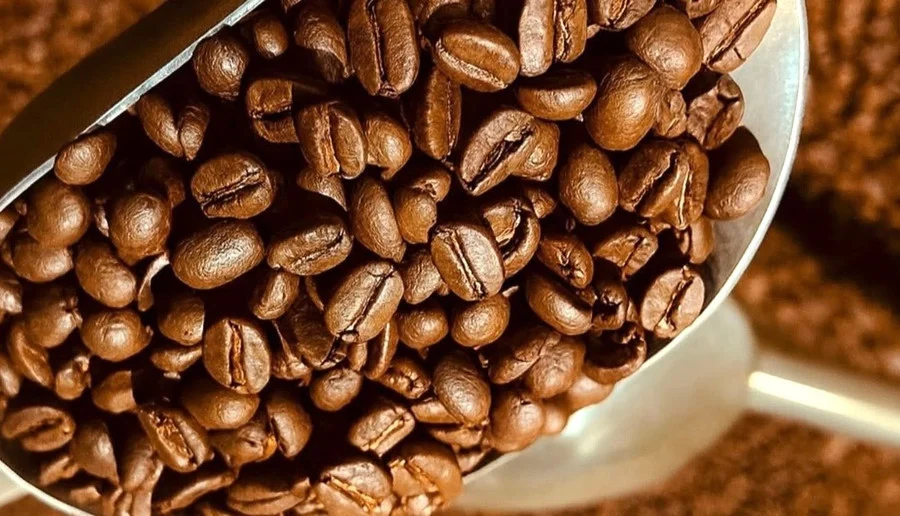
Global Coffee Prices Rise as Roasters Step In After Recent Slump

Global coffee prices moved higher for a second consecutive session as bargain buying emerged after recent six-month lows. While Brazil and Vietnam are expected to expand production, tightening exports and shifting inventories are keeping the market balanced.

DUBAI – QAHWA WORLD

Global coffee markets extended gains for a second consecutive session on Friday, supported by renewed buying interest after prices recently fell to six-month lows.

March arabica futures (KCH26) closed up 0.40 cents (+0.13%), while March ICE robusta (RMH26) rose by $24 (+0.63%), with robusta touching a one-week high. The rebound follows a sharp two-week decline that pushed both contracts to six-month lows earlier in the week, encouraging roasters to rebuild inventories at more attractive price levels.

  • Domestic Market Remains Stable

While international prices moved higher, domestic coffee prices held steady at 96,400–97,700 VND per kilogram. The highest levels were recorded in Gia Lai and Dak Lak at 97,700 VND/kg, while Lam Dong posted the lowest at 96,400 VND/kg.

On the futures markets, London robusta contracts advanced across delivery months. The January 2026 contract rose by $24 to $3,859 per ton, and the November 2026 contract gained $46 to $3,584 per ton.

In New York, March 2026 arabica edged up 0.4 cents to 300.05 cents per pound, while the December 2026 contract climbed 0.85 cents to 286.40 cents per pound. Brazilian arabica futures showed mixed movement, with March down 4.6 cents to 384.0 cents per pound and May up 1.35 cents to 381.4 cents per pound.

  • Pressure from Expanding Supply

Despite the short-term recovery, coffee prices have faced sustained pressure from expectations of strong global supply.

Brazil’s crop forecasting agency, Conab, projected that Brazil’s 2026 coffee production will rise 17.2% year-on-year to a record 66.2 million bags, including a 23.2% increase in arabica output to 44.1 million bags and a 6.3% rise in robusta production to 22.1 million bags.

YOU MAY LIKE: High Coffee Costs Force Americans to Change Their Daily Habits

Improved weather conditions have further eased supply concerns. According to Somar Meteorologia, Brazil’s key arabica-growing region of Minas Gerais received 72.6 mm of rainfall in the week ended February 6 — 113% of the historical average — reducing earlier drought worries.

Vietnam’s strong export performance has also weighed on robusta prices. The country’s National Statistics Office reported January coffee exports surged 38.3% year-on-year to 198,000 metric tons, while full-year 2025 exports rose 17.5% to 1.58 million metric tons. Vietnam’s 2025/26 coffee production is projected to increase 6% year-on-year to 1.76 million metric tons (29.4 million bags), marking a four-year high.

  • Inventory Recovery Adds Headwinds

The rebound in ICE-monitored inventories has also added downward pressure. Arabica stocks, after falling to a 1.75-year low of 396,513 bags in November, recovered to a 3.25-month high of 461,829 bags in early January. Robusta inventories similarly rebounded from a 13-month low in December to a two-month high by late January.

  • Supportive Factors Remain

On the supportive side, Brazil’s January coffee exports dropped 42.4% year-on-year to 141,000 metric tons, tightening short-term supply availability.

In Colombia, the world’s second-largest arabica producer, January coffee production fell 34% year-on-year to 893,000 bags, according to the National Federation of Coffee Growers.

The International Coffee Organization (ICO) reported that global coffee exports for the current October–September marketing year declined 0.3% year-on-year to 138.658 million bags, pointing to tighter trade flows.

Meanwhile, the USDA Foreign Agriculture Service (FAS) projected world coffee production in 2025/26 will increase 2.0% year-on-year to a record 178.848 million bags. Arabica output is expected to fall 4.7% to 95.515 million bags, while robusta production is forecast to rise 10.9% to 83.333 million bags. FAS estimates 2025/26 ending stocks will decline 5.4% to 20.148 million bags from 21.307 million bags in 2024/25.

  • Market Outlook

The market remains caught between short-term demand recovery and longer-term supply expansion. While bargain buying has lifted prices in recent sessions, forecasts for larger crops in Brazil and Vietnam continue to cap upside momentum.


Coffee Prices Slide on Improved Supply Outlook

Dubai – Qahwa World

Coffee prices extended their week-long decline on Wednesday, pressured by signs of improving global supply. March arabica coffee (KCH26) closed down 8.45 cents (-2.66%), while March ICE robusta coffee (RMH26) fell 49 points (-1.29%).

Arabica prices dropped to a 5.75-month low, and robusta touched a six-week low. The market has been weighed down by favourable weather and rising production expectations, particularly in Brazil and Vietnam.

Above-average rainfall in Brazil has eased concerns about dryness in key growing regions. Somar Meteorologia reported that Minas Gerais—the country’s largest Arabica-producing state—received 69.8 mm of rain in the week ended January 30, or 117% of the historical average.

Brazil’s supply outlook also turned more bearish after Conab, the country’s crop forecasting agency, raised its 2025 coffee production estimate by 2.4% to 56.54 million bags, up from 55.20 million bags projected in September.

Robusta prices have been further pressured by strong export and production prospects in Vietnam, the world’s largest robusta producer. Vietnam’s National Statistics Office reported that 2025 coffee exports rose 17.5% year over year to 1.58 million metric tonnes. Meanwhile, Vietnam’s 2025/26 coffee production is projected to increase 6% year over year to 1.76 million metric tonnes (29.4 million bags), a four-year high. The Vietnam Coffee and Cocoa Association has also said output could rise 10% from the previous season if weather conditions remain favourable.

Rising exchange inventories have added to bearish sentiment. ICE-monitored Arabica inventories rebounded to 461,829 bags on January 7, a 3.25-month high, after falling to a 1.75-year low in mid-November. ICE robusta inventories also recovered, climbing to a two-month high of 4,662 lots after reaching a 13-month low in December.

Some factors have provided limited support. Brazil’s coffee exports declined sharply in December, according to Cecafe. Total green coffee exports fell 18.4% year over year to 2.86 million bags, with Arabica exports down 10% and Robusta exports down 61%.

The International Coffee Organization reported that global coffee exports for the current October–September marketing year slipped 0.3% year over year to 138.66 million bags, signalling tighter trade flows.

Looking ahead, the USDA’s Foreign Agriculture Service projects global coffee production in 2025/26 will rise 2.0% year over year to a record 178.85 million bags. Arabica production is forecast to fall 4.7% to 95.52 million bags, while robusta output is expected to jump 10.9% to 83.33 million bags. Brazil’s production is projected to decline 3.1% to 63 million bags, while Vietnam’s output is forecast to rise 6.2% to a four-year high of 30.8 million bags. Global ending stocks are expected to fall 5.4% to 20.15 million bags.

Why Have Coffee Prices Surged Again Globally?

Dubai, September 9, 2025 (Qahwa World) – Coffee prices are once again on the rise, pushing global markets into a renewed bullish phase after months of volatility and decline. Analysts point to a mix of climate pressures, trade barriers, falling inventories, and speculative buying as the key forces driving the market upward.

Arabica coffee futures on the Intercontinental Exchange (ICE) climbed above $3.70 per pound in early September 2025, nearing record levels last seen at the beginning of the year. This rebound followed a sharp downturn during the first half of 2025, when prices fell by 19.22% in the second quarter and dropped 4.07% overall in the first six months, closing June at $3.0675 per pound.

On July 8, 2025, the December Arabica contract reached its lowest point of the year at $2.72 per pound. From there, the market staged a dramatic recovery, rallying nearly 43.9% to $3.9130 by August 28. The turnaround signaled a renewed long-term bullish momentum for coffee.

Climate Concerns Put Pressure on Supply

Brazil, the world’s largest coffee producer, is facing challenging weather conditions, including drought in some regions and unusually cold temperatures in others. These climate issues have heightened concerns about reduced crop yields in the upcoming harvest.

At the same time, ICE data shows that open interest in coffee futures rose 11.5% between August 12 and August 28, climbing from 146,352 to 163,170 contracts, highlighting increased speculative activity. Meanwhile, ICE coffee inventories fell to multi-year lows, further tightening global supply.

Tariffs Fuel the Rally

Adding to the pressure, the United States has imposed additional tariffs on coffee imports from Brazil and Vietnam, the two largest exporters. These trade barriers have raised costs for roasters, while well-capitalized Brazilian farmers have held back sales, using the tight market to strengthen their negotiating position. The result has been an acceleration of the rally in coffee prices.

Starbucks Feels the Impact

Rising green coffee costs are weighing directly on Starbucks, one of the world’s biggest buyers. While U.S. equity markets reached new highs in August, Starbucks shares underperformed. From March 3 to September 5, 2025, the stock fell 27.5% from $117.46 to $85.06, before closing at $85.32—6.4% below the year-end 2024 level. Analysts point to rising input costs, particularly coffee, as a major factor behind the decline.

Lack of Investment Vehicles

Since the iPath Coffee Subindex ETF ceased trading in June 2023, investors seeking direct exposure to coffee have had to rely exclusively on futures and options listed on ICE. Each futures contract represents 37,500 pounds of green coffee. At $3.7365 per pound on September 5, the December contract was valued at approximately $140,118.75. With an initial margin requirement of $10,659, traders can control the contract with just 7.6% upfront, though they must meet maintenance margin calls if equity falls below $9,690.

Outlook: Volatility Ahead

Looking forward, analysts expect heightened volatility in the coffee market over the coming weeks and months. Climate challenges in Brazil, tariff-driven trade distortions, and dwindling inventories will continue to keep upward pressure on prices. While the long-term trend remains bullish, sharp fluctuations are likely to remain a defining feature of the global coffee trade.