Kenya Coffee Production to Jump 12 Percent in 2026/27 on New Plantings and Better Crop Care

Author: Qahwa World – Dubai
Source: USDA Foreign Agricultural Service (FAS) Nairobi
Date: May 19, 2026

Executive Summary:

  • FAS Nairobi forecasts Kenya coffee production to reach 950,000 60 kg bags in MY 2026/27, a 12 percent increase over the previous estimate.
  • The growth is driven by new harvested area, improved crop care, and farmer reinvestment following two years of high prices.
  • Exports are expected to rise nearly 12 percent to 940,000 bags, while domestic consumption remains flat at 62,000 bags due to inflation and reduced urban coffee culture.
  • Kenya enacted a new Coffee Act in March 2026, transferring regulatory oversight from the Agriculture and Food Authority to the revived Coffee Board of Kenya.
  • The Coffee Research and Training Institute has been established as an independent body separate from KALRO.
  • Average coffee prices at the Nairobi Coffee Exchange fell to $268.77 per 50 kg bag in April 2026, a 28.4 percent drop from October 2025.
  • The United States remains Kenya’s top export destination with 17.2 percent market share, followed by Belgium and Germany.

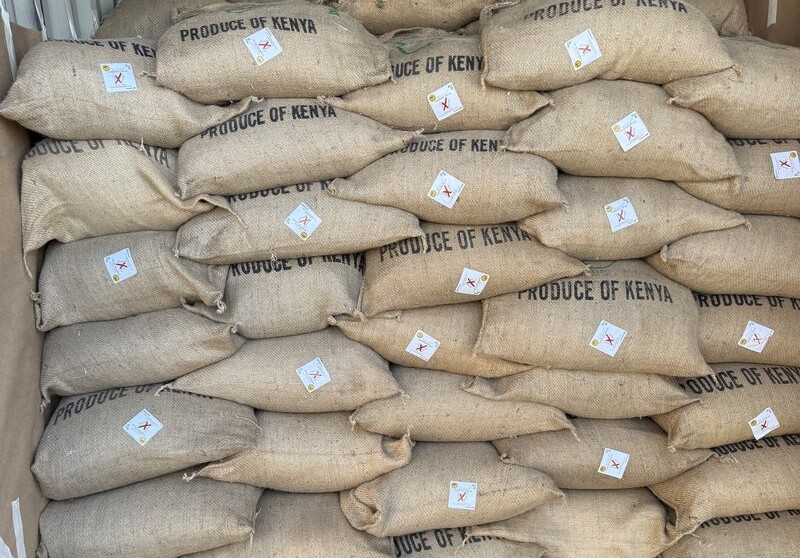
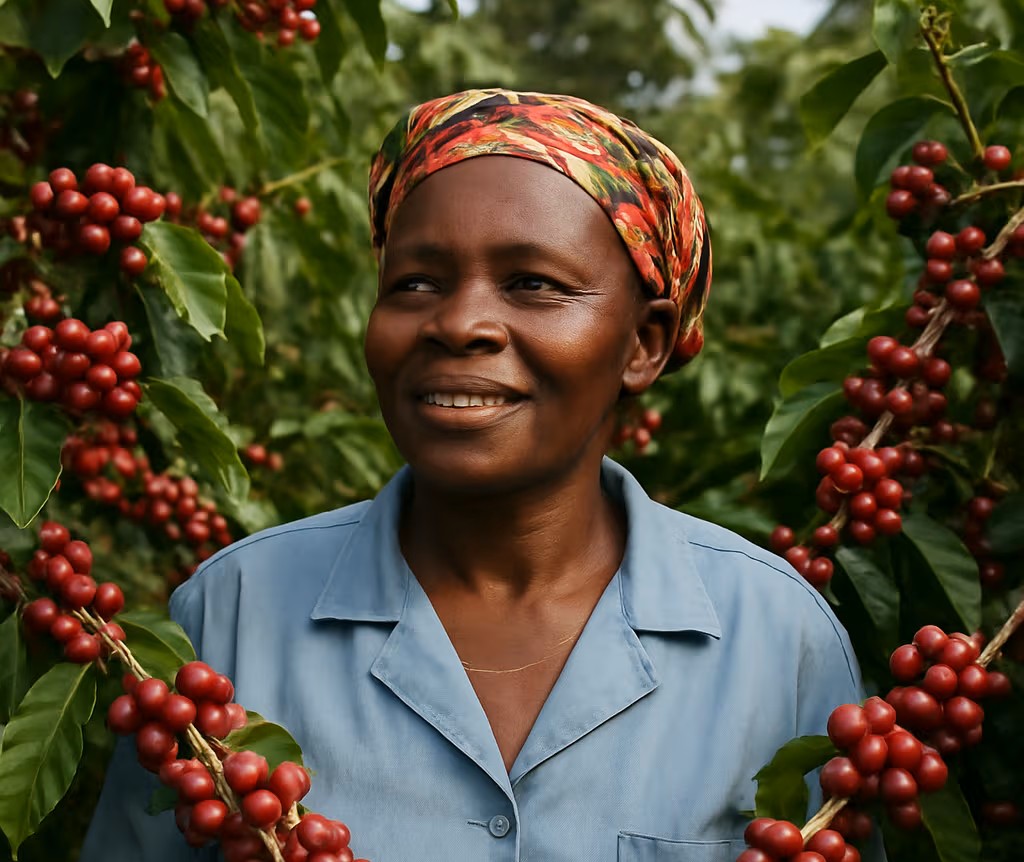
Kenya’s coffee production is set for a steady recovery, with FAS Nairobi forecasting a 12 percent jump to 950,000 60 kilogram bags in the 2026/27 marketing year. The increase is attributed to new harvested area, improved crop care, and farmers’ ability to reinvest after two years of sustained high market prices. Growers now have the capital to apply more consistent fertilizer and control pests and diseases that often limit yields.

Coffee farms in the key Mount Kenya region flowered robustly following the severe drought that lasted until March 2026. The harvested area is projected to increase marginally to 106,000 hectares as recent plantings mature. Exports are expected to reach 940,000 bags, while domestic consumption is likely to remain flat at 62,000 bags due to reduced purchasing power and disruption of urban coffee culture.

Coffee Expansion Program and Regulatory Changes

Kenya is pursuing an aggressive coffee expansion program across the Central, Eastern, and Rift Valley regions. The initiative is being channeled through the New Kenya Planters Cooperative Union, which uses a government supported revolving fund to provide farmers with saplings and fertilizers. Several county governments have also launched localized grant programs to help farmers offset expansion costs.

The expansion has tested the country’s capacity to produce planting materials. The Coffee Research Institute faces a massive backlog despite efforts to ramp up production. In March 2026, Kenya enacted a new Coffee Act that transfers regulatory oversight from the Agriculture and Food Authority to the revived Coffee Board of Kenya. The law also establishes an independent Coffee Research and Training Institute, separate from the Kenya Agricultural and Livestock Research Organization.

The new law codifies several reforms that have been ongoing since 2022, including the reorganization of the Nairobi Coffee Exchange and the establishment of the Direct Settlement System, a digital payment platform enabling direct, transparent, and faster payments from buyers to coffee farmers. Licensed brokers now handle coffee classification, sale catalogues, and both auction and direct sales. Licensing of coffee millers has moved from the Agriculture and Food Authority to county governments.

Production and Area Trends

Indicator MY 2024/25 MY 2025/26 MY 2026/27 (Forecast)
Area harvested (1000 HA) 105 105 106
Total production (1000 bags) 950 850 950
Bean exports (1000 bags) 923 800 900
Domestic consumption (1000 bags) 58 62 62
Ending stocks (1000 bags) 74 97 120

Over most of the last decade, peri-urban coffee growing areas underwent systematic uprooting to make way for residential housing, driven by demand for urban expansion. This trend was particularly rampant around Nairobi, Thika, Kiambu, and Nyeri. In the last two years, the trend has slowed due to significant stagnation in the real estate market. However, without a clear land use policy to safeguard arable land, analysts see this as a temporary reprieve that could reverse if coffee market prices slump.

Marketing and Price Trends

Roughly 80 percent of Kenya coffee is sold through producer cooperatives, with the remainder managed by corporate and individual estates. The Nairobi Coffee Exchange, a spot market founded in 1935, facilitates over 95 percent of coffee sales. Other transactions occur through direct contracts between producer agents and exporters. The Capital Markets Authority has licensed 16 coffee brokers for the exchange, of which eleven are farmer owned cooperatives or unions. Fifteen brokers actively traded during the 2025/26 season.

Average coffee prices at the exchange surged since MY 2024/25 due to tight global supply. This situation is expected to correct due to a projected two percent increase in global coffee production for 2025/26. In April 2026, the average price fell to $268.77 per 50 kg bag, marking a 28.4 percent drop from $375.24 in October 2025. The exchange trades in US dollars, and the Kenyan shilling’s stability at roughly 129 shillings per dollar has been key in keeping local producer returns steady.

Export Destinations and Trade Shifts

Destination MY 2022/23 (MT) MY 2023/24 (MT) MY 2024/25 (MT) Market Share 2024/25
United States 12,253 8,122 9,737 17.2%
Belgium 4,021 7,445 8,763 15.5%
Germany 9,741 7,609 7,173 12.7%
Netherlands 2,475 1,831 2,937 5.2%
France 193 268 2,826 5.0%
South Korea 3,085 2,492 2,817 5.0%

The United States remains Kenya’s dominant coffee export destination with 17.2 percent market share, recovering from a sharp decline in MY 2023/24. Belgium has shown consistent growth, doubling its volume over three years from 4,021 metric tons to 8,763 metric tons. France and Canada have followed rapid expansion paths. Germany, once holding nearly 18 percent of the market, has seen its volume erode to 7,173 metric tons or 12.7 percent. Sweden experienced a dramatic downturn from 9.5 percent market share to just 4.0 percent.

Kenya has launched traceability mechanisms to comply with the European Union Deforestation Regulation. Larger export firms must meet these requirements by December 30, 2026, while smaller enterprises have until June 30, 2027.

Domestic Consumption and Tourism Impact

Domestic coffee consumption is projected to plateau at 62,000 bags in MY 2026/27. Intense inflationary pressures are straining purchasing power, making coffee less accessible to average households. The proliferation of coffee houses and service outlets in Nairobi and other major cities has lost momentum. This decline is largely tied to the departure of several major non-governmental organizations and the withdrawal of key donor operations. These organizations historically supported the urban middle class and expatriate communities that formed the backbone of the high-end coffee market. Their exit has left a void in demand.

Kenya’s tourism industry, a primary driver of coffee consumption through tourist hotels and lodges, is facing a slowdown due to rising travel costs for local and international visitors. This downturn supports the outlook for a stagnant domestic coffee market.

Frequently Asked Questions (FAQ)

1. How much will Kenya’s coffee production increase in 2026/27?

FAS Nairobi forecasts a 12 percent increase to 950,000 60 kilogram bags, driven by new harvested area and improved crop care.

2. What is the new Coffee Act of 2026?

The new law transfers regulatory oversight from the Agriculture and Food Authority to the revived Coffee Board of Kenya and establishes an independent Coffee Research and Training Institute.

3. Why is domestic coffee consumption flat?

Inflation is reducing purchasing power, urban coffee house expansion has slowed due to NGO departures, and the tourism industry is facing a slowdown.

4. Which country is Kenya’s top coffee export destination?

The United States remains the top destination with 17.2 percent market share, followed by Belgium at 15.5 percent and Germany at 12.7 percent.

5. How have coffee prices at the Nairobi Coffee Exchange changed?

Prices fell to $268.77 per 50 kg bag in April 2026, a 28.4 percent drop from $375.24 in October 2025, due to increased global supply expectations.

6. What is the Direct Settlement System?

It is a digital payment platform established under the new Coffee Act that enables direct, transparent, and faster payments from buyers to coffee farmers.

Qahwa World – Based on USDA FAS Coffee Annual report KE2026-0011 by Kennedy Gitonga, approved by Damian Ferrese.
Published: May 19, 2026

Kenya Coffee Production Rises Sharply with Record Output Expected in 2026

Author: Coffee World – Dubai | Source: News agencies and official sources | Date: 10 May 2026

  • Kenya’s coffee production rose to 51,400 tons in the 2024/2025 season
  • Production is forecast to grow by 13.3 percent in the 2025/2026 season
  • Kirinyaga county distributed record profits of 7.4 billion Kenyan shillings (approximately $57 million) to farmers
  • Total trade value at the Nairobi Coffee Exchange reached 24.7 billion shillings in the first half of the 2025/2026 season
  • Prices jumped from $35 per kilo in 2024 to $120 per kilo in 2026

Kenya’s coffee sector is experiencing an unprecedented boom, driven by a combination of rising global prices, improved farming practices, and ambitious government reforms. The latest data indicates record gains for farmers and the Kenyan economy, with expectations that this momentum will continue throughout the current season.

According to the 2026 Economic Survey released by the Kenya National Bureau of Statistics, the country’s coffee production rose to 51,400 tons during the 2024/2025 season, compared to 49,500 tons in the previous season. International experts forecast continued growth during the 2025/2026 marketing season, with estimates of a 13.3 percent increase in production. This optimism is attributed to farmers responding to higher prices, a slowdown in the conversion of agricultural land to real estate projects, and the long-awaited launch of government reforms.

Kenyan coffee prices have seen a dramatic jump, rising from $35 per kilo in 2024 to $60 per kilo in 2025, reaching a new record level of $120 per kilo in 2026, according to a report released by the African Coffee Trade Exhibition. This increase has been directly reflected in farmers’ incomes.

In a clear indicator of this qualitative shift, Kirinyaga county, one of Kenya’s largest coffee-producing regions, announced the distribution of record profits totaling 7.4 billion Kenyan shillings, equivalent to approximately $57.2 million, to farmers for the 2025/2026 season. Prices per kilo of fresh cherry ranged between 104 and 157 shillings, averaging 139 shillings per kilo, higher than the average of the previous season.

This boom is supported by structural reforms led by the Kenya Coffee Producers Association, in coordination with other government entities. Kenya’s Deputy President announced a comprehensive reform package in anticipation of the current season, including the provision of subsidized fertilizers and pesticides, simplification of operating licenses, and the approval of new laws to regulate the work of cooperatives and processing plants. These measures aim to eliminate intermediaries and ensure that fair returns reach farmers. The new laws are expected to entrench transparency and efficiency throughout the entire value chain.

The Nairobi Coffee Exchange continued its central role in marketing local coffee, achieving significant sales in the first half of the 2025/2026 season. The total trade value reached 24.7 billion Kenyan shillings, with more than 540,000 bags sold. The auctions witnessed strong demand from local and international buyers. Direct sales through specialized supply chains also contributed to enhancing returns, as major cooperatives continue to export their best coffee directly to international roasters. The sector looks forward to another promising season, with all stakeholders committed to continuing support for farmers and enhancing the competitiveness of Kenyan coffee in international markets.

Frequently Asked Questions

How has Kenya’s coffee production developed over the past two years?
Production has seen a notable increase, reaching 49,500 tons in the 2023/2024 season and rising to 51,400 tons in the 2024/2025 season. International experts forecast continued growth during the 2025/2026 season, supported by improving weather conditions and government reforms.

What are the reasons for the rise in Kenyan coffee prices?
The record price increase is attributed to several factors, most notably increased global demand for high-quality coffee beans, improved local production quality, and government reforms that have reduced the role of intermediaries and allowed for more transparent direct sales, positively reflected in farmers’ financial returns.

What are the most prominent results of Kenya’s coffee sector reforms?
The results have included improved infrastructure for cooperatives, increased technical support for farmers, and simplified export procedures, which have directly contributed to raising production efficiency, reducing waste, and ensuring a larger share of the final sale price reaches farmers.

What is the importance of the Nairobi Coffee Exchange?
The Nairobi Coffee Exchange remains the main transparent platform for marketing and determining coffee prices in Kenya. It brings together local and international buyers and plays a vital role in achieving price balance and ensuring market liquidity.

What do the record profits in Kirinyaga county mean?
The distribution of 7.4 billion Kenyan shillings in profits to Kirinyaga farmers is tangible evidence of the success of the reforms and rising global prices. It reflects the improved efficiency of cooperatives and their ability to secure better prices, which positively impacts the income of thousands of rural households and drives the local economy.


Author: Coffee World – Dubai | Source: News agencies and official sources

Rising Production and Exports Put Kenya Back on the Global Coffee Map

Dubai – Qahwa World

Kenya is witnessing a strong rebound in its coffee sector, with production forecast to grow by 13.3% in the 2025/26 marketing year, reaching 850,000 sixty-kilogram bags. This recovery is driven by high global prices, government reforms, and farmer support programs. Exports are also projected to rise by 10%, while domestic consumption is expected to increase by 6.9%. With these promising indicators, Kenya is reclaiming its place among the world’s top Arabica coffee producers.

According to the USDA’s Coffee Annual Report (May 2025), Kenya’s coffee production is forecast to increase from 750,000 bags in 2024/25 to 850,000 bags in 2025/26. Farmers have responded to favorable prices with improved agricultural practices—applying more fertilizer, controlling pests more effectively, and capitalizing on Arabica’s natural biennial production peak.

In February 2025, the Nairobi Coffee Exchange (NCE) recorded a historic high of $363 per 50-kg bag, up from $254 in October 2024. Although a slight price correction is expected in the second half of the year, prices remain favorable and have reinvigorated investment in farms.

Slight Expansion in Planted Area

While harvested area is expected to remain at 105,000 hectares, planted area will increase slightly as the Kenyan government rolls out its Coffee Expansion Program in both traditional and new growing regions across Central, Eastern, and Rift Valley Kenya. The program includes subsidized seedlings, supported by county-level grants and expanded production at the Coffee Research Institute to meet increased demand.

Urbanization Slows, Coffee Area Stabilizes

Between 2020 and 2024, coffee area declined from 112,000 to 105,000 hectares due to urban development, particularly around Nairobi, Kiambu, and Nyeri. However, this trend has slowed, thanks to a stagnating real estate market, offering the sector a chance to stabilize.

Marketing Reforms and Structural Overhaul

Roughly 80% of Kenya’s coffee is sold through producer cooperatives, while the remaining volume is marketed by private farms and estates. The Nairobi Coffee Exchange remains the country’s primary marketplace, handling over 90% of coffee sales.

Since 2023, Kenya has implemented significant reforms in marketing and regulation. The NCE is now under the Capital Markets Authority, which licenses brokers responsible for classification and auction procedures. There are currently 15 licensed brokers. Additionally, licensing of millers was decentralized to county governments.

A pending Coffee Bill in Parliament seeks to formalize these changes by creating a new Coffee Board of Kenya and an independent Coffee Research and Training Institute, to be funded through a coffee sales levy.

Exports Rising but Facing EU Deforestation Law

Coffee exports are expected to grow by 10% to 840,000 bags in 2025/26, up from 763,000 bags the previous year. Green beans dominate Kenya’s export portfolio, with major buyers including:

  • European Union: Over 57%

  • United States: 16.75%

  • South Korea: 5.16%

  • United Kingdom: 3.43%

  • Other emerging markets: China, Australia, India

However, the upcoming EU Deforestation Regulation, taking effect in January 2026, poses a potential challenge. In response, Kenya has formed a multi-agency committee to evaluate readiness and establish compliance mechanisms.

Domestic Consumption on the Rise

Domestic coffee consumption is projected to grow by 6.9%, reaching 62,000 bags in 2025/26. This growth is driven by the rapid expansion of coffee shops, particularly in Nairobi, and a 15% surge in tourism in 2024. Kenya’s coffee culture is evolving, with increasing demand for specialty brews and locally roasted varieties.

Despite this growth, soluble coffee consumption remains low due to the lack of local processing facilities. Kenya imports approximately 45,000 bags of instant coffee annually.

Stock Levels and Imports

Ending stocks are expected to increase to 86,000 bags in 2025/26, reflecting higher production. For 2024/25, stock estimates have been revised downward to 63,000 bags due to higher exports and tighter output.

Conclusion: Kenya’s Return to Coffee Leadership

With production, exports, and consumption all trending upward, Kenya is once again asserting itself on the global coffee stage. While challenges like EU environmental compliance lie ahead, the country’s proactive reforms and farmer-focused strategies signal a new era of growth and global relevance for Kenyan coffee.