International Coffee Day 2025: ICO Launches Global Campaign “Embracing Collaboration More Than Ever”

London – Qahwa World

The International Coffee Organization (ICO) has announced the theme for International Coffee Day 2025, celebrated worldwide on October 1: “Embracing Collaboration More Than Ever.”

The annual event brings together millions of people across the globe to celebrate coffee and recognize the farmers, cooperatives, traders, roasters, baristas, and consumers who contribute to making coffee the world’s most beloved beverage. This year’s campaign underscores that coffee is synonymous with collaboration and calls on all stakeholders to unite in a spirit of solidarity and shared purpose.

Collaboration at the Core

The ICO emphasizes that the 2025 theme highlights the essential role of collaboration across the coffee value chain in ensuring sustainable livelihoods and shared prosperity. By strengthening links from crop to cup, the campaign positions coffee as a driver of income generation, sustainable development, and resilient communities.

Vanúsia Nogueira, Executive Director of the ICO, stated:

“Coffee is a product of many hands and many hearts. When farmers, cooperatives, researchers, roasters, traders, baristas and consumers work together, we create opportunities for income, resilience and environmental stewardship. This year’s campaign calls for practical collaboration that delivers real benefits along the whole chain. Join us — take part in the challenges and show how, together, coffee can be a force for good.”

Digital Campaign and Global Participation

The 2025 initiative will feature a refreshed, interactive website and encourage digital participation through the hashtag #ICD2025. Among the activities, participants will be invited to complete the phrase “Coffee is collaboration because…” in posts or videos, showcasing the many ways coffee connects people across the globe.

The ICO invites governments, industry partners, civil society, cooperatives, and consumers to get involved by:

Registering events and activities on the official campaign website

Promoting the hashtag #ICD2025 through their communication channels

Recording short videos with the campaign phrase and tagging @icocoffeeorg

A full communications toolkit and multilingual resources are available at www.internationalcoffeeday.org

About the ICO

The International Coffee Organization is the only intergovernmental body focused on enhancing the sustainability of the global coffee sector. It provides official statistics on production, trade, and consumption, and develops public-private partnerships and technical cooperation projects to foster progress and resilience in the industry. More information is available at www.ico.org

Kadıköy Becomes the Capital of Coffee as the 11th Istanbul Coffee Festival Kicks Off

Istanbul, September 14, 2025 (Qahwa World) – Türkiye’s largest celebration of coffee culture, the Türk Telekom Prime Istanbul Coffee Festival, has officially opened in Kadıköy for its 11th edition, transforming the outdoor grounds of Tepe Nautilus into a meeting point for thousands of coffee lovers, professionals, and music enthusiasts. The event, which runs from September 11 to 14, has already drawn crowds eager to explore a world of flavors, innovation, and tradition, making it one of the most anticipated gatherings in the global coffee calendar.

This year’s festival spans an impressive 10,000 square meters and brings together more than 200 brands from Türkiye and abroad, offering visitors free tastings of over 100 varieties of coffee beans sourced from around the world. From the earthy tones of Latin America to the floral complexity of East Africa, the diversity on display highlights both the global reach of coffee and the growing appreciation of specialty brewing among Turkish consumers. Festival founder and Dream Sales Machine Chairman Alper Sesli emphasized the cultural depth of the occasion, noting that while Türkiye is not traditionally a coffee-producing country, coffee has been part of daily life and local identity for nearly five centuries through the unique tradition of Turkish coffee. He explained that this year, discussions have also turned toward the emerging prospect of domestic coffee cultivation, with industry stakeholders, growers, and organic farmers contributing to conversations about production and sustainability.

Alongside tastings, the festival has introduced cutting-edge innovation that points to the future of coffee service. The debut of X BARISTA, an artificial intelligence–powered coffee station created by Thude Robotics, has drawn particular attention. CEO Önder Akyazıcı described the system as a “fourth-generation coffee experience”, blending the artistry of specialty coffee with the precision and consistency of robotics. Developed entirely in Türkiye in both software and hardware, X BARISTA uses sensors to replicate the movements of professional baristas, preparing intricate beverages such as lattes with remarkable accuracy. Akyazıcı underlined that the goal is not to replace human baristas but to improve efficiency, sustainability, and accessibility, and revealed that international orders have already begun.

The atmosphere in Kadıköy reflects the spirit of a growing community. Award-winning barista and Niji Coffee Co. co-founder Alireza Razzaghzadeh praised the festival for its accessibility and inclusivity, pointing out that its location and design allow more people to participate and experience the richness of specialty coffee. He stressed that the Istanbul Coffee Festival plays a central role in promoting the industry, connecting local consumers with global coffee practices, and encouraging professional growth among Turkish baristas.

While coffee remains at the heart of the festival, the event extends beyond the cup to become a celebration of culture, art, and music. The program features live concerts each evening, with performances by beloved artists such as Levent Yüksel, Ceza, Madrigal, and Haluk Levent, drawing large crowds and adding to the festive mood. Workshops and seminars give visitors opportunities to deepen their knowledge of coffee preparation and culture, while interactive tastings provide a chance to compare beans and brewing methods. The blend of education and entertainment makes the festival a dynamic experience that appeals to both seasoned professionals and newcomers to the world of coffee.

For the first time in its history, the festival has also introduced a Türk Telekom Children’s Area, offering family-friendly activities designed to make the event inclusive for all ages. Meanwhile, the Türk Telekom Prime Lounge has become a hub for relaxation and interaction, offering refreshments, competitions, and opportunities for visitors to engage with coffee culture in new and playful ways.

From the aroma of freshly ground beans rising above Kadıköy to the sight of a robotic barista preparing precise pours, the Istanbul Coffee Festival 2025 captures the tension between heritage and innovation that defines today’s coffee world. It is a space where traditional Turkish coffee brewed in hot sand meets futuristic AI-driven technology, where music and community blend with workshops and serious industry discussions, and where the joy of discovery fuels both conversation and culture. Eleven years after its founding, the festival has not only grown into a major international event but also strengthened Istanbul’s position as a regional hub for coffee appreciation and creativity.

The Complete Guide to Coffee Cupping

Coffee cupping is no longer just a closed ritual reserved for industry professionals; it has become a universal language spoken by everyone who lives within the coffee world. From roasting labs in global capitals to specialty cafés across continents, the scene repeats itself: rows of identical cups, noses leaning in to inhale, spoons clinking against the surface as they break the crust to reveal hidden aromas. These sessions are no longer limited to determining quality alone—they have become a mirror of coffee’s reputation, a decisive factor in its market value, and the stage where a bean’s future is determined. Cupping today is both a cultural practice and an economic force, shaping the journey of coffee from the farm to the consumer.

In this complete guide, we take you step by step into the heart of this unique ritual: from its historic beginnings in Yemen, through the modern protocols set by the Specialty Coffee Association (SCA), to the tools, methods, and skills required to master it. This is a comprehensive reference for anyone seeking to understand cupping—whether you are a professional aiming for quality control, or an enthusiast eager to experience coffee with a new perspective.

What Is Coffee Cupping?

Coffee cupping is the standardized method used worldwide to evaluate and score coffee quality. Originally created as a tool for quality control, it has since become the shared language of the coffee industry, enabling exporters, importers, roasters, and quality specialists to communicate in precise terms about a coffee’s characteristics.

Unlike other brewing methods that may mask or alter certain traits, cupping exposes coffee in its purest form. It is systematic, repeatable, and designed to reveal both the strengths and defects of a coffee.

History and Origins

The roots of cupping trace back to 15th-century Yemen, where Sufi mystics first prepared coffee as a beverage to help them stay awake during long nights of worship. From Yemen’s mosques and learning circles, coffee entered daily life and spread through the port of Mokha to the wider world. By the 16th century, coffeehouses in Mecca, Cairo, and Istanbul had become cultural hubs, where comparing and discussing coffee quality laid the groundwork for what we now call cupping.

In the 19th century, as global trade expanded, European and American trading houses began formalizing evaluation methods to assess lots before purchase. This marked the beginning of systematic cupping as a commercial tool.

By the 1980s, the Specialty Coffee Association (SCA) introduced a unified protocol with standardized forms and scoring systems, which remain the global benchmark today.

✦ Did You Know?

Yemen was the first country in history to transform coffee from a wild fruit in the Ethiopian highlands into a global beverage. In the 15th century, Yemeni Sufi mystics drank coffee to sustain their spiritual practices, and from cities like Aden and Sana’a it became a part of everyday life. Through the port of Mokha, coffee was exported to the Hijaz, Egypt, the Ottoman Empire, and later Europe.
Because coffee in Yemen was never “just a drink,” early merchants and scholars began to compare its flavors and qualities. These early practices formed the very first seeds of what we now know as coffee cupping.

The Science Behind Cupping

Cupping is effective because it is precise and controlled:

  • Ratio: 8.25 g of coffee per 150 ml water (1:18.18).

  • Water Temperature: 200°F (93°C).

  • Extraction Yield: 18–22% of soluble compounds.

  • Immersion Method: No filtration, allowing oils and fine particles to remain for full sensory evaluation.

Essential Equipment

Required:

  • Identical cupping bowls (7–9 oz, ceramic or glass)

  • Deep cupping spoons (non-reactive, traditionally silver-plated)

  • Burr grinder for consistent particle size

  • Precision scale (accurate to 0.1 g)

  • Timer and thermometer

  • Filtered water with balanced mineral content

  • Spittoon for expectoration

Optional but Helpful:

  • SCA cupping forms for scoring

  • Sample trays for green or roasted beans

  • Aroma kits for sensory training

The Cupping Protocol

1. Preparation

  • Grind coffee medium-coarse (similar to French press).

  • Dose 8.25 g per 150 ml water.

  • Prepare at least five bowls per sample for consistency.

2. Dry Fragrance

  • Smell the dry grounds.

  • Record intensity and quality of aromas.

3. Adding Water

  • Pour hot water at 200°F (93°C) over the grounds.

  • Fill to the rim and start a 4-minute timer.

  • Observe the bloom and crust formation.

4. Breaking the Crust (at 4 minutes)

  • Gently stir the crust with a spoon.

  • Inhale the released aromatics.

  • Rinse spoon between samples.

5. Skimming

  • Remove floating grounds and foam.

  • Leave a clean surface for tasting.

6. Tasting

  • Taste at three temperature stages:

    • Hot (160–140°F): acidity and balance.

    • Warm (120–100°F): complexity and depth.

    • Cool (70–80°F): sweetness and aftertaste.

Spitting is recommended to prevent palate fatigue.

Evaluation Categories

  • Aroma/Fragrance (0–10): Dry vs. wet notes.

  • Flavor (0–10): Core taste impression.

  • Aftertaste (0–10): Lingering finish.

  • Acidity (0–10): Brightness and vibrancy.

  • Body (0–10): Texture and weight.

  • Balance (0–10): Harmony of attributes.

  • Uniformity (0–10): Consistency across cups.

  • Clean Cup (0–10): Absence of defects.

  • Sweetness (0–10): Natural pleasantness.

  • Overall (0–10): Holistic impression.

SCA Scoring Scale:

  • 90–100: Outstanding (competition grade)

  • 85–89.99: Excellent (specialty)

  • 80–84.99: Very good (specialty)

  • 75–79.99: Acceptable but below specialty

  • <75: Commodity

Common Defects

  • Earthy/Musty – poor drying or storage.

  • Woody/Papery – aged or oxidized beans.

  • Sour/Fermented – over-fermentation or under-roasting.

  • Astringent – harsh, dry mouthfeel.

  • Phenolic – chemical or medicinal notes.

Advanced Cupping Practices

  • Triangulation: Identify the odd sample out.

  • Blind Cupping: Remove bias by hiding origin and process.

  • Comparative Cupping: Taste multiple coffees side by side.

  • Calibration Sessions: Align results among multiple cuppers.

Professional Applications

  • Quality Control: Monitoring roast profiles and detecting defects.

  • Trading: Determining value and setting prices.

  • Competitions: Used in Cup of Excellence and Q Grader certification.

Building Your Skills

  • Cup regularly to develop sensory memory.

  • Train with aroma kits and known flavor standards.

  • Participate in group sessions for calibration.

  • Document notes carefully and consistently.

The Future of Cupping

Technology is enhancing tradition:

  • Digital apps for recording and analyzing scores.

  • Spectral and chemical analysis for defect detection.

  • Virtual cuppings and remote evaluations.

  • AI-assisted flavor recognition.

Yet the human sensory experience remains irreplaceable. At its core, cupping is a ritual that connects farmers, roasters, and consumers across the globe.

Conclusion

Coffee cupping is both science and art. It began in Yemen in the 15th century, evolved through centuries of global trade, and today stands as the universal standard for coffee evaluation.

Whether you are a professional searching for precision or an enthusiast eager to deepen your appreciation, cupping is the gateway to understanding coffee at its most profound level.

Every sip tells a story—and through cupping, you become the storyteller.

Pret A Manger Aims to Double UK Stores Following Strong 2024 Growth

Pret A Manger is preparing for a major expansion across the UK after reporting robust growth in 2024.

The London-based coffee and food-to-go chain, which currently operates 500 stores in the UK and another 200 across 20 international markets, achieved 10% year-on-year revenue growth in 2024, reaching £1.2bn ($1.6bn). Adjusted EBITDA rose 36% to £98m ($133m).

Chief Executive Pano Christou, who has led the JAB Holding-backed business since 2019, said Pret aims to double its UK footprint to 1,000 outlets by focusing on city centres and transport hubs. “Customers love the brand on the go. Our travel business has really exploded in recent years. We have eight locations at Heathrow and will add two more next year,” he told reporters.

Pret ended 2024 with 717 outlets across 21 global markets. Alongside its expansion plans, the chain will introduce new value-driven offerings, including a £6-£7 ($8.14-$9.50) lunchtime meal deal trial in the UK. The initiative, already successful in France, is expected to boost sales and afternoon footfall.

The company has also launched a premium ‘Super Plates’ salad range in 250 UK stores and overhauled its Club Pret subscription, scrapping its five-coffees-a-day offer for £30 ($38.99). Additionally, a new store format targeting dine-in and family groups has been unveiled in its home market.

Beyond the UK, Pret is seeking significant growth in the US, where it operates 70 stores generating approximately $100m annually, mainly in New York. Christou highlighted transport hubs along the East Coast as the primary focus for expansion. In October 2023, Pret signed a joint venture with franchise partner Dallas International to triple its US footprint by 2029, and in July 2025, it appointed former Tim Hortons executive Felipe Athayde as President of its North America business.

“2024 was another year of growth for Pret, where we took disciplined decisions to protect sales despite intense pressures on the hospitality industry. Our priority now is to drive transactions and sustainable growth by offering great value for Pret customers,” Christou said.

Oman Coffee Community Announces the AeroPress Championship 2025

Muscat, September 7, 2025 (Qahwa World) – The Oman Coffee Community has officially announced the launch of the Oman AeroPress Championship 2025, set to take place from October 3 to 4 at Rozna Hall in Muscat. The highly anticipated competition promises two days of excitement, creativity, and skill, where coffee enthusiasts and professionals will compete for the national title and the chance to represent Oman at the World AeroPress Championship finals.

The event will span two consecutive days: the qualifiers on October 3 and the final showdown on October 4, where the champion will be crowned.
Competitors will face off in head-to-head elimination rounds, with each participant given just five minutes to grind, brew, and present their coffee using the AeroPress brewer. The submissions will be evaluated through a blind tasting process, ensuring impartiality and fairness.

Rules and Regulations

The competition follows the official World AeroPress Championship guidelines, designed to guarantee transparency and equal opportunities. Key highlights include:

  • Format: Multi-round, elimination-style tournament.

  • Time limit: Five minutes per competitor for the complete process.

  • Brewer specifications:

    • Only AeroPress Original or AeroPress Clear are permitted.

    • Use of the Flow Control Filter Cap is allowed if it is a genuine AeroPress product.

    • Other versions (Go, XL, Premium) are not allowed.

    • Custom-painted or trophy AeroPress brewers are permitted, provided they are original and unaltered.

  • Filters: Any type (paper, metal, cloth, etc.) may be used, as long as it fits inside the cap and does not alter flavor.

  • Ingredients: Only ground coffee and water are permitted. If official coffee or water is provided by the host, competitors must use them exclusively.

  • Dosage: Maximum of 18g of ground coffee, with a minimum output of 150g of brewed coffee.

  • Accessories: Grinders, kettles, scales, stirrers, thermometers, WDT/RDT tools, chillers, and other brewing aids are permitted, provided they do not violate the brewer specifications.

The Judging

Judges will taste each entry blind, with competitor names hidden to ensure neutrality. Each judge makes an independent decision without discussion, pointing simultaneously to their preferred cup on a synchronized count of three. In case of a full tie, the Head Judge makes the final decision after tasting all entries.

Registration

The registration fee is set at 12 OMR + 5% (total 12.6 OMR). Registration is confirmed only after payment and submission of the receipt via the official form. Participants are required to provide their full details, including civil number, email, and contact number. The full competition rules and regulations can be found here.

The winner of the Oman AeroPress Championship will secure the honor of representing the Sultanate at the World Finals. Should the champion be unable to attend, eligibility will pass to the runner-up, then the third-place competitor. This ensures Oman’s representation on the international stage, reinforcing the country’s growing presence in the specialty coffee community.

The World AeroPress Championship was launched in 2008 in Oslo, Norway, with only three competitors. It quickly grew into a global event, now held across dozens of countries and attracting thousands of participants each year. The championship is unique in being open to everyone — both professionals and amateurs — making it one of the most popular and inclusive competitions in the world of specialty coffee.

Luckin Coffee Gains Market Share as Rivals Struggle

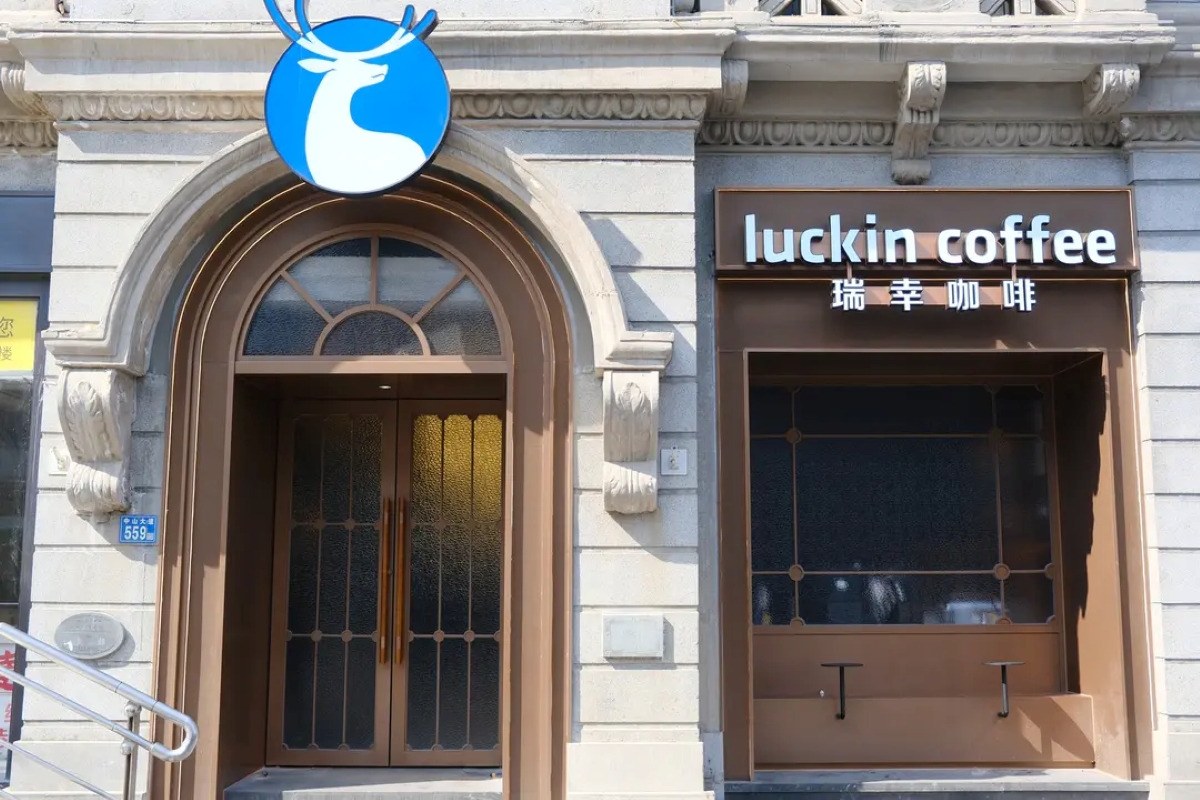
Dubai, September 5, 2025 (Qahwa World) – Luckin Coffee continues its rapid ascent in the global coffee industry, expanding aggressively while key competitors like Starbucks face declining sales.

The Chinese coffee chain, which has already surged ~35% this year, recently entered the U.S. market with new stores in New York City. This move comes as Starbucks undergoes a difficult transformation in both its American and Chinese operations.

Strong Same-Store Sales Growth

Luckin Coffee reported a 13% year-on-year increase in same-store sales at company-owned outlets in Q2 2025. This marks its fourth consecutive quarter of acceleration, rising from a decline in late 2024. In comparison, Starbucks posted a 2% sales decline in the U.S. and only 2% growth in China, where it introduced discounts to counter Luckin’s aggressive promotions.

By outperforming Starbucks’ same-store sales growth by 11 percentage points, Luckin has proven resilient in a strained global economy where many restaurant chains are seeing contractions.

Aggressive Expansion Strategy

The company’s expansion strategy remains unmatched. In Q2 alone, Luckin opened 2,109 new stores, lifting its total footprint to 26,200 – a 31% year-on-year increase. Over the past year, Luckin has added more than 6,200 stores, averaging 17 openings per day.

In contrast, Starbucks expanded its network by just 5% over the same period, adding 1,600 stores worldwide. Luckin’s U.S. debut has been met with favorable reviews, with New York outlets receiving 4–5 star ratings on Google and Yelp.

With RMB 8.2 billion ($1.1 billion) in cash reserves and no debt, Luckin has ample resources to finance its ambitious global rollout.

Differentiation: Menu Innovation and Value Pricing

Luckin distinguishes itself through a bold menu and competitive pricing. While offering classic beverages, it experiments with unique flavors – from fruity Americanos to limited-edition drinks like Roast Duck coffee in China.

Equally important is its pricing advantage: brewed coffee at its U.S. outlets starts at $3.45, below the average price in many American cities. This value-driven approach has fueled customer growth while maintaining a 21% store operating margin.

Valuation Advantage

Despite its momentum, Luckin trades at a far lower valuation than U.S. peers. Its price-to-earnings ratio is around 19x, half that of Starbucks. On revenue multiples, Luckin is valued at a quarter of fast-growing competitor Dutch Bros, even though it is expanding at a faster pace.

Risks and Outlook

While Luckin’s history includes challenges—such as price wars and over-discounting in 2024—the company has since shifted strategy to balance promotions with profitability.

Analysts see more upside than downside as Luckin strengthens its position in China while expanding overseas. Its combination of innovation, affordability, and financial strength makes it one of the most compelling players in the global coffee industry today.

illycaffè Acquires 80% of «Capitani»

Dubai, September 3, 2025 (Qahwa World) – Italian premium coffee brand illycaffè has announced the acquisition of an 80% stake in Capitani, a Como-based manufacturer of single-serve capsule coffee machines for the home market.

The move is part of illycaffè’s strategy to strengthen its European supply chain and reduce reliance on non-European suppliers, as the global coffee sector faces mounting pressures from soaring green coffee prices and new tariffs on exports, particularly to the United States, the company’s second-largest market after Italy.

CEO Cristina Scocchia emphasized that the investment in Capitani reflects illycaffè’s ongoing transition from a traditional coffee roaster to a holistic systems company. She said: “The geopolitical context, trade barriers, tariffs, and rising raw material costs are significant challenges, but we have chosen to continue focusing on Made in Italy and innovation, investing in our country and strengthening the Italian production chain.”

Founded in 1979, Capitani specializes in designing and producing single-serve coffee machines primarily for the home market. The company operates a 43,000 sq ft production facility in Solbiate con Cagno and has been a long-standing supply partner for illycaffè. In 2024, Capitani generated revenues of approximately €20 million.

Under the deal, set to close in October 2025, the Capitani family will retain a 20% stake. The new partnership aims to double Capitani’s revenues within five years by leveraging synergies, industrial efficiency, and innovation capabilities.

illycaffè reported record revenues of €630 million in 2024, up 6% year-on-year, with net profits rising 42% to over €33 million and EBITDA up 19% to €110 million.

In the first half of 2025, the company posted an 11% increase in revenues compared to the previous year, reaching €319 million (~$370 million). However, illycaffè expects slower growth of 7–10% in the second half due to record-high coffee costs and the newly introduced 15% tariffs on European coffee exports to the US.

For illycaffè, acquiring Capitani is a pivotal step in reinforcing domestic production and protecting the Italian identity of its products. By combining Capitani’s industrial expertise with illycaffè’s global reach, the partnership is set to boost competitiveness in the fast-growing European capsule coffee market, where at-home consumption continues to expand rapidly.

Who Is Nestlé’s New Leader, Philipp Navratil?

Dubai, September 2, 2025 – (Qahwa World) – Nestlé has appointed Philipp Navratil as its new Chief Executive Officer following the dismissal of Laurent Freixe, who was removed after an internal investigation confirmed a breach of the company’s Code of Business Conduct.

Navratil, 49, a Swiss-Austrian national, brings more than two decades of experience within Nestlé and is widely recognized for his leadership in the global coffee sector. He joined the company in 2001 and steadily advanced through international roles, including Country Manager of Nestlé Honduras in 2009, Coffee & Beverages Business Lead in Mexico in 2013, and Senior Vice President heading the Coffee Strategic Business Unit in 2020. In July 2024, he was appointed CEO of Nespresso and became a member of Nestlé’s Executive Board in January 2025.

“Philipp has an impressive track record in delivering results across diverse markets and is known for his dynamic leadership and collaborative management style,” said Nestlé Chairman Paul Bulcke, who himself is set to step down in 2026 after 47 years with the company.

Navratil assumes the top job at a critical time. Nestlé reported a 1.8% revenue decline in 2024 to CHF 91.3 billion ($10.1 billion) and a further 1.8% drop in the first half of 2025. Despite the overall slowdown, the company’s coffee business remains strong, with double-digit growth in the Americas and mid-single-digit growth in Europe during the first six months of 2025. Price increases averaging 6% across retail coffee ranges also helped drive category performance.

Industry observers say Navratil’s appointment underscores Nestlé’s reliance on its coffee portfolio — one of the group’s fastest-growing categories — to stabilize sales and restore momentum. His immediate challenge will be to rebuild investor confidence and strengthen Nestlé’s global position following a period of turbulence at the top.

The Coffee Race: From Corporate Giants to Startups… Who Will Shape the Future?

Dubai – Ali Alzakry

The sale of Geisha coffee from the famed “Hacienda La Esmeralda” at the “Best of Panama 2025” auction was no ordinary event. A historic record was set when the washed Geisha fetched an unprecedented $30,204 per kilogram. Yet the bigger surprise was not the price itself, but the buyer: a Dubai-based startup, just one week old at the time, that stunned the industry by purchasing the entire 20-kilogram lot for a staggering $604,000. A dramatic scene that shook the markets and ignited debates among experts, investors, and coffee leaders worldwide.

And the shocks did not stop there. The sector was soon rattled by a string of announcements: “Coca-Cola” revealed it is considering the sale of “Costa Coffee”; “Burgerizzr” announced its acquisition of 60% of the café chain “Shuffle”; and a historic milestone was recorded with “Keurig Dr Pepper” acquiring “JDE Peet’s” for €15.7 billion. A whirlwind of events that disrupted the landscape and raised big questions about the future of coffee in Dubai and across the globe.

These developments prompted us at Qahwa World to open this file seriously, guided by the voices of seasoned leaders and pioneers in the coffee sector — people who combine boldness with credibility, and who know the market intimately. With them, we explored critical questions:

  • Are these events just a passing wave of headlines, or the signs of a long-term transformation?

  • How will Dubai and the region be impacted?

  • And what do these deals mean for producers, independent roasters, and young entrepreneurs?

Diverging Views: From Showmanship to the Core of Coffee

When we asked coffee experts about these developments, their views revealed striking contrasts — an intellectual confrontation that highlights the complexity of the challenges ahead.

“Kim Thompson” sees the sale of “Costa Coffee” as simply corporate repositioning that does not affect the fundamentals of specialty coffee, emphasizing that true value lies in farmer relationships. “Matt Toogood,” however, warns that extravagant moves — such as buying an entire lot of Geisha at a record price — risk harming the industry more than helping it. In contrast, “Katerina Borodich” argues that coffee has now become a strategic sector in its own right, while “Federico Ortile” views these changes as a signal of the industry’s shift toward innovation and partnerships. “Robert Jones,” meanwhile, believes we are at the dawn of a new era in coffee, with the global map being redrawn.

Kim Thompson: “Big Deals Don’t Change the Core of Specialty Coffee”

“Kim Thompson,” co-founder of “RAW Coffee Company,” describes Coca-Cola’s potential sale of “Costa Coffee” as interesting but unsurprising. She stresses that such moves do not alter the essence of what companies like RAW Coffee do: sourcing directly from trusted producers, ensuring fair trade, and serving customers who value quality and transparency.

According to Thompson, multinational repositioning reflects shareholder priorities, but the real work happens at origin and in independent roasteries. Corporate headlines may ripple across markets, but they do not affect the heart of the sector: ensuring farmers are fairly paid and consumers are served authentic coffee.

She notes that the industry’s deeper transformation lies in changing consumer tastes, rising interest in specialty coffee, and recognition of coffee as both culture and commodity.

On Panama, she believes that a Dubai startup purchasing the entire Geisha lot was headline-grabbing but not a true measure of sustainability or impact. For her, the real benchmark lies in how investments support farmers, knowledge-sharing, and meaningful consumer experiences.

Thompson warns that the sector must not be distracted by dramatic headlines and forget the daily challenges faced by producers — rising costs, volatile markets, and climate change. The future of coffee, she insists, will not be determined by billion-dollar deals but by empowering producers and supporting sustainable farming.

Matt Toogood: “Showmanship Harms Coffee More Than It Helps”

Matt Toogood,” CEO“RAW Coffee Company,

“Matt Toogood,” CEO “RAW Coffee Company,” describes Dubai as a unique laboratory for specialty coffee, where consumer tastes shifted over 15 years from bitter, traditional espresso to balanced, flavorful profiles. He emphasizes that this shift was driven not by big chains but by independent cafés that dared to serve coffee that was sweet, balanced, and not bitter.

He recalls that initial reactions ranged from confusion to excitement, but eventually consumers embraced the change.

In contrast, large chains, he says, adopted the language of quality without improving their products — masking poor coffee with milk and sugar. The true transformation, Toogood argues, was led by independent operators who adapted to consumer behavior.

Regarding Panama, he calls the record-breaking Geisha purchase “a theatrical stunt” with no commercial logic. He warns that such actions mislead farmers into thinking value lies in inflated prices, when in fact auctions are often choreographed months in advance for marketing purposes.

Katerina Borodich: “Coffee Is No Longer a Side Product… It’s a Strategic Sector”

Katerina Borodich,” CEO of “Drinkit UAE

“Katerina Borodich,” CEO of “Drinkit UAE,” sees “Burgerizzr’s” 60% acquisition of “Shuffle” as proof of a clear trend: coffee is no longer a complementary product in food and beverage — it is a strategic industry on its own.

She notes that regional demand is driven by fast-paced lifestyles and strong hospitality culture, with consumers seeking convenience, flavor, personalization, and speed. Drinkit’s tech-enabled platform, she says, delivers exactly that.

Borodich emphasizes that Dubai is more than a consumer market — it is a gateway and a global platform. The city rewards speed and innovation, and what succeeds there can succeed anywhere.

She acknowledges that competition will intensify, but insists this also creates more opportunities for startups. Success, she argues, comes not from “serving coffee” alone but from understanding consumers and delivering complete experiences.

For her, these deals reflect investor confidence in coffee’s future in the region, grounded in stable demand and strong government support.

Federico Ortile: “Dubai Is Not a Market… It’s a Global Laboratory”

Federico Ortile,” Managing Director of the “Simonelli Group Middle East

“Federico Ortile,” Managing Director of the “Simonelli Group Middle East,” sees Coca-Cola’s potential exit from “Costa Coffee” as part of a larger corporate trend — moving from owning retail brands to focusing on innovation and partnerships.

He views Burgerizzr’s investment in “Shuffle” as a landmark move, bringing regional capital into a space long dominated by international players. This, he argues, strengthens the region’s food and beverage ecosystem.

On “Keurig Dr Pepper’s” €15.7 billion acquisition of “JDE Peet’s,” Ortile calls it transformative, consolidating two global powerhouses. He notes that it will intensify competition but also open access to greater resources and platforms.

As for Dubai, Ortile describes it not as a mere consumer market but as a global laboratory — where international trends meet regional innovation. He believes its role as a hub for luxury coffee will only grow as local capital merges with global technology.

Robert Jones: “We Are on the Cusp of a New Era in Coffee”

Robert Jones,” Managing Director of “Coffee Planet

“Robert Jones,” Managing Director of Family First Cafe | GEMS Global,” interprets Coca-Cola’s reconsideration of “Costa Coffee” as a clear sign that even the biggest players are reassessing their bets in a changing market. Consumers, he says, no longer seek scale alone but quality and experience — and legacy brands risk irrelevance if they fail to evolve.

He views Burgerizzr’s acquisition of “Shuffle” as an investor move to control consumer dwell time and data — proof that coffee is now a lifestyle and emotional connection rather than just a beverage.

On the “Keurig Dr Pepper” deal for “JDE Peet’s,” Jones calls it a reshaping of the global value chain, with ripple effects on sourcing, pricing, and pressure on smaller brands to stand out through authenticity.

For him, Dubai is no longer peripheral but a central player in specialty coffee worldwide. The record Geisha purchase, he argues, was a strategic message that placed Dubai at the center of the global coffee stage.

“We are not witnessing a passing wave,” Jones concludes. “This is a complete redrawing of the coffee map. It is a new era for coffee — but success will go to those who build with vision and purpose, not those chasing spectacle.”

Conclusion

From Panama to Dubai, from auction halls to billion-euro deals, coffee has broken free of its role as a daily beverage or traditional trade. It has become a global investment arena — where corporate giants collide with ambitious startups, and visions clash between spectacle and substance, between quick profit and long-term sustainability.

This investigation revealed that there is no single answer to the question: What is happening in the coffee market?

  • “Kim Thompson” believes the core of specialty coffee remains unchanged.

  • “Matt Toogood” warns that theatrical excess could damage the industry.

  • “Katerina Borodich” stresses the future belongs to agile, innovative startups.

  • “Federico Ortile” sees Dubai as a global laboratory where capital meets innovation.

  • And “Robert Jones” insists the world is entering a new era where the coffee map itself is being redrawn.

One thing is certain: coffee is no longer in the shadows. It has taken center stage in the global economic and cultural landscape — and today’s developments will shape its future for decades to come.

Tim Cofer’s Strategy: Why Keurig Dr Pepper Is Building a Coffee Giant

New York – August 27, 2025 (Qahwa World) – When Keurig Dr Pepper (KDP) unveiled its $18.4 billion acquisition of JDE Peet’s, the headline alone turned heads. But the deeper story lies in the reasoning of CEO Tim Cofer, who is reshaping the company by building a coffee powerhouse—only to spin it off as an independent entity while KDP doubles down on its soda and refreshment empire.

The move marks a sharp departure from the vision set in 2018, when Keurig Green Mountain merged with Dr Pepper Snapple in a $19 billion deal. The idea was bold: unite hot and cold beverages under one roof, controlling every category of nonalcoholic drinks on consumers’ shopping lists. That concept thrived during the COVID-19 lockdown, when KDP used AI insights from home brewers to anticipate surging demand for K-Cups, while also stockpiling Dr Pepper and Canada Dry. Sales boomed as consumers hoarded both coffee pods and sodas.

Yet the promise of synergy has faded. In Q2 2025, KDP’s soft drink revenues surged 10.7% compared with the previous year, but U.S. coffee sales fell 1.9% and international hot beverages dropped 3.8%. Rising coffee bean prices forced K-Cup price hikes, pushing consumers toward cheaper ground and instant coffee. Instead of a perfect fit, coffee became a drag on the business, and management faced the distraction of running two very different operations.

Cofer’s solution: scale and separation. By acquiring JDE Peet’s—home to brands like Jacobs, L’Or, and Peet’s Coffee retail stores—KDP will merge it with Keurig to create a transatlantic coffee giant generating nearly $16 billion in annual revenues split evenly between Europe and North America. Then KDP will spin off the coffee business to shareholders, giving it independence and sharper focus. The remaining KDP will center entirely on refreshment, managing more than 150 brands from Dr Pepper and 7Up to Snapple and Schweppes.

For Cofer, the decision is not about retreat but about unlocking potential. Coffee, he points out, is a $400 billion global market—one of the few products most people consider indispensable. But paired with sodas, it lacked the attention and resources it deserved. As a standalone company, it can pursue growth on its own terms. Meanwhile, KDP’s soda business can concentrate on taking market share from Coke and Pepsi, especially in restaurants, energy drinks, sports hydration, and trendy innovations like “dirty sodas,” which KDP introduced after spotting a viral TikTok craze.

The move reflects Cofer’s pedigree as a dealmaker. At Kraft and Mondelez, he mastered the art of integrating and separating global businesses, from the Kraft-Cadbury merger to snack acquisitions in Asia. At KDP, he has applied the same instincts, betting on bold moves like acquiring Ghost Energy and diversifying into premium categories. Now he is wagering that specialization, not diversification, will deliver long-term growth.

Investors are skeptical. KDP’s stock fell 11% on the day of the announcement, erasing billions in market value. But analysts note that coffee and sodas are fundamentally different businesses, with little overlap in distribution or strategy. Splitting them could, in fact, make both stronger.

If Cofer’s gamble pays off, KDP’s breakup will not just be remembered as a costly deal but as one of the defining strategic pivots in today’s beverage industry—creating two giants instead of one distracted hybrid.

Yemeni Café to Replace Starbucks in the Heart of Dearborn

Detroit – August 27, 2025 (Qahwa World) – The well-known Starbucks branch on Michigan Avenue in East Dearborn has permanently closed after nearly 16 years of operation, paving the way for a Yemeni café that reflects the cultural shifts in a city with one of the most prominent Arab-American communities.

The store, located at the intersection of Michigan Avenue and Oakman Boulevard, officially ceased operations on August 24 and will soon be transformed into a Yemeni café. According to local reports, Moka & Co, a Yemeni coffee brand with multiple branches in Detroit, Ann Arbor, East Lansing, Okemos, and other states, is expected to take over the site. The lease is anticipated to be finalized within weeks, with the café projected to open by late 2025 or early 2026 after renovations.

The closure comes as part of Starbucks’ “Back to Starbucks” initiative, announced in July 2025, which includes closing or converting up to 90 mobile-order and pick-up-only stores across the U.S. by fiscal year 2026 to focus on traditional café formats. While the company has not issued a specific statement about this location, the decision aligns with consumer trends in Dearborn, where Yemeni cafés are steadily gaining ground.

Dearborn, home to one of the largest Arab-American populations in the United States, has become a hub for Yemeni coffee through establishments such as Haraz Coffee House and Qahwah House. These cafés are distinguished by their richly spiced brews, honeycomb bread, and late-night community atmosphere, creating spaces that have often outshined corporate chains.

The upcoming Yemeni café is expected to serve single-origin beans from Yemen alongside a menu that blends tradition and modern trends, including iced pistachio lattes, moka spice lattes, Adeni chai, frozen drinks, refreshers, and matcha lattes.

The shift away from global coffee chains in Dearborn has been fueled both by consumer boycotts tied to geopolitical issues and by a preference for authentic, community-driven experiences. A 2024 report by The Arab American News highlighted a sharp decline in Starbucks sales in the city as customers increasingly turned to Yemeni cafés for better value, cultural connection, and superior taste.

For many residents, the closure of Starbucks marks a continuation rather than a loss. “Starbucks was fine, but Yemeni cafés offer something unique — coffee with a story, from Yemen’s mountains to our cups,” said Aisha Nasser, a regular at Qahwah House.

With renovations already underway, the location is expected to reopen soon under Yemeni management. For East Dearborn, the transformation of a Starbucks into a Yemeni café underscores a broader narrative: the city’s coffee identity is no longer shaped by global chains but by a return to its cultural roots — Yemeni coffee as both tradition and thriving enterprise.

Tokyo’s Avatar Robot Café: A New Dawn for Inclusive Dining

Tokyo, August 2025 (Qahwa World) – In the heart of Chuo Ward, Tokyo, a café is redefining what it means to dine out. The Avatar Robot Café Dawn ver. Beta employs people who are paralyzed or otherwise unable to leave their homes, giving them the chance to work and connect with society by remotely piloting humanoid robots.

Originally launched as a short-term experiment, the café has now become a permanent space that blends hospitality, technology, and inclusivity. Staffed by over 60 “pilots” operating from their homes across Japan, the café offers a uniquely human experience—through robots.

Dining with Robots, Connecting with People

Customers can choose from three seating tiers, ranging from casual observation to full table service by OriHime robots. These units, developed by OryLab, allow operators to interact with guests, take orders, and even hold conversations.

One such pilot is Koki, a veteran OriHime operator from Mie Prefecture, over 300 kilometers away. Paralyzed since 1991 after a diving accident, Koki once felt isolated and withdrawn. Today, through OriHime, he provides warm table service, shares stories, and even entertains guests with impromptu singing.

Koki explains how this work has changed his life: “Before, I was always thanking others for helping me, but I was rarely thanked myself. At the Avatar Café, I hear people say ‘thank you’ to me. That makes me happy.”

Human Interaction in a Robotic World

Unlike typical restaurants where robots simply deliver plates, Dawn’s robots are human-driven, giving them personality and humor. Guests witness lively exchanges between robot staff, occasional clumsy moments like dropping cups, and heartfelt conversations that make the dining experience feel deeply personal.

Beyond wait service, the café also features a Nextage Tele-Barista robot, which brews coffee through a French press under the control of a remote operator. Customers can choose from three coffee beans and watch as the robot prepares their drinks with precision—and occasional endearing mistakes.

A Vision of Accessibility

The café is the brainchild of Ory Yoshifuji, inventor of the OriHime robot, who created the system to combat loneliness and provide opportunities for people with disabilities. The project has grown into a platform for empowerment, allowing individuals like Koki to not only serve customers but also lecture at universities, carry the Olympic torch, and even assist Japan’s Prime Minister at global events.

Mariko Ohanabatake, a visitor who experienced Dawn firsthand, described it as “a place where robots connect people, not just serve them. It felt like the future.”

Café Details

Avatar Robot Café Dawn ver. Beta (分身ロボットカフェ DAWN ver.β)
📍 Nihonbashi Lifescience Building 3 (1F), Chuo-ku, Tokyo
⏰ Hours: 11:00 a.m. – 7:00 p.m. (Closed Thursdays unless public holiday)
🌐 Website: DAWN Avatar Robot Café