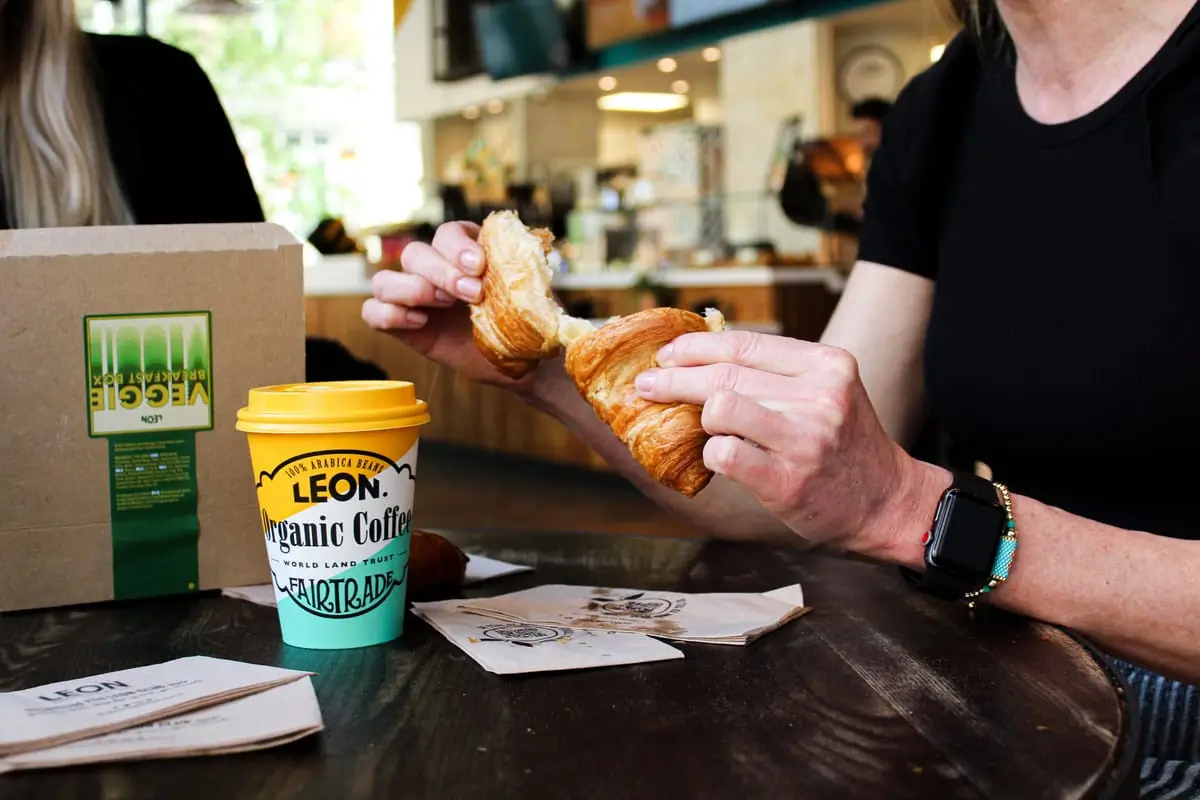
Leon launches major restructuring plan with potential store closures

London – Qahwa World

Leon, the UK-based food-to-go and coffee chain, has initiated a company voluntary arrangement (CVA) as it works to shut down loss-making branches and reshape the business into a more efficient and sustainable operation.

This step follows the recent move by Co-founder John Vincent, who reacquired the brand from Asda just over a month ago.

Leon reported a pre-tax loss of £8.4 million ($11.3 million) for 2024, marking the company’s ninth consecutive year in deficit.

As part of the restructuring plan, the chain may close up to 20 underperforming outlets in an effort to reduce ongoing financial pressures. The CVA allows Leon to continue operating while arranging a structured repayment plan with creditors. Although the process is less costly than other insolvency options and keeps management in control, it is expected to lead to job cuts.

The initial phase will target branches that have been consistently unprofitable. Vincent said the process should help Leon emerge as a “leaner business” with a clearer path back to its original mission and values.

Vincent’s return to leadership has already brought significant changes. Shortly after retaking ownership of the 70-store chain, he discontinued Leon’s value-driven coffee subscription programme—ended only 18 months after its relaunch, which had aimed to attract budget-conscious customers.

Leon has not recorded a profit since 2015, and although losses were reduced by more than half in the previous year, the chain still ended 2024 with a substantial deficit.

Leon was founded in 2004 by Vincent, Henry Dimbleby, and chef Allegra McEvedy to introduce healthier fast-food options to the UK high street. However, after the brand’s sale to EG Group in 2021 and later to Asda in 2023, critics argue that its nutrition-focused identity has weakened.

In October 2025, shortly before Vincent took back control, Dimbleby—formerly a government advisor on food health—publicly criticised Asda, accusing it of undermining Leon’s concept by prioritising cheaper and saltier menu items.

During Asda’s tenure, Leon also expanded its presence in supermarkets. What began in 2019 with packaged coffee and sauces has since grown into a wide range of ready meals and frozen items such as waffle fries, burgers, and chicken nuggets—an area where some critics say the brand’s health-first approach has become less visible.

Financial advisory firm Quantuma has been appointed to manage the CVA process. Leon also announced a partnership with Pret A Manger to support employees who may face redundancy, offering opportunities for redeployment within Pret’s network.

SSP Group Reports Strong Annual Growth

Dubai – Qahwa World

Global travel food and beverage operator SSP Group has announced solid revenue growth for the fiscal year ending 30 September 2025, supported by strong performances in the UK and Asia Pacific. However, the company continues to face headwinds in its Continental European markets.

According to its preliminary financial update, SSP achieved an 8% year-on-year increase in total revenues, reaching £3.7 billion ($4.9 billion). Group-wide like-for-like sales rose by 4%, while operating profit is projected to climb 11% to £230 million ($307 million).

Sales in the UK and Ireland advanced by 8% in the fourth quarter, driven by increased rail passenger spending. Meanwhile, the Asia Pacific and EEME (Eastern Europe, Middle East, and Africa) region recorded a 9% rise, bolstered by the integration of Airport Retail Enterprises (ARE) in Australia, acquired in 2024.

In contrast, Continental Europe posted a 1% sales decline for the same period. SSP cited disruptions in France’s rail network and infrastructure works in Germany as key factors, alongside weaker consumer spending and a gradual withdrawal from its unprofitable partnership with Tank & Rast, the German motorway service operator. The company’s North American operations remained flat due to reduced airport passenger volumes.

To address these challenges, SSP launched a cost-efficiency programme across its 15 Continental European markets in mid-2025. The initiative follows the appointment of Satya-Christophe Menard, formerly of JDE Peet’s, who now leads the group’s European division with profitability as a top priority.

Group CEO Patrick Coveney said SSP’s strategy for enhanced returns is beginning to yield results, though the company remains focused on accelerating improvements in France and Germany. “We recognise the need for rapid progress and are acting decisively as we enter the new financial year,” Coveney stated.

Headquartered in London, SSP operates nearly 3,000 outlets across 38 global markets, including airports and rail hubs. Its portfolio features licensed brands such as Starbucks, Pret A Manger, BackWerk, and Exki, alongside its proprietary concepts Upper Crust, Camden Food Co, and Caffè Ritazza.

The group is set to publish its audited full-year results on 4 December 2025.

India’s Coffee Shop Market Rises as Homegrown Brands Gain Ground

New Delhi, 11 September 2025 – Qahwa World – India’s branded coffee shop sector is undergoing remarkable growth, highlighting both the strength of global players and the rise of domestic champions. New industry data shows the market expanded by 12.7% over the past year, adding more than 600 new outlets to reach a nationwide total of 5,339 branded coffee shops. This surge underscores the growing appetite for café culture in the world’s most populous nation.

Market leaders and shifting dynamics

At the forefront is Tata Starbucks, which operates 480 outlets across India, securing its position as the market leader. It is closely followed by Barista with 465 stores, while Café Coffee Day remains in third place with 425 stores, though it continues to shrink in scale due to financial pressures.

India’s branded coffee landscape is not just defined by large chains. Among the 104 branded operators currently active, nearly four in five are homegrown, demonstrating the growing dominance of domestic brands. Boutique names such as Blue Tokai Coffee Roasters, Third Wave Coffee, and Subko have built reputations by spotlighting India’s coffee-growing heritage, while affordable brands like Nothing Before Coffee, abCoffee, and First Coffee attract younger professionals seeking value-driven options.

Fastest movers in the market

Two local chains stand out for their rapid expansion: Third Wave Coffee and Café Buddy’s Espresso. Each grew by 56 outlets in the past year, bringing their store counts to 172 and 145 respectively. Their rise reflects the strong momentum of Indian-owned businesses as they capture consumer loyalty.

Consumer preferences: social and experiential

Unlike in many Western countries, takeaway culture remains limited in India. Coffee shops are primarily social spaces where family and friends gather, with nearly one-third of visits taking place after 5 p.m. The experience comes at a premium: average spending per visit, including food, is ₹660.86 ($7.53), while beverage-only visits average ₹426.22 ($4.85).

Beyond coffee shops, coffee also plays a growing role in restaurant culture, with nearly 75% of surveyed consumers reporting that they ordered coffee in restaurants over the past year. This has encouraged international players to adapt, with UK-based Pret A Manger launching its first-ever full-service restaurant format in India earlier this year.

A market with global potential

India’s demographics provide fertile ground for future growth. With a population of 1.45 billion, more than half of whom are under 30, and a strong base of coffee-growing regions, the country is poised to become a key global hub for coffee commerce.

Projections indicate that the branded coffee shop market will exceed 6,100 outlets by 2026, and is on track to cross 10,000 outlets by 2030. Analysts forecast a 13.2% compound annual growth rate (CAGR) over the next five years. Coffee-focused chains are expected to expand at 15% CAGR, surpassing 8,050 outlets, while food-led operators will grow at around 7% CAGR, reaching nearly 1,860 stores.

Coffee’s future in India

India’s shift from a tea-first nation to a thriving coffee culture is unmistakable. While global chains such as Starbucks and Costa Coffee initially brought premium café experiences to the country, domestic brands are now setting the pace. By blending modern hospitality with local roots, these operators are shaping India’s evolving identity as a coffee destination.

With rising incomes, urbanization, and a new generation of coffee drinkers seeking aspirational experiences, India is set to become one of the world’s most dynamic coffee markets. From metropolitan hubs like Delhi, Mumbai, and Bengaluru to second- and third-tier cities, coffee culture is spreading fast — and the momentum shows no signs of slowing.

Pret A Manger Aims to Double UK Stores Following Strong 2024 Growth

Pret A Manger is preparing for a major expansion across the UK after reporting robust growth in 2024.

The London-based coffee and food-to-go chain, which currently operates 500 stores in the UK and another 200 across 20 international markets, achieved 10% year-on-year revenue growth in 2024, reaching £1.2bn ($1.6bn). Adjusted EBITDA rose 36% to £98m ($133m).

Chief Executive Pano Christou, who has led the JAB Holding-backed business since 2019, said Pret aims to double its UK footprint to 1,000 outlets by focusing on city centres and transport hubs. “Customers love the brand on the go. Our travel business has really exploded in recent years. We have eight locations at Heathrow and will add two more next year,” he told reporters.

Pret ended 2024 with 717 outlets across 21 global markets. Alongside its expansion plans, the chain will introduce new value-driven offerings, including a £6-£7 ($8.14-$9.50) lunchtime meal deal trial in the UK. The initiative, already successful in France, is expected to boost sales and afternoon footfall.

The company has also launched a premium ‘Super Plates’ salad range in 250 UK stores and overhauled its Club Pret subscription, scrapping its five-coffees-a-day offer for £30 ($38.99). Additionally, a new store format targeting dine-in and family groups has been unveiled in its home market.

Beyond the UK, Pret is seeking significant growth in the US, where it operates 70 stores generating approximately $100m annually, mainly in New York. Christou highlighted transport hubs along the East Coast as the primary focus for expansion. In October 2023, Pret signed a joint venture with franchise partner Dallas International to triple its US footprint by 2029, and in July 2025, it appointed former Tim Hortons executive Felipe Athayde as President of its North America business.

“2024 was another year of growth for Pret, where we took disciplined decisions to protect sales despite intense pressures on the hospitality industry. Our priority now is to drive transactions and sustainable growth by offering great value for Pret customers,” Christou said.