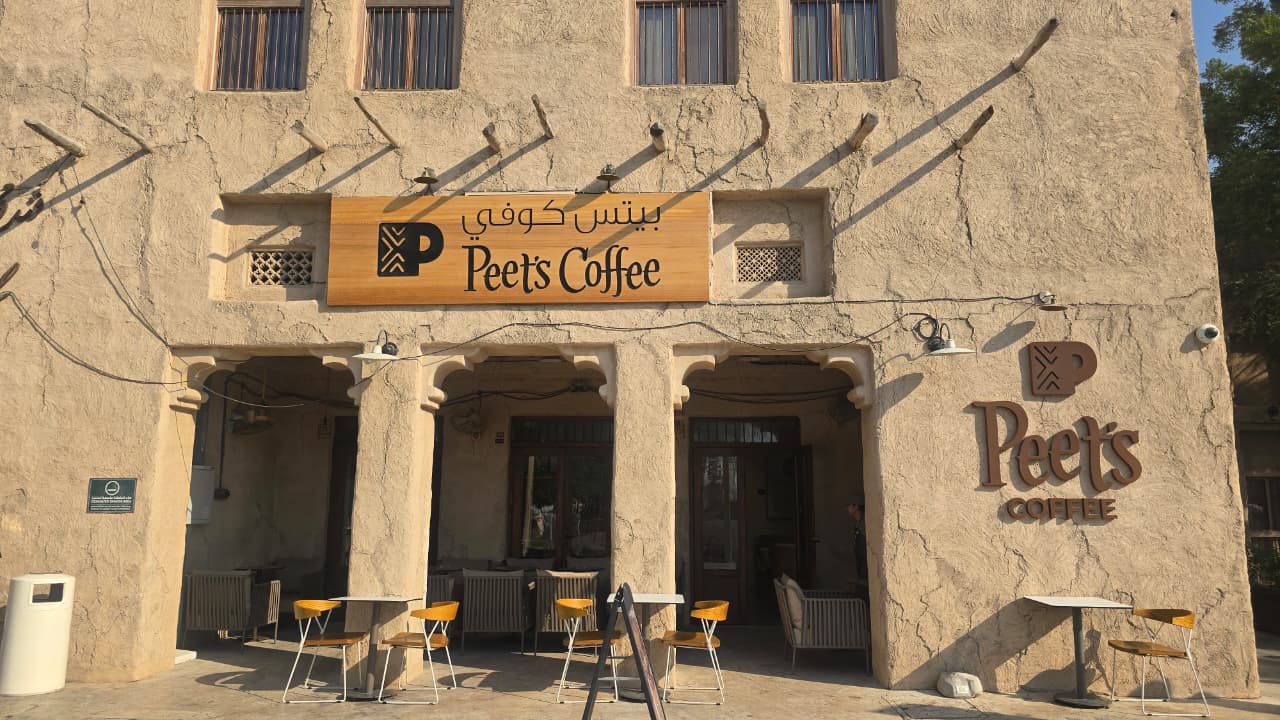
Peet’s Coffee to Close Several San Francisco Locations

Dubai – Qahwa World

Peet’s Coffee is set to close multiple San Francisco locations, including its Polk Street café at 2139 C Polk St., as part of a broader restructuring expected to take effect by the end of January 2026.

A spokesperson for Peet’s confirmed the closures, emphasizing that the company is adjusting its operations to align with long-term growth strategies and current market conditions. Specific details regarding the total number of affected stores or their exact locations were not disclosed.

“These decisions reflect our ongoing commitment to sustainable growth while honoring the quality and heritage that have defined Peet’s for more than 60 years,” the spokesperson said. “We are deeply grateful to our employees and loyal customers and remain focused on innovation and excellence in every cup.”

Peet’s opened its Polk Street location in 1993 and currently operates more than 20 stores throughout San Francisco. Reports indicate that additional locations, including those at 919 Cole St. and 2257 Market St., are also expected to close this month.

The closures coincide with an $18 billion acquisition of Peet’s parent company, JDE Peet’s, by Keurig Dr Pepper, a deal slated to finalize later this year.

This wave of store reductions reflects broader shifts in the coffee industry as chains adapt to evolving market conditions and corporate restructuring plans.

Peet’s Coffee Names Stuart Heflin as New President Amid US Growth Push

Dubai – Qahwa World

Peet’s Coffee, the iconic Californian specialty coffee brand, has appointed Stuart Heflin as its new President, marking a fresh chapter for the US coffee pioneer. Heflin succeeds Eric Lauterbach, who stepped down as President and CEO after three-and-a-half years at the helm.

Heflin joins Peet’s from Colorado-based food group Simply Good, where he served as General Manager of its Quest Nutrition division. In his new role, he will oversee all domestic and international Peet’s operations, including 250 company-owned stores in the US and 250 licensed outlets across China, the UAE, and Saudi Arabia. Heflin will also lead Peet’s specialty coffee brands Stumptown Coffee and Intelligentsia Coffee, both acquired by Peet’s in 2015.

“I’m confident that Stuart, with his deep appreciation for brands with soul and proven ability to lead with both vision and heart, is the right leader for this next phase,” Lauterbach said. Lauterbach, who joined Peet’s in 2010, guided the company through its transition from public to private ownership under JAB Holding Company and the formation of JDE Peet’s in December 2019.

The leadership change coincides with Peet’s strategic shift towards a franchise-led growth model in the US. Most of Peet’s 250 US stores remain company-owned, primarily in California, but the company is now seeking new franchise partners to expand across eastern US states. Peet’s is also increasing investment in consumer packaged coffee products, including ready-to-drink beverages, concentrates, and instant coffee.

These moves form part of JDE Peet’s “Reignite the Amazing” strategy, unveiled to investors in July 2025, and one of its three major growth priorities alongside the French coffee brand L’OR and a portfolio of heritage brands led by Jacobs. The strategy gains added significance as JDE Peet’s prepares for acquisition by Texas-based Keurig Dr Pepper in an $18.2 billion deal, with plans to invest heavily in premium and profitable coffee categories.

Founded in 1966 with its first café in Berkeley, California, Peet’s continues to blend its legacy as a US specialty coffee pioneer with an ambitious plan for national and international expansion under Heflin’s leadership.

JDE Peet’s Reports Strategic and Operational Progress, Confirms 2025 Outlook

Amsterdam – Qahwa World

JDE Peet’s N.V. (Euronext: JDEP), the world’s leading pure-play coffee company, announced continued progress in implementing its new brand-led growth strategy and productivity initiatives while reaffirming its 2025 financial outlook.

Strategic and Productivity Initiatives Under Way

On July 1, 2025, JDE Peet’s launched its “Reignite the Amazing” strategy, designed to accelerate brand-led growth and enhance operational efficiency. The company reported solid progress across several fronts:

  • U.S. Integration: The full integration of the U.S. capsules business into Peet’s Coffee was completed following the discontinuation of the L’OR Barista roll-out in the American market.

  • Distribution Transition: Peet’s is transitioning from its Direct Store Delivery (DSD) system to a direct central distribution model in the U.S., expected to be completed by the end of the first half of 2026.

  • Portfolio Optimization: The company exited its low-margin Food Ingredients (B2B) business in Asia.

  • Manufacturing Footprint: Two additional plant closures were announced—one in northeastern Brazil and another in the northeastern United States—as part of an ongoing global optimization program.

  • Brand Rationalization: Fifteen long-tail brands are scheduled for transition within the next six months.

  • Cultural Transformation: JDE Peet’s is reshaping its corporate culture around four newly defined values—Dare to amaze, Own it, Make it simple, and Win together—to foster agility, ownership, and transparency across the organization.

Business Performance Update

The company stated that its overall third-quarter performance was broadly in line with expectations, taking into account anticipated retailer negotiations and customer pre-buying during the first half of the year.

JDE Peet’s reaffirmed its 2025 outlook, citing strong discipline in pricing and cost control that continues to support gross profit and adjusted EBIT. Approximately 96 percent of the second wave of global price negotiations, which began in July, have already been completed.

While green-coffee prices remain significantly elevated and increasingly volatile compared to previous years, JDE Peet’s said it continues to manage these pressures effectively. The company also confirmed the termination of its share-buyback program as of September 1.

Update on Keurig Dr Pepper Transaction

The planned public offer by Keurig Dr Pepper Inc. (KDP) for all issued and outstanding shares of JDE Peet’s is progressing as scheduled:

  • The regulatory antitrust filing has been submitted in the U.S.

  • The company has received positive advice from JDE Peet’s Dutch Works Council.

  • The transaction closing remains expected in the first half of 2026, subject to the satisfaction or waiver of customary pre-offer and closing conditions.

About JDE Peet’s

JDE Peet’s is the world’s largest pure-play coffee company, serving approximately 4,400 cups of coffee per second across more than 100 markets. Guided by its Reignite the Amazing strategy, the company is pursuing brand-led growth through three global power brands—Peet’s, L’OR, and Jacobs—alongside a portfolio of nine local icons.

In 2024, JDE Peet’s generated €8.8 billion in sales and employed more than 21,000 people worldwide.
More information: www.jdepeets.com

Tim Cofer’s Strategy: Why Keurig Dr Pepper Is Building a Coffee Giant

New York – August 27, 2025 (Qahwa World) – When Keurig Dr Pepper (KDP) unveiled its $18.4 billion acquisition of JDE Peet’s, the headline alone turned heads. But the deeper story lies in the reasoning of CEO Tim Cofer, who is reshaping the company by building a coffee powerhouse—only to spin it off as an independent entity while KDP doubles down on its soda and refreshment empire.

The move marks a sharp departure from the vision set in 2018, when Keurig Green Mountain merged with Dr Pepper Snapple in a $19 billion deal. The idea was bold: unite hot and cold beverages under one roof, controlling every category of nonalcoholic drinks on consumers’ shopping lists. That concept thrived during the COVID-19 lockdown, when KDP used AI insights from home brewers to anticipate surging demand for K-Cups, while also stockpiling Dr Pepper and Canada Dry. Sales boomed as consumers hoarded both coffee pods and sodas.

Yet the promise of synergy has faded. In Q2 2025, KDP’s soft drink revenues surged 10.7% compared with the previous year, but U.S. coffee sales fell 1.9% and international hot beverages dropped 3.8%. Rising coffee bean prices forced K-Cup price hikes, pushing consumers toward cheaper ground and instant coffee. Instead of a perfect fit, coffee became a drag on the business, and management faced the distraction of running two very different operations.

Cofer’s solution: scale and separation. By acquiring JDE Peet’s—home to brands like Jacobs, L’Or, and Peet’s Coffee retail stores—KDP will merge it with Keurig to create a transatlantic coffee giant generating nearly $16 billion in annual revenues split evenly between Europe and North America. Then KDP will spin off the coffee business to shareholders, giving it independence and sharper focus. The remaining KDP will center entirely on refreshment, managing more than 150 brands from Dr Pepper and 7Up to Snapple and Schweppes.

For Cofer, the decision is not about retreat but about unlocking potential. Coffee, he points out, is a $400 billion global market—one of the few products most people consider indispensable. But paired with sodas, it lacked the attention and resources it deserved. As a standalone company, it can pursue growth on its own terms. Meanwhile, KDP’s soda business can concentrate on taking market share from Coke and Pepsi, especially in restaurants, energy drinks, sports hydration, and trendy innovations like “dirty sodas,” which KDP introduced after spotting a viral TikTok craze.

The move reflects Cofer’s pedigree as a dealmaker. At Kraft and Mondelez, he mastered the art of integrating and separating global businesses, from the Kraft-Cadbury merger to snack acquisitions in Asia. At KDP, he has applied the same instincts, betting on bold moves like acquiring Ghost Energy and diversifying into premium categories. Now he is wagering that specialization, not diversification, will deliver long-term growth.

Investors are skeptical. KDP’s stock fell 11% on the day of the announcement, erasing billions in market value. But analysts note that coffee and sodas are fundamentally different businesses, with little overlap in distribution or strategy. Splitting them could, in fact, make both stronger.

If Cofer’s gamble pays off, KDP’s breakup will not just be remembered as a costly deal but as one of the defining strategic pivots in today’s beverage industry—creating two giants instead of one distracted hybrid.