Coffee Prices Slide as U.S. Hints at Possible Tariff Reductions

Dubai – Qahwa World

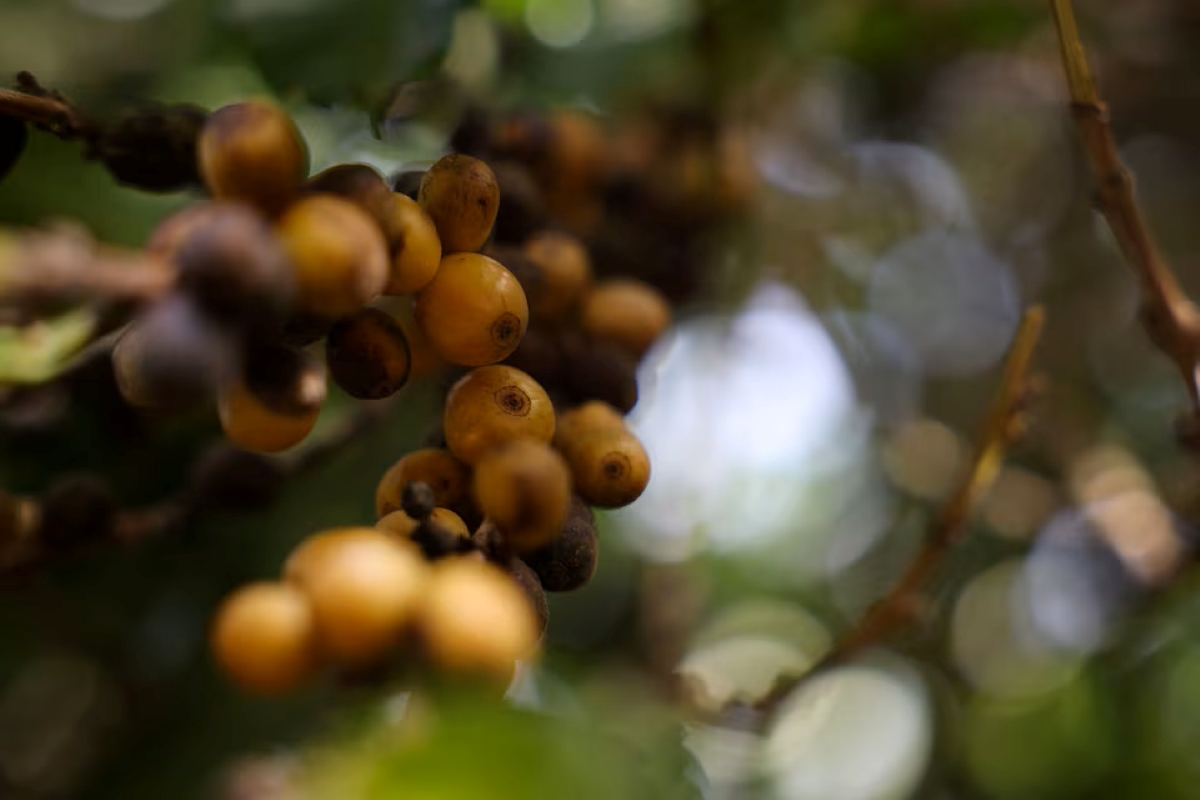
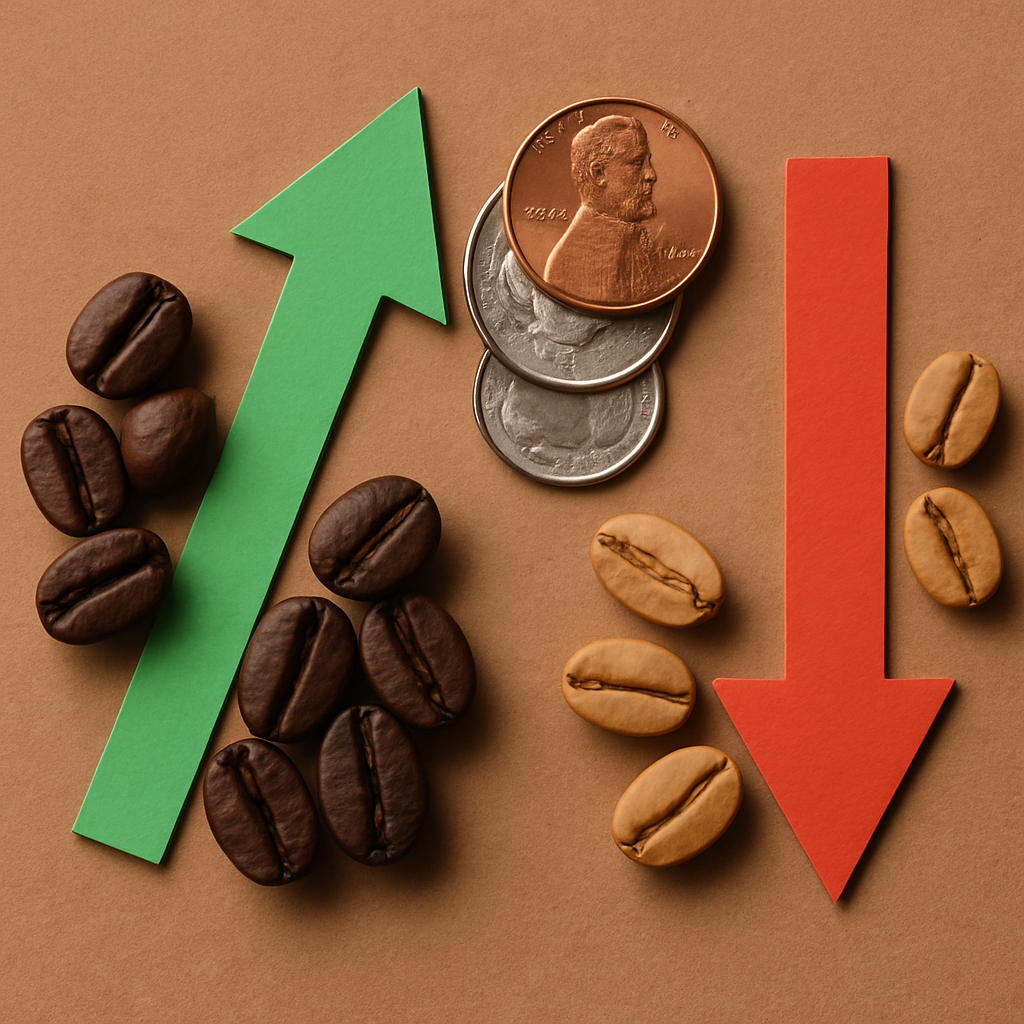
Coffee markets recorded a sharp downturn on November 12 after fresh signals from Washington suggested that import tariffs on coffee could soon be eased, triggering immediate reactions across arabica and robusta futures. December arabica contracts declined by 3.62%, while January robusta fell by 5.09%, reaching a two-week low. The drop intensified after comments by President Donald Trump indicating plans to reduce tariffs on coffee, followed by remarks from Treasury Secretary Bessent about upcoming announcements affecting products not grown in the United States, coffee among them.

The market also reacted to the first outlook from StoneX for the 2026/27 season, which projects Brazil’s total coffee harvest at 70.7 million bags, including 47.2 million bags of arabica — a significant 29% increase compared to the previous year. Consistent rains in Brazil added further pressure, with Somar Meteorologia reporting that Minas Gerais, the country’s primary arabica-producing region, received 72.1 mm of rain during the week ending November 7, equal to 160% of its historical average. Improved moisture levels reduced earlier concerns about dryness and contributed to the bearish sentiment.

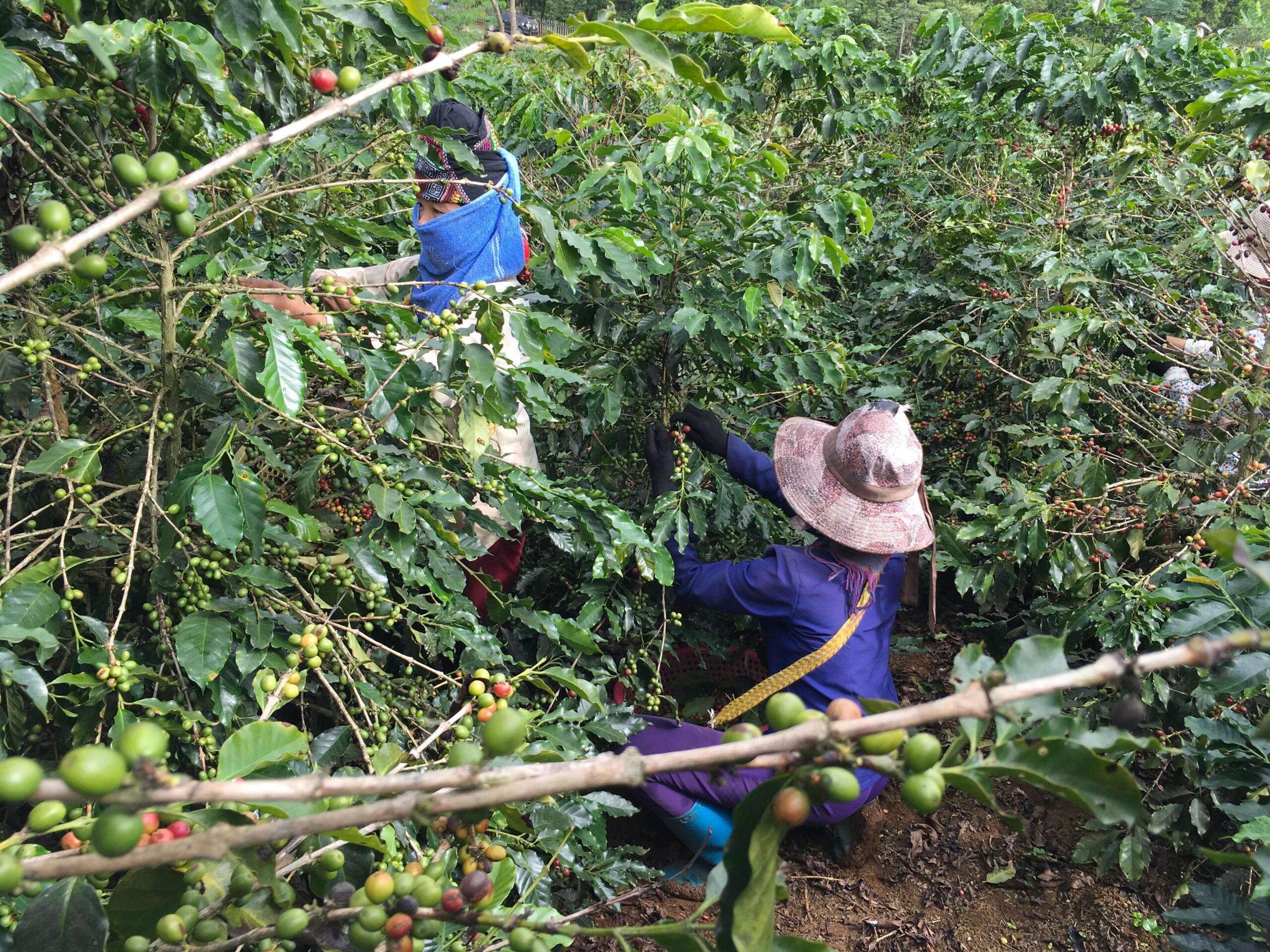
Additional downward pressure came from Vietnam, where the National Statistics Office confirmed that coffee exports for January to October 2025 rose by 13.4% year-on-year to 1.31 million metric tons. Production for 2025/26 is expected to increase by 6% to 1.76 million metric tons, marking the country’s highest output in four years. Industry officials noted that, with favorable weather, the harvest could potentially surpass last year’s by 10%. Vietnam remains the world’s largest producer of robusta coffee, and higher supply expectations have weighed heavily on prices.

Despite these developments, some indicators are providing support to the market. The International Coffee Organization reported a slight decline of 0.3% in global coffee exports for the current marketing year, reaching 138.658 million bags. At the same time, ICE inventories have tightened noticeably as U.S. buyers reduce purchases from Brazil since the introduction of 50% tariffs on Brazilian coffee imports. ICE-monitored arabica inventories fell to a 1.75-year low of 406,129 bags, while robusta stocks dropped to 5,873 lots, the lowest level in nearly four months. With about one-third of U.S. unroasted coffee typically sourced from Brazil, reduced contracting has led to a visible drawdown in domestic supplies.

Longer-term climate risks also continue to influence sentiment. In mid-September, the U.S. National Oceanic and Atmospheric Administration raised the probability of a La Niña event to 71% for the October–December period. Such conditions can bring excessively dry weather to Brazil and potentially disrupt the 2026/27 crop. Brazil’s crop agency Conab has already revised its 2025 arabica forecast downward by 4.9%, estimating 35.2 million bags, while also trimming overall coffee production to 55.2 million bags.

On a global scale, the USDA Foreign Agricultural Service expects 2025/26 world coffee production to reach a record 178.68 million bags, reflecting a 2.5% increase. The outlook includes a slight decline of 1.7% in arabica production to 97.022 million bags, offset by a robust 7.9% rise in robusta output to 81.658 million bags. Brazil’s production is forecast to grow modestly by 0.5% to 65 million bags, while Vietnam’s output is projected to rise by 6.9% to 31 million bags, the highest level in four years. Global ending stocks are estimated to climb by 4.9% to 22.819 million bags.
Weather Extremes Drive Coffee Prices to New Highs

Dubai – Qahwa World

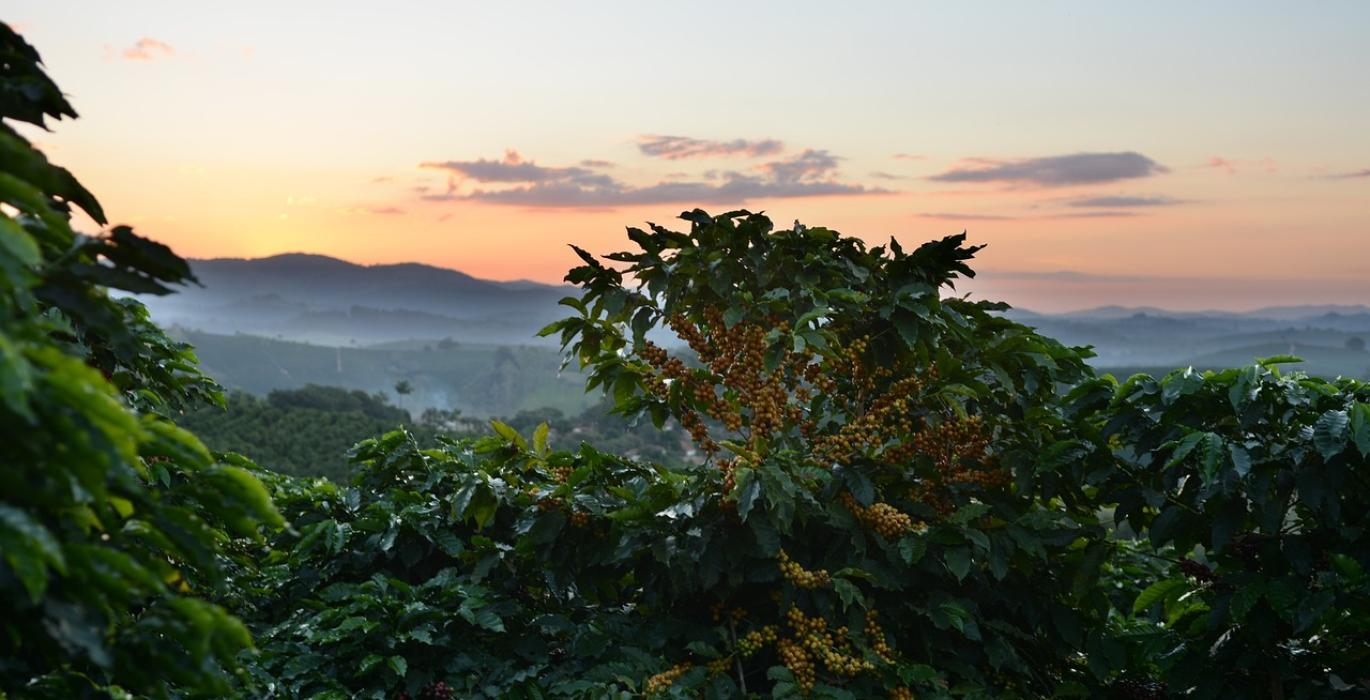
Coffee prices strengthened midweek as extreme weather patterns across major growing regions continued to fuel fears of reduced global supply. Arabica futures for December delivery climbed more than 2%, reaching their highest level in a week and a half, while January Robusta futures also recorded modest gains.

In Brazil — the world’s leading Arabica producer — unusually dry conditions have persisted in Minas Gerais, where rainfall reached only three-quarters of the seasonal average by the end of October. The prolonged dryness follows an even drier previous week and has raised concerns over the next crop’s development. Meanwhile, in Southeast Asia, Typhoon Kalmaegi is expected to make landfall in southern Vietnam, threatening coffee plantations in key Robusta-growing provinces.

Inventories monitored by the Intercontinental Exchange (ICE) continued to shrink, adding upward pressure on prices. Arabica reserves dropped to their lowest point in over a year and a half, while Robusta stocks also declined. The drawdown follows reduced U.S. imports from Brazil, where a 50% tariff has sharply slowed trade. Since Brazil supplies nearly one-third of the unroasted coffee used in the U.S., buyers are now facing tighter availability. However, recent remarks by Presidents Luiz Inácio Lula da Silva and Donald Trump hint at possible progress toward resolving trade tensions, which could influence upcoming market movements.

The U.S. National Oceanic and Atmospheric Administration (NOAA) recently increased the probability of a La Niña event to 71% for the final quarter of 2025. Such conditions often bring hotter and drier weather to Brazil, potentially impacting the 2026/27 harvest if the pattern strengthens.

At the same time, Vietnam — the world’s largest Robusta exporter — continues to expand its output. Official data shows exports rising by more than 10% year-on-year in the first nine months of 2025. The Vietnam Coffee and Cocoa Association expects production for 2025/26 to reach a four-year high if favorable weather persists.

Global trade figures also suggest sufficient overall supply. The International Coffee Organization (ICO) recently reported a slight annual increase in coffee exports, while Brazil’s crop agency, Conab, revised its 2025 Arabica estimate downward due to dry weather.

According to projections from the U.S. Department of Agriculture, world coffee production for 2025/26 could hit a record level of nearly 179 million bags, driven mainly by higher Robusta yields. Arabica output, however, is expected to dip slightly. Ending stocks are projected to rise by almost 5%, suggesting that despite short-term volatility, the market remains well supplied — though increasingly sensitive to shifting weather patterns.

Easing Weather Threats in Brazil and Vietnam Weigh on Coffee Prices

Dubai – Qahwa World

Coffee prices dropped sharply on Thursday after giving up early gains, with December Arabica down 2.54% and November Robusta falling 3.9%.

The decline came as weather conditions improved in two of the world’s largest coffee-producing countries. Forecasts from Brazil’s Climatempo predicted weekend rains across the coffee-growing regions, while Vietnam’s weather office reduced the likelihood of heavy rainfall from Tropical Storm Fengshen over the Central Highlands—its main coffee belt—lessening the risk of crop damage.

In Brazil, prices had earlier rallied on concerns over severe drought during the flowering phase of coffee trees, which is critical for the 2026/27 harvest. The state of Minas Gerais, the country’s largest Arabica-producing region, received only about 70% of its average rainfall in the past month.

In contrast, Robusta prices faced downward pressure following data from Vietnam’s National Statistics Office showing that the country’s coffee exports from January to September 2025 rose +10.9% year-on-year to 1.23 MMT. Production for 2025/26 is forecast to rise +6% to 1.76 MMT (approximately 29.4 million bags), the highest level in four years.

Lower inventories on the Intercontinental Exchange (ICE) provided only partial support. ICE-monitored Arabica stocks fell to a 19-month low of 465,910 bags, while Robusta stocks hit a 3-month low of 6,141 lots.

Optimism surrounding trade talks between the United States and Brazil also weighed on prices. Reports suggest discussions may lead to the removal of the 50% tariffs currently imposed on Brazilian imports, a move that could ease supply constraints in the U.S. market.

Meanwhile, International Coffee Organization (ICO) data showed that global coffee exports for the current 2024/25 season (October–August) rose +0.2% to 127.92 million bags, indicating ample supply.

Brazil’s crop forecasting agency Conab lowered its 2025 harvest estimate to 55.2 million bags (-0.9% from May), reducing Arabica output to 35.2 million bags (-4.9%).

According to the U.S. Department of Agriculture (USDA), global coffee production in 2025/26 is expected to rise +2.5% to a record 178.68 million bags, driven by a +7.9% increase in Robusta to 81.65 million bags, despite a -1.7% decline in Arabica output.

Trading company Volcafe projects a global Arabica deficit of 8.5 million bags for 2025/26—wider than the 5.5 million-bag shortfall recorded in 2024/25 and marking the fifth consecutive year of supply deficits.

Arabica Coffee Prices Dip as Brazil Rains and Tariff Talks Pressure Market

Dubai – Qahwa World

Arabica coffee prices fell on Wednesday as forecasts of rainfall in Brazil’s coffee belt and renewed trade discussions between Brazil and the United States triggered selling in the futures market.

On the ICE exchange, December Arabica (KCZ25) dropped by –4.75 points (–1.19%), while November Robusta (RMX25) rose by +55 points (+1.23%). The session began with an upward trend but later reversed, with traders reacting to changing weather expectations and tariff concerns.

Traders who had bet on prolonged dry conditions liquidated positions after new forecasts showed that Brazil’s main coffee-growing regions would receive rain later this week. The shift came just after reports of drought-related stress in Minas Gerais, where rainfall during the week ending October 11 reached only 48% of the historical average, raising concerns for the crucial flowering phase of the 2026/27 crop.

Market sentiment also shifted after Bloomberg reported that Brazilian Foreign Affairs Minister Mauro Vieira is set to meet U.S. Secretary of State Marco Rubio on Thursday to discuss tariffs. The talks come amid ongoing U.S. import tariffs of 50% on Brazilian coffee, which have already reduced shipments and tightened U.S. supplies.

ICE-monitored arabica inventories fell to a 1.5-year low of 494,558 bags, while robusta inventories slipped to 6,200 lots, their lowest in nearly three months. Meanwhile, the NOAA recently raised the likelihood of a La Niña event to 71% for October–December, potentially bringing drier conditions to Brazil and heightening risks for the next harvest.

In contrast, Vietnam’s Central Highlands, the country’s main coffee zone, is forecast to receive above-average rainfall through October 20 — with Dak Lak province expecting 70 mm, compared with a historical average of 61 mm. The favorable weather supports a strong 2025/26 robusta crop, with production projected to rise by 6% year-on-year to 1.76 million tons (29.4 million bags) — a four-year high.

According to the Vietnam National Statistics Office, coffee exports in the first nine months of 2025 climbed 10.9% year-on-year to 1.23 million tons, adding to global supply pressures.

The U.S. Foreign Agricultural Service (FAS) projects 2025/26 global coffee production at a record 178.68 million bags, up 2.5% from the previous year. Arabica output is expected to decline 1.7%, while robusta rises 7.9%.

Brazil’s total coffee production is forecast at 65 million bags, up 0.5%, while Vietnam’s is seen reaching 31 million bags, up 6.9%.

However, global trading firm Volcafe anticipates an arabica deficit of 8.5 million bags for 2025/26 — the fifth consecutive annual shortfall.

Tightening ICE Stocks Push Coffee Futures Higher

Dubai – Qahwa World

Global coffee futures climbed as stocks registered on the Intercontinental Exchange (ICE) continued to shrink, tightening availability and pushing traders to reprice risk. December Arabica (KCZ25) rose about 1.78%, while November Robusta (RMX25) gained roughly 1.9%, reflecting increased buying interest across both contracts.

The market has been reacting to a notable decline in ICE-tracked inventories: Arabica holdings dropped to roughly 534,665 bags, a low not seen in about 18 months, and Robusta balances fell to near 6,237 lots, the lowest in a few months. A major contributor to tighter U.S. supplies has been new trade barriers: a 50% tariff on Brazilian coffee imports has prompted some American buyers to cancel or delay contracts, and because Brazil supplies about one-third of U.S. unroasted coffee, the effect has been pronounced.

Weather worries have compounded supply concerns. Key Arabica zones in Brazil — notably Minas Gerais — received barely measurable rainfall in early October, raising alarms about the crop’s flowering stage for 2026/27. Forecasters have also increased the odds of a La Niña episode through the October–December window, a pattern that can bring drier conditions to Brazil and add further downside pressure to yields.

Still, the global picture contains mixed signals. The International Coffee Organization reported a small year-on-year rise in exports for the current marketing window, pointing to continuing flows of coffee around the world. At the same time, Vietnam’s strong Robusta shipments — up double digits year-to-date — are helping keep robusta markets supplied.

Brazilian crop agencies and exporters have trimmed recent estimates or recorded export slowdowns: domestic forecasts for Arabica output have been revised lower and export volumes in some months have fallen sharply from year-earlier levels. Conversely, U.S. Department of Agriculture outlooks point to a modest increase in total world production for 2025/26, driven largely by a stronger Robusta harvest, while some trade houses continue to flag an Arabica shortfall.

The interplay of shrinking registered stocks, tariff-driven trade shifts and weather risks leaves prices vulnerable to swings — and keeps market attention trained on inventories, crop forecasts and buyer behavior in the coming weeks.

Coffee Prices Retreat on Rain Forecasts for Brazil

Dubai –  Qahwa World

Coffee prices fell for the second consecutive day on Tuesday as forecasts pointed to rain across key coffee-growing regions in Brazil, easing previous concerns over dry conditions.

December arabica coffee (KCZ25) closed down 1.56% at –5.95, while November ICE robusta (RMX25) slipped 1.27% to –57. According to Climatempo, rainfall is expected to spread from São Paulo to Minas Gerais this week, with some regions receiving over 30 mm of precipitation — a welcome relief for farmers during the critical flowering stage of the 2026/27 crop.

The decline follows Monday’s report from the International Coffee Organization (ICO) showing that global coffee exports between October 2024 and August 2025 rose 0.2% year-on-year to 127.92 million bags, signaling abundant global supply.

Robusta prices also faced pressure from Vietnam, where the National Statistics Office reported that coffee exports from January to September 2025 surged 10.9% to 1.23 million metric tons (MMT), reinforcing supply-driven headwinds.

Just days earlier, coffee prices had hit two-week highs on worries about dry weather in Brazil. Somar Meteorologia reported that Minas Gerais — the nation’s largest arabica region — received only 0.9 mm of rain in the week ending October 4, representing just 3% of the historical average.

Adding to the market’s complexity, U.S. tariffs on Brazilian imports have tightened supply in the American market. The 50% tariff, imposed earlier this year, has led to a sharp drawdown in ICE-monitored inventories, with arabica stocks dropping to a 1.5-year low of 534,665 bags, and robusta stocks to a 2.5-month low of 6,293 lots. Roughly one-third of unroasted coffee consumed in the U.S. originates from Brazil, intensifying the domestic supply strain.

Meanwhile, the National Oceanic and Atmospheric Administration (NOAA) raised the likelihood of a La Niña event in the southern hemisphere to 71% for October–December 2025, potentially signaling drier conditions in Brazil later this year.

Brazil’s national crop forecasting agency Conab recently trimmed its 2025 arabica estimate by 4.9%, down to 35.2 million bags, and revised its total coffee production forecast to 55.2 million bags — a modest decrease from 55.7 million in May.

Earlier, Cecafé, Brazil’s coffee exporters’ council, reported that the country’s July exports fell 28% to 2.7 million bags, bringing total shipments for January–July 2025 down 21% year-on-year to 22.2 million bags.

On the other hand, Vietnam — the world’s largest producer of robusta — is expected to harvest a 4-year-high crop of 1.76 MMT (29.4 million bags) in the 2025/26 season, up 6% year-on-year.

The U.S. Department of Agriculture’s Foreign Agricultural Service (FAS) projects global coffee production for 2025/26 to grow 2.5% year-on-year to a record 178.68 million bags, driven by a 7.9% increase in robusta output to 81.66 million bags, while arabica output is forecast to decline 1.7% to 97.02 million bags. FAS expects ending stocks to climb 4.9% to 22.82 million bags.

Despite these figures, Volcafe foresees a global arabica deficit of 8.5 million bags for 2025/26 — the fifth consecutive year of shortage — widening from 5.5 million bags last season.

Coffee Prices Mixed as Robusta Surges and Arabica Faces U.S. Tariff Pressure

Dubai – Qahwa World

Coffee futures ended Monday in mixed territory as robusta prices climbed on concerns over heavy rains in Vietnam, while arabica remained under pressure from uncertainty surrounding U.S. tariff policy and ongoing harvest progress in Brazil. December arabica (KCZ25) fluctuated during the session and ultimately closed down -1.50 (-0.41%), while November robusta (RMX25) gained +121 (+2.93%).

The sharp rise in robusta was fueled by forecasts of heavy rainfall across Vietnam’s Central Highlands, the country’s key growing area, which could damage cherries entering their final stage of development before harvest. Vietnam, the world’s largest producer of robusta, continues to play a decisive role in global market movements. Despite the short-term weather risks, the country is still expected to deliver a bumper crop, with 2025/26 production projected to climb 6% year-on-year to 1.76 million metric tons, or 29.4 million bags, the highest level in four years. Export momentum remains strong as well, with shipments from January to August up 7.8% compared with the previous year, reaching 1.141 million metric tons.

Arabica, meanwhile, faced renewed selling pressure linked to the policy debate in Washington, where lawmakers are considering a bill that would exempt coffee imports from tariffs. The United States currently maintains a 50% tariff on Brazilian imports, a measure that has disrupted traditional trade flows and forced buyers to cancel contracts. This has tightened U.S. supplies significantly, with ICE-monitored arabica inventories falling to a 17-month low of 643,341 bags. Robusta inventories also dropped to a 1.75-month low of 6,464 lots. The trade impact is considerable, since Brazil accounts for roughly one-third of America’s unroasted coffee imports.

While tariffs weigh on demand for arabica, supply-side pressures in Brazil are offering a degree of support. Somar Meteorologia reported that Minas Gerais, Brazil’s largest arabica-producing state, received only 10.5 millimeters of rain during the week ending September 20, representing just 73% of the historical average. September is a critical flowering month for coffee trees, and any shortage of rain could compromise the next crop cycle. Earlier this month, Brazil’s crop agency Conab cut its forecast for the 2025 arabica harvest by 4.9% to 35.2 million bags and lowered total coffee production to 55.2 million bags, reinforcing concerns about supply.

Globally, the balance remains tight despite expectations of record output. The USDA’s Foreign Agriculture Service projects that world coffee production will increase by 2.5% in 2025/26 to reach 178.68 million bags. Arabica output, however, is forecast to decline 1.7% to 97 million bags, while robusta is expected to rise by nearly 8% to 81.6 million bags. This uneven growth underlines the structural imbalance in the market. Commodity trader Volcafe has warned that the arabica deficit will widen to 8.5 million bags in 2025/26, compared with 5.5 million bags in the previous cycle, marking the fifth consecutive year of shortfalls.

Export figures add further weight to bullish sentiment. The International Coffee Organization reported earlier this month that global shipments in July fell 1.6% year-on-year to 11.6 million bags, while cumulative exports for the first ten months of the current season declined 0.3%. Brazil’s shipments saw particularly sharp declines. Data from the Trade Ministry showed that unroasted coffee exports in July plunged 20.4% to 161,000 metric tons, while exporter group Cecafe reported green coffee shipments down 28% to 2.4 million bags. Robusta exports collapsed by nearly half. In total, Brazil’s shipments between January and July dropped 21% to 22.2 million bags.

In the short term, harvest pressure continues to weigh on arabica prices. Brazil’s Cooxupe cooperative, the country’s largest exporter group, reported that its members had completed 98.9% of the harvest by September 12, signaling that near-term supply remains ample. Yet market participants remain cautious about the months ahead, with the National Oceanic and Atmospheric Administration forecasting a 71% chance of La Niña developing between October and December. Such a weather pattern could intensify drought conditions in Brazil and place the 2026/27 crop at risk.

The global coffee market thus finds itself pulled in opposite directions. On one side, robusta prices are supported by immediate weather risks in Vietnam, while arabica is weighed down by trade policy uncertainty and harvest dynamics in Brazil. On the other, tightening inventories, shrinking exports, and the prospect of continued arabica deficits provide a strong bullish undertone. With weather volatility and geopolitical trade policies both in play, analysts expect price swings to remain a defining feature of the market for months to come.

Vietnam on the Brink of a Thriving Coffee Season: Higher Yields and Greener Practices

Hanoi – September 15, 2025 – (Qahwa World) – Vietnam is preparing for the 2025/26 coffee harvest season with a sense of optimism, as early forecasts point to higher yields, improved quality, and significant progress on sustainability initiatives. Industry experts confirm that weather conditions, farming practices, and regulatory readiness are aligning to strengthen the country’s position as one of the world’s most important coffee producers.

Production expectations for the new crop are estimated at 29.65 million bags, an 8.3% increase compared with last year. Robusta, the dominant variety in Vietnam, is projected at 28.34 million bags (+7.4% year-on-year), while Arabica is forecast to reach 1.31 million bags, marking an impressive 31.3% rise. These estimates are based on crop surveys and current field observations. Farmers report that the cherries are developing steadily, with many Robusta plants entering maturation and Arabica already approaching harvest.

Weather conditions have remained favorable so far, with rainfall close to historical averages. This suggests that harvest timing will mirror last year: Arabica is expected to begin in mid-September, Robusta in mid-October, with both peaking in early December and concluding by late January. If favorable conditions continue, quality is expected to improve, supported by the growing adoption of Good Agricultural Practices (GAPs) such as pruning, weeding, and shade management. Many farmers are also converting from chemical fertilizers to organic compost, which is expected to further enhance cup quality and reduce input costs.

At this stage, no major challenges have been reported. Producers and processors are optimistic, and high prices across agricultural commodities are providing farmers with strong returns for the second consecutive year. This economic stability is enabling many to invest in better inputs and more sustainable practices, creating a positive outlook for both production and livelihoods.

Vietnam’s coffee industry is also navigating an evolving regulatory environment. Domestically, the government has introduced a 5% Value Added Tax (VAT) on coffee trading, with exporters and buyers required to comply through verified suppliers. On the international stage, the European Union Deforestation Regulation (EUDR) will come into force on January 1, 2026. Although not yet active, Vietnamese supply chains are already preparing by strengthening traceability systems and collecting farm-level data to ensure compliance when the regulation takes effect.

Sustainability remains a central focus this year, with multiple initiatives underway to boost farm productivity, resilience, and environmental responsibility. The IMPACT responsible sourcing program continues to expand, with a 4,000-metric-ton supply chain in Gia Lai now in its second verification cycle and a 3,500-metric-ton chain in Lâm Đồng advancing into its third year. According to Senior Sustainability Coordinator Nhu Le, more than 80% of the supply chain has now been mapped using polygon farm plots, a sharp increase from 30% earlier this year, both to prepare for EUDR and to support broader forest conservation efforts.

Expansion is also taking place in Arabica-growing regions. In Son La and Lâm Đồng, more than 1,500 farmers across five wet mills have joined programs certified under RA, 4C, and the Global Coffee Platform (GCP). These farmers are receiving training on sustainable agricultural practices aligned with international standards, further strengthening Vietnam’s network of responsible suppliers.

Farmer training remains a cornerstone of the country’s sustainability agenda. Over the past season, more than 1,500 farmers have participated in interactive workshops covering composting, fertilizer management, water and weed control, Integrated Pest Management (IPM), and shade tree cultivation. These sessions not only transfer technical knowledge but also create opportunities for farmers to share experiences and apply practices directly in their fields, enhancing resilience at both farm and community level.

One of the most promising developments has been the shift from chemical fertilizers to organic composts. Farmers are increasingly learning to produce compost from coffee husk waste generated during Robusta natural processing. So far, nearly 500 farmers have been trained in composting techniques, collectively producing more than 3,000 metric tons of organic fertilizer. This practice reduces chemical inputs, improves soil health, cuts costs, and contributes to lower carbon emissions.

Tree planting projects are also taking root. Over the past year, farmers have received 47,000 forest and fruit tree seedlings, which will help diversify local ecosystems, improve environmental resilience, and provide additional sources of income through fruit and timber.

Soil and carbon initiatives are another priority. The Vietnam team has collected 475 soil samples to provide tailored fertilizer guidance, helping farmers cut input costs while maintaining yields and lowering emissions. At the same time, carbon footprint mapping is underway across partner projects, with the results expected to shape long-term reduction strategies and support compliance with new global standards.

The combination of favorable weather, improved agricultural practices, and strong sustainability investments has positioned Vietnam’s coffee industry for a productive 2025/26 season. With production projected to rise and sustainability outcomes deepening, the outlook for both farmers and buyers is positive. The sector’s early adaptation to regulatory changes and its ongoing commitment to responsible sourcing reinforce Vietnam’s role as a global leader in coffee supply.

As the harvest begins in the coming weeks, industry stakeholders are closely watching how these combined efforts will translate into both higher yields and better quality in the cup. For now, Vietnam’s coffee story in 2025/26 is one of growth, resilience, and readiness for the challenges and opportunities that lie ahead.

Vietnam Coffee Industry Poised to Benefit from Global Price Surge

HANOI – August 30, 2025 (Qahwa World) — Vietnam’s coffee industry is moving to capitalize on soaring global prices, with exports recording strong growth and experts urging greater investment in processing and branding to ensure long-term sustainability.

According to the Ministry of Agriculture and Environment, Vietnam’s coffee export turnover reached more than $560 million in July, bringing the total export value for the first seven months of 2025 to $3.6 billion. This represents a 20 percent year-on-year increase and underscores the industry’s ability to leverage favorable international conditions.

The growth comes amid a rally in global coffee prices. A study by the Food and Agriculture Organization reported that prices rose globally by about 40 percent in 2024, driven by unfavorable weather conditions linked to climate change. Production declines in Brazil, Colombia, and Indonesia reduced global supply, while demand in Europe, the United States, and Asia continued to expand.

A strong market position
Vietnam is the world’s largest exporter of Robusta coffee, accounting for around 40 percent of the global market. This dominance, combined with stable supply, gives the country a competitive edge at a time when many producers are struggling with weather disruptions.

Nguyen Nam Hai, president of the Vietnam Coffee and Cocoa Association, emphasized that “the international coffee market has never been as favorable as it is now. With high prices, strong demand, and Vietnam’s reliable supply, the industry is in an advantageous position.”

However, Hai and other experts caution that to take full advantage of these conditions, Vietnam must expand into deep processing and value-added products instead of relying primarily on raw bean exports.

Processing gap remains wide
While exports are rising in value, the structure of Vietnam’s coffee trade remains heavily skewed toward raw beans. Deep-processed coffee, including roasted, instant, and specialty products, currently accounts for just 12–15 percent of total exports. This is significantly lower than in Brazil and Colombia, where processed coffee represents 30–40 percent of total shipments.

Industry leaders say this gap leaves Vietnam vulnerable to fluctuations in global commodity prices. Le Hoang Diep Thao, founder and chief executive of King Coffee, told local media that investing in processing allows companies to “multiply the value of their products significantly.”

But she acknowledged that the financial barriers are steep. Instant coffee production technology alone requires capital investments running into hundreds of billions of dong, which many small and medium-sized enterprises cannot afford. In addition to high costs, technological limitations and branding weaknesses continue to slow progress.

Technology and branding challenges
Large enterprises such as Vinacafe, Trung Nguyen, and Nestlé have invested in processing facilities, but many smaller businesses lack the technological capacity to compete. The industry’s processing base remains uneven, particularly in the specialty coffee and instant coffee segments.

Branding is another critical challenge. Internationally, Vietnam is recognized for its export volume, but its consumer brands have yet to achieve significant recognition. Global buyers often associate coffee with well-known international names such as Starbucks from the United States, Lavazza from Italy, or Nestlé from Switzerland. This lack of global brand presence makes it harder for Vietnamese processed coffee to compete in premium markets.

Agricultural economist Dinh Van Thanh warned that “if Vietnam continues to depend mainly on raw exports, it will remain only an ingredient supplier for large multinational corporations.” He stressed the need for a long-term national strategy to boost processing capacity and to build a recognized coffee brand that can stand alongside global competitors.

Positive signals from the industry
Despite these challenges, signs of progress are emerging. Trung Nguyen Legend has been expanding its instant coffee exports to markets in the Middle East and Eastern Europe. Vinacafe has shifted focus toward developing sales within the ASEAN region. Meanwhile, several start-ups in Lam Dong and Gia Lai are working to establish specialty coffee brands targeting premium consumers in Japan and South Korea.

Rather than exporting raw beans, some of these start-ups are partnering with international buyers to roast and process coffee locally before shipping it abroad. According to Thao, this model doubles the selling price compared to raw beans while also ensuring farmers receive higher incomes.

Strategic recommendations
Industry specialists believe that to maintain momentum and secure its place in the global market, Vietnam must adopt a three-pronged strategy.

First, investment in deep processing technology must be accelerated. Government support through preferential credit policies could play a crucial role in enabling businesses to acquire the necessary machinery and production lines for instant and specialty coffee.

Second, Vietnam must prioritize the development of a strong national coffee brand. Experts point to models such as Thailand’s Jasmine rice and Colombia’s Arabica coffee, both of which have achieved global recognition. A similar effort in branding would enhance Vietnam’s visibility and competitiveness on the international stage.

Third, attention should be directed toward emerging markets such as the Middle East, South Asia, and Eastern Europe, where demand for coffee is growing rapidly. These regions present opportunities for processed Vietnamese coffee to establish new distribution channels and expand market share.

At a turning point
With international coffee prices at record highs and global consumption continuing to rise, Vietnam’s coffee sector stands at a turning point. The ability to move beyond raw exports and build a stronger international identity could define its future role in the global coffee trade.

As industry experts stress, Vietnam now faces a critical choice: remain a bulk supplier of raw beans, or transform into a producer of high-value, branded coffee products that command a stronger position in world markets.

Coffee Prices Surge on Dry Weather in Brazil and Tighter U.S. Supplies

Dubai, 21 August 2025 (Qahwa World) – Coffee prices continued their sharp rally this week, reaching multi-month highs as drought in Brazil, tighter U.S. supplies, and falling inventories combined to fuel bullish sentiment in global markets. September arabica coffee (KCU25) closed up +4.05 cents (+1.14%), while September robusta coffee (RMU25) jumped +236 points (+5.35%), marking the strongest levels for arabica in more than two months and for robusta in two and a half months. The upward trend has now extended for over two weeks, signaling growing concerns among traders and roasters alike.

Much of the momentum is driven by weather conditions in Brazil, the world’s largest producer. Somar Meteorologia reported that Minas Gerais, the country’s main arabica-growing state, received no rainfall during the week ending August 16. Dry conditions at this stage of the harvest have spurred funds and speculators to increase their positions in coffee futures. While dryness helps in harvesting ripe cherries, prolonged lack of rain threatens the health of trees and could affect the next cycle’s yield, especially for arabica, which is more sensitive to climatic stress.

At the same time, the United States, one of the biggest coffee importers, is facing its own supply squeeze. Following the imposition of 50% tariffs on Brazilian coffee exports, American buyers have been avoiding new contracts and seeking loopholes in existing ones to escape the higher levies. Some have even requested extended shipping timelines in hopes that trade restrictions may eventually ease. With about a third of unroasted coffee consumed in the U.S. normally sourced from Brazil, the tariffs have significantly tightened the market.

Export figures from Brazil reinforce the tightening picture. The country’s Trade Ministry reported that unroasted exports in July dropped -20.4% year on year to 161,000 metric tons, while Cecafé, the exporters’ council, confirmed that green coffee exports fell -28% to 2.4 million bags. Within that total, arabica shipments declined -21% and robusta plunged nearly -49%. Overall, Brazil’s coffee exports in July fell to 2.7 million bags, and shipments for the first seven months of the year were down -21% to 22.2 million bags compared to the same period in 2024.

Another layer of support for prices comes from declining inventories on the Intercontinental Exchange (ICE). Arabica stocks dropped to a 1.25-year low of 726,661 bags last week before inching up slightly, while robusta inventories sank to a three-week low of 6,732 lots, still well below the two-year high reached in late July.

Even as supply pressures mount, Brazil’s harvest progress offers a short-term counterbalance. Cooxupé, the country’s largest cooperative and exporter, announced that its members had harvested 86.1% of their crop by August 15. Independent consultancy Safras & Mercado placed national progress at 94% complete, with nearly all robusta and more than 90% of arabica cherries already picked. This suggests that near-term supply will remain steady, though the longer-term outlook is clouded by weather concerns.

Globally, the International Coffee Organization (ICO) reported that exports in June rose +7.3% year on year to 11.69 million bags, though cumulative shipments for October through June were nearly flat at 104.14 million bags, down -0.2% compared to the previous year. Meanwhile, in Vietnam, the world’s largest robusta producer, production in 2023/24 fell -20% to 1.472 million metric tons, the smallest harvest in four years, due to severe drought. Exports for 2024 slipped -17.1% to 1.35 million metric tons, and the Vietnam Coffee and Cocoa Association has already cut its production forecast for 2024/25 to 26.5 million bags, down from an earlier estimate of 28 million. Yet, despite these challenges, Vietnam’s exports in the first seven months of 2025 rose +6.9% to 1.05 million metric tons, providing some temporary relief to the international market.

Looking ahead, projections from the U.S. Department of Agriculture’s Foreign Agricultural Service (FAS) suggest that world coffee production in 2025/26 will increase +2.5% year on year to a record 178.68 million bags. Arabica output is expected to fall -1.7% to 97.02 million bags, while robusta is forecast to rise +7.9% to 81.65 million bags. Brazil is projected to produce 65 million bags (+0.5%), and Vietnam is forecast to reach a four-year high of 31 million bags (+6.9%). Ending stocks are expected to climb by nearly +4.9% to 22.82 million bags. Still, major trader Volcafe has warned of a widening deficit in arabica, projecting a shortfall of -8.5 million bags for 2025/26, compared with -5.5 million bags this year. If accurate, this would mark the fifth consecutive year of arabica deficits, ensuring that upward pressure on prices will likely persist well into next year.

Vietnam Coffee Prices Hit Historic High at 117,500 VND/kg

Dubai, 18 August 2025 (Qahwa World) – Coffee prices in Vietnam continued their sharp upward trend on August 17, climbing by 2,500–2,800 VND per kilogram across major producing regions. Average domestic purchase prices now range between 116,800 and 117,500 VND/kg, marking one of the highest levels recorded this season, according to Báo Gia Lai.

Regional Price Updates

  • Gia Lai Province: Prices rose by 2,600 VND/kg to reach 117,200 VND/kg.

  • Lam Dong Province: Prices increased by 2,800 VND/kg, bringing the average to 116,800 VND/kg.

  • Dak Nong Province: Prices advanced by 2,500 VND/kg to 117,500 VND/kg, the highest among major regions.

  • Dak Lak Province: Coffee traded at 117,300 VND/kg, up 2,500 VND/kg from the previous day.

Drivers Behind the Price Rally

Economic experts attribute the surge primarily to dwindling domestic supplies. After months of intensive harvesting, coffee stocks held by farming households have fallen to low levels. Meanwhile, exporters are aggressively buying to fulfill international contracts, intensifying pressure on local prices.

Global Coffee Market Trends

Vietnam’s domestic rally comes against the backdrop of strong movements in global futures markets:

  • Robusta futures (November 2025 delivery) rose by USD 506 per tonne, equivalent to a 14.2% weekly gain.

  • Arabica futures (December 2025 delivery) surged by USD 340 per tonne to USD 7,370 per tonne (about 192,100 VND/kg), a 10.5% rise compared with the previous week.

This follows four consecutive sessions of triple-digit increases in Robusta futures, underscoring heightened volatility driven by tight supply concerns worldwide.

Context and Outlook

The latest jump builds on an already rapid price escalation earlier this month, when domestic coffee crossed the 107,000 VND/kg threshold for the first time. Analysts warn that continued low inventories combined with strong export demand could sustain upward pressure in the coming weeks.

Vietnam, the world’s largest Robusta producer, plays a critical role in global supply. Any prolonged imbalance in its domestic market may have ripple effects internationally, particularly in Europe and Asia where Robusta beans are heavily used in instant coffee and espresso blends.

Tight Supplies Push Coffee Prices to Multi-Week Highs in September 2025

Dubai, 12 August 2025 (Qahwa World) – The global coffee market saw a sharp rally at the start of August, with September Arabica futures (KCU25) rising by 14.00 cents (+4.53%) to hit a seven-week high, while September Robusta futures (RMU25) climbed 188 points (+5.28%) to a four-week high. The surge was fueled by clear signs of tightening supply in the world’s largest producing countries, driven by lower exports and falling inventories.

Brazil’s Trade Ministry reported that the country’s exports of unroasted coffee in July dropped 20.4% year-on-year to 161,000 metric tons. At the same time, ICE-monitored Arabica inventories fell to a 14.5-month low of 738,095 bags, while Robusta stocks declined to a two-week low of 6,981 lots.

Markets are closely watching the United States’ stance on import tariffs, as President Trump has yet to announce an exemption for coffee from the 50% import duty on Brazilian exports — a move that could impact U.S. sales and boost domestic inventories in Brazil.

In weather developments, Minas Gerais, Brazil’s largest Arabica-growing region, recorded 4.8 mm of rainfall during the week ending 9 August, amounting to 109% of the historical average, easing drought concerns. Harvest progress remains swift, with Safras & Mercado estimating that 94% of the 2025/2026 crop had been completed as of 6 August (99% for Robusta and 91% for Arabica). Cooxupé, the country’s largest coffee cooperative and exporter, reported its members had harvested 74% of their crop by 1 August.

Globally, the International Coffee Organization’s monthly report showed that June exports rose 7.3% year-on-year to 11.69 million bags, while cumulative exports from October to June slipped 0.2%.

In recent months, prices have faced downward pressure from expectations of abundant supply. In June, the U.S. Department of Agriculture forecast Brazil’s 2025/2026 coffee production at 65 million bags (+0.5%), and Vietnam’s output at 31 million bags (+6.9%, the highest in four years). The USDA also projected record global output of 178.68 million bags (+2.5%), with Arabica production down 1.7% and Robusta production up 7.9%. Ending stocks are expected to rise 4.9% to 22.82 million bags.

Brazil’s Coffee Exporters Council (Cecafe) reported that June green coffee exports fell 31% year-on-year to 2.3 million bags, with Arabica shipments down 27% and Robusta down 42%. In Vietnam, 2023/2024 production dropped 20% year-on-year due to drought, hitting a four-year low, while exports from January to July 2025 rose 6.9% to 1.05 million metric tons.

Volcafe projects that the global Arabica market will post a deficit of 8.5 million bags in 2025/2026, compared to a 5.5 million-bag deficit in 2024/2025, marking the fifth consecutive year of shortfall.