Starbucks Loses Coffee Battle in China and Prepares to Sell Its Unit

Beijing – September 11, 2025 – Qahwa World – Reuters has revealed that Starbucks, the world’s largest coffee chain, is preparing to sell a controlling stake in its China operations in a deal valued at around $5 billion. The decision marks one of the most dramatic turns in the company’s history as slowing sales and intensifying competition from local rivals force the Seattle-based giant to rethink its strategy in its second-largest market.

According to sources cited by Reuters, Starbucks has drawn up a shortlist of five investment firms: Carlyle Group, EQT, HongShan Capital Group (HSG), Boyu Capital, and Primavera Capital. These firms are expected to submit binding bids in early October, with a final agreement anticipated by the end of next month. Financial analysts estimate that Starbucks China will generate between $400 million and $500 million in EBITDA this year, which supports a valuation close to $5 billion.

For years, China was considered the crown jewel of Starbucks’ international growth, with the company expanding to nearly 7,800 stores, representing almost 20% of its global footprint and around 8% of group revenues. But the tide has turned. Data from Euromonitor shows the company’s market share plunged from 34% in 2019 to just 14% in 2024, as local players like Luckin Coffee, Cotti Coffee, and Lucky Cup captured millions of consumers with lower prices, digital apps, and aggressive promotions.

Despite this decline, Starbucks has no plans for a full exit. The company intends to retain a minority stake in its Chinese unit while keeping its coffee roasting facility to safeguard quality standards. This strategy will allow Starbucks to share financial and operational risks with local partners while maintaining a foothold in a market with immense long-term potential.

The shortlisted bidders bring strong experience in food and beverage operations. HSG owns a stake in Heytea, China’s 4,300-store tea chain. Carlyle Group operates South Korea’s 1,700-store A Twosome Place and previously held a stake in McDonald’s China. Primavera Capital has invested in Yum China, EQT formerly owned global foodservice operator SSP, and Boyu Capital is a backer of e-commerce giant Alibaba.

The sale of a controlling stake in Starbucks China represents more than just a financial transaction—it is a strategic turning point. Once viewed as a symbol of Western modernity in China, Starbucks now finds itself forced into a restructuring move to secure its survival in a market where domestic brands are growing at breakneck speed. For investors, the deal offers a rare chance to gain access to a multibillion-dollar coffee market that continues to expand, though marked by fierce competition and price-sensitive consumers.

Binding offers are due in early October, with a final decision expected by the end of the month. Whatever the outcome, one fact is clear: Starbucks is losing the coffee battle in China and entering a new phase of forced partnerships and strategic recalibration that could reshape not only its presence in the country but also the global coffee landscape.
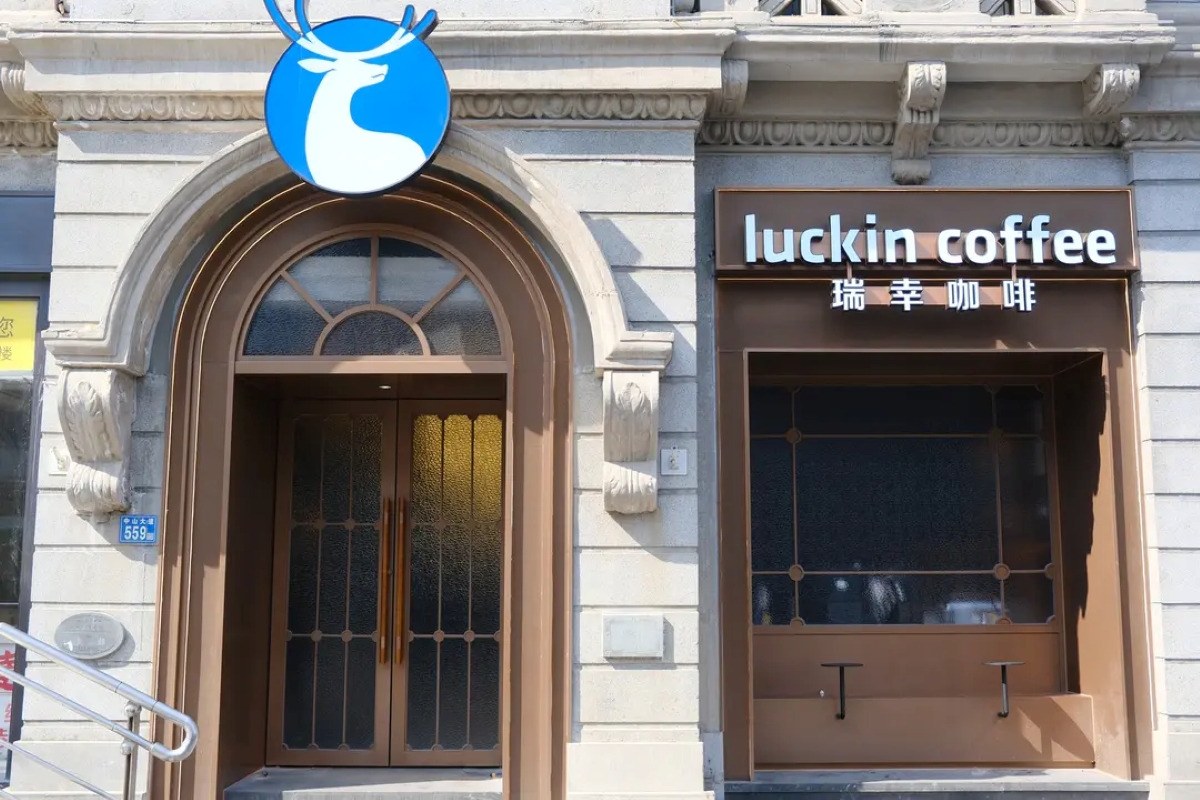
Luckin Coffee Gains Market Share as Rivals Struggle

Dubai, September 5, 2025 (Qahwa World) – Luckin Coffee continues its rapid ascent in the global coffee industry, expanding aggressively while key competitors like Starbucks face declining sales.

The Chinese coffee chain, which has already surged ~35% this year, recently entered the U.S. market with new stores in New York City. This move comes as Starbucks undergoes a difficult transformation in both its American and Chinese operations.

Strong Same-Store Sales Growth

Luckin Coffee reported a 13% year-on-year increase in same-store sales at company-owned outlets in Q2 2025. This marks its fourth consecutive quarter of acceleration, rising from a decline in late 2024. In comparison, Starbucks posted a 2% sales decline in the U.S. and only 2% growth in China, where it introduced discounts to counter Luckin’s aggressive promotions.

By outperforming Starbucks’ same-store sales growth by 11 percentage points, Luckin has proven resilient in a strained global economy where many restaurant chains are seeing contractions.

Aggressive Expansion Strategy

The company’s expansion strategy remains unmatched. In Q2 alone, Luckin opened 2,109 new stores, lifting its total footprint to 26,200 – a 31% year-on-year increase. Over the past year, Luckin has added more than 6,200 stores, averaging 17 openings per day.

In contrast, Starbucks expanded its network by just 5% over the same period, adding 1,600 stores worldwide. Luckin’s U.S. debut has been met with favorable reviews, with New York outlets receiving 4–5 star ratings on Google and Yelp.

With RMB 8.2 billion ($1.1 billion) in cash reserves and no debt, Luckin has ample resources to finance its ambitious global rollout.

Differentiation: Menu Innovation and Value Pricing

Luckin distinguishes itself through a bold menu and competitive pricing. While offering classic beverages, it experiments with unique flavors – from fruity Americanos to limited-edition drinks like Roast Duck coffee in China.

Equally important is its pricing advantage: brewed coffee at its U.S. outlets starts at $3.45, below the average price in many American cities. This value-driven approach has fueled customer growth while maintaining a 21% store operating margin.

Valuation Advantage

Despite its momentum, Luckin trades at a far lower valuation than U.S. peers. Its price-to-earnings ratio is around 19x, half that of Starbucks. On revenue multiples, Luckin is valued at a quarter of fast-growing competitor Dutch Bros, even though it is expanding at a faster pace.

Risks and Outlook

While Luckin’s history includes challenges—such as price wars and over-discounting in 2024—the company has since shifted strategy to balance promotions with profitability.

Analysts see more upside than downside as Luckin strengthens its position in China while expanding overseas. Its combination of innovation, affordability, and financial strength makes it one of the most compelling players in the global coffee industry today.