Source: Business Insider
Date: May 20, 2026
- Chinese brands are moving from being global manufacturers to competing directly for consumers in the US, Europe, and beyond.
- Luckin Coffee is testing markets long dominated by Starbucks, including New York, with app based ordering and limited edition drinks.
- Fashion labels Urban Revivo and Songmont are competing with Zara and Polène through stylish products at lower prices.
- Pop Mart has evolved from a toy company into a global cultural force through collectible figures, especially Labubu.
- Chinese brands face challenges including trade tensions, tariffs, and the need to build a clearly defined global identity.
- Some brands downplay their Chinese origin, while others embrace Chinese aesthetics and cultural heritage as core identity.
- Long term success depends on evolving from low cost alternatives into premium global names commanding lasting loyalty.
For nearly half a century, China has been the world’s factory floor, producing everything from smartphones to inexpensive clothing. While “Made in China” became common on consumer products, the companies behind those goods often remained unknown. Now, some of China’s fastest growing brands want consumers around the world to recognize their names. They are moving from the background of global commerce to the center, competing directly for customers in the United States, Europe, and beyond.
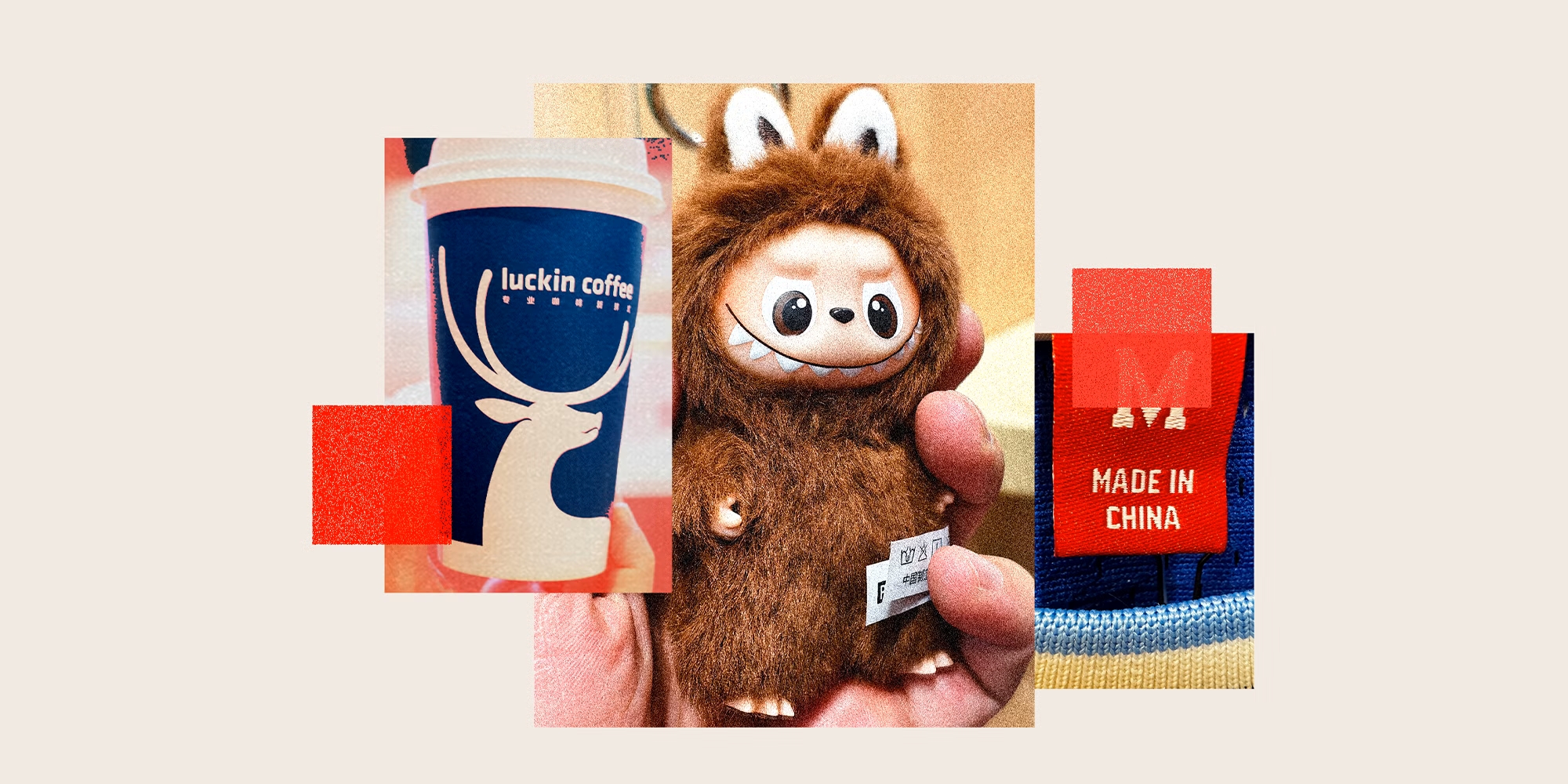
Fujian based Luckin Coffee is testing markets long dominated by Starbucks, including New York. The company uses app based ordering systems and offers limited edition drinks such as blood orange cold brew in the US and pandan coconut latte in Southeast Asia. Fashion labels including Urban Revivo and Songmont are competing with global mid market brands like Zara and Polène by offering stylish products at lower prices. Pop Mart has evolved from a toy company into a global cultural force through its collectible figures, particularly Labubu. Fast fashion giant Shein is reportedly considering acquiring the millennial favorite brand Everlane.
A New Generation of Chinese Brands
This is not the first time Chinese companies have attempted to reshape global business. In the 2000s, Beijing encouraged state backed industrial giants to expand overseas for resources and infrastructure projects. In the 2010s, Chinese firms embarked on a global acquisition spree, purchasing assets ranging from AMC Theatres to the Waldorf Astoria. More recently, companies such as electric vehicle maker BYD and drone manufacturer DJI demonstrated that Chinese firms could compete globally through advanced technology, not just lower prices.
Now, a new generation of Chinese brands is pursuing something even more challenging: becoming culturally influential and desirable. For many Chinese companies, international expansion is also becoming a necessity. China faces a prolonged economic slowdown, and its birthrate fell to a record low in 2025. Domestic competition has intensified, with aggressive price wars shrinking profit margins. As a result, overseas growth is increasingly essential.
Years of operating in one of the world’s most competitive consumer markets have given Chinese companies significant advantages in manufacturing, logistics, sales, and scaling operations. According to Eunkyu Lee, a marketing professor at Syracuse University, China is transforming itself from a low priced manufacturer into a producer of brands with unique personalities and storylines.
The Challenge of Building a Global Identity
| Approach | Examples | Strategy |
|---|---|---|
| Downplaying Chinese identity | Shein, TikTok | Present as internet native global platforms |
| Embracing Chinese aesthetics | Songmont, Laopu, Chagee | Highlight Chinese symbolism, craftsmanship, traditions |
| Sports marketing | Li-Ning | Sponsor NBA players to enter mainstream sports culture |
Becoming a globally recognized brand where image, identity, and perception matter remains difficult. National identity often helps transform products into symbols of aspiration and lifestyle. European luxury brands traditionally emphasize heritage, craftsmanship, and exclusivity, while American companies promote innovation and optimism. Japan and South Korea successfully made similar transitions during the late 20th century. Brands such as Sony, Samsung, Nintendo, and Uniqlo became globally associated with precision, minimalism, technology, and pop culture. China is now attempting a similar transformation, but at a much faster pace and without a clearly defined global identity.
Some Chinese brands are downplaying their Chinese identity altogether. Global successes such as Shein and TikTok gained popularity not by emphasizing their origins, but by presenting themselves as internet native global platforms. That strategy fits naturally within online culture, where trends spread quickly and consumers prioritize novelty over geography. As Lee noted, younger consumers are looking for something new, cool, and fresh. In that context, the country of origin is not very important.
Sportswear brand Li-Ning has increased its international visibility by sponsoring NBA players including Jimmy Butler and CJ McCollum, bringing Chinese designed footwear into mainstream sports culture. Pop Mart has also partnered with Disney and Sanrio’s Hello Kitty, placing its characters alongside some of the world’s most recognizable entertainment brands.
Embracing Chinese Heritage and Luxury Attention
At the same time, other Chinese brands are leaning heavily into Chinese aesthetics and cultural heritage. Songmont, Laopu, and tea chain Chagee are embracing Chinese symbolism, craftsmanship, and traditions as central parts of their brand identity. A growing online fascination with Chinese lifestyle and aesthetics, sometimes referred to as China-maxxing, suggests global consumers may be increasingly open to brands that highlight rather than soften their origins.
There are signs that global luxury leaders are paying attention. Songmont, whose minimalist leather handbags retail for up to around 800 dollars, has drawn attention from LVMH CEO Bernard Arnault. He reportedly visited a Songmont store and purchased two bags during a trip to Shanghai last September. Arnault also visited Laopu Gold, a jewelry brand known for handcrafted 24K gold pieces inspired by Chinese symbolism including dragons and gourds. In April, Gucci owner Kering announced plans to acquire a minority stake in Shanghai based fashion label Icicle, a premium brand often compared to Max Mara.
Political Challenges and Long Term Prospects
Politics may present another obstacle for Chinese brands seeking overseas growth. Trade tensions have disrupted supply chains and increased scrutiny of Chinese technology companies such as TikTok. BYD has expanded rapidly across Europe and South America but remains largely shut out of the US market because of high tariffs. Tariffs have also affected companies such as Shein and Temu, though neither has slowed its expansion efforts significantly. Instead, many firms are adapting by localizing operations and refining their international strategies.
This new generation of Chinese brands may be better positioned than previous waves because they are increasingly selling products as desirable lifestyle goods rather than simply low cost alternatives. Governments may find it difficult to prevent consumers from embracing brands they see as fashionable, useful, or culturally relevant. According to Lee, these brands are largely detached from political issues.
Ultimately, long term success will depend on whether Chinese brands can evolve from being viewed as inexpensive or trendy alternatives into premium global names capable of commanding lasting loyalty and higher prices. Success would mean some of these brands achieving premium brand recognition among global consumers and being able to command a price premium. That transformation will take time. But the broader direction is becoming increasingly clear: China has already reshaped how the world manufactures products. Now, it is trying to shape what the world wants.
Frequently Asked Questions (FAQ)
1. Which Chinese brands are expanding globally?
Luckin Coffee, Pop Mart, Songmont, Urban Revivo, Shein, Li-Ning, BYD, and DJI are among the Chinese brands competing in international markets.
2. How is Luckin Coffee competing with Starbucks?
Luckin is testing markets including New York with app based ordering systems and limited edition drinks such as blood orange cold brew and pandan coconut latte.
3. What strategies are Chinese brands using to go global?
Some brands downplay their Chinese identity and present as global platforms. Others embrace Chinese aesthetics and cultural heritage. Some use sports marketing and partnerships with global entertainment brands.
4. What challenges do Chinese brands face overseas?
Trade tensions, tariffs, political scrutiny, and the difficulty of building a clearly defined global identity are major challenges.
5. Are global luxury brands paying attention to Chinese brands?
Yes. LVMH CEO Bernard Arnault visited Songmont and Laopu stores. Kering announced plans to acquire a stake in Shanghai based brand Icicle.
6. What would success look like for Chinese brands?
Success means achieving premium brand recognition among global consumers and being able to command higher prices and lasting loyalty.
Published: May 20, 2026

