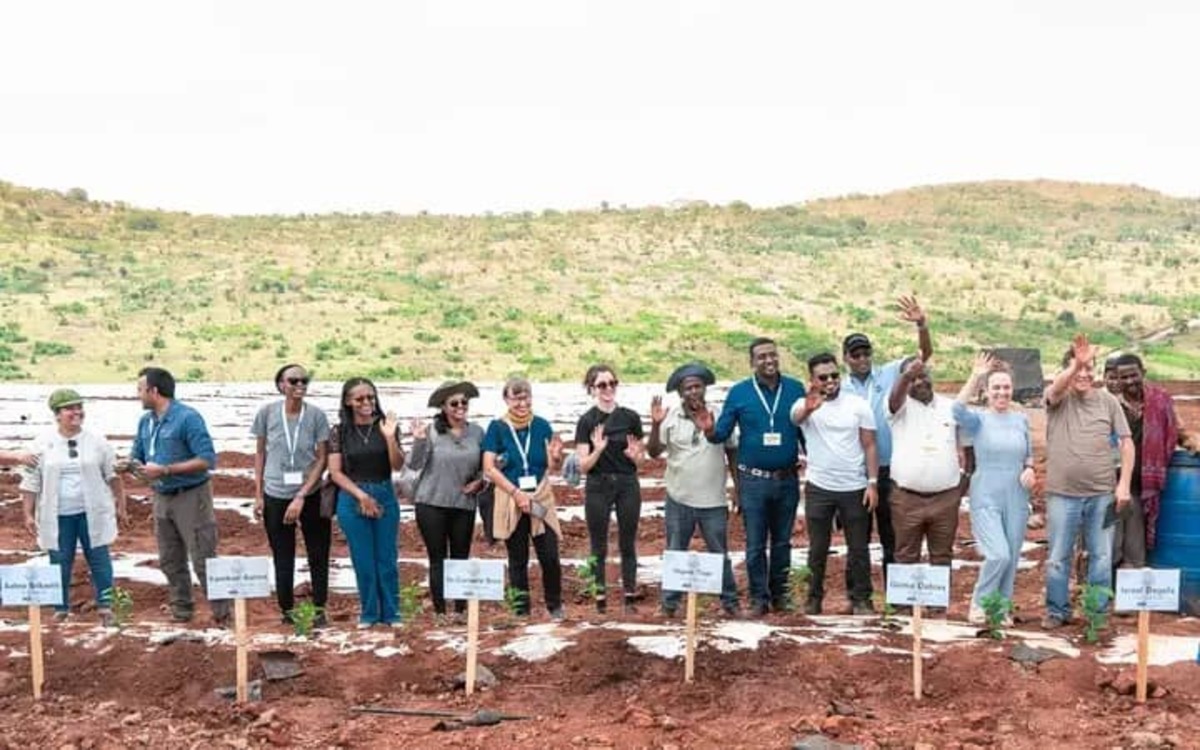
COT 2 Returns with Leading Coffee Professionals

Kerchanshe Leads a Deep Dive into Ethiopia’s Coffee Cradle

Addis Ababa – Qahwa World

The Coffee Origins Trip (COT), the high-impact expedition that redefined origin transparency, is set to return for its second edition from December 7–12.

Hosted by the Kerchanshe Group —Ethiopia’s largest coffee exporter and a revolutionary force in value chain modernization—this year’s journey is positioned as a critical field study into the future resilience of Arabica coffee.

The six-day immersion is specifically designed for international buyers, roasters, and researchers tasked with navigating the global specialty sector’s most pressing challenges: climate volatility, increasing traceability demands, and sustaining genetic diversity. The expedition will move across the famed highlands of Arsi, Bale, West Arsi, Sidama, Guji, and Gedeo —terroirs that are the literal birthplace of the Coffea arabica species.

The Research Mission: From Forest Genetics to Global Cup

Unlike typical origin trips, the COT agenda is built around an intensive research and development framework. The first days will focus on ecological vulnerability and resilience, with participants engaging with forest experts in the Arsi and Bale highlands—areas essential to understanding Arabica’s ancestral ecology and the genetic resources needed to combat climate change.

Israel Degefa, Kerchanshe Group CEO and the mastermind behind the trip commented: “The goal is to connect the sensory experience in the cup directly to the environmental reality on the ground. This is about moving beyond transaction; it’s about co-investing in the stability of our most precious commodity.”

The itinerary then pivots to innovation, with on-site access to best-practice operations, offered by the host, including the modern processing standards at Worka and Debeka farms. A dedicated cupping session at a state-of-the-art coffee lab in Bule Hora will feature unreleased micro-lots and experimental processing profiles, giving buyers an early glimpse into Ethiopia’s evolving flavor portfolio ahead of the 2025 shipping cycle.

Traceability, Transparency, and Cultural Value

A major focus of COT is demonstrating the feasibility of end-to-end traceability in Ethiopia’s complex smallholder system. Walkthroughs of the Tore Washing Stations will showcase the latest advancements in drying systems and export preparation protocols, addressing the critical industry need for verifiable, farm-level transparency.

Crucially, the cultural component—highlighted by the traditional Buna Qalaa ceremony—is integrated to emphasize that cultural heritage is a non-negotiable value add for Ethiopia’s coffee. By weaving in community dialogue and storytelling, the host organization underscores that sustainability must encompass the social and historical narrative of the land and its people.

COT’s final session in Addis Ababa on December 12 is expected to transition into a closed-door discussion on potential collaborations, setting the tone for how international partners and the host organization, which supports millions of farmer livelihoods, can co-design a more resilient and rewarding specialty coffee supply chain.

Barista Magazine Reveals a Unique Ethiopian Coffee Ritual: Buna Qalaa

Dubai – Qahwa World

Barista Magazine has published an in-depth feature uncovering a rare Ethiopian coffee ritual little known outside the birthplace of coffee. This unique tradition, called “Buna Qalaa,” defies convention — here, coffee isn’t drunk, it’s eaten.
The article, written by Tewodros Balcha, founder of Ethiopia’s Buna Kurs platform, explores how this centuries-old practice turns coffee into both nourishment and a symbol of unity.

With full respect to Barista Magazine’s rights — and given the importance of this report in highlighting one of coffee’s oldest traditions — Qahwa World is republishing and translating it into Arabic and Russian in line with our editorial policy and with the kind permission of Mr. Tewodros Balcha.

We now present this remarkable feature:

Preserving an Age-Old Coffee Tradition With Ethiopia’s Buna Qalaa

In Ethiopia’s southwest, coffee sizzles before it steams. Butter melts over beans, releasing a smoky, nutty aroma that signals not a drink—but a meal.

Among the Guji people of Oromia, a centuries-old tradition known as Buna Qalaa transforms coffee from beverage to sustenance. The beans are simmered whole in butter and milk, and eaten together: a ritual that blurs the line between nourishment and ceremony, taste and belonging.

“’Buna Qalaa’ literally means ‘slaughtered coffee,’” says Nega Wedajo, Deputy Commissioner of the Oromia Tourism Commission. “It refers to a ritualized coffee meal woven into social life—used in ceremonies, blessings, and formal gatherings. It’s not just food. It’s a symbol of fertility, well-being, and community connection.”

Nega is one of many Ethiopians working to gain global recognition for Ethiopian coffee, including the ancient practices that center around the beverage. “Traditions like Buna Qalaa are treasures,” Nega told Barista Magazine. “They keep communities at the center and show the world that coffee is life—not just a drink.”

The Making of Buna Qalaa

According to Nigatu Elias Dukelle, Head of the Coffee Quality and Certifications Center at the Ethiopian Coffee and Tea Authority’s Bule Hora Branch, the preparation of Buna Qalaa is both precise and poetic—a choreography of patience, scent, and sound.

Only ripe coffee cherries are handpicked and sun-dried whole, their parchment still intact. Before cooking, the tip of each bean is slightly cut, traditionally with the teeth, to help the butter seep in.

A clay pot called kelo is heated until faintly smoking. Butter melts first, then the beans are gently stirred in until they reach a light, even roast—never dark or burnt. The buttery beans are transferred into a wooden bowl, the kori, and hot milk, boiled in the same pot, is poured back in, coating each bean. Finally, the mixture is served in a cup known as mudunu.

“The butter penetrates the bean and enriches it,” Nigatu told Barista Magazine. “You chew it slowly, and it stays in your mouth like gum for hours. It fills you deeply. People say it gives long-lasting energy and even keeps the teeth clean.”

Coffee for Every Passage

Buna Qalaa marks nearly every threshold of life—childbirths, naming ceremonies, weddings, reconciliations, and even the close of mourning. In the Borana Gadaa system, it is offered by elders as a sign of respect and continuity.

Beyond nourishment, Buna Qalaa is believed to restore vitality, sustain endurance, and renew social harmony. Prepared in silence or in song, its aroma fills the home, summoning memory and connection: a sensory bridge between generations.

Advocating for Community-Led Tourism

As Ethiopia seeks recognition from the United Nations Educational, Scientific and Cultural Organization (UNESCO) for its traditional coffee ceremony, regional expressions like Buna Qalaa are also gaining visibility.

Through initiatives such as Visit Oromia’s Tour de Coffee and digital collaborations with Google Arts & Culture, travelers are discovering coffee not just as a drink, but as a living heritage. “Visitors who experience Buna Qalaa describe it as slow, sensory, and unforgettable,” Nega Wedajo says.

Nega also emphasizes that tourism around Buna Qalaa must remain community-led: “This isn’t a performance—it’s a living culture. We want travelers to learn directly from local custodians, and we ensure the benefits return to them.”

Tradition Meets Specialty

For Nigatu, who bridges heritage and the specialty coffee sector, Buna Qalaa represents innovation through preservation.

“Specialty coffee talks a lot about terroir and traceability,” he says. “But traditions like Buna Qalaa show another layer—the human terroir. When you eat coffee instead of drinking it, you taste the land, the butter, and the hands that made it. It’s a full sensory connection to origin.”

He believes the ritual holds lessons for the global coffee industry: “We spend so much energy refining flavor in the cup. But here, flavor is tied to nourishment—to coffee as energy, community, and care. Maybe cafés today can learn from that: Sometimes, innovation means returning to the source.”

A Global Reflection

In modern cafés, where precision and presentation define excellence, Buna Qalaa offers a humbler but deeper lesson—that coffee’s truest meaning lies not in its extraction, but in its sharing.

Its pace and ritual echo contemporary movements toward mindfulness, sustainability, and authenticity. It reminds us that coffee’s richness is not only sensory but social: a bridge between nourishment and narrative.

As Nega puts it: “In every bite of Buna Qalaa lies a quiet truth: Coffee began as communion, not competition. In a world chasing novelty, this ritual whispers something timeless—sometimes the future of coffee is found in its oldest form: eaten, not sipped; shared, not sold.”