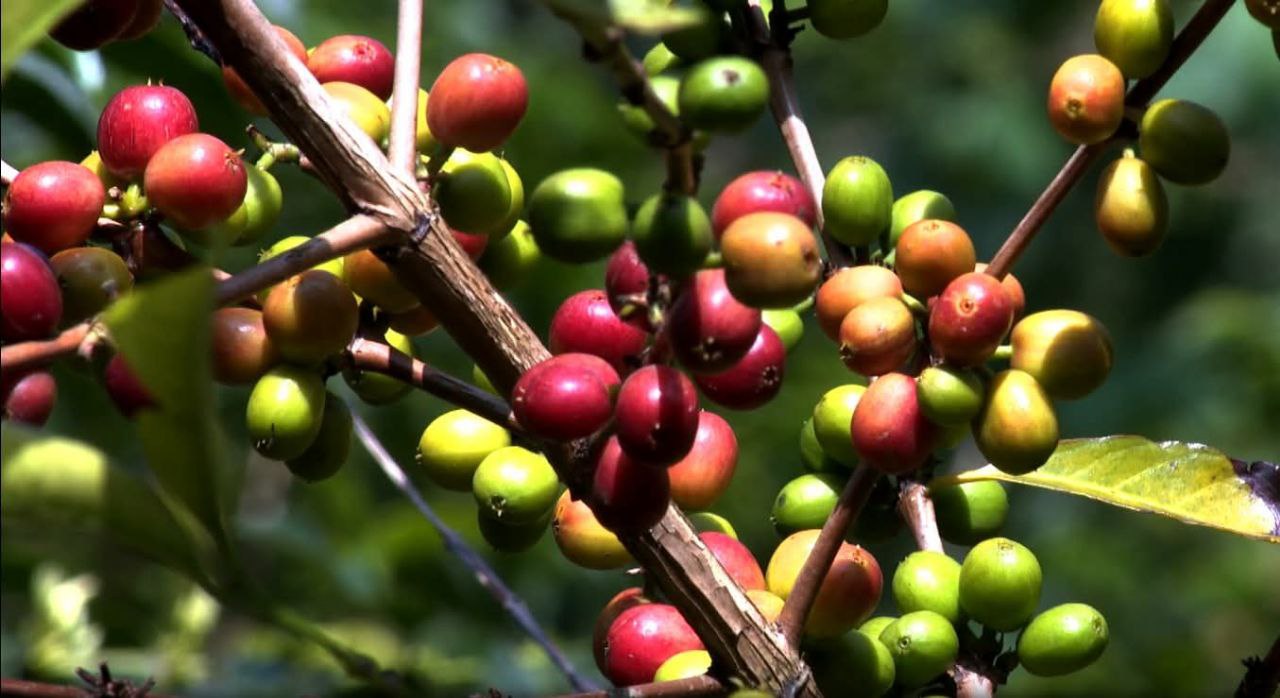
Arabica Drops, Robusta Rises Amid Global Coffee Supply

Dubai – Qahwa World

Global coffee prices showed mixed trends this week. Arabica coffee declined to a one-and-a-half-week low, while Robusta coffee gained support from tight supply conditions.

The main pressure on Arabica prices comes from forecasts of a record Brazil coffee crop, the world’s largest coffee producer. Several international agencies raised estimates for the 2026/27 season to around 75 million bags, a strong year-on-year increase boosting the global supply outlook.

Despite climatic challenges, such as below-average rainfall in key regions like Minas Gerais, Brazilian production continues to rise.

The strength of the Brazilian real limited Arabica losses by reaching a three-week high against the U.S. dollar, reducing exporters’ incentives to sell.

Meanwhile, Robusta coffee prices were supported by falling ICE-certified inventories to a 3.5-month low, reflecting tight supply amid strong demand, especially for instant coffee production.

Global logistics disruptions, including the closure of the Strait of Hormuz, increased shipping, insurance, and fuel costs, affecting importers and roasters worldwide.

Market pressures persist due to rising Arabica inventories and declining Brazilian green coffee exports, reflecting fluctuations in the global coffee market.

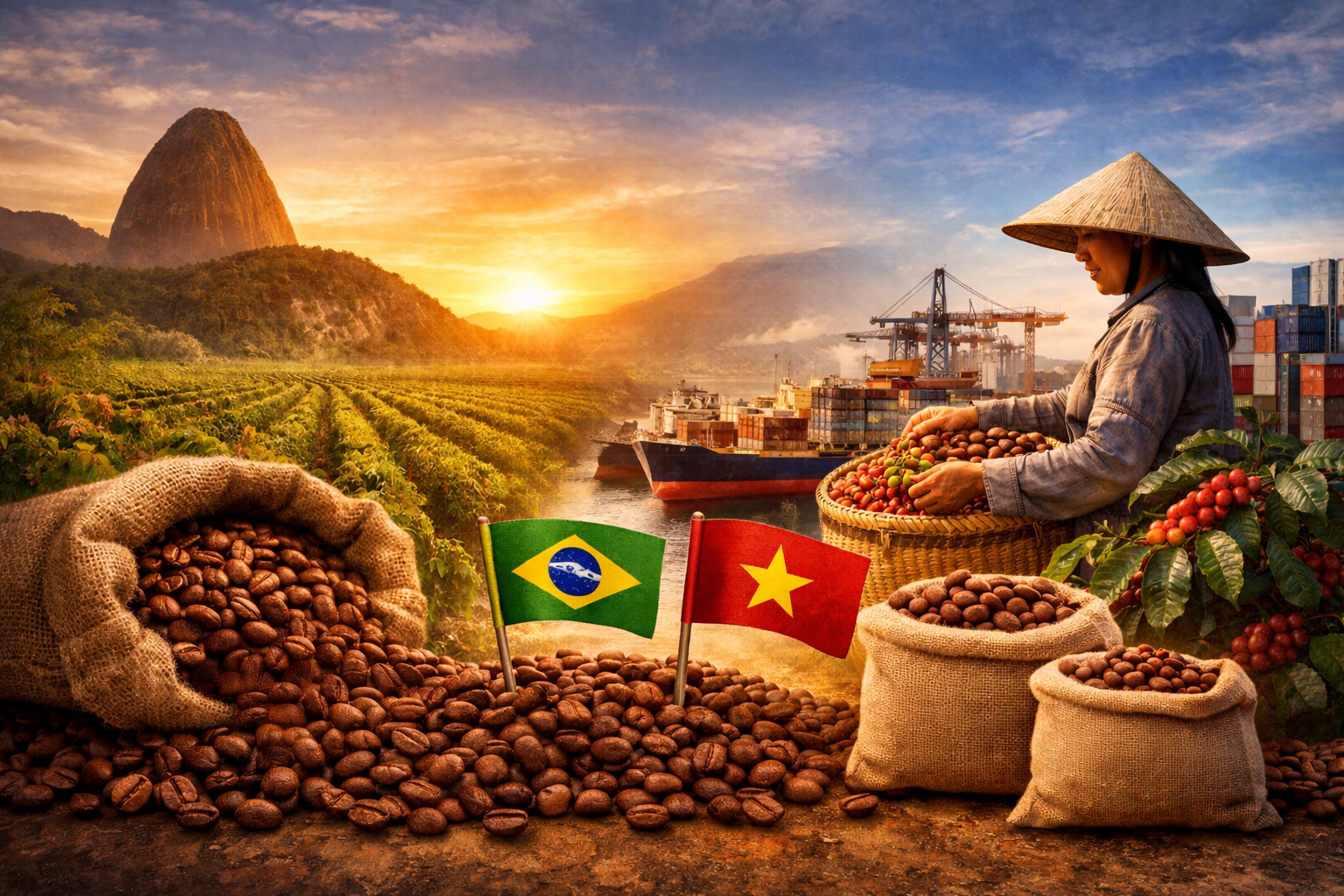
Globally, coffee production is expected to reach record levels in 2026/27, driven mainly by Robusta growth. Vietnam, the largest Robusta producer, continues to expand exports and output, adding downward pressure on prices.

Overall, the global coffee market reflects a delicate balance between abundant Arabica supplies and relatively tight Robusta stocks, along with climate effects, currency fluctuations, and logistical challenges, keeping prices volatile in the near term.

Coffee Slides on Supply Surge Signals

London – Qahwa World

Coffee futures dropped notably, with arabica hitting its lowest level in about a week and robusta sinking to a multi-month low. The decline comes as expectations grow for a significantly larger global supply, led by Brazil.

Forecasts from multiple analysts point to a record-breaking Brazilian harvest in the 2026/27 season, with estimates clustering around the mid-70 million bag range—marking a strong year-over-year increase. This optimistic outlook has weighed heavily on prices in recent sessions.

The downturn intensified as the U.S. dollar strengthened to its highest level in over ten months, adding further pressure to commodity markets, including coffee.

You may like: CQI CEO Michael Sheridan Highlights Strong Q1 2026 Momentum

Despite the broader bearish tone, some factors are offering support—particularly for robusta. Exchange-monitored inventories have tightened recently, signaling short-term supply constraints.

Logistical challenges have also emerged as shipping disruptions in key global routes have pushed up freight, insurance, and fuel costs, indirectly impacting coffee trade flows and pricing dynamics.

Weather conditions in Brazil remain another point of concern. Key growing regions have received less rainfall than usual, which could affect crop development if dryness persists.

On the inventory front, Arabica stocks tracked by exchanges have been rising, contributing to downward pressure on prices.

Read also: Roseville’s Coffee Passport brews community and business growth

Export data adds a mixed picture. Brazil reported a sharp decline in green coffee shipments in February compared to last year, alongside a broader drop in total coffee exports.

Earlier in the year, prices had already come under pressure following projections of a bumper crop in Brazil. Government and private forecasts have consistently pointed to strong production growth, especially in arabica output.

Globally, coffee supply is expected to expand further. Estimates suggest total production could reach new highs in the upcoming season, supported by gains in both Brazil and Vietnam.

Vietnam, the leading robusta producer, continues to boost exports, with shipments rising in the early months of the year. Production is also expected to increase, adding to global availability.

Meanwhile, some international data indicates only a slight dip in global exports so far this season, while overall production forecasts remain strong. However, ending stock levels are expected to tighten modestly, reflecting steady demand.

Coffee rallies hard as supply tightens and money flows back into the market

Dubai – Qahwa World

You can feel it again—the market is tightening, and coffee is responding exactly the way it tends to when physical supply starts to disappear.

Over the past week, coffee prices pushed sharply higher, and this wasn’t just a technical move. It’s a combination the industry knows well: weaker exports from origin countries and fresh speculative money stepping back in. That mix rarely stays quiet for long.

Arabica for May delivery jumped 8.6% to around $6,828 per tonne, while robusta added another 6%, reaching $6,664. Both markets are moving in sync, which usually tells you this isn’t a localised issue—it’s systemic.

You may like to read: Indonesia’s Top 9 Coffees in 2026

At the same time, the broader commodity space is sending mixed signals. Silver dropped heavily under the weight of high interest rates, while coffee moved the other way. That divergence says a lot about where capital is going: away from passive holdings and into markets where supply risk is real and immediate.

  • And right now, coffee has plenty of that.

The geopolitical backdrop isn’t helping. Tensions in the Middle East have started to interfere with shipping through the Strait of Hormuz, pushing oil prices higher. For coffee producers, that translates directly into higher costs — fuel, fertilisers, transport — everything gets more expensive. Eventually, those costs show up in the price of coffee.

But the bigger story is still supply.

Exports from the major producers are clearly slowing:

Brazil saw green coffee exports drop 27% year-on-year in February
Vietnam was down 20%
Colombia fell even harder, down 32%

Those are not small adjustments — that’s a meaningful contraction across all key origins at the same time.

You can also read: The Best Time to Drink Coffee, According to Experts

What’s more telling is what’s happening on the exchange. ICE stocks — the market’s safety cushion — are still about 30% below last year, sitting just above 552,000 bags. And Brazilian coffee makes up only a tiny share of that, roughly 4%.

That’s important. When Brazil isn’t showing up in exchange stocks, it usually means producers aren’t satisfied with current price levels — or simply don’t feel pressure to sell. Either way, it tightens the market further.

On top of that, funds are coming back in. Managed money increased its net long position in arabica by nearly 30% in just one reporting period. That kind of move doesn’t happen unless confidence — or urgency — is building.

Locally, in Vietnam’s Central Highlands, prices followed the global trend, climbing to around 94,000 dong per kilo. That’s a strong move in a short time, and it reflects how quickly international pressure feeds into domestic markets.

Read also: 43 Years of Data: How Coffee Affects the Brain and Memory

  • Meanwhile, silver drops — and capital rotates

While coffee is climbing, silver is going through the opposite cycle.

Prices fell more than 14% last week, extending a steady run of losses. The main driver here isn’t supply — it’s macroeconomics.

With inflation in the U.S. still stubborn, interest rates remain elevated. That pushes bond yields higher and makes non-yielding assets like silver less attractive. Money simply moves elsewhere.

You can also see it in ETF flows. Holdings dropped by 225 tons in a single week — a clear sign that institutional investors are reducing exposure.

What’s interesting, though, is that the physical market is telling a different story. China imported over 790 tons of silver in the first two months of the year, with February hitting a record. At the same time, exchange inventories in both Shanghai and COMEX are shrinking fast.

So, while paper markets are selling, physical demand hasn’t gone away.

  • The bigger picture

What we’re seeing now is a classic divergence.

Coffee is being driven by real-world constraints — supply, logistics, and producer behavior.
Silver is being driven by financial conditions — rates, yields, and capital flows.

For coffee, the key question isn’t whether prices can move — they already are. The real question is how long supply remains tight and whether producers step in at these levels.

Until that happens, the market stays vulnerable to further upside.

Indonesia’s Top 9 Coffees in 2026

New ranking highlights leading producers and coffee traditions

Dubai – Qahwa World

A newly updated ranking published on March 18, 2026 by TasteAtlas highlights nine of the most notable coffees and producers across Indonesia, offering a snapshot of one of the world’s most diverse coffee landscapes.

Spanning regions such as Sumatra, Bali, Java, and Sulawesi, the list reflects a wide range of production methods, flavor profiles, and traditions—from high-end civet coffee to everyday robusta staples.

The Top 9 Indonesian Coffees

1. Gayo Kopi – Wild Kopi Luwak (Sumatra)
Topping the list is Gayo Kopi, known for its wild-sourced Kopi Luwak from the highlands of northern Sumatra. The coffee is often associated with a smooth texture and reduced bitterness, with deep, earthy flavor characteristics.

2. Akasa Coffee – Honey Process (Bali)
From the Kintamani region, Akasa Coffee focuses on full control over production. Its honey-processed Arabica is typically described as balanced, with gentle sweetness, floral notes, and a clean finish.

3. Wahana Estate – Sidikalang (North Sumatra)
Situated at elevations between 1,300 and 1,500 meters, Wahana Estate is recognized for its focus on experimentation and variety development, contributing to layered and complex flavor profiles.

4. Seven Bika Coffee – Java Preanger
This brand draws from several Indonesian coffee regions, offering both single-origin Arabica and blends. Its small-batch approach aims to preserve the character of each origin.

5. Toarco Toraja – Sulawesi
Produced in the Toraja Highlands, this coffee is processed using washed methods that highlight clarity and balance, often resulting in a refined and structured cup.

6. Puntang Coffee – Arabica Wine Process (West Java)
Grown on Mount Puntang, these coffees benefit from volcanic soil and high elevations. The use of experimental processing methods contributes to fruit-forward and aromatic profiles.

7. El’s Coffee – Lampung
Based in southern Sumatra, this brand focuses on locally grown beans, including robusta from Lampung, known for its full body and strong flavor.

8. Kopi Luwak Coffee – Central Java
A long-established producer of civet-processed coffee, offering cups commonly associated with smoothness and notes of chocolate and caramel.

9. Mandailing Estate Coffee – Sumatra
Originating from northern Sumatra, this coffee reflects a traditional profile with a full body and flavors often described as dark chocolate, spice, and dried fruit.

Traditional Coffee Styles Still Shape the Culture

Alongside these producers, Indonesia’s coffee culture remains deeply connected to traditional preparation methods.

Kopi luwak continues to attract global attention for its unique processing method. Kopi tubruk remains a daily staple, prepared by mixing ground coffee directly with hot water and allowing it to settle in the cup. In Yogyakarta, kopi joss is known for its unusual preparation involving hot charcoal, while kopi terbalik from Aceh is served upside down as part of a distinctive local ritual. Ginseng coffee represents a more modern variation, blending coffee with herbal elements.

A Snapshot of a Changing Industry

The ranking reflects broader developments in Indonesia’s coffee sector, where traditional practices continue to coexist with modern approaches to cultivation and processing. Specialty Arabica is gaining international attention, while robusta remains essential to local consumption and identity.

TasteAtlas notes that its rankings are based on audience ratings, with systems designed to identify reliable input and reduce bias. The list is intended to highlight notable local products and encourage exploration, rather than serve as a definitive global classification.

Source

This article is adapted from a ranking published by TasteAtlas (March 18, 2026):
https://www.tasteatlas.com/best-rated-coffees-in-indonesia

Coffee Prices Rise on Supply Concerns

Dubai – Qahwa World

Coffee futures rose on Monday, recovering from earlier losses as concerns over global supply disruptions supported the market.

May arabica gained 2.52 percent, rising 7.20 points, while May robusta edged up 0.46 percent, adding 16 points.

The rebound followed reports that the Strait of Hormuz has been closed, disrupting a key global shipping route. The development has pushed up freight rates, insurance costs, and fuel prices, increasing pressure on coffee importers and roasters worldwide.

You may Like: Coffee Prices Rise as Iran Conflict Disrupts Global Shipping

Earlier in the session, prices had moved lower as improved weather conditions in Brazil eased concerns about crop stress. Rainfall in Minas Gerais, the country’s main arabica-growing region, reached 57.7 millimeters last week, about 139 percent of the historical average.

Expectations of a large Brazilian harvest also continue to weigh on the market. StoneX recently raised its forecast for Brazil’s 2026 to 2027 coffee production to a record 75.3 million bags, up from 70.7 million.

Export data, however, provided some support. Figures from Cecafé showed Brazil’s green coffee exports fell 27 percent year on year in February to 2.3 million bags. Data from the country’s Trade Ministry also showed total coffee exports declined 17.4 percent to 142,000 metric tons.

Read also: Coffee Markets Rise Amid Middle East Shipping Disruptions

At the same time, rising inventories continue to weigh on prices. Arabica stocks monitored by Intercontinental Exchange climbed to 572,004 bags last week, the highest level in five and a half months. Robusta inventories also reached a three and a half month high earlier this month before easing slightly.

Coffee markets have been under pressure in recent weeks. In February, arabica fell to its lowest level in more than 15 months, while robusta dropped to a seven month low, largely due to expectations of a strong Brazilian crop.

Brazil’s crop agency Conab estimates 2026 production will rise 17.2 percent to 66.2 million bags. Arabica output is expected to increase 23.2 percent, while robusta production may grow 6.3 percent.

You may read: Kim Thompson: Coffee on the Edge of Disruption

Globally, Rabobank projects coffee production will reach a record 180 million bags in the 2026 to 2027 season, up by around 8 million bags from the previous year.

Strong supply from Vietnam has also added pressure to the market. Coffee exports from the country rose 14 percent in the first two months of 2026 to 366,000 metric tons, while full-year 2025 exports increased 17.5 percent. Production is expected to rise 6 percent to 1.76 million metric tons.

According to the International Coffee Organization, global coffee exports for the current season edged down 0.3 percent to 138.66 million bags. Meanwhile, the USDA Foreign Agricultural Service forecasts global production will increase 2 percent to a record 178.85 million bags, even as ending stocks are expected to decline by 5.4 percent to 20.15 million bags.

Coffee Prices Drop on Brazil Weather and Rising Stocks

Dubai – Qahwa World

Coffee markets fell on Wednesday amid favorable weather forecasts in Brazil and rising inventories monitored by the Intercontinental Exchange (ICE).

May arabica futures (KCK26) were down 8.70 points (-2.94%), while May ICE robusta (RMK26) declined 137 points (-3.71%). Showers expected in key Brazilian coffee-growing regions supported the recent price drop.

ICE data shows that arabica inventories, which fell to a 1.75-year low of 396,513 bags in November, recovered to a five-month high of 564,626 bags on Tuesday. Robusta inventories also rose to a 3.5-month peak before falling slightly to 4,563 lots as of Wednesday.

You may like:Brazil’s Specialty Coffee Sector Gains Global Momentum

Coffee prices had partially retraced last week’s rally triggered by the Iran conflict and the closure of the Strait of Hormuz, which increased global shipping rates, fuel, and insurance costs.

Brazil’s exports also influenced the market. According to Cecafe, February green coffee shipments fell by 27% year-on-year, while the Trade Ministry reported a 17.4% decline to 142,000 metric tons. Conversely, recent rains in Minas Gerais—the country’s largest arabica-producing state—amounted to 14.9 mm last week, about 35% of the historical average, offering some support to crop expectations.

Earlier in February, coffee prices hit multi-month lows amid forecasts of a record Brazilian crop. Conab projected Brazil’s 2026 coffee output at 66.2 million bags, with arabica rising 23.2% to 44.1 million bags and robusta up 6.3% to 22.1 million bags. Global production for 2026/27 is expected to reach 180 million bags, according to Rabobank.

You may like:Coffee Markets Rise Amid Middle East Shipping Disruptions

Vietnam’s coffee exports further pressured robusta prices. The National Statistics Office reported a 14% year-on-year rise to 366,000 MT for January–February 2026, while 2025 exports jumped 17.5% to 1.58 million MT. Production in 2025/26 is forecast to reach 1.76 million MT, a four-year high.

Despite these factors, the International Coffee Organization (ICO) noted a slight 0.3% year-on-year decline in global coffee exports for the current marketing year. The USDA’s Foreign Agriculture Service projects 2025/26 global production at 178.848 million bags, with arabica down 4.7% to 95.515 million bags and robusta up 10.9% to 83.333 million bags. Brazil’s production is expected to fall 3.1% to 63 million bags, while Vietnam rises 6.2% to 30.8 million bags. Ending stocks are forecast to decline 5.4% to 20.148 million bags.

Analysts say the combination of Brazilian rainfall, rising ICE inventories, and record production in Vietnam is likely to maintain downward pressure on coffee prices in the near term.

Coffee Markets Rise Amid Middle East Shipping Disruptions

Dubai – Qahwa World

Global coffee markets moved higher last week as escalating tensions in the Middle East disrupted key shipping routes and increased freight costs, while supply developments in major producing countries also influenced market sentiment.

Arabica coffee futures began the week at 279.90 US cents per pound and briefly approached the 290-cent level before easing slightly. The market maintained upward momentum through the week, posting marginally higher closes on Wednesday and Thursday. By Friday, prices opened 5.45 cents per pound higher than the previous day’s close, supported in part by reports that Brazil’s coffee exports fell 17.4% year-on-year in February.

You may like:Shock in the Coffee Market: Colombia’s Production Drops 36%

  • Shipping routes under pressure

Market activity during the period from March 2 to March 5 was shaped largely by geopolitical developments rather than major supply news from coffee-producing regions.

Military strikes involving the United States and Israel against Iran, followed by retaliatory actions, disrupted shipping activity through the Strait of Hormuz, a critical route for global trade. At the same time, shipping companies remain cautious about passing through the Red Sea amid concerns over possible attacks by Yemeni Houthi rebels.

These risks have forced some vessels to take longer routes around the Cape of Good Hope, significantly increasing transportation times as well as freight and insurance costs. The situation has added new uncertainty to global supply chains, including agricultural commodities such as coffee.

Read also: Kim Thompson: Coffee on the Edge of Disruption

  • Weather challenges in Colombia

At origin, coffee production conditions in Colombia remain difficult due to excessive rainfall. Persistent wet weather has affected flowering, maturation, and bean development in several regions, particularly in southern areas where limited sunshine has compounded the problem.

Producers and exporters are also facing economic pressure. The stronger Colombian peso, combined with the recent decline in the C-market price, is expected to reduce revenues compared with the previous year.

As a result, exporters have slowed sales, leading to lower export volumes and rising inventories while waiting for more favorable market conditions when possible.

  • Honduras harvest nearing completion

In Honduras, the harvest season has moved well beyond its peak, with more than 75% of the crop already collected. Harvesting has largely finished in lower-altitude regions, leaving mainly higher-elevation farms still gathering the remaining coffee.

Purchasing activity remains mixed. Exporters who secured contracts earlier at higher market prices are continuing to buy coffee cherries and parchment, while others with fewer forward commitments are delaying purchases.

Read this also; Oil Surge Could Brew Higher Coffee Prices

  • Currency markets react

Currency markets were also influenced by developments in the Middle East, with the US dollar strengthening following the weekend’s military strikes.

The GBP/USD and EUR/USD currency pairs initially dropped to 1.327 and 1.155, respectively, before recovering slightly to around 1.332 and 1.160 by Tuesday afternoon.

For the remainder of the week, both pairs traded mostly within a lower range compared with previous weeks as investors monitored geopolitical developments and their potential impact on global trade and energy markets.

  • Market outlook

While major supply-side news from coffee-producing countries remained limited during the week, traders continue to monitor shipping disruptions, weather conditions at origin, export flows, and currency movements. These factors are expected to remain key drivers of short-term price movements in global coffee markets.

Coffee Prices Rise Amid Surging Shipping Costs

Dubai – Qahwa World

Coffee markets saw gains on Wednesday, with May arabica (KCK26) climbing +3.10 (+1.09%) and May robusta (RMK26) rising +29 (+1.78%).

Analysts attribute the rebound to supply-side concerns. The ongoing conflict in Iran has disrupted shipping through the Strait of Hormuz, driving up global freight rates, insurance costs, and fuel expenses—factors that are expected to push costs higher for coffee importers and roasters.

Meanwhile, favorable weather in Brazil is supporting the country’s coffee crop but is acting as a bearish influence on prices. Somar Meteorologia reported that Minas Gerais, Brazil’s largest arabica-growing region, received 78 mm of rainfall in the week ending February 20, 131% of the historical average.

You may read: War Redraws Global Shipping Map and Pressures Coffee Supply Chains

Despite this, coffee prices had sharply declined over the past five weeks, with arabica hitting a 15-month low last Tuesday and robusta dropping to a 6.75-month low last Monday. Brazil’s crop forecasts show strong production ahead: the national agency Conab predicts 2026 coffee output will reach a record 66.2 million bags, up +17.2% year-on-year. Arabica production is expected at 44.1 million bags (+23.2% y/y), and robusta at 22.1 million bags (+6.3% y/y).

On a global scale, Rabobank projects coffee production in 2026/27 to hit 180 million bags, an increase of 8 million bags from the previous year.

Vietnam, the largest robusta producer, is also contributing to market pressure. January coffee exports surged +38.3% y/y to 198,000 metric tons, while total 2025 exports jumped +17.5% y/y to 1.58 MMT. Vietnam’s 2025/26 production is projected to reach 1.76 MMT (29.4 million bags), a four-year high.

Inventory dynamics are mixed. ICE-monitored arabica stocks, which fell to a 1.75-year low of 396,513 bags on November 18, have rebounded to a four-and-three-quarter-month high of 528,028 bags. Robusta inventories also recovered to a 3.25-month high of 4,721 lots after hitting a 14-month low in December.

Brazilian exports, however, fell sharply in January, with 141,000 MT shipped (-42.4% y/y), while Colombia’s smaller output supports price levels. The National Federation of Coffee Growers reported that January arabica production fell -34% y/y to 893,000 bags.

The International Coffee Organization noted a slight global export decline for the marketing year (Oct-Sep) of -0.3% y/y to 138.658 million bags. USDA forecasts for 2025/26 show total world coffee production rising +2.0% y/y to a record 178.848 million bags. Arabica output is expected to fall -4.7% to 95.515 million bags, while robusta climbs +10.9% to 83.333 million bags. Brazil’s production is projected at 63 million bags (-3.1%), and Vietnam’s at 30.8 million bags (+6.2%). Ending stocks are forecast to decline -5.4% to 20.148 million bags.

India’s Quiet Coffee Superpower

By Dr. Steffen Schwarz

How a shade-grown origin once hidden behind state control and instant exports is being rediscovered through climate pressure, stronger roasting capacity, and a fast-maturing café culture.

India has long been one of the world’s major coffee producers — yet for decades, it remained largely invisible in the global specialty conversation. The country cultivated coffee at scale in some of the most biodiverse landscapes on earth, but much of its output was absorbed into anonymous blends and instant coffee supply chains. Its identity as an origin was diluted long before it reached the cup.

  • From State Control to Market Incentives

For much of the 20th century, India’s coffee sector operated under a centralised pooling system managed by the Coffee Board of India. Growers delivered their harvest into a regulated structure, and sales were conducted through auctions for domestic and export markets. The model aimed to stabilise trade and manage foreign exchange, but it limited differentiation. Exceptional lots were averaged into broader price pools, reducing incentives to pursue traceable quality.

Market liberalisation in the 1990s changed that equation. As pooling was phased out, growers gained more freedom to sell directly. Quality investments — selective harvesting, fermentation control, microlot separation, improved drying — became economically rational. India’s naturally complex growing environment finally had a pathway to market recognition.

You may like: A New Era for Coffee: The EU-India Free Trade Agreement

  • A Major Producer with Boutique Perception

India ranks among the world’s top coffee-producing nations, with annual production in the mid-300,000 metric tonne range. Official reporting places output at approximately 360,500 metric tonnes in 2023–24 and around 363,300 metric tonnes in 2024–25 (provisional), making India the world’s seventh-largest producer.

Most cultivation is concentrated in southern states — Karnataka, Kerala, and Tamil Nadu — with additional production in the Eastern Ghats. A defining feature of Indian coffee is shade cultivation. Grown under dense tree canopies in ecologically sensitive regions, shade moderates temperature, extends cherry maturation, and supports biodiversity. In an era of climate volatility, shade is both an environmental and agronomic advantage.

India produces both Arabica and Canephora (Robusta), with Canephora accounting for a substantial share. This balance aligns with domestic consumption habits, where milk-based beverages dominate and body-forward profiles perform well.

  • Climate Pressure and Processing Precision

Monsoon patterns increasingly shape the industry’s risk profile. Erratic rainfall, extreme weather events, and crop disruptions affect both volume and quality. Drying infrastructure, moisture control, and fermentation management have become strategic investments rather than technical details.

India’s globally distinctive monsooned coffees remain commercially relevant. When carefully controlled, the process creates low-acidity, heavy-bodied profiles suited to certain espresso blends. When poorly managed, quality deteriorates. Precision has become the dividing line.

Read also: Indian Coffee Export Earnings Set to Surpass $2 Billion in 2025

  • Domestic Consumption: Small but Expanding

India’s coffee consumption has risen steadily, from roughly 84,000 tonnes in 2012 to about 91,000 tonnes in 2023, with estimates near 96,000 tonnes in 2024. Per-capita consumption, however, remains low — approximately 0.07 kilograms per year compared to a global average near 1.3 kilograms.

The implication is significant: even small increases in daily coffee habits can generate substantial new demand in a country of over one billion people.

Soluble coffee remains dominant, representing around 70% of domestic consumption. While specialty cafés capture headlines, instant coffee continues to anchor volume growth through accessibility and convenience.

  • Café Expansion and Market Layers

India’s café landscape has evolved in stages.

Cafe Coffee Day normalised café culture for urban India in the late 1990s and 2000s, creating a mass-market “third place” environment. Starbucks entered through a joint venture with Tata Consumer Products and has expanded steadily, reporting 479 stores across 80 cities by March 2025. Costa Coffee operates through franchise partnerships, while McCafé and convenience retail formats add further layers of accessibility.

Good to read: Invisible Gravity in Coffee

Parallel to this expansion, a specialty movement has emerged. Roasters such as Blue Tokai Coffee Roasters and numerous independent operators now emphasise traceability, lighter roasting, and origin transparency. Northern entrepreneurs increasingly source directly from southern estates, reversing decades of value export by building domestic premium ecosystems.

  • Exports and Strategic Tension

Exports remain central to India’s coffee economy. Recent reporting places export earnings around USD 1.8 billion in FY24, with Europe as a key destination. As domestic consumption rises, competition between export markets and internal demand may intensify, especially for higher-quality lots.

Managing this balance will require stronger segmentation, transparent pricing, and climate-resilient production systems.

  • The Dual Identity

India today occupies a unique position: a large-scale, shade-grown producer with a rapidly professionalising domestic roasting scene and a café culture transitioning from novelty to habit. It is both a major export origin and an emerging consumer powerhouse.

The next phase of India’s coffee development will hinge on translating its ecological strengths and cultural diversity into measurable, traceable quality — while adapting to climate uncertainty and scaling domestic demand responsibly.

India is no longer a quiet bulk supplier. It is a complex coffee ecosystem redefining its global role — at scale.

Coffee Prices Consolidate Amid Mixed Signals in Global Market

DUBAI – QAHWA WORLD

Coffee prices settled mixed on Wednesday, consolidating recent losses after a period of significant pressure. May Arabica coffee (KCK26) closed slightly lower at -0.65 (-0.23%), while May Robusta coffee (RMK26) rose +63 (+1.73%).

Arabica and robusta prices had tumbled earlier this month, with arabica reaching a 15-month low on Tuesday and robusta falling to a 6.5-month low on Monday, driven by expectations of a record Brazilian crop. Brazil’s crop forecasting agency, Conab, projected on February 5 that 2026 coffee production will rise +17.2% year-on-year to 66.2 million bags. Arabica production is expected to increase +23.2% to 44.1 million bags, while robusta will climb +6.3% to 22.1 million bags.

Wednesday’s losses were limited due to a stronger Brazilian real, which rose to a 1.75-year high against the U.S. dollar, discouraging export sales. Additionally, adequate rainfall in Brazil is supporting crop prospects. Somar Meteorologia reported that Minas Gerais, the country’s largest arabica-growing region, received 62.8 mm of rain during the week ending February 13, or 138% of the historical average.

Vietnam, the world’s largest robusta producer, is also influencing the market. January coffee exports surged 38.3% year-on-year to 198,000 metric tonnes, while total 2025 exports increased 17.5% to 1.58 million metric tonnes. Vietnam’s 2025/26 production is projected to rise 6% to a four-year high of 1.76 million metric tonnes (29.4 million bags).

ICE coffee inventories have shown signs of recovery, adding pressure to prices. Arabica stocks monitored by ICE rose to a 3.75-month high of 461,829 bags on January 7 after falling to a 1.75-year low in November. Similarly, ICE robusta inventories recovered to a 2.75-month high of 4,662 lots on January 26.

On the positive side, Brazil’s Trade Ministry reported that January exports fell -42.4% year-on-year to 141,000 metric tonnes, while lower supplies from Colombia, the world’s second-largest arabica producer, supported prices after January production dropped -34% to 893,000 bags.

Globally, the International Coffee Organization reported that total coffee exports for the current marketing year (October–September) declined slightly by -0.3% to 138.658 million bags. The USDA Foreign Agriculture Service projected in December that world coffee production in 2025/26 will reach a record 178.848 million bags, with arabica falling -4.7% to 95.515 million bags and robusta rising +10.9% to 83.333 million bags. Brazil’s production is expected to decline by 3.1% to 63 million bags, while Vietnam’s output will increase by 6.2% to 30.8 million bags. Ending stocks for 2025/26 are forecast to fall -5.4% to 20.148 million bags.

Overall, the coffee market faces mixed signals, with strong Brazilian supply forecasts and Vietnamese robusta exports exerting downward pressure, while lower production in Colombia and supply constraints in certain markets provide support for prices.

Coffee Prices Plunge on Rising Global Supply

DUBAI – QAHWA WORLD

Coffee futures fell sharply on Tuesday, pressured by improving global supply expectations and stronger production forecasts from key producing countries.

March arabica coffee contracts dropped 5.15%, settling at a 7.25-month low. March robusta futures declined 4.44%, marking a six-month low. The downturn extends a three-week slide driven largely by expectations of a bumper crop in Brazil.

According to Brazil’s crop forecasting agency Conab, the country’s 2026 coffee production is projected to rise 17.2% year-over-year to a record 66.2 million bags. Arabica output is expected to increase 23.2% to 44.1 million bags, while robusta production is forecast to climb 6.3% to 22.1 million bags.

Weather conditions have also supported the bearish outlook. Somar Meteorologia reported that Minas Gerais — Brazil’s largest arabica-growing region — received 72.6 mm of rainfall during the week ending February 6, representing 113% of the historical average.

Additional pressure came from Vietnam, the world’s largest robusta producer. Data from Vietnam’s National Statistics Office showed January coffee exports surged 38.3% year-over-year to 198,000 metric tons. Full-year 2025 exports rose 17.5% to 1.58 million metric tons. Production for the 2025/26 season is projected to increase 6% to 1.76 million metric tons (29.4 million bags), the highest level in four years.

Rising exchange inventories have also weighed on prices. Intercontinental Exchange-monitored arabica stocks rebounded from a 1.75-year low of 396,513 bags in mid-November to 461,829 bags in early January. Robusta inventories likewise recovered from a 13-month low of 4,012 lots in December to 4,662 lots in late January.

On the supportive side, Brazil’s Trade Ministry reported a 42.4% year-over-year decline in January coffee exports to 141,000 metric tons. Meanwhile, production in Colombia — the world’s second-largest arabica producer — fell 34% in January to 893,000 bags, according to the National Federation of Coffee Growers.

Globally, supply signals remain mixed. The International Coffee Organization reported that exports for the current marketing year (October–September) slipped 0.3% year-over-year to 138.658 million bags.

In its latest bi-annual outlook, the U.S. Department of Agriculture’s Foreign Agricultural Service projected that global coffee production for 2025/26 will rise 2.0% to a record 178.848 million bags. Arabica output is forecast to decline 4.7% to 95.515 million bags, while robusta production is expected to jump 10.9% to 83.333 million bags.

The agency also estimates that global ending stocks for 2025/26 will decline 5.4% to 20.148 million bags, compared with 21.307 million bags in 2024/25 — suggesting that despite short-term pressure, underlying supply dynamics remain closely balanced.

Coffee Prices Rise as Demand Returns After Sharp Decline

DUBAI – QAHWA WORLD

Coffee prices rose for a second consecutive day at the end of the week, following recent declines that prompted roasting companies to return to the market and rebuild their low inventories.

March arabica contracts recorded a slight increase, while robusta contracts rose to a one-week high, signaling strong renewed demand.

  • Sharp Declines Trigger Buying

Over the past two weeks, coffee faced significant pressure. Robusta prices fell to a six-month low, while arabica prices reached the same level, amid expectations of a plentiful Brazilian crop.

YOU MAY LIKE: Top 20 Most Powerful Coffee Companies in the World 2026 

Brazil’s National Supply Agency Conab announced that the country’s coffee production in 2026 is expected to rise by 17.2 percent compared to last year, reaching a record 66.2 million bags. Arabica production is projected to increase by 23.2 percent to 44.1 million bags, while robusta output is expected to rise by 6.3 percent to 22.1 million bags.

  • Rainfall Improves Crop Outlook

Heavy rainfall has eased drought concerns and improved expectations for Brazil’s coffee harvest. Minas Gerais, the country’s largest arabica-growing region, received 72.6 millimeters of rain for the week ending February 6, or 113 percent of the historical average, according to Somar Meteorologia.

  • Vietnam Increases Supply

Meanwhile, rising exports from Vietnam have added pressure on robusta prices. Vietnam’s January exports rose 38.3 percent year-on-year to 198,000 metric tons, while full-year 2025 exports increased 17.5 percent to 1.58 million metric tons.

READ THIS INTERVIEW: Hind Shaia: The Entrepreneur Renewing the Heritage of Yemeni Coffee from the Heart of Sana’a 

Vietnam’s coffee production for the 2025/2026 season is expected to rise six percent to 1.76 million metric tons, the highest level in four years, further boosting global robusta supply.

  • Inventory Recovery Limits Gains

Coffee inventories monitored by international exchanges have recovered from previous lows, moderating price gains. Arabica stocks rose from a one-and-a-half-year low, and robusta inventories recovered from a thirteen-month low to reach a two-month high.

  • Price Support Factors

Despite abundant supply in some regions, supportive factors remain. Brazil’s trade data showed January exports fell 42.4 percent year-on-year.

Colombia’s coffee production fell 34 percent in January to 893,000 bags, supporting arabica prices, as Colombia is the world’s second-largest producer of arabica coffee.

READ THIS RELATED STORY: Coffee Prices Rise as Brazilian Real Strength Sparks Short Covering 

Globally, the International Coffee Organization reported that world coffee exports during the marketing year from October to September declined 0.3 percent to 138.658 million bags, reflecting a slight tightening of global supply.

  • Global Production Forecast

The United States Department of Agriculture’s biannual report projects that world coffee production in the 2025/2026 season will rise two percent to a record 178.848 million bags. Arabica production is expected to decrease 4.7 percent to 95.515 million bags, while robusta output will rise 10.9 percent to 83.333 million bags.

Global ending stocks are projected to fall 5.4 percent to 20.148 million bags from 21.307 million bags in the previous season.

This data shows that the coffee market is balancing between ample supply in some countries and declining production and exports in others, alongside renewed demand at low price levels, keeping prices volatile and closely watched in the coming weeks.