By Dr. Steffen Schwarz
How a shade-grown origin once hidden behind state control and instant exports is being rediscovered through climate pressure, stronger roasting capacity, and a fast-maturing café culture.
India has long been one of the world’s major coffee producers — yet for decades, it remained largely invisible in the global specialty conversation. The country cultivated coffee at scale in some of the most biodiverse landscapes on earth, but much of its output was absorbed into anonymous blends and instant coffee supply chains. Its identity as an origin was diluted long before it reached the cup.
- From State Control to Market Incentives
For much of the 20th century, India’s coffee sector operated under a centralised pooling system managed by the Coffee Board of India. Growers delivered their harvest into a regulated structure, and sales were conducted through auctions for domestic and export markets. The model aimed to stabilise trade and manage foreign exchange, but it limited differentiation. Exceptional lots were averaged into broader price pools, reducing incentives to pursue traceable quality.
Market liberalisation in the 1990s changed that equation. As pooling was phased out, growers gained more freedom to sell directly. Quality investments — selective harvesting, fermentation control, microlot separation, improved drying — became economically rational. India’s naturally complex growing environment finally had a pathway to market recognition.
You may like: A New Era for Coffee: The EU-India Free Trade Agreement
- A Major Producer with Boutique Perception
India ranks among the world’s top coffee-producing nations, with annual production in the mid-300,000 metric tonne range. Official reporting places output at approximately 360,500 metric tonnes in 2023–24 and around 363,300 metric tonnes in 2024–25 (provisional), making India the world’s seventh-largest producer.
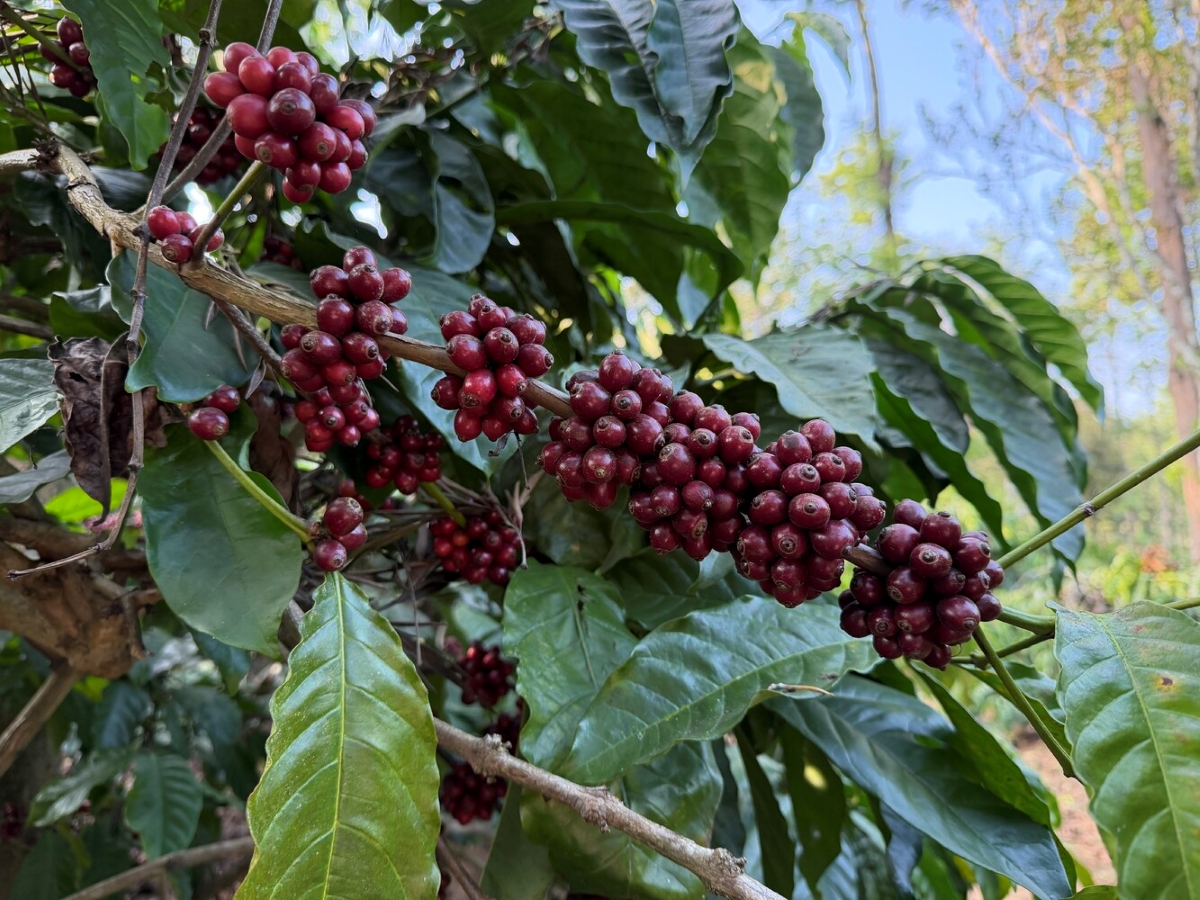
Most cultivation is concentrated in southern states — Karnataka, Kerala, and Tamil Nadu — with additional production in the Eastern Ghats. A defining feature of Indian coffee is shade cultivation. Grown under dense tree canopies in ecologically sensitive regions, shade moderates temperature, extends cherry maturation, and supports biodiversity. In an era of climate volatility, shade is both an environmental and agronomic advantage.
India produces both Arabica and Canephora (Robusta), with Canephora accounting for a substantial share. This balance aligns with domestic consumption habits, where milk-based beverages dominate and body-forward profiles perform well.
- Climate Pressure and Processing Precision
Monsoon patterns increasingly shape the industry’s risk profile. Erratic rainfall, extreme weather events, and crop disruptions affect both volume and quality. Drying infrastructure, moisture control, and fermentation management have become strategic investments rather than technical details.
India’s globally distinctive monsooned coffees remain commercially relevant. When carefully controlled, the process creates low-acidity, heavy-bodied profiles suited to certain espresso blends. When poorly managed, quality deteriorates. Precision has become the dividing line.
Read also: Indian Coffee Export Earnings Set to Surpass $2 Billion in 2025
- Domestic Consumption: Small but Expanding
India’s coffee consumption has risen steadily, from roughly 84,000 tonnes in 2012 to about 91,000 tonnes in 2023, with estimates near 96,000 tonnes in 2024. Per-capita consumption, however, remains low — approximately 0.07 kilograms per year compared to a global average near 1.3 kilograms.
The implication is significant: even small increases in daily coffee habits can generate substantial new demand in a country of over one billion people.
Soluble coffee remains dominant, representing around 70% of domestic consumption. While specialty cafés capture headlines, instant coffee continues to anchor volume growth through accessibility and convenience.
- Café Expansion and Market Layers
India’s café landscape has evolved in stages.
Cafe Coffee Day normalised café culture for urban India in the late 1990s and 2000s, creating a mass-market “third place” environment. Starbucks entered through a joint venture with Tata Consumer Products and has expanded steadily, reporting 479 stores across 80 cities by March 2025. Costa Coffee operates through franchise partnerships, while McCafé and convenience retail formats add further layers of accessibility.
Parallel to this expansion, a specialty movement has emerged. Roasters such as Blue Tokai Coffee Roasters and numerous independent operators now emphasise traceability, lighter roasting, and origin transparency. Northern entrepreneurs increasingly source directly from southern estates, reversing decades of value export by building domestic premium ecosystems.
- Exports and Strategic Tension
Exports remain central to India’s coffee economy. Recent reporting places export earnings around USD 1.8 billion in FY24, with Europe as a key destination. As domestic consumption rises, competition between export markets and internal demand may intensify, especially for higher-quality lots.
Managing this balance will require stronger segmentation, transparent pricing, and climate-resilient production systems.
- The Dual Identity
India today occupies a unique position: a large-scale, shade-grown producer with a rapidly professionalising domestic roasting scene and a café culture transitioning from novelty to habit. It is both a major export origin and an emerging consumer powerhouse.
The next phase of India’s coffee development will hinge on translating its ecological strengths and cultural diversity into measurable, traceable quality — while adapting to climate uncertainty and scaling domestic demand responsibly.
India is no longer a quiet bulk supplier. It is a complex coffee ecosystem redefining its global role — at scale.

