Sharjah – Ali Alzakary
On Maliha Road in Sharjah, where the spirit of authenticity meets the ambition of the future, and golden sands dance with the dreams of a new era, stands “South Roastery” as a true icon in the world of specialty coffee. My destination was not just a routine journalistic visit; it was an exploratory journey, a profound meeting with a pioneer of the scene, Mr. Ahmed Al Zaabi, Co-Founder and CEO. He welcomed us with his calm smile and a hot cup of coffee, opening a wide window into a world of passion and craftsmanship—a world born from a unique blend of Emirati and Saudi management in 2022.
- The Coffee Majlis… Where Time Melts in the Cup
In a reception lounge meticulously designed with the architect’s care and the artist’s taste, not to be a loud, bustling cafe, but an intimate space for work and intellectual exchange—where the “rush” of daily life fades behind the warmth of the cup and the aroma of freshly roasted coffee—we held an extended coffee session.
The session was like a private “coffee majlis,” similar to those held in the desert under a sky dotted with stars, characterized by friendliness, transparency, and spontaneous laughter. During it, we discussed the pulse of a sector with a global market value exceeding $130 billion annually, from the remote crop alleys in the highlands of Yemen, Ethiopia, and Colombia, to the clamor of global markets and the New York and London exchanges. Mr. Ahmed presented his deep insights and analyses with utmost humility, insisting it was “just his point of view,” while in reality, it was an accurate and documented testimony from one of the most prominent players in an industry that produces over 10 million tons of coffee annually.
- Cultural Maturity… From Passing Obsession to Sustainable Awareness
Al Zaabi, stirring his cup with a light, circular motion as tasting experts do, believes that the UAE coffee culture scene has moved past the naive beginnings and blind experimentation, reaching very advanced levels of development and maturity. This evolution, witnessed in the country over the last decade, has created an intensely competitive market with over 4,800 coffee shops in Dubai alone. However, at its core, it holds “immense opportunities for growth, prosperity, and income generation.”
The key, as he asserts with the confident tone of someone experienced, is not in imitating others or blindly replicating successful models, but in the “real and precise understanding of the market’s nature, its requirements, and the influencing factors, from demographic composition to changing consumer behavior.”
Al Zaabi believes that true gain is measured by an entirely different standard: “The important thing is not the amount of direct material gain at the end of the financial quarter, but the extent of people’s trust in the product you offer. This trust is the real capital, the hidden treasure that builds solid loyalty and true long-term success in a market that does not forgive the weak.”
Speaking about the specialty coffee wave that swept the region like a refreshing hurricane since the middle of the last decade, Al Zaabi confirms with the confidence of a seasoned analyst that this wave has “fully matured and reached a stage of stability.” It is no longer a mere “craze” following trends and social media fads; instead, it has transformed into a robust and deeply rooted culture, filtering out the fashion followers who came out of curiosity and retaining “those with genuine taste and an appetite for quality.”
This tangible maturation has clearly reflected on the quality of the coffee shops themselves and the elevation of their standards. Today, the Emirati consumer, especially the educated and well-traveled new generation, is “precisely capable of discerning the quality and true value of the coffee,” shifting from a passive recipient who drinks what is offered, to a conscious and interactive partner in evaluating the product and holding the service provider accountable.
- Dubai and the Bidding Wars… Strategic, Not Just Marketing, Weight
The conversation smoothly shifted to the media buzz recently created by Dubai in the global coffee market—a buzz that ignited media outlets and social platforms. Starting with paying the most expensive recorded price for a kilogram of the rare ‘Geisha’ crop from Panama, where a Dubai cafe paid $604,080 for 20 kilograms of washed Geisha coffee from Hacienda La Esmeralda farm in Boquete, Panama, and extending to the fierce competition to offer the world’s most expensive cup of coffee, where the price jumped from $680 to $1,000 within two months.
Al Zaabi, smiling knowingly about the city’s nature, believes that for Dubai, as a global destination for excellence and pioneering in various fields from real estate to hospitality, coffee could not be far from this relentless pursuit of record numbers and entry into the Guinness World Records. He does not see any fundamental harm in this competition, despite its occasional oddity, to the spirit or values of the industry. Instead, he views it as a clever kind of marketing and promotional momentum that adds wide fame to the region as a whole, places the UAE on the global coffee lovers’ map, and gives a specific demographic—the one passionate about distinction, exceptional experiences, and financially capable of undertaking these adventures—its private space for enjoyment and showing off.
- Resilience of Will… Global Balance Challenges and 2026 Preparedness
The discussion did not overlook the immense challenges that have cast heavy shadows over the global scene in the past two years. Specifically, we talked about the confusion of customs tariffs and trade wars between major powers, the severity of climate change that poses an existential threat to major crop regions in Brazil, Vietnam, and Colombia (Brazil’s production dropped by 25% in the 2024 season due to drought), and the consecutive disruptions in supply chains and maritime shipping that raised costs by 30-50% on some routes.
Al Zaabi sees that the UAE, thanks to its unique geographical location as a gateway between East and West, its globally recognized logistical leadership, and the wisdom of its prudent leadership, has managed to build a solid, fortified wall around the local sector: “Thanks to its wise and proactive policy, the availability of a wide and diverse strategic stock of various varieties and crops, and an extended network of commercial relationships, the UAE has managed to overcome the global market storms with superb skill and exceptional flexibility.”
While clearly acknowledging that the overall direct impact of the challenges was relatively limited on the local market and did not leave deep scars on final consumer prices or product availability, as an expert observer who misses no subtle market details, he cautiously pointed out that the accumulated pressures related to climate change and increased shipping and transport costs “may reveal themselves more clearly in the coming year, 2026.”
This is an explicit, implicit signal of the necessity to prepare and anticipate tangible fluctuations in the prices and quality of some major crops, reflecting a deep and well-considered foresight into global market volatility and its delayed effects.
As for the “Matcha” green wave that recently swept cafes and sparked widespread debate about the future of coffee, Al Zaabi, with the confidence of coffee’s deep roots, affirmed an unshakeable truth: “Coffee will remain coffee.” He noted that the Matcha wave, despite its momentary appeal, has already begun to recede and fade, leaving coffee, forever, as the undisputed queen of hot beverages.
- South… From Roastery to Integrated Factory with Promising Asian Horizons
“South” is not just an ordinary roastery selling bags of coffee; it is, as Al Zaabi proudly describes it, “an integrated factory” focused on high quality and excellence in all stages of production, from selecting green beans to roasting, packaging, and distribution.
After achieving remarkable and astonishing success in the local market in just two and a half years, the company is now seriously considering possibilities for geographical expansion outside the UAE borders. Surprisingly, Al Zaabi clearly indicated that the expansion is not primarily targeting neighboring Gulf markets, as some might expect, but is ambitiously heading toward the rising and promising Asian markets and some emerging East African markets, where Al Zaabi sees huge growth potential and a consumer segment hungry for quality.
With cautious and measured optimism, he predicted a tangible presence for “South” in these new markets perhaps by the end of 2026 or early 2027 at the latest, with a clear plan for gradual opening and building trusted local partnerships.
- South Academy… Investing in Minds Before Machines
As a true investment in the distant future, Al Zaabi stressed with clear enthusiasm the importance of continuous training and development, considering it “an urgent need, not a luxury or an optional extra that can be postponed,” especially in a fast-paced world witnessing continuous evolution in modern technologies, barista skills, and the arts of preparation and addition (over 20 new methods for preparing specialty coffee have emerged in the last five years).
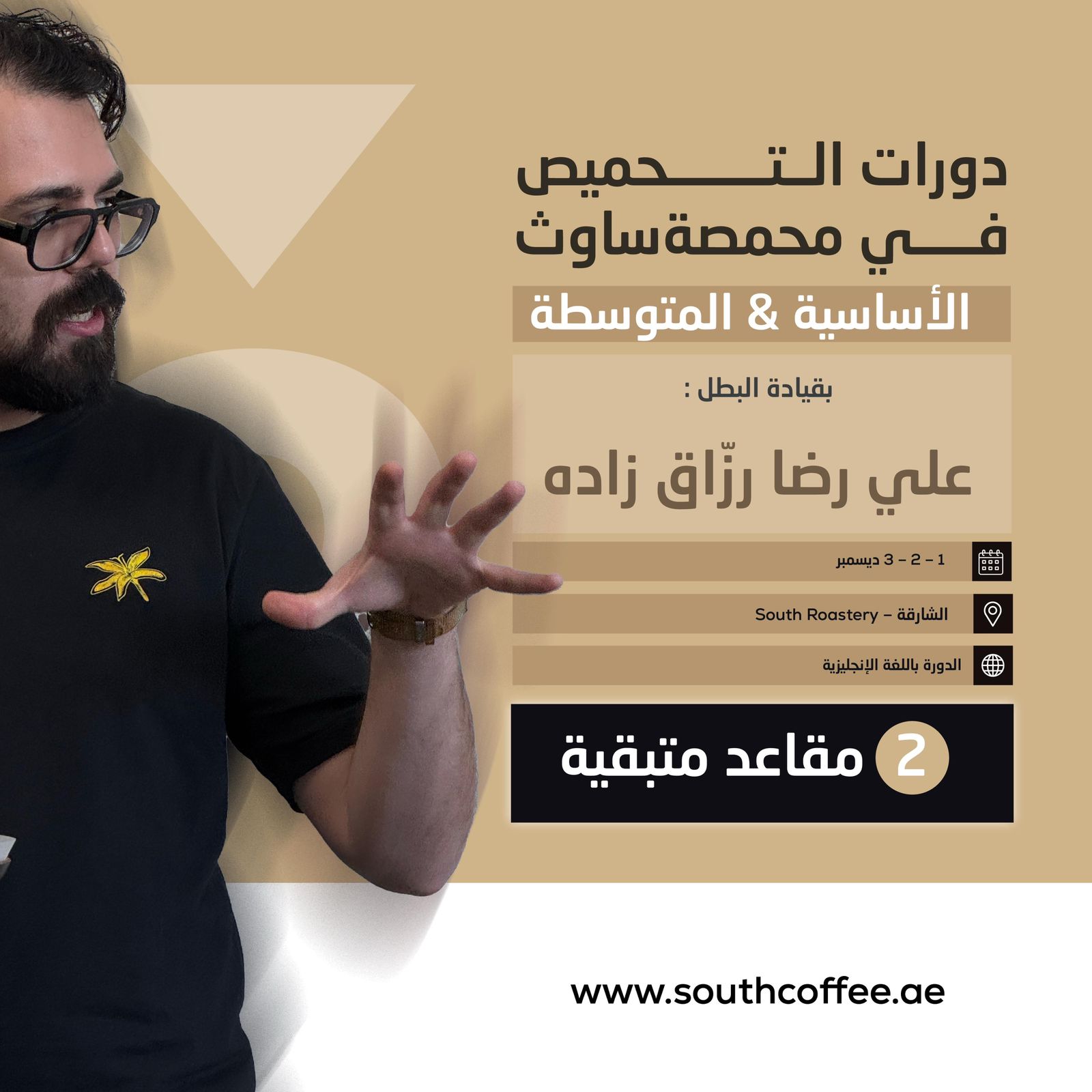
It is for this precise reason, and from this deep belief in knowledge, that the “South Training Academy” was established—an ambitious initiative whose main goal is not direct profit, but a higher, more comprehensive objective: “to enhance genuine craftsmanship, spread the culture and respect of the profession, and strengthen knowledge and experience exchange among sector workers.”
The academy, which opened in early 2025, has so far welcomed over 300 trainees of various nationalities and backgrounds, offering internationally accredited specialized programs ranging from foundational courses for beginners to advanced workshops for roasting and tasting professionals.
- Major Events… Civilizational Convergence and Elevating Collective Taste
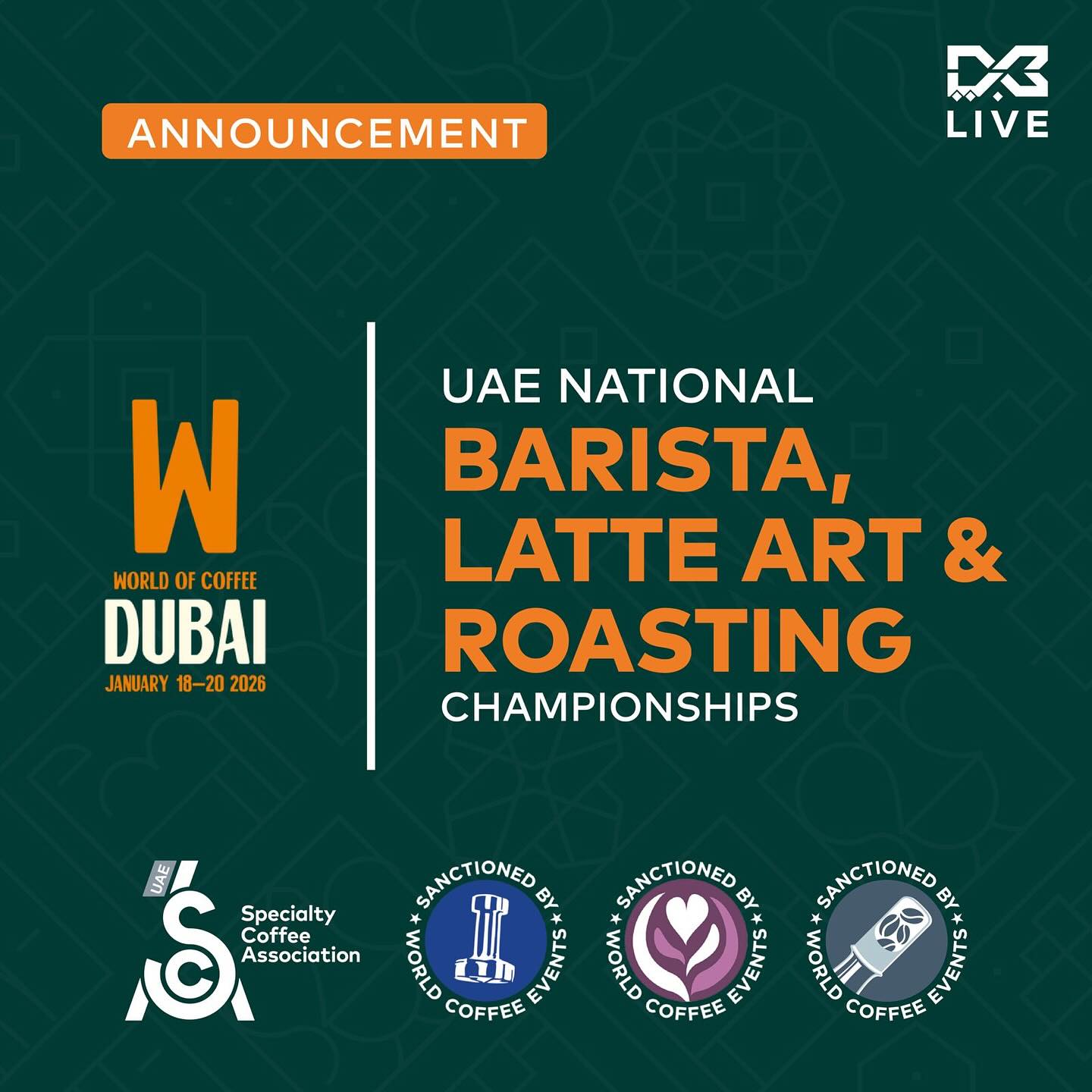
In conclusion of this rich and engaging interview, which extended for over three continuous hours, Al Zaabi affirmed with a voice full of passion the pivotal and decisive role of the large-scale coffee events generously hosted annually by the UAE, foremost among them the “World of Coffee Dubai” exhibition, and the national and regional coffee championships that witness fierce competitions among the brightest names.
He bets, with all the confidence of a strategic planner, on these periodic gatherings as “one of the most important factors for the prosperity of the local market and the development of the industry in general on both the regional and global levels.”
These vital platforms far surpass being mere commercial marketplaces or exhibitions for buying and selling; they become radiant focal points for knowledge, culture, and creativity. They are genuine arenas for the convergence of different civilizations and the exchange of rich experiences among the elite of the global coffee industry, a forum where public taste is enriched and elevated, and young baristas’ skills are honed to confidently keep pace with the latest trends and the finest arts of preparation and creativity in the ever-renewing world of coffee.
These events, with their majestic international presence and high-caliber professional organization, confirm to the whole world that the UAE is not just a commercial transit point or a consumer market, but a living intellectual laboratory and a center of civilizational radiation that continuously raises the status of coffee, transforming it from a mere commodity into a deep-seated cultural value and a human heritage worthy of celebration and appreciation.
“Smile, Roasted in Sharjah” – this simple, yet profound, slogan accurately summarizes the spirit of the roastery that innovates daily and bravely redefines the coffee experience through a magical blend of high craftsmanship, intense passion, and insistence on excellence, confirming to everyone that coffee in the UAE is not just a passing morning drink, but a mature, deeply rooted culture and a promising future whose chapters are being written today on the land of Sharjah, one coffee at a time, one cup at a time.
Click here to visit South Roastry site