USDA Announces Second Tranche of Food for Peace Funding for Seven Countrie

Executive Summary

  • USDA announces second tranche of Food for Peace Title II Program funding
  • Applications accepted from 7 countries: DRC, El Salvador, Ethiopia, Guatemala, Haiti, Kenya, Rwanda
  • Program transferred to USDA administration on February 3, 2026
  • Focus on delivering US-grown commodities to global food assistance programs
  • Application deadline: June 12, 2026 at 5:00 PM EDT

The U.S. Department of Agriculture’s Foreign Agricultural Service today announced a second tranche of funding for the Food for Peace, Title II Program. Under a competitive Notice of Funding Opportunity, USDA will accept applications from the Democratic Republic of Congo, El Salvador, Ethiopia, Guatemala, Haiti, Kenya and Rwanda.

USDA announced on February 3, 2026, that pursuant to a temporary interagency agreement, it would administer the Food for Peace, Title II Program. The move transferred management of the historic food assistance program from the U.S. Agency for International Development to USDA.

Context: Food for Peace joins USDA’s existing portfolio of international food assistance programs, including the McGovern-Dole International Food for Education and Child Nutrition Program and Food for Progress.

“USDA is working to return Food for Peace to its core functions,” said Michelle Bekkering, Deputy Under Secretary for Trade and Foreign Agricultural Affairs. “This funding will more responsibly deliver lifesaving food assistance with high-quality American commodities, helping American farmers and producers at home and people in need across the world.”

Eligible Countries for Funding

  • Democratic Republic of Congo
  • El Salvador
  • Ethiopia
  • Guatemala
  • Haiti
  • Kenya
  • Rwanda

Food for Peace joins USDA’s portfolio of longstanding food assistance programs, alongside the McGovern-Dole International Food for Education and Child Nutrition Program and Food for Progress.

The Food for Peace NOFO on Grants.gov describes this funding in detail. Eligible applicants include public or private organizations, including intergovernmental organizations and other multilateral organizations.

Application deadline: 5:00 p.m. Eastern Daylight Time on June 12, 2026.

Frequently Asked Questions

What is the Food for Peace Title II Program?
Food for Peace is a historic U.S. government food assistance program that provides emergency and development food aid to countries facing hunger and food insecurity. Title II specifically covers the donation of U.S.-grown commodities.

Which countries are eligible for this funding?
The seven eligible countries are: Democratic Republic of Congo, El Salvador, Ethiopia, Guatemala, Haiti, Kenya, and Rwanda.

When was USDA given authority over Food for Peace?
USDA announced the temporary interagency agreement on February 3, 2026, transferring administration of the program from USAID to USDA.

What is the application deadline?
Applications must be submitted by 5:00 p.m. Eastern Daylight Time on June 12, 2026.

Where can I find the full NOFO?
The complete Notice of Funding Opportunity is available on Grants.gov.

Who is eligible to apply?
Public or private organizations, including intergovernmental organizations and other multilateral organizations, are eligible to apply.
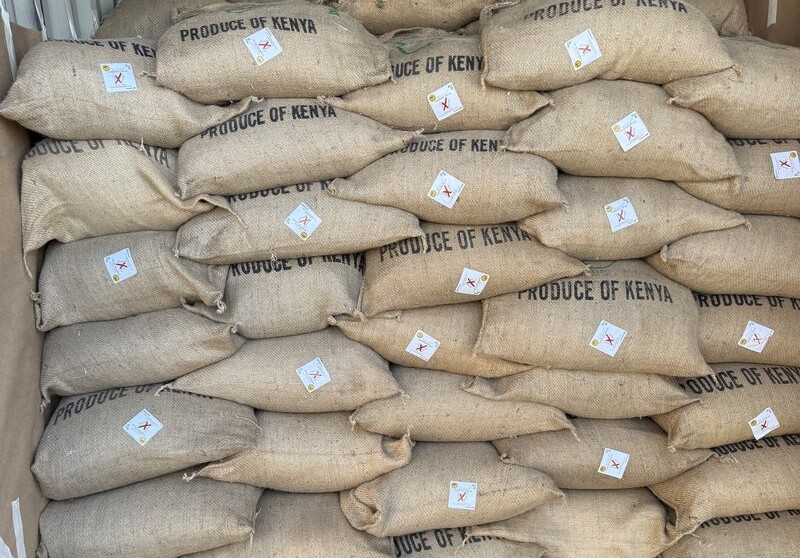


Kenya Coffee Production Rises Sharply with Record Output Expected in 2026

Author: Coffee World – Dubai | Source: News agencies and official sources | Date: 10 May 2026

  • Kenya’s coffee production rose to 51,400 tons in the 2024/2025 season
  • Production is forecast to grow by 13.3 percent in the 2025/2026 season
  • Kirinyaga county distributed record profits of 7.4 billion Kenyan shillings (approximately $57 million) to farmers
  • Total trade value at the Nairobi Coffee Exchange reached 24.7 billion shillings in the first half of the 2025/2026 season
  • Prices jumped from $35 per kilo in 2024 to $120 per kilo in 2026

Kenya’s coffee sector is experiencing an unprecedented boom, driven by a combination of rising global prices, improved farming practices, and ambitious government reforms. The latest data indicates record gains for farmers and the Kenyan economy, with expectations that this momentum will continue throughout the current season.

According to the 2026 Economic Survey released by the Kenya National Bureau of Statistics, the country’s coffee production rose to 51,400 tons during the 2024/2025 season, compared to 49,500 tons in the previous season. International experts forecast continued growth during the 2025/2026 marketing season, with estimates of a 13.3 percent increase in production. This optimism is attributed to farmers responding to higher prices, a slowdown in the conversion of agricultural land to real estate projects, and the long-awaited launch of government reforms.

Kenyan coffee prices have seen a dramatic jump, rising from $35 per kilo in 2024 to $60 per kilo in 2025, reaching a new record level of $120 per kilo in 2026, according to a report released by the African Coffee Trade Exhibition. This increase has been directly reflected in farmers’ incomes.

In a clear indicator of this qualitative shift, Kirinyaga county, one of Kenya’s largest coffee-producing regions, announced the distribution of record profits totaling 7.4 billion Kenyan shillings, equivalent to approximately $57.2 million, to farmers for the 2025/2026 season. Prices per kilo of fresh cherry ranged between 104 and 157 shillings, averaging 139 shillings per kilo, higher than the average of the previous season.

This boom is supported by structural reforms led by the Kenya Coffee Producers Association, in coordination with other government entities. Kenya’s Deputy President announced a comprehensive reform package in anticipation of the current season, including the provision of subsidized fertilizers and pesticides, simplification of operating licenses, and the approval of new laws to regulate the work of cooperatives and processing plants. These measures aim to eliminate intermediaries and ensure that fair returns reach farmers. The new laws are expected to entrench transparency and efficiency throughout the entire value chain.

The Nairobi Coffee Exchange continued its central role in marketing local coffee, achieving significant sales in the first half of the 2025/2026 season. The total trade value reached 24.7 billion Kenyan shillings, with more than 540,000 bags sold. The auctions witnessed strong demand from local and international buyers. Direct sales through specialized supply chains also contributed to enhancing returns, as major cooperatives continue to export their best coffee directly to international roasters. The sector looks forward to another promising season, with all stakeholders committed to continuing support for farmers and enhancing the competitiveness of Kenyan coffee in international markets.

Frequently Asked Questions

How has Kenya’s coffee production developed over the past two years?
Production has seen a notable increase, reaching 49,500 tons in the 2023/2024 season and rising to 51,400 tons in the 2024/2025 season. International experts forecast continued growth during the 2025/2026 season, supported by improving weather conditions and government reforms.

What are the reasons for the rise in Kenyan coffee prices?
The record price increase is attributed to several factors, most notably increased global demand for high-quality coffee beans, improved local production quality, and government reforms that have reduced the role of intermediaries and allowed for more transparent direct sales, positively reflected in farmers’ financial returns.

What are the most prominent results of Kenya’s coffee sector reforms?
The results have included improved infrastructure for cooperatives, increased technical support for farmers, and simplified export procedures, which have directly contributed to raising production efficiency, reducing waste, and ensuring a larger share of the final sale price reaches farmers.

What is the importance of the Nairobi Coffee Exchange?
The Nairobi Coffee Exchange remains the main transparent platform for marketing and determining coffee prices in Kenya. It brings together local and international buyers and plays a vital role in achieving price balance and ensuring market liquidity.

What do the record profits in Kirinyaga county mean?
The distribution of 7.4 billion Kenyan shillings in profits to Kirinyaga farmers is tangible evidence of the success of the reforms and rising global prices. It reflects the improved efficiency of cooperatives and their ability to secure better prices, which positively impacts the income of thousands of rural households and drives the local economy.


Author: Coffee World – Dubai | Source: News agencies and official sources