Dubai – Ali Alzakry
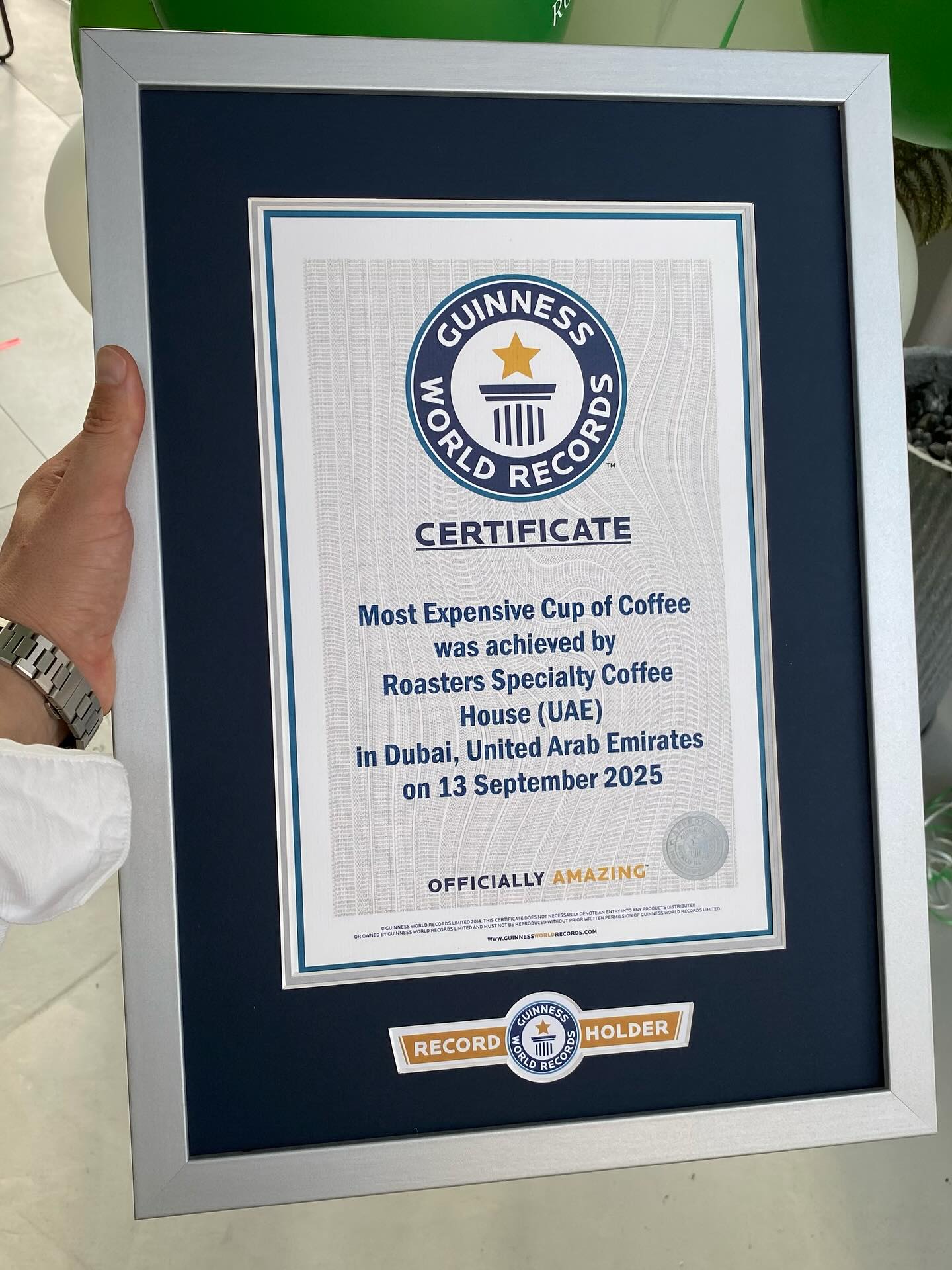
The sale of Geisha coffee from the famed “Hacienda La Esmeralda” at the “Best of Panama 2025” auction was no ordinary event. A historic record was set when the washed Geisha fetched an unprecedented $30,204 per kilogram. Yet the bigger surprise was not the price itself, but the buyer: a Dubai-based startup, just one week old at the time, that stunned the industry by purchasing the entire 20-kilogram lot for a staggering $604,000. A dramatic scene that shook the markets and ignited debates among experts, investors, and coffee leaders worldwide.
And the shocks did not stop there. The sector was soon rattled by a string of announcements: “Coca-Cola” revealed it is considering the sale of “Costa Coffee”; “Burgerizzr” announced its acquisition of 60% of the café chain “Shuffle”; and a historic milestone was recorded with “Keurig Dr Pepper” acquiring “JDE Peet’s” for €15.7 billion. A whirlwind of events that disrupted the landscape and raised big questions about the future of coffee in Dubai and across the globe.
These developments prompted us at Qahwa World to open this file seriously, guided by the voices of seasoned leaders and pioneers in the coffee sector — people who combine boldness with credibility, and who know the market intimately. With them, we explored critical questions:
-
Are these events just a passing wave of headlines, or the signs of a long-term transformation?
-
How will Dubai and the region be impacted?
-
And what do these deals mean for producers, independent roasters, and young entrepreneurs?
Diverging Views: From Showmanship to the Core of Coffee
When we asked coffee experts about these developments, their views revealed striking contrasts — an intellectual confrontation that highlights the complexity of the challenges ahead.
“Kim Thompson” sees the sale of “Costa Coffee” as simply corporate repositioning that does not affect the fundamentals of specialty coffee, emphasizing that true value lies in farmer relationships. “Matt Toogood,” however, warns that extravagant moves — such as buying an entire lot of Geisha at a record price — risk harming the industry more than helping it. In contrast, “Katerina Borodich” argues that coffee has now become a strategic sector in its own right, while “Federico Ortile” views these changes as a signal of the industry’s shift toward innovation and partnerships. “Robert Jones,” meanwhile, believes we are at the dawn of a new era in coffee, with the global map being redrawn.

Kim Thompson: “Big Deals Don’t Change the Core of Specialty Coffee”
“Kim Thompson,” co-founder of “RAW Coffee Company,” describes Coca-Cola’s potential sale of “Costa Coffee” as interesting but unsurprising. She stresses that such moves do not alter the essence of what companies like RAW Coffee do: sourcing directly from trusted producers, ensuring fair trade, and serving customers who value quality and transparency.
According to Thompson, multinational repositioning reflects shareholder priorities, but the real work happens at origin and in independent roasteries. Corporate headlines may ripple across markets, but they do not affect the heart of the sector: ensuring farmers are fairly paid and consumers are served authentic coffee.
She notes that the industry’s deeper transformation lies in changing consumer tastes, rising interest in specialty coffee, and recognition of coffee as both culture and commodity.
On Panama, she believes that a Dubai startup purchasing the entire Geisha lot was headline-grabbing but not a true measure of sustainability or impact. For her, the real benchmark lies in how investments support farmers, knowledge-sharing, and meaningful consumer experiences.
Thompson warns that the sector must not be distracted by dramatic headlines and forget the daily challenges faced by producers — rising costs, volatile markets, and climate change. The future of coffee, she insists, will not be determined by billion-dollar deals but by empowering producers and supporting sustainable farming.
Matt Toogood: “Showmanship Harms Coffee More Than It Helps”

“Matt Toogood,” CEO “RAW Coffee Company,” describes Dubai as a unique laboratory for specialty coffee, where consumer tastes shifted over 15 years from bitter, traditional espresso to balanced, flavorful profiles. He emphasizes that this shift was driven not by big chains but by independent cafés that dared to serve coffee that was sweet, balanced, and not bitter.
He recalls that initial reactions ranged from confusion to excitement, but eventually consumers embraced the change.
In contrast, large chains, he says, adopted the language of quality without improving their products — masking poor coffee with milk and sugar. The true transformation, Toogood argues, was led by independent operators who adapted to consumer behavior.
Regarding Panama, he calls the record-breaking Geisha purchase “a theatrical stunt” with no commercial logic. He warns that such actions mislead farmers into thinking value lies in inflated prices, when in fact auctions are often choreographed months in advance for marketing purposes.
Katerina Borodich: “Coffee Is No Longer a Side Product… It’s a Strategic Sector”

“Katerina Borodich,” CEO of “Drinkit UAE,” sees “Burgerizzr’s” 60% acquisition of “Shuffle” as proof of a clear trend: coffee is no longer a complementary product in food and beverage — it is a strategic industry on its own.
She notes that regional demand is driven by fast-paced lifestyles and strong hospitality culture, with consumers seeking convenience, flavor, personalization, and speed. Drinkit’s tech-enabled platform, she says, delivers exactly that.
Borodich emphasizes that Dubai is more than a consumer market — it is a gateway and a global platform. The city rewards speed and innovation, and what succeeds there can succeed anywhere.
She acknowledges that competition will intensify, but insists this also creates more opportunities for startups. Success, she argues, comes not from “serving coffee” alone but from understanding consumers and delivering complete experiences.
For her, these deals reflect investor confidence in coffee’s future in the region, grounded in stable demand and strong government support.
Federico Ortile: “Dubai Is Not a Market… It’s a Global Laboratory”

“Federico Ortile,” Managing Director of the “Simonelli Group Middle East,” sees Coca-Cola’s potential exit from “Costa Coffee” as part of a larger corporate trend — moving from owning retail brands to focusing on innovation and partnerships.
He views Burgerizzr’s investment in “Shuffle” as a landmark move, bringing regional capital into a space long dominated by international players. This, he argues, strengthens the region’s food and beverage ecosystem.
On “Keurig Dr Pepper’s” €15.7 billion acquisition of “JDE Peet’s,” Ortile calls it transformative, consolidating two global powerhouses. He notes that it will intensify competition but also open access to greater resources and platforms.
As for Dubai, Ortile describes it not as a mere consumer market but as a global laboratory — where international trends meet regional innovation. He believes its role as a hub for luxury coffee will only grow as local capital merges with global technology.
Robert Jones: “We Are on the Cusp of a New Era in Coffee”

“Robert Jones,” Managing Director of Family First Cafe | GEMS Global,” interprets Coca-Cola’s reconsideration of “Costa Coffee” as a clear sign that even the biggest players are reassessing their bets in a changing market. Consumers, he says, no longer seek scale alone but quality and experience — and legacy brands risk irrelevance if they fail to evolve.
He views Burgerizzr’s acquisition of “Shuffle” as an investor move to control consumer dwell time and data — proof that coffee is now a lifestyle and emotional connection rather than just a beverage.
On the “Keurig Dr Pepper” deal for “JDE Peet’s,” Jones calls it a reshaping of the global value chain, with ripple effects on sourcing, pricing, and pressure on smaller brands to stand out through authenticity.
For him, Dubai is no longer peripheral but a central player in specialty coffee worldwide. The record Geisha purchase, he argues, was a strategic message that placed Dubai at the center of the global coffee stage.
“We are not witnessing a passing wave,” Jones concludes. “This is a complete redrawing of the coffee map. It is a new era for coffee — but success will go to those who build with vision and purpose, not those chasing spectacle.”
Conclusion
From Panama to Dubai, from auction halls to billion-euro deals, coffee has broken free of its role as a daily beverage or traditional trade. It has become a global investment arena — where corporate giants collide with ambitious startups, and visions clash between spectacle and substance, between quick profit and long-term sustainability.
This investigation revealed that there is no single answer to the question: What is happening in the coffee market?
-
“Kim Thompson” believes the core of specialty coffee remains unchanged.
-
“Matt Toogood” warns that theatrical excess could damage the industry.
-
“Katerina Borodich” stresses the future belongs to agile, innovative startups.
-
“Federico Ortile” sees Dubai as a global laboratory where capital meets innovation.
-
And “Robert Jones” insists the world is entering a new era where the coffee map itself is being redrawn.
One thing is certain: coffee is no longer in the shadows. It has taken center stage in the global economic and cultural landscape — and today’s developments will shape its future for decades to come.