Climate Change: Brewing Uncertainty in the Bean Belt

By Dr. Steffen Schwarz


Few challenges weigh more heavily on coffee’s future than climate change. Coffee is a climate-sensitive crop, with both Arabica and Canephora varieties thriving only within narrow temperature and rainfall ranges. Even slight shifts in these conditions can significantly affect yields and reduce suitable cultivation areas.

Scientific consensus is sobering: if current warming trends continue, many of today’s coffee heartlands could become marginal by mid-century. Research from agronomists and organizations such as World Coffee Research and the Food and Agriculture Organization (FAO) suggests that up to half of the land now ideal for coffee may be unsuitable by 2050. Arabica is particularly vulnerable, requiring mild temperatures (18–22 °C) and specific rainfall patterns. One major study projects a 50% decline in global Arabica-suitable areas by mid-century due to rising heat, altered seasonal patterns, and increased pest and disease pressure. While Canephora tolerates heat better, it too faces losses if extreme events and droughts become more common.

Farmers are already seeing the effects of climate volatility. Recent years have brought severe droughts in Brazil’s Cerrado and Southeast (2014, 2020), a devastating black frost in Brazil’s coffee belt in July 2021 that destroyed millions of trees, prolonged drought and heat in Vietnam (2020–2023) reducing Canephora output, and excessive rains from shifting monsoons affecting Indonesia and Colombia. Events once considered rare now occur with alarming frequency. As one grower in Minas Gerais observed, “We used to count on the rains coming predictably; now nothing is predictable.” The result is more volatile yields and increasing difficulty in planning farm operations.

Projections show that many coffee zones will need to “migrate” to survive — often to higher elevations or latitudes. In Central America, current coffee zones may shrink sharply, pushing cultivation to limited high-altitude areas. East Africa’s highlands could remain suitable longer, but lowland regions will struggle. In Brazil, optimal zones may shift southward or into currently forested areas, risking deforestation. By 2100, without adaptation, major producers such as Brazil, Vietnam, and Colombia could face steep production declines. The FAO’s climate risk mapping reinforces these trends, warning of steadily worsening coffee viability in key regions throughout the 21st century.

Adaptation Strategies in Motion
The coffee industry is responding with multi-pronged adaptation efforts. Breeding climate-resilient varieties is a priority, with researchers rediscovering and crossbreeding wild coffee species that withstand heat or drought, and developing cultivars resistant to coffee leaf rust. Seedlings of these improved varieties are being distributed to farmers.

Farm management practices are also shifting. Shade-grown systems are increasingly adopted, with canopy trees shielding coffee plants from extreme heat, preserving soil moisture, and fostering biodiversity. Enhanced irrigation and water management help mitigate drought stress, though costs remain a barrier for smallholders.

Policymakers and institutions are supporting these measures. The FAO’s ABC-Map tool (Adaptation, Biodiversity and Carbon Mapping) provides localized projections of crop suitability under different climate scenarios, enabling farmers and governments to plan long-term investments or consider alternative crops.

The Social and Geographic Shifts Ahead
Even with adaptation, some regions will inevitably become too hot or unpredictable for coffee. This poses serious social risks: millions of smallholders could lose their primary income, potentially driving poverty and migration. Organizations such as the International Fund for Agricultural Development (IFAD) and Fairtrade warn that without broader climate action, these challenges will intensify.

Conversely, climate change may open new opportunities. Regions at higher latitudes — such as parts of the southern United States, Uruguay, or northern Argentina — could become suitable for coffee cultivation. High-altitude zones previously too cold, including certain East African mountains, might also become viable. Emerging experiments in China’s Sichuan province and Nepal hint at possible future origins if microclimatic conditions align.

The July 2021 frost in Brazil remains a vivid reminder of climate volatility’s market impact, slashing Arabica harvest forecasts and driving global prices to decade highs. Conversely, drought in 2022–2023 produced different but equally disruptive effects. In today’s coffee sector, extreme events are becoming the norm, and “average weather” is an unreliable planning benchmark. As one analyst noted, “The only consistent trend is inconsistency.” This unpredictability complicates investment decisions for farmers, supply planning for buyers, and ultimately fuels market volatility — an issue closely tied to the financial dynamics we will explore next.

Ethiopia to Host 22nd African Fine Coffees Conference & Exhibition 2026

Addis Ababa, August 9, 2025 (Qahwa World) – The African Fine Coffees Association (AFCA) has officially announced that the 22nd African Fine Coffees Conference & Exhibition (AFCC&E) will be held from February 4 to 6, 2026, at the Addis International Convention Center in Addis Ababa, Ethiopia, the birthplace of Arabica coffee. This premier event is set to unite over 2,000 coffee professionals, including producers, exporters, roasters, buyers, policymakers, and enthusiasts from across Africa and beyond, to celebrate and advance the continent’s coffee industry.

Organized by AFCA in partnership with the Ethiopian Coffee and Tea Authority and the Inter-African Coffee Organization, the 2026 conference will build on the success of previous editions, fostering innovation, sustainability, and market access under the theme “Brewing the Next African Generation.” The event aims to position Africa not only as a supplier of fine coffee but as a global leader shaping the future of the industry.

A Landmark Event for African Coffee

Ethiopia, which last hosted the AFCC&E in 2024, will once again welcome delegates to the Addis International Convention Center, a world-class venue designed to showcase Africa’s rich coffee heritage. The 2024 event attracted over 1,200 delegates, featured 53 speakers, and showcased more than 350 coffees, launching the continent’s first African Coffee Week. The 2026 edition is expected to draw an even larger crowd, with a focus on market access, climate resilience, value addition, and intra-African trade.

“The African Fine Coffees Conference and Exhibition is more than a conference; it is where business deals are done, ideas are born, and the future is shaped,” said Amir Hamza, AFCA Chairperson. “We aim to position Africa as a global force in coffee, and Ethiopia, as the birthplace of coffee, is the perfect stage for this vision.”

Key Highlights of the 2026 Conference

The 2026 AFCC&E will offer a dynamic program, including:

  • B2B Cupping Sessions: Opportunities to taste and evaluate some of Africa’s finest coffees, including winners of the Taste of Harvest Competition, which showcases top-quality Arabica and Robusta coffees from AFCA member countries.

  • African Barista Championship: A platform for baristas to demonstrate their skills and elevate the continent’s coffee culture.

  • Technical Workshops and Panels: Discussions on traceability, quality standards, sustainability, and innovations in coffee production.

  • African Coffee Safari: Field trips to Ethiopia’s renowned coffee-growing regions, offering delegates a chance to engage directly with farmers and experience the country’s coffee heritage.

  • Exhibition Hall: A vibrant space for exhibitors to showcase cutting-edge technologies, coffee products, and services, fostering trade relationships and networking with global coffee luminaries.

Gizat Worku, President of the Ethiopian Coffee Association and AFCA Ethiopia Chapter Chairman, emphasized the event’s significance: “Despite being the origin of coffee, Africa hasn’t fully benefited from its global success. This conference is a renewed commitment to closing the gap between origin and market, promoting African coffee globally while ensuring fair rewards for producers.”

Ethiopia’s Role as Host

As one of Africa’s largest coffee exporters, Ethiopia generated over $2.65 billion in revenue from shipping nearly 469,000 tons of coffee in the 2024/25 fiscal year. The country’s unique coffee heritage and its role as the birthplace of Arabica coffee make it a fitting host for this transformative event. The 2026 conference will highlight Ethiopia’s leadership in advancing the continent’s coffee sector while addressing challenges such as weak branding, limited marketing reach, and the need for greater innovation.

Gilbert Gatali, AFCA Executive Director, noted: “The success of our previous event in Ethiopia and the integral role of the Ethiopian coffee sector make returning to Addis Ababa a natural choice. We look forward to welcoming the global coffee community to this vibrant hub.”

Registration and Participation

Registration for the 22nd AFCC&E is now open, with early bird opportunities available for exhibitors, sponsors, and delegates. The event promises a lineup of esteemed international and regional speakers, engaging workshops, and vibrant social events designed to foster lifelong connections in the coffee industry.

For more information on registration, sponsorship, or the conference program, visit the official AFCA website at afca.coffee. Stay tuned for updates on speakers, venues, and additional events, including the African Coffee Safari and side events.

About AFCA

Founded in 2000, the African Fine Coffees Association is a non-profit, non-political, member-driven organization representing coffee sectors in 11 African countries. AFCA’s mission is to promote high-quality African coffees, enhance market access, and drive sustainable development across the continent’s coffee value chain.

20 kg of Coffee Sold for $600,000: Gesha’s Journey Sets a Global Record

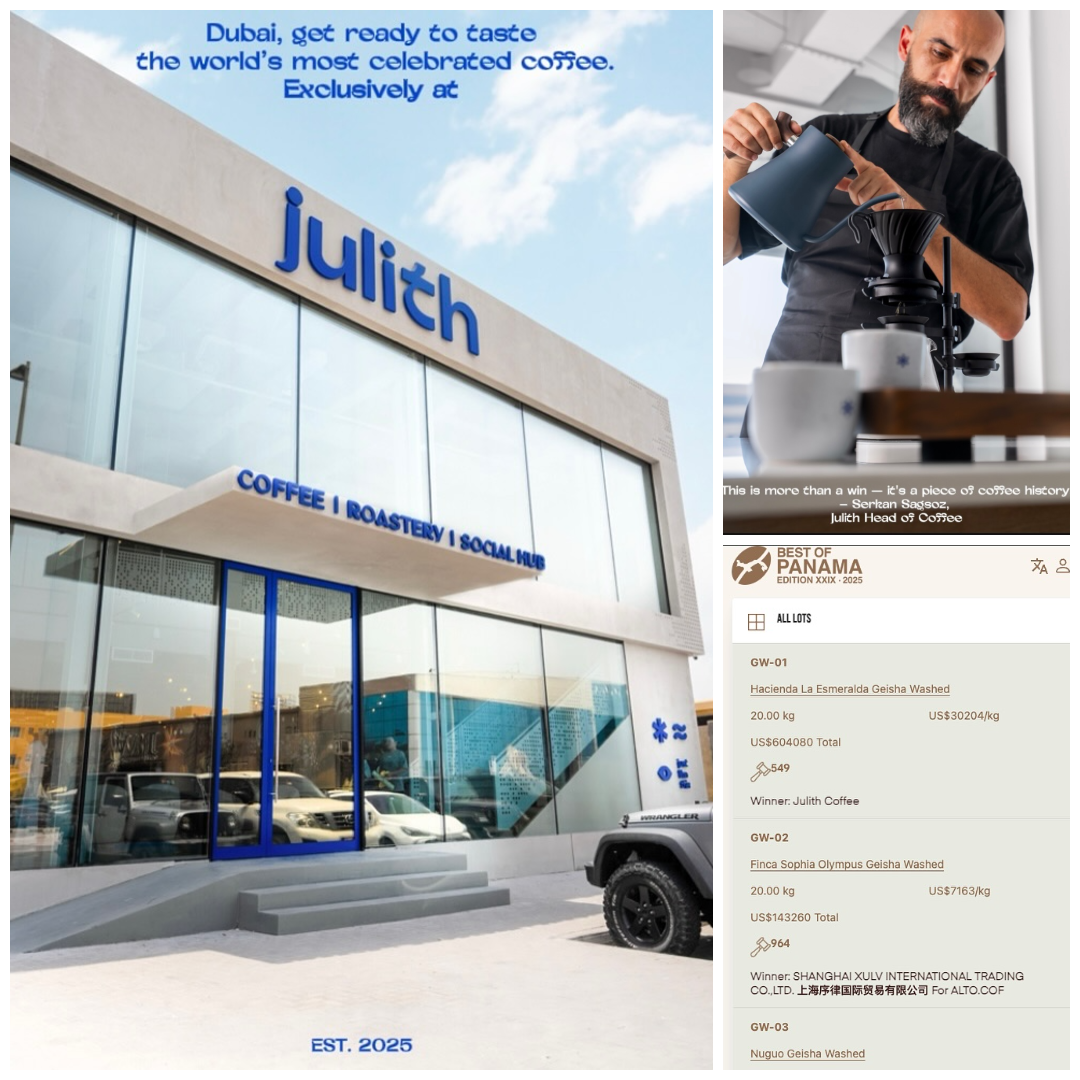
The specialty coffee world witnessed history at the 2025 Best of Panama electronic auction, where a washed Gesha (Geisha) coffee from Hacienda La Esmeralda in Boquete, Panama, fetched a record-breaking US $30,204 per kilogram. The 20-kilogram lot, scoring an unprecedented 98.00 points from 22 international cupping judges, was purchased by Julith Coffee & Roastery in Dubai for a total of US $604,080.

The Best of Panama is recognized as the most prestigious auction in the coffee industry, drawing elite buyers from around the world. This year’s event featured 50 lots—20 washed Gesha, 20 natural Gesha, and 10 varietals—with 30 lots surpassing US $1,000 per kilogram. The auction’s average price reached US $2,861.20 per kilogram, nearly doubling last year’s figure of US $1,383.72. Over a 12-hour bidding period, a record 18,988 bids were placed, setting a new benchmark for participation and price performance.

Rachel Peterson, co-owner of Hacienda La Esmeralda, expressed deep gratitude for the achievement, noting that the result reflects years of dedication, teamwork, and the shared pursuit of excellence. David Paparelli, CEO of M-Cultivo, which organized the auction, emphasized that the sale further cements Panama’s reputation as a global leader in ultra-premium coffee and opens doors for producers across the country.

For Julith Coffee, the acquisition marks a major milestone. Located in Al Quoz, Dubai, the roastery has quickly gained attention in the UAE’s specialty coffee scene. Head coffee roaster and Turkish Barista Champion Serkan Sagsoz described the purchase as “a true honour and a piece of history,” adding that the coffee will be roasted in extremely limited quantities and offered through exclusive tastings and curated experiences for coffee lovers.

The sale not only showcases Panama’s ability to produce some of the world’s most sought-after coffees but also highlights Dubai’s growing influence as a hub for specialty coffee culture. With this record-breaking acquisition, Julith Coffee has secured its place in coffee history, bringing one of the rarest and highest-scoring coffees ever auctioned to the UAE.

Swedish Study Links Workplace Coffee Machines to Higher Bad Cholesterol Levels

Dubai, August 9, 2025 – (Qahwa World) – A new Swedish study has raised fresh concerns about how workplace coffee machines could be silently impacting heart health. Researchers from Uppsala University and Chalmers University of Technology have found that the way coffee is brewed plays a decisive role in determining its effect on cholesterol levels—particularly low-density lipoprotein (LDL), often called “bad” cholesterol.

The peer-reviewed study, published in Nutrition, Metabolism & Cardiovascular Diseases, examined the presence of two naturally occurring coffee compounds—cafestol and kahweol—that are scientifically linked to higher LDL cholesterol. While coffee itself is not harmful, and can even lower the risk of certain diseases, these compounds have been shown to counteract some of coffee’s potential benefits when consumed in high amounts.

Why Workplace Machines Pose a Risk

The researchers focused on self-service coffee machines widely used in offices and public buildings, which typically rely on metal filters rather than paper. This choice of filtration, they discovered, makes a crucial difference. Paper filters trap most of the cafestol and kahweol before they reach the cup, but metal filters allow much more of these compounds to pass through.

Lead researcher Dr. David Iggman explained that some modern workplace machines produce coffee with diterpene levels comparable to boiled coffee—an unfiltered brewing method that Nordic dietary guidelines have advised against since 2023.

The Numbers Tell the Story

Over the course of the study, the team analyzed coffee from 14 workplace machines and compared it with various home-brewing methods. Their findings revealed stark contrasts:

  • Workplace brewing machines (n = 11): median cafestol 176 mg/L, kahweol 142 mg/L

  • Liquid-model machines (n = 3): much lower, median cafestol 8 mg/L, kahweol 7 mg/L

  • Home paper-filtered coffee: median cafestol 12 mg/L, kahweol 8 mg/L

  • Boiled coffee: cafestol 939 mg/L, kahweol 678 mg/L

  • French press / espresso: intermediate to high levels, with espresso showing large variability—sometimes exceeding 2,400 mg/L of cafestol in a single sample.

These differences are not just academic. Using established cardiovascular risk models, the researchers estimated that replacing three cups of machine-brewed coffee per workday with paper-filtered coffee could lower LDL cholesterol by approximately 0.58 mmol/L—a reduction associated with a 13% drop in cardiovascular risk over five years, and as much as 36% over a 40-year career.

A Brewing Method Matters as Much as the Beans

The study reinforces a growing body of evidence that how coffee is prepared is as important as the type of beans or roast when it comes to health outcomes. While specialty coffee lovers often focus on flavor profiles and origin stories, this research underscores that the choice of brewing equipment—especially in workplace environments—can have long-term health implications.

The researchers suggest that organizations could improve staff wellness simply by switching to machines that use paper filters, or by encouraging employees to brew filtered coffee at home and bring it to work.

Global Relevance Beyond Sweden

Although the study focused on Swedish workplaces, its findings are relevant globally, especially in regions where unfiltered coffee methods—such as French press, Turkish coffee, or espresso—are culturally dominant. In many countries, corporate wellness programs already promote healthier food options; integrating coffee brewing guidelines could be a cost-effective addition.

Balancing Enjoyment and Health

Coffee remains one of the world’s most consumed beverages and a source of pleasure for millions. This research does not suggest giving it up, but rather making informed choices about brewing methods to maximize health benefits while minimizing risks.

In the words of Dr. Iggman: “The way coffee is brewed has a measurable effect on cholesterol. By making small changes in preparation, we can keep coffee both enjoyable and heart-friendly.”

Keurig Dr Pepper Shifts Focus to Soft Drinks Amid Coffee Segment Slowdown

Dubai, August 8, 2025 (Qahwa World) – Keurig Dr Pepper (KDP) is ramping up its investment in soft beverages and premium coffee lines as traditional coffee sales show signs of strain under inflationary pressure, volatile commodity markets, and shifting consumer behavior.

In its second-quarter earnings report, KDP announced a 6.1% increase in total net sales, reaching $4.2 billion, with growth largely driven by its U.S. soft drinks portfolio, which posted a 10.5% jump to $2.7 billion. Leading brands such as Dr Pepper, Canada Dry, 7Up, Snapple, and Electrolit contributed to the strong performance.

However, the company’s U.S. coffee segment reported a 0.2% decline in sales quarter-over-quarter, down to $0.9 billion. While price increases helped drive a 2% rise in adjusted operating income to $299 million, the segment saw a 3.6% decline in volumes, reflecting weakened consumer confidence and sensitivity to pricing.

“The U.S. Coffee segment will need to manage through impacts from higher commodity inflation, increased tariffs, and consumer uncertainty in the face of additional pricing,” said CEO Tim Cofer, noting further coffee price hikes are expected in Q3. “We expect segment performance to remain subdued for the balance of the year.”

The downturn is prompting KDP to recalibrate its coffee strategy, shifting attention away from its traditionally value-oriented offerings, such as Keurig Green Mountain and K-Cup capsules, and toward more premium-positioned innovations.

Among the highlights for the quarter:

  • Lavazza K-Cup capsules were launched in Italian dessert-inspired flavors, including tiramisu.

  • La Colombe ready-to-drink (RTD) coffee lines showed triple-digit sales growth, reflecting rising interest among younger, specialty-focused consumers.

  • The upcoming K-Rounds, a plastic-free and aluminum-free pod, is scheduled for launch in 2026, signaling KDP’s push toward sustainability.

Cofer emphasized that while headwinds remain, the company sees long-term potential in its coffee business, provided it can deliver innovation that aligns with evolving consumer preferences.

“Looking ahead, the balance of 2025 will present challenges in the form of rising cost pressures, including from tariffs that remain highly fluid, as well as continued consumer caution,” he added.

KDP’s strategy reflects a broader trend in the U.S. coffee market, where flavor exploration, RTD beverages, and wellness are increasingly shaping consumption patterns — particularly among Gen Z consumers. The company’s challenge will be to retain its stronghold in value coffee while bringing its core category along on this more premium, lifestyle-driven journey.

When Coffee Meets Summer: Victoria Arduino Unveils Refreshing Coffee Cocktails with PureBrew Technology

Dubai,  8 August 2025 (Qahwa World) – As temperatures rise, Victoria Arduino is redefining summer refreshment by blending the worlds of specialty coffee and mixology. The Italian coffee equipment pioneer has introduced a new wave of creative coffee-based cocktails made with its groundbreaking PureBrew technology—just in time for the season of sun, flavor, and innovation.

Designed to bring out the cleanest, smoothest, and most aromatic qualities of coffee, PureBrew is featured in several of Victoria Arduino’s top-tier machines, including the E1 Prima EXP, E1 Prima PRO, Black Eagle Maverick, and the standalone PureBrew+ brewer. This brewing method serves as the perfect base for summer-ready signature cocktails that surprise the palate and elevate the coffee experience.

Prima on Flower

By Andrea Villa, 2025 Italian Coffee in Good Spirits Champion

A floral bouquet in a glass, this cocktail combines rose, elderflower, jasmine, and fresh lemon with the clean profile of PureBrew Coffee—crafted from naturally processed or fermented beans. Vodka adds structure, while a lavender mist adds an aromatic finishing touch. The result is a light, elegant drink that highlights coffee’s delicate, fragrant potential—perfect for summer afternoons and garden soirées.

The Prima-ry Drink

Also by Andrea Villa

Inspired by alpine landscapes and the classic Italian aperitivo, this bold yet refined cocktail layers vanilla sweetness with bitter alpine liqueur and the depth of vermouth. PureBrew Coffee brings smoothness and complexity, while a splash of chinotto adds a citrusy, herbal finish. It’s an adventurous blend for those who appreciate the sophisticated marriage of cocktail craft and specialty coffee.

Why Choose PureBrew for Coffee Cocktails?

Victoria Arduino’s PureBrew technology represents the cutting edge of filter coffee innovation. Its unique brewing system delivers:

  • Exceptional flavor clarity through gentle and even extraction

  • Silky texture and smooth body, ideal for mixed drinks

  • Versatile performance across a range of coffees, teas, and infusions

  • Consistent results with just a touch of a button

Whether served hot or over ice, PureBrewCoffee offers a refined base that brings coffee and cocktail culture together in one glass.


A New Breed of Coffee Consumers

By Dr. Steffen Schwarz


As coffee production has globalised, so too has its consumption. Once dominated by Europe and North America—particularly Scandinavian countries and Italy—the world’s coffee scene is witnessing a dynamic shift. Today, a new wave of consumption is sweeping across emerging markets, especially within traditional coffee-producing nations that historically exported nearly all their harvests. This evolution is reshaping coffee from a purely export commodity into a locally valued and widely consumed product.

Brazil: From Bean Basket to Brew Capital

Brazil exemplifies this transformation. Long regarded as the world’s coffee farm, Brazil is now also one of its largest consumers. With domestic consumption estimated at 22–23 million bags annually, Brazil trails only the United States in total volume. Remarkably, Brazilians now consume nearly half of what the country produces. This surge is driven by cultural traditions like the cafezinho, growing urban cafe culture, rising incomes, and the country’s vast population. While Brazil continues to export most of its beans, this robust internal market adds economic resilience and helps retain more value—through domestic roasting, packaging, and branding.

Vietnam: Brewing a Distinct Identity

Vietnam, the world’s second-largest coffee producer, has historically leaned toward tea and exported most of its coffee. But that’s changing. Domestic coffee culture—anchored by drinks like cà phê sữa đá (iced coffee with condensed milk)—is thriving, especially among the urban middle class. USDA projections show Vietnam’s domestic coffee consumption rising from 4 million bags in 2024/25 to 4.9 million in 2025/26. Although per-capita consumption remains modest, the growing cafe scene and youthful demographic are fostering a strong internal market.

India: From Chai to Coffee Shops

Traditionally a tea-drinking nation, India is rapidly warming up to coffee. Urbanization, changing lifestyles, and the proliferation of coffee chains have pushed consumption upward. Though still relatively low at 1.3–1.5 million bags annually, India’s coffee market has grown about 30% from 2018 to 2024. Industry experts forecast that the market will double by 2030, as awareness and access spread beyond the southern states into major northern and western cities.

China: The Giant Awakens

No emerging market has embraced coffee as dramatically as China. Once a near-exclusive tea nation, China has seen a nearly 150% increase in coffee consumption over the past decade. Imports have grown from under 1 million bags in 2014/15 to an estimated 3.6 million in 2024/25, with total consumption expected to hit 6.3 million bags this year. The surge is fueled by the rapid expansion of chains like Starbucks and local specialty cafés, especially among younger consumers.

China also grows arabica coffee—primarily in Yunnan province, with an output of around 1.9 million bags—but domestic production covers just 30% of demand. The rest is met through imports, particularly from Brazil and Colombia (the latter recently surpassing Vietnam as China’s top supplier). As Chinese preferences shift from instant to specialty brews, global sourcing patterns are adjusting in response.

Rising Local Demand Across Coffee Lands

Other producing countries like Indonesia and Ethiopia are also seeing increased internal consumption. In Indonesia, branded chains are thriving in major cities, while in Ethiopia, traditional coffee ceremonies remain central to social life, supplemented now by a burgeoning cafe sector. In Central America, countries such as Guatemala and Costa Rica maintain strong export markets but are nurturing vibrant domestic coffee scenes.

Importing emerging economies—such as Turkey, Egypt, and Algeria—also feature prominently in this shift, with established cultural ties to coffee or coffee-like beverages. Yet, the most striking trend is the transformation within exporting nations themselves. According to the International Coffee Organization (ICO), producing countries now account for nearly 30% of global coffee consumption—up from less than 20% in the 1990s.

This shift means that more coffee is consumed closer to where it’s grown. In years of surplus, it helps balance global supply. But during production shortfalls or price spikes, this broader consumption base adds pressure to already tight markets.

A Market Redefined by Emerging Demand

The implications are far-reaching. Demand growth in countries like China, India, Brazil, Vietnam, and Mexico is expected to continue. With vast populations and relatively low per-capita intake, even small increases in consumption per person translate to major shifts in global demand.

This offers a promising outlook for long-term coffee sales—but also raises critical questions:

  • Can production scale sustainably to meet this growing demand?

  • Will the quality of coffee be preserved amid expansion?

  • And will producing nations capture more of the value chain through roasting, branding, and retail within their own borders?

These questions set the stage for the next chapter in coffee’s evolution, as environmental constraints, supply chain dynamics, and consumer preferences reshape the industry’s global landscape.

Barista Terminology | Episode 12: Brewing Equipment Maintenance & Hygiene

Welcome to Episode 12 of our Barista Terminology series on QahwaWorld.com — your guide to mastering the essentials of specialty coffee. In this episode, we dive into the critical world of brewing equipment maintenance and hygiene. Behind every great cup of coffee is clean, well-maintained gear — from espresso machines to grinders and milk pitchers. Discover the daily, weekly, and monthly routines every barista should follow to ensure consistent quality, equipment longevity, and a safe working environment.

Clean tools make clean coffee. A barista’s skill isn’t just seen in how they pour a shot or steam milk—it’s also in how they care for their equipment. Regular cleaning and maintenance ensure optimal taste, safety, and longevity of machines. Neglecting hygiene can lead to off-flavors, equipment failure, and even health code violations.

  1. Daily Cleaning Checklist
  • Backflush espresso machines with water or detergent
  • Wipe steam wands before and after every use
  • Soak portafilters, baskets, and shower screens
  • Rinse and clean group heads
  • Clean grinder hoppers and dosing chambers
  • Sanitize all milk pitchers, tampers, and tools
  • Wipe down counters and prep areas with food-safe cleaners
  1. Weekly Deep Cleaning
  • Backflush espresso machines with detergent
  • Remove and soak group heads, portafilters, and baskets
  • Scrub steam wand tips and replace gaskets if needed
  • Clean inside grinder burrs using brush or grind-cleaner pellets
  • Run cleaning cycles for batch brewers and drip systems
  1. Monthly & Preventive Maintenance
  • Descale espresso machines and kettles to remove mineral buildup
  • Inspect rubber seals and gaskets for wear
  • Lubricate mechanical parts if applicable
  • Replace worn burrs, filters, or shower screens
  • Check water filter systems for replacement
  1. Grinder Hygiene
  • Use brushes to remove fine coffee dust daily
  • Avoid leaving beans overnight in the hopper
  • Calibrate grinder regularly to prevent flavor inconsistency
  • Clean burrs thoroughly without using water
  1. Water Quality Matters
  • Always use filtered water to prevent scale
  • Hard water shortens machine lifespan and affects taste
  • Test water hardness monthly; maintain recommended TDS
  1. Tools Every Barista Should Use
  • Group head brush
  • Food-safe cloths (color-coded for milk and coffee)
  • Backflush detergent
  • Descaler
  • Grinder cleaning pellets
  • Milk thermometer sanitizer
  • Calibration weights for scales and grinders
  1. Hygiene in Workflow
  • Wash hands regularly
  • Avoid cross-contamination (e.g., milk pitchers for dairy and non-dairy)
  • Never reuse cloths without sanitizing
  • Discard old milk and used coffee grounds promptly

Related Stories:

Barista Terminology | Episode 11: Milk-Based Coffee Drinks

Barista Terminology | Episode 10: Advanced Concepts

Barista Terminology | Episode 9: Sensory Evaluation

Barista Terminology | Episode 8: Customer Service Language in the Café

Barista Terminology | Episode 7: Water & Temperature Control

Barista Terminology | Episode 6: Grind & Extraction Variables

Barista Terminology | Episode 5: Milk Texturing & Latte Art

Barista Terminology | Episode 4: Brew Methods Explained

Barista Terminology | Episode 1: The Coffee Bean – From Seed to Roast

Barista Terminology | Episode 2: Barista Tools & Equipment

Barista Terminology | Episode 3: Espresso Basics

New Titans of Coffee Production

By Dr. Steffen Schwarz 

Once centered in Africa and Latin America, the global map of coffee production has dramatically evolved in recent decades. New producers have risen to prominence, shifting the balance of global supply and reshaping the coffee trade. At the forefront of this transformation is Vietnam, whose meteoric rise represents one of the most striking agricultural developments of the late 20th century.

In the 1980s, Vietnam played only a minor role in the global coffee sector. However, following sweeping economic reforms (Đổi Mới) and strategic government investment, the country’s Central Highlands became a hub for robusta cultivation. Production surged from just 91,000 tonnes in 1975 to around 1.8 million tonnes by the late 2010s, giving Vietnam a 17–18% share of global coffee output. In typical years, the country now produces between 27–30 million bags, nearly all of them robusta.

However, the 2023/24 season marked a significant downturn. According to the FAO, prolonged drought and extreme heat triggered a 20% decline in Vietnamese output. Many farmers also delayed selling their beans in anticipation of higher prices, creating an early-season supply squeeze for exporters.

Looking ahead, the outlook is more optimistic. Improved rainfall is expected to lift production to 29 million bags in 2024/25, and 31 million in 2025/26, reinforcing Vietnam’s role as the world’s top robusta producer. Export volumes, which were constrained in the first half of 2024/25 due to farmer stockpiling, are projected to rebound to 27 million bags by 2025/26.

Still, the boom comes with environmental costs. Vietnam’s coffee success has been driven by intensive monoculture and land expansion, practices now under scrutiny amid mounting climate pressures.

Beyond Vietnam: Other Rising Coffee Powers

Across Asia, Indonesia remains a major player. The country grows both arabica (Sumatra, Java, Sulawesi) and canephora (mostly in southern Sumatra). Though heavy rains reduced output by 16.5% in 2023, a recovery is underway. The USDA estimates 2024/25 production at 10.9 million bags, up from 8.1 million the previous year — including a significant 2.7 million bag increase in canephora.

In Africa, Ethiopia continues to punch above its weight. While it ranks around fifth globally in volume, its role as the birthplace of arabica gives it unique significance. Ethiopian farmers — mostly smallholders — produced a record 11.6 million bags in 2025/26, with roughly half consumed domestically. Despite this, export revenues hit an all-time high of $2.6 billion, driven by quality improvements and better farmer access to global markets.

Uganda, too, plays a key role, particularly in canephora (which is native to its forests), with some arabica from the Mount Elgon highlands. Together, Ethiopia and Uganda anchor Africa’s contribution to global supply.

Central America and Beyond

In Central America, Honduras has emerged as the top producer, surpassing regional neighbors after recovering from a severe rust outbreak in 2012. It now consistently exports over 6 million bags annually.

Mexico, after years of decline, has stabilized production at around 4 million bags. Arabica output grew 5.2% this year, but canephora volumes plunged by a third after heatwaves damaged lowland plantations in Veracruz. These divergent trends underscore how climate variation affects each coffee species differently.

Across the globe, dozens of nations — including India, Peru, and more — contribute to the world’s coffee supply. Their ranks and outputs shift regularly, driven by economics, climate, and agronomic practices.

A Global Patchwork of Production

Today’s coffee production landscape spans:

  • Latin America: ~41% of global supply

  • Asia & Oceania: ~27%

  • Africa: ~17%

Together, these regions form a dynamic, evolving matrix of farms — large and small — that power the world’s coffee consumption. As climate challenges intensify, and as market pressures shift, the titans of coffee production will continue to redefine the future of this global industry.

7-Year Tea-Coffee Wedding in Istanbul Comes to an End

By Serkan Oral 

Istanbul – August 6, 2025 (Qahwa World) – A symbolic chapter in Türkiye’s beverage industry has officially closed as Dutch coffee titan Jacobs Douwe Egberts (JDE) finalized the sale of its controlling stake in Ofçay to the Turkish conglomerate Efor Holding. This marks the end of a unique seven-year alliance between global coffee heritage and local tea tradition — a partnership once seen as a bold bridge between two beloved hot beverages.

The agreement was announced at a press conference held in Istanbul, where Efor Holding executives confirmed the full acquisition of Ofçay and its planned merger with Efor Çay, the group’s existing tea brand. The financial terms of the deal remain undisclosed due to a confidentiality agreement, but the implications are clear: JDE has now fully exited Türkiye’s tea market.

From a €75 Million Venture to a Strategic Exit

The so-called “tea-coffee wedding” began in 2018, when JDE — the global maker of brands like Jacobs, L’OR, Tassimo, and Douwe Egberts — acquired a 75% stake in Ofçay for €75 million ($86.8 million). Over the years, JDE invested an additional €70 million to modernize production, upgrade facilities, and expand Ofçay’s operational footprint.

The partnership aimed to blend JDE’s 265-year coffee expertise with Ofçay’s deep roots in Türkiye’s tea tradition. Yet, despite initial optimism and investment, JDE has now opted to realign its global portfolio, turning its focus away from tea to consolidate its core coffee operations.

Efor Holding Steps In: A National Brand with Global Ambitions

Ibrahim Akkuş, Chairman of Efor Holding, described the acquisition as a strategic milestone: “We are proud to represent Türkiye’s production power as a locally owned and nationally recognized brand. This move strengthens our position both at home and abroad.”

With the acquisition, Efor Holding plans to double production capacity and expand its tea processing area by 85%, positioning the merged Efor Çay-Ofçay operation as Türkiye’s third-largest tea producer by volume.

The group also has an eye on export markets. Efor Çay, currently shipping products to six countries including the Balkans, Russia, and Saudi Arabia, is set to scale its international presence with a broader product portfolio and upgraded distribution channels.

End of a Chapter for JDE Peet’s in Türkiye

For JDE, the sale is part of a larger streamlining strategy amid rising commodity costs and shifting priorities. The company is also considering further price hikes across its packaged coffee lines to mitigate the financial impact of green coffee prices, which have surged 28% year-over-year.

At its Capital Markets Day in July 2025, JDE Peet’s unveiled its “Reignite the Amazing” roadmap — targeting €500 million in savings by 2027 and focusing on three main brand pillars: Peet’s, L’OR, and Jacobs.

Conclusion: A Toast to the Past, and a Brew for the Future

The end of the tea-coffee partnership may symbolize a broader transformation in the global beverage landscape — one where companies are forced to sharpen focus amid economic headwinds and operational complexities.

Yet while Jacobs Douwe Egberts steps back, Efor Holding steps forward with a renewed commitment to Turkish tea. The “wedding” may be over, but the legacy it leaves behind is a rare fusion of international expertise and local pride — and its story will continue to steep in Türkiye’s evolving tea sector.

Regenerative Agriculture Takes Center Stage at July Circular Economy Coffee Meeting

Dubai – August 2025 (Qahwa World) – The Circular Economy Working Group, part of the ITC Coffee Guide Network, held its July meeting on the 16th with over 40 participants from across the global coffee sector. The session focused on regenerative agriculture as a key circular economy practice in coffee, featuring real-world insights from Kenya and Brazil and in-depth discussion on farmer profitability, environmental stewardship, and value chain innovation.

The meeting began with updates on recent initiatives by the Center for Circular Economy in Coffee (C4CEC), including the success of a regional webinar with the African Fine Coffees Association (AFCA) that drew 113 participants — the highest attendance to date. The group also highlighted its active presence at World of Coffee Geneva and announced a new global webinar series running from September to December 2025.

Guest Speakers Share Ground-Level Innovation

Three guest speakers shared their perspectives and fieldwork:

  • David Lenny Waweru, Kenyan farmer and owner of Ruwawa Farm, introduced his circular “farm engine” model, which uses a biogas digester to produce cooking gas and organic fertilizer. The system cut chemical fertilizer use by 70–80%, increased yields by up to 15%, and generated 20% of revenue through diversified crops.

  • Luiza Mantiça Kreimeier, Technical Advisor at Brazil’s National Coffee Council (CNC), presented Brazil’s national circular economy strategy with a focus on the “Coffee Producer of Water” program. The initiative promotes soil and water conservation and rewards farmers financially through environmental service payments.

  • Natalia Fernandes Carr, ESG Manager at Cooxupé (Brazil’s largest coffee cooperative), shared the cooperative’s regenerative agriculture program involving resistant cultivars, composting, biofertilizers, and a three-year impact assessment project. She also discussed ongoing research into water reuse and alternative uses for coffee byproducts.

Key Themes from the Discussion

The open discussion addressed critical questions:

  • How can regenerative agriculture create income for farmers?

  • What mechanisms exist — or need to be developed — to reward farmers for sustainable practices?

  • What knowledge gaps must be filled to scale these practices globally?

Speakers emphasized:

  • The importance of diversification (e.g., beekeeping, agroforestry, livestock) as a resilience strategy.

  • The potential of biochar to rebuild degraded soils and improve water retention, despite current logistical and adoption challenges.

  • The need for systemic value chain support to commercialize innovations like carbon crediting, composting, and product traceability.

Participants from Uganda, Peru, and Ethiopia shared regional experiences, reinforcing the global relevance of regenerative models and the need for shared learning.

Action Points and What’s Next

  • Participants were invited to complete and distribute two industry surveys on spent coffee grounds:

  • The group encouraged members to share ideas, propose speakers, and nominate regenerative practices for inclusion in C4CEC’s list of good practices.

  • The next working group meeting will take place on September 4, 2025, focusing on biochar and its role in regenerative agriculture.

📌 Interested participants can join the LinkedIn group for continued discussions and resources.

Coffee Market Trends: Tariff Worries and Global Supply Dynamics

Dubai, August 7, 2025 (Qahwa World) – Coffee prices dipped on Wednesday, driven by concerns over potential U.S. tariffs on Brazilian coffee and expectations of plentiful global supply. Arabica futures for September delivery fell 1.77%, while robusta contracts for the same month declined 0.53%.

The market is reacting to uncertainty around a proposed 50% U.S. tariff on Brazilian coffee exports. Without an exemption, this could reduce Brazil’s shipments to the U.S., potentially increasing domestic stockpiles in Brazil and exerting downward pressure on global prices.

Global coffee exports rose 7.3% year-over-year in June, reaching 11.69 million bags, according to the International Coffee Organization. However, cumulative exports from October to June slightly decreased by 0.2% to 104.14 million bags.

Despite the price decline, some factors provide support. In Brazil’s key arabica-producing region, Minas Gerais, rainfall was well below average, with only 2.7 mm recorded in the week ending August 2—about 31% of typical levels. Low precipitation could impact future yields.

Inventory levels are also influencing the market. Arabica stocks monitored by ICE hit a 14.5-month low of 751,044 bags, while robusta inventories reached a one-year high of 7,029 lots, signaling bearish pressure on robusta prices.

Speculative activity is another factor. Funds increased their net-short positions in robusta by 1,226 contracts in the week ending July 29, reaching a two-year high of 5,854 contracts. A shift in market sentiment could trigger short-covering.

Brazil’s 2025/26 coffee harvest is progressing rapidly, with 90% completion by July 30, surpassing last year’s 87% and the five-year average of 84%. Robusta harvesting is nearly complete at 98%, while arabica is at 85%, according to Safras & Mercado. The country’s largest coffee cooperative, Cooxupé, reported that 74% of its members’ harvest was finished by August 1.

Over the past three months, coffee prices have trended lower due to expectations of robust harvests. In June, arabica futures hit an eight-month low, and robusta reached a 1.25-year low. The USDA projects Brazil’s 2025/26 coffee production to increase by 0.5% to 65 million bags, while Vietnam’s output is expected to rise 6.9% to 31 million bags, a four-year high.

However, Brazil’s export data provided some counterbalance. June green coffee exports fell 31% year-over-year to 2.3 million bags, with arabica down 27% and robusta down 42%, according to Cecafé.

In Vietnam, the top robusta producer, drought reduced the 2023/24 crop by 20% to 1.472 million metric tons, the lowest in four years. Coffee exports in 2024 dropped 17.1% to 1.35 million metric tons. The Vietnam Coffee and Cocoa Association lowered its 2024/25 production forecast to 26.5 million bags from 28 million. Still, January–July 2025 exports rose 6.9% to 1.05 million metric tons, per Vietnam’s General Statistics Office.

Looking forward, global coffee production is projected to hit a record 178.68 million bags in 2025/26, up 2.5% from the previous year. This includes a 1.7% decline in arabica to 97.022 million bags and a 7.9% rise in robusta to 81.658 million bags. Global ending stocks are expected to grow 4.9% to 22.819 million bags.

Despite the surplus outlook, analysts at Volcafe forecast an 8.5 million bag deficit for arabica in 2025/26, up from 5.5 million bags in 2024/25, marking the fifth consecutive year of arabica shortages.