Researchers: The age of coffee is more than half a million years

The cup of coffee you drank this morning might trace its roots back 600,000 years.

A new study published in Nature Genetics on April 15, 2024, has revealed that Coffea arabica—the world’s most popular coffee species—emerged through natural crossbreeding between two other species long before human cultivation.

Researchers from the University at Buffalo and Nestlé examined genetic data from coffee plants around the world to construct a comprehensive family tree of Coffea arabica. Their findings indicate that the species originated approximately 600,000 years ago, when Coffea canephora (robusta) and Coffea eugenioides hybridized naturally in the wild.

“In other words, this occurred long before any human intervention,” said Victor Albert, a biologist at the University at Buffalo and co-lead author of the study.

The wild ancestors of arabica first appeared in the highlands of Ethiopia, but it was in Yemen, during the 1400s, that the beans were first roasted and brewed—marking the beginning of coffee culture as we know it today.

By the 1600s, legend has it that Indian monk Baba Budan smuggled seven coffee beans from Yemen to India, laying the foundation for global coffee cultivation.

Today, arabica accounts for 60–70% of the world’s coffee production, prized for its smooth, mildly sweet flavor. It forms the backbone of beverages served by leading brands such as Starbucks, Tim Hortons, and Dunkin’.

The remaining 30–40% of the market comes from Coffea canephora—commonly known as robusta—a stronger and more bitter relative of arabica.

To uncover arabica’s genetic history, the team analyzed the genomes of C. canephora, C. eugenioides, and more than 30 arabica samples, including an 18th-century specimen preserved in the Natural History Museum in London. This very sample was once studied by Swedish botanist Carl Linnaeus when he officially classified the species.

The study shows that arabica’s population has fluctuated greatly over millennia—thriving during warm and wet periods, but shrinking during dry epochs. These “population bottlenecks” left arabica with low genetic diversity, making it highly vulnerable to diseases such as coffee leaf rust, which costs the global coffee industry billions each year.

Researchers also examined a rust-resistant arabica variety to identify genetic markers that could help breeders develop hardier plants. These insights, scientists say, could be key to safeguarding the species against the growing threats of pests and climate change.

“This study not only clarifies arabica’s evolutionary history but also provides crucial clues for protecting one of the world’s most valuable crops,” said Fabian Echeverria, adviser at the Center for Coffee Research and Education at Texas A&M University, who was not involved in the research.

By retracing arabica’s ancient lineage, scientists hope to ensure a sustainable future for coffee cultivation—keeping plants healthy, farmers resilient, and morning cups full for generations to come.
Arabica Coffee Surges Amid Brazil Crop Damage Concerns

Arabica coffee futures surged on Friday amidst worries over Brazil’s coffee crops, while robusta prices fluctuated.

Coffee prices ended the session with arabica reaching a new 5-3/4 month high. Concerns mounted as heavy rainfall in Brazil’s coffee-growing regions raised fears of crop damage. Somar Meteorologia’s report indicated a significant increase in rainfall in Brazil’s Minas Gerais region, which accounts for a substantial portion of the country’s arabica crop.

Meanwhile, worries persisted over the robusta coffee production in Vietnam due to excessive dryness. Although robusta prices hit an all-time high earlier, profit-taking ensued after ICE-monitored inventories rose to a 2-1/2 month high.

The current El Nino weather event is contributing to bullish sentiments for coffee prices, with its impact on Brazil’s coffee production and Vietnam’s coffee areas noted. Tight supplies from Vietnam further bolstered prices, with projections indicating a significant drop in coffee production for the upcoming crop year.

However, a rebound in Vietnam’s coffee exports tempered some of the bullish momentum. Additionally, Rabobank’s prediction of a surplus for the upcoming marketing year provided a bearish outlook, albeit with adjustments to production forecasts.

Despite rebounding from historic lows, coffee inventories remain a point of interest, particularly with larger exports from Brazil. Recent reports highlight substantial increases in global coffee exports, adding to market dynamics.

Forecasts from the International Coffee Organization and the USDA’s Foreign Agriculture Service shed light on production and consumption trends, with Brazil expected to play a significant role in arabica production.

Overall, the coffee market continues to navigate through a complex interplay of factors, with Brazil’s crop concerns taking center stage amidst broader global dynamics.


Specific dates that should be taken into account… When do we drink coffee?

Many people continue to drink coffee immediately after waking up because of its effective role in improving mood, but there is scientific evidence that confirms that drinking coffee immediately after waking up is not “correct,” and that benefiting from it comes from drinking it at the appropriate time.

Coffee is a favorite drink among all people, including Germans, which is confirmed by estimates that 73 percent of Germans drink coffee daily. While the percentage of Germans who do not drink coffee at all is only 6 percent. There are many studies on this drink compared to other drinks. Most of the test results were positive and clearly confirm that this drink is a completely healthy stimulant.

Coffee strengthens memory and prevents diabetes. It contains antioxidants and provides the body with a large amount of energy. It also reduces the risk of developing serious diseases, including liver cancer, skin cancer, and nerve diseases, which is something that many may not know.

The results of studies may sometimes conflict about the effect of coffee on some diseases, such as cognitive impairment, dementia, and Alzheimer’s, but most of these studies confirm that coffee protects against these diseases. In addition, researchers have proven in two recent studies that drinking coffee and tea together has a positive effect on cognition. Note that drinking tea alone does not effectively affect the problem of cognitive impairment, but a recent study confirmed that drinking coffee between 3 to 5 times a day in middle age helps reduce the incidence of dementia by 65 percent, according to what was reported on the German “Gesundheit Identity” website. In health affairs.

It is not recommended to drink coffee immediately after waking up

There is no doubt that the delicious taste of coffee and its ability to improve the mood every morning prompts many people to continue drinking it daily. According to the German “Gesunde Ernerung” website, obtaining the full benefits of coffee depends on knowing the appropriate time to drink it. To benefit from morning coffee, researchers advise not drinking it immediately after waking up. Rather, you must wait a little and then drink it. Researchers attribute this to the fact that the adrenal gland secretes, upon waking, the hormone cortisol, known as the “stress” hormone, and this hormone helps the body regain the ability to perform its functions, thus providing the body with its energy naturally. By consuming caffeine immediately after waking up, the level of energy in the body increases excessively.

On the other hand, drinking coffee two hours after waking up gives the body more energy when its natural energy begins to gradually decline. Which means that the most appropriate time to drink morning coffee and benefit from the effect of caffeine on the body is around eight-thirty, when waking up at seven, for example.

DMCC Coffee Centre Opens

DMCC – the world’s flagship Free Zone and Government of Dubai Authority on commodities trade and enterprise – inaugurated the ‘DMCC Coffee Centre’ 18 February 2019 , a state-of-the-art 7,500m² temperature-controlled facility, and the first of its kind in the Middle East. The Centre launched during Dubai’s Gulfood event, the world’s largest annual food and beverage trade exhibition.

From crop to cup, the Centre offers cost-effective logistical support and services that connect producers to buyers. Core services include warehousing, logistics, green coffee cleaning, contract roasting and packing, as well as more specialised offerings for re-bagging of green coffee, sample evaluation and training.

The Centre houses a coffee quality laboratory, cupping labs and a Specialty Coffee Association (SCA) Premier Training Campus, in addition to a range of commercial office space. Projected to handle up to 20,000 tonnes of green coffee bean annually – with an estimated annual trade value of around AED 367 million (USD 100 million) – the Centre is set to attract new trade flows to Dubai and boost the national economy.

A number of senior delegates including  H.E. Sultan Ahmed bin Sulayem, Group Chairman and CEO of DP World; H.E. Hamad Buamim, President and CEO Dubai Chamber of Commerce and Industry; H.E. Ahmed Mahboob Musabih, Director of Dubai Customs; H.E. Salem Rashid Al Owais, Ambassador of the UAE to Columbia; H.E. Eduardo Fonseca, Ambassador of Panama to the UAE; and H.E. Ridwan Hassan, Consul General of Indonesia to the UAE attended the official launch in Dubai, and joined a tour of the facility located adjacent to the DMCC Tea Centre in the Jebel Ali Free Zone (Jafza).

“Today represents a significant milestone, and one that places Dubai firmly at the heart of the global coffee trade. First conceptualised in 2016, it is promising to see our vision to serve the market in an entirely different way become a reality,” said Ahmed Bin SulayemExecutive ChairmanDMCC.

“Dubai is uniquely positioned to serve the significant emerging markets trade corridor of the Middle East, North Africa and South Asia, and well connected to the coffee-producing regions of Africa, China, India, Latin America and South East Asia. The DMCC Coffee Centre will connect international coffee traders with sophisticated logistics, and a host of value-add services, providing operational excellence to meet growing global demand. Until now, the region simply did not have the capacity, equipment or expertise to facilitate global coffee trade on this scale, and we look forward to seeing the impact of our Centre on the industry going forward,” he added.

Dubai’s strategic geographic location offers connectivity between the fast-growing and high-value consumer markets in the Middle East and Europe, to some of the world’s major coffee producing nations such as Ethiopia, India, Indonesia, Uganda and Vietnam. Operational since November 2018, the Centre is set to become the preferred hub for speciality coffee buyers, traders, roasters and producers.

Other services offered by the DMCC Coffee Centre include: three fully outfitted cupping rooms with water to SCA standards; a coffee quality laboratory; a sample (Probat and Ikawa) and small batch (Diedrich) roasters – to assist customers in quality assessment, and shipments of roast and green coffee samples to buyers –; and two Brambati production roasters (30kg and 60kg) – which can accommodate specialty and commercial coffee roasting.

Coffee is one of the world’s most widely consumed hot beverages. The global coffee industry is worth an estimated AED 367.3 billion (USD 100 billion), with the industry in the Middle East expected to climb to AED 16.2 billion (USD 4.4 billion) by 2021, according to Euromonitor.

Yemeni Coffee: History and Fame

Historically, Yemen has been associated with coffee for centuries, particularly with the city of Mocha, which represented the starting point for the fame of this beverage locally and globally. Yemeni coffee is known in many cultures as “Mocha,” referring to the port of Mocha, which was a hub for coffee exports.

Origin of the Coffee Tree:

The coffee tree is evergreen, reaching heights of approximately 4.5 to 6 meters, with deep roots and soft leaves. Coffee is used as a hot or cold beverage, prized for its stimulating effect due to its caffeine content.

Origin and History of Coffee:

Opinions vary regarding the origin of the coffee tree and its wild existence. Some believe it originated in the Arabian Peninsula and was transported to Ethiopia. Some suggest that coffee first appeared wild in the Kaffa region of southern Ethiopia, while others propose that it was likely brought to Ethiopia from Yemen due to environmental similarities between the two countries.

Yemeni Connection to Coffee:

It is believed that Yemenis became acquainted with the coffee tree in the early 5th century AD when it was planted in the Al-Dain region. Some accounts credit the Arab physician Al-Razi as the first to mention Yemeni coffee in 900 AD.

Agricultural and Commercial Development:

Coffee cultivation in Yemen has witnessed significant development since the Middle Ages, making Yemeni coffee a prominent symbol of high quality. Yemeni coffee became synonymous with the port of Mocha, renowned for its high quality, and was traded to several countries.

Coffee Growing Regions:

Coffee shrubs thrive in various regions of Yemen, including Sana’a, Hajjah, Al-Dain, Yafi, due to the considerable similarity in climatic conditions between these areas.

Coffee Varieties Cultivated in Yemen:

Yemen cultivates three varieties of coffee known as the Al-Daini, Tufahi, and Dwayri, named after the regions where they are cultivated, such as Al-Hamadi, Al-Yafi, Al-Burai, Al-Harazi, Al-Mutri, and Al-Haimi.

DMCC Coffee Centre signs strategic partnership with Boncafé Middle East LLC

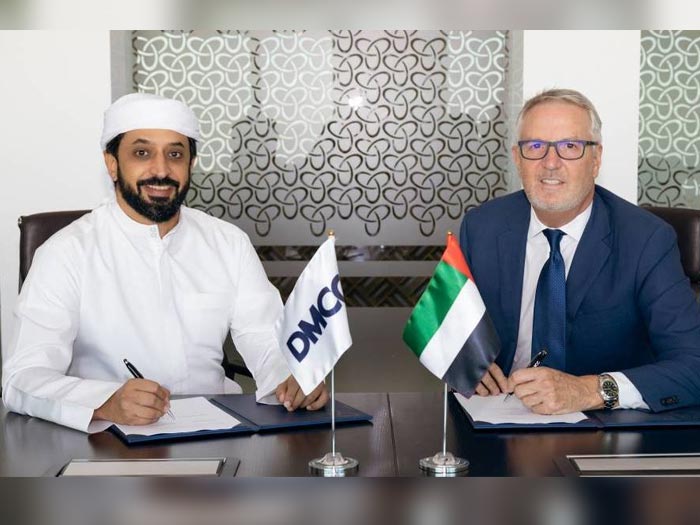
DMCC – the world’s flagship Free Zone and Government of Dubai Authority on commodities, trade and enterprise – has signed a strategic partnership with Boncafé Middle East, a leading manufacturer and distributor of gourmet coffee and coffee machines, to produce locally roasted coffee at DMCC’s state-of-the-art Coffee Centre. The signing, which took place in DMCC Headquarters in Almas Tower, was attended by Ahmed bin Sulayem, Executive Chairman and Chief Executive Officer of DMCC and Tony Billingham, CEO MENA and Group Executive Director of Boncafé.

Under the agreement, DMCC Coffee Centre will produce a variety of locally roasted coffee which is set to boost trade flow into the emirate of Dubai and in return will help develop Boncafé’s brand position in the larger MENA region. DMCC Coffee Centre will also produce and solely distribute a range of bespoke coffee products tailor made for Boncafé across the GCC.

The DMCC Coffee Centre offers world-class infrastructure and services and the partnership will further cement its position as a leading centre of excellence and trade producing a range of high quality coffees and blends up to par with traditional coffee markets such as Italy, the USA and Switzerland. The move serves both the global and local market by delivering fresh and cost-efficient coffee.

DMCC is proud to partner with Boncafé, a true powerhouse in the coffee industry and the region for 18 years, to provide them with a range of bespoke services to facilitate their global trade. This collaboration underpins our strategy of providing world-class services, from roasting and quality control through to packaging and distribution, that cater to the entire coffee value chain. It also truly reflects the strong reputation the Coffee Centre has built and its ability to attract leading coffee players, in turn positioning Dubai as a global hub for specialty coffee. We thank Boncafé for choosing us as their partner and very much look forward to working alongside their teams.” said Ahmed Bin Sulayem, Executive Chairman and Chief Executive Officer of DMCC.

The UAE is one of the most developed coffee markets in the region and the agreement is set to further enhance this position and bring added value to Dubai by boosting the import of Green coffee sourced from Africa, Latin America and Asia. Agreements as such will catapult Dubai’s GDP through the re-export of roasted coffee products into the region.

To partner with DMCC is a natural progression for the Boncafé & Massimo Zanetti Beverage Group and this further shows the Group commitment to develop locally roasted UAE coffees. This will undoubtedly enhance our brands position throughout the whole Middle East region being now produced locally in the UAE.” said Tony Billingham, CEO MENA, Boncafé Group Executive Director.

The DMCC Coffee Centre continues to attract international businesses by connecting the fast-growing consumer markets in the Middle East and Europe to some of the world’s major coffee producing nations. The Coffee Centre supports the entire coffee industry from crop to cup by offering cost-efficient logistical support as well as warehousing, roasting and packaging services. In July 2020, DMCC announced plans to expand the Coffee and Tea Centres to triple output, increase services and boost capacity.