Haraz: Where Mountain Agriculture Shapes the Character of Yemeni Coffee

Haraz – Qahwa World

High in Yemen’s rugged western highlands, the Haraz region stands as one of the world’s most demanding and refined coffee-growing landscapes. Farming coffee here is not merely an agricultural activity; it is a disciplined system built on manual labor, inherited knowledge, and a deep respect for natural cycles.
At Jabalbon Estate, this centuries-old approach remains alive, offering a clear field example of how Yemeni mountain coffee is cultivated with precision, patience, and purpose.

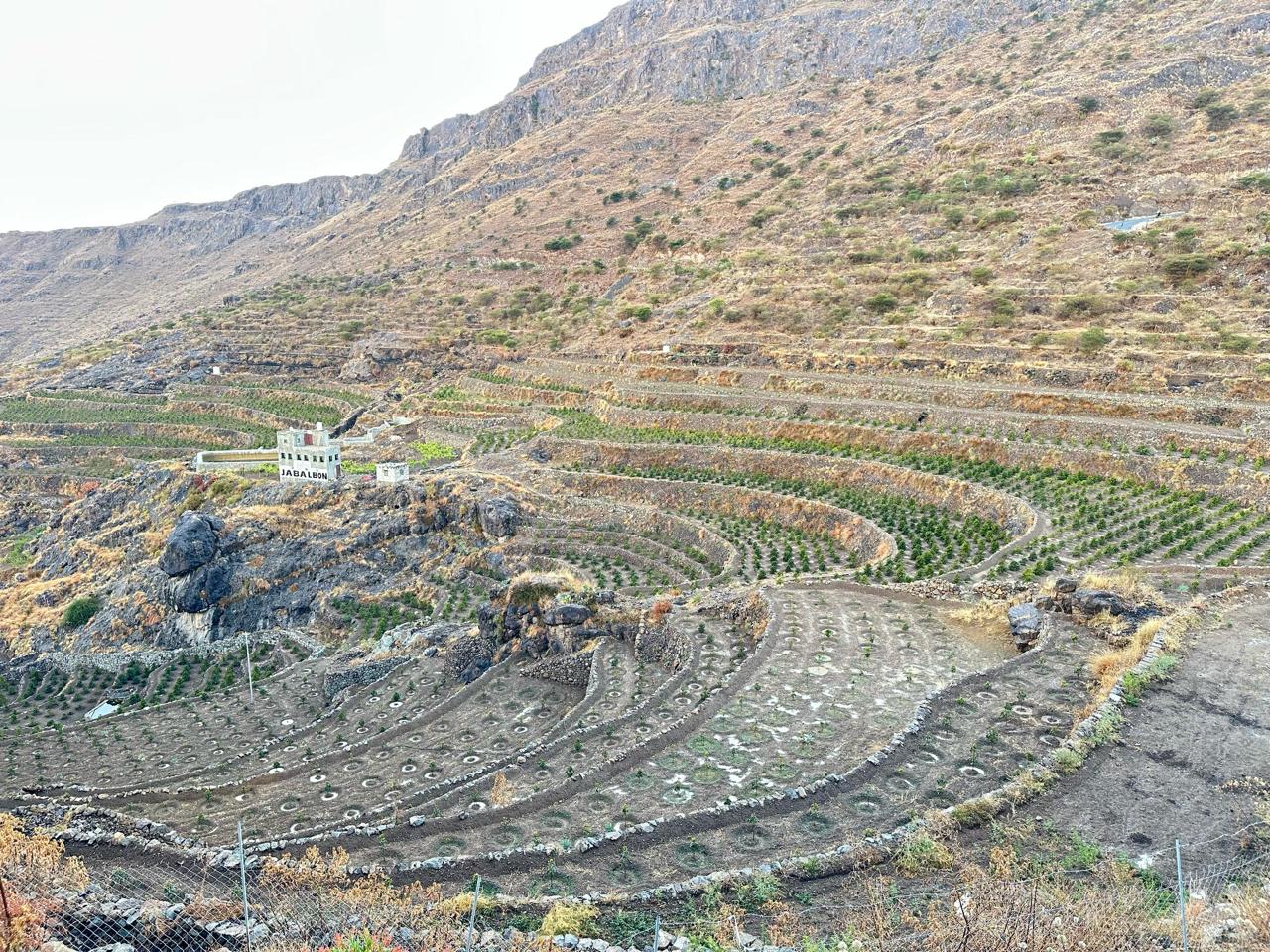
The land reclamation process in Jabalbon Estate farms in Haraz
  • Reclaiming the Mountain Slopes

The coffee journey in Haraz begins with land rehabilitation, a physically intensive process essential to survival farming in steep terrain. Farmers remove invasive trees such as acacia, clear wild grasses, and restore collapsed stone terraces using traditional construction methods. These terraces are more than landscape features. They stabilize soil, capture seasonal rainfall, and prevent erosion, forming the backbone of sustainable agriculture in Yemen’s high mountains.

A plot of land in Jabalbon Estate in Haraz, where meticulous care is evident from the very beginning.
  • Precision in Field Layout

Once the land is prepared, plots are carefully mapped to determine planting points. Coffee trees are spaced at approximately two meters apart, a deliberate decision aimed at improving soil aeration, reducing nutrient competition, and allowing balanced root and canopy development. In an environment where every square meter matters, spacing becomes a quality factor rather than a convenience.

In Jabalbon Estate in Haraz, every tree in its plot tells a unique story.
  • The “Buur” Pits: A Local Practice with Scientific Logic

One of Haraz’s most distinctive practices is the use of deep planting pits, locally known as buur. Each pit is roughly one meter deep and one meter wide. These pits are designed to break compact volcanic clay soil, enhance drainage, and reactivate biological life within the ground.
Left exposed for several months, the pits are naturally sterilized by sunlight before being refilled, transforming dense soil into a healthier growing medium ready to receive coffee seedlings.

In Jabalbon Estate in Haraz, the timing of planting is carefully managed.
  • Seasonal Planting Windows

Coffee seedlings are planted during two key periods: March and July. These windows coincide with moderate temperatures and natural moisture from seasonal rains, significantly increasing seedling survival rates and long-term stability.


  • In Jabalbon Estate in Haraz, coffee trees receive continuous care throughout the year, carried out manually with precise professional attention.
    In Jabalbon Estate in Haraz, coffee trees receive continuous care throughout the year, carried out manually with precise professional attention.

Maintaining coffee trees in Haraz requires continuous attention. Due to the soil’s tendency to harden, farmers carry out multiple annual plowing cycles to prevent root suffocation.
Irrigation relies primarily on rainfall, supported by carefully controlled supplemental watering when necessary. Fertilization follows a balanced program focused on strengthening root systems, supporting vegetative growth, and improving cherry quality over time rather than chasing short-term yields.

Jabalbon Estate is located atop the peaks of the Haraz Mountains, where the high altitude is one of the key factors behind its quality and distinction.
  • Altitude: The Silent Quality Driver

Jabalbon’s farms are located at elevations exceeding 2,600 meters above sea level. At this height, cooler temperatures and wide day–night fluctuations slow cherry development.
This extended maturation period increases bean density and contributes to the layered, complex flavor profiles that distinguish high-altitude Yemeni coffee on the global stage.

In Jabalbon Estate in Haraz, patience and continuous effort are two indispensable factors.
  • Patience Before Productivity

Coffee trees at Jabalbon are nurtured for years before reaching full economic production. Peak performance typically begins around the sixth year, when trees achieve physiological stability and consistent output. The philosophy here prioritizes longevity over speed, treating each tree as a long-term agricultural partner rather than a short-term asset.

In Jabalbon Estate in Haraz, between the tree’s flowering and the fruit’s ripening lies a journey that is both challenging and rewarding.
  • Flowering, Maturation, and Harvest

Flowering generally begins in March, followed by a slow maturation period lasting six to seven months. Harvest season starts in October and is conducted entirely by hand.
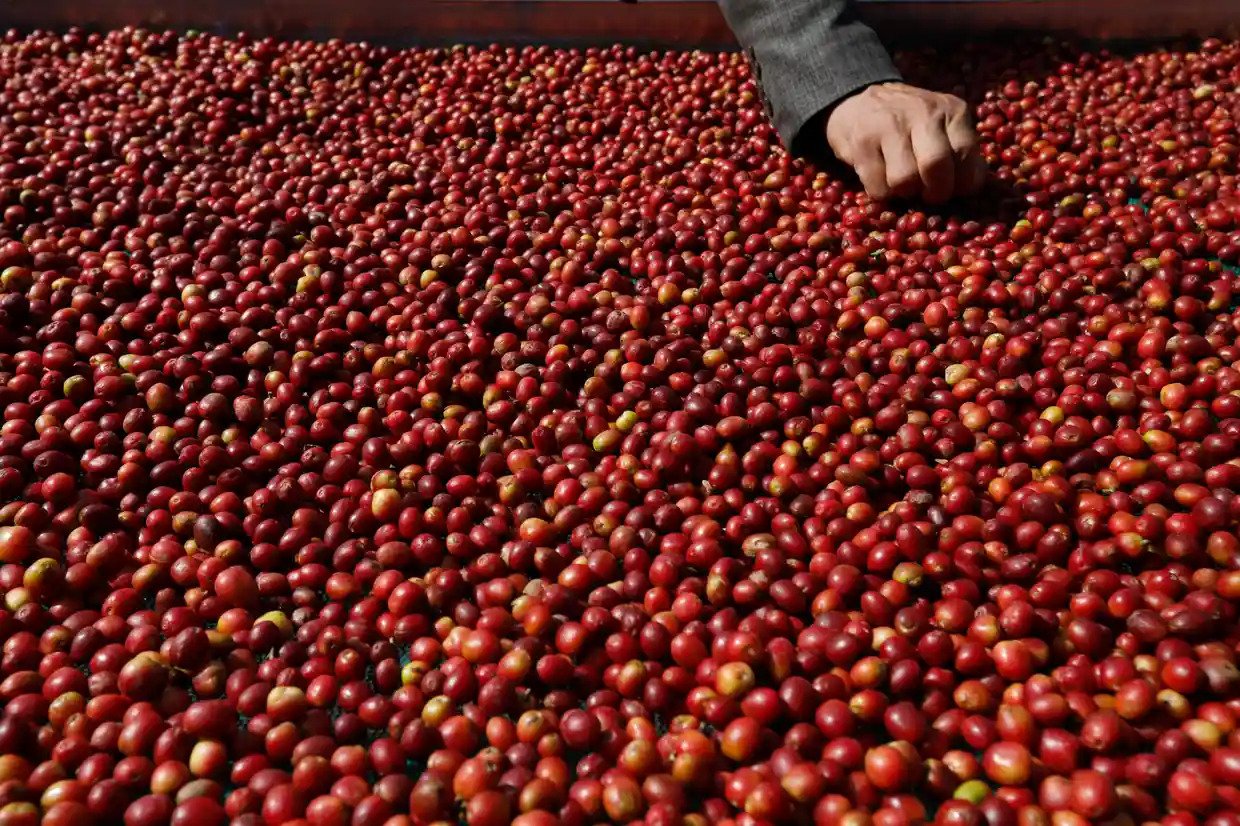
Only fully ripe red cherries are selectively picked, while unripe or green fruit is deliberately excluded. This strict selection ensures that each harvest reflects the true expression of altitude, soil, and climate.

In Jabalbon Estate in Haraz, there is complete reliance on manual labor.
  • Agricultural Ethics at the Core

Jabalbon Estate operates on principles that define traditional Yemeni coffee farming: manual cultivation, respect for natural rhythms, and refusal to force productivity at the expense of tree health.
Here, quality is not engineered through shortcuts. It is earned through time, restraint, and commitment to the land.

In Yemen’s high mountains, coffee is not grown to be harvested quickly — it is grown to endure.

In Jabalbon Estate in Haraz, irrigation holds special importance and follows precise schedules.

Yemeniyat: From Roastery to Boutique, Crafting the Finest Yemeni Coffee

Dubai,5 Marach 2024(QW): – In an enchanting coffee narrative, we delve into the tale of “Yemeniyat Boutique” in the Saudi capital, Riyadh. Initially, the name led me to believe it might be the brainchild of a group of Yemeni women, but a captivating revelation awaited. “Yemeniyat” emerged as a meticulously curated assortment of coffee, roasted at the “Runa” roastery in Jeddah, Saudi Arabia.

This roastery boasted a diverse array of coffee, encompassing Yemeni, Ethiopian, Brazilian, and other variants, a tradition that continues at the Al-Runa Roastery in Jeddah. Muhammad Modhesh, the project’s founder, shared that in 2018, they inaugurated the “Runa” roastery in Jeddah, offering a spectrum of Yemeni and Ethiopian crops. Towards the year-end, product packages were introduced, each bearing the names of the respective countries. These included the “Latinas,” “Ethiopian Women,” and the notable “Yemeniyat” package, featuring approximately 10 varieties of Yemeni coffee crops.

Despite its premium pricing, the “Yemeniyat” package garnered significant popularity due to its exceptional quality. Motivated by this success, the company decided to establish a small boutique in Riyadh in August 2023, exclusively dedicated to showcasing Yemeni coffee, aptly named “Yemeniyat.”

Hassan Al-Darib, the director, emphasized that their objective extends beyond introducing Yemeni coffee to the wider public; it also involves preserving and promoting the rich Yemeni coffee culture. The success of Yemeniyat Boutique has spurred plans for expansion, with the opening of three branches within the Kingdom this year and contemplation of entry into foreign markets, particularly in Abu Dhabi, Dubai, and Canada.

While Yemeniyat operates as a commercially profitable venture, it carries significant developmental facets by actively supporting Yemeni farmers. The project involves educating them on optimal practices in coffee cultivation and processing to yield superior products. Challenges abound due to the limited farming culture in most Yemeni regions, prompting farmers to rush harvests. Notably, the Haraz region stands out, where farmers have recognized the importance of meticulous crop handling and patience in both harvesting and post-harvest processing.

Modhesh disclosed concerted efforts to boost coffee cultivation in various Yemeni regions, particularly those internationally renowned, such as Yafa, where they planted 200 coffee petals. He stressed the necessity of collaboration, activity, strong awareness, and patience for these initiatives to bear fruit.

Crucially, Modhesh underscored their commitment to inclusivity, stating that Yemeniyat welcomes coffee from all regions in Yemen. The company not only supports all farmers but also acknowledges them by naming crops after them, fostering encouragement and motivation. Presently, their focus lies on coffee processing, offering diverse products like Arabic espresso, drip coffee, and more.

Elaf Mustafa’s Artistic Journey through Yemeni Coffee Heritage

Dubai  – Ali Alzakary

In the enchanting realms of Sanaa and Haraz, the life of Elaf Mustafa unfolds among the layers of Yemen’s rich soil. As a connoisseur of language, literature, art, and coffee, Elaf embarked on an academic path in translation and linguistics, finding herself guided by the intertwined forces of art, language, and the world of coffee.

Her connection to coffee is not a recent one; it is deeply rooted in her family’s history of cultivating and trading coffee beans. The fertile lands in Haraz, adorned with ancient coffee trees, tell stories that traverse generations, weaving a fabric of identity and knowledge.

Elaf’s journey, branching into diverse paths, testifies to the resilience imprinted in her experiences. Whether facing challenges through books, art, or embracing comforting coffee, she always designs alternative plans to navigate the ever-changing currents of life. And there is Sanaa, the captivating city that, despite challenges, never fails to inspire resilience.

In this interview, Elaf Mustafa explores her fascinating life, delving into the intersection of her academic pursuits, family heritage in coffee cultivation, and the profound impact of history on her journey as an artist. From her initial encounters with written words to the rich inspiration drawn from her family’s coffee heritage, Elaf paints a vivid picture of her evolution as an artist, revealing the symbiotic relationship between the brush and the coffee tree.

Join us as we uncover the layers of Elaf’s artistic narrative, where each stroke on the canvas echoes the stories of her ancestors and the enduring spirit of Yemeni coffee.

Who is Elaf Mustafa?

“I have lived my life between the lands of Sanaa and Haraz, and both have a vast space in my soul. I love everything related to language, literature, art, and coffee. Despite my passion for painting, which has accompanied me for years, I specialized academically in translation and linguistics. Today, I see that both art and language have led me to the path of coffee.

My affiliation with coffee is not a recent thing. My family has a deep history in the cultivation and trade of coffee. We own several farms in our hometown, Haraz, including farms that contained, and still are to this day, coffee trees that have lived for a decade, and through which ancestral stories, ancient knowledge and identity have been transmitted.

Between today and the past, I feel that I have branched out a lot. However, it’s worth mentioning that what I and my generation experienced in previous periods has shaped us in a way that one lifetime is not enough. We learned how to appreciate life, and in every instance when challenges prevailed, we had to devise alternative plans to navigate through the constantly changing waves of life. And there is Sanaa, the enchanting city that never lets us fall without inspiring us to rise, no matter how deep the trenches.”

How did your journey with coffee begin, and how were you influenced by the history and heritage of your family in coffee cultivation?

“My father had a library that contained many of history books, including those talking about ancient and contemporary civilizations. Thanks to his continuous encouragement for reading, I read many of them starting from the age of ten. I found that Yemen has a rich history that cannot be covered by volumes or thousands of books. But through my readings, I found that coffee created a beacon of light in this journey, through various stations. It connected with Yemenis through ages as a window and light. It’s noteworthy that it has been and still is creating and telling stories, and, in turn, I love stories very much.

I was greatly influenced by the fascinating link created by coffee trees. My grandmother, Hassana Ismail, preserved many stories for me about its importance in society, how it was cultivated, and the rituals of harvesting back then. She mentioned in one of the stories that at the beginning of the harvest, she and her mother would go to the farm. She would pick a few coffee beans in her hands and exchange them for other goods, a unique privilege that only coffee had. Many stories, all of which instilled in me love and pride for this tree, continually drive me to reflect its impact in paintings, even if only a little is revealed.”

How can coffee transform from a beverage into an identity and history, and how do you seek to convey this idea through your artistic works?

“In reality, coffee beans can never be confined to the word ‘beverage.’ They overflow from their cup, and they have many dimensions.

From the port of Mokha, this fruit witnessed civilizations, eras, and kingdoms. It created many contradictions as people doubted and clung to it, hiding it in a jar for decades as one of the most precious treasures. We see throughout history how wars were waged for it, and other wars were extinguished because of it.

When we witness today how our ancestors spent their lives preserving it despite the difficulties that mostly bent their backs, the picture becomes clear. This is precisely why I painted my latest piece titled ‘Descendants of the Sun’ for Hajjah Fatima, one of the coffee farmers in Mahwit, as a loud sign for the Yemeni coffee revolution in every era. She reached the age of eighty and still holds onto her beans, so it became imperative for me to immortalize her story within the folds of a painting.

How can art contribute to raising awareness of the importance of Yemeni coffee and its history in local and global communities?

“Since ancient times until today, art has been the main factor in conveying and preserving civilizations. For me, I see art alongside the history of coffee as an ancient window adorned with the colors of Yemeni lunar, each time portraying a scene that must be immortalized. So, I see them narrating their stories through my window, not the other way around. We truly see how the importance of this thing has imposed its reality on societies, whether local or international.”


How do you envision the future of the coffee industry in Yemen, and what role can art play in supporting it and shedding light on its heritage?

“The previous periods were challenging for Yemeni coffee, as its production significantly declined due to economic difficulties and environmental degradation. But today, we are living in an era of revival like never before. All sectors are working at full capacity to elevate it to stages surpassing its predecessors, starting from the land and supporting farmers by all means, up to roasting and presenting it. From our perspective today, I see a promising future waiting.

As for art, it is the constant companion to these beans and their land, embracing its roots tightly to preserve them from oblivion. They will always tell stories together.”

Fatima Abdul Khabeer: Inspirational Journey of a Yemeni Woman from Rural Taiz in Coffee Farming and Production

Dubai, January 27, 2024 (QW): In the rugged terrains of Yemen, where societal constraints often hinder women from pursuing entrepreneurial endeavors, a story of flexibility, wisdom, and determination has emerged. This is the inspirational journey of Fatima AbdulKhabeer, a Yemeni woman hailing from highly conservative rural areas, who defied social norms and founded a pioneering women’s agricultural association in the famous Sabr Mountain in Taiz Province, Yemen.

Fatima Abdul Khabeer’s remarkable journey garnered significant attention at the World of Coffee Dubai 2024, where she shared her journey from the inception of the association to its accomplishments up to the present.

Foundation Years   

In 2001, the “Talouq Feminine Association” was established, and over the years, the association grew to include 70 members engaged in coffee cultivation and production.

The association successfully implemented various projects, including a post-harvest coffee technology project funded by the French Embassy, amounting to approximately 250,000 USD. Additionally, they constructed 45 rainwater harvesting tanks and provided specialized training for over 400 farmers.

In 2009, Fatima Abdul Khabeer traveled to Germany, a journey that facilitated connections with foreign companies and marked a qualitative leap in understanding the importance of coffee quality, flavors, tasting techniques, and different aromas.

In 2010, she participated in the Second International Coffee Conference in Yemen, showcasing Talouq Valley’s coffee products and establishing partnerships, notably with “Mokha 1450,” a pivotal collaboration that began in 2013.

In 2014, Fatima embarked on a second journey to Ethiopia with the aim of exchanging experiences with Ethiopian coffee farmers and specialized associations.

Things were progressing well until 2015 when a dramatic shift occurred. Political conflicts intensified in Yemen, escalating into a war, bringing work to a complete halt. However, Fatima’s journey did not stop. Since 2017, she has led trips and visits to share experiences and transfer knowledge to farmers from various regions.

In 2022, the impact of climate change on farms became noticeable, prompting the association to monitor and track changes in coffee production caused by climate variations.

In 2023, the association received training from theSpecialty Coffee Association, initiating the peeling and cleaning operations for farmers from different regions with the goal of supporting exports.

At the Dubai Coffee World Exhibition 2024, Fatima AbdulKhabeer highlighted the current challenges facing Yemeni coffee farmers, including armed conflicts, climate change impacts, limited funding and support for farmers’ needs, export and marketing difficulties, and unfair competition from local traders.

She also outlined the stages of obtaining specialty coffee in Yemen:

  1. Pre-Harvest: Monitoring fruits in farms, protecting them from pests and nutritional deficiencies.
  2. Harvest: Careful selection and harvesting of ripe coffee beans.
  3. Drying: Sun-drying coffee beans on beds while controlling temperature and humidity to maintain quality.
  4. Storage: Appropriate storage conditions to preserve flavors and aromas, avoiding excessive heat, moisture, and odors.

Fatima AbdulKhabeer proudly stopped at some success stations in her career, as in 2017 she achieved third place in UAE Ibrik Championship , and in 2017 she achieved first place in the same tournament and fourth place in 2018.

Fatima AbdulKhabeer concluded her presentation by providing an overview of the current status of specialty coffee in Yemen, emphasizing that Yemen lacks sufficient expertise in preparing specialty coffee. Nevertheless, some regions have initiated serious efforts by training farmers, purchasing their crops, and selling them to external companies specializing in coffee.

Haraz: A Journey into the Heart of Yemeni Coffee

In the rich tapestry of coffee’s history, Yemen holds a special place. It was from Yemen that the world first tasted coffee, and the roots of the global coffee trade dig deep into its soil. While historians debate the origin of coffee—Ethiopia or Yemen—one fact remains indisputable: without Yemen, coffee would be an unknown entity.

Historical records point to Yemeni Sufis in the early fifteenth century as the first to elevate coffee from a mere beverage to a social ritual, using it to stimulate their minds during nightly worship. Yemeni coffee stands as the epitome of quality and commands a staggering price, with a pound fetching $240 and a kilo commanding around $500. Europe and the United States are the primary importers, despite dwindling production.

Coffee thrives across Yemen, but certain regions have etched their names in coffee history. Among them, Haraz, renowned for its towering mountains, some reaching 3000 meters above sea level,Coffee is grown there at altitudes, some of which reach 2,600 meters above sea level and terraced gardens crafted by Yemeni hands, transforming the landscape into lush coffee farms.

Haraz is synonymous with picturesque houses rising above the clouds, their roofs adorned with vibrant hues mirroring the splendor of drying coffee berries scattered around. Historical accounts trace coffee cultivation in Haraz back over 500 years.

Our guide into the heart of Haraz was Abdul Latif Al-Jaradi, a certified coffee expert from quality coffee institute   and founding shareholder of “Mocha Story” and “Coffee Story” companies exporting Yemeni coffee. Al-Jaradi has not only preserved endangered coffee varieties but also propagated them on a private farm with 300 thriving trees.

Haraz, according to Al-Jaradi, is divided into four distinct coffee-producing sections: eastern Haraz, western Haraz, Saafan, and Bani Ismail. Each region boasts its unique character and coffee profile, shaped by differences in terrain, environment, water, and soil.

Eastern Haraz coffee captivates with its unparalleled sweetness and fruitiness. In contrast, western Haraz coffee stands out with tropical fruity overtones, unique incense notes, intense sweetness, and exceptionally hard beans. Saafan coffee charms with its floral and sugary notes, while Bani Ismail coffee, often likened to chocolate, offers a blend of nuts, caramelization, and distinctive circular beans.

Haraz’s elevation, ranging from 1,700 to 2,600 meters above sea level, produces dense and sweet coffee beans. Al-Jaradi emphasizes that these heights are not just numbers but a testament to the careful cultivation on ancestral terraces.

Al-Jaradi identifies Al-Jaadi Al-Shirqi and Al-Jaadi Al-Daariti as prevalent in Haraz, with Saafan favoring the apple variety. Meanwhile, Bani Ismail boasts the Al-Khattab variety, renowned globally for its unique characteristics.

Despite being one of Yemen’s leading coffee producers, Haraz faces challenges from climate change. Al-Jaradi notes the reliance on traditional farming methods, with no machines intervening in plowing or harvesting. Coffee, akin to a family member, receives meticulous care, and the return mirrors the attention invested.

Recent changes in post-harvest practices, including selective harvesting and meticulous drying methods, have revived Haraz coffee’s reputation on the global stage.

In conclusion, Haraz remains a captivating chapter in the saga of Yemeni coffee. Its unique terroir, diverse coffee varieties, and the dedication of its cultivators echo through the ages. As climate change poses challenges, the resilience of Haraz’s coffee farmers keeps this ancient tradition alive, ensuring the world continues to savor the magic of Yemeni coffee.


Yemeni Coffee: History and Fame

Historically, Yemen has been associated with coffee for centuries, particularly with the city of Mocha, which represented the starting point for the fame of this beverage locally and globally. Yemeni coffee is known in many cultures as “Mocha,” referring to the port of Mocha, which was a hub for coffee exports.

Origin of the Coffee Tree:

The coffee tree is evergreen, reaching heights of approximately 4.5 to 6 meters, with deep roots and soft leaves. Coffee is used as a hot or cold beverage, prized for its stimulating effect due to its caffeine content.

Origin and History of Coffee:

Opinions vary regarding the origin of the coffee tree and its wild existence. Some believe it originated in the Arabian Peninsula and was transported to Ethiopia. Some suggest that coffee first appeared wild in the Kaffa region of southern Ethiopia, while others propose that it was likely brought to Ethiopia from Yemen due to environmental similarities between the two countries.

Yemeni Connection to Coffee:

It is believed that Yemenis became acquainted with the coffee tree in the early 5th century AD when it was planted in the Al-Dain region. Some accounts credit the Arab physician Al-Razi as the first to mention Yemeni coffee in 900 AD.

Agricultural and Commercial Development:

Coffee cultivation in Yemen has witnessed significant development since the Middle Ages, making Yemeni coffee a prominent symbol of high quality. Yemeni coffee became synonymous with the port of Mocha, renowned for its high quality, and was traded to several countries.

Coffee Growing Regions:

Coffee shrubs thrive in various regions of Yemen, including Sana’a, Hajjah, Al-Dain, Yafi, due to the considerable similarity in climatic conditions between these areas.

Coffee Varieties Cultivated in Yemen:

Yemen cultivates three varieties of coffee known as the Al-Daini, Tufahi, and Dwayri, named after the regions where they are cultivated, such as Al-Hamadi, Al-Yafi, Al-Burai, Al-Harazi, Al-Mutri, and Al-Haimi.