Researchers: The age of coffee is more than half a million years

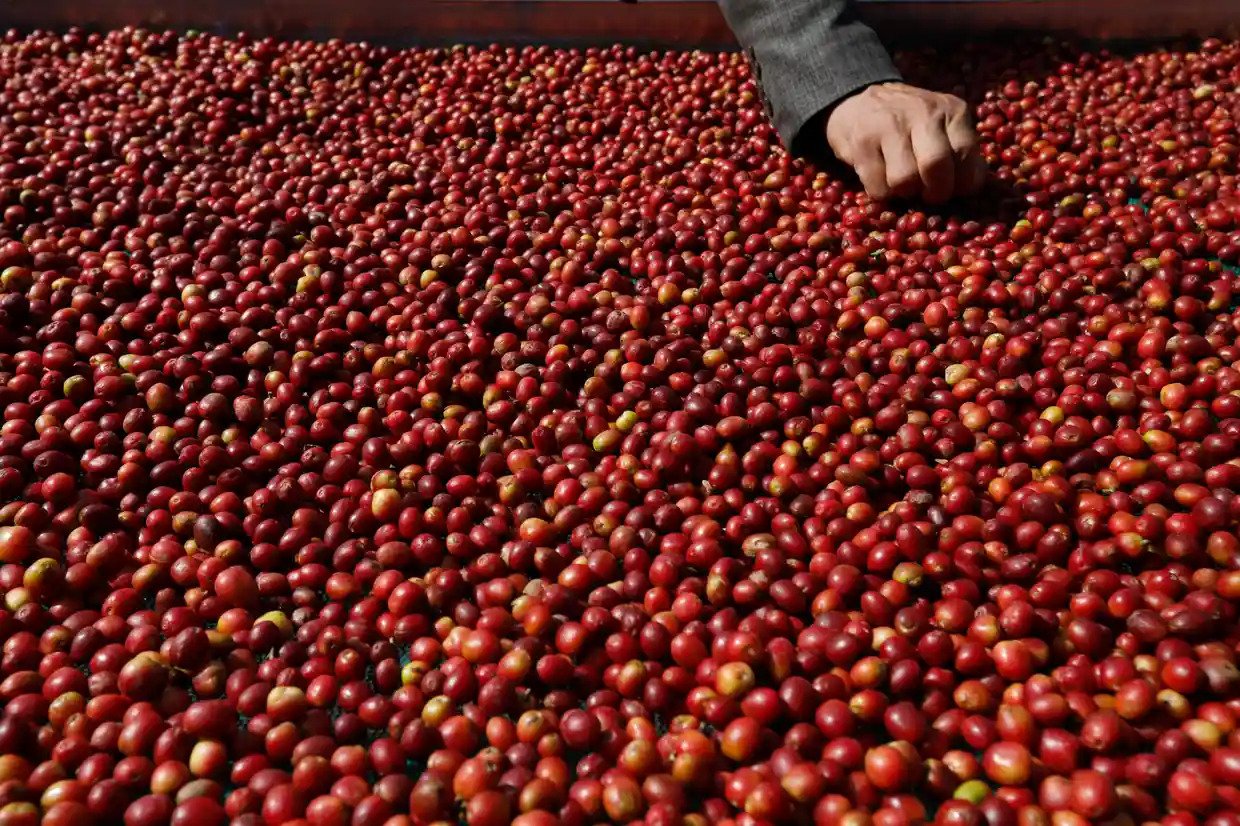
The cup of coffee you drank this morning might trace its roots back 600,000 years.

A new study published in Nature Genetics on April 15, 2024, has revealed that Coffea arabica—the world’s most popular coffee species—emerged through natural crossbreeding between two other species long before human cultivation.

Researchers from the University at Buffalo and Nestlé examined genetic data from coffee plants around the world to construct a comprehensive family tree of Coffea arabica. Their findings indicate that the species originated approximately 600,000 years ago, when Coffea canephora (robusta) and Coffea eugenioides hybridized naturally in the wild.

“In other words, this occurred long before any human intervention,” said Victor Albert, a biologist at the University at Buffalo and co-lead author of the study.

The wild ancestors of arabica first appeared in the highlands of Ethiopia, but it was in Yemen, during the 1400s, that the beans were first roasted and brewed—marking the beginning of coffee culture as we know it today.

By the 1600s, legend has it that Indian monk Baba Budan smuggled seven coffee beans from Yemen to India, laying the foundation for global coffee cultivation.

Today, arabica accounts for 60–70% of the world’s coffee production, prized for its smooth, mildly sweet flavor. It forms the backbone of beverages served by leading brands such as Starbucks, Tim Hortons, and Dunkin’.

The remaining 30–40% of the market comes from Coffea canephora—commonly known as robusta—a stronger and more bitter relative of arabica.

To uncover arabica’s genetic history, the team analyzed the genomes of C. canephora, C. eugenioides, and more than 30 arabica samples, including an 18th-century specimen preserved in the Natural History Museum in London. This very sample was once studied by Swedish botanist Carl Linnaeus when he officially classified the species.

The study shows that arabica’s population has fluctuated greatly over millennia—thriving during warm and wet periods, but shrinking during dry epochs. These “population bottlenecks” left arabica with low genetic diversity, making it highly vulnerable to diseases such as coffee leaf rust, which costs the global coffee industry billions each year.

Researchers also examined a rust-resistant arabica variety to identify genetic markers that could help breeders develop hardier plants. These insights, scientists say, could be key to safeguarding the species against the growing threats of pests and climate change.

“This study not only clarifies arabica’s evolutionary history but also provides crucial clues for protecting one of the world’s most valuable crops,” said Fabian Echeverria, adviser at the Center for Coffee Research and Education at Texas A&M University, who was not involved in the research.

By retracing arabica’s ancient lineage, scientists hope to ensure a sustainable future for coffee cultivation—keeping plants healthy, farmers resilient, and morning cups full for generations to come.

Coffee Origins: Its History and Impact on the Body

From the bustling streets of New York to the serene slopes of Ethiopia’s hills, coffee is an integral part of the lives of millions of people around the world.

Coffee has held a prominent place in human culture for over 15 centuries, credited with promoting the Enlightenment movement in the seventeenth and eighteenth centuries, contributing to the foundation of the modern world.

Caffeine is considered the main component in coffee, and today it is one of the most consumed stimulants in the world, reflecting its influence on thinking and sensation.

Coffee Source and History:

Coffee comes from the fruits of the Arabica coffee plant, whose main origin is Ethiopia. Over 90% of coffee is produced in developing countries, while most of this production is consumed in industrialized countries.

The oldest accounts of coffee history date back to the ninth century AD when a shepherd named Khalid was the first to discover its benefits when he noticed the activity of his goats after consuming it.

In the fourteenth century, Sufis in Yemen roasted coffee beans, and from there, its use as a common beverage spread worldwide.

In the fifteenth century, coffeehouses emerged in the Ottoman Empire and spread to Europe as centers of cultural and intellectual dialogue, contributing to the promotion of Enlightenment ideas.

Coffee’s Impact on the Body:

Once caffeine is consumed, it is absorbed and directed to the nervous system, where it stimulates the brain and reduces the feeling of drowsiness.

Caffeine interacts with adenosine receptors in the nervous system, leading to increased heart rate, alertness, and concentration.

The benefits of caffeine last between 15 minutes and two hours, with side effects if consumed excessively, such as anxiety and insomnia.

For health benefits, moderate consumption of coffee is recommended daily, and excessive consumption should be avoided.

After about 600 years, coffee still occupies an important place in global culture, remaining a focal point of many people’s daily lives, thanks to its vital influence on the body and mind.


Elaf Mustafa’s Artistic Journey through Yemeni Coffee Heritage

Dubai  – Ali Alzakary

In the enchanting realms of Sanaa and Haraz, the life of Elaf Mustafa unfolds among the layers of Yemen’s rich soil. As a connoisseur of language, literature, art, and coffee, Elaf embarked on an academic path in translation and linguistics, finding herself guided by the intertwined forces of art, language, and the world of coffee.

Her connection to coffee is not a recent one; it is deeply rooted in her family’s history of cultivating and trading coffee beans. The fertile lands in Haraz, adorned with ancient coffee trees, tell stories that traverse generations, weaving a fabric of identity and knowledge.

Elaf’s journey, branching into diverse paths, testifies to the resilience imprinted in her experiences. Whether facing challenges through books, art, or embracing comforting coffee, she always designs alternative plans to navigate the ever-changing currents of life. And there is Sanaa, the captivating city that, despite challenges, never fails to inspire resilience.

In this interview, Elaf Mustafa explores her fascinating life, delving into the intersection of her academic pursuits, family heritage in coffee cultivation, and the profound impact of history on her journey as an artist. From her initial encounters with written words to the rich inspiration drawn from her family’s coffee heritage, Elaf paints a vivid picture of her evolution as an artist, revealing the symbiotic relationship between the brush and the coffee tree.

Join us as we uncover the layers of Elaf’s artistic narrative, where each stroke on the canvas echoes the stories of her ancestors and the enduring spirit of Yemeni coffee.

Who is Elaf Mustafa?

“I have lived my life between the lands of Sanaa and Haraz, and both have a vast space in my soul. I love everything related to language, literature, art, and coffee. Despite my passion for painting, which has accompanied me for years, I specialized academically in translation and linguistics. Today, I see that both art and language have led me to the path of coffee.

My affiliation with coffee is not a recent thing. My family has a deep history in the cultivation and trade of coffee. We own several farms in our hometown, Haraz, including farms that contained, and still are to this day, coffee trees that have lived for a decade, and through which ancestral stories, ancient knowledge and identity have been transmitted.

Between today and the past, I feel that I have branched out a lot. However, it’s worth mentioning that what I and my generation experienced in previous periods has shaped us in a way that one lifetime is not enough. We learned how to appreciate life, and in every instance when challenges prevailed, we had to devise alternative plans to navigate through the constantly changing waves of life. And there is Sanaa, the enchanting city that never lets us fall without inspiring us to rise, no matter how deep the trenches.”

How did your journey with coffee begin, and how were you influenced by the history and heritage of your family in coffee cultivation?

“My father had a library that contained many of history books, including those talking about ancient and contemporary civilizations. Thanks to his continuous encouragement for reading, I read many of them starting from the age of ten. I found that Yemen has a rich history that cannot be covered by volumes or thousands of books. But through my readings, I found that coffee created a beacon of light in this journey, through various stations. It connected with Yemenis through ages as a window and light. It’s noteworthy that it has been and still is creating and telling stories, and, in turn, I love stories very much.

I was greatly influenced by the fascinating link created by coffee trees. My grandmother, Hassana Ismail, preserved many stories for me about its importance in society, how it was cultivated, and the rituals of harvesting back then. She mentioned in one of the stories that at the beginning of the harvest, she and her mother would go to the farm. She would pick a few coffee beans in her hands and exchange them for other goods, a unique privilege that only coffee had. Many stories, all of which instilled in me love and pride for this tree, continually drive me to reflect its impact in paintings, even if only a little is revealed.”

How can coffee transform from a beverage into an identity and history, and how do you seek to convey this idea through your artistic works?

“In reality, coffee beans can never be confined to the word ‘beverage.’ They overflow from their cup, and they have many dimensions.

From the port of Mokha, this fruit witnessed civilizations, eras, and kingdoms. It created many contradictions as people doubted and clung to it, hiding it in a jar for decades as one of the most precious treasures. We see throughout history how wars were waged for it, and other wars were extinguished because of it.

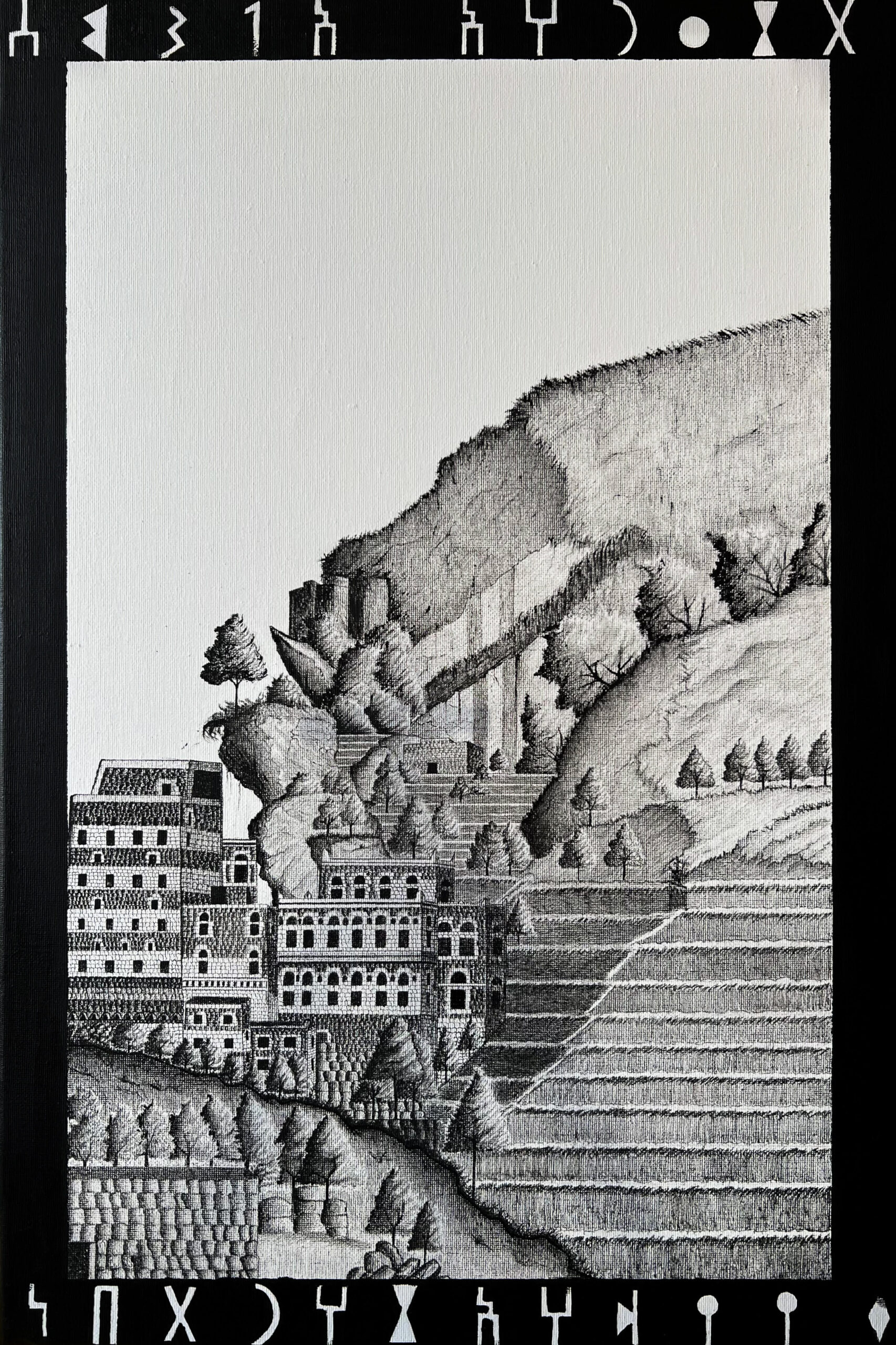
When we witness today how our ancestors spent their lives preserving it despite the difficulties that mostly bent their backs, the picture becomes clear. This is precisely why I painted my latest piece titled ‘Descendants of the Sun’ for Hajjah Fatima, one of the coffee farmers in Mahwit, as a loud sign for the Yemeni coffee revolution in every era. She reached the age of eighty and still holds onto her beans, so it became imperative for me to immortalize her story within the folds of a painting.

How can art contribute to raising awareness of the importance of Yemeni coffee and its history in local and global communities?

“Since ancient times until today, art has been the main factor in conveying and preserving civilizations. For me, I see art alongside the history of coffee as an ancient window adorned with the colors of Yemeni lunar, each time portraying a scene that must be immortalized. So, I see them narrating their stories through my window, not the other way around. We truly see how the importance of this thing has imposed its reality on societies, whether local or international.”


How do you envision the future of the coffee industry in Yemen, and what role can art play in supporting it and shedding light on its heritage?

“The previous periods were challenging for Yemeni coffee, as its production significantly declined due to economic difficulties and environmental degradation. But today, we are living in an era of revival like never before. All sectors are working at full capacity to elevate it to stages surpassing its predecessors, starting from the land and supporting farmers by all means, up to roasting and presenting it. From our perspective today, I see a promising future waiting.

As for art, it is the constant companion to these beans and their land, embracing its roots tightly to preserve them from oblivion. They will always tell stories together.”

Yemeni Coffee: History and Fame

Historically, Yemen has been associated with coffee for centuries, particularly with the city of Mocha, which represented the starting point for the fame of this beverage locally and globally. Yemeni coffee is known in many cultures as “Mocha,” referring to the port of Mocha, which was a hub for coffee exports.

Origin of the Coffee Tree:

The coffee tree is evergreen, reaching heights of approximately 4.5 to 6 meters, with deep roots and soft leaves. Coffee is used as a hot or cold beverage, prized for its stimulating effect due to its caffeine content.

Origin and History of Coffee:

Opinions vary regarding the origin of the coffee tree and its wild existence. Some believe it originated in the Arabian Peninsula and was transported to Ethiopia. Some suggest that coffee first appeared wild in the Kaffa region of southern Ethiopia, while others propose that it was likely brought to Ethiopia from Yemen due to environmental similarities between the two countries.

Yemeni Connection to Coffee:

It is believed that Yemenis became acquainted with the coffee tree in the early 5th century AD when it was planted in the Al-Dain region. Some accounts credit the Arab physician Al-Razi as the first to mention Yemeni coffee in 900 AD.

Agricultural and Commercial Development:

Coffee cultivation in Yemen has witnessed significant development since the Middle Ages, making Yemeni coffee a prominent symbol of high quality. Yemeni coffee became synonymous with the port of Mocha, renowned for its high quality, and was traded to several countries.

Coffee Growing Regions:

Coffee shrubs thrive in various regions of Yemen, including Sana’a, Hajjah, Al-Dain, Yafi, due to the considerable similarity in climatic conditions between these areas.

Coffee Varieties Cultivated in Yemen:

Yemen cultivates three varieties of coffee known as the Al-Daini, Tufahi, and Dwayri, named after the regions where they are cultivated, such as Al-Hamadi, Al-Yafi, Al-Burai, Al-Harazi, Al-Mutri, and Al-Haimi.