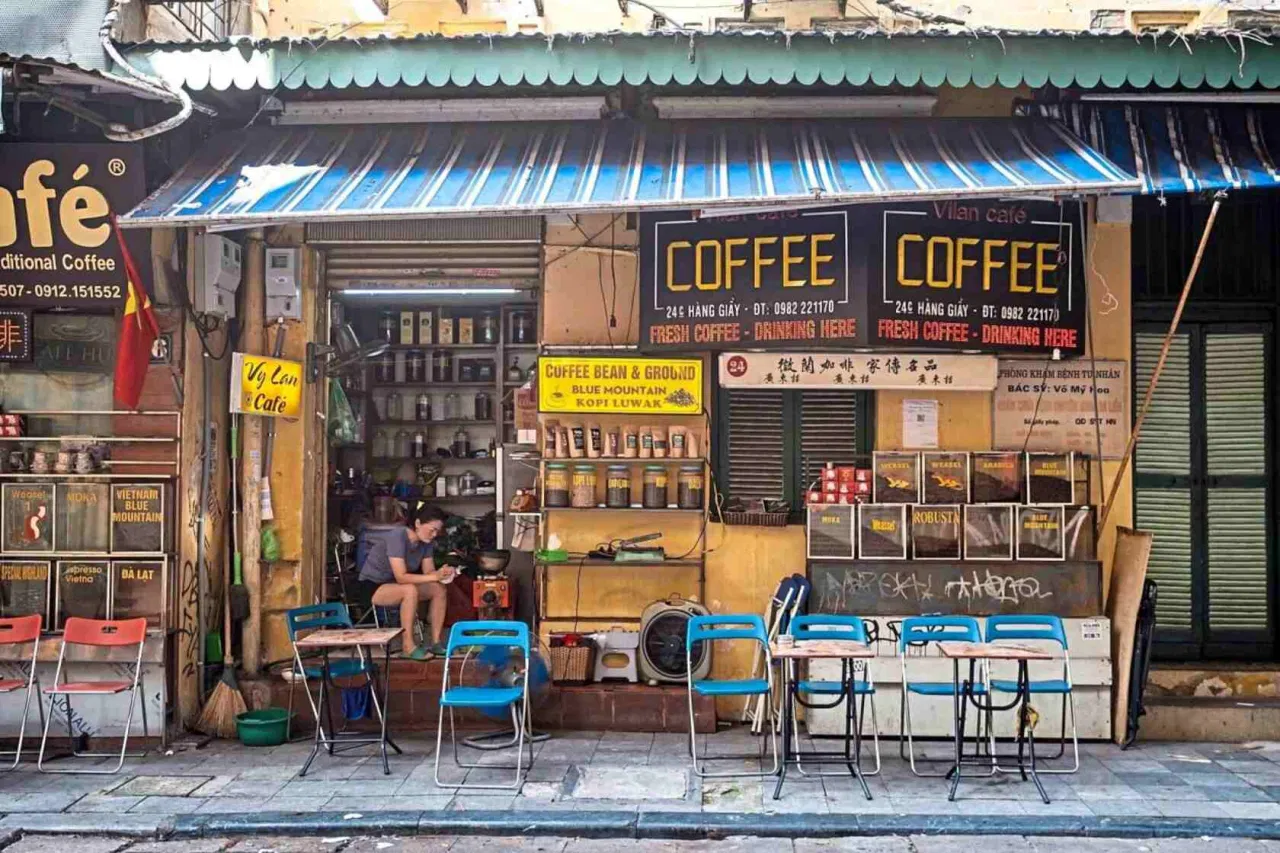
How Vietnam Turned Coffee Into a Way of Life?

Dubai – Qahwa World

National Geographic has published an in-depth report examining Vietnam’s coffee culture, describing it as one of the most dynamic and inventive in the world—where a once-colonial crop has evolved into a powerful symbol of identity, community, and creativity.

According to the magazine, coffee in Vietnam is far more than a daily stimulant. While many cultures consume coffee quickly or in passing, Vietnamese coffee is typically enjoyed slowly, in social settings that encourage conversation, reflection, and a shared sense of place.

From Colonial Introduction to Global Powerhouse

As reported by National Geographic, coffee was first introduced to Vietnam in 1857 by French missionaries. Early cultivation focused on Arabica beans, which struggled in the country’s climate. Farmers eventually shifted to Robusta, a hardier variety that thrived in the Central Highlands and southern regions.

Following the Vietnam War, coffee became a cornerstone of the country’s economic recovery. Government investment in the 1980s helped transform Vietnam into a major producer, and today it stands as the world’s second-largest coffee exporter after Brazil, the magazine notes.

Innovation Shaped by Scarcity

The report highlights how periods of scarcity fueled Vietnam’s most distinctive coffee traditions. During the 1940s, when fresh milk was difficult to obtain, condensed milk became a staple ingredient. The same era saw the creation of Vietnam’s iconic egg coffee, made by whisking egg yolks with sugar into a rich, creamy topping.

National Geographic also points to the phin filter—a simple metal brewing device—as a defining feature of Vietnamese coffee culture, producing a bold, concentrated brew that reflects both practicality and craftsmanship. Coconut coffee, meanwhile, emerged from the country’s abundance of tropical resources.

Coffee as a Social Ritual

According to voices cited by National Geographic, coffee in Vietnam functions as a social rhythm rather than a rushed habit. From street-side stools in Ho Chi Minh City to neighborhood cafés in Hanoi, coffee drinking is deeply embedded in everyday life.

The magazine reports that this communal approach has increasingly attracted travelers, while younger generations of Vietnamese entrepreneurs are reshaping the industry—focusing on quality, traceability, and thoughtful café experiences that elevate local beans to global standards.

A New Era of Coffee Experiences

National Geographic notes that cities such as Hanoi, Da Nang, and Hoi An now offer a wide spectrum of coffee experiences. Traditional cafés coexist with specialty shops, luxury hotels, and curated tasting programs that introduce visitors to Vietnam’s diverse coffee terroirs.

The report also highlights the growing presence of coffee-based cocktails and modern mixology, where Vietnamese Robusta beans are used to add depth and structure to innovative drinks, reflecting the country’s evolving culinary creativity.

A Living Cultural Legacy

In conclusion, National Geographic emphasizes that Vietnam’s relationship with coffee mirrors the nation’s broader history—shaped by colonial influence, hardship, and adaptation, yet ultimately defined by ownership and pride.

As the magazine observes, drinking Vietnamese coffee today is not simply about flavor, but about experiencing a collective memory of resilience, reinvention, and hope.

Coffee Price Forecast in Russia for 2026

Dubai – Qahwa World

Experts have warned that coffee prices in Russia could see a significant rise in 2026. Sergey Mitrofanov, Marketing Director at Svarshchitsa Ekaterina, explained the factors influencing coffee prices and why an increase is expected to continue.

Mitrofanov noted that the cost of coffee results from a long chain of processes, including crop yields in producing countries, climate risks, global demand, logistics, roasting, inflation, and currency fluctuations. Since the Russian market relies entirely on imports, the dollar exchange rate directly affects the final coffee price.

The expert highlighted that most of the global coffee volume is traded on international exchanges: Robusta on the London Intercontinental Exchange and Arabica on the ICE in New York. According to ICE data, coffee prices reached about $3.25 per pound ($7.15 per kilogram) in September 2025, one of the highest levels in recent years. Between September 2024 and September 2025, global coffee prices rose by roughly 25%.

Mitrofanov indicated that prices are expected to continue rising, with a projected increase of around 20% in 2026. He explained that changes on the exchanges affect retail prices with a delay, as most purchases are contracted 6–12 months in advance.

He also noted that a poor harvest in one country does not automatically mean a shortage, as supply can be compensated by neighboring countries. Specialty coffee roasters continue to seek alternative lots to maintain quality while balancing cost, keeping options open for the Russian market.

Mitrofanov added that other costs such as equipment, maintenance, and logistics are rising year by year, which adds additional pressure on coffee prices. However, he noted that the strengthening of the ruble in the first half of 2025 temporarily lowered retail prices, and the market outlook for 2026 will depend on multiple factors.

Earlier reports showed that Americano and Latte were the most purchased drinks in Russian stores. There were also statements from former U.S. President Donald Trump regarding plans to reduce coffee tariffs in global markets.

Global Coffee Giants Face Slower Growth and Rising Costs

Dubai – Qahwa World

Leading coffee companies are encountering a slowdown in consumer demand. Poor harvests, trade tariffs, and rising costs have weakened coffee consumption in Western markets, slowing sales growth and putting pressure on company valuations in the $400 billion industry. Expansion into emerging markets like China is seen as the next step, but it will likely be a costly and complex effort.

The modern coffee surge began in the late 1990s, peaking just before the pandemic. Major chains like Starbucks spread rapidly through Western cities, followed by the emergence of numerous specialty coffee shops. Companies such as Nestlé expanded their coffee lines to capitalize on growing demand for a high-margin beverage.

In 2018, Nestlé acquired the rights to sell Starbucks-branded products outside the U.S. for $7 billion. That same year, JAB, owner of JDE Peets, invested $2 billion to acquire a controlling stake in Pret A Manger. Coca-Cola also purchased Costa for $5 billion, describing the chain as a platform to broaden coffee sales from supermarkets to automated vending.

Yet, recent years have seen challenges mount. Coffee prices have surged, making popular drinks like cappuccinos and lattes more expensive for consumers, particularly in inflation-affected regions. In the U.S., ground coffee reached a record $9 per pound, double the price from 2021, and coffee prices increased 9% in the past year, well above overall inflation.

Future production faces risks from extreme weather events—droughts, floods, and frost—in key coffee-growing countries such as Brazil, Indonesia, and Vietnam. Rising labor costs and other operational expenses now make up roughly 90% of the cost of a cup of coffee. Tariffs on countries producing coffee pods, including Switzerland and Brazil, further strain margins, though recent U.S. agreements with Argentina, Ecuador, Guatemala, and El Salvador may ease some pressures.

The sector is seeing major shifts. Starbucks, valued at $100 billion, has faced profit warnings and is closing about 1% of its stores under CEO Brian Niccol. Keurig Dr Pepper’s $18 billion purchase of JDE Peets is designed to separate higher-margin beverage sales from lower-margin coffee operations. Pret A Manger also recorded a significant write-down, and Coca-Cola has considered divesting Costa due to underperformance.

Nestlé, whose at-home coffee products tend to be smaller and lower in caffeine content, appears better positioned against inflation. Still, the bigger challenge is sustaining growth in already crowded markets. In the U.S., Starbucks and Dunkin’ Donuts operate nearly 30,000 stores combined, while in the U.K., 98 million cups of coffee are consumed daily, with almost one in five people visiting a coffee shop each day.

To find growth, companies are increasingly turning to China and Latin America. Nestlé’s new CEO, Philipp Navratil, plans to introduce products in these regions, and Starbucks recently announced 145 new stores across Latin America and the Caribbean. However, income levels remain modest in these markets, competition is intense, and marketing costs will likely rise, limiting profitability. Starbucks’ experience in China demonstrates the difficulty of competing with local operators and imitations.

Expanding beyond saturated Western markets is logical, but the path forward may mean slower growth and smaller margins for the coffee industry.

Organic Coffee Market to Reach USD 30.5 Billion by 2033, Growing at 8.5% CAGR

Dubai, September 8, 2025 (Qahwa World) – The global organic coffee market is on track to more than double in value, rising from USD 15.2 billion in 2024 to USD 30.5 billion by 2033, according to a new report by Verified Market Reports. The study highlights a strong compound annual growth rate (CAGR) of 8.5% from 2026 to 2033, driven by shifting consumer preferences and evolving market dynamics.

Key Growth Drivers

The rise in demand for organic coffee is propelled by several factors:

  • Health and premiumization: Increasing awareness of health benefits and demand for high-quality certified organic Arabica and specialty blends.

  • Sustainability and ethics: Growth in ethically sourced products and investments in organic farming practices.

  • Digital traceability: Use of blockchain and QR codes for provenance and storytelling, enhancing consumer trust.

  • Climate challenges: Weather-related disruptions are reshaping sourcing strategies and spurring investment in regenerative agriculture.

  • Market channels: Expansion of direct-to-consumer (DTC) and ready-to-drink (RTD) organic products, supported by subscription models and e-commerce.

  • Regulatory and regional shifts: Stricter certification standards and rising demand in Asia-Pacific, particularly in China, Japan, and South Korea.

Market Challenges

Despite strong growth, the market faces hurdles such as high certification costs for smallholders, limited availability of high-yield organic varietals, and climate-driven yield variability. Industry experts suggest that pooled certification, cooperative financing, and agronomy support programs could help overcome these barriers while strengthening supply chains.

Regional Outlook

North America and Western Europe remain the largest importers and consumers of organic coffee, but Asia-Pacific is projected to record the fastest growth. Increasing consumption in emerging economies, coupled with regulatory changes, is expected to reshape trade flows and create new competitive dynamics.

Industry Players

Major companies shaping the market include Jim’s Organic Coffee, Rogers Family, Death Wish Coffee, Grupo Britt, Strictly Organic Coffee, Dean’s Beans Organic Coffee, Keurig Green Mountain, Allegro Coffee, Café Don Pablo, Grupo Nutresa, and Oakland Coffee, among others. Their strategies revolve around premium positioning, digital traceability, and diversified product portfolios.

Market Segmentation

The report categorizes the organic coffee market by product type (whole bean, ground, instant, pods/capsules), roast type (light, medium, dark, blended), distribution channel (online retail, supermarkets, specialty stores, convenience stores, direct sales), end-user demographics (health-conscious, environmentally-conscious, income and age groups), and formulation (single-origin, blends, flavored, decaffeinated).

Coca-Cola Weighs Future of Costa Coffee Amid Strategic Review

Dubai, 24 August 2025 (Qahwa World) – The Coca-Cola Company is considering a possible sale of Costa Coffee, the British café chain it acquired in 2018, in what could become one of the most significant moves in the global coffee sector this year. According to reports confirmed by individuals familiar with the discussions, the U.S. beverage giant has hired investment bank Lazard to explore strategic options for Costa, ranging from a complete divestment to other restructuring paths. Early conversations have reportedly taken place with a limited number of potential bidders, including private equity firms, with indicative offers expected later this autumn.

The development marks a dramatic turn for Coca-Cola, which purchased Costa Coffee for more than $5 billion only seven years ago. At the time, the acquisition was presented as a bold entry into the booming global coffee market, positioning Coca-Cola to compete directly with established players such as Starbucks and Nestlé. With over 4,000 stores worldwide, including more than 2,700 outlets in the United Kingdom and Ireland, Costa provided the Atlanta-based company with an immediate international footprint in coffee retail, a sector where it had previously lacked presence.

Yet the performance of Costa under Coca-Cola’s ownership has fallen short of expectations. While revenues have grown modestly, the chain has struggled with profitability in the face of rising costs, increased competition, and shifting consumer behavior. In 2023, Costa’s revenues climbed by 9 percent to nearly £1.22 billion, but the company recorded a pre-tax loss of £9.6 million. The figure represented a sharp contrast with the £245.9 million profit reported just one year earlier, underscoring the financial pressure weighing on the brand.

Several factors appear to have contributed to Costa’s difficulties. Inflation has raised the cost of raw coffee beans and other inputs, while the high-street café market in the United Kingdom has grown more crowded with independent operators and international rivals. Additionally, some smaller branches in towns such as Andover and Lyme Regis have recently closed, fueling concerns that the chain has been unable to maintain momentum outside its core metropolitan strongholds.

The possibility of a sale, first reported by Sky News and later confirmed by other outlets, has already sparked debate over how much Costa is worth in the current environment. Industry analysts have suggested that the chain could fetch as little as £2 billion—less than half of what Coca-Cola paid in 2018. Such a valuation would reflect the challenges the brand faces as well as the cautious outlook of investors weighing long-term demand trends.

Coca-Cola executives have acknowledged the need to reassess the company’s position in the coffee category. In an earnings call last month, Chief Executive James Quincey stated that Costa had not delivered on the original investment hypothesis, noting that the company was now reflecting on lessons learned and exploring new avenues for growth in coffee. At the same time, he emphasized that Costa continues to operate successfully day to day, suggesting that any decision would be carefully measured rather than abrupt.

The discussions around Costa also fit into a broader wave of corporate restructuring across the global food and beverage industry. With inflation altering cost structures and consumers increasingly prioritizing health, sustainability, and transparency, large companies are rethinking their portfolios to adapt. Coca-Cola has already made moves in this direction, most recently announcing a shift to real cane sugar in its U.S. beverages as part of a campaign to respond to rising health awareness.

Should a sale move forward, it would reshape the global coffee landscape. Costa, with operations spanning more than 50 countries, represents one of the few brands capable of challenging Starbucks on a multi-regional scale. A new owner could seek to revitalize the brand with fresh investment and focus, while Coca-Cola would gain flexibility to redirect resources toward other categories. On the other hand, if bids fall short of expectations, the company may choose to retain Costa and pursue an internal restructuring to restore profitability.

For now, the process remains in early stages, and no definitive outcome has been decided. What is clear, however, is that Coca-Cola’s venture into the café business—once considered a cornerstone of its diversification strategy—is under critical review. Whether Costa changes hands or undergoes a major transformation within the Coca-Cola system, the decision will send ripples through both the corporate boardrooms and coffee shops that make up an increasingly competitive global market.

CQI Reflects on a Landmark Year and Sets Ambitious Plans for 2025

As the Coffee Quality Institute (CQI) concludes 2024, CEO Michael Sheridan shares reflections on a remarkable year for the organization and its global coffee community. Marking the 20th anniversary of the Q Grader program, CQI celebrated the milestone with podcasts, social media campaigns, and in-person events that underscored the legacy of the industry’s premier coffee cupping credential.

The Q Grader community, which now boasts nearly 10,000 members, saw significant growth this year, alongside the expansion of CQI’s Processing Professionals and Instructor networks. Sheridan welcomed three new team members, including T.J. Ryan, who has taken on the role of Director of Mission Engagement. “Welcoming T.J. was like bringing family home,” Sheridan noted. Ryan will spearhead CQI’s project initiatives and the evolving Global Fund, an area poised for greater impact in the coming year.

Global Fund Expansion: Empowering Coffee Communities Worldwide

In its second year of operation, the CQI Global Fund provided nearly $90,000 in cash and in-kind support to seven initiatives across four continents. Highlights include:

  • Mexico: Two grants supported nearly 100 participants, with post-harvest process training and scholarships empowering smallholder farmers and quality control managers. Collaborations included CAFECOL and the International Women’s Coffee Alliance.
  • Ethiopia: CQI worked with women-led companies to certify seven new Q Graders through the Q Combo course.
  • Latin America: The innovative Girlsplaining initiative, led by Assistant Instructor Camila Khalifé, delivered specialized training to women in coffee.
  • United States: Support for NKG PACE program partners included cupping courses and introductory post-harvest processing classes.

Looking ahead, CQI plans to unveil a comprehensive vision for the Global Fund’s future at its 25th Annual Luncheon in April 2025 in Houston.

Celebrating Dedication: Honoring Outgoing Trustees

As 2024 draws to a close, CQI honors the commitment of outgoing trustees who collectively dedicated 96 years of service to the organization. From Ellen Jordan’s 26-year legacy to the fresh perspective of Liz Caselli-Mechael’s two-year tenure, CQI’s success owes much to these visionaries.

A Message of Growth and Gratitude

Sheridan’s year-end message also highlighted plans for 2025, including expanded coffee events, new courses, and continued certification projects, such as the impressive five-fold increase in certified Q Graders in Burundi. As CQI looks to the future, it remains deeply committed to improving coffee quality and the lives of those who produce it.

With deep gratitude for the past and ambitious goals for the future, CQI enters 2025 with renewed energy to strengthen its impact in the global coffee community.