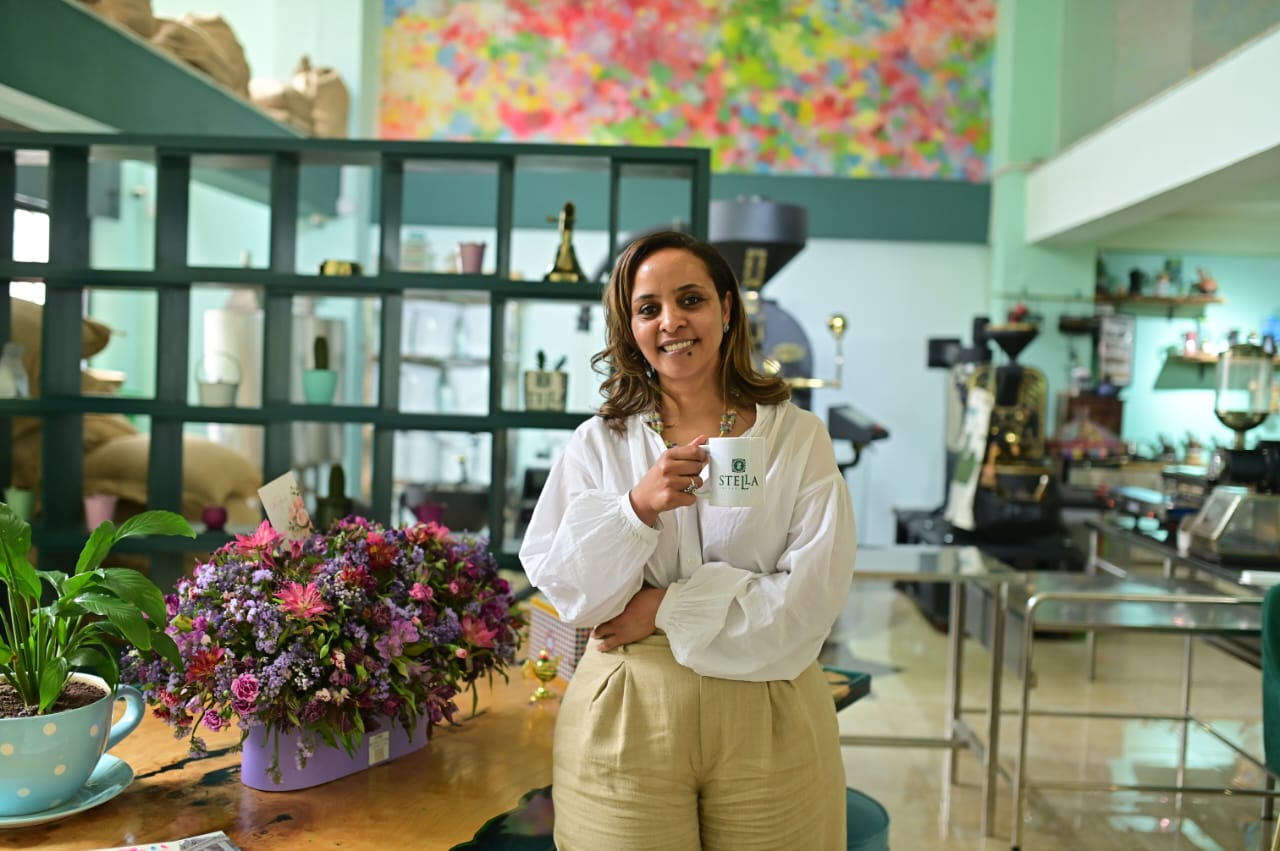
Mexican Coffee Must Not Disappear Behind Intermediaries: A Conversation with José Manuel Hernández García

Author: Ali Alzakary
Source: Qahwa World
Date: May 20, 2026This article features a José Manuel Hernández García interview.

Executive Summary:

  • José Manuel Hernández García, a mechatronics engineer from Coatepec, Mexico, is building digital traceability systems and opening new trade routes for Mexican coffee to the Middle East and Eurasia.
  • Severe drought in 2024/2025 affected Mexican coffee production, pushing prices higher and forcing farms to adopt new water management strategies.
  • EUDR regulations pose a risk of excluding small farmers. The response is to help producers meet traceability requirements without being left behind.
  • Dubai serves as a strategic hub for roasting and distributing Mexican coffee across the Middle East, adapting to local consumption styles including espresso and Turkish coffee.
  • Armenia was chosen as a gateway to Russia and Eurasia because of its trade framework, avoiding the complexities of direct business with Russia and the limitations of Turkey.
  • The “Todos Somos Mexico” movement turned coffee into a tool for economic diplomacy, uniting producers, governments, embassies, and consulates to present Mexico internationally.
  • A new Latin American platform is being developed to connect producers directly with buyers in the Middle East and Eurasia, supporting transparency, fair trade, and direct negotiation.

José Manuel Hernández García grew up in Coatepec, Veracruz, one of Mexico’s most recognized coffee producing regions. He was surrounded by coffee farms and the people who work them. But instead of staying on the farm, he became a mechatronics engineer.

Instead of exporting coffee the traditional way, he built digital traceability systems, opened new trade routes to the Middle East and Eurasia, and founded “Todos Somos México,” a movement that uses coffee as a tool for economic diplomacy. At only 29 years old, he is now developing a Latin American platform to connect producers from Mexico and beyond with strategic markets in Dubai, Armenia, Russia, and the GCC.

In this interview, he speaks openly about drought, EUDR regulations, fair returns for small farmers, and why he chose Armenia over Turkey as a gateway to Eurasia. Do not just drink your coffee. Know the story behind it.

Here is the full interview.

As a mechatronics engineer who grew up in Coatepec, one of Mexico’s most recognized coffee producing regions, how has your technical background influenced the production systems and digital traceability processes at Casa Tostadora Briones?

Growing up in Coatepec gave me a direct connection to coffee culture from an early age, while my background in mechatronics engineering helped me approach the coffee industry from a systems, technology, and process perspective.

At Casa Tostadora Briones, we focus heavily on organization, traceability, quality control, and long term scalability. My technical background has influenced how we structure information, manage producer relationships, monitor quality standards, and develop more efficient commercial and export processes.

One of the projects we are currently developing focuses on improving traceability directly at the farm level. Our goal is to build systems that allow buyers to follow the coffee journey more closely, from the moment harvesting begins to the movement and processing of each coffee lot.

We are also exploring the implementation of AI assisted technologies for coffee quality analysis, including colorimetry and density evaluation systems, to help improve consistency, transparency, and quality control throughout the supply chain.

I believe technology can help create stronger connections between producers and international markets while bringing more transparency and value to Mexican coffee.

Mexican coffee producers are facing major climate related challenges, including droughts, along with ongoing instability in global coffee prices. How are these factors affecting the consistency and quality of your specialty coffee, and how do you balance fair returns for producers while staying competitive in international markets?

The 2024 2025 coffee harvest in Mexico was heavily affected by severe drought conditions, which significantly impacted production volumes and contributed to a major increase in coffee prices across the market.

In many coffee producing regions, farmers faced water shortages, irregular rainfall, and higher stress on coffee plants, directly affecting consistency, cherry development, and overall production planning.

One of the biggest challenges today is not only maintaining coffee quality, but also adapting farms to increasingly unstable climate conditions.

In response to this, some coffee farms in Mexico are beginning to implement new water management strategies, including the construction of water reservoirs, the development of water wells, and more efficient irrigation systems to help secure water access during critical periods.

At the same time, technology is becoming increasingly important. We are working toward implementing monitoring systems that help analyze water needs at the farm level, allowing producers to make more informed decisions based on environmental and production conditions.

Regarding fair returns for producers, our approach is to avoid competing only through low prices. If the international market demands specialty coffee, traceability, consistency, and origin, then the producer must also receive a fair value for that work.

We balance this by building relationships with markets that understand quality and origin, especially in regions such as the Middle East and Eurasia. Instead of reducing the value paid to producers, we work on improving market positioning, logistics, traceability, and commercial strategy so Mexican coffee can remain competitive internationally without weakening the producer’s income.

For us, competitiveness does not mean paying less at origin. It means creating a stronger value chain where the producer, the exporter, and the international buyer can all participate in a sustainable and transparent way.

With the European Union Deforestation Regulation (EUDR) introducing strict geolocation and traceability requirements, how are you preparing to meet these standards while ensuring that small coffee farmers are not left out of global trade opportunities?

The EUDR represents a major turning point for the coffee industry. Traceability is no longer only a commercial advantage. It is becoming a requirement for access to some of the most important international markets.

At Casa Tostadora Briones, we are preparing by strengthening traceability directly from the farm level. This includes producer identification, farm and plot geolocation, documentation of coffee lots, and better digital organization of information throughout the supply chain.

One of the most important elements of our work is that we already have producer groups in different coffee growing regions of Mexico. For example, in one region of Veracruz, specifically in Cordoba, we work with a group of around 200 small producers. They have the quality, the knowledge of the land, and the potential to produce excellent coffee, but many of them are not familiar with the international rules, documentation, certifications, and traceability requirements that global markets increasingly demand.

This is where our role becomes very important. We do not only act as an exporter. We also work as a bridge between producers and international markets, helping them understand what each market requires and supporting them in the process of improving coffee quality, organizing information, and moving toward standardization according to buyer expectations.

We are also working toward integrating technology that allows us to follow the movement of coffee from the moment the harvest begins, through processing, commercialization, and export. The goal is to give international buyers more transparency while helping producers become better prepared for new global requirements.

One of the biggest risks of regulations like EUDR is that small producers could be left behind simply because they do not always have access to digital tools, technical support, or administrative systems. We believe companies like ours must help prevent that.

For us, compliance should not become an exclusion filter. It should become a path toward better organization, stronger traceability, and greater participation for small producers in global trade.

The future of Mexican coffee depends on combining origin, technology, traceability, and inclusion.

You are currently leading expansion efforts from Dubai to strengthen the presence of Mexican coffee in the Middle East. What makes this region strategically important for you, and how do you plan to position Mexican coffee in such a highly competitive specialty coffee market?

Dubai, and the United Arab Emirates in general, are strategically important for us because coffee is one of the most important beverages not only in the UAE, but across the Middle East. Coffee is deeply connected to hospitality, business, family, and daily life in the region.

We are also seeing important changes in nearby markets. For example, Russia has traditionally been a tea consuming market, but coffee consumption has been growing significantly, creating new opportunities for coffee producers and brands.

The UAE is also one of the most important logistics and commercial hubs in the world. From Dubai, we can import green coffee, roast it locally to preserve freshness, and distribute it across different channels. This gives us a major advantage because freshness is essential for positioning high quality coffee in a competitive market.

Our current focus is to enter and develop the HORECA sector by adapting Mexican coffee to the local culture of consumption. In the Middle East, every country has its own way of drinking coffee, and if you do not adapt, you are out of the market.

That is why our strategy is not only to sell Mexican coffee as an origin, but to understand how it can perform in espresso, specialty brewing, Turkish style preparations, and other local preferences.

From Dubai, we also see the opportunity to re export Mexican coffee to the GCC and other strategic markets. This allows us to use Dubai as a platform to build a long term presence for Mexican coffee across the Middle East and beyond.

The goal is to position Mexico as a serious, consistent, and adaptable coffee origin in one of the most dynamic coffee regions in the world.

Your expansion strategy has also included Armenia as a gateway to Russia and the wider Eurasian market. Why did you choose Armenia for this role, and what were the biggest challenges in opening these new commercial routes?

Armenia became part of our expansion strategy because we saw an opportunity to build a new bridge between Mexico, the Middle East, Russia, and the wider Eurasian market.

Russia is a large and important market, but because of the current restrictions and sanctions environment, doing business directly with Russia is not simple. At the same time, this has created a market where many international players have stepped back, leaving space for new routes and alternative commercial structures.

At the beginning, we considered Istanbul as a possible hub for Eurasia. However, when you analyze the geopolitical and logistical situation, Turkey presents certain limitations for this specific strategy. Doing business with Russia can be complex, and there is also no open land border between Turkey and Armenia, which makes regional coverage more difficult.

Armenia, on the other hand, has strong commercial ties with Russia and is part of a trade framework that allows access to Russia and other Eurasian markets under more favorable conditions. This gives us the possibility to receive payments, work with regional partners, and explore re export opportunities to countries within that framework.

For us, Armenia can become a strategic platform. Our vision is to import Mexican green coffee, evaluate where it is most efficient to roast or process it, and then re export it to Russia and other Eurasian destinations.

One of the biggest challenges we have faced in Armenia is the high import tax, which can reach around 20 percent. That is where the strategy becomes important: understanding where the coffee should be imported, where it should be roasted or processed, and from where it should be re exported in order to remain competitive.

Opening this type of route requires solving logistics, customs, payments, documentation, local partnerships, and market adaptation at the same time.

Another important challenge is education. Mexican coffee is not yet strongly positioned in Armenia or Russia, so we have to explain the origin, the quality, the regions, and the value behind the product.

For us, Armenia represents a strategic door into Eurasia and a way to continue opening international routes for Mexican and Latin American coffee beyond traditional markets.

Through your leadership in the “Todos Somos Mexico” initiative, how were you able to turn coffee from an agricultural product into a tool for economic diplomacy and international representation for Mexico?

“Todos Somos Mexico (We are all Mexico)” was born when we decided to take Mexican coffee to new horizons, especially to the Middle East.

When we began exploring these markets, we realized that Mexican coffee was not strongly positioned internationally. But we also realized something deeper: in many cases, there was limited knowledge about Mexico itself, its coffee regions, its producers, its culture, and its capacity to participate in high value global markets.

We also saw that Mexican coffee often does not go far beyond the United States. Many small producers remain disconnected from international opportunities because they do not have access to the right networks, market information, export structures, or institutional support.

That is why we decided that our mission could not be only to sell coffee. We needed to position Mexican coffee and Mexico at the same time.

We began visiting farms, listening directly to the needs of coffee growers, and understanding the reality behind each region. From there, we started bringing together small producers, civil associations, state governments, and institutions under one shared vision.

The Ministry of Tourism of Mexico also joined this effort, allowing us to present not only coffee, but also Mexico’s culture, identity, and regional diversity at World of Coffee Dubai 2026. Mexican embassies in the Middle East and consulates also became part of this representation.

That is how “Todos Somos Mexico” was born: as a movement to unite coffee producing regions, producers, institutions, governments, embassies, and consulates under one international message.

For me, coffee became a tool for economic diplomacy because it allowed us to speak about Mexico through its people, its land, its culture, and its productive capacity.

The message is simple: no one should be left out of this great representation. Mexican coffee must become a bridge that opens doors for more producers, strengthens Mexico’s image abroad, and creates long term opportunities in strategic markets.

After bringing together producers, organizations, and diplomatic representatives under one shared vision, what real impact did local Mexican coffee farmers experience on the ground?

The first real impact was visibility.

For many years, many small coffee farmers in Mexico produced high quality coffee, but once their coffee entered the commercial chain, their identity often disappeared. Exporters or intermediaries would buy the coffee, but the final presentation usually focused only on the exporting company or the final brand, without mentioning the farm, the producer, the region, or the story behind that coffee.

From the beginning, we decided to change that.

For us, origin and traceability are not only technical concepts. They are also a way to give recognition back to the people who produce the coffee. That is why one of the first steps was to document the farm, the region, the producer, and the story behind each coffee lot, so the final buyer can understand where the coffee comes from and who is behind it.

Through “Todos Somos Mexico”, producers began to see that their coffee could be represented internationally with their own identity, not only as an anonymous product inside a supply chain.

On the ground, this created more awareness about what global markets require: traceability, quality consistency, documentation, standardization, and storytelling. Producers started to understand that international positioning requires more than a good cup. It requires organization, information, and long term preparation.

Another important impact is that this work also encourages other exporters and companies to become more conscious about how small producers are treated. When the market begins to value the farm, the region, and the producer behind the coffee, the entire supply chain is pushed toward more transparency and responsibility.

In our case, the objective is also to generate more resources and reinvest part of that value back into coffee growing communities. This reinvestment is essential because coffee production in Mexico has not been growing as it should. In many regions, instead of increasing, production has been decreasing.

Mexico has excellent coffee, diverse microclimates, rich soil, altitude, and strong producing communities. The potential is there. But without reinvestment, technical support, infrastructure, and long term planning, it is very difficult for producers to increase production and improve consistency.

That is also part of our objective: to use international positioning to create a stronger cycle where better markets can generate more value, and that value can return to the communities to help increase production, improve quality, and strengthen the future of Mexican coffee.

Of course, this is a long term process. The impact is not immediate for every producer, and there is still a lot of work to do. But the first step was to return visibility to the producer and open a door that did not exist before.

For us, the real impact is creating a path where more producers can access better markets, better information, better recognition, reinvestment, and better opportunities without losing their identity along the way.

You are now developing a Latin American platform aimed at connecting producers and coffee brands with strategic markets in the Middle East and Eurasia. What are the main operational and technological features of this platform, and how will it support transparency and fair trade?

The Latin American platform we are developing is designed to connect producers and coffee brands from Mexico and Latin America with strategic markets in the Middle East and Eurasia.

The idea is not to create a simple buy and sell marketplace. We want to build a commercial, technological, and marketing arm for producers, allowing them to reach international buyers without leaving behind their farms or losing control of their origin.

When I first arrived in Dubai, this is exactly the kind of support I would have wanted to find. I would have wanted a structure, guidance, market access, local support, and a platform that could help me understand how to enter such a competitive and complex market.

That experience became part of the vision. What we had to learn by ourselves, we now want to make possible for producers across Mexico and Latin America.

Through the platform, producers will be able to present their coffee directly to buyers, including information about the farm, region, process, quality profile, available volume, and traceability. The goal is to bring the final buyer closer to the producer, instead of hiding the producer behind layers of intermediaries.

Operationally, the platform will support direct negotiation, local roasting, local distribution, storage, HORECA opportunities, retail access, and market positioning in strategic locations such as Dubai. This means a producer in Mexico or Latin America could access the Middle East market without having to immediately open a company, travel constantly, or build an entire local operation from zero.

The technology behind this platform is already developed. We are currently refining the final details before announcing the official launch. The same visibility work that we started with Mexican coffee, documenting producers, farms, regions, stories, and origin, will now be expanded to Latin America.

This technology will allow buyers to receive information when harvesting begins, follow the movement of coffee lots from the farm, and access more transparent information throughout the supply chain.

But the platform is not only about sending one container to the Middle East and considering the work finished. In many cases, sending a container can be the easy part. The real challenge is creating a market for each producer or coffee brand, with its own narrative, identity, and story.

This is extremely important because if a buyer changes suppliers, the producer should not disappear from the market completely. If the farm, the region, and the story have already been positioned, the producer has a stronger foundation to continue building commercial opportunities beyond one single buyer.

In terms of fair trade, the platform supports transparency by giving producers visibility and a more active role in the commercial process. When the producer can be seen, contacted, and recognized, the value of the coffee is less likely to disappear inside the supply chain.

For buyers, the platform creates direct access to origin, better information, stronger traceability, and a more human connection with the people behind the coffee.

For producers, it becomes a way to negotiate, position their brand, access local roasting and distribution, and enter strategic international markets while continuing to focus on what they do best: producing coffee.

Our long term vision is to help Mexican and Latin American coffee compete globally with stronger organization, better technology, and a more direct connection between origin and demand.

As a 29 year old entrepreneur who has built international trade networks and commercial infrastructure across multiple regions, what vision is guiding your efforts to shape the future of Latin American coffee in emerging global markets?

My vision is to help Mexican and Latin American coffee move from being seen only as a raw material to becoming a stronger global value proposition with origin, identity, traceability, and direct market presence.

Mexico and Latin America have some of the best coffee producing regions in the world. We have altitude, soil, microclimates, producers, culture, and quality. But there is still so much to explore, to learn, and to implement. In many cases, producers still do not have enough access to international markets, commercial infrastructure, technology, or the right positioning.

Since I left Mexico, my main objective has been very clear: to continue being a bridge for producers, to keep opening routes, and to create new paths for Mexican and Latin American coffee in markets where our origins are still not fully recognized.

At 29, I understand that this is only the beginning. Building international routes takes time, patience, trust, and a lot of work. But I also believe this is the right moment. Emerging markets such as the Middle East and Eurasia are looking for quality, origin, consistency, and new stories. Mexico and Latin America have all of that, but we need to present it with better organization, stronger strategy, and greater unity.

What we started with Mexican coffee, we now want to expand to Latin America. The goal is to create more visibility, more transparency, and more commercial opportunities for producers, while helping buyers access coffee with real origin and a human story behind it.

For me, the future of Mexican and Latin American coffee is about exporting better, with more value, more recognition, and more participation from the people who actually produce the coffee.

If we can combine technology, traceability, logistics, local roasting, market adaptation, and international partnerships, Mexican and Latin American coffee can become much stronger in emerging global markets.

That is the vision guiding my work: to keep building bridges, opening routes, and creating opportunities so producers from Mexico and Latin America can participate in the world with more dignity, more visibility, and more future.

Ali Alzakary – Conducted this interview for Qahwa World.
Published: May 20, 2026

Carolina Gutierrez: In Specialty Coffee, Hospitality Matters More Than Complexity

Author: Carolina Gutierrez
Source: LinkedIn
Date: May 20, 2026

Executive Summary:

  • The best coffee experiences are built on hospitality, connection, simplicity, and humility, not on ego.
  • Consumers rarely build loyalty to a brand simply because they were educated. They return because of how the experience made them feel.
  • People remember experiences far more emotionally than they remember technical details, according to consumer behavior research.
  • Most consumers seek comfort, trust, familiarity, and connection, not complexity.
  • The most successful industries evolved by becoming more accessible, not more intimidating. Wine and craft beer are examples.
  • Specialty coffee sometimes confuses passion with correction, making people feel unwelcome for not knowing enough.
  • The future of specialty coffee belongs to brands that make people feel included first and educated second.

Carolina Gutierrez, a specialty coffee leader focused on coffee quality and education across the Middle East and Africa, recently shared a reflective post on LinkedIn about the state of specialty coffee culture. Her message centered on a simple but often overlooked truth: the best coffee experiences are not built on ego. They are built on hospitality, connection, simplicity, and humility.

Gutierrez observed that while the specialty coffee industry says it wants more people to appreciate high quality coffee, it sometimes makes people feel unwelcome for not knowing enough. She argued that this matters more than many professionals realize. Consumers rarely build loyalty to a brand simply because they were educated. They return because of how the experience made them feel.

The Gap Between Expertise and Accessibility

Gutierrez pointed out that consumer behavior research has shown for years that people remember experiences far more emotionally than they remember technical details. Yet in coffee, professionals sometimes overcomplicate the experience in an attempt to communicate expertise. Processing methods, extraction theory, total dissolved solids, and flavor notes all matter. But most consumers are not searching for complexity. They are searching for comfort, trust, familiarity, and connection.

She emphasized that this is not a weakness in consumer behavior. It is simply human behavior. The most successful industries evolved when they became more accessible, not more intimidating. Wine evolved. Craft beer evolved. The strongest hospitality brands learned how to simplify experiences instead of overcomplicating them. Even companies like Apple built global loyalty by making complex things feel intuitive. Gutierrez believes coffee should learn from that example.

Passion Versus Correction

Gutierrez offered a critical observation about specialty coffee culture. She wrote that specialty coffee sometimes confuses passion with correction. A consumer enjoying sugar, flavored drinks, dark roast, or commercial coffee does not mean they have bad taste. It simply means that is where they are in their journey. People should not feel pressured to understand coffee before they feel welcome in it.

She concluded that complexity may impress professionals, but simplicity is what grows industries. The future of specialty coffee, in her view, will belong to the brands and professionals who make people feel included first and educated second.

Frequently Asked Questions (FAQ)

1. What is the main argument of Carolina Gutierrez’s post?

She argues that specialty coffee should prioritize hospitality, connection, simplicity, and humility over ego and technical expertise to make consumers feel welcome.

2. Why do consumers return to a coffee brand according to Gutierrez?

Consumers return because of how the experience made them feel, not simply because they were educated about coffee.

3. What does consumer behavior research say about memory and emotion?

Research shows that people remember experiences far more emotionally than they remember technical details.

4. What mistake does specialty coffee sometimes make?

Specialty coffee sometimes confuses passion with correction, making people feel unwelcome for not knowing enough about coffee.

5. What industries have successfully evolved by becoming more accessible?

Wine, craft beer, and strong hospitality brands have evolved by simplifying experiences instead of overcomplicating them. Apple also made complex technology feel intuitive.

6. What does Gutierrez believe is the future of specialty coffee?

The future belongs to brands and professionals who make people feel included first and educated second.

Carolina Gutierrez – Specialty Coffee Leader | Coffee Quality & Education Leadership | Driving Growth & Innovation across the Middle East & Africa.
Published on Qahwa World: May 20, 2026

Chinese Brands Like Luckin and Pop Mart Take on Starbucks and Nike in Global Push

Author: Qahwa World
Source: Business Insider
Date: May 20, 2026
Executive Summary:

  • Chinese brands are moving from being global manufacturers to competing directly for consumers in the US, Europe, and beyond.
  • Luckin Coffee is testing markets long dominated by Starbucks, including New York, with app based ordering and limited edition drinks.
  • Fashion labels Urban Revivo and Songmont are competing with Zara and Polène through stylish products at lower prices.
  • Pop Mart has evolved from a toy company into a global cultural force through collectible figures, especially Labubu.
  • Chinese brands face challenges including trade tensions, tariffs, and the need to build a clearly defined global identity.
  • Some brands downplay their Chinese origin, while others embrace Chinese aesthetics and cultural heritage as core identity.
  • Long term success depends on evolving from low cost alternatives into premium global names commanding lasting loyalty.

For nearly half a century, China has been the world’s factory floor, producing everything from smartphones to inexpensive clothing. While “Made in China” became common on consumer products, the companies behind those goods often remained unknown. Now, some of China’s fastest growing brands want consumers around the world to recognize their names. They are moving from the background of global commerce to the center, competing directly for customers in the United States, Europe, and beyond.

Fujian based Luckin Coffee is testing markets long dominated by Starbucks, including New York. The company uses app based ordering systems and offers limited edition drinks such as blood orange cold brew in the US and pandan coconut latte in Southeast Asia. Fashion labels including Urban Revivo and Songmont are competing with global mid market brands like Zara and Polène by offering stylish products at lower prices. Pop Mart has evolved from a toy company into a global cultural force through its collectible figures, particularly Labubu. Fast fashion giant Shein is reportedly considering acquiring the millennial favorite brand Everlane.

A New Generation of Chinese Brands

This is not the first time Chinese companies have attempted to reshape global business. In the 2000s, Beijing encouraged state backed industrial giants to expand overseas for resources and infrastructure projects. In the 2010s, Chinese firms embarked on a global acquisition spree, purchasing assets ranging from AMC Theatres to the Waldorf Astoria. More recently, companies such as electric vehicle maker BYD and drone manufacturer DJI demonstrated that Chinese firms could compete globally through advanced technology, not just lower prices.

Now, a new generation of Chinese brands is pursuing something even more challenging: becoming culturally influential and desirable. For many Chinese companies, international expansion is also becoming a necessity. China faces a prolonged economic slowdown, and its birthrate fell to a record low in 2025. Domestic competition has intensified, with aggressive price wars shrinking profit margins. As a result, overseas growth is increasingly essential.

Years of operating in one of the world’s most competitive consumer markets have given Chinese companies significant advantages in manufacturing, logistics, sales, and scaling operations. According to Eunkyu Lee, a marketing professor at Syracuse University, China is transforming itself from a low priced manufacturer into a producer of brands with unique personalities and storylines.

The Challenge of Building a Global Identity

Approach Examples Strategy
Downplaying Chinese identity Shein, TikTok Present as internet native global platforms
Embracing Chinese aesthetics Songmont, Laopu, Chagee Highlight Chinese symbolism, craftsmanship, traditions
Sports marketing Li-Ning Sponsor NBA players to enter mainstream sports culture

Becoming a globally recognized brand where image, identity, and perception matter remains difficult. National identity often helps transform products into symbols of aspiration and lifestyle. European luxury brands traditionally emphasize heritage, craftsmanship, and exclusivity, while American companies promote innovation and optimism. Japan and South Korea successfully made similar transitions during the late 20th century. Brands such as Sony, Samsung, Nintendo, and Uniqlo became globally associated with precision, minimalism, technology, and pop culture. China is now attempting a similar transformation, but at a much faster pace and without a clearly defined global identity.

Some Chinese brands are downplaying their Chinese identity altogether. Global successes such as Shein and TikTok gained popularity not by emphasizing their origins, but by presenting themselves as internet native global platforms. That strategy fits naturally within online culture, where trends spread quickly and consumers prioritize novelty over geography. As Lee noted, younger consumers are looking for something new, cool, and fresh. In that context, the country of origin is not very important.

Sportswear brand Li-Ning has increased its international visibility by sponsoring NBA players including Jimmy Butler and CJ McCollum, bringing Chinese designed footwear into mainstream sports culture. Pop Mart has also partnered with Disney and Sanrio’s Hello Kitty, placing its characters alongside some of the world’s most recognizable entertainment brands.

Embracing Chinese Heritage and Luxury Attention

At the same time, other Chinese brands are leaning heavily into Chinese aesthetics and cultural heritage. Songmont, Laopu, and tea chain Chagee are embracing Chinese symbolism, craftsmanship, and traditions as central parts of their brand identity. A growing online fascination with Chinese lifestyle and aesthetics, sometimes referred to as China-maxxing, suggests global consumers may be increasingly open to brands that highlight rather than soften their origins.

There are signs that global luxury leaders are paying attention. Songmont, whose minimalist leather handbags retail for up to around 800 dollars, has drawn attention from LVMH CEO Bernard Arnault. He reportedly visited a Songmont store and purchased two bags during a trip to Shanghai last September. Arnault also visited Laopu Gold, a jewelry brand known for handcrafted 24K gold pieces inspired by Chinese symbolism including dragons and gourds. In April, Gucci owner Kering announced plans to acquire a minority stake in Shanghai based fashion label Icicle, a premium brand often compared to Max Mara.

Political Challenges and Long Term Prospects

Politics may present another obstacle for Chinese brands seeking overseas growth. Trade tensions have disrupted supply chains and increased scrutiny of Chinese technology companies such as TikTok. BYD has expanded rapidly across Europe and South America but remains largely shut out of the US market because of high tariffs. Tariffs have also affected companies such as Shein and Temu, though neither has slowed its expansion efforts significantly. Instead, many firms are adapting by localizing operations and refining their international strategies.

This new generation of Chinese brands may be better positioned than previous waves because they are increasingly selling products as desirable lifestyle goods rather than simply low cost alternatives. Governments may find it difficult to prevent consumers from embracing brands they see as fashionable, useful, or culturally relevant. According to Lee, these brands are largely detached from political issues.

Ultimately, long term success will depend on whether Chinese brands can evolve from being viewed as inexpensive or trendy alternatives into premium global names capable of commanding lasting loyalty and higher prices. Success would mean some of these brands achieving premium brand recognition among global consumers and being able to command a price premium. That transformation will take time. But the broader direction is becoming increasingly clear: China has already reshaped how the world manufactures products. Now, it is trying to shape what the world wants.

Frequently Asked Questions (FAQ)

1. Which Chinese brands are expanding globally?

Luckin Coffee, Pop Mart, Songmont, Urban Revivo, Shein, Li-Ning, BYD, and DJI are among the Chinese brands competing in international markets.

2. How is Luckin Coffee competing with Starbucks?

Luckin is testing markets including New York with app based ordering systems and limited edition drinks such as blood orange cold brew and pandan coconut latte.

3. What strategies are Chinese brands using to go global?

Some brands downplay their Chinese identity and present as global platforms. Others embrace Chinese aesthetics and cultural heritage. Some use sports marketing and partnerships with global entertainment brands.

4. What challenges do Chinese brands face overseas?

Trade tensions, tariffs, political scrutiny, and the difficulty of building a clearly defined global identity are major challenges.

5. Are global luxury brands paying attention to Chinese brands?

Yes. LVMH CEO Bernard Arnault visited Songmont and Laopu stores. Kering announced plans to acquire a stake in Shanghai based brand Icicle.

6. What would success look like for Chinese brands?

Success means achieving premium brand recognition among global consumers and being able to command higher prices and lasting loyalty.

Qahwa World – Based on reporting from Business Insider.
Published: May 20, 2026

Tanzania Coffee Production to Rise 10 Percent in 2026/27

Author: Qahwa World
Source: USDA Foreign Agricultural Service (FAS) Dar es Salaam
Date: May 20, 2026
Executive Summary:

  • FAS Dar es Salaam forecasts Tanzania coffee production to reach 1.6 million 60 kg bags in MY 2026/27, a 10.3 percent increase year on year.
  • The growth is driven by rehabilitated fields from 2019 to 2024 reaching full maturity and rising coffee prices incentivizing farmer investment.
  • Cultivated area is expected to expand from 270,000 hectares to 275,000 hectares, with harvested area increasing to 270,000 hectares.
  • Green bean exports are projected to rise 2.9 percent to 1.4 million bags, supported by higher production and strong global demand.
  • The European Union remains Tanzania’s leading coffee importer, purchasing five times more than the United States.
  • Domestic consumption is projected to increase from 85,000 to 90,000 bags, driven by growing urban coffee culture in Dar es Salaam and Arusha.
  • Ending stocks are expected to rise sharply to 157,000 bags due to production outpacing consumption and export growth.

Tanzania’s coffee production is projected to reach 1.6 million 60 kilogram bags in the 2026/27 marketing year, up from 1.45 million bags the previous year, representing a 10.3 percent increase.

This growth is attributed to rehabilitated fields from 2019 to 2024 reaching full maturity. Rising coffee prices have incentivized farmers to expand plantations, invest in advanced fertilizers and equipment, and enhance efficiency.

Stable prices have strengthened cooperative societies, expanding support and training for growers. Favorable rainfall and steady temperatures have improved growing conditions, helping the sector recover from past droughts and increasing yields. Strong global demand continues to drive production and exports, reinforcing Tanzania’s position in the coffee market.

Crop Area Expansion

Tanzania’s coffee sector is expected to expand by nearly two percent, with cultivated area rising from 270,000 hectares in MY 2025/26 to 275,000 hectares in MY 2026/27. This rise is driven mainly by robusta farmers in Kagera and Kigoma who are opening new land and are supported by subsidized seedlings and strong farm gate prices. Harvested area is projected to increase by a similar percentage from 265,000 hectares to 270,000 hectares as new farms mature.

Coffee is the country’s leading cash crop, grown by over 40 percent of farmers and covering 39 percent of permanent cropland. Production occurs through three systems: pure stand smallholder farms in the south, coffee banana intercropping in the north and west, and larger estates. Overall, larger estates contribute under 10 percent of output. Most smallholders cultivate about 0.63 hectares with older trees and 400 to 2,000 trees per farm. Tanzania produces arabica in the northern and southern highlands and robusta almost entirely in Kagera near Lake Victoria.

Production and Inputs

Indicator MY 2024/25 MY 2025/26 MY 2026/27 (Forecast)
Area harvested (1000 HA) 265 265 270
Arabica production (1000 bags) 700 750 850
Robusta production (1000 bags) 650 700 750
Total production (1000 bags) 1,350 1,450 1,600
Bean exports (1000 bags) 1,250 1,360 1,400
Domestic consumption (1000 bags) 77 85 90
Ending stocks (1000 bags) 50 51 157

Tanzania is one of the three leading producers of the Colombian mild arabica variety, contributing about six percent of global supply. Roughly 320,000 smallholder farmers produce 90 percent of the crop, with about 100 large estates accounting for the rest.

Fertilizer subsidies in Tanzania primarily support tobacco, corn, and rice producers, with minimal assistance directed toward coffee farmers. In February 2026, the government reduced its fertilizer subsidy from covering roughly half the market price to a flat rate of approximately 0.38 US dollars per 50 kg bag. High fertilizer prices have long prevented farmers from applying adequate nutrients, keeping average use near 50 kilograms per hectare.

Policy and Trade

Tanzania is expanding climate resilient coffee varieties, widening cultivation, improving input support, and upgrading processing and agronomic practices. Recent reforms include a 30 million US dollar memorandum of understanding with Corus International that focuses on large scale seedling distribution, stronger disease control programs, digitalized auctions, and tighter export licensing rules. The policy aims to boost transparency, traceability, and competitiveness in premium markets.

The Tanzania Coffee Board’s directive of April 24, 2026, established benchmark prices of 4.61 US dollars per kilogram for processing unit parchment arabica, 3.65 dollars for home processed parchment arabica, 1.54 dollars for robusta dry cherry, and 1.96 dollars for hard arabica dry cherry.

Green bean exports are projected to rise 2.9 percent to 1.4 million bags in MY 2026/27, supported by higher production and strong global demand. The European Union remains Tanzania’s leading coffee importer, purchasing five times more than the United States. Japan also remains a key destination for Tanzanian coffee, particularly for premium arabica.

Export Destinations and Soluble Coffee Decline

Destination 2022 (bags) 2023 (bags) 2024 (bags) 2025 (bags)
European Union 588,354 749,451 652,891 596,487
Japan 281,684 204,779 200,254 193,718
United States 58,841 79,586 112,720 128,032
Morocco 49,678 93,941 52,226 69,192
India 17,928 36,326 50,934 30,594

The United States is rapidly emerging as a major growth market for Tanzanian coffee, with imports rising from 58,841 bags in 2022 to 128,032 bags in 2025. Meanwhile, soluble coffee exports from Tanzania collapsed dramatically between 2022 and 2025, falling from 10,858 bags to just 814 bags, a drop of more than 92 percent. The EU and Kenya, once the two largest buyers, slashed imports from several thousand bags to only 446 and 88 bags respectively by 2025.

Domestic Consumption and Stocks

Tanzania’s coffee consumption is projected to increase from 85,000 to 90,000 bags in 2026/27, driven primarily by a growing urban coffee culture in Dar es Salaam and Arusha. Rising incomes and urbanization are encouraging younger professional consumers to incorporate coffee into their daily routines. Tourism further reinforces demand, as hotels and operators serving visitors expand their coffee offerings.

Projected coffee stocks for MY 2026/27 are expected to rise sharply to 157,000 bags, up from 51,000 bags in MY 2025/26, reflecting a significant supply driven buildup. The surge is primarily the result of higher production outpacing the country’s relatively modest growth in domestic consumption and exports.

Frequently Asked Questions (FAQ)

1. How much will Tanzania coffee production increase in 2026/27?

FAS Dar es Salaam forecasts a 10.3 percent increase to 1.6 million 60 kg bags, driven by rehabilitated fields reaching maturity and rising prices.

2. What is driving the expansion of coffee area in Tanzania?

Robusta farmers in Kagera and Kigoma are opening new land, supported by subsidized seedlings and strong farm gate prices. Cultivated area is expected to reach 275,000 hectares.

3. Which countries are the top buyers of Tanzanian coffee?

The European Union remains the leading importer, followed by Japan and the United States, which has shown rapid growth in recent years.

4. What happened to Tanzania’s soluble coffee exports?

Soluble coffee exports collapsed by more than 92 percent between 2022 and 2025, falling from 10,858 bags to just 814 bags.

5. How is domestic coffee consumption changing in Tanzania?

Domestic consumption is projected to rise from 85,000 to 90,000 bags, driven by growing urban coffee culture in Dar es Salaam and Arusha and rising tourism demand.

6. Why are ending stocks expected to increase sharply?

Production is outpacing the relatively modest growth in domestic consumption and exports, leading to a supply driven buildup to 157,000 bags.

Qahwa World – Based on USDA FAS Coffee Annual report TZ2026-0003 by Benjamin Mtaki, approved by Damian Ferrese.
Published: May 20, 2026

Kenya Coffee Production to Jump 12 Percent in 2026/27 on New Plantings and Better Crop Care

Author: Qahwa World – Dubai
Source: USDA Foreign Agricultural Service (FAS) Nairobi
Date: May 19, 2026

Executive Summary:

  • FAS Nairobi forecasts Kenya coffee production to reach 950,000 60 kg bags in MY 2026/27, a 12 percent increase over the previous estimate.
  • The growth is driven by new harvested area, improved crop care, and farmer reinvestment following two years of high prices.
  • Exports are expected to rise nearly 12 percent to 940,000 bags, while domestic consumption remains flat at 62,000 bags due to inflation and reduced urban coffee culture.
  • Kenya enacted a new Coffee Act in March 2026, transferring regulatory oversight from the Agriculture and Food Authority to the revived Coffee Board of Kenya.
  • The Coffee Research and Training Institute has been established as an independent body separate from KALRO.
  • Average coffee prices at the Nairobi Coffee Exchange fell to $268.77 per 50 kg bag in April 2026, a 28.4 percent drop from October 2025.
  • The United States remains Kenya’s top export destination with 17.2 percent market share, followed by Belgium and Germany.

Kenya’s coffee production is set for a steady recovery, with FAS Nairobi forecasting a 12 percent jump to 950,000 60 kilogram bags in the 2026/27 marketing year. The increase is attributed to new harvested area, improved crop care, and farmers’ ability to reinvest after two years of sustained high market prices. Growers now have the capital to apply more consistent fertilizer and control pests and diseases that often limit yields.

Coffee farms in the key Mount Kenya region flowered robustly following the severe drought that lasted until March 2026. The harvested area is projected to increase marginally to 106,000 hectares as recent plantings mature. Exports are expected to reach 940,000 bags, while domestic consumption is likely to remain flat at 62,000 bags due to reduced purchasing power and disruption of urban coffee culture.

Coffee Expansion Program and Regulatory Changes

Kenya is pursuing an aggressive coffee expansion program across the Central, Eastern, and Rift Valley regions. The initiative is being channeled through the New Kenya Planters Cooperative Union, which uses a government supported revolving fund to provide farmers with saplings and fertilizers. Several county governments have also launched localized grant programs to help farmers offset expansion costs.

The expansion has tested the country’s capacity to produce planting materials. The Coffee Research Institute faces a massive backlog despite efforts to ramp up production. In March 2026, Kenya enacted a new Coffee Act that transfers regulatory oversight from the Agriculture and Food Authority to the revived Coffee Board of Kenya. The law also establishes an independent Coffee Research and Training Institute, separate from the Kenya Agricultural and Livestock Research Organization.

The new law codifies several reforms that have been ongoing since 2022, including the reorganization of the Nairobi Coffee Exchange and the establishment of the Direct Settlement System, a digital payment platform enabling direct, transparent, and faster payments from buyers to coffee farmers. Licensed brokers now handle coffee classification, sale catalogues, and both auction and direct sales. Licensing of coffee millers has moved from the Agriculture and Food Authority to county governments.

Production and Area Trends

Indicator MY 2024/25 MY 2025/26 MY 2026/27 (Forecast)
Area harvested (1000 HA) 105 105 106
Total production (1000 bags) 950 850 950
Bean exports (1000 bags) 923 800 900
Domestic consumption (1000 bags) 58 62 62
Ending stocks (1000 bags) 74 97 120

Over most of the last decade, peri-urban coffee growing areas underwent systematic uprooting to make way for residential housing, driven by demand for urban expansion. This trend was particularly rampant around Nairobi, Thika, Kiambu, and Nyeri. In the last two years, the trend has slowed due to significant stagnation in the real estate market. However, without a clear land use policy to safeguard arable land, analysts see this as a temporary reprieve that could reverse if coffee market prices slump.

Marketing and Price Trends

Roughly 80 percent of Kenya coffee is sold through producer cooperatives, with the remainder managed by corporate and individual estates. The Nairobi Coffee Exchange, a spot market founded in 1935, facilitates over 95 percent of coffee sales. Other transactions occur through direct contracts between producer agents and exporters. The Capital Markets Authority has licensed 16 coffee brokers for the exchange, of which eleven are farmer owned cooperatives or unions. Fifteen brokers actively traded during the 2025/26 season.

Average coffee prices at the exchange surged since MY 2024/25 due to tight global supply. This situation is expected to correct due to a projected two percent increase in global coffee production for 2025/26. In April 2026, the average price fell to $268.77 per 50 kg bag, marking a 28.4 percent drop from $375.24 in October 2025. The exchange trades in US dollars, and the Kenyan shilling’s stability at roughly 129 shillings per dollar has been key in keeping local producer returns steady.

Export Destinations and Trade Shifts

Destination MY 2022/23 (MT) MY 2023/24 (MT) MY 2024/25 (MT) Market Share 2024/25
United States 12,253 8,122 9,737 17.2%
Belgium 4,021 7,445 8,763 15.5%
Germany 9,741 7,609 7,173 12.7%
Netherlands 2,475 1,831 2,937 5.2%
France 193 268 2,826 5.0%
South Korea 3,085 2,492 2,817 5.0%

The United States remains Kenya’s dominant coffee export destination with 17.2 percent market share, recovering from a sharp decline in MY 2023/24. Belgium has shown consistent growth, doubling its volume over three years from 4,021 metric tons to 8,763 metric tons. France and Canada have followed rapid expansion paths. Germany, once holding nearly 18 percent of the market, has seen its volume erode to 7,173 metric tons or 12.7 percent. Sweden experienced a dramatic downturn from 9.5 percent market share to just 4.0 percent.

Kenya has launched traceability mechanisms to comply with the European Union Deforestation Regulation. Larger export firms must meet these requirements by December 30, 2026, while smaller enterprises have until June 30, 2027.

Domestic Consumption and Tourism Impact

Domestic coffee consumption is projected to plateau at 62,000 bags in MY 2026/27. Intense inflationary pressures are straining purchasing power, making coffee less accessible to average households. The proliferation of coffee houses and service outlets in Nairobi and other major cities has lost momentum. This decline is largely tied to the departure of several major non-governmental organizations and the withdrawal of key donor operations. These organizations historically supported the urban middle class and expatriate communities that formed the backbone of the high-end coffee market. Their exit has left a void in demand.

Kenya’s tourism industry, a primary driver of coffee consumption through tourist hotels and lodges, is facing a slowdown due to rising travel costs for local and international visitors. This downturn supports the outlook for a stagnant domestic coffee market.

Frequently Asked Questions (FAQ)

1. How much will Kenya’s coffee production increase in 2026/27?

FAS Nairobi forecasts a 12 percent increase to 950,000 60 kilogram bags, driven by new harvested area and improved crop care.

2. What is the new Coffee Act of 2026?

The new law transfers regulatory oversight from the Agriculture and Food Authority to the revived Coffee Board of Kenya and establishes an independent Coffee Research and Training Institute.

3. Why is domestic coffee consumption flat?

Inflation is reducing purchasing power, urban coffee house expansion has slowed due to NGO departures, and the tourism industry is facing a slowdown.

4. Which country is Kenya’s top coffee export destination?

The United States remains the top destination with 17.2 percent market share, followed by Belgium at 15.5 percent and Germany at 12.7 percent.

5. How have coffee prices at the Nairobi Coffee Exchange changed?

Prices fell to $268.77 per 50 kg bag in April 2026, a 28.4 percent drop from $375.24 in October 2025, due to increased global supply expectations.

6. What is the Direct Settlement System?

It is a digital payment platform established under the new Coffee Act that enables direct, transparent, and faster payments from buyers to coffee farmers.

Qahwa World – Based on USDA FAS Coffee Annual report KE2026-0011 by Kennedy Gitonga, approved by Damian Ferrese.
Published: May 19, 2026

GCP opens 30‑day public consultation on Coffee Sustainability Reference Code and Equivalence Mechanism review

Author: Ali Alzakary – Dubai. This article discusses the GCP public consultation Coffee SR Code 2026 and its relevance for stakeholders.

Event: GCP webinar, 19 May 2026
Source: Global Coffee Platform (GCP) public consultation launch materials and webinar

Stakeholders across the coffee value chain invited to review proposed updates and provide feedback by 19 June 2026. Surveys available in five languages.

Dubai, 19 May 2026 — The Global Coffee Platform (GCP) today officially opened a 30‑day public consultation on the review of its Coffee Sustainability Reference Code (Coffee SR Code) and the Equivalence Mechanism (EM). The consultation, launched during a live webinar hosted by GCP Sustainable Sourcing Manager Gabriel Chavez, runs from 19 May to 19 June 2026 and invites stakeholders from across the coffee sector to help shape the next generation of these critical sustainability tools.

The Coffee SR Code was developed as a common language for baseline sustainable coffee production, centered on economic prosperity, social well‑being, and environmental stewardship. The Equivalence Mechanism recognises sustainability schemes that align with the Code, supporting comparability and mutual understanding across the sector. Both tools are being reviewed together to ensure coherence and continued relevance.

“We welcome the participation of stakeholders from across the coffee value chain and from around the world to bring their experience and expertise to this process,” said Gabriel Chavez, GCP Manager Sustainable Sourcing. “A rich diversity of voices will help ensure these tools are fit‑for‑purpose, modernised and relevant.”

Why the review matters now

The coffee sector faces increasingly complex challenges: climate change, evolving regulatory frameworks such as the EU Deforestation Regulation (EUDR), rising market expectations, and the need for greater alignment across sustainability initiatives. Since the tools were first launched, 33 schemes have been recognised under the Equivalence Mechanism (four third‑party and 29 second‑party). Sustainable coffee purchases recorded under GCP’s framework have grown from about 639,000 tonnes in 2018 to 1.73 million tonnes in 2024, according to data shared during the webinar.

“If we look at where we are now, there are no fewer than 33 schemes which are currently recognised under the equivalence mechanism,” said Jeremy Laforet, Chair of the GCP Technical Committee. “The purchases of sustainable coffee recorded have risen from about 639,000 tons in 2018 up to 1.73 million tons in 2024, which is a tremendous sign of the seriousness with which our industry takes coffee sustainability.”

The review follows GCP’s regular five‑year cycle, aligned with the ISEAL Code of Good Practice. The combined review of the Coffee SR Code and EM was mandated by the GCP Board to improve alignment across the sustainable sourcing approach and reduce stakeholder fatigue by avoiding separate parallel processes.

“Now it’s over to you, it’s over to the wider membership as a whole to ensure that these two tools – the SR Code and the equivalence mechanism – remain practical, relevant and credible.” – Jeremy Laforet, Chair, GCP Technical Committee

Key proposed updates

The review process has been informed by a comprehensive assessment phase that included 55 survey responses, 8 stakeholder interviews, two workshops with the International Trade Centre, and detailed analysis of 33 recognised schemes. The proposed updates focus on refinement rather than redesign.

For the Coffee SR Code, proposed highlights include a stronger emphasis on continuous improvement, maintaining a risk‑based and context‑driven approach, and reinforcing alignment with due diligence logic (risk assessment → action → monitoring). The Code remains positioned as a shared baseline for sustainable coffee, not a prescriptive certification standard.

For the Equivalence Mechanism, updates are more pronounced. They include improved clarity and structure, strengthened governance, transparency, and data integrity, clearer expectations on disclosure and accountability, and a reinforced risk‑ and due diligence‑based methodology that moves beyond “tick‑box” compliance.

“The overall approach of this review has been focused on refinement rather than redesign,” Chavez explained. “We are not aiming to fundamentally change the intent or the scope, but rather to strengthen and improve based on implementation experience, stakeholder feedback, and evolving sector expectations.”

How to participate

GCP has prepared a consultation toolkit available on its website. Stakeholders can access a summary of proposed changes (available in English, Spanish, Portuguese, Bahasa Indonesia, and Vietnamese), a full consultation draft of the Coffee SR Code (English only), and two online surveys.

The main survey consists of 25 required questions covering high‑level feedback and key substantive changes. It is available in English, Spanish, Portuguese, Bahasa Indonesia, and Vietnamese. A separate technical survey (English only) allows stakeholders to provide detailed, requirement‑specific input on individual requirements. Both surveys will remain open until 19 June 2026.

All responses are confidential and will be anonymised. A summary of consultation results will be published on the GCP website in the second half of July 2026.

Next steps

Following the public consultation, GCP will consolidate and analyse all stakeholder feedback, identify key themes, and develop revised drafts. These will go through further technical discussion and validation with the Technical Committee, the Advisory Task Force, and the GCP Board. The final updated tools are expected to be published by the end of 2026, together with clear implementation and transition pathways for scheme owners and users across the sector.


ICO Coffee Market Report April 2026: Global prices fall 2.7% as supply outlook outweighs Strait of Hormuz disruption

Author: Qahwa World – London

Source: International Coffee Organization (ICO) – Coffee Market Report, April 2026
Report number: N/A (monthly market report)
Date: May 2026

ICO Composite Indicator Price averages 266.24 US cents/lb; Robusta drops 6.9% (fifth consecutive monthly decline); certified stocks remain at historically low levels.

LONDON, May 2026 — The International Coffee Organization (ICO) Composite Indicator Price (I‑CIP) averaged 266.24 US cents per pound in April 2026, a 2.7 percent decrease from March 2026. The market balanced two opposing forces: the closure of the Strait of Hormuz since 4 March, which pushed crude oil prices up by 55.8 percent and shipping freight costs by 43.6 percent between 27 February and 30 April, against a continued improvement in the global supply outlook. On balance, the supply‑side factor outweighed the geopolitical disruption, erasing most of March’s gains.

All coffee groups recorded losses in April, with Robusta suffering the steepest decline. The ICO report highlights that since the end of coffee year 2024/25, Robusta prices have dropped 21.9 percent, while the I‑CIP fell 18.0 percent and the three Arabica groups declined by an average of 16.9 percent. The sharper downturn in Robusta is attributed to improved supply availability — Robusta green bean exports rose 16.7 percent in the first half of 2025/26 — and a 4.5 percentage point increase in its share of total green exports.

Key takeaway: The market has largely priced in the war, while fundamentals (supply and demand) are now driving prices downward. The I‑CIP dropped 2.7% in April, compared to a 2.3% increase in March when geopolitical fears dominated.

Price performance by group and futures markets

The Colombian Milds and Other Milds both contracted by 0.9 percent in April, averaging 334.56 and 331.32 US cents/lb respectively. Brazilian Naturals fell 2.1 percent to 313.76 US cents/lb. Robusta declined 6.9 percent to 164.64 US cents/lb. At the futures level, the London ICE Robusta market dropped 7.0 percent to 150.65 US cents/lb, while New York ICE Arabica fell 1.9 percent to 284.63 US cents/lb.

IndicatorMarch 2026April 2026ChangeICO Composite (US cents/lb)273.70266.29-2.7%Colombian Milds337.45334.52-0.9%Other Milds334.34331.52-0.8%Brazilian Naturals320.51314.29-1.9%Robustas176.77164.17-7.1%New York ICE (Arabica)290.18284.75-1.9%London ICE (Robusta)161.91150.19-7.2%

Strait of Hormuz blockage: a lasting impact on input costs

Since 4 March 2026, shipping flows through the Strait of Hormuz have remained disrupted. Around one‑fifth of the world’s oil supply passes through this corridor. Between 27 February and 30 April, Brent crude rose from US$73.23/bbl to US$114.09/bbl, an increase of 55.8 percent. The Containerized Freight Index climbed from 1,331.1 to 1,911.4 points, a 43.6 percent rise. Fertilizer urea price jumped 47 percent from US$465/t to US$682/t over the same two‑month period. The Gulf region is a major fertilizer producer; Qatar Fertiliser Company alone accounts for about 14 percent of global urea production. The ICO notes that the increase in urea prices will hit high‑input coffee origins most severely, especially producers who have not secured fertilizers in advance for the main nitrogen application period supporting flowering for the next harvest.

Global supply outlook improves – market forecasts point to larger crops

Throughout March and April, several market players released optimistic projections. On 18 March, Scaufina projected Brazil’s 2026/27 crop to be up 15.5 percent year‑on‑year. On 19 March, Marex Group projected a 14.3 percent increase. On 2 April, StoneX projected global 2026 production at 182.5 million bags, an increase of 9.6 percent over the previous year, and forecast world stocks to rise to 48.2 million bags from 38.3 million in 2025.

These fundamentals gained the upper hand in April, as the market appeared to have already factored in the war. The I‑CIP’s 2.7 percent decline reversed the 2.3 percent increase seen in March, when geopolitical shocks dominated.

Price differentials and arbitrage

The Colombian Milds–Other Milds differential widened slightly from 3.12 to 3.34 US cents/lb. The Colombian Milds–Brazilian Naturals differential grew 22.7 percent to 20.8 US cents/lb. The arbitrage between New York and London futures markets increased 4.5 percent to 133.99 US cents/lb in April, the second consecutive monthly increase. The arbitrage ratio (New York/London) stood at 1.89, above the historical average of 1.75 (January 2018 to May 2025). The ratio has remained above the historic average for 11 of the past 12 months, indicating a return to more typical arbitrage levels.

Volatility declines across all indicators

Intra‑day volatility of the I‑CIP averaged 9.0 percent in April, down 0.8 percentage points from March. Colombian Milds volatility fell to 8.5 percent, Other Milds to 8.8 percent, Brazilian Naturals to 9.7 percent, and Robustas to 10.7 percent. New York futures volatility decreased to 10.0 percent, London to 11.0 percent.

Certified stocks remain at historic lows

London certified Robusta stocks fell 5.5 percent month‑on‑month to 0.65 million bags in April. US certified Arabica stocks dropped 10.1 percent to 0.55 million bags. Stock levels have stabilized in the last six months but remain at historically very low levels. From January 2010 to December 2021, average total ICE stocks were 4.87 million bags. Since the end of 2021, total certified stocks have stayed below 3.0 million bags. Calculated as months of EU and US consumption, current stocks represent just 0.22 months’ worth, compared to an average of 0.91 months between 2010 and 2021.

Green bean exports: mixed performance by group

Global green bean exports in March 2026 rose 0.8 percent to 11.7 million bags. Robusta exports surged 24.0 percent to a record 5.52 million bags, driven by Vietnam (up 30.3 percent to 3.67 million bags) and supported by Brazil and India. Colombian Milds exports fell 33.8 percent to 0.88 million bags, the fifth consecutive monthly decline, as Colombia’s exports dropped 37.4 percent due to falling local supply. Other Milds exports edged up 0.9 percent to 2.59 million bags, led by Honduras (+19.3%). Brazilian Naturals exports declined 16.8 percent to 2.71 million bags, marking the 13th consecutive month of negative growth, driven primarily by Brazil.

Total Arabica exports fell 13.6 percent to 6.18 million bags in March 2026. As a result, Arabica’s share of total green bean exports for the first six months of 2025/26 fell to 59.6 percent from 64.5 percent a year earlier.

Coffee group March 2025 (million bags) March 2026 (million bags) Change
Robustas 4.45 5.52 +24.0%
Colombian Milds 1.33 0.88 -33.8%
Other Milds 2.57 2.59 +0.9%
Brazilian Naturals 3.26 2.71 -16.8%

Total exports by region (all forms of coffee)

Global exports of all forms of coffee increased 1.6 percent to 13.59 million bags in March 2026. Asia & Oceania led growth with a 13.1 percent rise to 5.82 million bags, driven by Vietnam’s 25.1 percent increase to 4.3 million bags – the country’s largest‑ever March export volume and second‑highest monthly volume on record. This was partly offset by Indonesia, whose exports fell an estimated 47.6 percent to 0.45 million bags.

Africa’s exports fell 14.7 percent to 1.4 million bags, led by Ethiopia (down 29.7% to 0.44 million bags). South America’s exports declined 8.3 percent to 4.07 million bags, with Colombia down 28.5 percent to 0.9 million bags – the fourth consecutive monthly downturn. The Caribbean, Mexico & Central America rose 7.1 percent to 2.3 million bags, led by Honduras (+19.3%).

Exports by form: soluble coffee up 6.6%

Green beans accounted for 85.23 percent of total exports in the first half of 2025/26, soluble coffee 14.21 percent, and roasted coffee 0.56 percent. Soluble coffee exports rose 6.6 percent to 1.82 million bags in March 2026, with Vietnam (0.56 million bags), Brazil (0.4 million), and India (0.28 million) as the largest shippers. Roasted bean exports increased 21.0 percent to 0.07 million bags.

Global supply/demand balance

According to ICO data, 2023/24 world production reached 177.5 million bags, up 5.2 percent from the previous year. Arabica production rose 4.5 percent to 102.1 million bags, Robusta 6.2 percent to 75.4 million bags. Consumption in 2023/24 was 175.1 million bags, up 1.4 percent, resulting in a positive balance of 2.44 million bags – the first surplus after three consecutive deficits.

Frequently Asked Questions

  • What was the ICO Composite Indicator Price in April 2026?
The I‑CIP averaged 266.24 US cents per pound, a 2.7 percent decrease from March 2026.
  • How much have Robusta prices fallen since the end of coffee year 2024/25?
Robusta prices have dropped 21.9 percent since the end of coffee year 2024/25, while the I‑CIP fell 18.0 percent and the three Arabica groups declined by an average of 16.9 percent.
  • How did the Strait of Hormuz closure affect shipping and fertilizer costs?
The Containerized Freight Index rose 43.6 percent and urea prices jumped 47 percent between 27 February and 30 April 2026.
  • What are market analysts forecasting for Brazil’s 2026/27 crop?
Scaufina projected a 15.5 percent increase, and Marex Group projected a 14.3 percent increase year‑on‑year.
  • How much green Robusta coffee was exported in March 2026?
Robusta green bean exports reached 5.52 million bags, a 24.0 percent increase from March 2025, the largest ever monthly volume on record.
  • What is the current level of certified stocks compared to historical averages?
Current certified stocks represent just 0.22 months of EU and US consumption, compared to an average of 0.91 months between 2010 and 2021.
Source: International Coffee Organization (ICO) – Coffee Market Report, April 2026 (published May 2026). All figures and analysis are strictly based on the original report. No external data has been added.

Related Stories:

March 2026 Coffee Market Report: Global Prices Rebound Amid Geopolitical Tension

ICO February 2026 Report: Has the Inflationary Wave Receded?

Global Coffee Market Roadmap—January 2026

ICO Releases Global Coffee Market Report – December 2025


GCP Launches 2026 Review of Coffee Sustainability Framework and Equivalence Mechanism

Author: Qahwa World
Source: Global Coffee Platform (GCP) official documentation
Date: May 19, 2026This article offers a GCP sustainability review based on the most recent official documentation.
Executive Summary:

  • The Global Coffee Platform (GCP) has initiated a five year review of its Coffee Sustainability Reference Code and Equivalence Mechanism in 2026.
  • The Equivalence Mechanism assesses sustainability schemes against the Coffee SR Code to ensure credibility and alignment.
  • GCP currently recognizes 33 sustainability schemes, including both third party and second party assurance systems.
  • Third party systems include 4C, Fairtrade, Rainforest Alliance. Second party systems include Nespresso AAA, Sucafina IMPACT, and Volcafe Verified.
  • The Coffee SR Code covers three dimensions: economic, social, and environmental, with 12 principles and 39 practices.
  • Five non-negotiable practices include elimination of child labor, forced labor, deforestation, prohibited pesticides, and continuous improvement.
  • The review follows ISO and ISEAL best practices and will run throughout 2026.

The Global Coffee Platform, a multi-stakeholder association dedicated to coffee sustainability, has begun a comprehensive five year review of its two core tools: the Coffee Sustainability Reference Code and the Equivalence Mechanism. The review, which started in early 2026, aims to ensure these frameworks remain relevant, practical, and aligned with evolving expectations across the coffee sector.

The Equivalence Mechanism serves as a benchmark. It evaluates existing sustainability schemes against the Coffee SR Code, which defines baseline principles for sustainable coffee production and primary processing. Schemes that meet the requirements become eligible for inclusion in GCP’s Collective Reporting on Sustainable Coffee Purchases, helping companies align their sourcing strategies with globally recognized standards.

How the Equivalence Mechanism Works

GCP evaluates sustainability schemes against the Coffee Sustainability Reference Code using operational criteria that cover governance, standard setting, assurance systems, data management, and claims requirements. The assessment process is conducted in partnership with the International Trade Centre, which independently evaluates schemes to ensure integrity and credibility.

The current recognition round, which closed in November 2025, marked the end of the Equivalence Mechanism 2.0 cycle. The 2026 review follows ISO and ISEAL best practices and will update both the Coffee SR Code and the Equivalence Mechanism. Stakeholders can follow updates through GCP’s website, newsletters, and social media channels.

33 Recognized Sustainability Schemes

GCP currently recognizes 33 sustainability schemes as equivalent to the Coffee SR Code. These are divided into two categories: third party assurance systems and second party assurance systems.

Third party assurance systems include independent oversight of audit competency and impartiality. Recognized schemes in this category include 4C, Fairtrade International Small Producer Organization and Coffee Standard, Fair Trade USA Agriculture Production Standard, and the Rainforest Alliance Sustainable Agriculture Standard.

Second party assurance systems are generally verification based programs managed by companies or organizations. These include Agri Evolve’s ACE, Comexim’s Green Trace, Coocacer’s Café Sustentável, Cooxupé’s Gerações, COFCO’s CROP, ECOM’s SMS Verified, Enveritas Green, Expocacer’s ECO, Exportadora de Café Guaxupé’s Guaxupé Planet, HACOFCO’s CONNECT, illycaffé’s Responsibillyty, Louis Dreyfus Company’s Responsible Sourcing Program Advanced, Minasul’s LEGACY Protocol, MITSUI’s VSS Midori Protocol, Montesanto Tavares Group’s GMT Green, Nespresso AAA Sustainable Quality Program, Neumann Kaffee Gruppe’s NKG BLOOM and NKG Verified, ofi’s AtSourceV and AtSourcePlus, Perhusa’s ARTS, Racafé’s CRECER, 3E by RGC Coffee, Sucafina’s IMPACT, Sucden Coffee Verified, Touton’s PACT, Volcafe Verified and Volcafe Excellence, and Westrock Coffee Company’s RAÍZ Sustainability.

Second Party vs Third Party Assurance

Second party assurance systems are commonly referred to as verification systems, while third party assurance systems are typically certification systems. The key difference is that third party systems include independent oversight of auditors and assessment bodies to ensure impartiality, competency, and effectiveness. They are also managed independently from buyers, certificate holders, or audit firms. Other differences include chain of custody models, transparency, stakeholder engagement, and claims verification processes.

Key Components of the Equivalence Mechanism

The Equivalence Mechanism framework includes 3 governance criteria, 4 standard setting criteria, 10 assurance criteria, 6 data criteria, and 4 claims criteria. These cover areas such as transparency, traceability, stakeholder engagement, continuous improvement, remediation, data quality, and substantiation of sustainability claims.

The Coffee Sustainability Reference Code

The Coffee SR Code was published in 2021 as a sector wide framework defining baseline principles and practices for sustainable coffee production and primary processing. It provides a common language that helps farmers, producer organizations, companies, NGOs, governments, financial institutions, and donors align their sustainability efforts.

The code addresses economic sustainability, social well being, environmental stewardship, climate change, and diversity, equity, and inclusion. It also emphasizes shared responsibility across the supply chain, encouraging downstream actors to support and incentivize farmers in implementing sustainable practices.

The Coffee SR Code includes three sustainability dimensions: economic, social, and environmental. Under these dimensions, it contains 12 principles, 39 practices, and 93 expected results. The economic dimension covers business management, agricultural services, and business integrity. The social dimension addresses the right to childhood, human rights, working conditions, and community well being. The environmental dimension covers biodiversity, pest and weed management, resource conservation, pollution prevention, and climate action.

Five Critical Non Negotiable Practices

The Coffee SR Code identifies five non negotiable sustainability practices: elimination of the worst forms of child labor, elimination of forced labor, no deforestation, no use of prohibited pesticides, and continuous improvement. These practices are considered essential for any credible sustainability program.

Evolution of the Code and Pesticides Action Group

The framework has evolved significantly over time. Key milestones include the launch of the Common Code for the Coffee Community (4C) in 2004, the start of 4C Association operations in 2007, a major revision of the 4C Code in 2015, the transition of the 4C verification system to Coffee Advisory Services in 2016, the formation of the Global Coffee Platform in 2016, publication of the Coffee Sustainability Reference Code in 2021, publication of Equivalence Mechanism 2.0 in 2022, and the current 2026 review.

GCP’s Pesticides Action Group brings together experts from producing and consuming countries across the coffee value chain. The group works to identify harmful pesticides, promote best practices, explore feasible alternatives, support transitions to less hazardous substances, and inform sustainability programs and farmer support initiatives.

Key Data Summary

Indicator Value
Recognized sustainability schemes 33
Governance criteria in EM 3
Standard setting criteria 4
Assurance criteria 10
Data criteria 6
Claims criteria 4
Sustainability dimensions in Coffee SR Code 3
Principles in Coffee SR Code 12
Practices in Coffee SR Code 39
Expected results 93

Looking Ahead

The Coffee Sustainability Reference Code and the Equivalence Mechanism are designed to strengthen alignment across the coffee sector, reduce fragmentation, and support continuous improvement in sustainability performance. Together, they provide a common language and shared foundation to advance a thriving and sustainable coffee sector for future generations. Stakeholders are encouraged to participate in the 2026 review process and contribute to shaping the next generation of coffee sustainability tools.

Frequently Asked Questions (FAQ)

1. What is the GCP Equivalence Mechanism?

It is a framework developed by the Global Coffee Platform to assess whether sustainability schemes align with the Coffee Sustainability Reference Code, ensuring credibility and baseline sustainability requirements.

2. How many sustainability schemes does GCP currently recognize?

GCP recognizes 33 sustainability schemes as equivalent to the Coffee SR Code, including both third party and second party assurance systems.

3. What is the Coffee Sustainability Reference Code?

It is a sector wide framework published in 2021 that defines baseline principles and practices for sustainable coffee production and primary processing across economic, social, and environmental dimensions.

4. What are the five non negotiable practices?

Elimination of worst forms of child labor, elimination of forced labor, no deforestation, no use of prohibited pesticides, and continuous improvement.

5. When will the 2026 review be completed?

The five year review cycle for both the Coffee SR Code and the Equivalence Mechanism will take place throughout 2026. Stakeholders should follow GCP channels for updates.

6. What is the difference between second party and third party assurance?

Third party assurance includes independent oversight of auditors and assessment bodies (certification). Second party assurance is typically verification based programs managed by companies or organizations.

Qahwa World – Based on official documentation from the Global Coffee Platform.
Published: May 19, 2026

Starbucks Korea Head Fired After Tank Day Promotion Sparks Public Outrage

Author: Qahwa World
Source: Reuters (Heejin Kim)
Date: May 19, 2026. This article discusses why the Starbucks Korea head fired Tank Day, which is the main subject of this article.

Executive Summary:

  • Starbucks Korea head Sohn Jeong-hyun was fired after a marketing campaign called “Tank Day” sparked public outrage.
  • The campaign promoted a line of tumblers with the tagline “put it on the table with a sound of ‘Tak’.”
  • The promotion coincided with Democratisation Movement Day, which commemorates the 1980 Gwangju Uprising.
  • Hundreds of people were killed or went missing when the military dictatorship cracked down on pro-democracy protesters in May 1980.
  • South Korean President Lee Jae Myung said he was “enraged” and called the campaign the act of a “degenerate peddler.”
  • Shinsegae Group, which licenses Starbucks in South Korea, dismissed Sohn and issued a public apology.
  • Starbucks Global launched an investigation and promised stronger internal controls.

Starbucks Korea head Sohn Jeong-hyun was fired on May 19, 2026, after a marketing campaign triggered public anger by evoking painful memories of a military crackdown on pro-democracy protesters in 1980. The campaign, called “Tank Day,” was launched on Monday to promote a line of tumblers with the tagline “put it on the table with a sound of ‘Tak’.”

The promotion coincided with Democratisation Movement Day, which commemorates the student-led Gwangju Uprising of May 1980. Hundreds of people are estimated to have died or gone missing when the military dictatorship of Chun Doo-hwan deployed troops and tanks to suppress the protests. The timing of the campaign drew immediate and fierce criticism across South Korea.

The Controversy Behind the Campaign

Critics also questioned the use of the word “tak” in the tagline. According to local media reports, South Korean police in 1987 used the same sound to explain the death of a student protester who was later found to have been tortured. Police at the time said the student died after investigators struck a desk making a “tak” sound. This connection deepened public anger toward Starbucks Korea.

Shinsegae Group, the retail conglomerate that licenses and manages Starbucks in South Korea, announced that it had dismissed Sohn Jeong-hyun for carrying out what it called “inappropriate marketing.” Reuters was unable to reach Sohn for comment. Starbucks Korea declined to make him available, stating that he had already left the company. The campaign was withdrawn.

Political and Corporate Reactions

South Korean President Lee Jae Myung expressed his anger on social media platform X on Monday. He said the campaign “tarnished the bloody protests of Gwangju citizens and the victims of the protests.” He demanded that Starbucks apologize to the families of those killed during the uprising and called the marketing the act of a “degenerate peddler.”

Shinsegae Group Chairman Chung Yong-jin issued a public apology. “I deeply bow in apology as the representative of the group,” Chung said. He admitted that the marketing “deeply hurt the public, the bereaved families, and the victims of the May 18 demonstration.” Starbucks Korea also posted a statement on its website apologizing for the promotion.

Starbucks Global issued a statement on Tuesday expressing regret and announcing that an investigation had begun. A spokesperson said, “We sincerely apologize to the people of Gwangju, to those impacted by this tragedy, and to our customers and communities.” The spokesperson added that leadership accountability actions had been taken and that stronger internal controls, review standards, and company-wide training would be implemented to prevent a recurrence.

Key Data and Impact

Indicator Details
Fired executive Sohn Jeong-hyun, CEO of Starbucks Korea
Campaign name Tank Day
Controversial tagline “Put it on the table with a sound of ‘Tak'”
Historical event referenced Gwangju Uprising (May 1980)
Estimated casualties Hundreds killed or missing
Starbucks Korea owner Shinsegae Group (through SCK Company)
E-Mart share change (May 19) Down 5.5 percent

Frequently Asked Questions (FAQ)

1. Why was Starbucks Korea head fired?

Sohn Jeong-hyun was fired for carrying out a marketing campaign called Tank Day that sparked public outrage by evoking painful memories of the 1980 Gwangju Uprising.

2. What was the Tank Day campaign?

The campaign promoted a line of tumblers with the tagline “put it on the table with a sound of ‘Tak’.” It launched on Democratisation Movement Day.

3. What is the Gwangju Uprising?

It was a student-led pro-democracy protest in May 1980. The military dictatorship under Chun Doo-hwan used troops and tanks to suppress it, killing or causing the disappearance of hundreds of people.

4. How did South Korean President react?

President Lee Jae Myung said he was “enraged” and called the campaign the act of a “degenerate peddler.” He demanded an apology to the victims’ families.

5. What actions did Starbucks take?

Starbucks Korea fired its CEO and withdrew the campaign. Starbucks Global launched an investigation and promised stronger internal controls and training.

6. How did Shinsegae Group respond?

Shinsegae Group Chairman Chung Yong-jin issued a public apology, saying the marketing deeply hurt the public and the victims’ families.

Qahwa World – Based on Reuters reporting by Heejin Kim.
Published: May 19, 2026

Indonesian Coffee Output Drops 8% to 11.38 Million Bags

Author: Qahwa World – Jakarta
Source: USDA Foreign Agricultural Service – Jakarta Office
Report Number: ID2026-0021
Date: May 15, 2026

Executive Summary
• Indonesian coffee production for MY 2026/27 is forecast at 11.38 million 60-kg bags, down 8% from the previous year.
• Robusta output falls to 10 million bags, a drop of 1 million bags, due to excessive rains in southern Sumatra and Central Java.
• Arabica production for 2025/26 is revised down to 1.37 million bags following Typhoon Sinyar floods in Aceh and North Sumatra.
• Farmgate prices: Robusta down 16% from 2025 peaks; Arabica down 14% since October 2025.
• Exports are forecast at 7 million bags in 2026/27, down 11% due to lower supplies and strong domestic demand.
• European imports of Indonesian coffee jumped 72% to 2.4 million bags in 2025/26.
• Domestic consumption is projected at 4.83 million bags, driven by soluble coffee and the kopi susu trend.
• Some Arabica plantations in Aceh may require 2-3 years to fully recover from flood damage.

1. Overview: Indonesia in the Global Coffee Market

Indonesia is the world’s fourth-largest coffee producer, after Brazil, Vietnam, and Colombia, and ahead of Ethiopia and Uganda. Approximately 75 percent of Indonesian coffee production is exported. Robusta accounts for nearly 88 percent of total output, making Indonesia the largest Robusta producer in Asia and a key supplier to European and US markets.

According to the USDA FAS report from the Jakarta office, Indonesia’s coffee sector faces significant climate-related challenges. Excessive rainfall during the flowering and fruit development phases in late 2025 and early 2026 has severely damaged Robusta crops in southern Sumatra and Central Java. Meanwhile, Arabica-growing areas in Aceh and North Sumatra are still recovering from floods and landslides caused by Typhoon Sinyar in November 2025.

Key insight: Robusta dominates Indonesian coffee production at 88 percent. Smallholders farming 1-2 hectares represent about 98 percent of total coffee area, making the sector highly vulnerable to weather shocks and infrastructure disruptions.

2. Production Forecast: MY 2026/27

FAS Jakarta forecasts Indonesian coffee production for MY 2026/27 at approximately 11.38 million 60-kg bags (682,800 metric tons), comprising 1.38 million bags of Arabica (82,800 tons) and 10.00 million bags of Robusta (600,000 tons). This represents an 8 percent decline from the revised 2025/26 estimate of 12.37 million bags.

Table 1: Indonesian Coffee Production (million 60-kg bags)

Category 2021/22 2022/23 2023/24 2024/25 2025/26 Revised 2026/27 Forecast
Arabica 1.30 1.40 1.40 1.40 1.37 1.38
Robusta 9.30 10.50 6.80 9.30 11.00 10.00
Total 10.60 11.90 8.20 10.70 12.37 11.38

3. Climate Challenges: Rains and Typhoon Damage

The main driver of Indonesia’s production decline is abnormal rainfall during flowering and fruit development. In mid-2025, excessive rains disrupted Robusta flowering in the southern Sumatra highlands. In Central Java, farmers reported heavy rains that caused flowers to drop and pollen to wash away, interrupting pollination and reducing fruit set.

In Aceh and North Sumatra, Arabica areas continue to suffer from flooding caused by Typhoon Sinyar in late November 2025. As of April 2026, infrastructure recovery remains incomplete, keeping transport costs high. Several processing facilities and warehouses were also damaged. Some Arabica plantations may need 2-3 years to recover. The main harvest in Aceh, normally from October to November, was delayed into early 2026.

Looking ahead, Indonesia’s National Weather Agency (BMKG) projects that the 2026 dry season will be significantly drier and longer than average due to a weak El Niño expected to strengthen to moderate levels in the second half of 2026. In Sumatra, the dry season will begin in April-May 2026, starting in Aceh and North Sumatra, then spreading to Lampung and South Sumatra, peaking around August 2026. El Niño conditions typically increase drought risk, which can further disrupt flowering.

Table 2: Rainfall Impact on Key Regions (2025-2026)

Region Event Impact Recovery Timeline
Southern Sumatra Highlands Excessive rains (mid-2025) Disrupted Robusta flowering Lower yields in 2026/27
Central Java Heavy rains, pollen washout Poor fruit development Lower harvest expected
Aceh & North Sumatra Typhoon Sinyar floods (Nov 2025) Damaged Arabica farms, destroyed infrastructure 2-3 years

4. Yield Projections

For MY 2026/27, Robusta yields are expected to decline due to rainfall disruptions, though the report did not provide specific yield per hectare figures. Historically, Indonesian Robusta yields remain below one metric ton per hectare and vary significantly by region. Arabica yields in Aceh and North Sumatra are expected to stay low until infrastructure and farms recover.

Adoption of improved, higher-yielding seedlings remains limited because most farmers rely on locally sourced planting material. Government distribution of subsidized seedlings and farmer training programs also remain limited in geographic coverage.

5. Price Dynamics: Decline from 2025 Peaks

Farmgate and spot prices for both Robusta and Arabica have declined significantly from their 2025 highs. According to spot price data from Lampung (Robusta) and Medan (Arabica), prices have moderated due to improved global supply expectations and weaker demand from some roasteries.

Robusta spot prices in Lampung peaked above 104,000 IDR/kg in February 2025 but fell to around 66,661 IDR/kg by April 2026, a drop of roughly 36 percent from the peak. Year-on-year (April 2025 to April 2026), Robusta prices fell 32 percent. Compared to October 2025 (84,128 IDR/kg), the decline is about 21 percent.

Arabica spot prices in Medan peaked above 229,835 IDR/kg in November 2025 but fell to around 174,162 IDR/kg by April 2026, a drop of roughly 24 percent from the peak. Compared to October 2025 (219,802 IDR/kg), the decline is about 21 percent.

Table 3: Robusta Spot Prices in Lampung (IDR/kg) – Selected Months

Month 2024 2025 2026 Change (Oct 2025 to Apr 2026)
January 56,069 94,724 78,595 -21%
February 55,854 104,371 70,862
March 59,018 102,373 69,785
April 72,712 98,659 66,661

6. Export Outlook: Lower Supplies, Stronger European Demand

FAS forecasts green bean exports for 2026/27 at 7 million bags, down 11 percent from 2025/26, due to lower exportable supplies and continued strong domestic demand. Total exports (including roasted and soluble) are forecast at 8.05 million bags.

Despite the overall decline, shipments to European markets rose 72 percent to 2.4 million bags in 2025/26 compared to the previous year. This reflects renewed demand for Indonesian beans, particularly from Belgium and Germany, supported by recovered supplies, competitive pricing, and EUDR compliance readiness.

The United States remains among Indonesia’s top five destinations, with steady demand between 680,000 and 950,000 bags over the past five years. In 2025/26, shipments to the US ranked third at 797,000 bags. These shipments typically consist of 60-80 percent Arabica beans, mostly exported through the Port of Belawan in North Sumatra.

Table 4: Indonesian Green Bean Exports by Destination (1,000 60-kg bags, 2025/26)

Rank Destination Volume (1,000 bags) Share
1 Europe (total) 2,400 ~30%
2 United States 797 ~10%
3 Others ~3,800 ~60%

7. Trade Agreements and Policy Environment

Unlike India, Indonesia has no newly ratified free trade agreements specifically targeting coffee exports to Europe. However, the country continues to benefit from existing Generalized System of Preferences (GSP) facilities. Exporters have reported higher freight costs and shipping delays linked to the Middle East conflict in the last quarter of 2025/26, which affected some shipments.

Rupiah depreciation against the US dollar supported stronger demand toward the end of 2025/26. Prices for lower-grade Arabica strengthened through March 2026 as access improved, though transport costs reportedly doubled in affected areas.

8. Domestic Consumption: A Growing Market

FAS forecasts domestic consumption for 2026/27 at 4.83 million bags (289,800 metric tons), up 20,000 bags from the previous year, supported by continued demand from roasteries and processors. Local roasteries have faced squeezed margins as green bean prices rose since 2024, and weaker purchasing power in 2025/26 shifted some demand toward low- to medium-grade coffee. With green bean prices easing in early 2026, demand from roasteries should remain strong.

At the consumer level, low-priced coffee sold by street vendors remains popular among workers and low- to middle-income consumers. Coffee outlets in public venues serve higher-end consumers, including Gen-Z. Kopi susu (coffee with milk) remains a popular entry-level drink, widely available in coffee shops and ready-to-drink products.

Table 5: Indonesian Domestic Consumption (million 60-kg bags)

Category 2024/25 2025/26 2026/27 Forecast
Roast & Ground Domestic 3.343 3.270 3.280
Soluble Domestic 1.530 1.540 1.550
Total Domestic Consumption 4.873 4.810 4.830

9. Long-Term Vision and Recovery Outlook

Indonesia has no publicly stated long-term production target comparable to India’s 2047 vision. However, the government and the Coffee Board of Indonesia (under the Ministry of Agriculture) have promoted sustainability programs and EUDR compliance support. The BMKG’s El Niño forecast for the second half of 2026 poses additional risks. Recovery for Arabica plantations in Aceh is expected to take 2-3 years, while Robusta areas may rebound in 2027/28 if normal rainfall returns.

10. Imports: Filling the Gap

FAS forecasts green bean imports for 2026/27 at 1.42 million bags (85,200 metric tons), up slightly from 1.415 million bags in 2025/26. Indonesian green bean imports are closely tied to production and local demand, jumping from around 230,000 bags in 2020/21 to a peak of 942,000 bags in 2023/24, then dropping to around 372,000 bags in 2025/26. The 2023/24 spike reflects weak domestic supply and strong demand for specialty beans and the growing ready-to-drink sector.

Green beans account for approximately 94 percent of total imports and are primarily sourced from Nicaragua, Vietnam, Brazil, and Kenya for processing and re-export.

11. Key Challenges Facing Indonesian Coffee Sector

  • Climate variability: Excessive rains during flowering (mid-2025) followed by El Niño drought (late 2026) create extreme weather shocks.
  • Infrastructure damage: Typhoon Sinyar destroyed roads, bridges, processing facilities, and warehouses in Aceh and North Sumatra. Recovery remains incomplete as of April 2026.
  • Smallholder vulnerability: 98 percent of coffee area is farmed by smallholders with limited access to credit, improved seedlings, or crop insurance.
  • Fertilizer costs: Rising input costs and fertilizer supply uncertainty continue to pressure farmer margins.
  • Freight disruptions: The Middle East conflict has increased shipping costs and caused delays, affecting export competitiveness.
  • Limited replanting programs: No major replanting or expansion programs have been implemented recently, leaving aging trees in place.

12. Opportunities

  • EUDR preparedness: Indonesian exporters have prepared for EU deforestation regulations, potentially gaining market share in Europe.
  • Growing domestic market: Rising coffee culture among Gen-Z and the popularity of kopi susu and ready-to-drink products.
  • Soluble coffee demand: Domestic soluble consumption is projected to remain strong at 1.55 million bags.
  • Rupiah depreciation: A weaker rupiah supports export competitiveness despite lower prices.
  • Recovery potential: Once infrastructure is rebuilt and rainfall normalizes, Indonesian Robusta production can rebound quickly.

Frequently Asked Questions

  • How much coffee will Indonesia produce in 2026/27?

According to the USDA FAS report, Indonesia is forecast to produce 11.38 million 60-kg bags (approximately 682,800 metric tons) in MY 2026/27, comprising 1.38 million bags of Arabica and 10.00 million bags of Robusta. This is an 8 percent decrease from the previous year.

  • Why is Robusta production expected to decline?

Robusta production is projected to fall by 1 million bags (to 10 million bags) due to excessive rains in mid-2025 that disrupted flowering in southern Sumatra highlands and heavy rains in Central Java that caused flowers to drop and pollen to wash away, interrupting pollination.

  • What happened to Arabica production in Aceh and North Sumatra?

Typhoon Sinyar in late November 2025 caused severe floods and landslides, damaging Arabica plantations, processing facilities, and infrastructure. Recovery is expected to take 2-3 years. The main harvest in Aceh was delayed into early 2026.

  • How have coffee prices changed in Indonesia?

Robusta spot prices in Lampung fell from a peak above 104,000 IDR/kg in February 2025 to around 66,661 IDR/kg in April 2026 (down 36% from peak). Arabica spot prices in Medan fell from above 229,835 IDR/kg in November 2025 to around 174,162 IDR/kg in April 2026 (down 24% from peak).

  • What are Indonesia’s main coffee export markets?

Europe is the largest destination, with shipments rising 72 percent to 2.4 million bags in 2025/26, led by Belgium and Germany. The United States ranks third at 797,000 bags. Other markets include Japan, Canada, and the Middle East.

  • How much coffee does Indonesia consume domestically?

Domestic consumption is forecast at 4.83 million bags in 2026/27, with soluble coffee accounting for about 1.55 million bags. Kopi susu (coffee with milk) remains a popular entry-level drink.

Author: Qahwa World – Jakarta
Source: USDA Foreign Agricultural Service – Report ID2026-0021
Date: May 15, 2026
Report Availability: The full USDA report can be accessed through the USDA PSD Online Advanced Query system.

Similar stories:

USDA Report: India’s Coffee Sector Faces Climate Challenges and Historic Trade Opportunities

Mexico Coffee Production Forecast to Reach 4.1 Million Bags in 2026/2027

Honduran coffee production surges to 5.53 million bags

Coffee Prices Decline as Expectations of Ample Brazilian Crop Weigh on Market

Author: Qahwa World
Source: Barchart (Rich Asplund)
Date: May 18, 2026 Coffee prices decline ample supplies is the main story as the market experiences significant changes.
Executive Summary:

  • July arabica coffee fell to a 1.5 year low on Monday, closing down 1.01 percent. July robusta posted a 4 week low, closing down 1.75 percent.
  • The Coffee Trading Academy projects Brazil’s 2026/27 harvest will increase 12 percent year on year to 71.4 million bags.
  • Marex Group and StoneX both forecast record Brazilian crops exceeding 75 million bags for 2026/27.
  • StoneX projects the 2026 global coffee surplus will expand to 10 million bags, the largest in six years.
  • Vietnam coffee exports rose 15.8 percent in the first four months of 2026 compared to the same period last year.
  • ICE robusta inventories fell to a two year low last Friday, while arabica inventories dropped to a 2.75 month low.
  • The closure of the Strait of Hormuz continues to disrupt global coffee supplies, supporting prices.

Coffee prices extended their sharp losses from last Friday on May 18, 2026. July arabica coffee futures closed down 1.01 percent, reaching a one and a half year low. July robusta coffee fell 1.75 percent, hitting a four week low. The declines were driven largely by expectations of a larger Brazilian coffee crop and surging exports from Vietnam.

Market analysts are forecasting a record harvest in Brazil for the 2026/27 season. On May 7, the Coffee Trading Academy projected Brazil’s crop would increase 12 percent year on year to 71.4 million bags. Earlier forecasts from Marex Group and StoneX were even higher. Marex projected a record 75.9 million bags, while StoneX raised its estimate to 75.3 million bags. StoneX also predicted that the global coffee surplus would expand from 1.8 million bags in 2025 to 10 million bags in 2026, the largest surplus in six years.

Vietnam, the world’s largest robusta producer, is also adding to supply pressure. According to Vietnam’s National Statistics Office, coffee exports in the first four months of 2026 rose 15.8 percent year on year to 810,000 metric tons. For the full year 2025, Vietnam’s coffee exports jumped 17.5 percent to 1.58 million metric tons. Production for the 2025/26 season is projected to climb 6 percent to a four year high of 1.76 million metric tons, equivalent to 29.4 million bags.

Inventories and Supply Disruptions

ICE coffee inventories have trended lower over the past two months, which typically supports prices. ICE robusta inventories fell to a two year low of 3,631 lots last Friday. ICE arabica coffee inventories dropped to a 2.75 month low of 462,777 bags on Monday. Despite these declines, the broader supply outlook remains bearish.

Meanwhile, smaller exports from Brazil are providing some support. On May 12, Cecafe reported that Brazil’s April green coffee exports fell 1.3 percent year on year to 2.76 million bags. Additionally, the ongoing closure of the Strait of Hormuz has disrupted global coffee supplies. The closure has increased shipping rates, insurance costs, fertilizer and fuel prices, raising costs for coffee importers and roasters. This factor remains bullish for prices.

Key Market Data

Indicator Value
July arabica coffee close (May 18) Down 1.01% to 1.5 year low
July robusta coffee close (May 18) Down 1.75% to 4 week low
Brazil 2026/27 crop forecast (Coffee Trading Academy) 71.4 million bags (+12% y/y)
Brazil 2026/27 crop forecast (Marex Group) 75.9 million bags (record)
Brazil 2026/27 crop forecast (StoneX) 75.3 million bags (record)
Projected 2026 global coffee surplus 10 million bags (largest in 6 years)
Vietnam coffee exports (Jan-Apr 2026) 810,000 MT (+15.8% y/y)
ICE robusta inventories (May 15) 3,631 lots (2 year low)
ICE arabica inventories (May 18) 462,777 bags (2.75 month low)

Global Export and Production Outlook

On November 7, the International Coffee Organization reported that global coffee exports for the current marketing year (October to September) fell 0.3 percent year on year to 138.658 million bags. This decline is a bearish factor for prices.

The USDA Foreign Agriculture Service released a bi-annual report on December 18 projecting that world coffee production in 2025/26 would increase 2.0 percent year on year to a record 178.848 million bags. Within that total, arabica production is expected to decrease 4.7 percent to 95.515 million bags, while robusta production is forecast to rise 10.9 percent to 83.333 million bags. The USDA also forecast that Brazil’s 2025/26 coffee production would decline 3.1 percent to 63 million bags, while Vietnam’s output would rise 6.2 percent to a four year high of 30.8 million bags. Ending stocks for 2025/26 are projected to fall 5.4 percent to 20.148 million bags from 21.307 million bags in 2024/25.

Frequently Asked Questions (FAQ)

1. Why are coffee prices falling?

Coffee prices are under pressure mainly due to expectations of a larger Brazilian coffee crop for 2026/27 and surging exports from Vietnam, which point to a global surplus.

2. How low did arabica coffee prices go?

July arabica coffee futures fell to a one and a half year low on May 18, 2026, closing down 1.01 percent.

3. What is the projected Brazilian coffee crop for 2026/27?

Forecasts vary, but the Coffee Trading Academy projects 71.4 million bags, while Marex Group and StoneX project record crops above 75 million bags.

4. How much did Vietnam’s coffee exports increase?

Vietnam’s coffee exports rose 15.8 percent in the first four months of 2026 compared to the same period last year, reaching 810,000 metric tons.

5. What is the expected global coffee surplus for 2026?

StoneX projects the 2026 global coffee surplus will expand to 10 million bags, the largest surplus in six years.

6. How does the Strait of Hormuz closure affect coffee prices?

The closure disrupts global coffee supplies by increasing shipping rates, insurance, and fuel costs, which is a bullish factor supporting prices.

Qahwa World – Based on market reports from Barchart by Rich Asplund.
Published: May 18, 2026

JDE Coffee Bondholders Approve Amendments to Six Euro Note Series

Author: Qahwa World
Source: Official press release from JDE Coffee B.V.
Date: May 18, 2026
Executive Summary:

  • JDE Coffee B.V. (formerly JDE Peet’s N.V.) secured approval from bondholders for proposed amendments to six series of euro notes.
  • The total outstanding nominal amount across all six note series is 3.45 billion euros.
  • Noteholders’ meetings were held on May 18, 2026, and all necessary resolutions were passed.
  • The amendments reflect the new corporate structure of the Maple Group following an acquisition and separation.
  • Guarantors will be introduced to guarantee payment obligations under the notes starting May 21, 2026.
  • An early consent fee of 0.10 percent will be paid on May 22, 2026, to eligible noteholders.

JDE Coffee B.V., the company formerly known as JDE Peet’s N.V., announced on May 18, 2026, that bondholders have approved proposed amendments to six series of its outstanding euro notes. The approval came during separate meetings held earlier that day for each series.

The amendments are designed to reflect the new corporate structure of the Maple Group following a recent acquisition and separation. Key changes include the introduction of guarantors who will guarantee the payment obligations of the issuer under the notes.

The total outstanding nominal amount of the six note series is 3.45 billion euros. The notes mature between December 2027 and January 2034.

Details of the Six Note Series

Series Name Maturity Date Outstanding Amount (EUR)
2027 Notes (Floating Rate) December 11, 2027 600,000,000
2028 Notes (0.625% Fixed) February 9, 2028 600,000,000
2029 Notes (0.500% Fixed) January 16, 2029 750,000,000
2030 Notes (4.125% Fixed) January 23, 2030 500,000,000
2033 Notes (1.125% Fixed) June 16, 2033 500,000,000
2034 Notes (4.500% Fixed) January 23, 2034 500,000,000

Key Approvals and Timeline

According to the announcement, the necessary quorum was achieved for each series. All extraordinary resolutions were passed. The issuer has satisfied the eligibility conditions and the resolution inter-conditionality.

The implementation of the amendments will follow a clear timeline. On May 21, 2026, the issuer and relevant agents will execute the supplemental agency agreement for each series. On the same day, the issuer and the relevant guarantors will execute the deed of guarantee. The proposed amendments will take effect from May 21, 2026.

The early consent fee payment date is set for May 22, 2026. Eligible noteholders will receive an early consent fee of 0.10 percent of the nominal amount of their notes.

Background of the Solicitation

On April 24, 2026, the issuer announced separate invitations for noteholders to consent to modifications of the terms and conditions. The purpose was to make amendments reflecting the new corporate structure of the Maple Group following an acquisition and separation. The issuer proposed introducing guarantors to guarantee payment obligations under the notes.

The consent solicitation memorandum containing the full terms and conditions was issued on April 24, 2026. The announcement does not include the full text of the proposed amendments, which are available in that memorandum.

The solicitation agents for the process included Deutsche Bank Aktiengesellschaft, Goldman Sachs Bank Europe SE, and Morgan Stanley Europe SE. The tabulation agent was Kroll Issuer Services Limited.

Frequently Asked Questions (FAQ)

1. What did JDE Coffee bondholders approve?

Bondholders approved amendments to the terms and conditions of six euro note series to reflect the new corporate structure of the Maple Group following an acquisition and separation.

2. When were the noteholder meetings held?

The meetings for each series of notes were held on May 18, 2026.

3. What is the total outstanding amount of the notes?

The total outstanding nominal amount across all six series is 3.45 billion euros.

4. When will the amendments take effect?

The proposed amendments will take effect on May 21, 2026, following the execution of the deed of guarantee and supplemental agency agreements.

5. What is the early consent fee?

Eligible noteholders will receive an early consent fee of 0.10 percent of the nominal amount of their notes. The payment date is May 22, 2026.

6. Why is JDE Peet’s now called JDE Coffee B.V.?

The company changed its name as part of a broader corporate restructuring following an acquisition and separation related to the Maple Group structure.

Qahwa World – Based on an official press release from JDE Coffee B.V. dated May 18, 2026.
Published: May 18, 2026