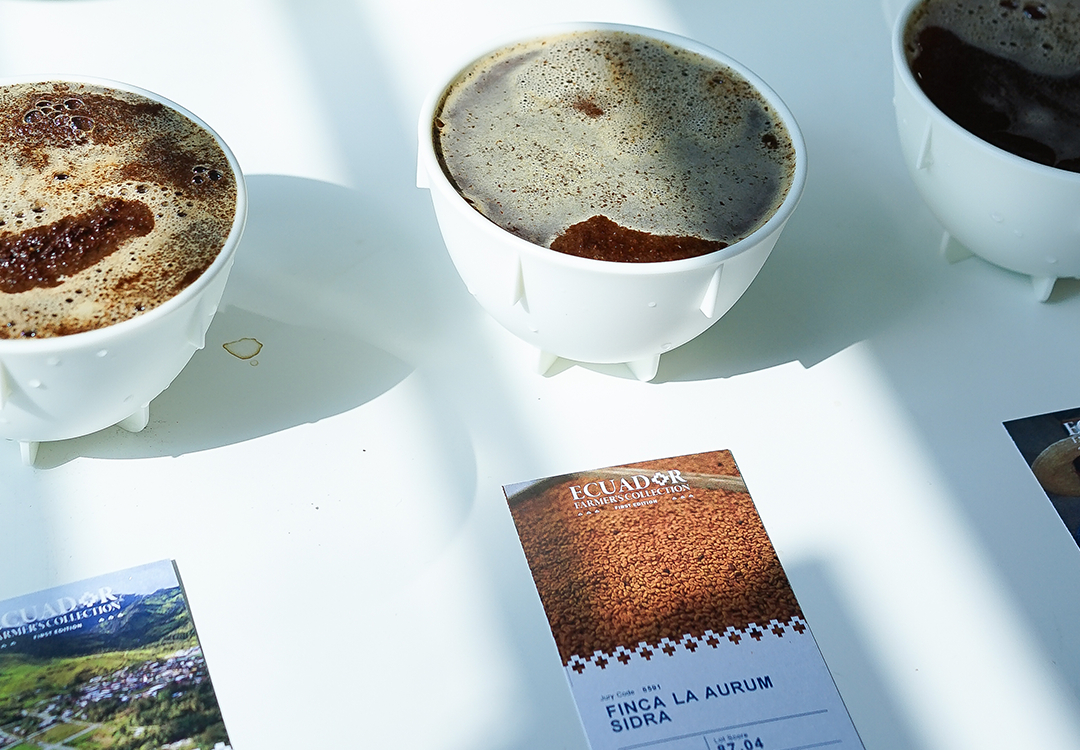
A Record-Breaking Auction in Ecuador Reveals Shifts in the Coffee Market

Dubai – Qahwa World

The global coffee industry continues to evolve at a striking pace, shaped by a mix of record-breaking achievements, scientific discoveries, corporate expansion, and structural challenges. Recent developments from different parts of the world offer a revealing snapshot of where coffee stands today—and where it may be heading.

A defining moment came from Ecuador, where a specialty coffee auction set a new national benchmark. A Gesha lot reached 318 dollars per kilogram, signaling not just a headline-grabbing price, but a broader shift in how emerging origins are positioning themselves in the high-value segment of the market. Ecuador, long overshadowed by more established producers, is increasingly demonstrating its potential to compete in the ultra-premium category, where traceability, processing precision, and storytelling drive value as much as cup quality.

This upward movement in prices at the top end reflects a wider transformation. Specialty coffee is no longer a niche; it is becoming a strategic pathway for producing countries seeking to escape the volatility of commodity markets. However, such success stories also highlight a growing divide between high-end micro-lots and the broader base of producers who remain exposed to fluctuating global prices and rising production costs.

At the same time, science continues to deepen our understanding of coffee ecosystems. The identification of new fungal species on arabica plants may seem like a small discovery, yet it underscores the complexity of the biological systems surrounding coffee cultivation. These organisms play a quiet but essential role in nutrient cycling and soil regeneration, reminding the industry that long-term sustainability depends not only on climate and economics, but also on the invisible ecological networks within farms.

On the institutional front, changes in trade governance signal a push toward modernization. Updated arbitration systems and the development of remote training platforms suggest an industry adapting to new realities, where digital access and standardized procedures are becoming increasingly important. As global trade grows more complex, the ability to resolve disputes efficiently and train professionals across borders is no longer optional.

Meanwhile, major coffee companies continue to expand, reporting strong financial growth and reinforcing their global presence. This reflects steady demand in consumption markets, even as the industry faces mounting pressures. New investment discussions and franchise expansion strategies, particularly in the United States, point to a continued belief in coffee as a resilient business model, capable of attracting capital even in uncertain economic conditions.

Yet beneath this growth lies a layer of vulnerability. Legal disputes linked to product safety, as well as incidents involving equipment failure, highlight operational risks that can have significant reputational and financial consequences. In parallel, cases of illegal activity tied to coffee retail spaces, though isolated, raise questions about oversight and the integrity of supply chains at the local level.

In emerging producing regions, entrepreneurial initiatives continue to take shape. New farm projects in Southeast Asia reflect both optimism and necessity, as the next generation of producers seeks to build sustainable models from the ground up. These efforts often rely on direct support, transparency, and storytelling to connect with global audiences and secure funding.

Taken together, these developments reveal an industry defined by contrasts. Record auction prices coexist with structural inequality. Scientific progress advances alongside environmental uncertainty. Corporate growth moves in parallel with operational and regulatory challenges.

Coffee today is not just a beverage or a commodity. It is a complex global system, where climate, biology, economics, and culture intersect. Understanding its future requires looking beyond individual headlines and recognizing the deeper forces reshaping the industry from farm to cup.

Coffee Varietals: From Genetic Roots to Your Daily Cup

Dubai – Qahwa World


When we explore the diversity of flavors in coffee cups from different corners of the world, we find a hidden yet decisive factor at play: coffee varietals. These are the genetic roots that define coffee’s identity, much like grape varieties shape the character of wine. Through these variations, we experience the difference between a Kenyan cup bursting with blackcurrant and wine-like acidity, and an Ethiopian cup laced with jasmine and bergamot. Each varietal carries a story — historical, agricultural, and sensory — that deserves to be told.

Arabica coffee, which originated in East Africa and spread through Yemen to the world, forms the foundation of most commercial varietals today. Typica stands at the forefront as the classic Arabica archetype, renowned for its clean sweetness and balance despite low yields and high disease susceptibility. From Typica emerged mutations such as Maragogipe in Brazil with its giant beans, Mundo Novo, a natural cross between Typica and Bourbon that became a cornerstone in Brazilian plantations, and Pacamara, a Salvadoran hybrid famous for its complex floral and fruity character.

Bourbon, a natural mutation of Typica discovered on Réunion Island, grew into one of specialty coffee’s pillars with its rich, smooth, chocolatey and fruity notes. From Bourbon arose varietals such as Caturra with its compact growth and bright acidity, Pacas from El Salvador, and Catuai, a hybrid balancing adaptability with mild cup quality. In Kenya, Scott Agricultural Laboratories introduced SL28 and SL34, now synonymous with winey acidity and blackcurrant flavors, cementing Kenya’s global reputation. Meanwhile, Laurina (Bourbon Pointu) from Réunion stands out for its naturally low caffeine content and delicate, tea-like qualities.

If Typica and Bourbon laid the foundation, Ethiopian landraces represent coffee’s treasure trove of genetic diversity. From Ethiopia’s highlands came varietals that became global icons: Gesha (Geisha), which found fame in Panama for its jasmine and bergamot notes; Yirgacheffe, prized for its lemony, floral clarity; Sidamo, known for its fruity, wine-like complexity; and Harrar, bold with blueberry and chocolate tones.

The 20th century brought new challenges such as coffee leaf rust, prompting the creation of resistant hybrids. Varietals like Catimor and Sarchimor gained traction for their high yields and resilience, while Castillo became a strategic crop in Colombia. In Kenya, Ruiru 11 and Batian were developed to balance disease resistance with cup quality. Brazil contributed with Obata and Icatu, robust hybrids designed for resilience in harsher climates.

Other important varietals include Villa Sarchi and Villalobos from Costa Rica, Typica Mejorado from Ecuador (with Gesha-like floral complexity), and even the wild species Eugenioides, not grown commercially but crucial as one of Arabica’s parents, offering unique insights into coffee’s evolution.

Varietals are not just agricultural classifications — they are a language spoken by producers, roasters, and consumers. They define farm identity, influence auction prices, and shape how coffee is perceived in global markets. More importantly, they are a tool for tackling the future, as climate change and disease reshape the landscape. Understanding varietals is not a luxury but a necessity for anyone seeking to truly understand coffee — from seed to cup.

Lineage Maps: Families of Coffee Varietals

  • Typica lineage: the classic foundation; gave rise to Maragogipe, Mundo Novo, Pacamara.

  • Bourbon lineage: rich and versatile; produced Caturra, Pacas, Catuai, SL28, SL34, Laurina.

  • Ethiopian landraces: unmatched diversity; Gesha, Yirgacheffe, Sidamo, Harrar.

  • Modern hybrids: bred for resistance and productivity; Catimor, Sarchimor, Castillo, Ruiru 11, Batian, Obata, Icatu.

  • Other notable varietals: Villa Sarchi, Villalobos, Typica Mejorado, Mocha, Liberica, Eugenioides.

Encyclopedic List of Varietals

Typica Lineage

  • Typica: East Africa → Yemen → Asia → Americas; sweet, clean, balanced, low yields.

  • Maragogipe: Brazil; giant beans, delicate flavors, lighter body.

  • Mundo Novo: Typica × Bourbon (Brazil); high yield, nutty, full-bodied.

  • Pacamara: Pacas × Maragogipe (El Salvador); complex, floral, fruity, large beans.

Bourbon Lineage

  • Bourbon: Réunion Island; rich, smooth, fruity, often chocolatey.

  • Caturra: Brazil, dwarf Bourbon mutation; bright acidity, lighter body.

  • Pacas: El Salvador; sweet, balanced, citrus notes.

  • Catuai: Caturra × Mundo Novo (Brazil); mild, adaptable, easy-drinking.

  • SL28: Kenya; winey acidity, blackcurrant notes.

  • SL34: Kenya; full-bodied, fruity, excellent in wet conditions.

  • Laurina (Bourbon Pointu): Réunion; naturally low caffeine, delicate, tea-like.

Ethiopian Landraces

  • Gesha/Geisha: Ethiopia → Panama; floral, tea-like, jasmine, bergamot.

  • Yirgacheffe: Ethiopia; lemony, floral, clean.

  • Sidamo: Ethiopia; fruity, wine-like, complex.

  • Harrar: Ethiopia; bold, blueberry, chocolate.

Modern Hybrids

  • Catimor: Caturra × Timor Hybrid; high yield, rust-resistant, variable cup quality.

  • Sarchimor: Villa Sarchi × Timor Hybrid; adaptable, mild cup.

  • Castillo: Colombia; rust-resistant, clean, balanced.

  • Ruiru 11: Kenya; disease-resistant, blackcurrant notes.

  • Batian: Kenya; recent hybrid, balanced, bright acidity.

  • Obata: Brazil; resistant, fruity, mild.

  • Icatu: Brazil (Arabica × Robusta backcross); sweet, nutty, resilient.

  • Colombia (varietal): Colombia; good body, clean citrus notes.

Other Notable Varietals

  • Villa Sarchi: Costa Rica; sweet, citrusy, bright.

  • Villalobos: Costa Rica; aromatic, balanced.

  • Typica Mejorado: Ecuador; intensely floral, Gesha-like complexity.

  • Mocha: small, round beans; strong chocolate notes.

  • Liberica: West Africa → Asia; woody, aromatic, bold.

  • Eugenioides: wild species; low caffeine, sweet, mild flavors.

Factors That Change a Varietal’s “Voice” in the Cup

  1. Altitude: slower maturation, denser beans, higher acidity and complexity.

  2. Soil & Climate: minerals, rainfall, and microclimates shape flavor nuances.

  3. Processing:

    • Washed: clean, bright acidity.

    • Natural: fruity, wine-like.

    • Honey/anaerobic: sweet, tropical, experimental flavors.

  4. Harvest & Sorting: selective picking enhances uniform quality.

  5. Roasting: reveals varietal distinctions, from floral notes to chocolate tones.

Diseases and Climate Adaptation

  • Coffee leaf rust: the biggest threat; spurred hybrids like Catimor and Castillo.

  • Heat & drought: push demand for hardier hybrids and modern agroforestry.

  • Farm strategy: planting multiple varietals reduces risk and ensures resilience.

Conclusion

Varietals are the backbone of the coffee world. They carry history, define flavor, and shape the future of farming. For drinkers, they deepen appreciation of the cup. For farmers, they provide tools to survive climate and market pressures. To understand coffee in its essence, one must understand its varietals — the living genetic stories in every bean.