Brazilian Coffee Ends 2025 with Record Revenues Exceeding $15.6 Billion

São Paulo – Qahwa World

In a detailed economic report reflecting major shifts in global commodity markets, the Brazilian Coffee Exporters Council (Cecafé) announced the conclusion of 2025 with an unprecedented financial performance. Despite ongoing supply chain disruptions and geopolitical volatility, Brazil achieved a historic record in coffee export revenues, reinforcing its position as a leading force in the global agricultural economy.

  • Cecafé: The Reference Authority for Data and Policy

The Brazilian Coffee Exporters Council (Cecafé) is the official body representing coffee exporters in Brazil and is responsible for monitoring coffee trade flows to more than 120 countries worldwide. According to Cecafé’s December 2025 report, these exceptional financial results demonstrate the sector’s ability to adapt to global price fluctuations, supported by strategic investments in quality enhancement and value creation for Brazilian coffee in international markets.

  • Financial Performance Analysis: Value Growth Amid Lower Volumes

Based on data analyzed by Cecafé, Brazil’s coffee export revenues reached $15.586 billion in 2025, marking a 24.1% increase compared with the previous year. This figure represents the highest export revenue level in Brazil’s coffee trade history.

Notably, this record revenue was achieved despite a 20.8% decline in shipment volumes. Brazil exported 40.049 million 60-kg bags in 2025, down from more than 50 million bags in 2024. The increase in revenues was driven by a sharp rise in the average export price, which reached $389.17 per bag, up 56.4% year on year. This pricing dynamic allowed exporters to generate higher returns with lower volumes, supporting crop sustainability and helping preserve domestic stocks affected by adverse climatic conditions.

  • A Reshaped Trade Map: Germany Takes the Lead

The year 2025 marked a significant shift in Brazil’s coffee export destinations. According to Cecafé, the United States fell to second place among Brazil’s largest coffee importers, while Germany emerged as the leading destination.

Germany imported 5.409 million bags, representing a 6.1% increase, while U.S. imports declined sharply by 33.9%, totaling 5.381 million bags. Cecafé attributes this contraction in the U.S. market primarily to the imposition of 50% import tariffs on Brazilian coffee during parts of the year, which reduced the product’s competitiveness and redirected volumes toward European and Asian markets.

In parallel, Japan recorded growth of 19.4%, while China posted a 19.5% increase, highlighting the success of Cecafé’s market diversification strategy and its focus on emerging economic powers in Asia.

  • Differentiated Coffees: Driving Qualitative Growth

Cecafé’s report also highlights the strong performance of the “Differentiated Coffees” segment, which includes coffees certified for high quality standards or sustainable production practices. This segment generated $3.525 billion in revenue, accounting for 22.6% of total export earnings.

Although shipment volumes in this category declined by 15.1%, their total value increased by 39.1%. Márcio Ferreira, President of Cecafé, noted that global consumers are increasingly willing to pay premium prices for coffees that ensure environmental and social sustainability—an area in which Brazil has strengthened its position through advanced agricultural technologies.

  • Logistics Challenges: The Cost of Success

Despite the strong financial results, 2025 was not without challenges. Cecafé reported severe logistical constraints at Brazilian ports, particularly at the Port of Santos. According to the report, 55% of vessels experienced schedule delays, disrupting the shipment of thousands of containers each month.

These delays resulted in operational losses amounting to millions of Brazilian reais, driven by demurrage charges and additional storage costs. Cecafé emphasized that improving port infrastructure and ensuring a steady supply of containers are essential to sustaining record export performance in the coming years.

  • Outlook for 2026: Sustainability and Innovation

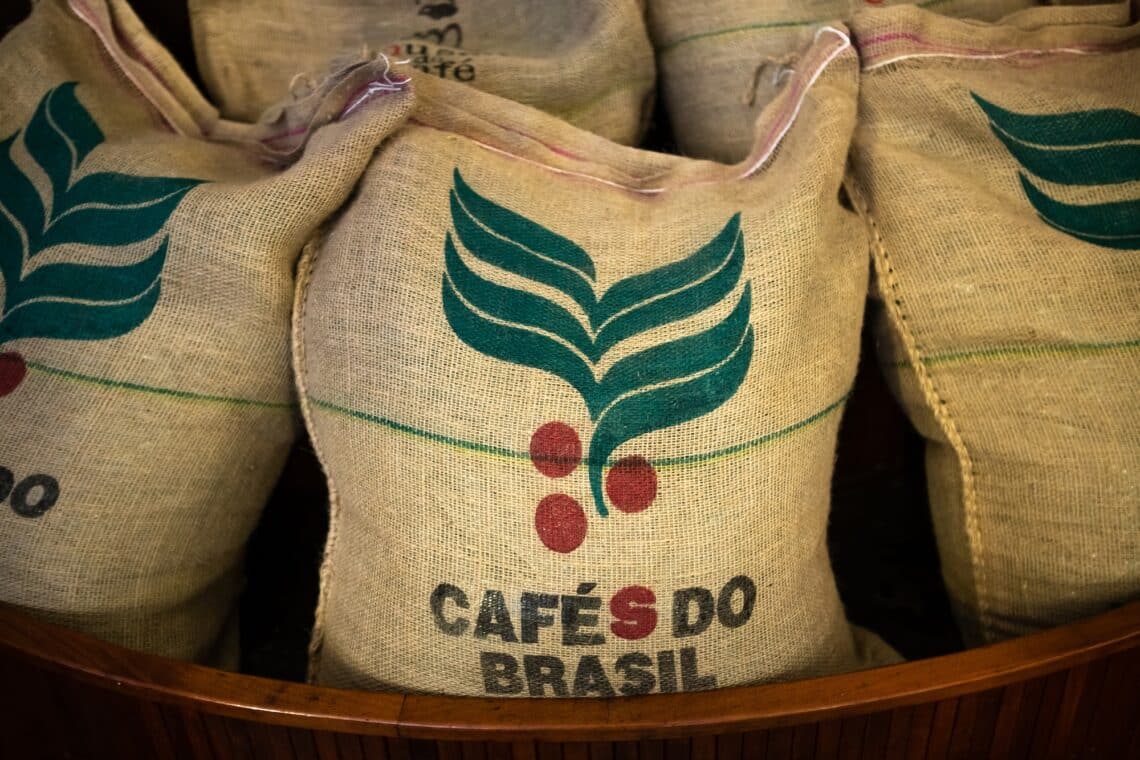
Cecafé’s December 2025 report concludes with an optimistic outlook led by Marcos Matos, CEO of the Brazilian Coffee Exporters Council. He stated that the “Cafés do Brasil” brand has become a global benchmark, successfully combining large-scale production with environmental responsibility.

According to the report, Brazil—through Cecafé—not only supplies approximately one-third of global coffee demand, but also leads efforts in agricultural digitalization, labor rights protection, and forest conservation, positioning Brazilian coffee as a reliable and sustainable choice for the future.

  • Conclusion

Generating more than $15.6 billion in export revenues in a single year is not merely a statistical milestone, but a clear indicator of the strength and global standing of Brazilian coffee. It also underscores the central role played by the Brazilian Coffee Exporters Council (Cecafé) in guiding the sector toward new levels of financial and professional achievement.

Coffee Prices in Russia Keep Climbing: How Much Does a Cup Cost Now?

Prices in retail and cafés continue to climb as the market braces for further increases in 2026

Moscow – Qahwa World

Russia’s coffee market experienced a sharp rise in prices throughout 2025, a trend that has become clearly visible to consumers both in retail stores and in cafés. As 2026 begins, prices for instant coffee and coffee beans remain at elevated levels, reinforcing concerns that a daily cup of coffee is becoming an increasingly expensive habit.

  • Sustained Growth Over Three Years

Over the past three years, coffee prices in Russia have followed a steady upward trajectory. According to data from Rosstat, the average price of one kilogram of instant coffee stood at 2,638 rubles in January 2022. By the end of that year, the price had risen by approximately 25%. Although a brief decline was recorded in 2023, it proved short-lived.

From January 2024 onward, prices resumed their upward movement, reaching 3,500 rubles per kilogram by December. In November 2025, instant coffee hit a new record high of 4,152 rubles per kilogram. Overall, instant coffee prices increased by nearly 60% over three years.

Coffee beans followed a more gradual but largely uninterrupted upward path. In January 2022, one kilogram cost 1,136 rubles, rising to 1,490 rubles by the end of that year. Prices remained relatively stable throughout 2023 before entering a new growth phase in 2024. By November 2025, the price of coffee beans reached 2,061 rubles per kilogram—an increase of roughly 80% over three years.

Industry experts note that official statistics reflect average market dynamics, which may underestimate the real financial impact felt by consumers in day-to-day purchases.

  • Key Drivers Behind the Price Increase

At the beginning of 2025, market forecasts suggested coffee prices could rise by 30–40%. In practice, price increases in several segments exceeded those expectations.

Market participants report that over the past two to three years, prices for many popular brands of ground and whole-bean coffee in retail stores have risen by 50–100% compared to 2021 levels.

The primary drivers of this trend include Russia’s near-total reliance on imported coffee, elevated global prices for coffee raw materials, and fluctuations in the ruble exchange rate. Additional pressure has come from higher costs associated with international payments, logistics, and packaging materials, all of which increase production costs before roasting even begins.

  • Impact on Cafés

Rising raw material costs have also affected the foodservice sector. During 2025, prices for coffee-based beverages increased by an average of 15–30% year-on-year. In certain formats—particularly 100% arabica and specialty coffee—the increase reached 35–45%.

In many cases, cafés implemented price increases gradually, introducing several small adjustments over the course of the year rather than a single sharp hike.

At the same time, industry representatives emphasize that profit margins remain limited. The cost of coffee itself accounts for only a small portion of the final price of a cup, while operating expenses—such as rent, wages, and taxes—make up the bulk of costs.

  • Price Outlook for 2026

Forecasting coffee prices for 2026 remains challenging due to multiple external variables, including weather conditions in producing countries, exchange rate movements, and the stability of global supply chains. Potential changes in tax policy could also add further pressure.

Current expectations point to continued price growth, though at a more moderate pace. Under a baseline scenario, prices could rise by 8–15% over the year if currency and logistics conditions remain relatively stable. In the event of renewed volatility, increases could be higher, particularly in higher-quality coffee segments.

Despite rising prices, demand for coffee in Russia remains resilient. Strong consumer attachment to the product has allowed the market to adapt to higher price levels without a significant decline in consumption.

  • A New Phase for the Coffee Market

Experts broadly agree that Russia’s coffee market is entering a new phase. While the period of sharp and sudden price shocks may be easing, a return to previously low price levels appears unlikely in the near term.

Instead, the market is expected to settle into a phase of relative price stabilization at higher levels, with future pricing shaped by currency dynamics, competition, and consumers’ ability to adjust to the evolving market environment.

Coffee Prices Rise as Dollar Weakens

Dubai – Qahwa World

Coffee futures ended higher on Friday, with robusta reaching a 1.5-month high, as the U.S. dollar fell to its lowest level in three and a half months. March arabica (KCH26) increased by 0.92%, while March robusta (RMH26) gained 2.88%. The weaker dollar prompted short-covering across commodities, including coffee.

Brazilian coffee exports have declined, supporting prices. Cecafe reported that December’s total green coffee exports fell 18.4% year-on-year to 2.86 million bags. Arabica shipments dropped 10% to 2.6 million bags, while robusta exports plunged 61% to 222,147 bags. Below-average rainfall in Minas Gerais, Brazil’s largest arabica-growing region, also added upward pressure, with Somar Meteorologia reporting only 33.9 mm of rain for the week ending January 16, just 53% of the historical average.

At the same time, inventories monitored by ICE have rebounded, putting some pressure on prices. Arabica stocks rose to a 2.5-month high of 461,829 bags, after reaching a 1.75-year low in November. Robusta inventories recovered to a 1.75-month high of 4,609 lots, following a 1-year low in December.

Global supply trends remain mixed. Brazil’s crop agency Conab raised its estimate for 2025 coffee production by 2.4% to 56.54 million bags. Vietnam, the world’s largest robusta producer, reported a 17.5% year-on-year increase in coffee exports for 2025, reaching 1.58 million metric tons. Its coffee output is projected to rise 6% to 29.4 million bags, marking a four-year high.

Overall, global coffee production is expected to grow, with USDA forecasts projecting a 2% increase in 2025/26 to a record 178.85 million bags. Arabica output is anticipated to fall 4.7% to 95.52 million bags, while robusta production is expected to climb 10.9% to 83.33 million bags. Brazil’s output is forecasted to decline 3.1% to 63 million bags, while Vietnam’s is projected to rise 6.2% to 30.8 million bags. Ending stocks are expected to drop 5.4% to 20.15 million bags.

The coffee market is navigating a mix of forces: a weaker dollar and tight Brazilian exports support prices, while recovering inventories and record Vietnamese production weigh on the market. Traders and industry observers will continue watching weather conditions, export flows, and inventory levels closely as the year progresses.

Brazil Coffee Export Revenue Hits Record Despite Falling Volumes

Dubai – Qahwa World

Brazil’s coffee export revenue reached a historic high of $15.6 billion in 2025, despite a significant decline in shipment volumes, according to the latest report from Cecafé, the Brazilian Coffee Exporters Council.

Released on January 19, the report shows that total coffee exports fell by more than 10 million 60-kilogram bags, dropping from a record 50,584,170 bags in 2024 to 40,049,222 bags in 2025—a decrease of over 20 percent. Even so, the 2025 figure remains higher than exports recorded in any year between 2020 and 2023.

Cecafé President Márco Ferreira attributed the surge in export earnings to steadily rising coffee prices throughout 2025. He noted that higher average monthly prices, combined with continued investment by Brazilian growers in technology, innovation, and quality, helped elevate both the standard and market value of Brazilian coffee.

The report also highlights the impact of United States tariffs, which led to a 55 percent decline in exports to the U.S. between August and November. The tariffs included a 40 percent national emergency levy, introduced on July 30, alongside a 10 percent reciprocal tariff. Both measures were lifted on November 12.

As a result of reduced U.S. demand, Germany emerged as Brazil’s largest coffee importer in 2025, followed by Italy, Japan, and Belgium.

Looking ahead, Ferreira expects Brazilian coffee exports in 2026 to once again exceed 40 million 60-kilogram bags, reinforcing the country’s position as the world’s largest coffee producer. By comparison, the record 2024 harvest generated approximately $12.5 billion in export revenue, while the 2023 crop earned $6.2 billion.

Coffee Prices Climb as Rain Forecasts in Brazil Remain Low

Dubai – Qahwa World

Coffee futures rebounded today following early declines, buoyed by weather forecasts signaling limited rainfall in Brazil’s key coffee-producing regions over the coming week. March arabica (KCH26) gained +1.40 points (+0.39%), while March ICE robusta (RMH26) rose +52 points (+1.31%).

Earlier in the session, arabica fell to a 1.5-week low, pressured by a stronger U.S. dollar, as the DXY index reached a six-week high.

Last week, arabica prices surged to a one-month high amid below-average precipitation in Brazil, the world’s largest arabica coffee exporter. Data from Somar Meteorologia showed that Minas Gerais, Brazil’s main arabica-growing state, received just 26.5 mm of rainfall during the week ending January 9 — only 29% of the historical average.

Shrinking inventories on ICE exchanges are also lending support to prices. Arabica stocks tracked by ICE dropped to a 1.75-year low of 398,645 bags on November 20, before climbing to a 2.5-month high of 461,829 bags last Wednesday. Robusta inventories fell to a one-year low of 4,012 lots on December 10 but recovered to a five-week high of 4,278 lots later in December.

However, a strong supply outlook remains a headwind. Brazil’s crop agency Conab raised its 2025 coffee production estimate by 2.4% in December to 56.54 million bags, up from the September projection of 55.20 million bags.

Vietnam, the largest robusta producer, is also expanding its output, which pressures robusta prices. Its 2025 coffee exports jumped 17.5% year-on-year to 1.58 million metric tons, according to the country’s National Statistics Office. Vietnam’s coffee production for 2025/26 is forecast to rise 6% year-on-year to 1.76 MMT (29.4 million bags), marking a four-year high, with the Vietnam Coffee and Cocoa Association projecting a potential 10% increase if weather conditions remain favorable.

Global coffee supply data show a mixed picture. The International Coffee Organization (ICO) reported November 7 that world coffee exports declined 0.3% year-on-year to 138.658 million bags for the current marketing year (October–September). Meanwhile, the USDA’s Foreign Agriculture Service predicted a 2% increase in global coffee production in 2025/26 to 178.848 million bags, driven by a 10.9% jump in robusta output to 83.333 million bags, despite a 4.7% drop in arabica production to 95.515 million bags. The report also projected Brazil’s production would fall 3.1% to 63 million bags, while Vietnam’s output rises 6.2% to a four-year high of 30.8 million bags. Ending stocks are expected to decline 5.4% to 20.148 million bags from 21.307 million bags in 2024/25.

Coffee Prices Rise on Brazil Dryness and Global Supply Dynamics

Dubai – Qahwa World

Coffee markets moved higher today amid ongoing concerns over dry conditions in Brazil, the world’s largest arabica producer. March arabica futures (KCH26) rose +4.20 (+1.18%), while March robusta futures (RMH26) gained +36 (+0.92%).

The price gains follow last week’s rally, when arabica hit a one-month high due to below-average rainfall in Brazil. Somar Meteorologia reported that Minas Gerais, Brazil’s primary arabica-growing region, received just 26.5 mm of rain for the week ending January 9—only 29% of the historical average—raising fears of smaller harvests.

  • Inventory Levels Support Prices

Tighter stock levels are adding upward pressure on coffee prices. ICE-tracked arabica inventories fell to a 1.75-year low of 398,645 bags on November 20 but rebounded to 461,829 bags last Wednesday. ICE robusta inventories hit a one-year low of 4,012 lots on December 10, later rising to a five-week high of 4,278 lots.

  • Vietnam Exports and Global Supply Trends

While Brazilian dryness is bullish, rising robusta exports from Vietnam are weighing on prices. Vietnam exported 1.58 million metric tons of coffee in 2025, up 17.5% from the previous year. Vietnam’s 2025/26 coffee production is expected to reach 1.76 million metric tons (29.4 million bags), a four-year high. The Vietnam Coffee and Cocoa Association noted that output could increase 10% over the prior year if favorable weather continues.

Globally, coffee supplies are showing mixed signals. The International Coffee Organization reported a slight year-on-year decline in exports for the current marketing year (October–September), totaling 138.658 million bags. Meanwhile, the USDA’s Foreign Agricultural Service (FAS) projects world coffee production in 2025/26 will hit a record 178.848 million bags, with arabica decreasing 4.7% to 95.515 million bags and robusta rising 10.9% to 83.333 million bags. Brazil’s production is expected to fall 3.1% to 63 million bags, while Vietnam’s output may climb 6.2% to 30.8 million bags. Ending stocks are projected to drop 5.4% to 20.148 million bags.

  • Outlook

Market watchers are balancing the bullish signals from Brazil’s dry weather and shrinking inventories against the bearish influence of rising Vietnamese supplies and higher global production forecasts. The net effect has been steady upward pressure on coffee prices, with both arabica and robusta futures posting notable gains in recent sessions.

ICO Releases Global Coffee Market Report – December 2025

Dubai – Coffee World

The global coffee market closed 2025 amid sharp volatility, leaving industry stakeholders facing an uncertain outlook at the start of 2026, according to the latest report issued by the International Coffee Organization (ICO). The report highlights a dramatic shift in market dynamics during December, as prices declined significantly following changes in international policy and a temporary easing of supply chain constraints in Asia.

Price Decline: Market Correction or Calm Before the Storm?

The ICO Composite Indicator Price (I-CIP) averaged 304.68 US cents per pound in December, representing a 7.8% decline from November levels. This downturn ended a historic upward trend, with prices falling from a peak of 343.92 cents to a mid-month low of 283.21 cents, before closing the year at 293.09 cents per pound.

According to the report, the decline was driven by three key factors:

  • Improved supply expectations, as major international institutions revised global production estimates for 2025 upward, easing speculative pressure.

  • Reduced regulatory uncertainty, following the European Union’s decision to delay implementation of the EU Deforestation Regulation (EUDR), which curtailed panic buying.

  • Currency effects, as the depreciation of the Brazilian real encouraged producers to accelerate dollar-denominated sales to maximize local currency returns.

Group Performance: Robusta Suffers the Sharpest Losses

All coffee groups recorded price declines in December, with Robusta experiencing the steepest drop. Robusta prices fell 11.3% to 190.53 cents per pound.

In contrast, Arabica prices declined more moderately. Both Colombian Milds and Brazilian Naturals fell by 6.5%, reflecting continued underlying demand for higher-quality coffees despite broader market volatility.

Global Exports: Asia and Africa Lead Growth

Global green coffee exports increased by 4.8% in November 2025, reaching 8.95 million bags, according to ICO data.

  • Asia and Oceania recorded exceptional growth of 47%, driven by Vietnam’s strong return to the market, with exports rising by 60%.

  • Africa continued its positive trajectory, posting a 7.7% increase, led by Uganda, whose exports surged by 72%.

  • South America was the only region to register a decline, with exports falling 14.9%, reflecting a normalization after record shipments earlier in the year and a 25.8% drop in Brazilian Robusta exports.

Supply–Demand Balance: Structural Deficit Persists

Despite the recent price correction, the report underscores ongoing structural imbalances in the global coffee market. The cumulative supply deficit over recent years has reached 17.91 million bags, while inventories in Europe and the United States have fallen to historically low levels.

Certified stocks at the New York exchange declined to just 0.48 million bags, leaving the market with limited buffers against potential future supply shocks.

2026 Outlook: Climate Risks Shape the Path Ahead

As 2026 begins, attention is firmly focused on weather conditions across the world’s major coffee-growing regions. The report warns of below-average rainfall in Brazil’s key producing areas, including Minas Gerais, where precipitation reached only 76% of normal levels. Meanwhile, flooding in Indonesia could reduce exports by up to 15% in the first quarter of the new year.

Conclusion

The global coffee market ended 2025 with a price correction that may suggest temporary stability. However, a deeper analysis of the data points to a fragile equilibrium. Low global inventories and escalating climate risks indicate that 2026 is likely to be a year of significant challenges for both producers and consumers across the coffee value chain.

Fabricio Scocco: A New Way to Read the Coffee Market

Dubai – Qahwa World

Fabricio Scocco: A New Way to Read the Coffee Market

By any measure, the coffee market is drowning in information—and starving for clarity. Charts, headlines, rumors, and price screens move faster than the coffee itself. Fabricio Scocco is attempting something different.

He’s experimenting with a new format designed to cut through the noise: short, structured, and built for decision-making. The result is a three-page Coffee Trade Intelligence brief that focuses less on opinion and more on what actually matters to buyers, sellers, and origin stakeholders in real time.

This first release—focused on Nicaragua, with a 2–4 week time horizon—marks the launch of an ongoing Coffee Trade Intelligence series. Feedback from roasters, traders, importers, and producers is not only welcome, but encouraged.

Coffee Trade Intelligence | Nicaragua

Time Horizon: 2–4 Weeks

Market Snapshot

Early harvest conditions are defining the current landscape.

  • Harvest arrivals are running 15–30% below peak levels

  • Differential holdings sit 5–10% above seasonal norms

  • Early volumes are largely pre-committed

  • Quality dispersion is widening across producing regions

The message is clear: coffee is moving, but not freely—and not evenly.

What’s Driving Price and Risk

Supply Reality

Harvest still ramping up
Picking is underway, but export-ready volumes remain limited. Supply is improving gradually, not surging. For now, there is not enough physical coffee entering the system to materially ease availability.

Producer selling tied to cash flow
Sales decisions are being paced by working capital needs and production costs. This introduces irregularity into supply timing, rather than a steady flow into the market.

Demand Behavior

Specialty buyers absorbing early lots
High-quality early arrivals are being quickly taken up by specialty buyers. This demand is targeted, quality-driven, and relatively price-inelastic.

Bulk buyers still on the sidelines
For now, larger volume buyers are showing limited urgency, likely waiting for clearer signals on price and peak harvest availability.

Market Disconnect

Physical market trailing futures by 2–3 weeks
There is a noticeable lag between futures market expectations and on-the-ground physical conditions. Paper markets are moving faster than coffee.

Prices not yet reflecting peak arrival pressure
Despite expectations of heavier arrivals, prices have not adjusted accordingly—suggesting potential re-pricing once supply is confirmed.

Buying Positioning

Recommended Strategy

Approach

  • Avoid bulk commitments at current levels

  • Accumulate selectively, targeting 25–30% of total needs

  • Scale purchases as mid-harvest volumes begin to flow

Timing Window

  • Late January through February will be critical for observing supply acceleration and adjusting buying pace accordingly

Key Risks to Watch

  • Weather during peak harvest, which could disrupt picking and logistics

  • FX-driven producer selling, where currency movements could unlock—or restrict—short-term liquidity and supply

Bottom Line

Wait for supply confirmation. Pay for quality, not urgency.
Let verified arrivals guide buying decisions. The premium today should be for cup profile and consistency—not speed.

What to Watch Over the Next 2–4 Weeks

  • Arrival acceleration into export channels

  • Differential softening, signaling improved physical availability

  • Producer selling pace, especially if FX movements shift incentives

Confidence Assessment

Overall Market Visibility: Medium

  • Supply clarity depends on how quickly harvest volumes scale

  • Specialty demand is firm, but bulk demand remains hesitant

  • Futures are moving ahead of physical reality, increasing volatility risk

  • Weather and FX remain persistent external variables

Final Take

Maintain a cautious but engaged posture. The coming weeks will be defined by how quickly supply materializes—and how producers choose to sell. Those signals will determine whether today’s market tightness holds, or finally begins to loosen.

Drier Conditions in Brazil Lift Arabica Coffee Prices

Dubai – Qahwa World

Arabica coffee futures moved higher on Wednesday, reaching their strongest level in about four weeks, while robusta prices weakened. March arabica contracts gained modestly, supported by weather concerns in Brazil and currency movements, whereas robusta futures declined amid ample supply from Vietnam.

Lower-than-normal rainfall across key Brazilian growing regions is providing support to arabica prices. Recent data from Somar Meteorologia showed that Minas Gerais—Brazil’s largest arabica-producing state—received significantly less rainfall than usual in late December, raising concerns about crop development. Brazil is the world’s top producer of arabica coffee, making weather conditions there especially influential for global prices.

Additional support came from a firmer Brazilian real, which reached its strongest level in roughly a month against the US dollar. A stronger currency tends to slow export selling, as Brazilian producers receive fewer local-currency returns from dollar-based coffee sales.

In contrast, robusta prices are under pressure due to strong export volumes from Vietnam, the world’s largest robusta supplier. Official figures indicate that Vietnam’s coffee exports rose sharply in 2025, adding to near-term supply availability.

Inventory trends remain a key focus for traders. Arabica stocks monitored by ICE had previously fallen to their lowest level in nearly two years before rebounding slightly in recent weeks. Robusta inventories also declined to a one-year low earlier in December but have since shown signs of recovery.

Demand patterns have also influenced the market. Earlier US tariffs on Brazilian imports reduced American purchases of Brazilian coffee, leading to tighter inventories in the United States. Although those tariffs have since been reduced, buying activity has not yet fully recovered.

Looking ahead, expectations of larger global supplies are limiting further price gains. Brazil’s crop agency recently raised its forecast for the country’s 2025 coffee output, citing improved conditions. Vietnam is also expected to increase production in the upcoming season, with industry groups projecting strong output if favorable weather continues.

On the global stage, export data suggest some tightening, as shipments declined slightly year over year. However, longer-term projections from the USDA point to record world coffee production in 2025/26, driven by growth in robusta output that more than offsets a decline in arabica production. Ending global coffee stocks are forecast to fall modestly, keeping supply concerns on the radar despite higher overall production.

Coffee Prices Mixed as Brazil Rainfall Lags and Vietnam Exports Surge

Dubai – Qahwa World

Coffee futures ended mixed on Monday, January 5, with arabica prices settling higher while robusta declined to a one-week low. March arabica coffee rose about 0.6%, supported by below-normal rainfall in Brazil and a stronger Brazilian real, while March robusta fell between 1% and 2.5% under pressure from rising Vietnamese supplies.

Arabica prices drew support after Somar Meteorologia reported that Minas Gerais—Brazil’s largest arabica-growing region—received just 47.9 millimeters of rain in the week ending January 2, only 67% of the historical average. Weather concerns remain important for Brazil, the world’s largest arabica producer. Additional support came from the Brazilian real strengthening to a three-week high against the U.S. dollar, which discourages Brazilian growers from selling coffee into export markets.

In contrast, robusta prices weakened as supply concerns eased. Vietnam’s National Statistics Office reported that 2025 coffee exports surged 17.5% year over year to 1.58 million metric tons. Vietnam is the world’s largest robusta producer, and expectations for higher output continue to weigh on prices. Production for the 2025/26 season is projected to rise about 6%, with industry groups suggesting output could climb as much as 10% if weather remains favorable.

Inventory trends remain mixed but generally supportive. ICE-monitored arabica inventories fell to a 1.75-year low in November before rebounding modestly in late December, while robusta inventories also recovered slightly after hitting a one-year low earlier in the month. Meanwhile, U.S. coffee stocks remain tight after American buyers sharply reduced Brazilian purchases last fall due to temporary import tariffs, which caused U.S. imports from Brazil to drop more than 50% year over year during that period.

Longer-term supply expectations continue to pressure the market. Brazil’s crop agency Conab recently raised its 2025 production estimate to 56.54 million bags. Globally, the USDA projects world coffee production in 2025/26 will rise 2% to a record level, driven by strong growth in robusta output despite a projected decline in arabica production. Ending stocks are expected to fall modestly, offering some offsetting support.

Overall, the coffee market remains caught between near-term weather and currency support for arabica and ample robusta supplies led by Vietnam, keeping prices volatile and direction mixed.

Coffee Prices Rise as Brazilian Real Strengthens and Supply Risks Grow

Dubai – Qahwa World

Coffee futures finished higher on Friday after reversing early weakness, supported by currency movements and renewed supply concerns. March arabica coffee contracts rose sharply, while March robusta prices posted a modest gain.

A key driver of the rebound was strength in Brazil’s currency. The Brazilian real climbed to its strongest level in roughly two weeks against the U.S. dollar, making exports less attractive for Brazilian producers. That shift prompted short covering in coffee futures and helped lift prices into the close.

Weather-related disruptions in Southeast Asia are also lending support. Severe flooding in Indonesia has affected a significant portion of arabica-growing areas in northern Sumatra. Industry officials estimate the damage could cut Indonesia’s coffee exports by up to 15% during the 2025/26 season. Indonesia is a major global supplier, particularly of robusta coffee, and any reduction in output adds to market uncertainty.

Concerns about Brazil’s crop conditions have not faded. Recent data from a private weather firm showed that Minas Gerais—Brazil’s largest arabica-producing region—received far less rainfall than normal in late December. Below-average moisture during this critical period has raised doubts about yield potential for the upcoming harvest.

Inventory trends remain another supportive factor. Arabica coffee stocks monitored by ICE fell to multi-year lows in November before rebounding modestly in recent weeks. Robusta inventories followed a similar pattern, touching their lowest levels in a year before seeing a short-term recovery. Despite the recent uptick, overall stock levels remain relatively tight by historical standards.

On the demand side, U.S. coffee inventories remain constrained. Earlier trade barriers sharply reduced American purchases of Brazilian coffee during late summer and early fall. Although those tariffs have since been reduced, imports have yet to fully recover, leaving supply channels under pressure.

Still, longer-term supply expectations continue to cap rallies. Brazil’s national crop agency recently raised its estimate for the country’s 2025 coffee output, citing improved conditions compared with earlier forecasts. Meanwhile, robusta markets remain weighed down by strong production and export data from Vietnam.

Vietnamese coffee shipments surged late last year, and output for the 2025/26 season is expected to rise further if weather remains favorable. As the world’s largest robusta producer, Vietnam’s expanding supply continues to temper bullish sentiment in that segment of the market.

Globally, mixed signals persist. While international coffee exports have edged slightly lower year over year, production forecasts point to a record crop in the coming season. Arabica output is projected to decline, but gains in robusta production are expected to more than offset those losses. Ending stocks are forecast to fall modestly, suggesting a tighter balance than last year but not an outright shortage.

Overall, coffee prices are being pulled in opposite directions—near-term supply risks and currency dynamics are supporting the market, while expectations of ample global production continue to limit upside potential.

Espresso Prices in Ukraine: Regional Trends and Cost Changes

Kiev – Qahwa World

The price of a single cup of espresso in Ukraine continues to rise, reflecting broader shifts in the country’s coffee market. As espresso forms the base of most coffee drinks, changes in its cost directly influence café pricing nationwide.

Data published by Opendatabot shows that in December 2025, the average price of an espresso reached 41 hryvnias. This marks a 17% increase compared to the same period last year, while prices have almost doubled since the beginning of the full-scale war.

Price differences between regions remain noticeable. The Lviv region currently records the highest average price, with a cup of espresso costing 47 hryvnias, up 19% year on year. This is the first time in several years that the region has topped the national price ranking.

The Odesa region follows closely, where espresso is sold for an average of 45 hryvnias per cup.

At the opposite end of the scale, the Khmelnytskyi region offers the lowest prices, with espresso costing around 33 hryvnias, despite an 18% annual increase. Prices remain relatively moderate in the Zaporizhzhia and Kirovohrad regions, where a cup averages 35 hryvnias.

The sharpest annual rise was recorded in the Sumy region, located near the frontline. There, espresso prices increased by 26% over the year, bringing the average cost to approximately 36 hryvnias.

The Espresso Index is commonly used as an economic benchmark, tracking the price of a standard espresso to compare living costs, purchasing power, and inflation trends across different regions and countries.

In related commodity news, global cocoa prices previously hit a record high, with New York futures reaching USD 11,578 per metric ton. By the end of April, however, cocoa bean prices fell by 26% within just two days.