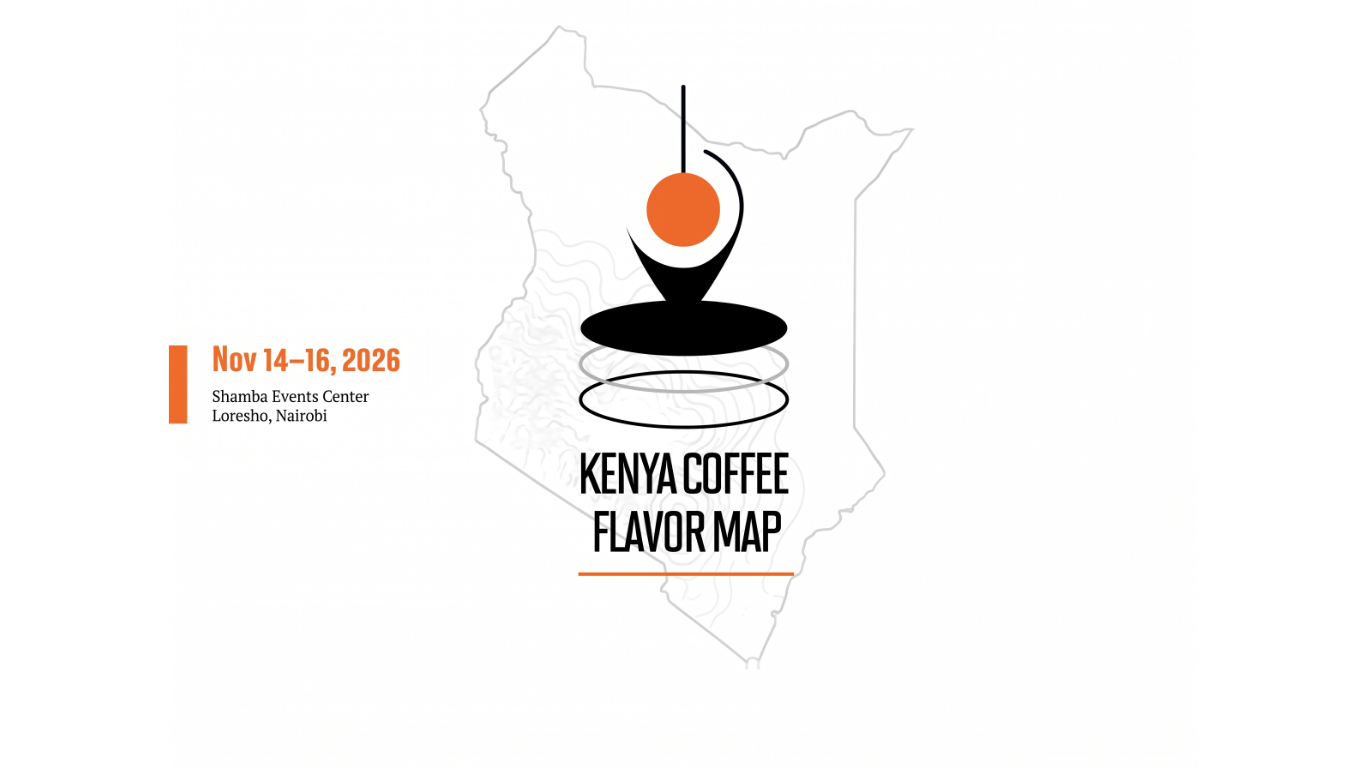
Kenya Launches National Coffee Flavor Map Project

Author: Qahwa World – Nairobi
Source: Kenya Coffee Flavor Map Press Release
Date: October 28, 2026

Kenya Launches National Coffee Flavor Map Project

Executive Summary

  • Kenya’s coffee producers, cooperatives, researchers, and sensory professionals are building a national coffee flavor atlas.
  • The project will analyze approximately 500 samples from 34 coffee-growing counties.
  • Organizers aim to recruit 300 Kenyan and international cuppers to participate.
  • The launch event takes place from November 14 to 16, 2026, at Shamba Events Centre in Loresho, Nairobi.
  • Professional blind sensory evaluations will be held on November 15 and 16.
  • The findings will be made freely available, with a full atlas planned for 2027.
  • Applications are free with no fixed deadline. The project is presented by the Government of Kenya, the Coffee Board of Kenya, and the FAO, in partnership with the Kenya Coffee Platform and UNIDO.

Kenya has launched an ambitious project to document the diverse flavors of its coffee. The Kenya Coffee Flavor Map brings together producers, cooperatives, researchers, and sensory professionals from across the country.

The initiative aims to build a national coffee flavor atlas. It will draw on approximately 500 samples collected from 34 coffee-growing counties. The project is recruiting both Kenyan and international cuppers to help with the analysis.

The goal is to bring together 300 participants. Together, they will document the relationships between flavor, regional origins, cultivated varieties, and production practices. The findings will be made freely available to the public.

Event Details and Program

The main gathering will take place from November 14 to 16, 2026, at the Shamba Events Centre in Loresho, Nairobi. Professional blind sensory evaluations will be held on November 15 and 16.

The Flavor Map is the central sensory project within the Kenya Coffee Flavor & Origin Expo. Across all three days, the Expo’s exhibition and trade area will feature stands for Kenyan producers, cooperatives, coffee brands, and local entrepreneurs. These stands will connect them with international buyers, roasters, equipment suppliers, and other industry partners.

Running alongside the Expo, Creative Coffee Week will add public cupping sessions, barista demonstrations, and cultural activities. Visitors will also have opportunities to explore Kenya’s coffee origins.

The Expo is presented by the Government of Kenya, the Coffee Board of Kenya, and the Food and Agriculture Organization of the United Nations (FAO) in Kenya. Partners include the Kenya Coffee Platform and UNIDO. Sponsors and supporters include the Nairobi Coffee Exchange (NCE), Ecotact, Bideli Roasters, and Torch Coffee. Creative Coffee Events and Coffee Magazine are media and organizing partners.

On November 14, the Kenya Coffee Origin Conference will bring together academics, scientists, producers, baristas, roasters, and entrepreneurs. The educational program will connect the Flavor Map’s investigation of regional coffee identities with questions facing the entire value chain. Sessions will cover topics such as regenerative agriculture, women in coffee, and international marketing. Practical demonstrations will cover biochar and vermicomposting.

The welcome session and the Flavor Map introduction on November 14 are free to attend. Other sessions in the accompanying program are ticketed.

Table 1: Key Facts at a Glance

Item Detail
Event Dates November 14-16, 2026
Venue Shamba Events Centre, Loresho, Nairobi
Samples Approximately 500 from 34 counties
Target Cuppers 300 Kenyan and international participants
Evaluation Dates November 15-16, 2026
Atlas Publication Planned for 2027
Application Free, no fixed deadline

Methodology and the 2027 Atlas

Kenyan scientists, researchers, producers, and technical professionals will work alongside Kenyan and international cuppers. They will connect sensory observations with geographic, environmental, and production data.

Each coffee will be evaluated blind by multiple cuppers. Standardized preparation and blind evaluation will ensure consistency. The combined records will inform the atlas. Further methodological details are available in the official project handbook.

The resulting atlas, planned for publication in 2027, will combine regional profiles, visual maps, and a sensory database. The map and supporting information are intended to be freely available for download and use. This will support producers, cooperatives, buyers, roasters, researchers, educators, and consumers.

The atlas can also support marketing as a form of education. It will give producers, roasters, and cafes information to explain regional differences, production practices, and the people behind Kenyan coffee to buyers and consumers.

Marty Pollack, co-founder of Torch Coffee, explains the philosophy behind the project. “Kenyan professionals are the hosts,” he says. “International cuppers bring their own experience and have a chance to learn from the people who know these coffees at source. That is how new relationships start.”

Torch Coffee’s Kenyan operation is the project’s technical partner. The company has worked with Kenyan professionals and research institutions since 2023. It reports training more than 15,000 students across its international network.

The framework builds on four annual editions of Torch’s Yunnan Coffee Flavor Map in China, from 2021 to 2024. The 2023 edition brought together 760 Q Graders who profiled more than 23,000 cups. That project produced downloadable regional flavor maps, demonstrating how collective sensory evaluation can generate practical references for producers, buyers, and educators.

Kenya’s Growing Domestic Coffee Culture

Kenya’s commercial coffee industry grew under British colonial rule within an export-oriented production system. The Flavor Map builds on Kenyan research and regional knowledge to document a diversity of coffees beyond the country’s best-known origins.

The Ministry of Agriculture’s Coffee Development and Marketing Strategy 2024-2029 reports that about 95% of Kenyan coffee was exported in green form in 2020/21. Imported instant coffee has also been part of the domestic market.

Over the past decade, Kenyan roasters, cafe owners, trainers, and baristas have helped more people experience locally grown coffee at home. The Agriculture and Food Authority recorded an increase in coffee shops from 231 in 2019 to 791 in 2023.

“Our cafes are full of people who would have ordered tea ten years ago,” says Ritesh Doshi, owner and CEO of Nairobi-based Spring Valley Coffee. “When coffee is roasted, branded and served in Kenya, the jobs, the skills and the margin stay in Kenya.”

Edwin Wanjiru, a Kenyan coffee professional and Q Grader, adds: “Coffee is part of Kenya’s identity, rooted in our land, our people, and generations of hard work. That is changing as more Kenyans discover, prepare and share the coffees we grow.”

Call for Cuppers and Exhibitors

Professional cuppers are invited to apply free of charge through the official application form. Selection considers professional experience and geographic representation. Selected participants will join the sensory evaluations on November 15 and 16.

Applicants may qualify through recognized sensory or cupping credentials, national cupper certification, Cup of Excellence jury experience, or at least two years of hands-on professional cupping experience.

Exhibitors are also invited. Producers, cooperatives, coffee brands, equipment manufacturers, service providers, and international roasters can contact [email protected]. Priority is given to producer cooperatives, county-level grower groups, and smallholder organizations.

Visitors can contact the organizing team for information on public activities, conference access, and tickets. International participants should consult the Kenya Travel Brief for accommodation and transport information.

Frequently Asked Questions

What is the Kenya Coffee Flavor Map?

It is a national project to document the diverse flavors of Kenyan coffee through sensory evaluation and data collection, creating a publicly available atlas.

When and where does the event take place?

November 14-16, 2026, at Shamba Events Centre, Loresho, Nairobi.

How many samples and cuppers are involved?

About 500 samples from 34 counties. Organizers aim to recruit 300 Kenyan and international cuppers.

Is there a cost to participate?

Applications for cuppers are free with no fixed deadline. The welcome session and Flavor Map introduction on November 14 are free to attend. Other sessions are ticketed.

When will the atlas be published?

The full atlas is planned for publication in 2027 and will be freely available.

Who is organizing the project?

The Expo is presented by the Government of Kenya, the Coffee Board of Kenya, and the FAO in Kenya, in partnership with the Kenya Coffee Platform and UNIDO. Torch Coffee is the technical partner.


Author: Qahwa World – Nairobi | Source: Kenya Coffee Flavor Map Press Release | Date: October 28, 2026
SensoCup CVA: The First Free Digital Tool for Professional Coffee Evaluation According to SCA Standards

Source: Garage Coffee Bros. – Press Release |
Author: Qahwa World |
Date: June 18, 2026

SensoCup CVA: The First Free Digital Tool for Professional Coffee Evaluation According to SCA Standards

Key Takeaways:

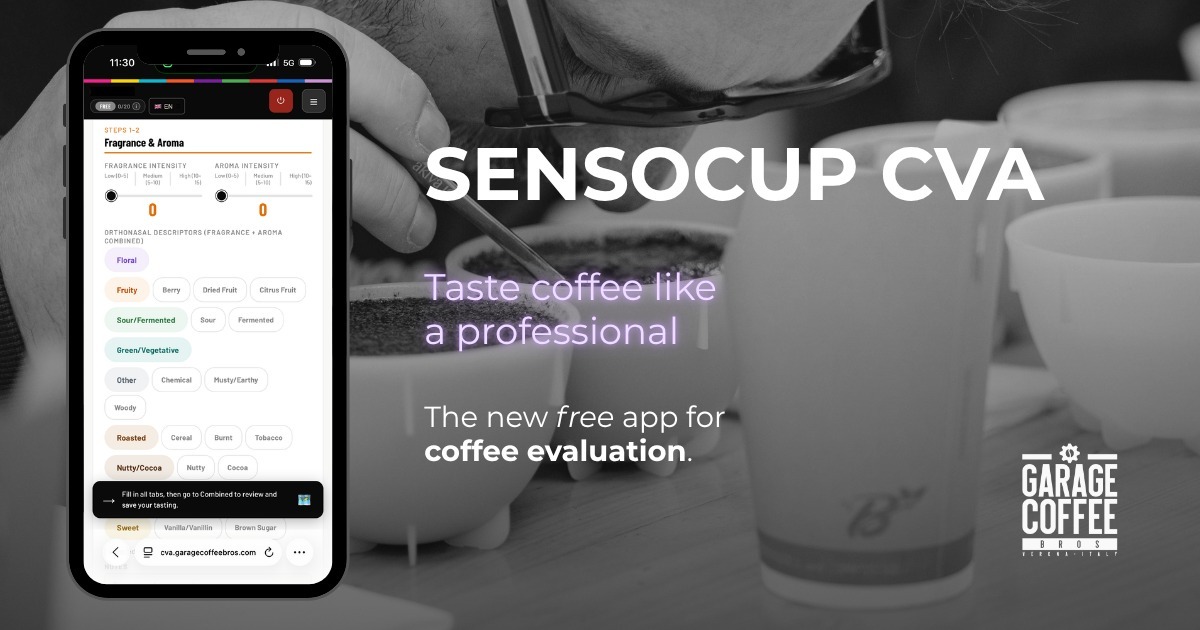
  • Garage Coffee Bros. launches SensoCup CVA, the first free digital tool for professional coffee evaluation according to the 2024/2025 Specialty Coffee Association (SCA) standards.
  • The application is a Progressive Web App (PWA) that works on all devices without installation, supporting 9 languages including Arabic with RTL support.
  • The app integrates three official SCA protocols: Descriptive Assessment, Affective Assessment, and Extrinsic Assessment, plus a Physical protocol currently in beta testing.
  • The evaluation system includes over 60 sensory descriptors calibrated to SCA standards, a CVA Score calculation engine, and multi-sample session management.
  • The app is available free for single sessions, with paid plans for multi-sessions and advanced analytics coming soon.
  • The project is currently being registered with SIAE (the Italian Public Register for Copyrighted Works) to protect its intellectual property.

Garage Coffee Bros. S.r.l., a Verona-based company operating in the specialty coffee sector, has officially announced the launch of SensoCup CVA.

This Progressive Web App (PWA) is designed for professional coffee evaluation according to the latest international standards of the Specialty Coffee Association (SCA). The launch comes at a critical time when demand for accurate, reliable tools throughout the value chain – from roastery to cup – is growing rapidly.

SensoCup CVA represents a paradigm shift in the world of sensory evaluation, offering a comprehensive solution for professionals such as Q Graders, roasters, importers, and SCA trainers, who until now were forced to work with paper forms, incomplete digital solutions, or paid software that did not support the new 2024/2025 SCA protocols.

The First Web App to Integrate All Three Evaluation Protocols in a Single Interface

SensoCup CVA fundamentally changes the landscape, being the first web application to simultaneously implement the three official SCA protocols: Descriptive Assessment (103/2024), Affective Assessment (104/2024), and Extrinsic Assessment (105/2025), plus the Physical protocol currently in beta testing. All protocols are available from any device, with no installation required.

The app integrates a CATA (Check-All-That-Apply) system featuring over 60 sensory descriptors calibrated to SCA standards, a CVA Score calculation engine, and multi-sample session management for advanced comparative evaluations. The platform is available in 9 languages – including Arabic with RTL support – to meet the demands of a global market.

Protocol Description Status
Descriptive Assessment (103/2024) Detailed evaluation of coffee’s sensory properties Released
Affective Assessment (104/2024) Measuring the taster’s response to coffee Released
Extrinsic Assessment (105/2025) Evaluating external factors affecting coffee Released
Physical Protocol Evaluating physical properties of coffee Beta testing

Global Vision: 9 Languages Including Arabic Support

SensoCup CVA has been developed with a global vocation built directly into its architecture. The app supports 9 languages, including Arabic with RTL support, making it instantly operational for professionals worldwide. Its web-based nature – accessible from smartphones, tablets, and desktops without downloading anything – ensures seamless accessibility across all devices.

The project is currently being registered with SIAE (the Italian Public Register for Copyrighted Works) to protect its intellectual property, with full ownership held by Garage Coffee Bros. S.r.l.

Access Model: Free Version and Professional Plans

SensoCup CVA is available immediately as a free version for single sessions. A Pro plan – featuring access to multi-sample sessions, an advanced comparator, and personal analytics – will be released in the coming weeks, alongside dedicated plans for Q Instructors and training academies.

Founder: The Tool I Wish I Had Years Ago

Davide Cobelli, Founder of Garage Coffee Bros., said: “I wanted a tool that spoke the language of coffee professionals: rigorous in its protocols, simple to use, and available anywhere. SensoCup CVA is the answer I wish I had years ago.”

Frequently Asked Questions About SensoCup CVA

Q: What is SensoCup CVA?

A: It is the first free Progressive Web App for professional coffee evaluation according to Specialty Coffee Association standards, integrating three official protocols in a single interface.

Q: Is the app free?

A: Yes, a free version is available for single sessions. Paid plans for multi-sessions and advanced analytics will be released soon.

Q: What languages does the app support?

A: The app supports 9 languages, including Arabic with RTL support.

Q: Does the app require installation?

A: No, it is a Progressive Web App (PWA) that works on all devices through a browser without any download or installation.

Q: Which protocols are supported in the app?

A: The app supports Descriptive Assessment (103/2024), Affective Assessment (104/2024), Extrinsic Assessment (105/2025), plus a Physical protocol currently in beta testing.

The launch of SensoCup CVA represents a significant step toward digitizing coffee sensory evaluation, providing accurate and reliable tools for professionals worldwide. With its Arabic language support and compliance with SCA standards, the app opens new possibilities for coffee professionals in the Arab region and beyond.

Prepared and edited by: Qahwa World – Based on a press release from Garage Coffee Bros. (June 2026).

All rights reserved. Republication with attribution permitted.

Publication date: June 18, 2026

When “Fruity” Means Five Different Things

How flavour molecules, memory, and culture quietly rewrite the same espresso in the minds of experts and customers alike

Dr. Steffen Schwarz
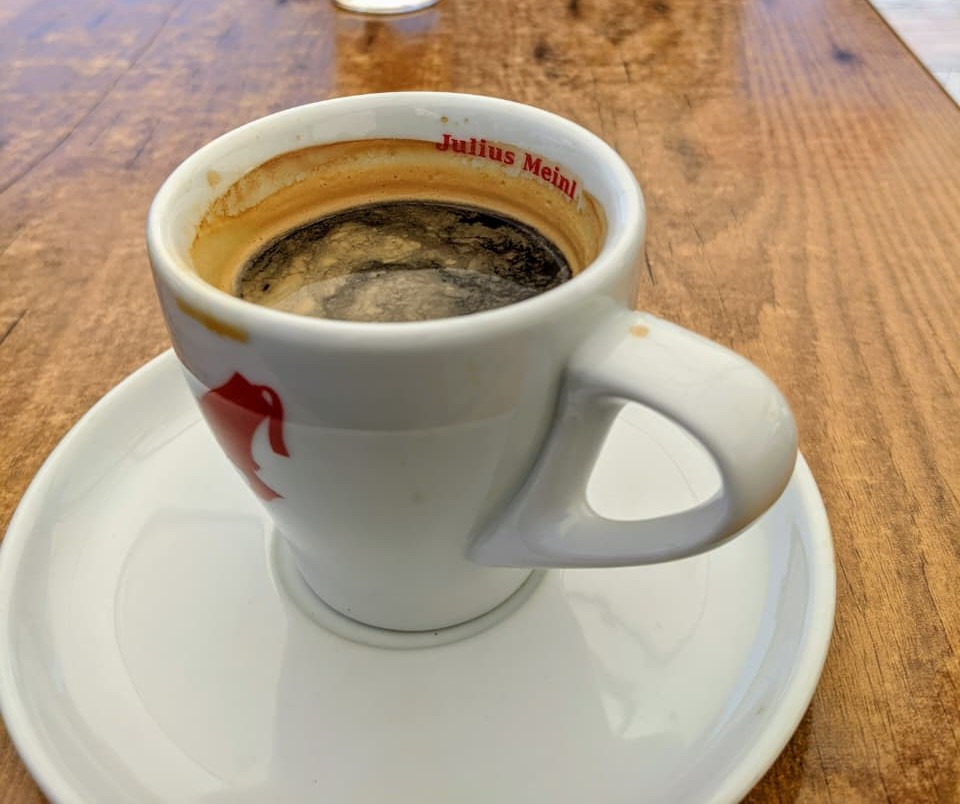
There is a particular moment, just after the demitasse has been set down, when espresso becomes less a beverage than a negotiation between physics and expectation. The crema still holds its heat, volatile compounds are escaping in a plume too faint to see, and the taster is already reaching for words that feel solid enough to pin the experience to the table. In Seoul, an expert may lean in and say “clean, vibrant, floral”. In Milan, another expert might hesitate, then say “balanced, roasted, bitter but pleasant”. In Kansas, the verdict could be simply “good, consistent, nothing stands out”. The coffee, however, could be the same. The molecules certainly are. What changes is the sensory map in the brain, the vocabulary available to describe it, and the cultural training that decides which differences matter and which are politely ignored.

The modern coffee industry has learned to treat flavour as both currency and compass. We use it to price green coffee, to design roasts, to justify machinery investments, to position brands, and to reassure customers that what they loved yesterday will still be there tomorrow. Yet flavour is also the least stable part of our product, because it exists in two places at once: in the cup as chemistry, and in the customer as perception. The deeper difficulty is that the same chemical signals can be sorted into different meanings depending on what a person has learned to notice, what they have been rewarded for noticing, and which terms their community considers legitimate descriptors of quality.

A recent cross-cultural study of espresso evaluation makes this tension unusually visible. Rather than chasing ever more detailed chemical measurements, it asks a deceptively simple question: if we standardise the way we taste espresso, do experts in different countries describe it in the same way, and do they do so consistently over time?

The study used The Espresso Protocol (TEP), a structured sensory approach designed to quantify and communicate espresso characteristics efficiently and repeatably across panellists and geographies. Experts from France, India, Italy, the Republic of Korea, and the USA evaluated eight single-origin and blended coffees three times each, following a tightly specified preparation and tasting sequence that mirrors the temporal unfolding of espresso itself: crema first, then aroma, then flavour and mouthfeel, then basic tastes and aftertaste, and finally stability as the cup cools. This approach treats espresso not as a single snapshot, but as a moving target whose sensory profile evolves minute by minute as temperature drops, viscosity shifts, and different volatiles dominate the headspace.

The protocol also forces a confrontation with language. TEP uses a check-all-that-apply (CATA) structure rooted in established coffee lexicons, guiding tasters through categories such as fruity, floral, nutty, cereal, cocoa, sweet, earthy, roasted, spices, vegetative, stale/papery, chemical, and alcohol/fermented, with sub-terms that narrow each meaning. This is not bureaucracy; it is an attempt to standardise the bridge between sensation and communication. In commercial reality, that bridge is where much of coffee’s value is created or destroyed.

To understand why friction is inevitable, it helps to revisit what tasters are actually perceiving. Taste, physiologically, is limited to sweetness, sourness, bitterness, saltiness, and umami. What most people call “taste” in coffee is largely aroma, delivered retronasally. Espresso amplifies this effect: high-pressure extraction emulsifies oils, suspends colloids, and creates a dense aromatic matrix released in bursts as the liquid moves and warms the palate. The crema acts as a dynamic interface, trapping and releasing volatiles and shaping early versus later impressions.

The brain interprets these signals through memory. A descriptor such as “molasses” may be vivid to one taster and meaningless to another. “Black tea” may evoke different references depending on cultural background. Even “nutty” can mean peanut, hazelnut, or a general roasted-brown note. Without calibration, experts may not be disagreeing about the cup, but about what their words are allowed to mean.

This is why repeatability matters. If an expert cannot reproduce their own descriptions across repeated tastings, vocabulary becomes storytelling rather than measurement. Using cluster analysis of the CATA data, the study found that most experts were individually repeatable across evaluations. In the Republic of Korea, every expert showed strong internal consistency, while France and the USA were also high. India and Italy showed slightly lower but still substantial repeatability.

Repeatability, however, does not guarantee agreement. A homogeneity index revealed how similarly experts within each country used descriptors. Korea showed the highest homogeneity, followed by France, India, and the USA, with Italy notably lower. This likely reflects professional composition: Korean panels were largely baristas trained in contemporary speciality lexicons, while Italian panels included more roasters aligned with traditional espresso frameworks emphasising roast balance, bitterness, and texture.

This distinction matters. Sensory culture is not only national; it is professional. The daily decisions of a roaster, a barista, a green buyer, and a technician reward attention to different signals, shaping how flavour is perceived and described.

Quality scoring revealed further nuance. Ethiopian samples were rated highest across most countries, while older, pre-packaged samples scored lowest, suggesting that freshness and aromatic vitality transcend culture. Beyond these anchors, rankings diverged. The USA panel compressed scores, while Italy and Korea used a wider range. This does not imply weaker discrimination, but different scoring cultures. Some environments train restraint; others reward differentiation. Since scores influence price, these cultural tendencies carry real economic consequences.

Customers, meanwhile, rarely speak in lexicon terms, yet their preferences arise from the same mechanisms: familiarity, learned associations, and cultural expectations of what “good coffee” should be. Preference is memory-driven. The palate does not only detect; it predicts.

For decision-makers, this creates a paradox. We want flavour language stable enough to support operations, yet flexible enough to speak to diverse markets. The solution is not to eliminate subjectivity, but to design systems that acknowledge and manage it.

Preparation is the first control point. Small changes in espresso variables radically reshape the cup. Brewing standards and water specifications are therefore foundational to comparability. Roast choice adds another layer: roast is itself a cultural translation of green coffee potential.

The second control point is lexicon training. Differences in terminology across cultures highlight the need for shared sensory education. This is not about enforcing uniformity, but about preventing costly misunderstandings. Words must function as instruments, not ornaments.

The third control point is aligning expert language with consumer perception. Tools like TEP can bridge expert evaluation and market reality by producing repeatable descriptive data that can be correlated with consumer liking and willingness to pay. Whether consumers themselves can meaningfully engage with such protocols remains an open and commercially significant question.

At the chemical level, flavour compounds arrive unlabeled. The same chemistry can be framed as “bright” or “sour”, “complex” or “fermented”, “roasty” or “burnt”, depending on context. Preferences evolve with exposure, fashion, and cultural narratives. No system is inherently right; each is coherent within its own aesthetic logic.

The strategic insight is simple: words are part of the product. Flavour is interpreted as much as it is extracted. Language shapes perception, guiding what tasters and customers search for in the cup. The responsibility of the industry is to ground that language in repeatable sensory reality while remaining aware of its cultural flexibility.

Espresso is a time-based experience. Quality is not a point, but a curve. Protocols like TEP attempt to measure that curve and give it language. This research shows that experts can do so consistently across countries, yet always through cultural lenses. For managers aligning sourcing, roasting, training, and marketing, this is not a limitation—it is an invitation to treat sensory strategy with the same rigour as logistics or engineering.

Because once the demitasse hits the table, the science of perception will happen anyway—whether we have prepared for it or not.