Saudi Arabia’s Coffee City: The Complete Story of a Giant Project Transforming Agriculture and Economy

Source: Qahwa World – Special Report |
Author: Qahwa World |
Date: June 9, 2026

Saudi Arabia’s Coffee City: The Complete Story of a Giant Project Transforming Agriculture and Economy

Key Highlights:

  • Saudi Arabia is building its first dedicated coffee city in the Al-Baha region, covering 170 hectares.
  • Over 527,000 coffee seedlings have been planted, with an expected annual production of 2,000 tons of high-quality coffee.
  • The Kingdom aims to establish six coffee cities to reach a national production target of 10,000 tons per year.
  • Investments exceed 1.2 billion riyals through the Saudi Coffee Company, owned by the Public Investment Fund.
  • The project will create about 100 direct jobs and hundreds of indirect opportunities.
  • Saudi Arabia currently imports 100,000 tons of coffee annually at a cost exceeding 2 billion riyals.
  • An initiative to plant one million coffee trees by 2030 supports food security and sustainability.

At a time when the world is seeking to diversify income sources and focus on sustainable agriculture, Saudi Arabia is taking bold steps to transform coffee from a traditional beverage symbolizing generosity and hospitality into a promising strategic economic sector. This vision is embodied in the first saudi coffee city project in the Al-Baha region, marking a qualitative leap toward achieving the goals of Vision 2030.

This giant project is not just an agricultural initiative. It is the cornerstone of the Kingdom’s vision to become a global coffee producer, reduce reliance on imports, enhance food security, and create thousands of jobs in rural areas.

The First Coffee City in Al-Baha: A Strategic Location and Ideal Climate

The pioneering project is located in the Makhushqa area of Al-Baha province, covering approximately 170 hectares (over 1.66 million square meters). After about three years since its launch, more than 527,000 coffee seedlings have been planted, with expected annual production of about 2,000 tons of high-quality coffee.

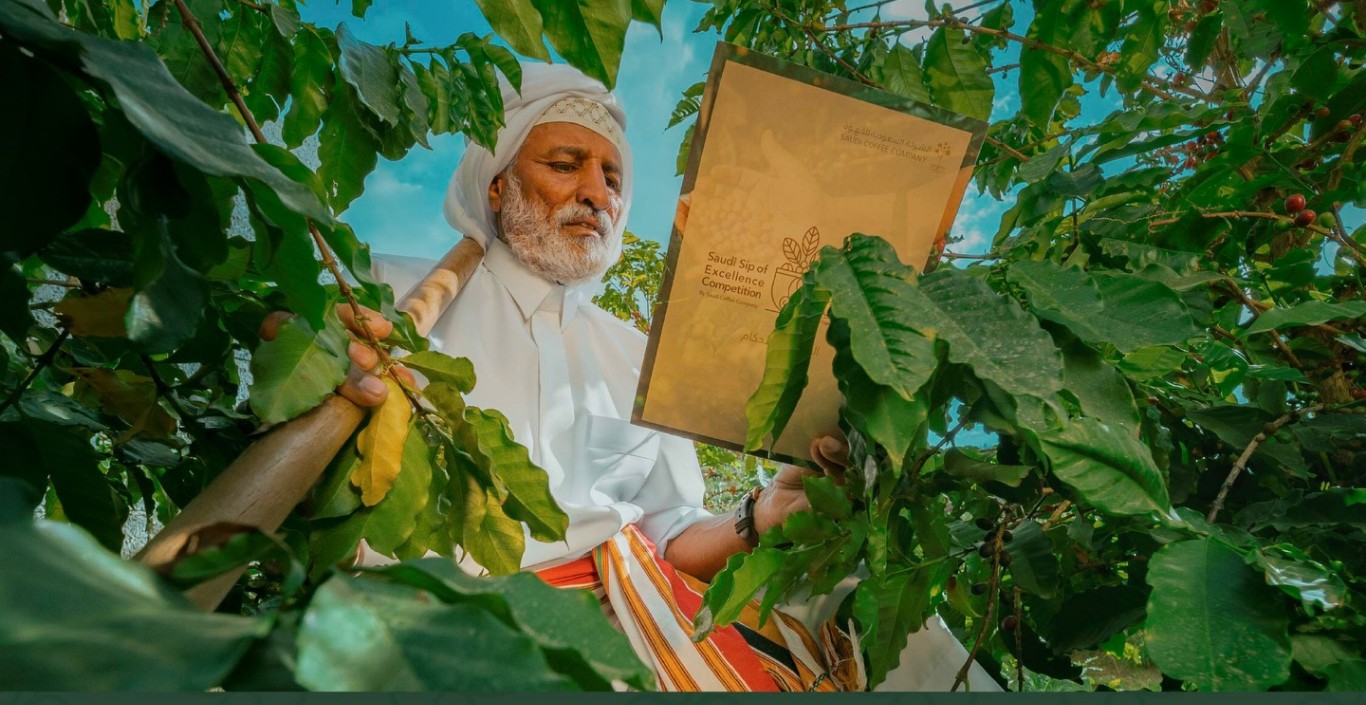
Al-Baha is one of the Kingdom’s most prominent agricultural regions, thanks to its mild mountain climate and altitude exceeding 2,000 meters above sea level. This altitude gives the coffee a distinctive taste and unique strength, rivaling the finest coffee varieties worldwide. The region currently hosts more than 450 coffee farms and about 115,000 coffee trees producing multiple varieties.

Indicator Value
Coffee city area 170 hectares
Coffee seedlings planted Over 527,000
Expected annual production 2,000 tons
Coffee farms in Al-Baha Over 450
Coffee trees in Al-Baha About 115,000

Ambitious Plan for Six Coffee Cities and National Production of 10,000 Tons

Saudi ambition is not limited to one city. The Kingdom aims to establish six specialized coffee cities in different regions, with the goal of reaching national production of 10,000 tons annually. Four development contracts have already been awarded to local and international companies, while the remaining contracts are still under tendering and competition.

The Ministry of Environment, Water, and Agriculture oversees these projects through its regional branches, opening the door to new investments and providing technical and logistical support to farmers.

Economic and Social Impact: Thousands of Jobs and Sector Growth

The Al-Baha coffee city project is expected to provide about 100 direct jobs for farmers, technicians, and supervisors, in addition to hundreds of indirect opportunities in logistics, roasting, packaging, marketing, and agricultural tourism.

This comes at a time when the coffee market in the Kingdom is valued between 7 and 18 billion riyals, with annual growth exceeding 5% to 9%. Saudis consume tens of millions of cups of coffee daily, making the sector a key driver of the hospitality industry and small and medium enterprises.

On the other hand, the Kingdom currently imports about 100,000 tons of coffee annually at a cost exceeding 2 billion riyals, prompting the government to accelerate local production efforts.

Indicator Value
Saudi coffee market size 7 to 18 billion riyals
Annual market growth 5% to 9%
Current annual imports 100,000 tons
Annual import cost Over 2 billion riyals

Massive Investments and Support Initiatives: Saudi Coffee Company and One Million Trees

The Saudi Coffee Company, owned by the Public Investment Fund, was established with investments reaching 1.2 billion riyals over 10 years. Key initiatives include planting one million coffee trees by 2030, establishing the Al-Baha Coffee Association to support small farmers, and developing training and research programs to improve quality and sustainability.

Engineer Mohammed Al-Marwani, CEO and Co-Founder of the Arab Coffee Foundation, stated: “The next step is to cement the Kingdom of Saudi Arabia’s position not just as a coffee-producing country, but as a globally recognized origin for coffee thanks to its quality, credibility, and innovation.” Al-Marwani noted that the challenge is not limited to increasing quantity but includes improving quality, developing modern processing methods, enhancing education and training, achieving environmental sustainability, and expanding access to local and global markets.

Future Vision: From a Net Importer to a Competitive Exporter

With these efforts continuing, experts expect the sector to transform from a net consumer to a competitive producer and exporter. Saudi coffee will contribute to enhancing food security, providing sustainable jobs for youth, and strengthening the Kingdom’s cultural and tourism identity. From the towering mountains of Al-Baha, a new story of the Saudi economy begins, where every coffee bean tells a story of ambition and national determination.

“Al-Baha always strives to be at the forefront of productive agricultural regions in the Kingdom of Saudi Arabia.”

– Mohammed Abbas, local coffee farmer

Frequently Asked Questions About the Saudi Coffee City Project

Q: Where is Saudi Arabia’s first coffee city located?

A: It is located in the Makhushqa area of Al-Baha province, covering 170 hectares.

Q: How many coffee seedlings have been planted so far?

A: Over 527,000 coffee seedlings have been planted.

Q: What is the Kingdom’s production target from these coffee cities?

A: To reach national production of 10,000 tons annually through six specialized cities.

Q: How much is the Saudi Coffee Company’s investment?

A: 1.2 billion riyals over 10 years.

Q: What is the one million coffee trees initiative?

A: A national initiative to plant one million coffee trees by 2030 to support local production and sustainability.

The Saudi coffee city project in Al-Baha is not just an agricultural initiative. It is a living model of Vision 2030 in action. It embodies Saudi ambition to transform local resources into national wealth, cultivating a prosperous future for generations to come, one cup at a time.

Prepared and edited by: Qahwa World – Based on reports from the Ministry of Environment, Water, and Agriculture and data from the Saudi Coffee Company.

All rights reserved. Republication with attribution permitted.

Publication date: June 9, 2026
Saudi Arabia’s Coffee Renaissance: Tradition Meets Specialty Cafe Boom

By: Soumya Gayatri

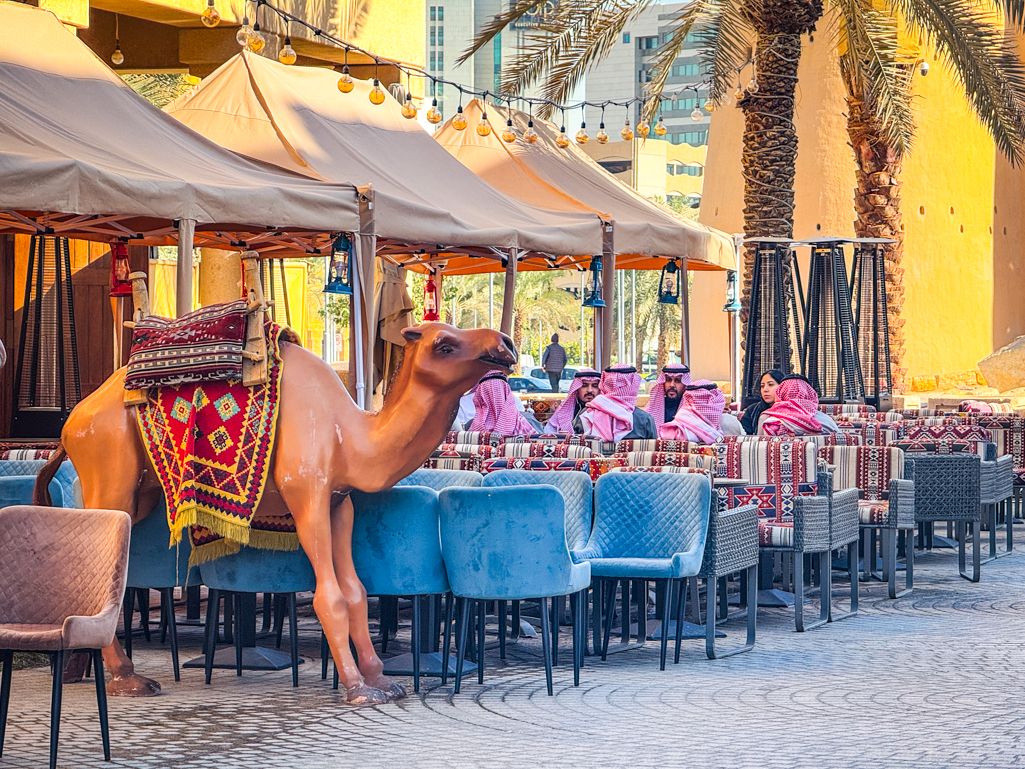
On a winter morning in Riyadh’s historic AlSafat Square, Qaysariat Al-Kitab — a traditional book cafe adorned with Najdi architectural motifs — offers more than coffee. It provides a setting where heritage, literature and conversation intersect, reflecting a broader transformation underway in Saudi Arabia’s coffee landscape.

Coffee in the kingdom has long been embedded in rituals of hospitality. Brewed in a long-spouted dallah and poured into small handleless cups known as finjan, Saudi coffee is served according to established social codes. The sequence of serving, the amount poured and the guest’s gestures all carry meaning. In many households, this ceremonial practice remains a daily custom, reinforcing coffee’s role as a cultural and moral obligation rather than a simple refreshment.

Historically, coffee traveled from Ethiopia to Yemen in the 15th century before spreading across the Arabian Peninsula through trade routes. In what is now southern Saudi Arabia — particularly the mountainous regions of Jazan, Al-Baha and Asir — cultivation took root. Jazan’s highlands are known for producing Khawlani beans, while associated agricultural traditions have received recognition as intangible cultural heritage by UNESCO.

You may like: How Ramadan’s Coffee Economy is Reshaping Global Supply Chains

As coffee spread, public coffeehouses emerged along caravan routes and in urban centers, serving as spaces for discussion, poetry and debate. Today, that social function is being revived amid what observers describe as a Saudi coffee renaissance — a period marked by expanding specialty cafes, growing domestic production and strong government support aligned with Vision 2030.

Saudi Arabia’s coffee market is currently valued between $1.3 and $1.9 billion annually, with more than 36 million cups consumed daily. Industry projections indicate the number of coffee outlets could exceed 5,350 by 2027, positioning the kingdom as the largest branded coffee shop market in the Middle East.

In 2022, the Saudi Coffee Company was launched to promote sustainable cultivation and global marketing of Khawlani coffee. Initiatives include planting hundreds of thousands of trees, training farmers in post-harvest handling and introducing modern irrigation and agricultural management systems to enhance productivity and quality.

Alongside these efforts, local specialty chains have expanded rapidly, responding to growing consumer interest in origin, roasting techniques, flavor profiles and ethical sourcing. Rather than displacing traditional practices, modern coffee culture has integrated with them. It is increasingly common to see consumers move from a traditional evening coffee gathering to a contemporary cafe serving craft beverages.

Read Also: Invisible Gravity in Coffee

Today’s cafes are also reclaiming their historical role as cultural hubs. Book readings, poetry evenings and creative workshops are regularly hosted in coffee spaces across Riyadh and other cities. These venues function as “third places” — environments beyond home and work — where community interaction, creativity and dialogue flourish.

As Saudi Arabia’s coffee culture evolves, it is reconnecting with its roots. The renewed emphasis on shared experience — once central to historic coffeehouses — suggests that in the kingdom, coffee remains as much about the space and the social exchange as it is about the drink itself.

Saudi Arabia’s Coffee Shops: From “Al-Zuhour” to a Billion-Riyal Industry under Vision 2030

Dubai – August 22, 2025 (Qahwa World) – Coffee in Saudi Arabia is no longer just a morning ritual or a social beverage. It has transformed into a thriving industry aligned with Vision 2030, drawing local and international investment. According to figures reported by Al-Eqtisadiah, the Saudi coffee market was valued between SAR 5 and 7 billion in 2024, growing at an annual rate of more than 5%. Saudis consume around 80,000 tons of coffee beans annually, which translates to 36.5 million cups every day.

Saudi Arabia’s café culture dates back to the mid-20th century. One of the earliest modern cafés, “Al-Zuhour,” opened in Riyadh in 1954. At the time, Yemeni-style cafés, serving coffee alongside tea, shisha, and food, were more prominent. By the 1960s and 1970s, cafés became more widespread, only to face setbacks during the 1980s due to social restrictions.

With the dawn of the new millennium, internet cafés marked the beginning of a new chapter. These spaces quickly evolved into modern cafés, catering to a young population—70% of Saudis are under 35. This demographic shift laid the foundation for today’s café boom, where establishments are not only places for leisure but also venues for cultural and artistic events.

Coffee and Vision 2030

Vision 2030 treats coffee as more than a beverage. It is seen as part of Saudi Arabia’s cultural identity and as a driver of economic diversification. In 2022, the Ministry of Culture declared the “Year of Saudi Coffee,” while also adopting the official term “Saudi Coffee” instead of “Arabic Coffee” in restaurants, cafés, and retail outlets.

This move carried strong symbolic value, reaffirming coffee’s deep cultural roots in the Kingdom. It also boosted international recognition through festivals, exhibitions, and promotional campaigns, positioning Saudi coffee as both a cultural marker and an economic asset.

To build on this momentum, the Public Investment Fund (PIF) launched the Saudi Coffee Company in 2022, with a SAR 1.2 billion (USD 320 million) investment plan over ten years. The company’s mission is to develop a full value chain—from cultivating beans in the southern regions, particularly Jazan, Asir, and Al-Baha, to processing, roasting, marketing, and exporting.

The plan includes planting 5 million coffee trees by 2030, raising domestic production from 800 tons annually to over 10,000 tons. A major milestone is the construction of a factory in Jazan with a capacity of 27,000 tons per year, including 9,000 tons of roasted coffee, with scalability for future expansion. This facility is expected to be a cornerstone for local industry growth and international market entry.

Cafés now account for 16% of Saudi Arabia’s food service sector, which reached SAR 17 billion in 2024. The Ministry of Commerce reports that by mid-2025, there were 61,000 commercial licenses for cafés, including 27,000 for traditional coffee shops.

On the brand front, competition is fierce. Local chain Barn’s leads the market with more than 800 outlets, followed by Dunkin’ with over 600, and Starbucks with more than 450. Kyan Café has expanded to over 270 locations, Coffee Address to 234, while Dr. Café maintains a strong presence with more than 100 outlets. This mix of homegrown and global brands reflects the Kingdom’s dynamic market and consumer demand.

From History to Today’s Transformation

Historically, coffeehouses worldwide were intellectual and social hubs—whether in Istanbul in 1475, Cairo’s famed El Fishawy café that hosted writers like Naguib Mahfouz, or the European coffeehouses that played roles in politics and literature.

In Saudi Arabia, the transformation has been unique. From Al-Zuhour in the 1950s to today’s modern coffeehouses, these spaces now serve as cultural platforms as much as commercial ventures. They host poetry readings, art exhibitions, and social events, aligning with a broader national vision to diversify entertainment and cultural offerings.

Long considered a “drink for the mood,” coffee in Saudi Arabia is now firmly embedded in the economic landscape. It is part of a broader narrative that blends heritage and modernity. Between the millions of cups consumed daily, the government-backed Saudi Coffee Company’s ambitious investments, and the strong presence of global and local brands, coffee has become a pillar of both identity and growth.

From its modest beginnings in a small Riyadh café seven decades ago to today’s billion-riyal industry, Saudi coffee tells a story of transformation. It is no longer only about flavor and tradition, but also about culture, business, and the country’s ambition to position itself as a key player in the global coffee economy.

Saudi Coffee Company Expands Market Presence with Key Supply Agreements

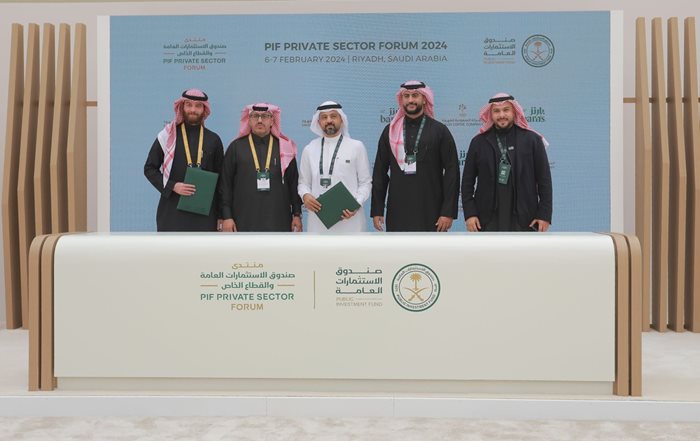
In a groundbreaking development, the Saudi Coffee Company, backed by the Public Investment Fund (PIF), has recently inked significant supply agreements with prominent coffee chains in Saudi Arabia. The deals, announced during the two-day PIF Private Sector Forum in Riyadh, mark a major stride in the company’s mission to revolutionize the local coffee industry through sustainable practices and strategic collaborations.

Founded in May 2022, the Saudi Coffee Company is dedicated to fostering the growth of the domestic coffee sector through sustainable agronomy, education initiatives, and strategic trade partnerships. The latest agreements solidify its commitment to elevating the Saudi coffee industry and contributing to the kingdom’s Vision 2030 economic diversification goals.

Among the high-profile deals, the Saudi Coffee Company will supply locally grown specialty coffee to the renowned Jeddah-based coffee chains, Barn’s (650 stores) and BON Cafe (50 drive-thru sites). This move is expected to not only boost the supply chain but also promote Saudi-grown coffee in the hot and cold beverage offerings of these establishments.

Furthermore, the Saudi Coffee Company is set to introduce its bespoke specialty coffee brand, Jazean, to AlHokair Group’s 23 hotels and Altanfeethi’s 27 airport lounges. In addition to supplying green beans to Elixir Bunn Coffee Roasters, the company will provide comprehensive training on roasting, processing methods, and tasting. Collaborating with Riyadh-based Elixir Bunn, the Saudi Coffee Company envisions joint events and the exchange of expertise in the future.

Khalid Abu Theeb, CEO of the Saudi Coffee Company, expressed enthusiasm about the company’s pivotal role in advancing the Saudi coffee industry. “Our presence at this forum marks a crucial step in our mission to elevate the Saudi coffee industry. With our strategic partnerships and collaborations, we reiterate our commitment to sustainability and sector growth, both locally and globally – proudly contributing to the kingdom’s Vision 2030 and the diversification of the economy,” he stated.

With a substantial SAR 1.2 billion ($320 million) investment from the PIF, the Saudi Coffee Company has ambitious goals, aiming to increase annual coffee production from 300 to 2,500 tons by 2028 and plant 10 million coffee trees in the Jazan region over the next decade. This bold vision positions the company as a key player in reshaping the landscape of the Saudi Arabian coffee industry.