Coffee Prices Rise Amid Brazilian Heatwave and Supply Pressures

Dubai – Qahwa World

Coffee markets are seeing an upward shift in prices, driven by weather events in key production regions and tightening global supplies.

March arabica futures rose 1.26%, while ICE robusta for January had previously gained 1.06% before the holiday closure. The Brazilian coffee belt is experiencing a heatwave forecasted to last through Monday, putting pressure on crops and supporting prices.

Additional factors are influencing the market. In Indonesia, recent floods have affected roughly one-third of northern Sumatra’s arabica plantations, potentially cutting the nation’s coffee exports by up to 15% in the 2025-26 season. Robusta production has been less impacted. Indonesia remains the third-largest robusta producer worldwide.

Meanwhile, Brazil’s Minas Gerais region received rainfall during the week ending December 19 that was below average, according to Somar Meteorologia. Reduced precipitation in key growing areas can add bullish pressure on arabica coffee.

Coffee inventories also play a role in market dynamics. ICE-tracked arabica stocks hit a 1.75-year low of 398,645 bags in November before rising to 456,477 bags recently. Robust a inventories similarly fell to near 12-month lows before modest recovery.

US demand for Brazilian coffee remains restrained. Tariffs previously imposed on imports led to a 52% drop in purchases from August to October compared to the previous year. Although tariffs have since eased, US stock levels remain limited.

On the supply side, Brazil’s national crop agency Conab raised its 2025 production estimate to 56.54 million bags, up from 55.20 million in September, signaling an ample supply outlook.

Robusta coffee faces downward pressure amid expectations of strong output. Vietnam’s coffee exports surged 39% year-on-year in November and 14.8% from January to November, according to government statistics. Total production in 2025/26 is projected to rise 6% to 1.76 million metric tons, a four-year high.

Globally, the International Coffee Organization reported a slight decline of 0.3% in coffee exports for the current marketing year, supporting price stability. The USDA projects world coffee output for 2025/26 to reach a record 178.85 million bags, with arabica falling 4.7% and robusta rising 10.9%. Brazil’s production is expected to decrease by 3.1%, while Vietnam’s output could rise 6.2% to a four-year high. Ending stocks are projected to decline by 5.4% to 20.15 million bags.

Overall, a combination of adverse weather in Brazil, flooding in Indonesia, and fluctuating inventories is contributing to upward momentum in coffee prices, even as abundant output in some regions, particularly Vietnam, applies downward pressure on robusta markets.

Indian Coffee Export Earnings Set to Surpass $2 Billion in 2025

Dubai – Qahwa World

Indian coffee exports are on track to cross the $2 billion mark by the close of 2025, driven primarily by strong global prices, even as shipment volumes decline.

According to export permit data issued by the Coffee Board of India, the total value of coffee exports reached approximately $1.968 billion by 16 December. This represents a year-on-year increase of about 21% compared with the $1.63 billion recorded during the same period in 2024. The export value is more than double what the sector generated five years ago, underscoring the impact of sustained price strength in international markets.

In contrast, export volumes moved in the opposite direction. Shipments up to mid-December totaled around 366,000 tonnes, down from 391,000 tonnes during the corresponding period last year, reflecting a decline of roughly 6%.

Industry sources cited by Indian media reports suggest that the reduction in volumes is partly linked to some European buyers opting for lower-priced coffee origins, as Indian coffee prices remained comparatively high throughout the year.

Despite this shift, Indian coffee—both Robusta and Arabica—continues to command solid premiums on global exchanges. Indian Robusta parchment AB is currently trading at an estimated premium of $1,000 to $1,100 per tonne above London LIFFE prices. Robusta cherry AB is fetching an additional $400 to $450 per tonne. Meanwhile, Arabica parchment is selling at a premium of approximately 12 to 15 US cents per pound over New York market prices.

Europe remained the largest destination for Indian coffee exports. Italy accounted for about 18% of total shipments, followed by Germany at 11% and Belgium at 7.5%. Other key markets included the Russian Federation, which absorbed roughly 5.3% of exports, and the United Arab Emirates at around 5%.

India currently ranks as the world’s seventh-largest coffee producer and the fifth-largest exporter, maintaining a strong position in the global coffee trade despite ongoing shifts in demand and pricing dynamics.

Coffee as Destination: Positioning Ethiopia’s Origins for Experiential Tourism

An interview with Musa Kedir CEO, Tourism Attraction and Product Development, Ministry of Tourism – Ethiopia

By Qahwa World × Buna Kurs

Coffee has long been Ethiopia’s most visible global export, yet its potential as a tourism experience remains largely untapped. While several coffee-producing countries have successfully transformed farms, processing sites, cupping rituals, and café culture into immersive visitor journeys, origin countries themselves have often underutilized this experiential dimension.

Ethiopia, the birthplace of Coffea arabica, holds a rare advantage. Coffee here is not only an agricultural product but a living culture—woven into daily life, social rituals, landscapes, and identity. Translating this depth into structured and sustainable tourism experiences represents one of the most promising frontiers for destination development.

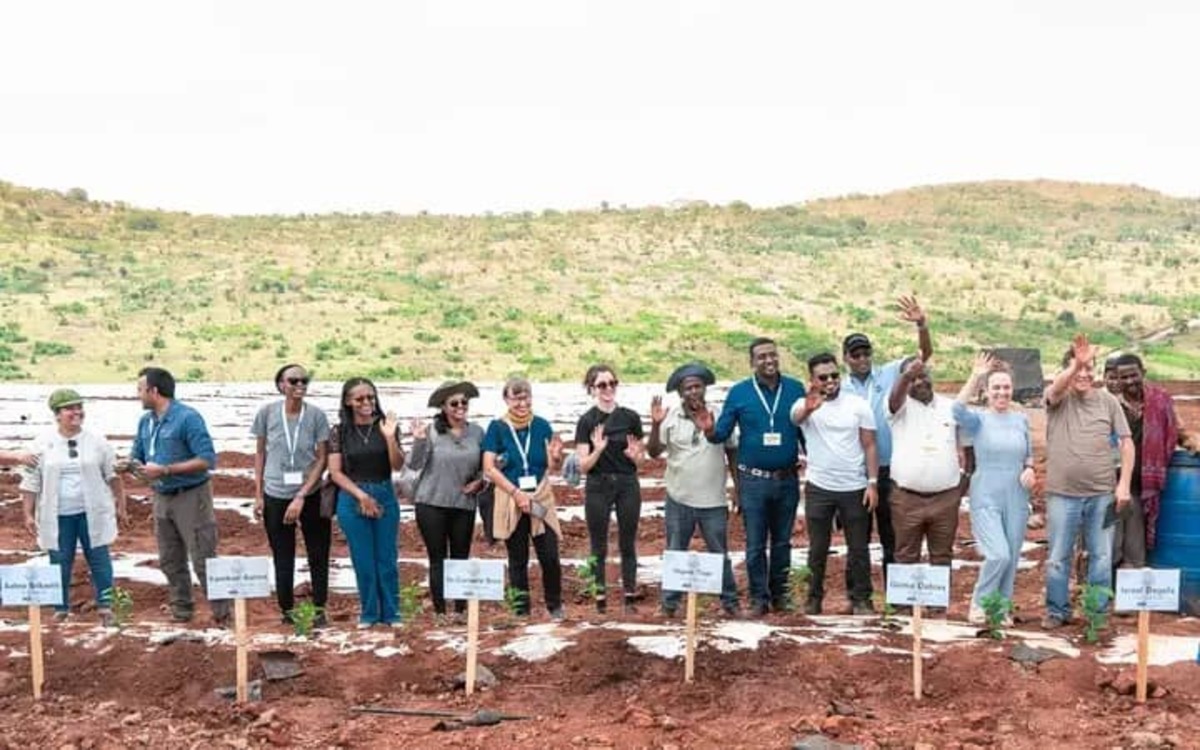
During the Coffee Origins Trip (COT 2) organized by Kerchanshe and Oromia Tourism Commission, a diverse group of international buyers, roasters, social media storytellers, tourism executives, and sector leaders came together to experience Ethiopia’s coffee landscape firsthand. As part of this journey, Qahwa World and Buna Kurs sat down with CEO, Tourism Attraction and Product Development, Ministry of Tourism – Ethiopia, to discuss how coffee tourism fits into the national tourism agenda and what it will take to elevate coffee into a globally competitive tourism product.

Qahwa × Buna: How does the Ministry currently position coffee within the wider national tourism development agenda, and what opportunities do you see for formalizing coffee as a structured tourism product?

Musa Kedir: The Ministry has already recognized coffee as a key element within Ethiopia’s national tourism brand, “Land of Origins,” which positions the country as the birthplace of Coffea arabica. This recognition is also reflected in the revised National Tourism Development Policy, which explicitly emphasizes the development of niche tourism products.

Within this framework, coffee is viewed both as a core special-interest tourism product and as a supplementary experience that can enhance broader travel itineraries. This policy foundation creates strong opportunities to formalize coffee tourism through structured products, packages, and destination planning.

Qahwa × Buna: From a destination development perspective, what gives Ethiopia a unique competitive edge in coffee tourism compared to other producing countries?

Musa Kedir: Ethiopia’s advantage lies not only in having given the world Arabica coffee, but in the deep cultural attachment to coffee itself. Coffee in Ethiopia is an integral part of daily life.

The way Ethiopians prepare, serve, and share coffee reflects a living culture rather than a staged experience. This cultural intimacy is something no other coffee-producing country can replicate, and it provides Ethiopia with a uniquely authentic foundation for coffee tourism.

Qahwa × Buna: Which parts of the coffee value chain do you believe hold the strongest potential for experience design—farm level, processing, culture, heritage, gastronomy, trade, or a combination?

Musa Kedir: A combination of farm-level experiences, processing, culture, heritage, and gastronomy offers the strongest potential overall. Together, these elements allow visitors to understand coffee as a complete journey rather than a single moment.

Among these, a well-organized and customized combination of farm-level and processing experiences holds particularly strong appeal due to its uniqueness and attraction. These stages allow visitors to witness the transformation of coffee firsthand, which is central to meaningful tourism experiences.

Qahwa × Buna: Is the Ministry working on national guidelines, standards, or policy frameworks to support the growth of coffee tourism experiences such as farm tours, cupping sessions, processing visits, or heritage trails?

Musa Kedir: Based on the recognition of coffee as a potential niche tourism product, the Ministry has previously organized coffee-focused familiarization trips for media outlets and diplomatic communities.

More recently, recognizing the need for deeper strategizing, the Ministry has begun working with partners such as the Japan International Cooperation Agency (JICA) to identify Ethiopia’s major coffee-producing corridors. This work will support the development of well-organized coffee tour packages at the national level.

The Ministry also plans to organize a national coffee tourism awareness seminar that will bring together key stakeholders across the value chain, and it is working on comprehensive tourism destination and product development guidelines aligned with the revised tourism policy.

Qahwa × Buna: How does the Ministry view the role of major private-sector actors like Kerchanshe in shaping the future landscape of coffee tourism?

Musa Kedir: The Ministry has a strong belief in the vital role played by private-sector actors affiliated with the coffee industry.

This is why the Ministry collaborated in the recent coffee tour organized jointly by the Oromia Tourism Commission and Kerchanshe. Moving forward, the Ministry has also scheduled consecutive meetings with key coffee sector actors to facilitate brainstorming and discussions focused specifically on developing coffee for tourism.

Qahwa × Buna: What kinds of cross-sector collaborations are needed between tourism, agriculture, culture, trade, and regional governments to build a unified coffee tourism platform?

Musa Kedir: Because the coffee value chain is cross-sectoral by nature, it is critical for all stakeholders to reach a similar level of understanding in order to succeed in positioning coffee for tourism.

The Ministry is taking a catalyst role by creating platforms that bring stakeholders together and laying the foundation for strong collaborations that can endure into the future.

Qahwa × Buna: From what you have observed on this field visit so far, what strengths, innovations, or community stories stand out as directly translatable into tourism offerings?

Musa Kedir: The visit revealed that there are exemplary companies, such as Kerchanshe, that are aligned with national priorities to make coffee one of Ethiopia’s competitive tourism advantages.

These actors are taking the lead in showcasing meaningful experiences within their capacity. However, the visit also highlighted the need to further strengthen local community participation, improve readiness among local authorities, and better organize resources at the local level.

A shared understanding and collaboration among stakeholders is essential for the sustainable creation of a strong national coffee tourism culture.

Qahwa × Buna: How can coffee tourism support local community development, regional economies, and job creation across key coffee districts like Guji, Sidama, Yirgacheffe, Jimma, and Kaffa?

Musa Kedir: At present, coffee primarily serves its traditional commercial role. However, recent familiarization trips—particularly those led by Visit Oromia—have shown how tourism can be developed alongside existing coffee systems.

These initiatives can help create permanent economic advantages through tourism, including job creation and income diversification in key coffee-producing regions.

Qahwa × Buna: What narratives or storylines should Ethiopia prioritize when positioning itself internationally as the birthplace of coffee and a unique tourism destination?

Musa Kedir: It is critical to firmly engage in leveraging Ethiopia’s identity as the birthplace of coffee. Beyond that, creativity is required to transform everyday coffee culture into compelling tourism experiences.

Coffee culture in Ethiopia is deeply rooted and diverse across the country. Interpreting this heritage in a way that resonates with international travelers—both as a special-interest experience and as a complementary offering—is essential.

Narratives should focus on Ethiopia’s local coffee cultures and on organizing their interpretation into well-designed tourism products.

Qahwa × Buna: How does the Ministry plan to ensure that coffee tourism grows in an environmentally and culturally sustainable way?

Musa Kedir: The Ministry has only recently begun to systematically structure programs that position coffee for tourism. To ensure sustainability, it is preparing a comprehensive National Tourism Destination Development and Management Plan.

This plan will guide tourism development across the entire value chain, including coffee-related experiences, and will ensure environmental and cultural sustainability.

Qahwa × Buna: What level of investment or infrastructure development is required to elevate selected coffee-producing areas into international-standard tourism sites?

Musa Kedir: Most coffee corridors are already accessible, but as coffee tourism becomes more competitive, it will require basic infrastructure such as improved access within farms, accommodation facilities, and structured community collaboration.

While coffee farms are well organized for production, additional effort is needed to convert them into tourism experiences. This can best be achieved through collaboration among farm owners, government institutions, and tourism organizations.

Qahwa × Buna: What immediate next steps does the Ministry envision after this trip, and how might these insights shape upcoming MOT programs or national campaigns related to coffee?

Musa Kedir: The Ministry has already begun planning around coffee tourism and similar niche potentials. To ensure long-term and sustainable use, it will focus on redesigning model tourism packages that integrate coffee as both a special-interest experience and a complementary tourism offering.

These insights will directly inform upcoming Ministry programs and national tourism campaigns.
Global Coffee Market: Collapsing Inventories and a Fragile Price Truce

Dubai – Qahwa World

The global coffee market is currently resting in a precarious calm, according to the International Coffee Organization’s (ICO) November 2025 Market Report. Despite major geopolitical and climatic events, the ICO Composite Indicator Price (I-CIP) showed only a marginal rise of 1.2%, averaging 330.44 US cents/lb.

This unexpected stability is not a sign of market health, but rather the result of a dramatic “offsetting effect” between two powerful, opposing forces: a historical US decision to soften tariffs on Brazilian coffee imports (a bearish signal), and devastating floods that struck Vietnam’s Central Highlands (a bullish factor).

  • The Damp Squib of US Tariff Relief

The most significant political event of the month was the US administration’s move to phase out the additional 40% tariff previously imposed on Brazilian coffee imports. This action should have triggered a sharp price correction downward, given Brazil’s status as the world’s largest producer.

The Professional Read: The market reaction was surprisingly muted. The I-CIP did dip to its monthly low (320.39 cents/lb) following the announcement, but the effect dissipated within three days. Analysts concur that the market had “priced in” the removal of the tariffs beforehand, drastically reducing the impact.

Compounding the lack of immediate bearish pressure, Brazil’s export performance remains subdued. Exports of Brazilian Naturals declined by 8.2% in October, marking the eighth consecutive month of negative growth for this key group, highlighting underlying challenges linked to the Arabica production cycle and not just trade barriers.

  • Vietnam’s Catastrophe: The Unlikely Price Stabilizer

As the US news failed to exert sustained downward pressure, a major climatic shock in Asia provided the necessary counter-balance. Severe flooding hit Vietnam’s Central Highlands, the global nucleus for Robusta coffee production.

• Destruction Estimates: Initial reports from Dak Lak indicated that an estimated 10% to 15% of the 2025/26 coffee crop, which was already harvested and undergoing the drying process, was significantly damaged.
• Price Resilience: This dire news provided crucial support, preventing Robusta coffee prices from sliding (they contracted only a negligible 0.1%). Furthermore, the supply concerns emanating from Asia helped push all Arabica groups (including Brazilian Naturals and Colombian Milds) higher, with increases ranging from 1.4% to 1.8%, contributing strongly to the overall I-CIP stability.

  • The Red Flag: Global Inventory Collapse

The most alarming data point in the ICO report is the state of exchange-certified stocks, which are rapidly depleting and indicate a severe structural vulnerability in the global supply chain.

• Robusta Stocks Crash: Certified Robusta coffee stocks at the London exchange plunged by a dramatic 28.3% in November, settling at a precarious 0.73 million bags.
• Arabica Drawdown: Arabica stocks in New York also drew down by 5.9%.

This inventory collapse means the market is quickly losing its buffer capacity. It is becoming almost entirely reliant on continuous, smooth flows of new harvests, making it exceptionally sensitive to any disruptions (like the future fallout from the Vietnam floods) and highly susceptible to sharp, upward price spikes.

  • Shifting Tides: The Decline of Latin American Dominance

While total global green coffee exports saw a slight rise of 1.9% in October 2025, the geographical distribution reveals a critical strategic shift.

• South America Retreats: Exports from South America (driven mainly by Brazil) declined by 13.0%, marking the eleventh consecutive month of negative growth for the region.
• Africa and Asia Surge: This gap was aggressively filled by other origins: Asia and Oceania exports jumped 23.9% (fueled by Vietnam), and African exports soared by 21.9% (led by Ethiopia and Uganda).
• Arabica Share Shrinks: The total share of Arabica coffee in green exports fell to 68.8% from 70.2% the previous year, underscoring the market’s increasing dependence on Robusta coffee to meet overall global demand.

  • The Bottom Line

The price stability observed in November was a fluke, a result of powerful forces cancelling each other out. The true economic background—collapsing exchange inventories and the sustained export decline from the world’s largest producer—suggests the market is in a highly precarious state of “active waiting.

The coffee sector is now dangerously exposed. Any further negative climate report or logistical disruption will likely shatter the current equilibrium, immediately unleashing a sharp, acute wave of price volatility. Buyers should prepare for potential supply shocks and the associated upward pricing pressure in the coming months.


Coffee Prices Drop as Supply Outlook Strengthens

Dubai – Qahwa World

Coffee prices experienced a sharp decline on Monday, with arabica falling to a two-week low and robusta reaching a 2.25-month low. The downturn comes amid expectations of abundant global coffee supplies.

Brazil’s crop agency, Conab, recently raised its 2025 production forecast to 56.54 million bags, up from 55.20 million bags projected in September. Meanwhile, Vietnam’s National Statistics Office reported a 39% year-on-year increase in November coffee exports, reaching 88,000 metric tons, while January–November exports grew nearly 15% to 1.398 million metric tons.

Analysts at StoneX forecast that Brazil could produce 70.7 million bags in the 2026/27 marketing year, including 47.2 million bags of arabica—a 29% increase compared to the previous year.

The European Union’s recent one-year delay of its deforestation regulation (EUDR) is also influencing market sentiment. The measure, designed to curb deforestation in countries exporting key commodities to the EU, now allows continued imports of coffee, soybeans, and cocoa from regions experiencing deforestation, contributing to expectations of steady supply.

Weather conditions in Brazil are playing a mixed role. In the country’s largest arabica-producing region, Minas Gerais, rainfall was reported at just 11 mm for the week ending December 5, only 17% of the historical average—offering some support for prices.

U.S. coffee inventories monitored by ICE have tightened due to tariffs on Brazilian coffee imports. Arabica stocks fell to a 1.75-year low of 398,645 bags in late November, though they recently rebounded to over 426,000 bags. Robusta stocks dropped to an 11.5-month low on Monday. U.S. purchases of Brazilian coffee from August to October declined 52% year-on-year following the tariff implementation, reducing domestic supply.

On the other hand, increased production from Vietnam exerts downward pressure on prices. The country is expected to produce 1.76 million metric tons (29.4 million bags) in 2025/26, a four-year high, with the Vietnam Coffee and Cocoa Association projecting a 10% increase over the previous crop if favorable weather continues. Vietnam remains the world’s largest robusta producer.

Globally, signs of tighter supplies provide some price support. The International Coffee Organization reported a slight 0.3% year-on-year decline in global coffee exports for the current marketing year, totaling 138.658 million bags.

The USDA projects world coffee production in 2025/26 to reach a record 178.68 million bags, with arabica slightly down 1.7% to 97.022 million bags and robusta rising 7.9% to 81.658 million bags. Brazil’s output is expected to increase modestly to 65 million bags, while Vietnam’s crop could rise to a four-year high of 31 million bags. Global ending stocks are forecast to grow nearly 5% to 22.819 million bags.

Brazilian Real Firming Lifts Arabica Coffee as Market Signals Remain Mixed

Dubai – Qahwa World

March arabica coffee (KCH26) rose slightly by +0.15 (+0.04%) on Tuesday, while January ICE robusta (RMF26) slipped -15 (-0.34%), hitting a 1.5-week low. The day’s movements reflect a split market, with arabica gaining support from a stronger Brazilian real, now at a two-week high against the US dollar. The firmer currency is discouraging export sales from Brazil’s growers, helping arabica prices edge upward.

Robusta, however, is under pressure. The Vietnam Coffee and Cocoa Association reported that around 10% of the country’s robusta harvest is now complete and forecasted that expected drier weather will accelerate harvesting through the month. Vietnam is the world’s largest robusta producer, and signs of increased output continue to weigh on prices.

Weather conditions in Brazil are offering some support to the market. Somar Meteorologia noted that Minas Gerais—Brazil’s main arabica-producing region—received only 20.4 mm of rain in the week ending November 28, equivalent to 39% of the historical average.

Coffee inventories monitored by ICE continue to tighten. US tariffs on coffee imports from Brazil triggered a sharp drawdown in stocks. ICE-certified arabica inventories reached a 1.75-year low of 398,645 bags on November 20, while robusta inventories fell today to an 11-month low of 4,115 lots. American buyers have cancelled new Brazilian coffee contracts due to the tariffs, tightening domestic supply. US imports of Brazilian coffee from August to October fell 52% year-on-year to 983,970 bags.

On the policy side, the outlook for ample supply strengthened after the European Parliament approved a one-year delay to the European Union’s anti-deforestation law (EUDR). The postponement allows EU members to continue importing agricultural commodities—including coffee—from regions in Africa, Indonesia, and South America where deforestation remains a concern.

Several supply signals are weighing on the market. StoneX recently projected Brazil’s 2026/27 crop at 70.7 million bags, including 47.2 million bags of arabica, a 29% year-on-year increase. Vietnam’s supply outlook also remains heavy: its Jan–Oct exports rose 13.4% year-on-year to 1.31 MMT, and 2025/26 production is expected to grow by 6% to 1.76 MMT (29.4 million bags), a four-year high. Vicofa additionally suggested that Vietnam’s 2025/26 output could rise by 10% if favorable weather continues.

Some indicators continue to signal tightening global supply. The International Coffee Organization reported that global exports for the current Oct–Sep cycle slipped 0.3% year-on-year to 138.658 million bags. In Brazil, Conab cut its 2025 arabica estimate by 4.9% in September, lowering the projection to 35.2 million bags. Total Brazilian coffee output was trimmed to 55.2 million bags.

Longer-term forecasts from the USDA’s Foreign Agriculture Service expect global production to rise 2.5% in 2025/26 to a record 178.68 million bags. The outlook includes a 1.7% decline in arabica output to 97.022 million bags, alongside a 7.9% increase in robusta to 81.658 million bags. Ending stocks are projected to rise 4.9% to 22.819 million bags.

COT 2 Returns with Leading Coffee Professionals

Kerchanshe Leads a Deep Dive into Ethiopia’s Coffee Cradle

Addis Ababa – Qahwa World

The Coffee Origins Trip (COT), the high-impact expedition that redefined origin transparency, is set to return for its second edition from December 7–12.

Hosted by the Kerchanshe Group —Ethiopia’s largest coffee exporter and a revolutionary force in value chain modernization—this year’s journey is positioned as a critical field study into the future resilience of Arabica coffee.

The six-day immersion is specifically designed for international buyers, roasters, and researchers tasked with navigating the global specialty sector’s most pressing challenges: climate volatility, increasing traceability demands, and sustaining genetic diversity. The expedition will move across the famed highlands of Arsi, Bale, West Arsi, Sidama, Guji, and Gedeo —terroirs that are the literal birthplace of the Coffea arabica species.

The Research Mission: From Forest Genetics to Global Cup

Unlike typical origin trips, the COT agenda is built around an intensive research and development framework. The first days will focus on ecological vulnerability and resilience, with participants engaging with forest experts in the Arsi and Bale highlands—areas essential to understanding Arabica’s ancestral ecology and the genetic resources needed to combat climate change.

Israel Degefa, Kerchanshe Group CEO and the mastermind behind the trip commented: “The goal is to connect the sensory experience in the cup directly to the environmental reality on the ground. This is about moving beyond transaction; it’s about co-investing in the stability of our most precious commodity.”

The itinerary then pivots to innovation, with on-site access to best-practice operations, offered by the host, including the modern processing standards at Worka and Debeka farms. A dedicated cupping session at a state-of-the-art coffee lab in Bule Hora will feature unreleased micro-lots and experimental processing profiles, giving buyers an early glimpse into Ethiopia’s evolving flavor portfolio ahead of the 2025 shipping cycle.

Traceability, Transparency, and Cultural Value

A major focus of COT is demonstrating the feasibility of end-to-end traceability in Ethiopia’s complex smallholder system. Walkthroughs of the Tore Washing Stations will showcase the latest advancements in drying systems and export preparation protocols, addressing the critical industry need for verifiable, farm-level transparency.

Crucially, the cultural component—highlighted by the traditional Buna Qalaa ceremony—is integrated to emphasize that cultural heritage is a non-negotiable value add for Ethiopia’s coffee. By weaving in community dialogue and storytelling, the host organization underscores that sustainability must encompass the social and historical narrative of the land and its people.

COT’s final session in Addis Ababa on December 12 is expected to transition into a closed-door discussion on potential collaborations, setting the tone for how international partners and the host organization, which supports millions of farmer livelihoods, can co-design a more resilient and rewarding specialty coffee supply chain.

Coffee Prices End the Week Higher as the Brazilian Real Strengthens

Dubai – Qahwa World

March arabica coffee (KCH26) finished Friday’s session up by +1.50 (+0.40%), while January ICE robusta (RMF26) added +26 (+0.57%).

Coffee futures reached their highest levels in a week on Friday, supported by a stronger Brazilian real. As the real (^USDBRL) advanced to a one-week peak against the US dollar, Brazilian growers were less inclined to sell, prompting short covering in the market.

Weather concerns continue to contribute to upward pressure on prices. Arabica markets are receiving support from ongoing dryness in Brazil. Somar Meteorologia reported that Minas Gerais—Brazil’s largest arabica-producing region—recorded 26.4 mm of rainfall in the week ending November 21, representing just 49% of the long-term average. Robusta prices are also firm as forecasts predict heavy rains across Dak Lak in Vietnam, the country’s key coffee-growing province, which are expected to further postpone the current harvest.

Falling ICE coffee stockpiles remain a bullish factor. US tariffs on Brazilian coffee imports have sharply reduced inventories. Arabica stocks monitored by ICE dropped to 398,645 bags last Thursday, the lowest level in 1.75 years, while robusta inventories hit a 6.5-month low of 4,530 lots on Friday. American importers have canceled new orders from Brazil due to tariff pressures, tightening domestic supply. Between August and October—after the tariffs were introduced—US purchases of Brazilian coffee fell by 52% year-on-year to 983,970 bags. Roughly one-third of the coffee imported unroasted into the US typically originates from Brazil.

Last Friday, arabica futures slumped to a 7-week low after President Trump signed an executive order late Thursday removing tariff restrictions on Brazilian food goods, including the 40% levy previously applied to Brazilian coffee.

On the bearish side, StoneX projected last Wednesday that Brazil could produce 70.7 million bags of coffee in the 2026/27 marketing year, including 47.2 million bags of arabica—a 29% increase from the previous year.

Robusta markets also face pressure from expanding supply out of Vietnam. Data from the Vietnam National Statistics Office on November 6 showed that coffee exports for January–October 2025 rose by 13.4% year-on-year to 1.31 million metric tons. Production for the 2025/26 season is expected to grow by 6% year-on-year to 1.76 million metric tons (29.4 million bags), reaching a four-year high. In addition, the Vietnam Coffee and Cocoa Association (Vicofa) stated on October 24 that, provided weather conditions remain favorable, the country’s 2025/26 crop could exceed last year’s output by 10%. Vietnam remains the world’s largest producer of robusta.

Signs of tightening global supply continue to underpin prices. The International Coffee Organization (ICO) reported on November 7 that global coffee exports for the ongoing marketing year (October–September) slipped by 0.3% year-on-year to 138.658 million bags.

Further support emerged after Brazil’s crop agency Conab reduced its 2025 arabica production estimate on September 4. The new estimate stands at 35.2 million bags, down 4.9% from the May forecast of 37.0 million bags. Conab also revised the country’s total 2025 coffee crop downward to 55.2 million bags, compared with the earlier estimate of 55.7 million bags.

According to the USDA’s Foreign Agriculture Service (FAS) outlook released on June 25, global coffee production for 2025/26 is expected to rise by 2.5% year-on-year to a record 178.68 million bags. The report anticipates arabica production will fall by 1.7% to 97.022 million bags, while robusta output will rise 7.9% to 81.658 million bags. FAS also forecasts Brazil’s 2025/26 crop increasing by 0.5% to 65 million bags and Vietnam’s output jumping 6.9% to 31 million bags, marking a four-year high. Ending stocks for 2025/26 are projected to grow by 4.9% to 22.819 million bags, up from 21.752 million bags in 2024/25.

Coffee Prices Continue Rising Despite Tariff Cuts

Dubai – Qahwa World

The global coffee market is entering a protracted period of rising prices, and even the easing of US tariffs has failed to change the trajectory of rapid price growth. In recent months, Arabica coffee has reached historic highs, and retail prices are only just beginning to reflect this jump. Experts warn that a reduction in the drink’s cost should not be expected in the foreseeable future, as supply chains and price dynamics continue to exert pressure on producers and sellers.

The global coffee market is entering a protracted period of rising prices, and even the easing of US tariffs has failed to change the trajectory of rapid price growth. In recent months, Arabica coffee has reached historic highs, and retail prices are only just beginning to reflect this jump. Experts warn that a reduction in the drink’s cost should not be expected in the foreseeable future, as supply chains and price dynamics continue to exert pressure on producers and sellers.

Cristina Scocchia, CEO of Illycaffe, announced that prices will increase again in January—the third such increase this year. She stated that the current rise in green bean costs remains “unhealthy,” and the company can no longer compensate for the increased expenses. Scocchia emphasized that the price increase will affect all countries and all sales channels. She attributes the sharp rise in Arabica prices primarily to speculation rather than global supply disruptions, although weak harvests in several countries also affect the market. (Note: I cannot confirm the accuracy of the company’s forecasts.)

Following the expansion of tariff concessions by US President Donald Trump for Brazilian agricultural products, Arabica and Robusta futures dropped by a few percent, but this effect proved temporary. Prices remained at abnormally high levels, underscoring the resilience of the long-term upward trend. The historical jump witnessed from 2023–2024—with Arabica costs increasing by almost 190% and Robusta by more than 260%—has not yet been fully reflected in retail. According to Carlos Mera, Head of Agricultural Commodities Research at Rabobank, the lag between exchange dynamics and store prices can range from several months to a year, so consumers should prepare for further price increases.

Despite the drop in futures and the easing of tariffs, producers continue to expect market growth and stable demand. According to Illycaffe’s long-term forecast, the cost of green Arabica will only enter a more stable range—remaining within $2.80–$3.00 per pound—in the second half of 2026. This indicates that the era of low coffee prices has effectively concluded, and the influence of speculative factors, climate risks, and trade policy will continue to hold the market in a high-cost zone.

Collectively, these factors form a strong expectation of further price increases for the end consumer. Even with sustained demand and the gradual adaptation of the market to new conditions, experts agree that a return to previous prices in the coming years is unlikely.

Coffee Prices Settle Lower Despite Inventory Tightness

Dubai – Qahwa World

Coffee futures closed lower on Wednesday, primarily due to an improved global supply outlook after a key European regulation was delayed. March arabica coffee (KCH26) settled down -3.60 (-0.94%), and January ICE robusta coffee (RMF26) closed down -46 (-1.01%).

The principal downward pressure on coffee prices stemmed from the European Parliament’s approval of a one-year delay to the Deforestation Regulation (EUDR). This regulation, which aims to combat deforestation in countries exporting key commodities like coffee to the EU, will now allow EU countries to continue importing agricultural products from regions in Africa, Indonesia, and South America where deforestation may be occurring. This delay ensures a more ample and continuous flow of global coffee supplies into the European market.

Further reinforcing the bearish outlook are strong production forecasts. StoneX predicted last Wednesday that Brazil’s coffee production for the new 2026/27 marketing year will hit 70.7 million bags, representing a significant year-over-year increase of +29%. Arabica production is specifically forecasted at 47.2 million bags. Signs of increasing robusta supplies are also evident in Vietnam. The country’s Jan-Oct 2025 coffee exports rose +13.4% year-over-year to 1.31 MMT. Furthermore, the 2025/26 coffee production is projected to climb +6% y/y to a four-year high of 29.4 million bags (1.76 MMT), a forecast supported by the Vietnam Coffee and Cocoa Association (Vicofa).

Despite the overall downward movement, losses were limited by several supportive factors, including adverse weather and tightening inventories. Arabica prices found support due to dryness in Brazil’s largest arabica-growing region, Minas Gerais, which received only 49% of its historical average rainfall in the week ended November 21. Robusta prices were also supported by forecasts of heavy showers in Vietnam’s Dak Lak province, which is expected to further delay the harvest in the world’s largest robusta producer.

Shrinking ICE coffee inventories have also been supportive of prices. ICE-monitored arabica inventories fell to a 1.75-year low of 398,645 bags last Thursday, and robusta inventories hit a 6.25-month low on Wednesday. This drawdown has been largely attributed to the previous US tariffs imposed on coffee imports from Brazil, which caused US buyers to void new contracts and tightened US supplies. However, arabica coffee experienced a sharp tumble last Friday after President Trump signed an executive order late Thursday that exempted Brazilian food products, including coffee, from those tariffs, potentially easing supply concerns moving forward.

Finally, there are mixed signals from global supply data. The International Coffee Organization (ICO) reported on November 7 that global coffee exports for the current marketing year (Oct-Sep) fell slightly by 0.3% y/y to 138.658 million bags, suggesting tighter global supplies recently. The USDA’s Foreign Agriculture Service (FAS) projects world coffee production in 2025/26 to increase by +2.5% y/y to a record 178.68 million bags, but forecasts a -1.7% decrease in arabica production, offering mixed signals.

In summary, the near-term supply outlook, bolstered by the EU regulation delay and massive Brazilian crop forecasts, outweighed the temporary support from weather issues and shrinking inventories, pushing coffee prices lower for the day.

Global Coffee Prices Jump Amid Supply Concerns

Dubai – Qahwa World

Prices for coffee futures saw a sharp increase today, driven by worries over how weather conditions might impact harvests in major producing nations, alongside notable drops in monitored exchange inventories.

Prices for both arabica and robusta coffee are significantly higher as adverse weather bolsters concerns over global coffee crops. Arabica coffee has found support due to dryness concerns in Brazil. Specifically, meteorology reports indicated that Brazil’s largest arabica coffee-growing area, Minas Gerais, received 49% of its historical average rainfall during the week ended November 21st, fueling concerns about the current crop. Robusta coffee is climbing today on forecasts of heavy showers in Vietnam’s Dak Lak province, the country’s biggest coffee-growing region. These heavy rains are expected to further delay the harvest, tightening short-term supply expectations.

Shrinking inventories monitored by the Intercontinental Exchange (ICE) are also supportive of prices. US trade actions concerning Brazilian coffee imports have reportedly caused a substantial reduction in US exchange stockpiles. ICE-monitored arabica stocks fell to a 1.75-year low last week, and ICE robusta inventories hit a 4.5-month low today. American buyers avoided new contracts for Brazilian coffee purchases due to the tariffs, thereby tightening US supplies, as about a third of America’s unroasted coffee comes from Brazil. US purchases of Brazilian coffee during the period when tariffs were effective dropped by 52% from the same period last year.

Last Friday, arabica coffee had briefly tumbled to a seven-week low after an executive order was signed late last week, exempting Brazilian food products, including coffee, from the 40% tariff. In a potentially bearish factor, one major commodity consultancy forecast that Brazil will produce 70.7 million bags of coffee in the new 2026/27 marketing year, including 47.2 million bags of arabica, a significant year-over-year increase. Increased Vietnamese coffee supplies are also bearish for prices. Recent statistics show Vietnam’s coffee exports rose by 13.4% year-over-year in the January-October period. Additionally, Vietnam’s 2025/26 coffee production is projected to climb 6% year-over-year to a four-year high of 29.4 million bags, with the Vietnam Coffee and Cocoa Association suggesting a 10% increase if weather remains favorable. Vietnam is the world’s largest producer of robusta coffee.

Signs of tighter global coffee supplies are generally supportive of prices. The International Coffee Organization (ICO) reported that global coffee exports for the current marketing year (October-September) fell 0.3% year-over-year. Coffee prices also found support after Conab, Brazil’s crop forecasting agency, cut its Brazil 2025 arabica coffee crop estimate by 4.9% in September, and slightly reduced its total Brazil 2025 coffee production estimate. The USDA’s Foreign Agriculture Service (FAS) previously projected that world coffee production in 2025/26 will increase by 2.5% to a record high, driven by a 7.9% increase in robusta production, offsetting a slight decrease in arabica output. FAS forecasted modest production increases for both Brazil and Vietnam in 2025/26, along with a climb in global ending stocks.

Coffee Prices Slide as U.S. Hints at Possible Tariff Reductions

Dubai – Qahwa World

Coffee markets recorded a sharp downturn on November 12 after fresh signals from Washington suggested that import tariffs on coffee could soon be eased, triggering immediate reactions across arabica and robusta futures. December arabica contracts declined by 3.62%, while January robusta fell by 5.09%, reaching a two-week low. The drop intensified after comments by President Donald Trump indicating plans to reduce tariffs on coffee, followed by remarks from Treasury Secretary Bessent about upcoming announcements affecting products not grown in the United States, coffee among them.

The market also reacted to the first outlook from StoneX for the 2026/27 season, which projects Brazil’s total coffee harvest at 70.7 million bags, including 47.2 million bags of arabica — a significant 29% increase compared to the previous year. Consistent rains in Brazil added further pressure, with Somar Meteorologia reporting that Minas Gerais, the country’s primary arabica-producing region, received 72.1 mm of rain during the week ending November 7, equal to 160% of its historical average. Improved moisture levels reduced earlier concerns about dryness and contributed to the bearish sentiment.

Additional downward pressure came from Vietnam, where the National Statistics Office confirmed that coffee exports for January to October 2025 rose by 13.4% year-on-year to 1.31 million metric tons. Production for 2025/26 is expected to increase by 6% to 1.76 million metric tons, marking the country’s highest output in four years. Industry officials noted that, with favorable weather, the harvest could potentially surpass last year’s by 10%. Vietnam remains the world’s largest producer of robusta coffee, and higher supply expectations have weighed heavily on prices.

Despite these developments, some indicators are providing support to the market. The International Coffee Organization reported a slight decline of 0.3% in global coffee exports for the current marketing year, reaching 138.658 million bags. At the same time, ICE inventories have tightened noticeably as U.S. buyers reduce purchases from Brazil since the introduction of 50% tariffs on Brazilian coffee imports. ICE-monitored arabica inventories fell to a 1.75-year low of 406,129 bags, while robusta stocks dropped to 5,873 lots, the lowest level in nearly four months. With about one-third of U.S. unroasted coffee typically sourced from Brazil, reduced contracting has led to a visible drawdown in domestic supplies.

Longer-term climate risks also continue to influence sentiment. In mid-September, the U.S. National Oceanic and Atmospheric Administration raised the probability of a La Niña event to 71% for the October–December period. Such conditions can bring excessively dry weather to Brazil and potentially disrupt the 2026/27 crop. Brazil’s crop agency Conab has already revised its 2025 arabica forecast downward by 4.9%, estimating 35.2 million bags, while also trimming overall coffee production to 55.2 million bags.

On a global scale, the USDA Foreign Agricultural Service expects 2025/26 world coffee production to reach a record 178.68 million bags, reflecting a 2.5% increase. The outlook includes a slight decline of 1.7% in arabica production to 97.022 million bags, offset by a robust 7.9% rise in robusta output to 81.658 million bags. Brazil’s production is forecast to grow modestly by 0.5% to 65 million bags, while Vietnam’s output is projected to rise by 6.9% to 31 million bags, the highest level in four years. Global ending stocks are estimated to climb by 4.9% to 22.819 million bags.