Luckin Coffee Gains Market Share as Rivals Struggle

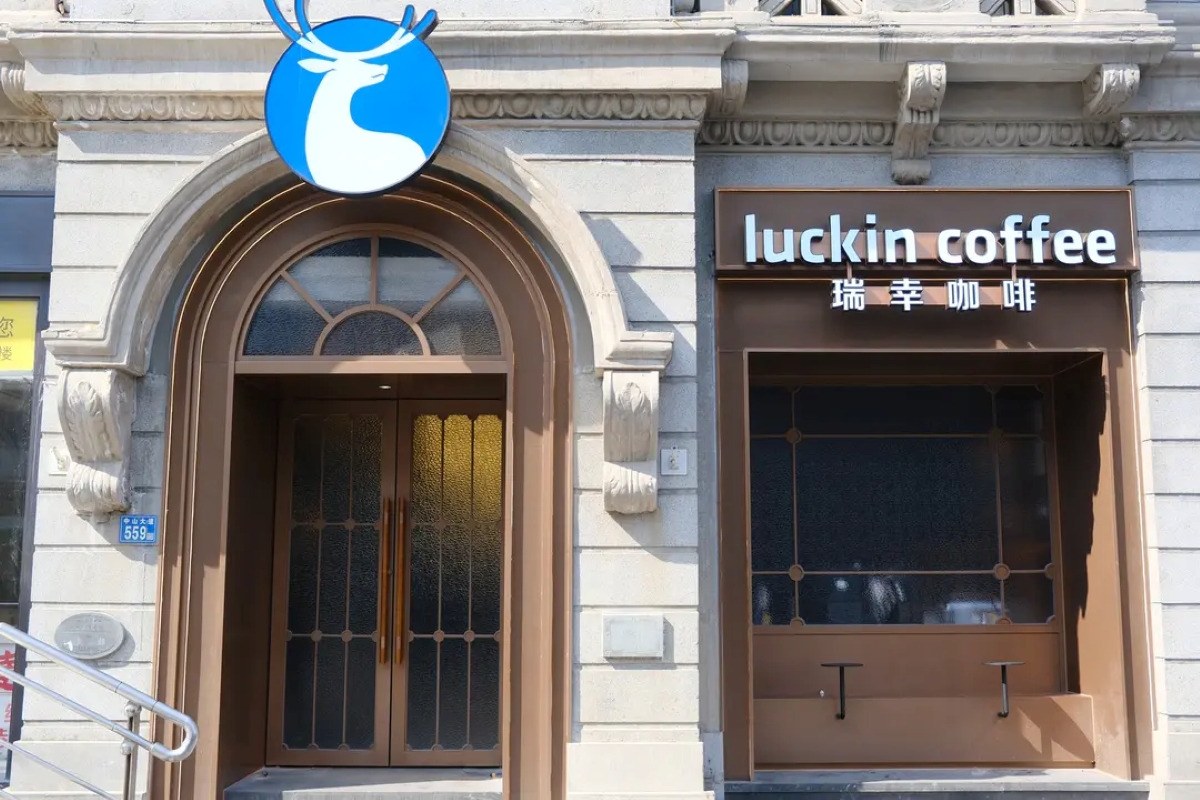
Dubai, September 5, 2025 (Qahwa World) – Luckin Coffee continues its rapid ascent in the global coffee industry, expanding aggressively while key competitors like Starbucks face declining sales.

The Chinese coffee chain, which has already surged ~35% this year, recently entered the U.S. market with new stores in New York City. This move comes as Starbucks undergoes a difficult transformation in both its American and Chinese operations.

Strong Same-Store Sales Growth

Luckin Coffee reported a 13% year-on-year increase in same-store sales at company-owned outlets in Q2 2025. This marks its fourth consecutive quarter of acceleration, rising from a decline in late 2024. In comparison, Starbucks posted a 2% sales decline in the U.S. and only 2% growth in China, where it introduced discounts to counter Luckin’s aggressive promotions.

By outperforming Starbucks’ same-store sales growth by 11 percentage points, Luckin has proven resilient in a strained global economy where many restaurant chains are seeing contractions.

Aggressive Expansion Strategy

The company’s expansion strategy remains unmatched. In Q2 alone, Luckin opened 2,109 new stores, lifting its total footprint to 26,200 – a 31% year-on-year increase. Over the past year, Luckin has added more than 6,200 stores, averaging 17 openings per day.

In contrast, Starbucks expanded its network by just 5% over the same period, adding 1,600 stores worldwide. Luckin’s U.S. debut has been met with favorable reviews, with New York outlets receiving 4–5 star ratings on Google and Yelp.

With RMB 8.2 billion ($1.1 billion) in cash reserves and no debt, Luckin has ample resources to finance its ambitious global rollout.

Differentiation: Menu Innovation and Value Pricing

Luckin distinguishes itself through a bold menu and competitive pricing. While offering classic beverages, it experiments with unique flavors – from fruity Americanos to limited-edition drinks like Roast Duck coffee in China.

Equally important is its pricing advantage: brewed coffee at its U.S. outlets starts at $3.45, below the average price in many American cities. This value-driven approach has fueled customer growth while maintaining a 21% store operating margin.

Valuation Advantage

Despite its momentum, Luckin trades at a far lower valuation than U.S. peers. Its price-to-earnings ratio is around 19x, half that of Starbucks. On revenue multiples, Luckin is valued at a quarter of fast-growing competitor Dutch Bros, even though it is expanding at a faster pace.

Risks and Outlook

While Luckin’s history includes challenges—such as price wars and over-discounting in 2024—the company has since shifted strategy to balance promotions with profitability.

Analysts see more upside than downside as Luckin strengthens its position in China while expanding overseas. Its combination of innovation, affordability, and financial strength makes it one of the most compelling players in the global coffee industry today.

Starbucks Malaysia Suffers Record Annual Losses as Boycotts Persist

Kuala Lumpur – August 28, 2025 (Qahwa World) – Starbucks’ Malaysia operator, Berjaya Food Berhad, has announced the heaviest losses in its history as customer boycotts linked to the Israel–Gaza conflict continued to weigh on sales and consumer sentiment. The group reported a net loss of RM 292 million ($69 million) for the year ending 30 June 2025, more than triple the losses of the previous year. Fourth-quarter results also reflected the downturn, with losses exceeding RM 185 million ($44 million), the worst quarterly outcome since the company was listed on Bursa Malaysia in 2011.

Revenues were similarly affected, dropping 36% year-on-year to RM 476.77 million ($113 million), while fourth-quarter sales fell 10% to RM 115.9 million ($27.5 million). Berjaya cited the prolonged boycotts as the main reason behind the decline, noting that the shift in consumer behavior has significantly impacted Starbucks and other US-based foodservice brands operating in Malaysia. The group was also compelled to scale back its Starbucks network, reducing its outlets from 408 to 320 stores over the past year, while making impairment provisions on assets due to the downsizing.

The financial damage reflects a wider backlash in Malaysia against American brands, with chains such as McDonald’s, Burger King, and KFC also facing boycotts. The trend has reshaped spending patterns in the majority-Muslim country, where consumer sentiment toward US companies has been severely weakened.

Globally, Starbucks is grappling with similar pressures, recording weaker results in several key markets. The brand has faced revenue declines in Europe and the Middle East alongside falling like-for-like sales across its 17,200 US outlets. Franchise partners have also been hit, with Alsea in Europe reporting five consecutive quarters of falling sales, while Kuwait-based Alshaya Group abandoned plans to sell a minority stake in its Starbucks franchise business earlier this year.

Despite the downturn, Berjaya is moving to diversify and expand. Beyond Starbucks, the group operates Paris Baguette, Kenny Rogers Roasters, and Krispy Kreme in Malaysia, and has been widening its international footprint with new Starbucks licenses in Denmark, Finland, and Iceland, where it opened its first store in July 2025. Berjaya is also looking to grow its Paris Baguette operations, with franchise agreements in place to bring the bakery-café chain to Thailand, Brunei, and the UAE.

Yemeni Café to Replace Starbucks in the Heart of Dearborn

Detroit – August 27, 2025 (Qahwa World) – The well-known Starbucks branch on Michigan Avenue in East Dearborn has permanently closed after nearly 16 years of operation, paving the way for a Yemeni café that reflects the cultural shifts in a city with one of the most prominent Arab-American communities.

The store, located at the intersection of Michigan Avenue and Oakman Boulevard, officially ceased operations on August 24 and will soon be transformed into a Yemeni café. According to local reports, Moka & Co, a Yemeni coffee brand with multiple branches in Detroit, Ann Arbor, East Lansing, Okemos, and other states, is expected to take over the site. The lease is anticipated to be finalized within weeks, with the café projected to open by late 2025 or early 2026 after renovations.

The closure comes as part of Starbucks’ “Back to Starbucks” initiative, announced in July 2025, which includes closing or converting up to 90 mobile-order and pick-up-only stores across the U.S. by fiscal year 2026 to focus on traditional café formats. While the company has not issued a specific statement about this location, the decision aligns with consumer trends in Dearborn, where Yemeni cafés are steadily gaining ground.

Dearborn, home to one of the largest Arab-American populations in the United States, has become a hub for Yemeni coffee through establishments such as Haraz Coffee House and Qahwah House. These cafés are distinguished by their richly spiced brews, honeycomb bread, and late-night community atmosphere, creating spaces that have often outshined corporate chains.

The upcoming Yemeni café is expected to serve single-origin beans from Yemen alongside a menu that blends tradition and modern trends, including iced pistachio lattes, moka spice lattes, Adeni chai, frozen drinks, refreshers, and matcha lattes.

The shift away from global coffee chains in Dearborn has been fueled both by consumer boycotts tied to geopolitical issues and by a preference for authentic, community-driven experiences. A 2024 report by The Arab American News highlighted a sharp decline in Starbucks sales in the city as customers increasingly turned to Yemeni cafés for better value, cultural connection, and superior taste.

For many residents, the closure of Starbucks marks a continuation rather than a loss. “Starbucks was fine, but Yemeni cafés offer something unique — coffee with a story, from Yemen’s mountains to our cups,” said Aisha Nasser, a regular at Qahwah House.

With renovations already underway, the location is expected to reopen soon under Yemeni management. For East Dearborn, the transformation of a Starbucks into a Yemeni café underscores a broader narrative: the city’s coffee identity is no longer shaped by global chains but by a return to its cultural roots — Yemeni coffee as both tradition and thriving enterprise.

Coca-Cola Weighs Future of Costa Coffee Amid Strategic Review

Dubai, 24 August 2025 (Qahwa World) – The Coca-Cola Company is considering a possible sale of Costa Coffee, the British café chain it acquired in 2018, in what could become one of the most significant moves in the global coffee sector this year. According to reports confirmed by individuals familiar with the discussions, the U.S. beverage giant has hired investment bank Lazard to explore strategic options for Costa, ranging from a complete divestment to other restructuring paths. Early conversations have reportedly taken place with a limited number of potential bidders, including private equity firms, with indicative offers expected later this autumn.

The development marks a dramatic turn for Coca-Cola, which purchased Costa Coffee for more than $5 billion only seven years ago. At the time, the acquisition was presented as a bold entry into the booming global coffee market, positioning Coca-Cola to compete directly with established players such as Starbucks and Nestlé. With over 4,000 stores worldwide, including more than 2,700 outlets in the United Kingdom and Ireland, Costa provided the Atlanta-based company with an immediate international footprint in coffee retail, a sector where it had previously lacked presence.

Yet the performance of Costa under Coca-Cola’s ownership has fallen short of expectations. While revenues have grown modestly, the chain has struggled with profitability in the face of rising costs, increased competition, and shifting consumer behavior. In 2023, Costa’s revenues climbed by 9 percent to nearly £1.22 billion, but the company recorded a pre-tax loss of £9.6 million. The figure represented a sharp contrast with the £245.9 million profit reported just one year earlier, underscoring the financial pressure weighing on the brand.

Several factors appear to have contributed to Costa’s difficulties. Inflation has raised the cost of raw coffee beans and other inputs, while the high-street café market in the United Kingdom has grown more crowded with independent operators and international rivals. Additionally, some smaller branches in towns such as Andover and Lyme Regis have recently closed, fueling concerns that the chain has been unable to maintain momentum outside its core metropolitan strongholds.

The possibility of a sale, first reported by Sky News and later confirmed by other outlets, has already sparked debate over how much Costa is worth in the current environment. Industry analysts have suggested that the chain could fetch as little as £2 billion—less than half of what Coca-Cola paid in 2018. Such a valuation would reflect the challenges the brand faces as well as the cautious outlook of investors weighing long-term demand trends.

Coca-Cola executives have acknowledged the need to reassess the company’s position in the coffee category. In an earnings call last month, Chief Executive James Quincey stated that Costa had not delivered on the original investment hypothesis, noting that the company was now reflecting on lessons learned and exploring new avenues for growth in coffee. At the same time, he emphasized that Costa continues to operate successfully day to day, suggesting that any decision would be carefully measured rather than abrupt.

The discussions around Costa also fit into a broader wave of corporate restructuring across the global food and beverage industry. With inflation altering cost structures and consumers increasingly prioritizing health, sustainability, and transparency, large companies are rethinking their portfolios to adapt. Coca-Cola has already made moves in this direction, most recently announcing a shift to real cane sugar in its U.S. beverages as part of a campaign to respond to rising health awareness.

Should a sale move forward, it would reshape the global coffee landscape. Costa, with operations spanning more than 50 countries, represents one of the few brands capable of challenging Starbucks on a multi-regional scale. A new owner could seek to revitalize the brand with fresh investment and focus, while Coca-Cola would gain flexibility to redirect resources toward other categories. On the other hand, if bids fall short of expectations, the company may choose to retain Costa and pursue an internal restructuring to restore profitability.

For now, the process remains in early stages, and no definitive outcome has been decided. What is clear, however, is that Coca-Cola’s venture into the café business—once considered a cornerstone of its diversification strategy—is under critical review. Whether Costa changes hands or undergoes a major transformation within the Coca-Cola system, the decision will send ripples through both the corporate boardrooms and coffee shops that make up an increasingly competitive global market.

Saudi Arabia’s Coffee Shops: From “Al-Zuhour” to a Billion-Riyal Industry under Vision 2030

Dubai – August 22, 2025 (Qahwa World) – Coffee in Saudi Arabia is no longer just a morning ritual or a social beverage. It has transformed into a thriving industry aligned with Vision 2030, drawing local and international investment. According to figures reported by Al-Eqtisadiah, the Saudi coffee market was valued between SAR 5 and 7 billion in 2024, growing at an annual rate of more than 5%. Saudis consume around 80,000 tons of coffee beans annually, which translates to 36.5 million cups every day.

Saudi Arabia’s café culture dates back to the mid-20th century. One of the earliest modern cafés, “Al-Zuhour,” opened in Riyadh in 1954. At the time, Yemeni-style cafés, serving coffee alongside tea, shisha, and food, were more prominent. By the 1960s and 1970s, cafés became more widespread, only to face setbacks during the 1980s due to social restrictions.

With the dawn of the new millennium, internet cafés marked the beginning of a new chapter. These spaces quickly evolved into modern cafés, catering to a young population—70% of Saudis are under 35. This demographic shift laid the foundation for today’s café boom, where establishments are not only places for leisure but also venues for cultural and artistic events.

Coffee and Vision 2030

Vision 2030 treats coffee as more than a beverage. It is seen as part of Saudi Arabia’s cultural identity and as a driver of economic diversification. In 2022, the Ministry of Culture declared the “Year of Saudi Coffee,” while also adopting the official term “Saudi Coffee” instead of “Arabic Coffee” in restaurants, cafés, and retail outlets.

This move carried strong symbolic value, reaffirming coffee’s deep cultural roots in the Kingdom. It also boosted international recognition through festivals, exhibitions, and promotional campaigns, positioning Saudi coffee as both a cultural marker and an economic asset.

To build on this momentum, the Public Investment Fund (PIF) launched the Saudi Coffee Company in 2022, with a SAR 1.2 billion (USD 320 million) investment plan over ten years. The company’s mission is to develop a full value chain—from cultivating beans in the southern regions, particularly Jazan, Asir, and Al-Baha, to processing, roasting, marketing, and exporting.

The plan includes planting 5 million coffee trees by 2030, raising domestic production from 800 tons annually to over 10,000 tons. A major milestone is the construction of a factory in Jazan with a capacity of 27,000 tons per year, including 9,000 tons of roasted coffee, with scalability for future expansion. This facility is expected to be a cornerstone for local industry growth and international market entry.

Cafés now account for 16% of Saudi Arabia’s food service sector, which reached SAR 17 billion in 2024. The Ministry of Commerce reports that by mid-2025, there were 61,000 commercial licenses for cafés, including 27,000 for traditional coffee shops.

On the brand front, competition is fierce. Local chain Barn’s leads the market with more than 800 outlets, followed by Dunkin’ with over 600, and Starbucks with more than 450. Kyan Café has expanded to over 270 locations, Coffee Address to 234, while Dr. Café maintains a strong presence with more than 100 outlets. This mix of homegrown and global brands reflects the Kingdom’s dynamic market and consumer demand.

From History to Today’s Transformation

Historically, coffeehouses worldwide were intellectual and social hubs—whether in Istanbul in 1475, Cairo’s famed El Fishawy café that hosted writers like Naguib Mahfouz, or the European coffeehouses that played roles in politics and literature.

In Saudi Arabia, the transformation has been unique. From Al-Zuhour in the 1950s to today’s modern coffeehouses, these spaces now serve as cultural platforms as much as commercial ventures. They host poetry readings, art exhibitions, and social events, aligning with a broader national vision to diversify entertainment and cultural offerings.

Long considered a “drink for the mood,” coffee in Saudi Arabia is now firmly embedded in the economic landscape. It is part of a broader narrative that blends heritage and modernity. Between the millions of cups consumed daily, the government-backed Saudi Coffee Company’s ambitious investments, and the strong presence of global and local brands, coffee has become a pillar of both identity and growth.

From its modest beginnings in a small Riyadh café seven decades ago to today’s billion-riyal industry, Saudi coffee tells a story of transformation. It is no longer only about flavor and tradition, but also about culture, business, and the country’s ambition to position itself as a key player in the global coffee economy.