Nuova Simonelli Technicians Competition Returns for 2026  

Author: Qahwa World – Dubai
Source: Industry announcement
Date: May 14, 2026
Executive Summary

  • The Nuova Simonelli Technicians Competition is back after its first edition in France
  • The 2026 edition expands to new international stages in Paris, London, and the Middle East
  • The competition begins with an online technical quiz that selects 8 finalists
  • Finalists then face hands-on practical challenges on espresso machines
  • Judges evaluate speed, precision, machine knowledge, and safety practices
  • The event celebrates technicians who work behind the scenes in the coffee industry

The Nuova Simonelli Technicians Competition is returning in 2026. After its first edition in France, the event is now expanding to new international markets including Paris, London, and the Middle East.

The competition focuses on espresso machine technicians. These professionals typically work behind the scenes. Yet they play a vital role in coffee quality, equipment reliability, and cafe performance.

Origins of the competition

The competition first launched in France. Organizers created it to showcase the skills, experience, and professionalism of coffee machine technicians. These workers often remain unseen by customers. Nevertheless, they maintain the equipment that baristas rely on every day.

Nuova Simonelli, the Italian espresso machine manufacturer, organizes the event. The company aims to highlight the strategic importance of technicians in delivering quality service and reliable products.

What sets this competition apart

The Nuova Simonelli Technicians Competition stands out for its hands-on, practical approach. It tests real-world skills that technicians use daily.

The competition begins with an online technical quiz. From this stage, organizers select eight technicians who qualify for the final round.

In the final stage, participants face practical challenges on espresso machines. These include simulated malfunctions, adjustments, and real technical interventions. The tasks mirror everyday work scenarios in coffee shops and service centers.

Speed, precision, machine knowledge, and operational efficiency all go under evaluation. Technical judges assess performance based on workplace safety, organization, technical expertise, and the ability to maintain excellent coffee quality.

Expansion to new markets in 2026

In the coming weeks, the competition will launch new international stages. The confirmed locations include Paris, London, and the Middle East.

This expansion confirms the global nature of the initiative. Nuova Simonelli aims to create real opportunities for exchange, professional growth, and knowledge sharing across key international markets.

Industry context: Coffee machine technicians play a critical role across the entire supply chain. Their work ensures operational continuity, consistent quality, and customer satisfaction in cafes worldwide.

Celebrating the technicians

Through this initiative, Nuova Simonelli celebrates the crucial role technicians play. They provide baristas with reliable, high-performing, and long-lasting equipment. Their work supports operational continuity, consistent quality, and end-customer satisfaction.

The event is more than just a competition. Organizers describe it as a platform for training, networking, and showcasing technical expertise.

How to participate

Technicians ready to join the next editions of the competition can apply through dedicated registration pages. Separate application links are available for the Dubai and United Kingdom editions.

Frequently Asked Questions

What is the Nuova Simonelli Technicians Competition?
It is an international competition for espresso machine technicians. Participants demonstrate their skills in diagnosing and repairing coffee equipment under timed conditions.

Where will the competition take place in 2026?
The competition will take place in Paris, London, and the Middle East. Specific venues and dates are available through the official registration pages.

How does the competition work?
Participants first complete an online technical quiz. The top eight scorers advance to a final round of hands-on practical challenges on espresso machines.

What skills are tested?
Judges evaluate speed, precision, machine knowledge, operational efficiency, workplace safety, organization, and the ability to maintain coffee quality.

Who can participate?
The competition is open to espresso machine technicians. Interested candidates should apply through the official registration pages for their region.

Why is this competition important?
Technicians play a crucial but often invisible role in the coffee industry. They ensure equipment remains reliable and performs well, which directly affects coffee quality and customer satisfaction.


Author: Qahwa World – Dubai
Source: Industry announcement
Date: May 14, 2026

South Korea Tightens Regulations on Decaffeinated Coffee

Dubai – Qahwa World

South Korea’s Ministry of Food and Drug Safety has announced stricter regulations for decaffeinated coffee products, stating that products will only be allowed to carry the “decaffeinated” label if they contain no more than 0.1% residual caffeine in the coffee beans.

The new labeling standards are set to take effect on January 1, 2028.

Under the current rules, at least 90% of the caffeine must be removed from coffee for it to be classified as decaffeinated. However, existing regulations do not specify the final amount of caffeine that may remain in the product. The term “decaffeinated” also does not necessarily mean that the coffee is completely caffeine-free, which can lead to consumer misunderstanding.

The ministry explained that some decaffeinated coffee products may still contain relatively high levels of residual caffeine, especially when made from naturally high-caffeine coffee beans. This, officials said, conflicts with consumer expectations that decaffeinated coffee should contain little to no caffeine.

To reduce confusion, the updated standards will focus on the amount of caffeine remaining in the beans, aligning South Korea’s regulations more closely with international standards, including those used in the United States.

In a related move, the ministry also strengthened labeling requirements for alcoholic beverages amid a rise in collaborative products featuring alcohol brands packaged in designs resembling ordinary food products.

Ukrainian Authorities Uncover Large-Scale Counterfeit Coffee Operation Near Kyiv

Author: Qahwa World – Dubai
Source: Korrespondent.net
Date: May 14, 2026Authorities recently uncovered a counterfeit coffee operation in Kyiv, Ukraine in 2026.

Executive Summary

  • Ukrainian authorities discovered an illegal coffee production facility in the Kyiv region
    Counterfeit products appeared under internationally known brand names
    Suspects allegedly continued using the brand illegally after their contract ended in 2021
    The fake coffee underwent no quality or safety controls, which posed consumer risks
    Authorities conducted 22 searches and seized assets worth nearly UAH 20 million
    The investigation remains ongoing under Criminal Code Article 229 for trademark violation
    A similar operation emerged in July 2025 with an organizer and five accomplices

The Bureau of Economic Security of Ukraine uncovered a large-scale underground operation near Kyiv. This facility produced counterfeit coffee products under internationally known brand names.

Investigators discovered illegal production facilities inside warehouse premises. Workers roasted, packaged, and labeled coffee at these locations. They used trademarks of major global coffee brands without permission.

  • How the counterfeit scheme operated

The scheme involved individuals registered under fictitious businesses. These entities processed payments and supported the distribution network. Therefore, authorities had to trace multiple financial transactions.

Suspects had previously cooperated officially with the trademark owner. However, they allegedly continued using the brand illegally after their contract ended in 2021. As a result, the company lost significant revenue.

Social media platforms and messaging applications helped promote the counterfeit products. Postal and courier delivery services distributed orders across Ukraine. Consequently, the fake coffee reached many unsuspecting customers.

  • Consumer safety risks

The fake coffee products underwent no quality or safety controls. Therefore, they may have posed serious health risks to consumers. Authorities warn buyers to remain vigilant.

Detectives conducted 22 searches during the investigation. They seized industrial production equipment, packaging materials, and printing supplies. In addition, they confiscated thousands of finished coffee packages, raw coffee materials, vehicles, cash, and financial documentation.

The seized assets hold an estimated value of nearly 20 million Ukrainian hryvnia.

  • Legal proceedings

The pre-trial investigation remains ongoing. Authorities filed the case under Part 3 of Article 229 of the Criminal Code of Ukraine. This article covers the illegal use of trademarks that causes particularly large financial damages.

  • Growing challenge of counterfeit food products

This case highlights a growing challenge for the coffee industry. Counterfeit food and beverage products threaten both consumers and legitimate coffee companies. Rising coffee prices continue to increase pressure across global supply chains. Therefore, counterfeit operations may become more common.

In July 2025, authorities announced suspicions against an organizer and five alleged accomplices. Those individuals operated another underground coffee manufacturing network in the Kyiv region. They also used internationally recognized brand names illegally.

Context: The Bureau of Economic Security of Ukraine continues to investigate illegal trademark violations in the food and beverage sector. Consumers should purchase coffee products only from authorized retailers.

Frequently Asked Questions

Where did authorities discover the counterfeit coffee operation?

The illegal production facility operated in the Kyiv region of Ukraine. Workers roasted, packaged, and labeled fake coffee inside warehouse premises.

Which brands did the operation counterfeit?

The operation used internationally known coffee brand trademarks. However, authorities have not publicly disclosed specific brand names due to the ongoing investigation.

How long did the illegal operation continue?

Suspects had an official contract with the trademark owner that ended in 2021. After that, they allegedly continued using the brand illegally.

What is the value of the seized assets?

Authorities seized assets worth nearly 20 million Ukrainian hryvnia. These include industrial equipment, packaging materials, finished coffee products, vehicles, and cash.

Are the counterfeit products dangerous?

Yes. The fake coffee underwent no quality or safety controls, so it may pose health risks to consumers.

Is this the only such case in Ukraine?

No. In July 2025, authorities announced suspicions against an organizer and five accomplices in another underground coffee manufacturing network in the same region.

Author: Qahwa World – Dubai
Source: Korrespondent.net
Date: May 14, 2026
Reference: Bureau of Economic Security of Ukraine, Criminal Code of Ukraine Article 229

Coffee Prices Supported by Shrinking ICE Inventories as Supply Tightens

Author: Qahwa World – Dubai. This article reviews ICE coffee inventories and coffee prices projections for 2026.

Executive Summary

  • July arabica coffee gained 0.21%, while July robusta rose 2.24% to a seven-week high
  • ICE robusta inventories fell to a two-year low of 3,642 lots
  • ICE arabica stocks dropped to a 2.5-month low of 471,831 bags
  • Brazil April green coffee exports declined 1.3% year-over-year to 2.76 million bags
  • Vietnam January-April coffee exports surged 15.8% to 810,000 metric tons
  • Global coffee surplus projected to reach 10 million bags in 2026, largest in six years

Coffee futures settled higher in Wednesday trading as shrinking exchange inventories continued to provide market support, with robusta prices climbing to their highest level in nearly two months.

July arabica coffee on the New York exchange rose 0.60 points, or 0.21 percent, while July robusta coffee on the London exchange advanced 78 points, or 2.24 percent, reaching a seven-week peak.

Tightening stocks on the Intercontinental Exchange remained the primary bullish factor for the market. Robusta inventories fell to a two-year low of 3,642 lots on Wednesday, while arabica stocks dropped to a two-and-a-half-month low of 471,831 bags earlier in the week.

Reduced shipments from Brazil also provided price support. The country’s April green coffee exports declined 1.3 percent compared to the same period last year, totaling 2.76 million bags, according to industry data.

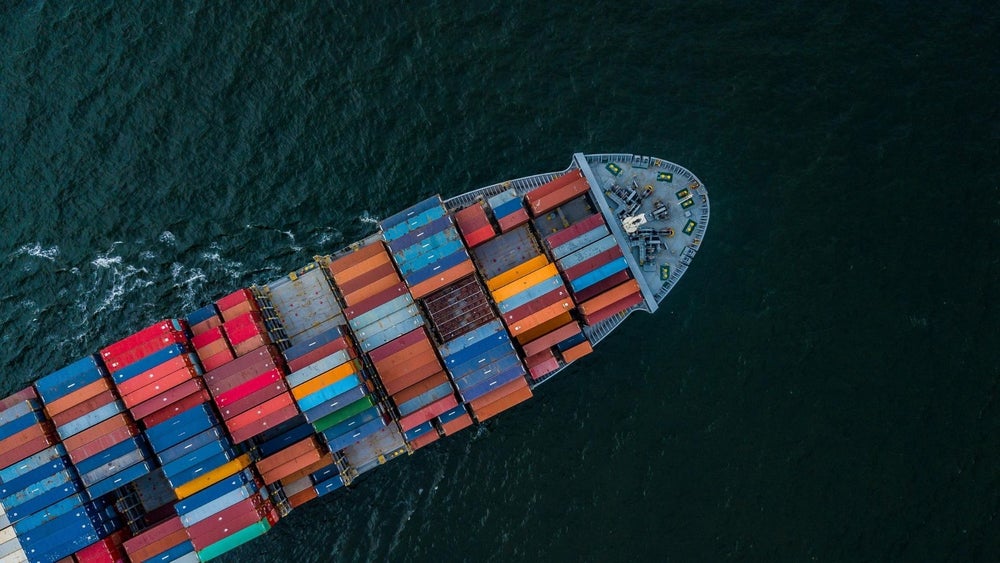
Disruptions in key shipping routes have raised concerns over global coffee supply chains, contributing to higher costs for freight, insurance, fertilizers, and fuel for importers and roasters.

On the bearish side, rising shipments from Vietnam, the world’s largest robusta producer, continued to weigh on the market. Vietnamese coffee exports during the first four months of 2026 increased 15.8 percent year-over-year to 810,000 metric tons. The country’s total coffee exports for 2025 also rose 17.5 percent to 1.58 million metric tons.

Supply outlook: Vietnam coffee production for the 2025/2026 season is projected to increase 6 percent to 1.76 million metric tons (29.4 million bags), which would mark a four-year high for the Southeast Asian producer.

Expectations of a larger Brazilian harvest are also placing downward pressure on prices. Recent projections indicate Brazil 2026/2027 coffee harvest could rise 12 percent year-over-year to 71.4 million bags.

Several trading firms have issued forecasts pointing to record production levels. A major commodities brokerage projected Brazil 2026/2027 crop at 75.9 million bags, while another trading firm raised its estimate to a record 75.3 million bags.

The global coffee surplus in 2026 could expand to 10 million bags, compared with 1.8 million bags in 2025, which would represent the largest surplus in six years, according to industry analysts.

Global coffee exports for the current October-September marketing year slipped 0.3 percent year-over-year to 138.66 million bags, based on data from the International Coffee Organization.

Looking further ahead, the United States Department of Agriculture Foreign Agricultural Service projects that global coffee production in 2025/2026 will rise 2 percent year-over-year to a record 178.85 million bags. The agency forecasts arabica production to decline 4.7 percent to 95.52 million bags, while robusta production is expected to increase 10.9 percent to 83.33 million bags.

Brazil production for 2025/2026 is forecast to fall 3.1 percent to 63 million bags, while Vietnam output is projected to rise 6.2 percent to a four-year high of 30.8 million bags.

The USDA also expects ending stocks for the 2025/2026 season to decline 5.4 percent to 20.15 million bags, down from 21.31 million bags in the previous season.

Frequently Asked Questions

Why did coffee prices rise recently?
Coffee prices moved higher primarily due to shrinking ICE inventories. Arabica stocks fell to a 2.5-month low, while robusta inventories dropped to a two-year low, tightening available supply.

How did Brazil coffee exports perform in April?
Brazil April green coffee exports declined 1.3 percent year-over-year to 2.76 million bags, providing some support to coffee prices.

What is happening with Vietnam coffee exports?
Vietnam coffee exports surged 15.8 percent in the first four months of 2026 to 810,000 metric tons, which has weighed on prices due to increased supply from the world largest robusta producer.

What is the global coffee surplus forecast for 2026?
The global coffee surplus in 2026 could expand to 10 million bags, up from 1.8 million bags in 2025, marking the largest surplus in six years.

What does the USDA forecast for global coffee production?
The USDA projects global coffee production will reach a record 178.85 million bags in 2025/2026, a 2 percent increase year-over-year, with robusta driving the growth.

How are Strait of Hormuz disruptions affecting coffee prices?
Disruptions in the Strait of Hormuz have raised concerns over global coffee supply chains, increasing shipping, insurance, fertilizer, and fuel costs for importers and roasters, which supports higher coffee prices.


Kim Thompson: Sustainability Rules Must Not Punish the Producers Who Need Market Access Most

Dubai – Ali Azakary | Qahwa World

On May 4, the European Commission published its “simplification” package for the Deforestation Regulation. Some saw it as genuine relief. Others called it cosmetic.

Qahwa World continues its interview series with industry experts. After Dr. Steffen Schwarz from Germany, our second guest is Kim Thompson, Co-Founder of RAW Coffee Company in Dubai. Kim is one of the pioneers of specialty coffee in Dubai, with real contributions to supporting smallholder farmers, especially in several producing and low-income countries.

Here is what she said.

  • What is your overall take on the EU simplification decision? Does it truly reduce the burden, or is it mostly cosmetic?

Kim Thompson: Our overall take is that the simplification helps, but only around the edges. It reduces some paperwork and gives smaller primary operators a more realistic route in, but it does not remove the biggest pressure point: traceability back to farm level.

The EU says the package could reduce annual compliance costs by around 75 percent, but geolocation, legality checks, and responsibility still sit heavily in the supply chain.

Our view is simple: the intention is right, but implementation has to be practical, fair, and producer focused. Traceability is important. Protecting forests is important. But if compliance becomes a paperwork race won only by the biggest players, then the coffee industry has not solved the problem. It has just moved the burden further down the chain.

  • Who benefits the most from this simplification in your opinion?

Kim Thompson: The biggest winners are not necessarily the smaller farmers and cooperative groups who are our direct trade partners. The real advantage goes to larger organizations and companies, and to origins that already have digital traceability systems, mapped farms, organized exporters, and strong documentation.

Low-risk countries get some relief on risk assessment, but they still need geolocation data, so it is not a free pass.

  • Soluble coffee is now fully covered, after being excluded before. How do you see this affecting coffee traders and roasters worldwide?

Kim Thompson: Logically, it makes sense. If green coffee is covered, soluble coffee should not sit outside the system. Otherwise, the industry risks moving deforestation exposure into a different product category rather than solving it.

But this will affect traders, instant coffee manufacturers, private label suppliers, and roasters using soluble ingredients, because they now need the same confidence in origin data and documentation.

  • Is the global coffee supply chain truly ready for the December 30, 2026 deadline? If not, which part of the industry will take the biggest hit?

Kim Thompson: Is the global coffee supply chain ready by December 30, 2026? Honestly, no. Not even close.

Larger companies are much closer. The vulnerable part is the smallholder end: farmers, collectors, cooperatives, and exporters in fragmented supply chains where coffee changes hands many times before export.

These people may be producing responsibly, but if they cannot prove it in the format the EU wants, they risk being excluded. That is the real concern for us: sustainability rules must not end up punishing the very producers who need market access the most.

Qahwa World – Episode Three tomorrow with Burke Campbell from Honduras.

Read the related stories:

Dr. Steffen Schwarz: EUDR Simplification Remains an Administrative Monster

EUDR Simplification: Six Voices from the Coffee Industry Speak

European Commission Simplifies Deforestation Regulation.. What’s New?

USDA Announces Second Tranche of Food for Peace Funding for Seven Countrie

Executive Summary

  • USDA announces second tranche of Food for Peace Title II Program funding
  • Applications accepted from 7 countries: DRC, El Salvador, Ethiopia, Guatemala, Haiti, Kenya, Rwanda
  • Program transferred to USDA administration on February 3, 2026
  • Focus on delivering US-grown commodities to global food assistance programs
  • Application deadline: June 12, 2026 at 5:00 PM EDT

The U.S. Department of Agriculture’s Foreign Agricultural Service today announced a second tranche of funding for the Food for Peace, Title II Program. Under a competitive Notice of Funding Opportunity, USDA will accept applications from the Democratic Republic of Congo, El Salvador, Ethiopia, Guatemala, Haiti, Kenya and Rwanda.

USDA announced on February 3, 2026, that pursuant to a temporary interagency agreement, it would administer the Food for Peace, Title II Program. The move transferred management of the historic food assistance program from the U.S. Agency for International Development to USDA.

Context: Food for Peace joins USDA’s existing portfolio of international food assistance programs, including the McGovern-Dole International Food for Education and Child Nutrition Program and Food for Progress.

“USDA is working to return Food for Peace to its core functions,” said Michelle Bekkering, Deputy Under Secretary for Trade and Foreign Agricultural Affairs. “This funding will more responsibly deliver lifesaving food assistance with high-quality American commodities, helping American farmers and producers at home and people in need across the world.”

Eligible Countries for Funding

  • Democratic Republic of Congo
  • El Salvador
  • Ethiopia
  • Guatemala
  • Haiti
  • Kenya
  • Rwanda

Food for Peace joins USDA’s portfolio of longstanding food assistance programs, alongside the McGovern-Dole International Food for Education and Child Nutrition Program and Food for Progress.

The Food for Peace NOFO on Grants.gov describes this funding in detail. Eligible applicants include public or private organizations, including intergovernmental organizations and other multilateral organizations.

Application deadline: 5:00 p.m. Eastern Daylight Time on June 12, 2026.

Frequently Asked Questions

What is the Food for Peace Title II Program?
Food for Peace is a historic U.S. government food assistance program that provides emergency and development food aid to countries facing hunger and food insecurity. Title II specifically covers the donation of U.S.-grown commodities.

Which countries are eligible for this funding?
The seven eligible countries are: Democratic Republic of Congo, El Salvador, Ethiopia, Guatemala, Haiti, Kenya, and Rwanda.

When was USDA given authority over Food for Peace?
USDA announced the temporary interagency agreement on February 3, 2026, transferring administration of the program from USAID to USDA.

What is the application deadline?
Applications must be submitted by 5:00 p.m. Eastern Daylight Time on June 12, 2026.

Where can I find the full NOFO?
The complete Notice of Funding Opportunity is available on Grants.gov.

Who is eligible to apply?
Public or private organizations, including intergovernmental organizations and other multilateral organizations, are eligible to apply.


USDA Report: India’s Coffee Sector Faces Climate Challenges and Historic Trade Opportunities

Executive Summary

  • India MY 2026/27 coffee production forecast at 6.14 million 60-kg bags
  • Arabica yields expected to decline 8% due to excessive rainfall followed by extended dry spell
  • Farmgate prices for Arabica down 16%, Robusta down 11% since October 2025
  • New free trade agreements with UK and EFTA countries offer zero tariffs on Indian coffee exports
  • Domestic consumption projected at 1.58 million bags, driven by soluble coffee demand
  • India aims to reach 900,000 metric tons production by 2047

1. Overview: India’s Position in Global Coffee Market

India ranks as the world’s seventh-largest coffee producer, after Brazil, Vietnam, Colombia, Indonesia, Ethiopia, and Uganda. Approximately 95 percent of India’s coffee production is exported, with green coffee accounting for about 59 percent of total exports and instant (soluble) coffee making up the remaining 41 percent.

According to the USDA Foreign Agricultural Service report from the New Delhi office, India’s coffee sector is at a critical juncture. The country faces climate-related production challenges while simultaneously gaining unprecedented access to European markets through newly ratified free trade agreements.

Key Insight: India’s coffee production comprises approximately one-third Arabica and two-thirds Robusta, with Robusta accounting for over 75% of total output due to its greater resilience to weather variability.

2. Production Forecast: MY 2026/27

FAS Mumbai forecasts India’s MY 2026/27 coffee production at approximately 368,400 metric tons, or about 6.14 million 60-kilogram bags, comprising 1.56 million 60-kg bags of Arabica (93,600 metric tons) and 4.58 million 60-kg bags of Robusta (274,800 metric tons).

📊 Figure 1: India Production Trend
Source: USDA/FAS (Chart data described below)
Figure 1: India coffee production has grown at a CAGR of 2.05% between MY 2021/22 and MY 2024/25

Production Data Table

Table 1: India Coffee Production Forecast (1000 60-kg bags)
Category MY 2024/25 (Actual) MY 2025/26 (Estimate) MY 2026/27 (Forecast)
Arabica Production 1,762 1,730 1,560
Robusta Production 4,297 4,700 4,580
Total Production 6,059 6,430 6,140

3. Climate Challenges: The Threat to Arabica

The India Meteorological Department’s first long-range outlook for the 2026 southwest monsoon indicates below-normal rainfall at about 92 percent of the long-period average, with a 66 percent probability of below-normal to deficit conditions.

Arabica output is expected to decline due to below-normal monsoon rainfall combined with unusually high temperatures, which may adversely affect flowering and fruit set. In contrast, Robusta production is projected to remain relatively strong, reflecting its greater resilience to weather variability.

Rainfall Data for Coffee Growing Regions

Table 2: Rainfall Statistics for Karnataka and Kerala (January – April 2026)
State/District Winter (Jan-Feb) Departure Pre-Monsoon (Mar-Apr) Departure
Chikmagalur (Karnataka) Large Excess (+244%) Normal (-17%)
Kodagu (Karnataka) Large Excess (+177%) Normal (-7%)
Wayanad (Kerala) Large Excess (+235%) Deficit (-48%)
Travancore (Kerala) Excess (+48%) Deficit (-53%)

The data reveals a stark pattern: excessive winter rainfall (January-February) followed by deficit pre-monsoon rains (March-April). This extreme weather variability – from flooding to drought within weeks – is precisely the type of climate shock that most damages coffee flowering and fruit set, particularly for the more sensitive Arabica variety.

4. Yield Projections

For MY 2026/27, Arabica yields are projected to decline by eight percent year-on-year to 452 kilograms per hectare, while Robusta yields are expected to fall marginally by two percent to 1,239 kilograms per hectare, although still above the three-year average.

Table 3: Coffee Yield Comparison (kg per hectare)
Coffee Type MY 2026/27 Forecast 3-Year Average (2022-2024) Change
Arabica 452 475 -8%
Robusta 1,239 1,156 +7% (above average)
Why Robusta Outperforms: Robusta yields remain about 2.3 times higher than Arabica, reflecting its greater resilience and productivity. Arabica is more sensitive to altitude, pest, and climate variability, requiring more precise growing conditions.

5. Price Dynamics: Decline from Record Highs

Farmgate prices for Arabica and Robusta have declined by 16 percent and 11 percent respectively since October 2025. Despite this change, prices remain at a premium to other origins, though further moderation is expected. The decline in prices is being driven by expectations of higher output in key producing countries and elevated domestic stock levels.

📊 Figure 2: Farmgate Raw Coffee Prices in Karnataka
Exchange rate: Rupees 92.99 per US dollar (as of April 20, 2026)
Source: Coffee Board of India
Figure 2: Indian coffee prices have moderated but still trade at premium to competing origins

6. Export Outlook: Trade Agreements Transform Market Access

Post forecasts that MY 2026/27 coffee exports will rise by three percent to 6.22 million bags (373,140 metric tons), driven by higher exportable surplus and strong demand for soluble coffee exports.

New Free Trade Agreements

Table 4: New Trade Agreements Benefiting Indian Coffee Exports
Agreement Partner Countries Benefit for Coffee Effective Date
India-UK CETA United Kingdom Zero duty on roast, ground, and instant coffee Recently concluded
India-EFTA TEPA Switzerland, Norway, Iceland Zero percent duty on all coffee exports October 1, 2025

The United Kingdom currently accounts for 1.7 percent of India’s coffee exports, while the EFTA countries (Switzerland, Norway, Iceland) offer new zero-tariff access. Europe has emerged as a more stable trading partner with increased inquiries. Italy remains the top destination, using almost 60 percent of imported Indian coffee domestically while 40 percent is processed for private label manufacturers for re-exports.

Export Destinations

📊 Figure 3: Coffee Export Share by Country (percentage)
Italy leads, followed by Germany, Russia, Belgium, and UAE
Source: Trade Data Monitor, LLC
Figure 3: Indian coffee exported to more than 125 countries, with 61% of shipments from Mangalore port

7. Export Challenges: Premium Prices and Freight Costs

Despite positive momentum, several challenges exist. Indian coffee prices are significantly higher than competing origins from Vietnam and Indonesia. High premiums could pose challenges to exports despite recent prices being lower than last year.

Freight costs to the Middle East have surged dramatically, from $700-$1,200 per 20-foot container in January/February to $1,500-$2,800, with occasional short-term spikes higher due to war risk surcharges, insurance costs, and vessel rerouting. Trade data indicates that about 11-12 percent of India’s total coffee exports in green bean equivalent go to the Middle East, the second-largest regional market after Europe (44-45 percent).

8. Domestic Consumption: A Growing Market

Post forecasts MY 2026/27 domestic consumption at 1.58 million 60-kilogram bags (94,800 metric tons), supported by rising demand for soluble coffee. Household consumption of soluble coffee is expected to account for a significantly larger share of domestic consumption, rising to around 73 percent next year.

India’s per capita coffee consumption remains at 0.04 kilograms, well below the global average of 1.3 kilograms, indicating significant growth potential.

Table 5: Domestic Consumption Breakdown (1000 60-kg bags)
Category MY 2024/25 MY 2025/26 MY 2026/27 Forecast
Roast & Ground Domestic 330 415 420
Soluble Domestic 820 1,160 1,160
Total Domestic Consumption 1,150 1,575 1,580

9. Long-Term Vision: India 2047

The Coffee Board of India has set an ambitious long-term target of increasing national coffee production to 900,000 metric tons by 2047, through a combination of productivity gains, area expansion, and value-chain improvements. This includes replanting old and low-yielding bushes with high-yielding, climate-resilient varieties, promoting better agronomic practices (irrigation, pruning, soil health), and expanding cultivation into non-traditional regions.

📊 Figure 4: Monthly Coffee Exports by Volume (October-September)
5-year average vs 2024/25 vs 2025/26
Source: Trade Data Monitor, LLC
Figure 4: Exports in MY 2025/26 (October-January) were 26% higher than the previous year

10. Imports: Filling the Gap

Post forecasts MY 2026/27 imports at 1.39 million 60-kilogram bags (83,400 metric tons). Imports are expected to be four percent higher than last year as the use of Indian coffee in soluble coffee re-exports remains limited due to domestic beans trading at a premium, necessitating higher reliance on imported beans for processing and value addition.

Green beans account for approximately 94 percent of total imports and are primarily sourced from Indonesia, Kenya, Vietnam, Uganda, and Brazil for processing and re-export.

Table 6: India Import Tariff on Coffee Products
HS Code Product Description Standard Rate
0901.11 Coffee not roasted, not decaffeinated 100%
0901.12 Coffee not roasted, decaffeinated 100%
0901.21 Coffee roasted, not decaffeinated 100%
2101.11.20 Instant coffee not flavored 30%

11. Key Challenges Facing Indian Coffee Sector

  • Climate Variability: Excessive rainfall followed by extended dry spells during critical flowering stage
  • Fertilizer Costs: Persistent shortages and rising input costs across the value chain
  • Labor Availability: Coffee production is labor intensive, with nearly 70% of production cost attributable to labor
  • Premium Pricing: Indian coffee prices significantly higher than competing origins from Vietnam and Indonesia
  • Freight Disruptions: Surging shipping costs to Middle East due to geopolitical tensions

12. Opportunities

  • Free Trade Agreements: Zero tariff access to UK, Switzerland, Norway, and Iceland
  • Growing Domestic Market: India’s coffee market projected to grow at 8.9% CAGR by 2028
  • Soluble Coffee Demand: Double-digit growth in domestic soluble coffee consumption
  • Specialty Coffee: Estate branded coffees commanding prices comparable to export levels
  • Youth Demographic: Expanding urban coffee culture and younger consumers driving growth

Frequently Asked Questions

How much coffee will India produce in 2026/27?

According to the USDA FAS report, India is forecast to produce 6.14 million 60-kilogram bags (approximately 368,400 metric tons) in MY 2026/27, comprising 1.56 million bags of Arabica and 4.58 million bags of Robusta.

Why is Arabica production expected to decline?

Arabica yields are projected to decline 8% due to excessive rainfall in January and February 2026 followed by an extended dry spell during the critical flowering and fruiting stage. Arabica is more temperature-sensitive and has higher water requirements compared to Robusta.

What are the new trade agreements benefiting Indian coffee?

The India-UK Comprehensive Economic and Trade Agreement (CETA) offers duty-free access for roast, ground, and instant coffee to the United Kingdom. The India-EFTA Trade and Economic Partnership Agreement (TEPA), effective October 1, 2025, provides zero percent duty on all coffee exports to Switzerland, Norway, and Iceland.

How have coffee prices changed in India?

Farmgate prices for Arabica have declined by 16 percent and Robusta by 11 percent since October 2025. Despite this decline, Indian coffee prices remain at a premium to other origins, though further moderation is expected.

What is India’s long-term coffee production target?

The Coffee Board of India has set an ambitious target of increasing national coffee production to 900,000 metric tons by 2047 through productivity gains, area expansion, replanting with high-yielding varieties, and value-chain improvements.

Who are the main buyers of Indian coffee?

Italy remains the major buyer, followed by Germany, Russia, Belgium, and the United Arab Emirates. Indian coffee is now exported to more than 125 countries, with approximately 61 percent of shipments originating from the Mangalore port in Karnataka.


Strong Dollar Weighs on Coffee Prices

Dubai – Qahwa World

Coffee futures closed lower on Tuesday as a stronger U.S. dollar pressured commodity markets. This is a clear example of how a Strong Dollar Weighs on Coffee Prices. July arabica coffee contracts (KCN26) fell 0.76%, while July robusta futures (RMN26) declined 0.63%.

Losses were limited by tightening certified coffee inventories. ICE arabica stocks dropped to a 2.5-month low of 471,831 bags, while robusta inventories fell to a two-year low of 3,664 lots.

The ongoing closure of the Strait of Hormuz continued to disrupt global coffee trade flows, increasing shipping, insurance, fuel, and fertilizer costs for importers and roasters.

Brazil’s weaker export performance also supported prices. Cecafe reported that Brazil’s March green coffee exports declined 10% year-on-year to 2.65 million bags, while the country’s Trade Ministry said total March coffee exports fell 31% to 151,000 metric tons.

Meanwhile, rising supplies from Vietnam weighed on robusta prices. Vietnam’s coffee exports during January–April 2026 increased 15.8% year-on-year to 810,000 metric tons, according to the National Statistics Office. The country’s 2025/26 coffee production is expected to rise 6% to a four-year high of 1.76 million metric tons.

Expectations of a larger Brazilian crop also added bearish pressure. Recent forecasts from the Coffee Trading Academy, Marex Group, Sucafina, and StoneX all point to strong production in Brazil’s 2026/27 season, with estimates ranging from 71.4 million to 75.9 million bags.

StoneX also expects the global coffee surplus to expand to 10 million bags in 2026, compared with 1.8 million bags in 2025.

The USDA’s Foreign Agricultural Service forecasts global coffee production in 2025/26 will reach a record 178.848 million bags, driven by stronger robusta output, while global ending stocks are projected to decline 5.4% to 20.148 million bags.

Dr. Steffen Schwarz: EUDR Simplification Remains an Administrative Monster

Dubai – Ali Al Zakry | Qahwa World

On May 4, the European Commission published its “simplification” package for the Deforestation Regulation. Some saw it as genuine relief. Others called it cosmetic. Dr Steffen Schwarz described the EUDR as an administrative monster.

Qahwa World opened this file from the beginning. We spoke to six experts from four continents. We published a preliminary investigation summarizing their views. Now we publish the full episodes, one expert per episode, with complete, unedited answers.

Our first guest is Dr. Steffen Schwarz, an applied coffee science expert from Germany and co-founder of Applied Coffee Science. He describes the simplified regulation as “still an administrative monster for many small actors.”

Here is the full interview.

  • What is your overall take on the EU simplification decision? Does it truly reduce the burden, or is it mostly cosmetic?

Dr. Steffen Schwarz: My overall view is that the simplification helps at the margins, but it does not solve the core problem. The EUDR remains an administrative monster for many small actors in the coffee chain.

The intention is absolutely right. Nobody in coffee can seriously argue against forest protection. The question is whether the instrument is proportionate and intelligent enough. At the moment, I fear that it mainly simplifies the system for those who already have the structures to deal with it: large importers, large exporters, certification bodies, and companies with compliance departments.

For small roasters, small importers, and direct trade relationships, the fundamental burden remains. Coffee is not only a bulk commodity. Many of the most valuable coffees in Europe come from small farms, old varieties, rare cultivars, agroforestry systems, and micro-lots. These coffees may be fully deforestation-free, but proving that in the required administrative format can become disproportionately expensive.

So yes, simplification is welcome. But if the system still makes it easier to import large, standardized volumes than small, diverse, direct-trade lots, then we have not fixed the real problem.

  • Who benefits the most from this simplification?

The biggest beneficiaries will probably be large companies and low-risk exporting countries with organized documentation systems. They can spread compliance costs over large volumes and integrate the EUDR into existing legal, digital, and certification structures.

Small producers may benefit on paper, especially where simplified declarations or reduced obligations apply. But many smallholders outside the EU will still feel the pressure indirectly. The legal obligation may sit with the European operator, but the demand for geolocation data, legality evidence, and traceability will travel upstream to the farm level.

That is where the danger lies. A small farmer who grows coffee under shade, preserves old varieties, and has never cleared forest may still be excluded if the paperwork is too difficult or too expensive. The system may not intentionally discriminate against smallholders, but its practical effect could do exactly that.

In my view, the real winners are those who can industrialize compliance. The potential losers are those whose strength lies in quality, diversity, and relationship-based trade rather than administrative capacity.

  • Soluble coffee is now fully covered, after being excluded before. How do you see this affecting coffee traders and roasters worldwide?

Dr. Steffen Schwarz: From a regulatory logic, including soluble coffee makes sense. If the aim is to prevent deforestation-linked coffee from entering the European market, then it would be inconsistent to regulate green and roasted coffee but leave soluble coffee outside.

However, soluble coffee is often based on complex, high-volume, multi-origin supply chains. It may involve large blends, several processing stages, and coffee from many farms, regions, or countries. That makes traceability more complicated.

For large soluble coffee manufacturers, this will create additional compliance work, but they are generally better equipped to manage it. For traders supplying the soluble industry, the pressure will increase significantly. They will need cleaner documentation, stronger segregation, and better origin data.

The risk is that soluble coffee supply chains will become more consolidated. Suppliers who cannot provide the required documentation may simply be removed from the chain. Again, the coffee may not necessarily become better or more sustainable. It may simply become easier to document.

Is the global coffee supply chain ready for the December 30, 2026 deadline? If not, which part of the industry will take the biggest hit?

Dr. Steffen Schwarz: No, not fully. Some parts of the industry are ready, especially larger exporters, organized cooperatives, multinational traders, and companies already working with detailed traceability systems. But the global coffee sector as a whole is not ready.

The biggest hit will be taken by small producers, small exporters, small importers, and independent roasters working with direct-trade lots. These actors often have the most transparent human relationships, but not always the administrative infrastructure required by the EUDR.

Geolocation is a good example. In theory, it is a powerful tool. In practice, collecting, verifying, storing, and transmitting accurate plot-level data across thousands of small farms is a major challenge. Keeping the December 2026 deadline means that many supply chains will have to make fast decisions.

The easiest decision will often be to reduce complexity: fewer origins, fewer small suppliers, fewer micro-lots, fewer experimental coffees.

That is my main concern. Europe may end up protecting itself legally, while weakening some of the most meaningful forms of sustainable coffee trade.

The EUDR asks the right moral question: should Europe consume coffee linked to deforestation? Clearly, no. But the next question is just as important: can Europe protect forests without pushing small farmers, old varieties, direct trade, and coffee diversity out of the market?

At present, I am not convinced that we have achieved that balance.

Qahwa World – Episode Two tomorrow with Kim Thompson, Co-Founder of RAW Coffee Company in Dubai.

Read Related stories:

EUDR Simplification: Six Voices from the Coffee Industry Speak

European Commission Simplifies Deforestation Regulation.. What’s New?


Al Jazeera Spotlights Yemeni Coffee at Kuala Lumpur Exhibition

Yemeni coffee competes globally with exceptional quality and production not exceeding 40 tons in 2025

Author: Qahwa World – Dubai | Source: Al Jazeera | Date: May 12, 2026 This article discusses the story of Al Jazeera Yemen coffee above the clouds and its journey to Kuala Lumpur. In fact, the story of Al Jazeera Yemen coffee above the clouds Kuala Lumpur highlights a unique cross-cultural journey.

Al Jazeera published a report on Yemeni coffee titled “Have You Tried Above the Clouds Coffee? The Secret of the Yemeni Bean That Caught Eyes in Malaysia,” prepared by its correspondent in Malaysia covering the International Coffee and Beverages Exhibition 2026 in Kuala Lumpur, held from May 7 to 9, 2026. Notably, the Al Jazeera Yemen coffee above the clouds Kuala Lumpur phenomenon was a main attraction at the exhibition.

The report opens by noting that those seeking an authentic flavor, rich taste, and captivating aroma from an exceptional cup of coffee might begin their journey in the Yemeni highlands, where coffee trees grow at altitudes exceeding 2,200 meters above sea level, in conditions unique to the mountains of Yafi and Abyan. The appeal of Al Jazeera Yemen coffee above the clouds Kuala Lumpur continues to grow among coffee lovers in Malaysia.

Yemeni Coffee.. Globally Recognized Quality

According to Yemeni coffee expert Ahmed Al Shoubli, Yemeni beans produce complex flavors tending toward chocolate, particularly in Al Yafei coffee, with ratings exceeding 85 points on the global quality scale, placing Yemeni coffee among the world specialty coffee elite.

However, Qaddafi Hamza, representative of the Chinese company Golden Choice in Malaysia, notes that Arabica coffee is no longer exclusive to Yemen, as his company also imports this variety from Guatemala, Mexico, Argentina, Indonesia, and elsewhere.

The Malaysian food exhibition in Kuala Lumpur brought together Al Shoubli and Hamza, with coffee companies occupying nearly half the exhibition space, a clear indicator of the rapidly growing global coffee industry. Al Jazeera Yemen coffee above the clouds Kuala Lumpur stands as a symbol of the region’s growing international presence.

Marketing Challenges and Limited Production

Coffee experts largely agree that Yemeni coffee possesses exceptional quality, but the greatest challenge lies in marketing and building a global brand capable of competing.

Rifat Al Ariqi, head of the coffee sector at the Small and Micro Enterprise Development Agency in Yemen, believes that enhancing the global presence of Yemeni coffee requires expanding Yemeni company participation in international coffee exhibitions, developing worker skills across various coffee production stages, establishing a specialized quality control authority, and strict adherence to global standards in farming, sorting, storage, roasting, packaging, and export.

Al Ariqi points out that officially exported Yemeni coffee does not exceed 10 percent of production volume, while a large portion leaves through unofficial channels, limiting its ability to compete in global markets.

Yemeni coffee farming also faces challenges related to high production costs due to farmers reliance on manual labor and the difficulty of using agricultural machinery in rugged mountainous areas, making quality and flavor distinction the most important competitive weapon.

From Qat to Coffee

Coffee cultivation is spread across 17 Yemeni governorates. According to Al Ariqi, production reached approximately 40 tons during 2025, with a notable expansion in cultivated areas at the expense of qat farms.

He confirms that Yemen witnessed the planting of more than 100,000 coffee trees over the past year, including 1,000 trees planted within just one month this year, indicating growing youth awareness of the importance of shifting toward coffee as a more sustainable and profitable economic crop.

This trend receives support from development organizations, including the Saudi Fund for the Reconstruction of Yemen and the Islamic Development Bank.

Nevertheless, the challenges facing Yemeni coffee are no different from global challenges related to climate and rising temperatures, which directly affect production volume and quality.

Accelerated Growth of Malaysia Coffee Market

Data from the World Coffee Portal indicates that Malaysia coffee sector recorded 28 percent growth over the past year, with the number of coffee shops and outlets reaching approximately 3,330 stores, with a market size estimated at $210 million.

Coffee is now present in nearly every corner of Malaysian shopping centers, alongside the spread of refrigerators dedicated to ready-made coffee in public places.

Shafiq Amin, an official at one coffee equipment company, says demand for coffee preparation machines has seen unprecedented growth over the past ten years, explaining that his company sales rose 15 percent this year compared to the previous year. He added that approximately 60 percent of machines sold go to homes, followed by offices and workplaces, amid increasing reliance on coffee as a daily source of energy and focus.

Boycotts and the Rise of Local and Asian Brands

Qaddafi Hamza believes that recent years have witnessed the rapid rise of local and Asian brands, particularly Chinese, at the expense of some traditional global brands.

He adds that boycott campaigns against companies accused of supporting Israel have contributed to accelerating the spread of these new brands, noting that building a brand in the coffee sector previously required many years, while startups today achieve wide reach within a short period.

He also pointed to the closure of some Starbucks branches in Malaysia amid boycott campaigns and accusations against the company regarding its positions on the Gaza war.

Hamza believes that some global cafes reliance on serving alcoholic beverages or mixing coffee with alcohol has pushed a segment of consumers toward local and Asian brands that offer products closer to consumer culture and values, while maintaining competitive quality levels.

Frequently Asked Questions

What is Above the Clouds coffee mentioned in the Al Jazeera report?
It is Yemeni coffee grown in highlands exceeding 2,200 meters above sea level, particularly in the Yafi and Abyan regions, known for complex chocolate-like flavors.

How much coffee did Yemen produce in 2025?
Production reached approximately 40 tons, with notable expansion in cultivated areas at the expense of qat farms, and more than 100,000 coffee trees planted over the past year.

What are the main challenges facing Yemeni coffee?
Key challenges include marketing and building a global brand, high production costs due to manual labor in mountainous areas, and a large portion of production leaving through unofficial channels.

How has the Malaysia coffee market grown?
The coffee sector in Malaysia recorded 28 percent growth, with approximately 3,330 coffee shops and a market size estimated at $210 million.

What is the relationship between boycott campaigns and the rise of local brands in Malaysia?
Boycott campaigns against companies accused of supporting Israel, including Starbucks, have accelerated the spread of local and Asian brands in the Malaysian market.


Author: Qahwa World – Dubai | Source: Al Jazeera | Date: May 12, 2026

EUDR Simplification: Six Voices from the Coffee Industry Speak

By Ali Al Zakry · Investigative Journalism · May 11, 2026. In this report, we explore EUDR simplification and feature coffee industry voices on the topic.

Soluble coffee is in, leather out, geolocation stays, but is the global coffee chain ready for 30 December 2026? Six experts from four continents give their verdict.

On 4 May 2026, the European Commission published its long-awaited “simplification package” for the EU Deforestation Regulation (EUDR). The coffee industry held its breath. After the December 2025 amendments, many hoped for genuine relief. What emerged was a contested bundle: new guidance, a draft delegated act, updated FAQs, and a report claiming 75% lower compliance costs for small operators. But critics say the core architecture — geolocation, polygon mapping, and the burden of proof remains intact.

Qahwa World asked six leading voices from Honduras, Germany, Kenya, Vietnam, Dubai and the Netherlands the same four questions. This preliminary report summarises their views. In the coming days, we will publish full, unedited interviews with each participant.

Who participated

Germany
Applied Coffee Science & sensory chemistry
Dubai, UAE
Co‑founder, RAW Coffee Company
Honduras (Copán Ruinas)
Supply chain forensic investigator
Kenya
CEO, Sumseron Coffee – green coffee exporter
Vietnam
Specialty coffee consultant, SCA trainer
Netherlands
Founder, Takumi Collective

What they said: a snapshot

Dr. Steffen Schwarz
On simplification: “Helps at the margins, but the EUDR remains an administrative monster for small players.” Who benefits? Large companies and low‑risk countries with organised documentation. Soluble coffee: Logical but adds complexity to multi‑origin supply chains. Readyness: “No. Small producers, small exporters and independent roasters will take the biggest hit.”
Kim Thompson, RAW Coffee Company
On simplification: “Helps around the edges, but does not remove traceability to farm level.” Who benefits? Larger organisations and origins with digital traceability. Soluble coffee: Closes a loophole, but pressures manufacturers. Readyness: “The vulnerable part is the smallholder end fragmented supply chains risk exclusion.”
Burke Campbell
On simplification: “Cosmetic. Brussels exported the burden to Honduras, Ethiopia, Uganda.” Who benefits? Big companies; low‑risk countries got a sticker, not relief. Soluble coffee: “Closes a real loophole, but taxes value addition at origin.” Readyness: “Hardest hit: African and Central American smallholder co-operatives without national traceability.”
John Seroney
On simplification: “Positive but partial. The real cost: farm mapping, satellite verification, farmer registration.” Who benefits? Large companies and organised chains. Soluble coffee: “Significant closes a loophole but raises pressure on traders.” Readyness: “Not ready in Africa and Asia. Smallholders, small exporters risk exclusion.”
Michael Trung
On simplification: “No real value for farmers or consumers  just higher costs.” Who benefits? (Not stated directly; criticises the “compliance tax”). Readyness: “Global supply chain is not ready for geolocation by December 2026.” Warns of parallels with organic certification where administrative costs swallow farm profits.
Fabricio Scocco Fioravante
On simplification: “Step in the right direction, but incremental.” Who benefits? Low‑risk country exporters and small producers with clearer obligations. Soluble coffee: “Closes a philosophically inconsistent loophole.” Readyness: “Not fully ready. Mid‑tier importers with aggregated complex lots will suffer most.”
“Europe may end up protecting itself legally, while weakening some of the most meaningful forms of sustainable coffee trade.”
Dr. Steffen Schwarz

One thing everyone agreed on

The global coffee supply chain is not ready for 30 December 2026. Not even close. The large traders and multinationals are prepared. But smallholder-driven origins across Africa, Southeast Asia, and Central America lack the infrastructure. As John Seroney put it: “Without financial support, training, and genuine partnerships, small producers risk being excluded from the European market  despite having grown sustainable coffee for generations.”

Burke Campbell added a structural observation: the “except small producers” exemption is an EU‑internal rule. A micro‑operator in Germany can use a postal address instead of polygons. A smallholder in Honduras or Vietnam cannot. “That single clause is the asymmetry.”

What changed — and what didn’t

✔ Soluble coffee is now fully covered (HS 2101 11 00) closing a loophole that allowed instant extracts to bypass the regulation. ✔ Leather and hides (raw, tanned, finished) were temporarily excluded, following industry lobbying documented by Earthsight. ✔ Compliance costs for micro and small operators inside the EU are estimated to fall by up to 75%. However, geolocation coordinates remain mandatory for exporters from low‑risk countries unless they are EU‑based micro operators. The final deadline: 30 December 2026 (large/medium operators) and 30 June 2027 for most micro/small non‑timber operators.

The Commission also announced a global law repository by December 2026, but several experts interviewed note that the burden of proof  polygons, legality evidence, and traceability  still sits with producers outside the bloc.

COMING NEXT — FULL EPISODES

This is the door. Over the next days, Qahwa World will publish six in‑depth episodes, each with complete, unedited answers from every expert.

Dr. Steffen Schwarz
Kim Thompson (RAW Coffee)
Burke Campbell
John Seroney
Michael Trung
Fabricio Scocco Fioravante

First episode: Dr. Steffen Schwarz on why the “administrative monster” remains dangerous for direct trade and micro‑lots.

Key questions: expert answers

Does the simplification exempt low‑risk countries from geolocation?
No. Exporters from low‑risk countries (except EU‑based micro/small primary operators) must still provide plot‑level geolocation coordinates. The relief applies to the risk‑assessment step, but not to polygon mapping.

Why was soluble coffee added now?
According to the European Coffee Federation and the Commission’s delegated act, the previous exclusion created a “fragmented approach” non‑compliant green coffee could be processed into instant and enter legally. Inclusion restores competitive fairness and closes the deforestation loophole.

Will smallholder farmers be pushed out of the EU market?
Most experts we interviewed fear that without technical and financial support, smallholders in Africa, Central America, and parts of Asia will struggle to provide polygon data, annual verification, and legality evidence leading to de‑facto exclusion.

© 2026 Qahwa World | Investigative journalism on coffee, trade & sustainability. Sources: European Commission simplification package (May 2026), expert interviews conducted by Ali Al Zakry. The views expressed are those of the individual experts.


International Coffee Organization Releases 2024/25 Annual Report

Author: Qahwa World – Dubai | Source: International Coffee Organization | Date: May 11, 2026The following article provides an overview of the International Coffee Organization annual report 2024 2025 and its key findings. Moreover, this analysis highlights the importance of the International Coffee Organization annual report 2024 2025 for industry professionals and stakeholders.

The International Coffee Organization has released its Annual Review for coffee year 2024/25, a comprehensive official document covering sector performance and institutional developments from October 2024 to September 2025. This Annual Review forms a core part of the International Coffee Organization annual report 2024 2025 series.

The report serves as the primary reference for policymakers, researchers, and coffee industry stakeholders, documenting key developments in the global coffee sector alongside the Organization achievements at both international and institutional levels.

annual-review-2024-2025-e.pdf – 22

Key Highlights from the Report

  • ICO composite indicator price rose 52 percent to 306.6 US cents per pound
  • Organization granted UN General Assembly observer status in December 2024
  • G7 recognized coffee as strategic sector for first time since 1970s
  • World coffee production estimated at 177.5 million bags, up 5.2 percent
  • Global consumption increased 1.4 percent to 175.1 million bags
  • ICO membership comprises 75 countries

Market Data

According to the report, the ICO composite indicator price averaged 306.6 US cents per pound during the coffee year, a 52 percent increase from the previous year. This average remains 118.3 percent higher than the ten-year average. Prices ranged between 250.5 and 354.4 US cents per pound during the period, as detailed in the International Coffee Organization annual report 2024 2025.

Brazilian Naturals saw the strongest growth among Arabica groups, rising 67 percent to 342.2 US cents per pound. Colombian Mids and Other Mids increased 57.9 percent and 58.9 percent respectively. The Robusta group indicator grew 29 percent to 225.7 US cents per pound.

World coffee production for 2024/25 is estimated at 177.5 million bags, up 5.2 percent. This comprises 102.1 million bags of Arabica and 75.4 million bags of Robusta. Global coffee consumption increased 1.4 percent to 175.1 million bags.

annual-review-2024-2025-e.pdf – 19

Institutional Achievements

In December 2024, the ICO was officially granted observer status in the UN General Assembly. Observer status recognizes the Organization relevance and enables it to contribute to international dialogue and policymaking while advocating for the global coffee sector at the highest level.

The G7 recognized coffee as a strategic sector during the Development Ministers Meeting in Pescara, Italy, in October 2024. This recognition will lead to the launch of a Global Coffee Fund aimed at leveraging blended finance solutions to catalyze private investments as outlined in the International Coffee Organization annual report 2024 2025.

Sustainability Initiatives

The Coffee Public-Private Task Force continued its work on living and prosperous income, developing a Process Guide to help Member countries understand coffee farmer incomes and implement collective action.

The Coffee Sustainability Support Database was relaunched in June 2025 with improved interface, currently tracking nearly 500 projects supporting coffee sustainability in areas including climate action, regenerative agriculture, and farmer prosperity.

annual-review-2024-2025-e.pdf – 19

2025/26 Priorities

The report identifies seven strategic priorities: strengthening governance, enhancing data transparency, promoting coffee as part of the solution to global challenges, advancing sustainability, scaling innovation, strengthening partnerships, and elevating coffee in global policy agendas including COP31.

ICO membership currently includes 75 countries, comprising 42 exporting members and 33 importing members. The Organization operates in four official languages: English, French, Spanish, and Portuguese.

Frequently Asked Questions

What is the ICO Annual Report?
It is an official document published annually by the International Coffee Organization reviewing global coffee sector performance and institutional developments.

What period does the 2024/25 report cover?
It covers October 2024 to September 2025. The report was released in May 2026. For further context, refer to the International Coffee Organization annual report 2024 2025.

What was the average coffee price according to the report?
The ICO composite indicator averaged 306.6 US cents per pound, a 52 percent increase from the previous year.

What are the key institutional achievements documented?
UN General Assembly observer status and G7 recognition of coffee as a strategic sector.

How many countries are ICO members?
75 countries, including 42 exporting members and 33 importing members.


Author: Qahwa World – Dubai | Source: International Coffee Organization | Date: May 11, 2026