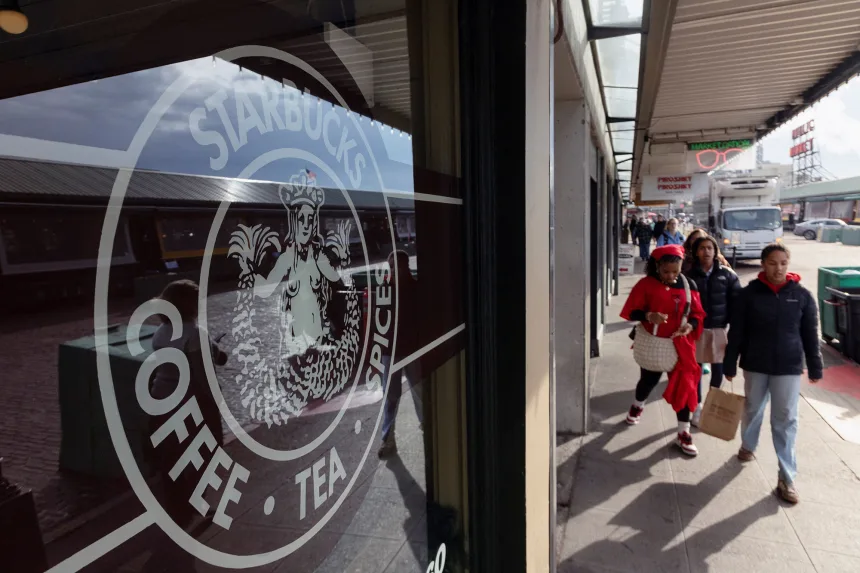
Nestlé Considers Selling Blue Bottle Coffee Stake

Dubai – Qahwa World

Sources indicate that the Swiss food and beverage conglomerate, Nestlé, is exploring the sale of its interest in Blue Bottle Coffee. The company is reportedly working with investment bank Morgan Stanley to manage the potential transaction.

Background on the Investment

2017 Acquisition: Nestlé secured a majority 68% share in Blue Bottle Coffee in 2017 for an estimated $425 million. At the time, this deal valued the specialized US coffee group at $700 million.

Initial Strategy: Announcing the acquisition, Nestlé positioned Blue Bottle as a gateway into the fast-growing, ‘super-premium’ US coffee shop segment, intended to complement their existing portfolio of brands like Nescafé and Nespresso.

Current Operations: California-based Blue Bottle, founded by James Freeman in 2002, currently runs over 100 high-end cafés in markets including the US, Japan, South Korea, China, Hong Kong, and Singapore. The company continued to operate as a stand-alone entity after the majority acquisition.

Rationale for Potential Divestment

The reported move to divest Blue Bottle comes amidst several strategic shifts at Nestlé:

Efficiency Drive: The potential divestiture aligns with a broader efficiency drive by new CEO Philipp Navratil to streamline the company’s portfolio and deliver $3.8 billion (CHF 3$ billion) in savings by 2028, amidst slowing sales and rising cost pressures. The focus is reportedly shifting toward more scalable, global brands rather than niche physical retail operations.

Potential Discount: Three sources cited by Reuters suggest that the boutique coffee operator might be sold at a lower valuation than its 2017 purchase price, indicating the investment has not generated sufficient gains.

Operational Challenges: While Blue Bottle has nearly doubled its store count since the acquisition, the move to sell highlights the complexities of operating a high-cost, high-service café business that prioritizes the specialized experience (like hand-drip extraction) over the high-volume efficiency that large corporations typically seek.

Strategic Options and Future Focus

Partial Sale: One source mentioned Nestlé might pursue a partial sale, specifically offloading the physical café business while retaining Blue Bottle’s intellectual property (IP).

Leveraging the Brand: This strategy would allow the company to continue selling packaged Blue Bottle-branded productssuch as wholebean coffee, ground coffee, and ready-to-drink (RTD) linesmirroring the model of its lucrative Global Coffee Alliance with Starbucks. The $$7.1$ billion Starbucks deal, finalized a year after the Blue Bottle acquisition, grants Nestlé exclusive rights to market and distribute Starbucks-branded retail packaged coffee products outside of Starbucks’ own stores.

The re-evaluation of its coffee investments by Nestlé is part of a wider industry trend. Other major conglomerates, such as Coca-Cola (which is also reportedly reviewing its Costa Coffee chain) and JAB Holding Company (reducing its stake in JDE Peet’s), have also been adjusting their large-scale coffee strategies to focus on packaged products and core businesses.

‘No Contract, No Coffee’: Bloomington Starbucks Workers Join National Strike

Dubai – Qahwa World

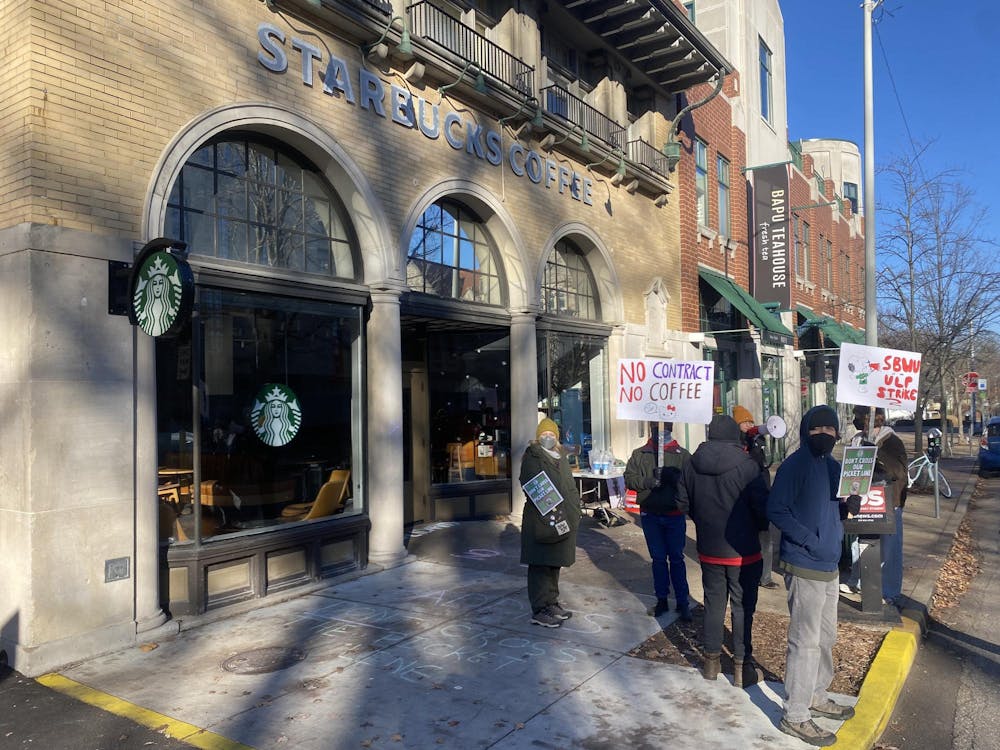
The Starbucks on Indiana Avenue in Bloomington closed for most of Friday as workers joined a nationwide strike protesting the lack of a contract and stalled wage negotiations between Starbucks CEO Brian Niccol and the labor union Starbucks Workers United.

Barista and union member Eliza Ortiz said employees decided to strike after monitoring early national walkouts to see if management would return to the bargaining table. “If they wanted to come back to the bargaining table, our strike would have ended. But they haven’t, so we are escalating,” she said.

Starbucks Workers United, founded in 2021, now represents over 11,000 baristas in 550 stores nationwide. The Indiana Avenue store joined 120 other locations in the strike, which began with a nationwide walkout on Nov. 13 during Starbucks’ seasonal “Red Cup Day.” Bloomington’s other unionized Starbucks on State Road 46 did not participate, according to barista Annabelle Purkey.

National framework bargaining began in April 2024, but negotiations stalled after Starbucks rejected the union’s economic proposals in December 2024. The union criticized Starbucks’ counteroffer for failing to raise wages in the first year or address key issues. They subsequently filed a national unfair labor practice charge, accusing the company of failing to bargain in good faith.

About seven picketers arrived at Indiana Avenue at 8 a.m. Friday with signs reading “No Contract, No Coffee” and “Baristas on Strike!” Ortiz used a bullhorn to engage passing drivers, while members of the Bloomington chapter of the Democratic Socialists of America joined to support the protest.

The store closed roughly four hours after opening when employees did not show up. A sign on the door directed customers to other locations without mentioning the strike.

Starbucks spokesperson Jaci Anderson said the Nov. 13 walkout affected less than 1% of stores. “Partner engagement is up, turnover is nearly half the industry average, and we get more than 1 million job applications a year. Any agreement needs to reflect the reality that Starbucks offers the best job in retail,” she said.

Indiana Avenue employees filed a petition to unionize in June 2024 due to inconsistent scheduling and low wages. Ortiz said employees often faced reduced hours and struggled to cover rent, groceries, and medications. She added that after organizing locally with Workers United, the group plans to picket daily until management addresses their demands.

What is the story behind “Functional Coffee” invading major coffee shops?

Dubai – Qahwa World

The British Broadcasting Corporation (BBC) published an investigation into the growing popularity of coffee beverages containing added ingredients that target specific health benefits, known as “Functional Coffee,” noting its shift from specialized health food stores to major coffee shop chains.

Functional Coffee is defined as coffee beverages to which additional ingredients are added, such as mushrooms (like Lion’s Mane, Reishi, and Chaga), protein, or collagen, aiming to provide consumers with benefits beyond the traditional caffeine boost.

The investigation indicates that consumers are seeking these additions to support clear focus, stable energy levels, or benefits related to skin and gut health.

In the context of this spread, Ellie Brecher, the nutritionist consulted by the BBC, affirms that Functional Coffee “is moving from specialized wellness corners to the mainstream,” as people have become “more interested in well-being, stress support, and energy stability.”

This transition is reflected in increased demand, where the health food chain Holland & Barrett nearly doubled its range of mushroom coffee drinks over the past year, while major stores like Marks & Spencer began selling Lion’s Mane latte beverages in their cafes.

The trend is not limited to that; coffee giants like Starbucks started selling protein-rich coffee in their US stores.

Furthermore, the Black Sheep Coffee chain launched its “Functional Wellness Latte” range, with Lion’s Mane latte sales being their best-seller, as customers add functional ingredients to approximately 15% of their total orders.

These striking figures confirm the findings of the food research company Tastewise, which found that the number of mushroom coffee drinks on UK cafe menus grew by 30% over the last year.

Regarding the product characteristics, the journalist who conducted the experiment reported that Lion’s Mane mushroom has a “subtle” flavor, and the Functional Coffee was not significantly different from a regular latte, despite her expecting the opposite.

As for the cost, these additions require an extra charge; at Black Sheep Coffee, adding Lion’s Mane mushroom costs about 99 pence (one British Pound), and collagen costs about £1.09.

In the context of health benefits, the investigation indicates that research on the effect of Lion’s Mane mushroom on brain function is “promising”; however, nutritionist Penny Suresh from the British Dietetics Association warns that the doses in commercial beverages are often “too low” to mimic the effects reported in research trials.

Nutritionist Ellie Brecher concludes her advice by stating: “If it makes you feel good and you have the budget for it, then go ahead and enjoy it… but remember the key is that it is an addition and not a magic solution.”

Functional Coffee Trend: The Rise of Mushroom & Protein Drinks in Major Cafes

For her part, in a special interview with “Qahwa World” commenting on these developments, Dr. Amani Adam said: “We have spent long years drinking coffee in the same traditional way. Although the global coffee market is growing from 2.2% to 4.3% annually, the more important thing is that health awareness is growing alongside it… because coffee has become part of a fast lifestyle filled with pressures and tension.”

She added: “From here, the role of Functional Coffee emerged – which has become a real solution to many problems associated with coffee drinking habits… such as tension, anxiety, and digestive and sleep disorders.”

She continued: “This vision is not new to us. For 4 years, I have seen the market moving in this direction, and that is why I started thinking about an awareness platform to clarify the benefits of coffee—especially Functional Coffee.”

She explained that the issue is not just ‘a healthy addition, nothing more.’ “Coffee itself contains more than a thousand bioactive compounds! This provides a huge opportunity to benefit from its chemical composition… transforming it from a regular caffeine dose… into a means to support focus, improve mood, and help the body perform better.”

According to Dr. Amani, this opened the door for powerful alternatives… such as Mushroom Coffee, which truly changed the concept of coffee for many people.

She concluded her statement by saying: “I believe that now is the appropriate time to understand the true role of coffee in our lives, and I thank Qahwa World for being among the first platforms to highlight everything new and important in the world of coffee.”

Global Coffee Market Value to Hit $186.5 Billion by 2033

The Fourth Wave Defines Trends and Shapes the Global Coffee Market Landscape

Dublin — Qahwa World

The global coffee industry is no longer just about waking up; it is about waking up to a new economic reality. According to a landmark report released yesterday by ResearchAndMarkets.com, the global coffee market is projected to surge from US$ 121.69 billion in 2024 to US$ 186.55 billion by 2033, driven by a compound annual growth rate (CAGR) of 4.86%.

While the headline figures suggest steady growth, the underlying currents reveal a volatile, transformative landscape. As we approach the end of 2025, the industry is navigating a “perfect storm” of climate-induced price shocks, a regulatory overhaul in Europe, and a massive consumption pivot toward the Asia-Pacific region.

The Asian Renaissance: Beyond the Tea Leaf

The report identifies the Asia Pacific (APAC) region as the primary engine of future growth, a trend confirmed by on-the-ground developments in late 2024 and 2025.

While Europe remains the revenue leader, Asia is where the volume is shifting. The “Third Wave” of coffeecharacterized by artisanal appreciation and traceabilityhas made landfall in traditionally tea-drinking nations.

India’s Awakening: The data aligns with India’s aggressive rise as both a consumer and exporter. Just this week, Starbucks reaffirmed its commitment to the subcontinent, celebrating its 500th store opening in Delhi NCR. Under the leadership of new global CEO Brian Niccol, the Seattle giant is doubling down on India, announcing a Farmer Support Partnership aiming to train 10,000 local farmers by 2030. This is a strategic hedge; as growth in China faces stiff competition from local price-warriors like Luckin Coffee, India represents the next great frontier for premiumization.

The Robusta Revival: Vietnam and Indonesia are capitalizing on the global shortage of Arabica beans. With climate change shrinking Arabica’s arable land, high-quality Asian Robusta (often called “Fine Robusta”) is entering the mainstream blends of major roasters to keep price points stable.

The Price of Sustainability: The EUDR Factor

The report highlights “sustainability benchmarking” as a key competitive differentiator, but in late 2025, sustainability is less about marketing and more about regulatory survival.

The industry is currently breathing a collectivealbeit temporarysigh of relief following the European Union’s decision to delay the Deforestation Regulation (EUDR) implementation to December 2026. This regulation, which bans the import of commodities linked to deforestation, threatened to disrupt supply chains for major players like Lavazza, JDE Peet’s, and Nestlé.

However, the delay is not a cancellation. Companies like Lavazza are aggressively pushing their “Roadmap to Zero,” aiming for carbon neutrality in Scope 1 and 2 emissions. The report notes that eco-friendly packaging and circular economy initiatives are no longer optional “nice-to-haves” but essential for maintaining market access in the premium European bloc.

Corporate Battlegrounds: The Fight for the Morning (and Afternoon)

The competitive landscape section of the report details a bifurcation in strategy among key players:

1. The Experience Economy: Starbucks vs. The World

Starbucks is currently executing its “Back to Starbucks” strategy. After a rocky 2024, the focus has returned to operational speed and the “human connection.” However, they face a new breed of competitor.

2. The Speed Demons: Dutch Bros

The report lists Dutch Bros as a key disruptor, and for good reason. The drive-thru chain has been on a tear in 2025, aggressively expanding its footprint with approximately 160 new shops opening this year alone. Their modelhigh-sugar, high-caffeine, cold beverages tailored for Gen Zis stealing the afternoon “treat” occasion from traditional coffee houses. Their target of 4,000 locations long-term suggests they are moving from a regional cult favorite to a national heavyweight.

3. The At-Home Revolution: Nestlé

Nestlé continues to dominate the at-home segment. With inflation keeping some consumers out of cafes, the “coffee shop at home” trend remains sticky. Nestlé’s 2025 innovation pipeline has heavily favored cold brew solutions and functional coffees (blends with added vitamins or adaptogens), catering to health-conscious millennials who want cafe quality at kitchen table prices.

Outlook: The Tech-Infused Bean

Looking toward 2033, the report suggests that technology will play a pivotal role. From AI-driven agronomy helping farmers navigate erratic weather patterns in Brazil to precision brewing systems in cafes, the “Fourth Wave” of coffee will be defined by data.

As the market marches toward that $186.55 billion valuation, the winners will be those who can balance the rising cost of green coffee (up 30-40% in mid-2025) with the consumer’s demand for ethics, quality, and convenience.

Starbucks aims to reach 1,000 stores in India by 2028

Dubai – Qahwa World

Starbucks’ global leadership has reaffirmed India’s position as one of the company’s most dynamic international markets, announcing new growth targets and fresh support for the country’s coffee sector.

The company’s Chief Executive, Brian Niccol, said in an interview with CNBC TV18 that India is now among the fastest-growing territories for the brand. The joint venture between the US coffee chain and Tata Consumer Products is expected to reach 500 stores this month, marked by the opening of a second Reserve location in the Delhi NCR area.

Niccol confirmed that the long-term ambition is to expand the network to 1,000 stores by 2028, emphasizing that success depends on pairing the company’s global expertise with a strong local presence. He highlighted that the strategy includes rolling out more premium formats aligned with the wider “Back to Starbucks” roadmap.

Starbucks first entered India in 2012 with a store in Mumbai and established a roasting facility in Karnataka the following year.

Alongside its retail growth plans, Starbucks also announced a new initiative aimed at strengthening India’s coffee value chain. Through the newly launched Farmer Support Partnership, the company’s global procurement and trading arm—Starbucks Coffee Trading Company—will work with growers in major producing regions including Karnataka, Tamil Nadu, Andhra Pradesh, and Kerala. The programme is designed to create technical model farms, promote best agricultural practices, and connect local producers with Starbucks’ global farming network.

The initiative will also support trials of new coffee varietals and collaborate with existing Farmer Support Centers located in countries such as Indonesia, China, and Costa Rica. Niccol said the partnership aims to train 10,000 farmers, combining Starbucks’ agronomy knowledge with Tata Starbucks’ understanding of local conditions.

Tata Consumer Products recently reported that Tata Starbucks returned to like-for-like sales growth for the first time in a year, supported in part by a government reduction in food and beverage taxes. The brand recorded 8% revenue growth in the second quarter ending 30 September 2025.

‘No Contract, No Coffee’: Why Starbucks Workers Are Striking Across the US

Dubai – Qahwa World

Unionized employees at Starbucks are intensifying a nationwide strike, warning it could become the largest and longest in the company’s history. Workers are urging customers to avoid stores while contract negotiations remain unresolved.

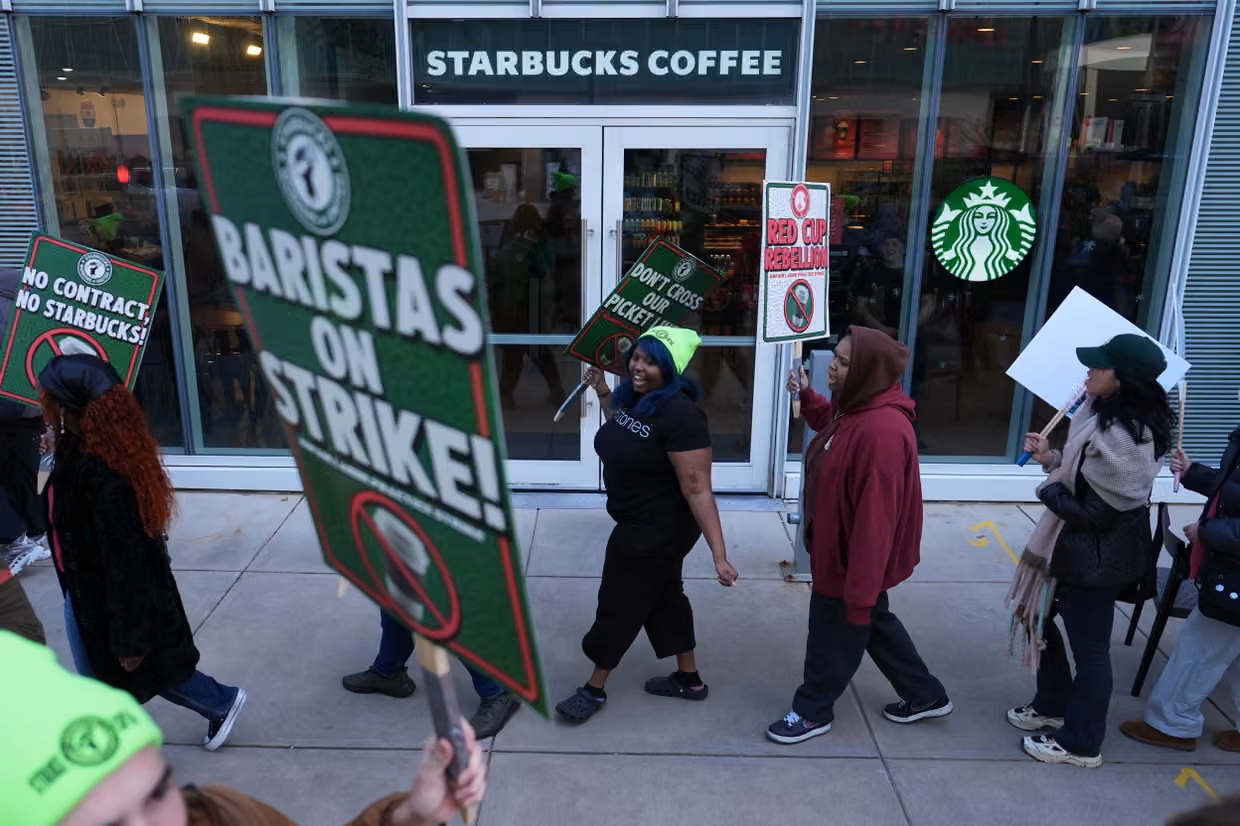
Since November 13, more than 1,000 baristas in over 40 cities have participated in the strike, which began on Starbucks’ “Red Cup Day”—a key moment marking the start of the holiday season. Discussions over the company’s first union contract stalled in recent months, with both Starbucks and the union attributing the deadlock to the other party.

Starbucks Workers United, representing roughly 11,000 employees at more than 550 stores, has also filed numerous unfair labor practice claims with the National Labor Relations Board, alleging that Starbucks has not negotiated in good faith.

Dachi Spoltore, a striking barista from Pittsburgh, emphasized the stakes: “We take pride in our work, but we are tired of being treated as replaceable. Our livelihoods and jobs are on the line. This strike is about securing fair contracts and ensuring our work is valued.”

The unionization effort began in December 2021, when a Buffalo store became the first to vote in favor of union representation. Since then, hundreds of additional stores have joined, making this one of the most prominent labor movements in recent US history. Starbucks has long resisted unionization, arguing that direct employee engagement is the most effective approach.

A Starbucks spokesperson said the strike has not significantly disrupted operations, noting that more than 99% of stores remained open during Red Cup Day, which achieved record sales. The company also highlighted the benefits offered to employees, including average hourly pay exceeding $30.

Starbucks is also navigating wider business pressures, including rising coffee prices, slower consumer demand, declining stock performance, and leadership transitions. Current CEO Brian Niccol has introduced job cuts and store closures as part of a “Back to Starbucks” initiative.

The union reports that most of the 65 locations affected by the strike have had to close temporarily due to staffing shortages. About 92% of union members voted in favor of the open-ended strike. The “No Contract, No Coffee” campaign could expand if progress in contract talks remains stalled.

Political leaders have publicly backed the striking workers. New York City mayor-elect Zohran Mamdani and Seattle mayor-elect Katie Wilson both encouraged boycotts, while dozens of US senators and congressional representatives sent letters urging Starbucks to reach an agreement with the union.

Global Coffee Giants Face Slower Growth and Rising Costs

Dubai – Qahwa World

Leading coffee companies are encountering a slowdown in consumer demand. Poor harvests, trade tariffs, and rising costs have weakened coffee consumption in Western markets, slowing sales growth and putting pressure on company valuations in the $400 billion industry. Expansion into emerging markets like China is seen as the next step, but it will likely be a costly and complex effort.

The modern coffee surge began in the late 1990s, peaking just before the pandemic. Major chains like Starbucks spread rapidly through Western cities, followed by the emergence of numerous specialty coffee shops. Companies such as Nestlé expanded their coffee lines to capitalize on growing demand for a high-margin beverage.

In 2018, Nestlé acquired the rights to sell Starbucks-branded products outside the U.S. for $7 billion. That same year, JAB, owner of JDE Peets, invested $2 billion to acquire a controlling stake in Pret A Manger. Coca-Cola also purchased Costa for $5 billion, describing the chain as a platform to broaden coffee sales from supermarkets to automated vending.

Yet, recent years have seen challenges mount. Coffee prices have surged, making popular drinks like cappuccinos and lattes more expensive for consumers, particularly in inflation-affected regions. In the U.S., ground coffee reached a record $9 per pound, double the price from 2021, and coffee prices increased 9% in the past year, well above overall inflation.

Future production faces risks from extreme weather events—droughts, floods, and frost—in key coffee-growing countries such as Brazil, Indonesia, and Vietnam. Rising labor costs and other operational expenses now make up roughly 90% of the cost of a cup of coffee. Tariffs on countries producing coffee pods, including Switzerland and Brazil, further strain margins, though recent U.S. agreements with Argentina, Ecuador, Guatemala, and El Salvador may ease some pressures.

The sector is seeing major shifts. Starbucks, valued at $100 billion, has faced profit warnings and is closing about 1% of its stores under CEO Brian Niccol. Keurig Dr Pepper’s $18 billion purchase of JDE Peets is designed to separate higher-margin beverage sales from lower-margin coffee operations. Pret A Manger also recorded a significant write-down, and Coca-Cola has considered divesting Costa due to underperformance.

Nestlé, whose at-home coffee products tend to be smaller and lower in caffeine content, appears better positioned against inflation. Still, the bigger challenge is sustaining growth in already crowded markets. In the U.S., Starbucks and Dunkin’ Donuts operate nearly 30,000 stores combined, while in the U.K., 98 million cups of coffee are consumed daily, with almost one in five people visiting a coffee shop each day.

To find growth, companies are increasingly turning to China and Latin America. Nestlé’s new CEO, Philipp Navratil, plans to introduce products in these regions, and Starbucks recently announced 145 new stores across Latin America and the Caribbean. However, income levels remain modest in these markets, competition is intense, and marketing costs will likely rise, limiting profitability. Starbucks’ experience in China demonstrates the difficulty of competing with local operators and imitations.

Expanding beyond saturated Western markets is logical, but the path forward may mean slower growth and smaller margins for the coffee industry.

Starbucks Faces Largest Labor Strike in U.S. History

Dubai – Qahwa World

Starbucks workers across the United States staged a coordinated strike on Thursday, marking what union leaders say could become the largest and longest unfair labor practice strike in the company’s history. The action began at 65 stores in 40 cities and has the potential to expand to as many as 550 locations in the coming weeks. The union, Starbucks Workers United, represents a growing segment of baristas and store employees pushing for better pay, hours, and protections against what they describe as persistent unfair labor practices.

Chanting slogans such as “What’s outrageous? Starbucks wages! What’s appalling? Starbucks stalling! What’s disgusting? Union busting!”, the striking workers highlighted longstanding grievances with corporate policies. Many of the early pickets coincided with Starbucks’ annual promotional “Red Cup Day,” a high-traffic event notorious for long lines and overworked staff. Sabina Aguirre, a barista from Columbus, Ohio, told Labor Notes that “Red Cup Day is one of the busiest days for Starbucks all year. It’s so well known to be a day of overwork and frustration on behalf of the employees.”

The strike is being supported by other unions as well. At a Brooklyn, New York location, striking baristas were joined by members of Laborers Local 79, the Communications Workers, the United Federation of Teachers, and building workers from SEIU Local 32BJ. The coordinated solidarity reflects a broader push by labor organizations to strengthen collective action across sectors.

Although Starbucks Workers United has successfully organized 650 stores, the company operates roughly 10,000 locations in the United States. To amplify pressure, the union is calling on the public to avoid all Starbucks stores, whether unionized or not, during the strike, and to communicate to the company that current labor conditions are unacceptable.

Negotiations between Starbucks and unionized workers began in February 2024. These discussions followed years of alleged unfair labor practices that started in 2021, when the first Buffalo stores unionized under Starbucks Workers United, a division of Workers United/SEIU. Progress toward a formal contract initially seemed promising but stalled after the company appointed a new CEO, Brian Niccol, in September 2024.

Tyler Cochran, a barista in Manhattan, noted, “So much progress was made in early 2024, before Brian Niccol took over. We knew the economic portion of bargaining would be the most challenging, but the timing coinciding with a new CEO really slowed things down.” Niccol, who previously worked at Chipotle, has a track record that includes closing the first store to seek union recognition at his former company, later settling for $240,000 with the National Labor Relations Board. Cochran highlighted the pay gap, noting that Niccol earns 666 times the salary of the average Starbucks barista.

Baristas say that while Starbucks has invested heavily in store refurbishments and promotional campaigns aimed at drawing customers back, staffing remains the most critical issue affecting operations and customer experience. “Lines are often out the door,” said Aguirre. “The main thing that would make stores more appealing to customers is adequate staffing. Nothing else can replace that.”

Equipment issues have further strained employees. Reports from striking workers include malfunctioning pitcher washers, leaking cold brew machines, and unrepaired refrigerators, sometimes forcing staff to store milk at room temperature. Beyond operational challenges, the union alleges that Starbucks continues to engage in unfair labor practices, including illegal monitoring and punitive actions against employees involved in union activities, along with unresolved workplace safety violations.

Compensation is another central grievance. Starbucks pays most baristas between $15 and $19 per hour, depending on location and local minimum wage laws. Aguirre, for example, earns $15.50 per hour in Columbus. Many employees struggle to qualify for health insurance or other benefits because they do not consistently receive enough hours. Even those who do qualify can lose coverage if their weekly hours fall below the minimum threshold over a six-month period.

Paradoxically, while baristas are seeking more hours and predictable scheduling, understaffing persists. “It feels like we’re constantly being asked to do more with less,” said Aguirre. “Management assumes that by placing time constraints on orders, problems will be solved automatically. In reality, staffing is the only solution to these persistent issues.”

The strike is being framed not only as a fight for fair wages and working conditions but also as a broader stand against corporate practices that baristas view as exploitative. “It’s about dignity at work,” Cochran emphasized. “We’re asking for the basic ability to support ourselves without relying on food stamps and without sacrificing health coverage or safe working conditions.”

As the strike unfolds, Starbucks Workers United continues to mobilize public support and encourage participation in picket lines. The union maintains that its goal is a comprehensive contract addressing pay, scheduling, equipment maintenance, and protections against unfair labor practices, aiming to set a precedent for the treatment of retail workers nationwide.

For updates and ways to support the picket lines, the union directs the public to nocontractnocoffee.org


Starbucks Renews Its Trademark in Russia as Coca-Cola Follows Suit

Moscow — November 5, 2025.

Starbucks has officially renewed its trademark rights in Russia, despite having fully exited the Russian market in 2022.

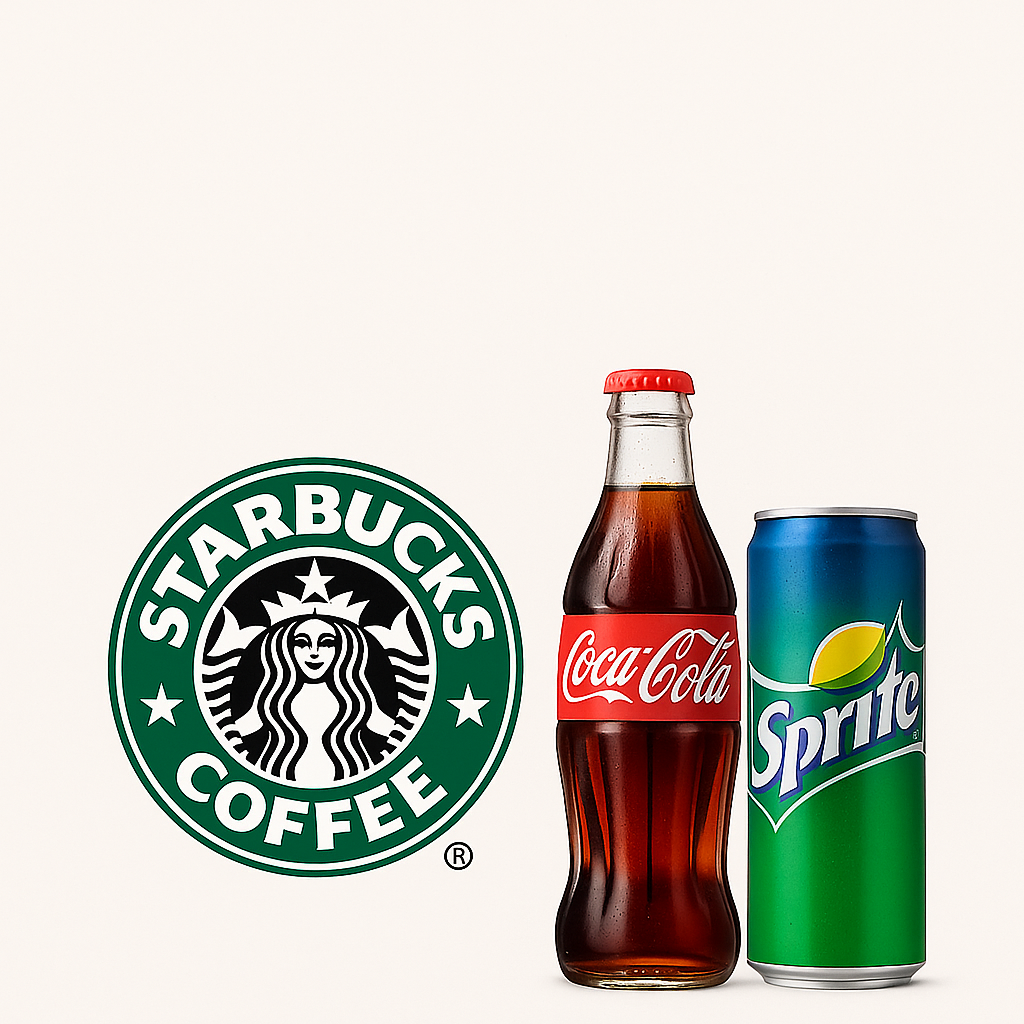
According to RIA Novosti, the Russian Federal Service for Intellectual Property (Rospatent) registered the company’s iconic siren logo under Class 21 of the International Classification of Goods and Services, which covers coffee makers, tableware, coffee filters, and related accessories. The registration grants Starbucks exclusive rights for 9.5 years — until May 2034 — allowing the company to legally provide coffee services, sell beverages, and manage loyalty programs.

At the same time, Coca-Cola renewed its trademarks for “Coca-Cola” and “Sprite” under Class 32 (non-alcoholic beverages). The application, initially filed on April 23, 2025, ensures protection of the brands in Russia until 2035.

Experts note that these actions do not necessarily indicate a return to the Russian market. Rospatent head Yuri Zubov stated that such registrations are aimed at “maintaining reputation, brand resilience, and ensuring legal protection.” Legal expert Yuri Fedyukin added that companies are securing their rights to prevent unauthorized use of their trademarks within Russia.

Following the 2022 events in Ukraine, both Starbucks and Coca-Cola, along with many other Western corporations, suspended their operations in Russia. Coca-Cola’s production facilities were repurposed to manufacture drinks under the “Dobry” brand, while Starbucks cafés were rebranded and reopened as Stars Coffee, managed by Russian entrepreneurs Timati and Anton Pinsky.

Starbucks Sells 60% Stake in China Business for $4 Billion

Dubai – Qahwa World

Starbucks has reached a major agreement to sell a 60 percent controlling stake in its China operations to Hong Kong-based private-equity firm Boyu Capital for $4 billion. The partnership marks one of the largest foreign coffee-sector transactions in Asia, positioning both companies to accelerate Starbucks’ expansion in the world’s biggest branded coffee market.

China remains Starbucks’ most strategic growth region outside the United States. The company currently operates around 8,000 stores nationwide and aims to scale that number to 20,000 in the coming years. Boyu’s local experience and financial backing are expected to support Starbucks’ next phase of growth, particularly in lower-tier Chinese cities where coffee culture is rapidly expanding.

Under the deal, Starbucks will keep its Shanghai headquarters and retain 40 percent ownership of the new joint venture. It will continue to license its brand and intellectual property while maintaining control over store design, training standards, and product development.

Brian Niccol, Chairman and CEO of Starbucks, said the collaboration would strengthen the company’s presence in China:

“Boyu’s deep understanding of Chinese consumers and regional markets will help us reach new communities while staying true to our values of exceptional partner experience and world-class customer service.”

Founded in 2011, Boyu Capital manages investments across Hong Kong, mainland China, and Singapore. Its portfolio exceeds 200 companies, including leading Chinese names such as Mixue Ice Cream and Alibaba Group—one of Starbucks’ delivery partners in China.

Alex Wong, Partner at Boyu Capital, described the partnership as “a shared belief in the strength of the Starbucks brand and a commitment to local innovation and customer connection.”

Starbucks’ decision follows months of speculation since late 2024 about a potential sale of its China division. The move comes as the company continues to recover from pandemic-era declines, reporting four consecutive quarters of growth in 2025. In its fiscal fourth quarter ending September 28, 2025, Starbucks recorded $831.6 million in China sales, a 6 percent increase year on year.

With this new alliance, Starbucks seeks to reinforce its market leadership amid mounting competition from domestic rivals such as Luckin Coffee and Cotti Coffee—companies that have gained ground with value-driven strategies and aggressive store rollouts.

US Roasters Tear Through Coffee Stocks Waiting for Brazil Trade Deal

New York – Qahwa World

Coffee roasters in the United States are depleting their stockpiles while waiting for the outcome of ongoing U.S.–Brazil trade negotiations — talks that could determine whether they must continue paying higher prices for alternative coffee sources.

Brazil, which supplies about one-third of the beans consumed by the world’s largest coffee market, has been effectively priced out of the U.S. since August, when President Donald Trump’s administration imposed a 50% import tariff on Brazilian coffee — a move widely viewed as politically motivated.

The tariff was seen as retaliation against Brazil’s left-wing President Luiz Inacio Lula da Silva, following tensions with the U.S. over his predecessor Jair Bolsonaro. The measure has disrupted the $340-billion U.S. coffee industry, leaving importers with stranded shipments, roasters cancelling deliveries, and consumers paying up to 40% more for coffee.

Industry estimates suggest U.S. coffee stockpiles will reach minimal levels by December. Some importers were forced to pay the 50% duty on cargoes booked before the tariff, while others redirected shipments to avoid it.

Steven Walter Thomas, owner of U.S. importer Lucatelli Coffee, said the tariff is “punitive, political, and personal — between Trump and Lula.” His company stored $720,000 worth of Brazilian coffee in a bonded warehouse in Florida to delay import taxes, while diverting some shipments to Canada to avoid the tariff, despite higher transport costs.

The cost surge has also squeezed major players such as Starbucks, whose CEO Cathy Smith said high coffee prices will remain a “headwind” through at least mid-2026.

Smaller roasters are feeling the pressure too. Downeast Coffee Roasters in Rhode Island said it managed to cancel some Brazilian orders but still faces rising costs for alternatives. Cancellation fees reached $20–$25 per 60-kg bag, on cargoes worth about $250,000 per container.

With Brazil largely off the U.S. market, prices for substitutes from Colombia, Mexico, and Central America have risen around 10%, while Brazilian prices have fallen about 5%.

Retail coffee prices in the U.S. climbed 41% year-on-year in September, reaching an average of $9.14 per pound, according to the Bureau of Labor Statistics — a key driver of food inflation. Tight supply and record-high Arabica futures on the ICE exchange continue to fuel the trend.

“I’m not looking too much into brands anymore — I’m going for the deals,” said Sherryl Legyin, a cashier from New Jersey.
“It used to be $6 or $7, now it’s $11,” added travel agent Yasmin Vazquez.

Traders estimate U.S. stocks at about 4 million 60-kg bags, likely to drop to 2.5–3 million by December — close to minimum operational levels. The U.S. typically consumes 25 million bags per year, with 8 million coming from Brazil.

President Lula said he remains optimistic that a trade deal with Washington could come “faster than anyone thinks.”
Trump responded cautiously: “I don’t know if anything’s going to happen, but we’ll see.”

Until then, the price of an American cup of coffee is expected to stay high.

Starbucks to Hire Thousands of New Managers by 2026

Seattle – Qahwa World

Starbucks has unveiled a large-scale hiring initiative to appoint full-time Assistant Store Managers (ASMs) in all of its company-operated stores across the United States and Canada by the end of 2026. The plan represents one of the most significant structural workforce expansions in the company’s recent history.

At present, only about 20 % of the 11,400 company-owned Starbucks outlets in North America have an ASM. Most of these roles have been part-time and experience relatively high turnover. Moving forward, Starbucks intends to assign a full-time ASM to every location, creating roughly 9,000 new positions across its network.

The company began piloting the full-time version of this role in mid-2025 at select stores in California, Illinois, and Texas. During that trial, 62 full-time ASMs were appointed — 90 % of them promoted from within. Starbucks now plans to maintain that internal-promotion rate as it scales up the initiative, aiming for 90 % of all retail leadership roles to be filled by existing employees by 2028.

According to Sara Kelly, Starbucks’ Chief Partner Officer, the ASM position will help store managers devote more time to coaching teams and elevating the customer experience — a key objective of the company’s “Back to Starbucks” plan.
“When we have strong, stable leaders throughout every shift, everything improves — from partner satisfaction to customer connection and overall store performance,” Kelly said in the company’s statement.

The new full-time ASMs will assist store managers with day-to-day operations such as staff scheduling, inventory control, and store coordination. Starbucks expects the added managerial stability to enhance workflow efficiency and strengthen in-store culture.

This hiring campaign coincides with CEO Brian Niccol’s broader effort to revitalize Starbucks’ brand identity and restore the “coffeehouse atmosphere” that helped make the company famous. Under his leadership, the chain has been phasing out stores focused purely on mobile orders and pickup, which Niccol described as “overly transactional.”

In July 2025, Starbucks announced plans to shut down all pickup-only locations in the U.S. by year-end. Then, in September, Niccol revealed that hundreds of underperforming stores across North America would close because they were not suitable for remodeling within the “Back to Starbucks” framework.

Introduced in October 2024, the strategy focuses on bringing warmth and comfort back to the brand’s physical spaces. Newly redesigned stores in New York and Southern California — featuring softer lighting, cozy seating, vibrant artwork, and ceramic serveware — have shown early signs of higher customer traffic and longer visits. Encouraged by those results, Starbucks plans to refurbish around 1,000 U.S. outlets, about 10 % of its company-owned stores, by July 2026.

The announcement also follows Starbucks’ recent financial update. For the third quarter ending 29 June 2025, the company reported U.S. revenue of $6.45 billion — up 1 % year-over-year — despite a 2 % decline in comparable-store sales. The coffee chain is scheduled to release its fourth-quarter and full-year earnings on 29 October 2025.

The hiring surge marks a notable contrast to the store closures outlined earlier in the year. While trimming less viable locations, Starbucks is simultaneously investing in people and training to reinforce its long-term operational foundation. Executives say the move reflects confidence in the brand’s future and a belief that improving leadership at every level will ultimately drive better results for both employees and customers.