Top 10 countries in coffee production and consumption

Coffee has become a part of the daily life of hundreds of millions of people around the world for mood and health purposes. Knowing the top coffee-producing and consuming countries in the world may be something new for many.

Before we begin, it might be helpful to mention that there are two types of coffee: Arabica and Robusta. So, what is the difference between Arabica and Robusta?

A report published by “The Roasters Pack,” a coffee news website, highlighted the differences between Arabica and Robusta as follows:

Taste: Robusta coffee has a bitter taste due to its higher caffeine content and chlorogenic acid compared to Arabica coffee, which has a more moderate taste.

Caffeine: Robusta beans contain up to 2.7% caffeine compared to only 1.5% in Arabica beans.

Fat and Sugar: Arabica coffee contains 60% more fat than Robusta, and about double the amount of sugar. This might be one of the factors why many people prefer the taste of Arabica.

Price: The price of Robusta coffee is about half that of Arabica coffee in the markets.

Yield: The higher caffeine level in Robusta coffee makes it more tolerant and resistant to pests on the farm, reducing the cost of cultivating Robusta compared to Arabica.

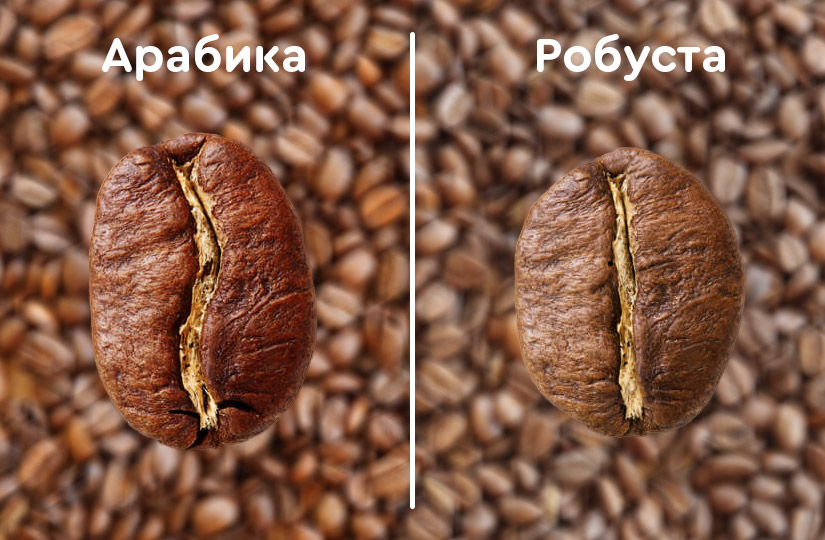
Shape: Arabica beans are oval-shaped, while Robusta beans are round. This is because the Arabica tree is shorter than the Robusta, resulting in oval-shaped beans.

Tree Height: Arabica trees reach between 2.5 and 4.5 meters, while Robusta trees range from 4.5 to 6 meters in height.

Chlorogenic Acid: The percentage of this acid plays a crucial role in the taste of coffee. It ranges from 7% to 10% in Robusta compared to 5.5% to 8% in Arabica, explaining the bitter taste of the former.

Production: The total coffee production in the world is divided into 75% Arabica and 25% Robusta.

Top Coffee-Producing Countries: In December of last year, the U.S. Department of Agriculture published a detailed report ranking the top coffee-producing countries by both Arabica and Robusta types.

Here is the ranking of the world’s top Arabica coffee-producing countries in the 2022/23 season according to the U.S. Department of Agriculture:

  1. Brazil: 39.8 million bags (1 bag = 60 kilograms)
  2. Colombia: 10.7 million bags
  3. Ethiopia: 7.3 million bags
  4. Honduras: 5.7 million bags
  5. Peru: 3.4 million bags
  6. Guatemala: 3.15 million bags
  7. Mexico: 3 million bags
  8. Nicaragua: 2.5 million bags
  9. India: 1.667 million bags
  10. China: 1.6 million bags

The ranking of the world’s top Robusta coffee-producing countries in the 2022/2023 season according to the U.S. Department of Agriculture is as follows:

  1. Vietnam: 26.3 million bags
  2. Brazil: 22.8 million bags
  3. Indonesia: 10.5 million bags
  4. Uganda: 5.575 million bags
  5. India: 4.2 million bags
  6. Malaysia: 1 million bags
  7. Ivory Coast: 1.050 million bags
  8. Thailand: 700 thousand bags
  9. Mexico: 545 thousand bags
  10. Tanzania: 520 thousand bags

The ranking of the world’s top coffee-producing countries (Arabica and Robusta) in the 2022/23 season according to the U.S. Department of Agriculture is as follows:

  1. Brazil: 62.6 million bags
  2. Vietnam: 27.2 million bags
  3. Indonesia: 11.85 million bags
  4. Colombia: 10.7 million bags
  5. Ethiopia: 7.3 million bags
  6. Uganda: 6.565 million bags
  7. India: 5.867 million bags
  8. Honduras: 5.7 million bags
  9. Mexico: 3.545 million bags
  10. Peru: 3.4 million bags

Production Outlook for 2024: The report predicts that the total coffee production, for both types, will reach 171.425 million bags by December 2024, with Brazil leading the list of producing countries with a total of 66.3 million bags, followed by Vietnam with 27.5 million bags, and then Colombia with 11.5 million bags.

The Top Coffee-Exporting Countries by Value:

The famous American statistics website “Statista” published a list of the top coffee-exporting countries in 2023 as follows:

  1. Brazil: $7.4 billion
  2. Switzerland: $3.6 billion
  3. Germany: $3.5 billion
  4. Netherlands: $1.199 billion
  5. United States: $1.193 billion
  6. Canada: $763 million
  7. Poland: $538 million
  8. Mexico: $433 million
  9. United Kingdom: $234 million
  10. Canada: $228 million

The World’s Top Coffee-Consuming Nations:

The statistics website “World of Statistics” posted a list of the world’s top coffee-consuming nations in 2023 on its official Twitter page as follows:

  1. Finland: Average annual coffee consumption per person is 9.6 kilograms.
  2. Norway: 7.2 kilograms
  3. Netherlands: 6.7 kilograms
  4. Sweden: 6.5 kilograms
  5. Slovenia: 6.1 kilograms
  6. Australia: 5.5 kilograms
  7. Serbia: 5.4 kilograms
  8. Denmark: 5.3 kilograms
  9. Germany: 5.2 kilograms
  10. Belgium: 4.9 kilograms

Top Coffee-Consuming Arab Countries: According to the 2020/2021 statistics released by the International Coffee Organization, the ranking of the top coffee-consuming Arab countries is as follows:

• Algeria: 2.13 million bags. • Egypt: 1.27 million bags. • Saudi Arabia: 1.25 million bags. • Morocco: 780 thousand bags. • Sudan: 702 thousand bags. • Lebanon: 452 thousand bags.

Arabica Coffee Futures Trading at 18-Month Highs

Arabica coffee futures trading has reached near its highest level since October 2022 as hedging funds exiting the cocoa market are now piling into coffee.

According to Bloomberg, money managers increased their bullish bets to an all-time high in the week ended April 2, according to the latest data from the Commodity Futures Trading Commission. Meanwhile, investors reduced their bullish bets on cocoa after a record rally saw prices more than double this year.

Elia Bezov, a coffee trader at Sukafina, said, “We are currently looking at the largest net speculative position in coffee futures history without a significant story to justify it, outside of the cocoa market, which is insane.” “However, once the tap is turned off, it takes time for speculative interest to wane and reverse.”

Marcelo Moreira, who tracks coffee markets at Archer Consulting, mentioned that investor optimism about Arabica coffee is also supported by technical factors. The last time futures reached the current level was in 2022, and the upward movement only stopped after reaching its peak at $2.4 per pound. He added, “This means there is no short-term resistance.”

The recent surge in Arabica coffee futures has helped widen the contract’s premium over cheaper Robusta coffee. However, the historical spread between the two varieties remains low, indicating that roasters are likely to replace Robusta with Arabica in their blends.

Comprehensive Comparison Between Arabica and Robusta Coffee and Which One is Suitable for You!

The Russian website “TEA.ru” published a comprehensive analysis by coffee experts, including a detailed comparison between the two most famous types of coffee in the world, Arabica and Robusta, including many characteristics that distinguish the two types from various aspects.

The analysis concluded by explaining many aspects that make either of the two types suitable for this or that person, and due to the importance of this analysis, we are publishing a summary of it.

“Arabica or Robusta?” – An eternal question pondered by coffee enthusiasts. As is well known, there is no final answer to it, but we will try to explain the difference between these two types simply and clearly.

Fact: Without Robusta, Arabica wouldn’t have appeared

There are several types of coffee in the world, but in retail stores, you will only find two types – Arabica and Robusta with various variations. And their blend. At the same time, many tend to treat the first type with respect and the second with a hint of disdain. This distinction is particularly noticeable in sales figures: Arabica is demanded at a rate close to double that of Robusta (60-70% of global production) compared to Robusta (30-40%). However, Arabica wouldn’t have appeared at all without Robusta!

Arabica (also known as Arabian coffee) is the result of crossing Robusta with a rare and unprofitable species for industrial agriculture called Eugenioides.

Arabica coffee trees require careful care, fertilizers, and high slopes – from 600 meters above sea level, while Robusta (Congolese coffee), on the other hand, mostly only needs warmth.

Taste

In terms of taste, Arabica takes the lead by a wide margin, leaving Robusta far behind. This is because Arabica coffee beans contain half the sugars compared to Robusta. The drink turns sweeter, even if sweeteners are not added. Moreover, its taste profile varies greatly due to a larger number of fruity acids, giving Arabica a noticeable acidity logically.

Robusta, on the other hand, is always about rich bitterness, due to the high content of caffeine and tannins. The coffee made from Robusta is smooth, without surprises from floral to citrus. It contains a lot of chlorogenic acid, but acidic taste is not its characteristic.

Price

As for the price, Robusta wins. Since the conditions for growing this variety do not require special efforts and financial investments, the price of the final product also differs significantly from the stubborn Arabica cost.

Bean Characteristics

Bean characteristics are not very important, but they are interesting. Robusta coffee beans can be easily distinguished from Arabica, especially if they are placed side by side. Robusta coffee beans appear smaller in size, more round, and multicolored, while Arabica stands out long, large, and with equal “tan”.

What is the ideal coffee for you? Arabica or Robusta?

Based on all the above, we can present you with some characteristics that can indicate the most suitable coffee for you as follows:

Arabica coffee will suit you more if:

  • Natural sweetness is important to you.
  • You prefer rich flavors.
  • You don’t mind acidity.
  • You don’t need a lot of caffeine.
  • You prepare coffee in the Turkish, French, or filter method.
  • The presence of distinctive foam (crema) is not important to you.
  • You are willing to pay the price.

Robusta coffee will suit you more if:

  • You always put sugar in your coffee anyway.
  • You don’t distinguish greatly between fine coffee flavors.
  • You don’t like acidic coffee.
  • You need a good dose of caffeine to increase productivity.
  • You prepare coffee in an espresso machine.
  • You like beautiful, dense foam.
  • You don’t want to pay a higher price.

Away from all that has been mentioned above, you can always reach a compromise, as many producing companies release coffee blends that mix Arabica and Robusta in different proportions (and sometimes other types, such as Eugenioides or Liberica). Thus, the coffee becomes more exciting, hybrid. The more Arabica in it, the sweeter and more acidic it becomes at the same time. Controlling Robusta gives you a strong stimulant drink.

Arabica Coffee Surges Amid Brazil Crop Damage Concerns

Arabica coffee futures surged on Friday amidst worries over Brazil’s coffee crops, while robusta prices fluctuated.

Coffee prices ended the session with arabica reaching a new 5-3/4 month high. Concerns mounted as heavy rainfall in Brazil’s coffee-growing regions raised fears of crop damage. Somar Meteorologia’s report indicated a significant increase in rainfall in Brazil’s Minas Gerais region, which accounts for a substantial portion of the country’s arabica crop.

Meanwhile, worries persisted over the robusta coffee production in Vietnam due to excessive dryness. Although robusta prices hit an all-time high earlier, profit-taking ensued after ICE-monitored inventories rose to a 2-1/2 month high.

The current El Nino weather event is contributing to bullish sentiments for coffee prices, with its impact on Brazil’s coffee production and Vietnam’s coffee areas noted. Tight supplies from Vietnam further bolstered prices, with projections indicating a significant drop in coffee production for the upcoming crop year.

However, a rebound in Vietnam’s coffee exports tempered some of the bullish momentum. Additionally, Rabobank’s prediction of a surplus for the upcoming marketing year provided a bearish outlook, albeit with adjustments to production forecasts.

Despite rebounding from historic lows, coffee inventories remain a point of interest, particularly with larger exports from Brazil. Recent reports highlight substantial increases in global coffee exports, adding to market dynamics.

Forecasts from the International Coffee Organization and the USDA’s Foreign Agriculture Service shed light on production and consumption trends, with Brazil expected to play a significant role in arabica production.

Overall, the coffee market continues to navigate through a complex interplay of factors, with Brazil’s crop concerns taking center stage amidst broader global dynamics.