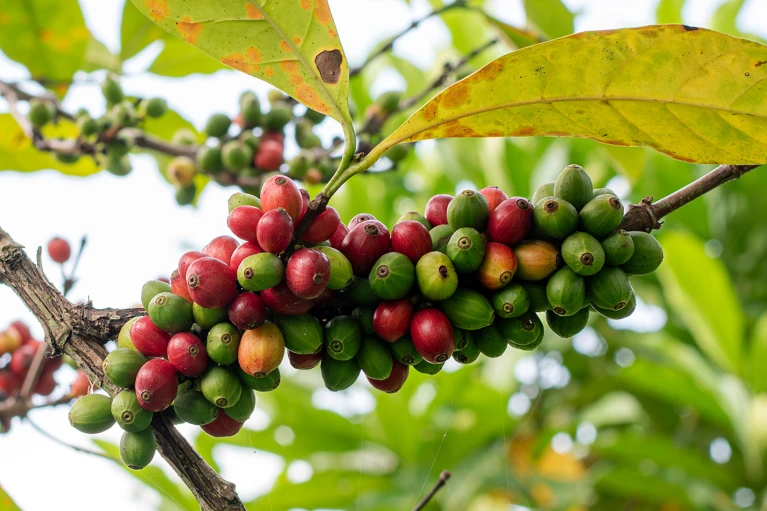
Coffee Prices Jump as Persistent Rain in Brazil Delays the Coffee Harvest

Source: Barchart (adapted) |
Author: Coffee World |
Date: June 12, 2026

Coffee Prices Jump as Persistent Rain in Brazil Delays the Coffee Harvest

Key Takeaways:

  • July arabica rose 2.17% and July robusta rose 3.19% to one‑week highs.
  • Moderate to heavy rain is forecast across Brazil’s coffee regions this week and may extend into next week.
  • ICE arabica inventories fell to a 6.5‑month low of 402,709 bags.
  • Concerns over a “Super El Niño” that could damage Brazil’s 2026/27 coffee crop are supporting prices.
  • The USDA FAS forecasts a record Brazil 2026/27 crop of 71.9 million bags, up 14% y/y.
  • Vietnam’s coffee exports rose 7.9% in January‑May 2026, adding bearish pressure.
  • The ongoing closure of the Strait of Hormuz continues to disrupt supplies and support prices.

Coffee prices jumped to one‑week highs today amid concerns that persistent rain in Brazil will delay the coffee harvest. July arabica futures rose 2.17%, while July robusta futures gained 3.19%. Forecaster Vaisala said moderate to heavy rainfall is forecast across Brazil’s coffee‑growing regions this week, and the showers could extend into next week.

The rally comes after arabica hit a 19‑month low on Tuesday, driven by expectations of a bumper Brazilian crop. However, the current rains have renewed worries about harvest delays and quality.

Persistent Rain Threatens to Delay Brazil’s Harvest

According to Vaisala, moderate to heavy rain is expected across Brazil’s coffee regions this week, with the potential to continue into next week. This could disrupt harvesting activities that have already begun and affect bean quality. Delayed harvests typically lead to a higher proportion of defective beans and lower overall quality, reducing the supply of high‑grade coffee in the market. As a result, futures prices rose sharply, with short covering amplifying the move.

Exchange Inventories Fall to Multi‑Month Lows

ICE arabica coffee inventories fell to 402,709 bags on Wednesday, a 6.5‑month low. Meanwhile, ICE robusta inventories remained near a two‑year low at 3,713 lots. The decline in inventories supports prices by signaling tight near‑term supplies.

“Super El Niño” Threatens Brazil’s 2026/27 Crop

Concerns are growing that an El Niño weather pattern could hurt Brazil’s coffee crop next year. Coffee trader Commercial said El Niño may delay rains in Brazil during September and October, the period when tree flowering normally occurs, damaging the 2026/27 crop. The US National Oceanic and Atmospheric Administration (NOAA) estimates a 67% probability of a “Super El Niño” this year, which could be the strongest on record. On Wednesday, the Japan Meteorological Agency confirmed that an El Niño pattern has formed across the equatorial Pacific, setting the stage for months of floods, droughts, and temperature fluctuations that could hinder coffee production in Asia and South America.

Source Brazil 2026/27 Crop Forecast (million bags)
USDA FAS 71.9 Coffee Trading Academy 71.4 Marex Group 75.9 Sucafina 75.4 StoneX 75.3

Vietnam Exports and Surplus Forecasts Cap Gains

On the other hand, large surplus expectations still loom. Last Wednesday, the USDA FAS forecast a record Brazil 2026/27 crop of 71.9 million bags, up 14% y/y. Rabobank raised its 2026/27 global arabica surplus estimate to 9.5 million bags from 7.0 million bags previously. Vietnam’s coffee exports rose 7.9% in the first five months of 2026, and its 2025/26 production is projected to climb 6% to 29.4 million bags. These factors limit the upside for prices in the longer term.

Type 2025/26 Forecast (million bags) Year-on-Year Change
Arabica 95.52 -4.7%
Robusta 83.33 +10.9%
Global Total 178.85 +2.0%

Strait of Hormuz Closure Supports Prices

The ongoing closure of the Strait of Hormuz continues to disrupt global coffee supplies, supporting prices. The closure has tightened supplies by raising shipping rates, insurance, fertilizer, and fuel costs, increasing costs for importers and roasters. This geopolitical factor adds another layer of uncertainty to the market.

Frequently Asked Questions About Coffee Price Moves

Q: Why did coffee prices jump today?

A: Because of forecasts for heavy rain in Brazil’s coffee regions, which could delay the harvest and affect quality.

Q: How does El Niño affect coffee prices?

A: El Niño could delay rains in Brazil and damage tree flowering, reducing next year’s crop and supporting higher prices.

Q: How do Vietnam’s exports influence prices?

A: Higher Vietnamese exports increase robusta supply, which tends to cap price gains in the medium term.

Q: What is the current level of exchange inventories?

A: ICE arabica inventories fell to 402,709 bags, a 6.5‑month low; robusta inventories near two‑year lows.

Q: Will prices continue to rise?

A: It depends on weather developments in Brazil, the severity of any El Niño impact, and geopolitical tensions.

The coffee market faces heightened uncertainty. While large surplus expectations remain in the background, current rains, El Niño risks, and Strait of Hormuz disruptions are reshaping the balance. Investors are closely watching weather developments in Brazil and inventory trends.

Prepared and edited by: Coffee World – Based on a Barchart report by Rich Asplund (adapted).

All rights reserved. Republication with attribution permitted.

Publication date: June 12, 2026

Japan Meteorological Agency Confirms El Niño, Lifting Coffee Prices

Source: Barchart (adapted) |
Author: Qahwa World |
Date: June 11, 2026

Japan Meteorological Agency Confirms El Niño, Lifting Coffee Prices

Key Takeaways:

  • July arabica closed up 1.64% and July robusta up 1.85% after Japan confirmed El Niño formation.
  • El Niño could bring months of floods, droughts, and temperature swings, threatening coffee production in Asia and South America.
  • Arabica had fallen to a 19-month low on Tuesday amid forecasts of a bumper Brazil crop.
  • USDA FAS forecasts a record Brazil 2026/27 crop of 71.9 million bags, up 14% year on year.
  • Vietnam’s coffee exports rose 7.9% in January-May 2026, pressuring robusta.
  • ICE arabica inventories fell to a 6.5-month low of 402,709 bags on Wednesday.
  • NOAA estimates a 67% chance of a “Super El Niño” that could be the strongest on record.

Coffee prices settled sharply higher on Wednesday as short covering emerged after the Japan Meteorological Agency confirmed an El Niño weather pattern had formed across the equatorial Pacific. This sets the stage for months of floods, droughts, and temperature fluctuations later this year that could hinder coffee production in Asia and South America.

July arabica coffee closed up 1.64%, and July robusta closed up 1.85%. The rally followed Tuesday’s declines, when arabica fell to a 19-month low and robusta slid to a two-month low amid expectations of a bumper Brazilian crop this year.

Record Brazil Crop Forecast Still Weighs on Prices

Last Wednesday, the USDA Foreign Agricultural Service (FAS) forecast a record 2026/27 Brazil coffee crop of 71.9 million bags, up 14% year on year. Rabobank also raised its 2026/27 global arabica surplus estimate to 9.5 million bags from 7.0 million bags previously.

On May 7, the Coffee Trading Academy projected Brazil’s 2026/27 harvest would increase by 12% to 71.4 million bags. On March 19, Marex Group projected a record 75.9 million bags, surpassing Sucafina’s 75.4 million bag forecast. StoneX raised its estimate to 75.3 million bags on March 12. StoneX projects the 2026 global coffee surplus will expand to 10 million bags, up from 1.8 million bags in 2025 – the largest surplus in six years.

Source Brazil 2026/27 Crop Forecast (million bags)
USDA FAS 71.9
Coffee Trading Academy 71.4
Marex Group 75.9
Sucafina 75.4
StoneX 75.3

Strong Vietnam Exports Pressure Robusta; Inventories Fall

Last Tuesday, Vietnam’s National Statistics Office reported that the country’s coffee exports from January to May 2026 rose 7.9% year on year to 922,000 metric tons. Vietnam’s 2025 coffee exports jumped 17.5% to 1.58 million metric tons. Vietnam’s 2025/26 coffee production is projected to climb 6% to a four-year high of 1.76 million metric tons (29.4 million bags).

In contrast, ICE arabica coffee inventories fell to a 6.5-month low of 402,709 bags on Wednesday. ICE robusta inventories fell to a two-year low of 3,631 lots on May 15 and are now slightly higher at 3,713 lots. The decline in inventories provides some support to prices.

El Niño Confirmation Raises Concerns; Strait of Hormuz Disruptions Persist

The Japan Meteorological Agency confirmed that an El Niño weather pattern has formed across the equatorial Pacific. This could bring months of floods, droughts, and temperature swings that may hinder coffee production in Asia and South America. Coffee trader Commercial stated that El Niño may delay rains in Brazil during September and October, when tree flowering normally occurs, hurting the 2026/27 crop.

The US National Oceanic and Atmospheric Administration (NOAA) estimates a 67% probability of a “Super El Niño” this year, which could be the strongest on record.

Furthermore, the ongoing closure of the Strait of Hormuz continues to disrupt global coffee supplies and is bullish for prices. The closure has tightened supplies by raising shipping rates, insurance, fertilizer, and fuel costs, increasing costs for importers and roasters.

Mixed Outlook for Global Production and Stocks

The International Coffee Organization (ICO) reported on November 7 that global coffee exports for the current marketing year (October to September) fell 0.3% to 138.658 million bags. The USDA FAS bi-annual report on December 18 projected that 2025/26 world coffee production will increase 2.0% to a record 178.848 million bags. Arabica production is expected to fall 4.7% to 95.515 million bags, while robusta production rises 10.9% to 83.333 million bags.

The USDA FAS also forecasts that 2025/26 ending stocks will fall 5.4% to 20.148 million bags, down from 21.307 million bags in 2024/25. This decline reflects strong global demand and persistent supply chain pressures.

Type 2025/26 Forecast (million bags) Year-on-Year Change
Arabica 95.52 -4.7%
Robusta 83.33 +10.9%
Global Total 178.85 +2.0%

Frequently Asked Questions About El Niño and Coffee Prices

Q: Why did coffee prices rise after the El Niño confirmation?

A: Because El Niño can cause floods and droughts that hinder coffee production in Asia and South America, reducing supply and lifting prices.

Q: What is the probability of a “Super El Niño” this year?

A: NOAA estimates a 67% chance of a Super El Niño, which could be the strongest on record.

Q: How do Vietnam’s exports affect robusta prices?

A: Higher Vietnamese exports increase global robusta supply, putting downward pressure on prices.

Q: What is the current level of ICE arabica inventories?

A: They fell to a 6.5-month low of 402,709 bags on Wednesday.

Q: What is the global coffee surplus forecast for 2026?

A: StoneX expects a surplus of 10 million bags, the largest in six years, but El Niño could alter this outlook.

The coffee market remains caught between large surplus expectations on one hand and climate risks from El Niño plus geopolitical tensions in the Strait of Hormuz on the other. Confirmation of El Niño adds a new layer of uncertainty and could reshape market balances in the coming months.

Prepared and edited by: Qahwa World – Based on a Barchart report by Rich Asplund (adapted).

All rights reserved. Republication with attribution permitted.

Publication date: June 11, 2026

Arabica Coffee Rebounds Amid Tight Spot Market Supplies

Source: Barchart (adapted) |
Author: Qahwa World |
Date: June 5, 2026

Recent trends show that arabica coffee has experienced a rebound in the spot market, drawing attention from both traders and coffee enthusiasts. In this article, we will examine the key developments and analysis surrounding the arabica coffee rebound spot market and what it means for industry stakeholders. If you are following arabica coffee rebound spot market news, understanding arabica coffee rebound spot market conditions is important for those looking to make sense of price fluctuations and opportunities in the industry.

Arabica Coffee Rebounds Amid Tight Spot Market Supplies

Key Highlights:

  • July arabica coffee futures rose 0.34% after hitting a 19-month low.
  • ICE arabica coffee inventories fell to a 3.75-month low on Thursday.
  • A record Brazil 2026/27 crop forecast is weighing on prices.
  • Rabobank raised its global arabica surplus estimate to 9.5 million bags.
  • Vietnam’s coffee exports rose 7.9% in the first five months of 2026.
  • El Niño could delay rains in Brazil and hurt next year’s crop.
  • The ongoing closure of the Strait of Hormuz disrupts global coffee supplies.

Arabica coffee futures rebounded from a 19-month low today. July arabica rose 0.34%, while July robusta fell 1.34%. The rebound was driven by short covering amid persistent tightness in the spot market. ICE monitored arabica coffee inventories dropped to a 3.75-month low on Thursday.

Therefore, the market remains mixed. Improved global supply expectations have pushed prices lower over the past six weeks. However, near-term supply tightness and geopolitical risks provide support.

Record Brazil Crop Forecast Weighs on Prices

On Wednesday, the USDA Foreign Agricultural Service (FAS) forecast a record 2026/27 Brazil coffee crop of 71.9 million bags. This represents a 14% increase year on year. In addition, Rabobank raised its 2026/27 global arabica surplus estimate to 9.5 million bags, up from 7.0 million bags previously.

On May 7, the Coffee Trading Academy projected Brazil’s 2026/27 harvest would increase by 12% to 71.4 million bags. On March 19, Marex Group Plc projected a record 75.9 million bags, surpassing Sucafina‘s forecast of 75.4 million bags. StoneX raised its estimate to 75.3 million bags on March 12.

As a result, coffee prices have trended lower over the past six weeks. StoneX projects the 2026 global coffee surplus will expand to 10 million bags, up from 1.8 million bags in 2025. This would be the largest surplus in six years.

Source Brazil 2026/27 Crop Forecast (million bags)
USDA FAS 71.9
Coffee Trading Academy 71.4
Marex Group 75.9
Sucafina 75.4
StoneX 75.3

Strong Vietnam Exports Pressure Robusta; Inventories Fall

On Tuesday, Vietnam’s National Statistics Office reported that the country’s coffee exports from January to May 2026 rose 7.9% year on year to 922,000 metric tons. Moreover, Vietnam’s 2025 coffee exports jumped 17.5% to 1.58 million metric tons. Vietnam’s 2025/26 coffee production is projected to climb 6% to a four-year high of 1.76 million metric tons (29.4 million bags).

In contrast, ICE arabica coffee inventories fell to a 3.75-month low of 426,063 bags on Thursday. Meanwhile, ICE robusta inventories dropped to a two-year low of 3,631 lots on May 15. They are now slightly higher at 3,732 lots.

El Niño and Strait of Hormuz Threaten Supplies

Concerns are growing that an El Niño weather pattern could hurt Brazil’s coffee crop next year. Coffee trader Commercial stated that El Niño may delay rains in Brazil during September and October, when tree flowering normally occurs. This would damage the 2026/27 crop.

The US National Oceanic and Atmospheric Administration (NOAA) estimates an 82% probability that El Niño conditions will emerge between May and July and persist through the end of the year. There is a 67% chance of a “Super El Niño.”

Furthermore, the ongoing closure of the Strait of Hormuz has disrupted global coffee supplies and is bullish for prices. The closure has tightened supplies by increasing shipping rates, insurance, fertilizer, and fuel costs. This raises costs for coffee importers and roasters.

On the bearish side, the International Coffee Organization (ICO) reported on November 7 that global coffee exports for the current marketing year (October to September) fell 0.3% to 138.658 million bags. The USDA FAS bi-annual report on December 18 projected that 2025/26 world coffee production will increase 2.0% to a record 178.848 million bags. Arabica production is expected to fall 4.7% to 95.515 million bags, while robusta production rises 10.9% to 83.333 million bags.

Type 2025/26 Forecast (million bags) Year-over-Year Change
Arabica 95.52 -4.7%
Robusta 83.33 +10.9%
Global Total 178.85 +2.0%

Ending Stocks Continue to Decline

The USDA FAS forecasts that 2025/26 ending stocks will fall 5.4% to 20.148 million bags, down from 21.307 million bags in 2024/25. This decline comes despite higher production expectations. It reflects strong global demand and continued supply chain pressures.

However, prices may face additional pressure if large surplus forecasts materialize, especially with recovering production in Brazil and Vietnam. Investors remain watchful of weather developments in South America and geopolitical tensions in the Arabian Gulf region.

Frequently Asked Questions About Coffee Price Movements

Q: Why did arabica coffee prices rebound despite record Brazil crop forecasts?

A: Due to short covering and tight spot market supplies. ICE monitored inventories fell to a 3.75-month low.

Q: How do Vietnam’s exports affect robusta prices?

A: Rising Vietnamese exports increase global robusta supply, putting downward pressure on prices. July robusta futures fell 1.34% today.

Q: What is the impact of El Niño on coffee prices?

A: El Niño could delay rains in Brazil, harming tree flowering and reducing next year’s crop. This would support higher prices.

Q: How does the Strait of Hormuz closure affect the coffee market?

A: The closure disrupts shipping routes and raises transport, insurance, and fuel costs. This increases costs for importers and roasters.

Q: What is the global coffee surplus forecast for 2026?

A: StoneX expects the surplus to reach 10 million bags, the largest in six years, driven by higher production in Brazil and Vietnam.

The coffee market remains torn between large surplus expectations on one hand and tight spot supplies, weather risks, and geopolitical tensions on the other. Investors continue to monitor exchange inventories and weather developments in Brazil closely.

Prepared and edited by: Qahwa World – Based on a Barchart report by Rich Asplund (adapted).

All rights reserved. Republication with attribution permitted.

Publication date: June 5, 2026

Russia Mandates Digital Labeling for Coffee and Chicory From June 2026

Source: TASS + Qahwa World |
Date: June 2, 2026

Russia Mandates Digital Labeling for Coffee and Chicory From June 2026

Key Takeaways:

  • Russia launches mandatory “Honest Sign” digital labeling for coffee and chicory from June 1, 2026.
  • Data Matrix codes on every package ensure full traceability from production to shelf.
  • Consumers can verify products instantly using the official mobile app.
  • Retail prices expected to rise 5 to 15 percent during the initial adaptation phase.
  • The Russian system surpasses European standards in consumer accessible real time data.
  • Labeling now covers more than 20 product categories as part of a national anti counterfeiting strategy.

Russia has officially launched mandatory digital labeling for coffee and chicory as of June 1, 2026. The measure is part of the national “Honest Sign” (Честный Знак) system. The initiative aims to enhance supply chain transparency and combat counterfeit products.

At the same time, Russia introduced piece by piece traceability for salmon and sturgeon caviar. This move is part of a broader government strategy that already covers more than 20 product categories. The coffee sector, especially instant coffee, is expected to see significant changes in prices and market structures in the coming period.

How It Works: 2D Codes and a Verification App

According to the government decree published on the official legal information portal, all producers and importers must now apply Data Matrix codes to coffee and chicory products. This applies when introducing products into commercial circulation. Goods manufactured before the deadline can be sold without codes until their expiration date.

The Center for the Development of Advanced Technologies (CRPT), operator of the “Honest Sign” system, stated that consumers can now verify product authenticity and safety with a single scan. This is done using the official mobile app. The app displays manufacturer or importer details, production date, shelf life, and official permits. If any issue is found, the app triggers immediate warnings to the buyer.

Expected Impact on Coffee Prices

Industry experts anticipate moderate price increases in the short term. The cost of applying each Data Matrix code, combined with expenses for labeling equipment, software integration, and staff training, will put pressure on producers. The instant coffee segment, which operates on low profit margins, will be particularly affected.

As a result, analysts estimate potential retail price rises of 5 to 15 percent for certain categories during the initial adaptation phase. However, the Ministry of Industry and Trade has downplayed concerns. It argues that reducing the gray market, estimated at up to 13 percent in the coffee sector, will eventually offset costs. Legitimate producers will then be able to gain market share.

In the medium to long term, greater market transparency could stabilize or even slightly lower prices. Squeezing out counterfeit and smuggled products will foster fairer competition.

Comparison: Russian System vs. European Standards

Criteria Russian “Honest Sign” System EU System (Regulation 178/2002)
Traceability level Centralized, unit by unit One step forward, one step back (direct suppliers and customers)
Consumer access to data Public via mobile app, instant scan of each package Not generally available to the public
Primary focus Anti counterfeiting, tax evasion reduction Food safety, health, environmental sustainability
National database Yes, unified and centralized No centralized public database
Additional initiatives Mandatory for over 20 product categories Digital Product Passport, EU Deforestation Regulation (EUDR)

Why This Matters

This development is part of a broader Russian strategy. Moscow has already applied mandatory labeling to more than 20 product categories, including pharmaceuticals, dairy, and bottled water. For consumers, this represents a significant empowerment. Instead of relying solely on brand reputation, they can now verify government backed information.

In addition, the reform is expected to reduce health risks from counterfeit products. It will also protect legitimate businesses, cut tax evasion, and support environmental goals. This is especially important for high value items like caviar, where illegal fishing has long been a concern.

The CRPT noted that a successful voluntary pilot phase allowed businesses to test and optimize the system beforehand. This minimized operational disruption.

As Russia strengthens its digital traceability infrastructure, its standards move closer to, and in some aspects ahead of, evolving international best practices. Consumers in Russia are advised to download the “Honest Sign” app and make scanning a regular habit when purchasing coffee, chicory, or premium caviar.

Frequently Asked Questions About Russia’s Digital Labeling System

Q: When did mandatory coffee labeling take effect in Russia?

A: The system came into force on June 1, 2026. It covers coffee and chicory.

Q: How can consumers verify product authenticity?

A: By downloading the official “Honest Sign” (Честный Знак) mobile app and scanning the Data Matrix code on the package.

Q: Will coffee prices increase because of this system?

A: A temporary increase of 5 to 15 percent is expected during the initial adaptation phase. In the long term, eliminating the gray market could stabilize or lower prices.

Q: What is the difference between the Russian and European traceability systems?

A: The Russian system is centralized and allows consumers to scan each product instantly. The EU system relies on one step forward, one step back traceability between businesses without a public consumer database.

Q: Does the system apply to imported products?

A: Yes, importers must also apply Data Matrix codes to imported products when they enter the Russian market.

Q: What other product categories already have mandatory labeling?

A: The system covers more than 20 categories, including pharmaceuticals, dairy, bottled water, fur, perfumes, tires, cameras, and others.

Prepared by: Qahwa World Specialized News Unit – based on statements from TASS and the Center for the Development of Advanced Technologies (CRPT).

Publication date: June 2, 2026

Coffee Prices Fall on Forecasts for Dry Weather in Brazil

Author: Qahwa World
Source: Barchart (Rich Asplund)
Date: May 29, 2026

Coffee Prices Fall on Forecasts for Dry Weather in Brazil

Executive Summary:

  • July arabica coffee futures closed down 2.70% on dry weather forecasts for Brazil, allowing the harvest to resume after rain delays.
  • July robusta coffee fell 2.14% amid improved global supply outlook and rising Vietnam exports.
  • Brazil’s 2026/27 coffee harvest is projected to increase 12% to 71.4 million bags, with some forecasts as high as 75.9 million bags.
  • StoneX expects the 2026 global coffee surplus to reach 10 million bags, the largest in six years.
  • Vietnam coffee exports rose 15.8% in January-April 2026 to 810,000 metric tons.
  • ICE arabica inventories fell to a 3.25-month low of 440,785 bags, supporting prices.
  • El Niño risks and dry conditions in Vietnam remain supportive for prices, while the US dollar weakness added support.

Coffee prices retreated sharply on Thursday after updated weather forecasts called for dry conditions next week in Brazil’s coffee growing regions.

The dry weather will allow the coffee harvest to resume after being delayed this week by heavy rains. July arabica coffee futures closed down 2.70%, while July robusta coffee fell 2.14%.

Brazil Crop Outlook and Global Surplus

Coffee prices have trended lower over the past month, with arabica falling to a one and a half year low last Tuesday amid an improved global supply outlook.

On May 7, the Coffee Trading Academy projected Brazil’s 2026/27 coffee harvest would increase 12% year on year to 71.4 million bags.

On March 19, Marex Group projected a record Brazilian crop of 75.9 million bags, surpassing Sucafina’s forecast of 75.4 million bags.

On March 12, StoneX raised its estimate to a record 75.3 million bags. StoneX also projected the 2026 global coffee surplus would expand to 10 million bags from 1.8 million bags in 2025, the largest surplus in six years.

Vietnam Exports and Inventory Trends

Soaring coffee exports from Vietnam, the world’s largest robusta producer, are bearish for robusta prices.

On May 9, Vietnam’s National Statistics Office reported that the country’s coffee exports in the first four months of 2026 rose 15.8% year on year to 810,000 metric tons.

Vietnam’s 2025 coffee exports jumped 17.5% to 1.58 million metric tons. Production for the 2025/26 season is projected to climb 6% to a four year high of 1.76 million metric tons, equivalent to 29.4 million bags.

ICE coffee inventories have trended lower over the past two months, which typically supports prices. ICE arabica coffee inventories fell to a 3.25-month low of 440,785 bags on Thursday.

ICE robusta inventories fell to a two year low of 3,631 lots on May 15, but recovered to a six week high of 3,968 lots last Friday.

Weather Risks and Other Factors

Global weather risks remain supportive for coffee prices. Excessive dryness in Vietnam is raising concerns about the robusta coffee crop.

Weather forecaster Vaisala said recent showers in Vietnam’s Central Highlands have been spotty, and more rain is needed to aid cherry growth.

Concerns that an El Niño weather pattern could hurt Brazil’s coffee crop next year are also supportive for prices.

Coffee trader Commercial said El Niño may delay rains in Brazil during September and October, when tree flowering normally occurs, potentially hurting the 2026/27 crop.

NOAA estimates an 82% probability of El Niño between May and July, with a 67% chance of a Super El Niño.

Smaller exports from Brazil are supportive of coffee prices.

On May 12, Cecafe reported that Brazil’s April green coffee exports fell 1.3% year on year to 2.76 million bags.

The ongoing closure of the Strait of Hormuz has disrupted global coffee supplies, increasing shipping rates, insurance, and fuel costs, which is bullish for prices.

USDA Production Forecasts

Indicator 2025/26 Forecast
World coffee production 178.848 million bags (+2.0% record)
Arabica production 95.515 million bags (-4.7%)
Robusta production 83.333 million bags (+10.9%)
Brazil production 63 million bags (-3.1%)
Vietnam production 30.8 million bags (+6.2%, 4-year high)
Ending stocks 20.148 million bags (-5.4%)

The USDA’s Foreign Agriculture Service bi-annual report of December 18 projected world coffee production in 2025/26 would increase 2.0% to a record 178.848 million bags.

Arabica production is expected to decrease 4.7% to 95.515 million bags, while robusta production is forecast to rise 10.9% to 83.333 million bags.

The USDA also forecast Brazil’s coffee production to decline 3.1% to 63 million bags, while Vietnam’s output would rise 6.2% to a four year high of 30.8 million bags.

Ending stocks are projected to fall 5.4% to 20.148 million bags.

Frequently Asked Questions (FAQ)

1. Why did coffee prices fall on Thursday?

Prices fell due to forecasts of dry weather in Brazil, allowing the coffee harvest to resume after being delayed by heavy rains.

2. How much did arabica and robusta drop?

July arabica fell 2.70%, and July robusta fell 2.14%.

3. What is the projected Brazilian coffee crop for 2026/27?

The Coffee Trading Academy projects 71.4 million bags, while Marex Group and StoneX project record crops above 75 million bags.

4. How much did Vietnam’s coffee exports increase?

Exports rose 15.8% in January-April 2026 to 810,000 metric tons.

5. What is the expected global coffee surplus for 2026?

StoneX projects a surplus of 10 million bags, the largest in six years.

6. How does El Niño affect coffee prices?

El Niño could delay rains in Brazil during the flowering season, potentially reducing the 2026/27 crop, which supports prices.

Qahwa World – Based on Barchart commodity bulletin by Rich Asplund.
Published: May 29, 2026

Coffee Prices Rise on Weather Concerns

Author: Qahwa World
Source: Barchart
Date: May 27, 2026

Coffee Prices Rise on Weather Concerns

Executive Summary:

  • July arabica coffee futures closed up 0.61 percent on Tuesday, while robusta gained 1.82 percent.
  • Dry and uneven rains in Vietnam’s Central Highlands raised concerns about robusta cherry development.
  • El Niño could delay Brazil’s September-October rains, threatening the 2026/27 flowering season.
  • NOAA estimates 82% chance of El Niño from May to July, with 67% chance of a Super El Niño.
  • Vietnam coffee exports rose 15.8% in Jan-Apr 2026 to 810,000 metric tons.
  • ICE robusta inventories fell to a two-year low before recovering slightly to 3,968 lots.
  • Brazil’s April green coffee exports declined 1.3% to 2.76 million bags.

Coffee prices moved higher on Tuesday, reaching one week highs as weather risks in key producing countries raised concerns about future supply.

July arabica coffee futures closed up 0.61 percent, while July ICE robusta coffee futures gained 1.82 percent.

Robusta prices climbed sharply due to continued dry conditions in Vietnam, the world’s largest robusta producer.

According to weather forecaster Vaisala, recent rainfall in Vietnam’s Central Highlands, the country’s main coffee growing region, has been uneven. Additional rain is needed to support cherry development.

El Niño Risks in Brazil

Concerns over a possible El Niño weather pattern in Brazil also supported prices. Coffee trader Commercial warned that El Niño could delay seasonal rains in Brazil during September and October, the critical flowering period for coffee trees, potentially affecting the country’s 2026/27 crop.

The US National Oceanic and Atmospheric Administration estimates an 82 percent probability that El Niño conditions will develop between May and July and continue through the end of the year, including a 67 percent chance of a Super El Niño.

Despite Tuesday’s gains, coffee prices have generally weakened over the past month as expectations for larger global supplies weighed on the market. Arabica futures fell to a one and a half year low last week following several optimistic crop forecasts for Brazil.

Supply Forecasts and Vietnam Exports

On May 7, the Coffee Trading Academy projected Brazil’s 2026/27 coffee harvest at 71.4 million bags, up 12 percent year on year.

Marex Group forecast a record crop of 75.9 million bags, while StoneX raised its estimate to 75.3 million bags. StoneX also projected the global coffee surplus could expand to 10 million bags in 2026, compared with 1.8 million bags in 2025.

Additional pressure on robusta prices has come from rising exports from Vietnam. On May 9, Vietnam’s National Statistics Office reported that coffee exports during January to April rose 15.8 percent year on year to 810,000 metric tons.

Full year exports for 2025 increased 17.5 percent to 1.58 million metric tons. Vietnam’s 2025/26 coffee production is also expected to rise 6 percent to 1.76 million metric tons, equivalent to 29.4 million bags, the highest level in four years.

Inventories and Other Factors

Indicator Value
July arabica close (Tuesday) Up 0.61% (KCN26)
July robusta close (Tuesday) Up 1.82% (RMN26)
Vietnam coffee exports (Jan-Apr 2026) 810,000 MT (+15.8% y/y)
ICE robusta inventories (May 22) 3,968 lots (6-week high)
ICE arabica inventories (Tuesday) 446,816 bags (3.25-month low)
Brazil April green coffee exports 2.76 million bags (-1.3% y/y)

ICE coffee inventories have generally declined over the past two months, offering some support to prices.

ICE robusta inventories fell to a two year low of 3,631 lots on May 15 before recovering slightly to 3,968 lots last Friday.

ICE arabica inventories dropped to a three and a quarter month low of 446,816 bags on Tuesday.

Brazilian export data also provided support. Cecafe reported on May 12 that Brazil’s April green coffee exports declined 1.3 percent year on year to 2.76 million bags.

Disruptions linked to the closure of the Strait of Hormuz have increased shipping costs, insurance premiums, fertilizer expenses, and fuel prices, tightening global coffee supply chains.

Global Production Outlook

The International Coffee Organization reported that global coffee exports for the current marketing year (October to September) fell 0.3 percent year on year to 138.658 million bags.

The USDA Foreign Agricultural Service projects global coffee production for 2025/26 will rise 2 percent to a record 178.848 million bags.

The report forecasts arabica production declining 4.7 percent to 95.515 million bags, while robusta production increases 10.9 percent to 83.333 million bags. FAS estimates Brazil’s 2025/26 coffee production at 63 million bags, down 3.1 percent, while Vietnam’s output is expected to rise 6.2 percent to a four year high of 30.8 million bags. Global ending stocks for 2025/26 are forecast to decline 5.4 percent to 20.148 million bags.

Frequently Asked Questions (FAQ)

1. Why did coffee prices rise on Tuesday?

Prices rose due to dry conditions in Vietnam threatening robusta cherry development and potential El Niño risks in Brazil that could delay flowering rains.

2. How much did robusta and arabica gain?

July robusta gained 1.82 percent, while July arabica rose 0.61 percent.

3. What is the El Niño risk for Brazil?

El Niño could delay September-October rains, the critical flowering period for coffee trees, potentially hurting the 2026/27 crop.

4. How much did Vietnam’s coffee exports increase?

Exports rose 15.8 percent in January-April 2026 to 810,000 metric tons.

5. What happened to ICE coffee inventories?

Robusta inventories recovered to 3,968 lots, while arabica inventories fell to a 3.25-month low of 446,816 bags.

6. What is the global production forecast for 2025/26?

USDA projects record production of 178.848 million bags, with arabica down 4.7% and robusta up 10.9%.

Qahwa World – Based on Barchart commodity data.
Published: May 27, 2026

Robusta Coffee Rallies on Vietnam Dry Weather

Author: Qahwa World
Source: Barchart (Rich Asplund)
Date: May 23, 2026

Robusta Coffee Rallies on Vietnam Dry Weather

Executive Summary:

  • July robusta coffee closed up 1.68 percent on Friday, while July arabica fell 0.38 percent.
  • Dry weather in Vietnam’s Central Highlands raised concerns about the robusta crop, with forecasters calling for more rain to aid cherry growth.
  • El Niño weather patterns may delay rains in Brazil during flowering season (September-October), potentially hurting the 2026/27 crop.
  • NOAA estimates an 82 percent chance of El Niño conditions between May and July, with a 67 percent chance of a Super El Niño.
  • ICE robusta inventories recovered to a 6 week high of 3,968 lots on Friday, while arabica inventories fell to a 3 month low.
  • Brazil’s April green coffee exports fell 1.3 percent year on year to 2.76 million bags, supporting prices.
  • The closure of the Strait of Hormuz continues to disrupt global coffee supplies, adding bullish pressure.

Coffee prices settled mixed on Friday, May 22, 2026. July robusta coffee futures closed up 1.68 percent, rising sharply amid dry weather in Vietnam that is raising concerns about the country’s robusta coffee crop. July arabica coffee futures closed down 0.38 percent.

Weather forecaster Vaisala reported that recent showers in Vietnam’s Central Highlands, the country’s main growing region, have been spotty. More rain is needed to aid cherry growth. This supply concern helped drive robusta prices higher.

El Niño Risks and Brazil Crop Outlook

Concerns that an El Niño weather pattern could hurt Brazil’s coffee crop next year are also supporting prices. Coffee trader Commercial said El Niño may delay rains in Brazil during September and October, when tree flowering normally occurs, potentially damaging the 2026/27 coffee crop.

The US National Oceanic and Atmospheric Administration (NOAA) estimates an 82 percent probability that El Niño conditions will emerge between May and July and persist through the end of the year, with a 67 percent chance of a Super El Niño.

Despite these risks, larger Brazilian crop forecasts have weighed on arabica prices. On May 7, the Coffee Trading Academy projected Brazil’s 2026/27 coffee harvest will increase 12 percent year on year to 71.4 million bags. On March 19, Marex Group projected a record Brazilian crop of 75.9 million bags.

On March 12, StoneX raised its estimate to a record 75.3 million bags. StoneX also projected the 2026 global coffee surplus will expand to 10 million bags from 1.8 million bags in 2025, the largest surplus in six years.

Vietnam Exports and Inventory Trends

Soaring coffee exports from Vietnam, the world’s largest robusta producer, are bearish for robusta prices. On May 9, Vietnam’s National Statistics Office reported that Vietnam’s coffee exports in the first four months of 2026 rose 15.8 percent year on year to 810,000 metric tons.

Vietnam’s 2025 coffee exports jumped 17.5 percent to 1.58 million metric tons. Production for the 2025/26 season is projected to climb 6 percent to a four year high of 1.76 million metric tons (29.4 million bags).

ICE coffee inventories have trended lower over the past two months, which is supportive of coffee prices. ICE robusta inventories fell to a two year low of 3,631 lots last Friday but recovered to a six week high of 3,968 lots on Friday. ICE arabica coffee inventories fell to a three month low of 449,567 bags on Friday.

Key Market Data

Indicator Value
July robusta coffee close (May 22) Up 1.68%
July arabica coffee close (May 22) Down 0.38%
Vietnam coffee exports (Jan-Apr 2026) 810,000 MT (+15.8% y/y)
ICE robusta inventories (May 22) 3,968 lots (6 week high)
ICE arabica inventories (May 22) 449,567 bags (3 month low)
Brazil April green coffee exports 2.76 million bags (-1.3% y/y)
El Niño probability (NOAA) 82% between May-July, 67% Super El Niño

Other Market Factors

Smaller exports from Brazil are supportive of coffee prices. Last Tuesday, Cecafe reported that Brazil’s April green coffee exports fell 1.3 percent year on year to 2.76 million bags. The ongoing closure of the Strait of Hormuz has disrupted global coffee supplies and is bullish for prices. The closure has increased shipping rates, insurance, fertilizer, and fuel costs, raising costs for importers and roasters.

As a bearish factor, the International Coffee Organization reported on November 7 that global coffee exports for the current marketing year (October to September) fell 0.3 percent year on year to 138.658 million bags.

The USDA Foreign Agriculture Service bi-annual report of December 18 projected world coffee production in 2025/26 will increase 2.0 percent year on year to a record 178.848 million bags, with a 4.7 percent decrease in arabica production to 95.515 million bags and a 10.9 percent increase in robusta production to 83.333 million bags.

The USDA forecast Brazil’s 2025/26 coffee production will decline 3.1 percent to 63 million bags and Vietnam’s output will rise 6.2 percent to a four year high of 30.8 million bags. Ending stocks for 2025/26 are projected to fall 5.4 percent to 20.148 million bags.

Frequently Asked Questions (FAQ)

1. Why did robusta coffee prices rally on Friday?

Robusta rallied on dry weather concerns in Vietnam’s Central Highlands, where spotty rains raised worries about cherry development.

2. What is the El Niño risk for Brazil coffee?

El Niño may delay rains in Brazil during September and October, the typical flowering period, potentially hurting the 2026/27 coffee crop.

3. How much did Vietnam’s coffee exports increase?

Vietnam’s coffee exports rose 15.8 percent in the first four months of 2026 to 810,000 metric tons.

4. What happened to ICE coffee inventories?

Robusta inventories recovered to a six week high of 3,968 lots, while arabica inventories fell to a three month low of 449,567 bags.

5. How did Brazil’s April coffee exports perform?

Brazil’s April green coffee exports fell 1.3 percent year on year to 2.76 million bags.

6. What is the global coffee production forecast for 2025/26?

The USDA projects record world production of 178.848 million bags, with arabica down 4.7 percent and robusta up 10.9 percent.

Qahwa World – Based on Barchart commodity bulletin by Rich Asplund.
Published: May 23, 2026

Ethiopian Coffee Output Rises 4.7% in 2026

Author: Qahwa World – Addis Ababa

Source: USDA Foreign Agricultural Service – Report ET2026-0005
Date: May 20, 2026

Executive Summary

  • Ethiopian coffee production for marketing year 2026/2027 is forecast at 12.10 million 60 kg bags, up 4.7%.
  • Harvested area is forecast at 800,000 hectares, a 1.3% increase from the previous year.
  • Exports are forecast at 7.13 million bags, up 2.4%, supported by growing demand for Ethiopian Arabica.
  • China emerged as the third largest market in 2024/2025, with exports surging 264% to 670,000 bags.
  • Red cherry prices hit record highs of 220‑250 Birr per kg in Yirgacheffe, nearly four times the previous season.
  • About 5.9 million farmers are engaged in coffee production; smallholders account for 90% of national output.
  • The government allocated 100,000 hectares for private mechanized coffee farms to transform the sector.

The USDA Foreign Agricultural Service office in Addis Ababa forecasts Ethiopian coffee production for marketing year 2026/2027 at 12.10 million 60 kg bags, a 4.7% increase from the previous season. T

he growth is driven by improved yields under normal weather conditions. Harvested area is forecast at 800,000 hectares, up 1.3% from the estimated area for 2025/2026.

Exports are forecast at 7.13 million bags, supported by growing demand for Ethiopian Arabica beans. Marketing year 2025/2026 constitutes an exceptional period for Ethiopia’s coffee export sector, as record high fresh cherry prices and rising operating costs continue to place significant financial pressure on traders and exporters. China is rapidly emerging as one of the top coffee buyers, driven by its tariff free market access.

Production Gains Supported by Improved Yields and Area Expansion

The forecast assumes favorable weather conditions, particularly regular rainfall. In April 2026, farmers reported healthier flowering and more uniform cherry development across key producing regions. The southern regions are expected to experience a positive year after reporting a reduced harvest during the 2025/2026 season. The Ethiopian Coffee and Tea Authority reports that 5.9 million farmers are engaged in coffee production across the country. Smallholder farmers dominate Ethiopia’s coffee sector, accounting for 90% of total national production. These farmers typically cultivate coffee on small plots averaging less than half a hectare, often integrating coffee trees into mixed farming systems alongside food crops.

At the farm level, growing adoption of improved agronomic practices such as pruning and stumping of aging trees, along with increased use of recommended extension packages including composting and soil management techniques, is supporting productivity gains. Farmers are also becoming more aware of the benefits of stumping old coffee trees and intercropping. The gradual uptake of improved seedlings that are both higher yielding and more disease resistant is beginning to contribute to enhanced productivity.

Table 1: Ethiopia Coffee Production Estimate and Forecast

Marketing Year 2024/2025 (Estimate) 2025/2026 (Estimate) 2026/2027 (Forecast)
Area Harvested (hectares) 760,000 790,000 800,000
Production (million bags) 11.46 11.56 12.10
Yield (MT/ha) 0.90 0.90 0.91

National Stumping Campaign Boosts Yields

According to industry sources, nearly 70% of Ethiopia’s coffee trees are old, with some estimated to be more than 100 years old. Following the launch of a national stumping campaign four years ago, the Ethiopian Coffee and Tea Authority reports that stumped trees have already begun producing yields. Stumped trees cover 15% of the total coffee harvested area in 2025/2026. The Oromia region recorded the highest stumping rate at 19% of total harvested area, followed by South Ethiopia region at 14% and Sidama at 13%. Studies in Sidama and South Ethiopia regions have demonstrated that stumped coffee trees can increase yields by up to threefold within four years after stumping.

The Ethiopian Agricultural Research Institute reports that over 50 improved varieties offering higher yields and stronger disease resistance have been distributed to coffee growers across the country. These improved hybrid varieties yield around 2.8 tons per hectare under better management conditions, compared with current national average yields of less than 1.0 ton per hectare.

Ethiopia Pushes for Mechanized and Commercial Farms

The Government of Ethiopia is interested in large scale modern coffee production and has allocated 100,000 hectares of land for private sector coffee development. This marks the first time the government has allocated large tracts of land exclusively for modern coffee production. This represents a 70% increase compared to the country’s current 143,000 hectares of commercial coffee farms. Local officials describe the initiative as a strategic national project designed to transform Ethiopia’s coffee sector from its current reliance on traditional smallholder farming into a hybrid model that combines established practices with large scale technology driven production. Reports from May 2026 show that 110 private investors received new farmland for coffee cultivation. Planting has not yet begun, and authorities are urging investors to start developing the farmlands quickly.

Record Cherry Prices and Tightening Washed Coffee Supply

Farmers anticipated that the previous year’s record high coffee prices would maintain momentum, driving local cherry prices to unprecedented levels. At the start of 2025/2026, cherry prices tripled in some areas and quadrupled in others compared to the previous season. Several farmer cooperatives in Yirgacheffe district reported that red cherry prices peaked at 220‑250 Birr ($1.42‑$1.62) per kilogram in December 2025, nearly four times higher than the previous season. This sharp price hike, combined with rising production costs including labor expenses, created significant challenges for wet mills.

As a result, a notable shift in coffee processing practices occurred. Several farmers opted to process coffee at home rather than sell red cherries to washing stations, capturing higher returns by drying and selling natural coffee themselves. Simultaneously, wet mills became less inclined to purchase fresh cherries due to price increases and elevated working capital requirements. Farmers retaining cherries and wet mills reducing purchases significantly decreased the volume of red cherries reaching washing stations, leading to tighter availability of washed coffee during 2025/2026, alongside a growing share of natural processed coffee beans.

China Emerges as Third Largest Market

In 2024/2025, Ethiopia exported around 670,000 bags to China, generating more than $274 million in revenue. This positioned China as the third largest destination for Ethiopian coffee, a sharp rise from a decade ago when China ranked 17th with exports of approximately 22,000 bags. The pace of this growth highlights how quickly China has moved from a marginal buyer to a major player. Chinese imports have been driven by targeted trade promotion, improved market access, and strengthening commercial linkages. Since December 1, 2024, Ethiopian exports to China have enjoyed tariff free access, and China expanded its zero tariff policy to cover all tariff lines for products from 53 African countries effective May 1, 2026.

According to a USDA report, China’s domestic coffee market was estimated at approximately $42 billion in 2024, as coffee consumption rises rapidly among younger urban consumers. China’s coffee consumption reached 6.3 million bags by the end of 2024, but per capita consumption remains low at 22 cups annually, indicating substantial room for future expansion. Large chains such as Luckin Coffee (over 26,000 stores) and Cotti Coffee (around 15,000 outlets) continue to scale aggressively, shaping consumer habits and fueling demand for high quality beans.

Table 2: Top 10 Export Destinations for Ethiopian Coffee (MY 2024/2025)

Rank Country Volume (1,000 bags) Share
1 Saudi Arabia 1,182 15.9%
2 Germany 1,126 15.2%
3 China 670 9.0%
4 Belgium 651 8.8%
5 United States 614 8.3%
6 UAE 444 6.0%
7 South Korea 381 5.1%
8 Italy 259 3.5%
9 Russia 171 2.3%
10 Sudan 117 1.6%

Domestic Consumption Expands Despite High Prices

Domestic coffee consumption for 2026/2027 is forecast at 5.0 million bags. Post revised the 2025/2026 domestic consumption estimate upward from 3.70 million bags to 4.50 million bags, reflecting current market dynamics where falling global coffee prices are anticipated to redirect more supply domestically. Burgeoning demand in both rural and urban centers, as well as the increasingly emerging coffee culture among youth, is driving domestic consumption. Ethiopia ranks among the largest coffee consuming countries globally within the group of major producers. Per capita consumption is estimated at around 2.0 kilograms per year.

EUDR Compliance and Organic Certification Challenges

Ethiopia is making progress toward compliance with the EU Deforestation Regulation, which takes effect on December 30, 2026 for large businesses and June 30, 2027 for smaller enterprises. The Ethiopian Coffee and Tea Authority is working with international development partners and private sector stakeholders to operationalize a national traceability platform. Hundreds of thousands of smallholder plots have already been mapped and registered. However, challenges remain due to Ethiopia’s fragmented smallholder production system, limited digital infrastructure, and remoteness of many producing areas.

The EU’s updated organic regulation (Regulation 2018/848) became fully binding for non EU exporters on January 1, 2025, ending the previous equivalence system. The minimum annual on site inspection sampling rate has risen from approximately 2% to 5% of farmers, while at least 2% must now undergo residue sampling. The regulation also caps group certifications at roughly 2,000 smallholders and mandates annual audits for all certified operators. These stricter requirements are causing longer field inspection times, rising compliance costs, and increasing administrative burdens, making EU organic certification increasingly difficult for Ethiopian smallholder coffee farmers to maintain.

Frequently Asked Questions

How much coffee will Ethiopia produce in 2026/2027?

Production is forecast at 12.10 million 60 kg bags, a 4.7% increase from the previous year.

How many farmers are engaged in coffee production in Ethiopia?

About 5.9 million farmers, with smallholders accounting for 90% of national output.

What are the main export destinations for Ethiopian coffee?

Saudi Arabia and Germany are the largest with 15.9% and 15.2% shares, followed by China, Belgium, and the United States.

How much coffee did Ethiopia export to China in 2024/2025?

Around 670,000 bags worth $274 million, a 264% increase from the previous year, making China the third largest market.

Why are red cherry prices so high in 2025/2026?

Farmers anticipated continued momentum from record prices the previous year, driving local cherry prices to unprecedented levels, reaching 220‑250 Birr per kg in Yirgacheffe.

How is Ethiopia preparing for the EU Deforestation Regulation?

The Ethiopian Coffee and Tea Authority is developing a national traceability platform with international partners; hundreds of thousands of smallholder plots have already been mapped and registered.


Author: Qahwa World – Addis Ababa | Source: USDA Foreign Agricultural Service – Report ET2026-0005 | Date: May 20, 2026

El Niño: What It Is and How It Affects Coffee

Author: Qahwa World – Climate Desk

Source: NOAA, WMO, ICO, StoneX, industry sources
Date: May 22, 2026

Executive Summary

  • There is a 96% probability that El Niño will persist through the Northern Hemisphere winter of 2026‑2027.
  • Sea surface temperatures in the Niño 3.4 region have already exceeded the +0.5°C El Niño threshold.
  • Vietnam and Indonesia face drought and higher temperatures, threatening Robusta yields.
  • Brazil may see irregular rainfall during critical flowering (August‑October 2026), reducing Arabica quality.
  • Colombia and Central America face mixed risks: excess rain (leaf rust) or drought.
  • Analysts expect higher coffee price volatility in 2027, with Robusta supply risks pushing futures higher.
  • Smallholder farmers in vulnerable regions could face income losses, food insecurity, and migration pressure.

As of mid‑May 2026, the tropical Pacific is showing unmistakable signs of a rapid transition toward El Niño conditions.

According to the NOAA Climate Prediction Center’s ENSO Diagnostic Discussion released on May 14, there is an 82% probability that El Niño will emerge between May and July 2026, rising to a 96% chance that it will persist through the Northern Hemisphere winter of 2026‑2027.

Scientists are closely monitoring whether this event could evolve into a Super El Niño, potentially rivaling the record‑strength episodes of 1982‑83, 1997‑98, or 2015‑16. With sea surface temperatures in key Niño regions already warming sharply, the stage is set for significant disruptions to global weather patterns — from devastating floods in South America to severe droughts across Southeast Asia and parts of East Africa.

What Is El Niño?

El Niño (Spanish for “The Little Boy” or “Christ Child”) is the warm phase of the El Niño‑Southern Oscillation (ENSO), Earth’s most influential climate variability pattern. Under normal conditions, strong easterly trade winds push warm surface water westward across the equatorial Pacific toward Indonesia, allowing cold, nutrient‑rich water to upwell off the coasts of Peru and Ecuador. During El Niño, these trade winds weaken or reverse. Warm water spreads eastward, suppressing upwelling and altering atmospheric circulation patterns worldwide.

The counterpart, La Niña, brings cooler waters and opposite weather effects. ENSO events typically occur every 2‑7 years and last 9‑18 months.

Current Status – May 2026

The equatorial Pacific is currently in a transitional state following a weak La Niña. Sea surface temperatures in the Niño 3.4 region have risen rapidly, with recent weekly values exceeding the +0.5°C El Niño threshold.

Multiple international models, including those from NOAA, the ECMWF, and the WMO, show high confidence in El Niño development by mid‑to‑late 2026. While peak strength remains uncertain, some projections suggest anomalies could exceed +2.0°C, raising the possibility of a strong‑to‑very‑strong event.

Global Weather Impacts

El Niño redistributes heat and moisture across the planet:

  • South America (Peru, Ecuador, northern Brazil): Increased rainfall and flooding risks, potential damage to infrastructure and agriculture.
  • Southeast Asia, Indonesia, Australia: Significantly reduced rainfall, drought, higher wildfire risk, water shortages.
  • East Africa: Wetter‑than‑average conditions, increased flood and disease risks.
  • Southern United States: Wetter winters; Northern US and Canada often milder.
  • Global: Elevated average temperatures (El Niño typically adds ~0.1–0.3°C to global surface temperatures).

Impact on Global Coffee Production

Coffee is one of the most climate‑sensitive major commodities. With roughly 12.5 million farming families dependent on it worldwide, any major ENSO event sends ripples through prices, quality, and livelihoods. The 2026‑2027 El Niño is expected to affect both Arabica and Robusta differently across key origins.

1. Brazil – The World’s Largest Producer

Brazil faces a complex outlook. While the current 2026/27 harvest is projected to be strong, El Niño could disrupt the critical flowering period (August‑October 2026) through irregular rainfall or excessive heat. Historical patterns show El Niño often brings drier conditions to key Arabica regions in Minas Gerais and São Paulo, potentially reducing bean size, increasing defects, and lowering quality.

2. Vietnam and Indonesia – Robusta Heartlands

These two giants are highly vulnerable to El Niño‑induced drought and elevated temperatures. Reduced rainfall and prolonged dry seasons can stress Robusta trees, leading to smaller beans, lower yields, and higher production costs due to increased irrigation needs. The 2015‑16 El Niño caused notable declines in Robusta output in these regions.

3. Colombia, Central America, and East Africa

Colombia and Central America face mixed signals: potential for excessive rainfall in some areas (increasing fungal diseases like coffee leaf rust) or drought in others. Ethiopia and Kenya may see wetter conditions that boost yields in some highlands but heighten disease pressure and complicate harvesting.

Overall Market Outlook

Analysts anticipate higher price volatility in 2027 as the event peaks. While Brazil’s large crop may buffer total volume in the short term, quality concerns and Robusta supply risks could push Arabica and Robusta futures higher. The ICO and major traders are already factoring these risks into their forecasts.

Broader Economic and Humanitarian Implications

  • Price Spikes: Coffee futures have already shown sensitivity to El Niño headlines, with short covering observed.
  • Smallholder Farmers: Millions in vulnerable regions face income losses, food insecurity, and potential migration pressures.
  • Supply Chain: Roasters, traders, and consuming countries should prepare for tighter specialty‑grade supplies and elevated costs.
  • Compounding Factors: Persistent low stocks, high input costs (fertilizers, labor), and climate change amplify risks.

Recommendations and Preparedness

For Governments and International Organizations: Strengthen early warning systems, support farmers with drought‑resistant varieties, irrigation, shade management, and crop insurance. The WMO, FAO, and ICO should coordinate contingency planning.

For the Coffee Industry: Diversify sourcing strategies, invest in sustainable practices that build resilience, and monitor ENSO updates monthly.

For Consumers: Expect potential price increases in premium and everyday coffee blends throughout 2027. Supporting traceable, climate‑smart coffee can help mitigate long‑term risks.

Frequently Asked Questions

What is the probability that El Niño will persist through winter 2026/2027?

NOAA estimates a 96% probability that El Niño will persist through the Northern Hemisphere winter of 2026‑2027.

Which coffee origins are most at risk from this El Niño?

Vietnam and Indonesia (Robusta) face drought; Brazil (Arabica) may see irregular flowering; Colombia and Central America face mixed flood/drought risks.

How could El Niño affect coffee prices?

Analysts expect higher price volatility in 2027. Robusta supply risks could push futures higher, and specialty‑grade supplies may tighten.

What can smallholder farmers do to prepare?

Governments and organizations should provide drought‑resistant varieties, irrigation support, shade management, and crop insurance.

How does this El Niño compare to past events?

Models suggest it could become a strong‑to‑very‑strong event, potentially rivaling 1982‑83, 1997‑98, or 2015‑16, but final strength remains uncertain.

What are the broader economic risks beyond coffee?

Smallholder farmers face income losses and food insecurity; supply chains face tighter supplies and elevated costs; migration pressures may increase.


Author: Qahwa World – Climate Desk | Source: NOAA, WMO, ICO, StoneX, industry sources | Date: May 22, 2026

How the Blockage of the Strait of Hormuz Impacts the Coffee Sector

Source: International Coffee Organization (ICO)
Author: Coffee World – Dubai
Date: May 20, 2026

Executive Summary

  • Reduced shipping flows through the Strait of Hormuz since March threaten global coffee supply chains.
  • Brent crude prices jumped 63% from $72.29/barrel in February to $118.03/barrel in April.
  • Urea fertilizer prices rose 47% from $465.45/ton to $684.75/ton over the same period.
  • One-quarter to one-third of global fertilizer trade passes through the Strait, with Qatar supplying 14% of the world’s urea.
  • Fertilizer accounts for 23% of production costs in Brazil and 26% in Vietnam, hitting smallholders hard.
  • The Middle East imports 8.6 million bags of coffee annually (4.5% of global imports), making regional demand vulnerable to instability.

The Strait of Hormuz: A Global Oil Artery Under Pressure

The International Coffee Organization warns that geopolitical tensions in the Middle East could generate significant ripple effects across global commodity markets, and coffee is no exception. The Strait of Hormuz is one of the most critical chokepoints in global trade, with around one-fifth of the world’s oil supply passing through it. Since March, shipping flows through the strait have been reduced, triggering higher oil prices, increased fuel costs, and greater volatility in freight markets.

Brent crude prices increased from $72.29 per barrel on February 27 to a high of $118.03 per barrel on April 29 – a jump of more than 63%. This directly affects coffee transport costs, inland logistics, and fertilizer prices, all central elements of production and export economics.

Fertilizer: The Weak Link in the Chain

Fertilizers are essential for coffee production. Between one-quarter and one-third of the global fertilizer trade – and up to one-third of nitrogen fertilizers (urea) – transits through the Strait of Hormuz. The Gulf region is a major fertilizer producer, with the Qatar Fertiliser Company (QAFCO), considered the world’s largest urea supplier, alone providing 14% of global urea.

As a result, the price of urea fertilizer rose from $465.45 per ton to $684.75 per ton over the same period – a 47% increase. For coffee-producing countries like Brazil and Vietnam, fertilizers represent a large share of production costs: 23% in Brazil and 26% in Vietnam. Smallholders, who operate on thin margins, are the most vulnerable to these increases.

Indicator Feb 27, 2026 Apr 29, 2026 Increase
Brent Crude (USD/barrel) 72.29 118.03 63%
Urea Fertilizer (USD/ton) 465.45 684.75 47%

The Middle East: A Strategic Consumer Region Under Pressure

The Middle East has become an increasingly important coffee-consuming region, with strong demand growth across Gulf countries over the past two decades. In 2024, imports to the Middle East reached 8.6 million bags, representing 4.5% of total world imports. Any regional instability may affect import demand, port operations, and re-export hubs such as the United Arab Emirates, which plays a strategic role in regional distribution and specialty coffee trade.

According to the European Coffee Federation, tensions around the Strait of Hormuz, combined with ongoing instability in the Red Sea, are pushing shipping lines to use longer alternative routings via the Cape of Good Hope. This leads to extended transit times, tighter vessel capacity, higher fuel costs, and additional security-related surcharges – especially for Ethiopia, which uses the port of Djibouti near the conflict zone.

Coffee Futures Markets: Extreme Sensitivity

Coffee futures markets are highly sensitive to macroeconomic uncertainty. Heightened geopolitical risk tends to strengthen the US dollar while intensifying speculative movements across commodities. For producing countries, whose local currencies are closely linked to export revenues, exchange-rate volatility can create both opportunities and risks, influencing farmgate prices and export competitiveness.

At this stage, the ICO considers it premature to draw conclusions or project specific market outcomes. However, it identifies several indicators the sector should monitor closely in the coming months: energy prices, freight rates, fertilizer costs, trade insurance premiums, currency volatility, and shifts in demand in key importing markets.

Conclusion: A Global Coffee Sector at Risk

Coffee is a deeply globalized sector, and its resilience depends on stable trade systems and international cooperation. In times of geopolitical uncertainty, transparency, market intelligence, and coordinated dialogue become even more important. The ICO will continue to monitor developments and provide timely analysis to support producing and consuming countries in managing potential risks to the sector.

Frequently Asked Questions (FAQ)

1. How much have oil prices increased since the Strait of Hormuz crisis began?

Brent crude prices rose 63%, from $72.29 per barrel on February 27 to $118.03 per barrel on April 29, 2026.

2. How does the Strait crisis affect fertilizer prices?

Urea fertilizer prices increased 47% over the same period because one-quarter to one-third of global fertilizer trade passes through the strait.

3. What is the fertilizer cost share for Brazil and Vietnam?

Fertilizer accounts for about 23% of production costs in Brazil and 26% in Vietnam, making them highly vulnerable.

4. How much coffee does the Middle East import annually?

The Middle East imported 8.6 million bags in 2024, which is 4.5% of total global coffee imports.

5. What alternative shipping routes are being used?

Ships are taking the longer Cape of Good Hope route, increasing transit times, fuel costs, and congestion in Mediterranean ports.

6. Can the ICO predict precise market outcomes?

No. The ICO says it is premature to draw conclusions but urges monitoring of energy, freight, fertilizer, currency, and demand indicators.

Author: Coffee World – Dubai  |
Source: International Coffee Organization (ICO)  |
Publication date: May 20, 2026

Coffee Prices Fall on Improved Brazil Crop Prospects

Author: Qahwa World
Source: Barchart
Date: May 20, 2026
Executive Summary:

  • July arabica coffee closed down 0.68% on Wednesday, while July robusta fell 0.51% to a one month low.
  • Arabica hit a one and a half year low on Tuesday amid an improved global supply outlook.
  • The Coffee Trading Academy projects Brazil’s 2026/27 harvest will increase 12% year on year to 71.4 million bags.
  • Marex Group and StoneX both forecast record Brazilian crops above 75 million bags for 2026/27.
  • StoneX projects the 2026 global coffee surplus will expand to 10 million bags, the largest in six years.
  • Vietnam coffee exports rose 15.8% in the first four months of 2026, reaching 810,000 metric tons.
  • ICE robusta inventories hit a two year low last Friday but recovered slightly on Wednesday.

Coffee prices settled lower on Wednesday, May 20, 2026, with robusta falling to a one month low. Expectations of a larger Brazilian coffee crop continue to weigh on prices. July arabica coffee futures closed down 0.68%, and July ICE robusta coffee closed down 0.51%.

Prices have ratcheted lower over the past month, with arabica falling to a one and a half year near term low on Tuesday amid an improved global supply outlook. On May 7, the Coffee Trading Academy projected Brazil’s 2026/27 coffee harvest would increase 12 percent year on year to 71.4 million bags. On March 19, Marex Group projected a record Brazilian crop of 75.9 million bags, surpassing Sucafina’s forecast of 75.4 million bags. On March 12, StoneX raised its Brazil 2026/27 production estimate to a record 75.3 million bags, up from a November estimate of 70.7 million bags. StoneX also projected the 2026 global coffee surplus would expand to 10 million bags from 1.8 million bags in 2025, the largest surplus in six years.

Vietnam Exports and ICE Inventories

Soaring coffee exports from Vietnam, the world’s largest robusta producer, are bearish for robusta prices. On May 9, Vietnam’s National Statistics Office reported that the country’s coffee exports in the first four months of 2026 rose 15.8 percent year on year to 810,000 metric tons. Vietnam’s 2025 coffee exports jumped 17.5 percent to 1.58 million metric tons. Production for the 2025/26 season is projected to climb 6 percent to a four year high of 1.76 million metric tons, equivalent to 29.4 million bags.

ICE coffee inventories have trended lower over the past two months, which typically supports prices. ICE robusta inventories fell to a two year low of 3,631 lots last Friday, though they recovered to a two and a half week high of 3,845 lots on Wednesday. ICE arabica coffee inventories fell to a two and three quarter month low of 456,462 bags on Wednesday.

Brazil Exports and Supply Disruptions

Smaller exports from Brazil are supportive of coffee prices. Last Tuesday, Cecafe reported that Brazil’s April green coffee exports fell 1.3 percent year on year to 2.76 million bags. The ongoing closure of the Strait of Hormuz has disrupted global coffee supplies and is bullish for prices. The closure has tightened supplies by increasing shipping rates, insurance, fertilizer and fuel costs, raising costs for importers and roasters.

As a bearish factor, the International Coffee Organization reported on November 7 that global coffee exports for the current marketing year (October to September) fell 0.3 percent year on year to 138.658 million bags.

USDA Production Forecasts

Indicator 2025/26 Forecast
World coffee production 178.848 million bags (+2.0% y/y record)
Arabica production 95.515 million bags (-4.7% y/y)
Robusta production 83.333 million bags (+10.9% y/y)
Brazil production 63 million bags (-3.1% y/y)
Vietnam production 30.8 million bags (+6.2% y/y, 4 year high)
Ending stocks 20.148 million bags (-5.4% y/y)

The USDA’s Foreign Agriculture Service bi-annual report of December 18 projected that world coffee production in 2025/26 would increase 2.0 percent year on year to a record 178.848 million bags. Within that total, arabica production is expected to decrease 4.7 percent to 95.515 million bags, while robusta production is forecast to rise 10.9 percent to 83.333 million bags. The USDA also forecast Brazil’s 2025/26 coffee production would decline 3.1 percent to 63 million bags, while Vietnam’s output would rise 6.2 percent to a four year high of 30.8 million bags. Ending stocks for 2025/26 are projected to fall 5.4 percent to 20.148 million bags from 21.307 million bags in 2024/25.

Frequently Asked Questions (FAQ)

1. Why are coffee prices falling?

Coffee prices are under pressure mainly due to expectations of a larger Brazilian coffee crop for 2026/27 and surging exports from Vietnam, pointing to a global surplus.

2. How low did arabica coffee prices go?

July arabica coffee futures fell to a one and a half year low on May 19, 2026, closing down 0.68% on May 20.

3. What is the projected Brazilian coffee crop for 2026/27?

The Coffee Trading Academy projects 71.4 million bags, while Marex Group and StoneX project record crops above 75 million bags.

4. How much did Vietnam’s coffee exports increase?

Vietnam’s coffee exports rose 15.8 percent in the first four months of 2026 compared to the same period last year, reaching 810,000 metric tons.

5. What is the expected global coffee surplus for 2026?

StoneX projects the 2026 global coffee surplus will expand to 10 million bags, the largest surplus in six years.

6. How does the Strait of Hormuz closure affect coffee prices?

The closure disrupts global coffee supplies by increasing shipping rates, insurance, and fuel costs, which is a bullish factor supporting prices.

Qahwa World – Based on Barchart commodity bulletin.
Published: May 20, 2026

ICO Coffee Market Report April 2026: Global prices fall 2.7% as supply outlook outweighs Strait of Hormuz disruption

Author: Qahwa World – London

Source: International Coffee Organization (ICO) – Coffee Market Report, April 2026
Report number: N/A (monthly market report)
Date: May 2026

ICO Composite Indicator Price averages 266.24 US cents/lb; Robusta drops 6.9% (fifth consecutive monthly decline); certified stocks remain at historically low levels.

LONDON, May 2026 — The International Coffee Organization (ICO) Composite Indicator Price (I‑CIP) averaged 266.24 US cents per pound in April 2026, a 2.7 percent decrease from March 2026. The market balanced two opposing forces: the closure of the Strait of Hormuz since 4 March, which pushed crude oil prices up by 55.8 percent and shipping freight costs by 43.6 percent between 27 February and 30 April, against a continued improvement in the global supply outlook. On balance, the supply‑side factor outweighed the geopolitical disruption, erasing most of March’s gains.

All coffee groups recorded losses in April, with Robusta suffering the steepest decline. The ICO report highlights that since the end of coffee year 2024/25, Robusta prices have dropped 21.9 percent, while the I‑CIP fell 18.0 percent and the three Arabica groups declined by an average of 16.9 percent. The sharper downturn in Robusta is attributed to improved supply availability — Robusta green bean exports rose 16.7 percent in the first half of 2025/26 — and a 4.5 percentage point increase in its share of total green exports.

Key takeaway: The market has largely priced in the war, while fundamentals (supply and demand) are now driving prices downward. The I‑CIP dropped 2.7% in April, compared to a 2.3% increase in March when geopolitical fears dominated.

Price performance by group and futures markets

The Colombian Milds and Other Milds both contracted by 0.9 percent in April, averaging 334.56 and 331.32 US cents/lb respectively. Brazilian Naturals fell 2.1 percent to 313.76 US cents/lb. Robusta declined 6.9 percent to 164.64 US cents/lb. At the futures level, the London ICE Robusta market dropped 7.0 percent to 150.65 US cents/lb, while New York ICE Arabica fell 1.9 percent to 284.63 US cents/lb.

IndicatorMarch 2026April 2026ChangeICO Composite (US cents/lb)273.70266.29-2.7%Colombian Milds337.45334.52-0.9%Other Milds334.34331.52-0.8%Brazilian Naturals320.51314.29-1.9%Robustas176.77164.17-7.1%New York ICE (Arabica)290.18284.75-1.9%London ICE (Robusta)161.91150.19-7.2%

Strait of Hormuz blockage: a lasting impact on input costs

Since 4 March 2026, shipping flows through the Strait of Hormuz have remained disrupted. Around one‑fifth of the world’s oil supply passes through this corridor. Between 27 February and 30 April, Brent crude rose from US$73.23/bbl to US$114.09/bbl, an increase of 55.8 percent. The Containerized Freight Index climbed from 1,331.1 to 1,911.4 points, a 43.6 percent rise. Fertilizer urea price jumped 47 percent from US$465/t to US$682/t over the same two‑month period. The Gulf region is a major fertilizer producer; Qatar Fertiliser Company alone accounts for about 14 percent of global urea production. The ICO notes that the increase in urea prices will hit high‑input coffee origins most severely, especially producers who have not secured fertilizers in advance for the main nitrogen application period supporting flowering for the next harvest.

Global supply outlook improves – market forecasts point to larger crops

Throughout March and April, several market players released optimistic projections. On 18 March, Scaufina projected Brazil’s 2026/27 crop to be up 15.5 percent year‑on‑year. On 19 March, Marex Group projected a 14.3 percent increase. On 2 April, StoneX projected global 2026 production at 182.5 million bags, an increase of 9.6 percent over the previous year, and forecast world stocks to rise to 48.2 million bags from 38.3 million in 2025.

These fundamentals gained the upper hand in April, as the market appeared to have already factored in the war. The I‑CIP’s 2.7 percent decline reversed the 2.3 percent increase seen in March, when geopolitical shocks dominated.

Price differentials and arbitrage

The Colombian Milds–Other Milds differential widened slightly from 3.12 to 3.34 US cents/lb. The Colombian Milds–Brazilian Naturals differential grew 22.7 percent to 20.8 US cents/lb. The arbitrage between New York and London futures markets increased 4.5 percent to 133.99 US cents/lb in April, the second consecutive monthly increase. The arbitrage ratio (New York/London) stood at 1.89, above the historical average of 1.75 (January 2018 to May 2025). The ratio has remained above the historic average for 11 of the past 12 months, indicating a return to more typical arbitrage levels.

Volatility declines across all indicators

Intra‑day volatility of the I‑CIP averaged 9.0 percent in April, down 0.8 percentage points from March. Colombian Milds volatility fell to 8.5 percent, Other Milds to 8.8 percent, Brazilian Naturals to 9.7 percent, and Robustas to 10.7 percent. New York futures volatility decreased to 10.0 percent, London to 11.0 percent.

Certified stocks remain at historic lows

London certified Robusta stocks fell 5.5 percent month‑on‑month to 0.65 million bags in April. US certified Arabica stocks dropped 10.1 percent to 0.55 million bags. Stock levels have stabilized in the last six months but remain at historically very low levels. From January 2010 to December 2021, average total ICE stocks were 4.87 million bags. Since the end of 2021, total certified stocks have stayed below 3.0 million bags. Calculated as months of EU and US consumption, current stocks represent just 0.22 months’ worth, compared to an average of 0.91 months between 2010 and 2021.

Green bean exports: mixed performance by group

Global green bean exports in March 2026 rose 0.8 percent to 11.7 million bags. Robusta exports surged 24.0 percent to a record 5.52 million bags, driven by Vietnam (up 30.3 percent to 3.67 million bags) and supported by Brazil and India. Colombian Milds exports fell 33.8 percent to 0.88 million bags, the fifth consecutive monthly decline, as Colombia’s exports dropped 37.4 percent due to falling local supply. Other Milds exports edged up 0.9 percent to 2.59 million bags, led by Honduras (+19.3%). Brazilian Naturals exports declined 16.8 percent to 2.71 million bags, marking the 13th consecutive month of negative growth, driven primarily by Brazil.

Total Arabica exports fell 13.6 percent to 6.18 million bags in March 2026. As a result, Arabica’s share of total green bean exports for the first six months of 2025/26 fell to 59.6 percent from 64.5 percent a year earlier.

Coffee group March 2025 (million bags) March 2026 (million bags) Change
Robustas 4.45 5.52 +24.0%
Colombian Milds 1.33 0.88 -33.8%
Other Milds 2.57 2.59 +0.9%
Brazilian Naturals 3.26 2.71 -16.8%

Total exports by region (all forms of coffee)

Global exports of all forms of coffee increased 1.6 percent to 13.59 million bags in March 2026. Asia & Oceania led growth with a 13.1 percent rise to 5.82 million bags, driven by Vietnam’s 25.1 percent increase to 4.3 million bags – the country’s largest‑ever March export volume and second‑highest monthly volume on record. This was partly offset by Indonesia, whose exports fell an estimated 47.6 percent to 0.45 million bags.

Africa’s exports fell 14.7 percent to 1.4 million bags, led by Ethiopia (down 29.7% to 0.44 million bags). South America’s exports declined 8.3 percent to 4.07 million bags, with Colombia down 28.5 percent to 0.9 million bags – the fourth consecutive monthly downturn. The Caribbean, Mexico & Central America rose 7.1 percent to 2.3 million bags, led by Honduras (+19.3%).

Exports by form: soluble coffee up 6.6%

Green beans accounted for 85.23 percent of total exports in the first half of 2025/26, soluble coffee 14.21 percent, and roasted coffee 0.56 percent. Soluble coffee exports rose 6.6 percent to 1.82 million bags in March 2026, with Vietnam (0.56 million bags), Brazil (0.4 million), and India (0.28 million) as the largest shippers. Roasted bean exports increased 21.0 percent to 0.07 million bags.

Global supply/demand balance

According to ICO data, 2023/24 world production reached 177.5 million bags, up 5.2 percent from the previous year. Arabica production rose 4.5 percent to 102.1 million bags, Robusta 6.2 percent to 75.4 million bags. Consumption in 2023/24 was 175.1 million bags, up 1.4 percent, resulting in a positive balance of 2.44 million bags – the first surplus after three consecutive deficits.

Frequently Asked Questions

  • What was the ICO Composite Indicator Price in April 2026?
The I‑CIP averaged 266.24 US cents per pound, a 2.7 percent decrease from March 2026.
  • How much have Robusta prices fallen since the end of coffee year 2024/25?
Robusta prices have dropped 21.9 percent since the end of coffee year 2024/25, while the I‑CIP fell 18.0 percent and the three Arabica groups declined by an average of 16.9 percent.
  • How did the Strait of Hormuz closure affect shipping and fertilizer costs?
The Containerized Freight Index rose 43.6 percent and urea prices jumped 47 percent between 27 February and 30 April 2026.
  • What are market analysts forecasting for Brazil’s 2026/27 crop?
Scaufina projected a 15.5 percent increase, and Marex Group projected a 14.3 percent increase year‑on‑year.
  • How much green Robusta coffee was exported in March 2026?
Robusta green bean exports reached 5.52 million bags, a 24.0 percent increase from March 2025, the largest ever monthly volume on record.
  • What is the current level of certified stocks compared to historical averages?
Current certified stocks represent just 0.22 months of EU and US consumption, compared to an average of 0.91 months between 2010 and 2021.
Source: International Coffee Organization (ICO) – Coffee Market Report, April 2026 (published May 2026). All figures and analysis are strictly based on the original report. No external data has been added.

Related Stories:

March 2026 Coffee Market Report: Global Prices Rebound Amid Geopolitical Tension

ICO February 2026 Report: Has the Inflationary Wave Receded?

Global Coffee Market Roadmap—January 2026

ICO Releases Global Coffee Market Report – December 2025