Dubai, UAE — Qahwa World
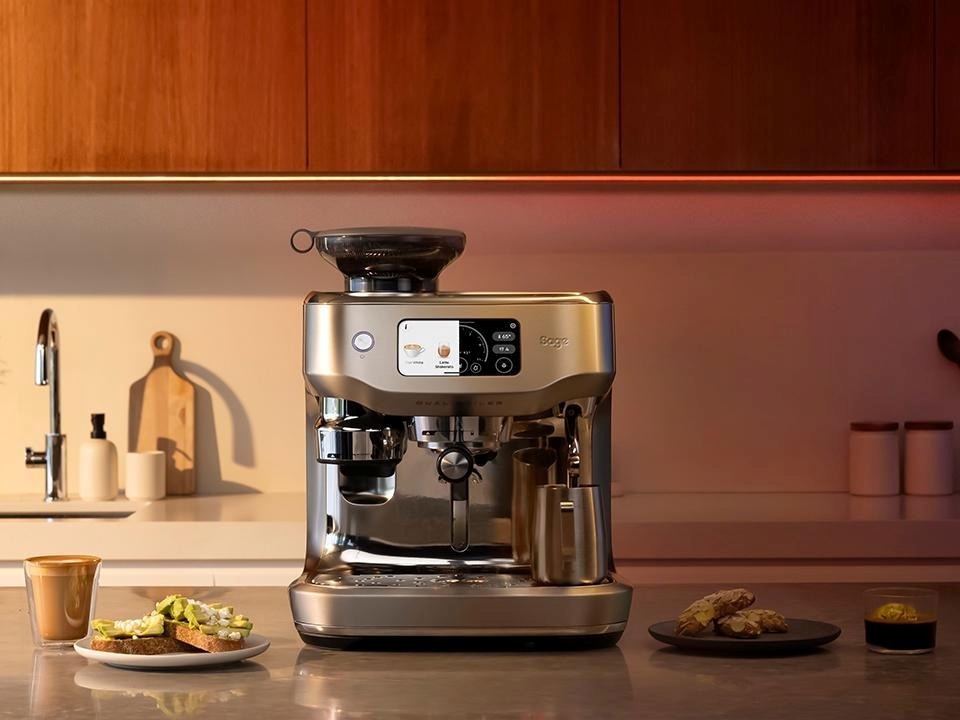
Sage Appliances®, the global manufacturer of premium kitchen appliances, has announced the launch of the Oracle Dual Boiler, the latest addition to its Oracle espresso machine range. The new model combines dual boiler technology with touchscreen automation, offering users the option to operate the machine in either automatic or manual mode.
The Oracle Dual Boiler is designed for home users seeking consistent espresso preparation with the flexibility to adjust brewing parameters manually. In automatic mode, the machine performs grinding, brewing and milk texturing in a simplified workflow. Manual mode allows users to adjust pre-infusion, blooming, extraction and milk texturing settings.
The machine features a 5.7-inch high-definition touchscreen, the largest display used in a Sage espresso machine to date. The interface provides step-by-step guidance and real-time feedback during coffee preparation. In the UAE, the Oracle Dual Boiler includes built-in Wi-Fi connectivity, enabling software updates and compatibility with the Sage Coffee App for remote machine control.
The Oracle Dual Boiler offers 15 preset beverage options, including espresso, flat white, latte, cappuccino, piccolo, mocha, iced latte and shakerato.
The machine is powered by a triple heating system, comprising a PID-controlled extraction boiler, a dedicated steam boiler and a heated group head. This configuration allows simultaneous espresso extraction and milk texturing while maintaining temperature stability.
The Oracle Dual Boiler also introduces Sage Appliances’ Auto Dial-In System, which automatically monitors espresso extraction and adjusts grind size to improve subsequent shots. The system operates in conjunction with Baratza European Precision burrs, offering 45 grind settings.
- Key product specifications include:
Triple heating system
Quad-core processor
Auto puck system
Auto Dial-In system
Auto MilQ™ steam wand
Baratza European Precision burrs with 45 grind settings
5.7-inch HD touchscreen
Heated group head
Brew customisation
Stainless steel heated cup tray
Alternative milk settings (soy, almond and oat)
Wi-Fi connectivity
Electronic grind adjustment
Professional 58mm stainless steel portafilter
15 preset beverages
Dedicated hot water spout
Matching Knock Box™ 10
PID temperature control
2.3-litre water tank
The Sage Oracle Dual Boiler is available from 15 December through leading retailers across the UAE and GCC, priced at AED 9,999, and via www.sageappliances.com
About Sage Appliances®
Sage Appliances is a global kitchen appliance brand with over 90 years of history. The company operates under the Sage name in Europe and Breville in other markets. Sage products are sold in more than 70 countries worldwide, focusing on innovation, functional design and consumer-led engineering.

