Haraz: Where Mountain Agriculture Shapes the Character of Yemeni Coffee

Haraz – Qahwa World

High in Yemen’s rugged western highlands, the Haraz region stands as one of the world’s most demanding and refined coffee-growing landscapes. Farming coffee here is not merely an agricultural activity; it is a disciplined system built on manual labor, inherited knowledge, and a deep respect for natural cycles.
At Jabalbon Estate, this centuries-old approach remains alive, offering a clear field example of how Yemeni mountain coffee is cultivated with precision, patience, and purpose.

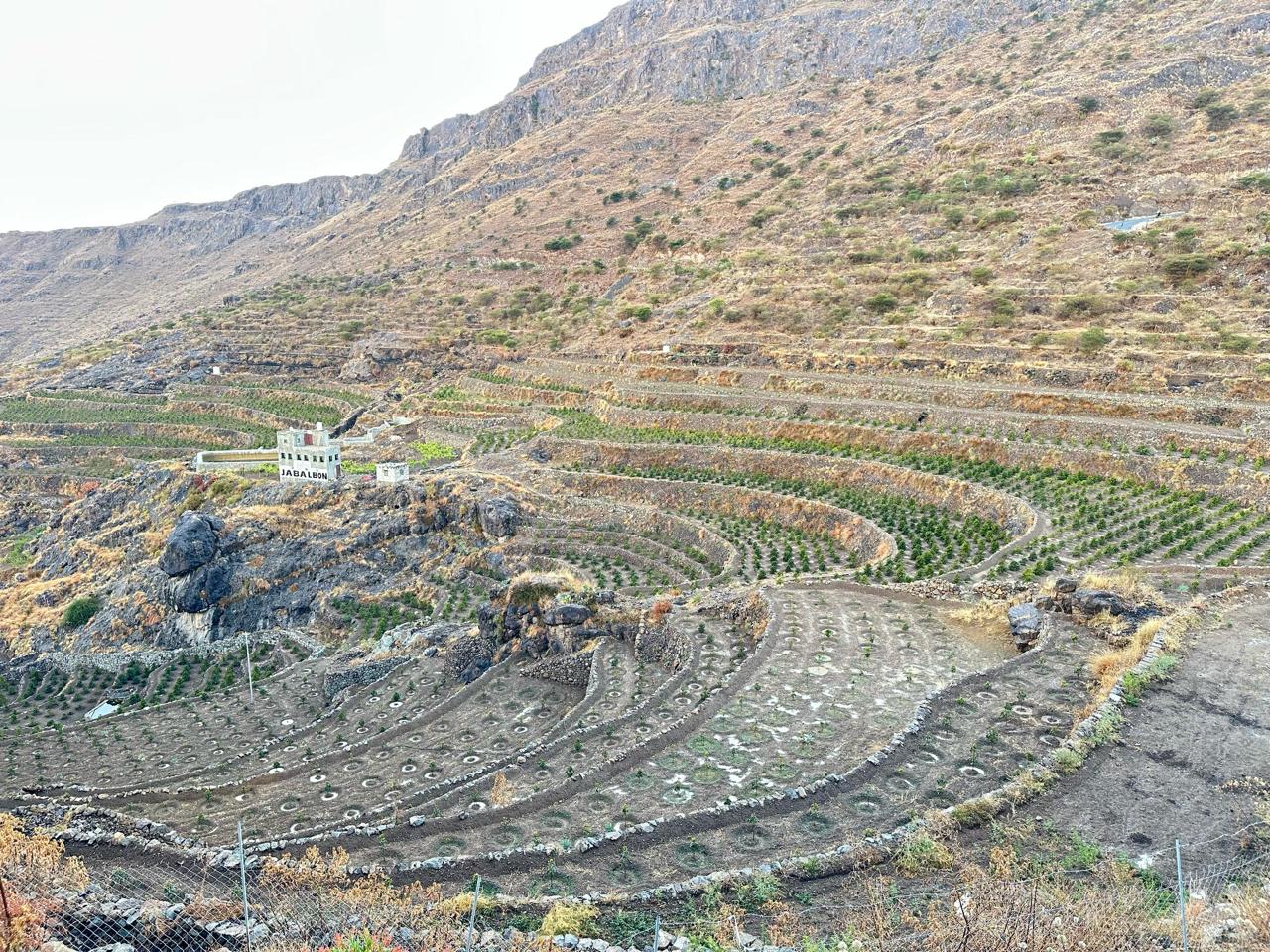
The land reclamation process in Jabalbon Estate farms in Haraz
  • Reclaiming the Mountain Slopes

The coffee journey in Haraz begins with land rehabilitation, a physically intensive process essential to survival farming in steep terrain. Farmers remove invasive trees such as acacia, clear wild grasses, and restore collapsed stone terraces using traditional construction methods. These terraces are more than landscape features. They stabilize soil, capture seasonal rainfall, and prevent erosion, forming the backbone of sustainable agriculture in Yemen’s high mountains.

A plot of land in Jabalbon Estate in Haraz, where meticulous care is evident from the very beginning.
  • Precision in Field Layout

Once the land is prepared, plots are carefully mapped to determine planting points. Coffee trees are spaced at approximately two meters apart, a deliberate decision aimed at improving soil aeration, reducing nutrient competition, and allowing balanced root and canopy development. In an environment where every square meter matters, spacing becomes a quality factor rather than a convenience.

In Jabalbon Estate in Haraz, every tree in its plot tells a unique story.
  • The “Buur” Pits: A Local Practice with Scientific Logic

One of Haraz’s most distinctive practices is the use of deep planting pits, locally known as buur. Each pit is roughly one meter deep and one meter wide. These pits are designed to break compact volcanic clay soil, enhance drainage, and reactivate biological life within the ground.
Left exposed for several months, the pits are naturally sterilized by sunlight before being refilled, transforming dense soil into a healthier growing medium ready to receive coffee seedlings.

In Jabalbon Estate in Haraz, the timing of planting is carefully managed.
  • Seasonal Planting Windows

Coffee seedlings are planted during two key periods: March and July. These windows coincide with moderate temperatures and natural moisture from seasonal rains, significantly increasing seedling survival rates and long-term stability.


  • In Jabalbon Estate in Haraz, coffee trees receive continuous care throughout the year, carried out manually with precise professional attention.
    In Jabalbon Estate in Haraz, coffee trees receive continuous care throughout the year, carried out manually with precise professional attention.

Maintaining coffee trees in Haraz requires continuous attention. Due to the soil’s tendency to harden, farmers carry out multiple annual plowing cycles to prevent root suffocation.
Irrigation relies primarily on rainfall, supported by carefully controlled supplemental watering when necessary. Fertilization follows a balanced program focused on strengthening root systems, supporting vegetative growth, and improving cherry quality over time rather than chasing short-term yields.

Jabalbon Estate is located atop the peaks of the Haraz Mountains, where the high altitude is one of the key factors behind its quality and distinction.
  • Altitude: The Silent Quality Driver

Jabalbon’s farms are located at elevations exceeding 2,600 meters above sea level. At this height, cooler temperatures and wide day–night fluctuations slow cherry development.
This extended maturation period increases bean density and contributes to the layered, complex flavor profiles that distinguish high-altitude Yemeni coffee on the global stage.

In Jabalbon Estate in Haraz, patience and continuous effort are two indispensable factors.
  • Patience Before Productivity

Coffee trees at Jabalbon are nurtured for years before reaching full economic production. Peak performance typically begins around the sixth year, when trees achieve physiological stability and consistent output. The philosophy here prioritizes longevity over speed, treating each tree as a long-term agricultural partner rather than a short-term asset.

In Jabalbon Estate in Haraz, between the tree’s flowering and the fruit’s ripening lies a journey that is both challenging and rewarding.
  • Flowering, Maturation, and Harvest

Flowering generally begins in March, followed by a slow maturation period lasting six to seven months. Harvest season starts in October and is conducted entirely by hand.
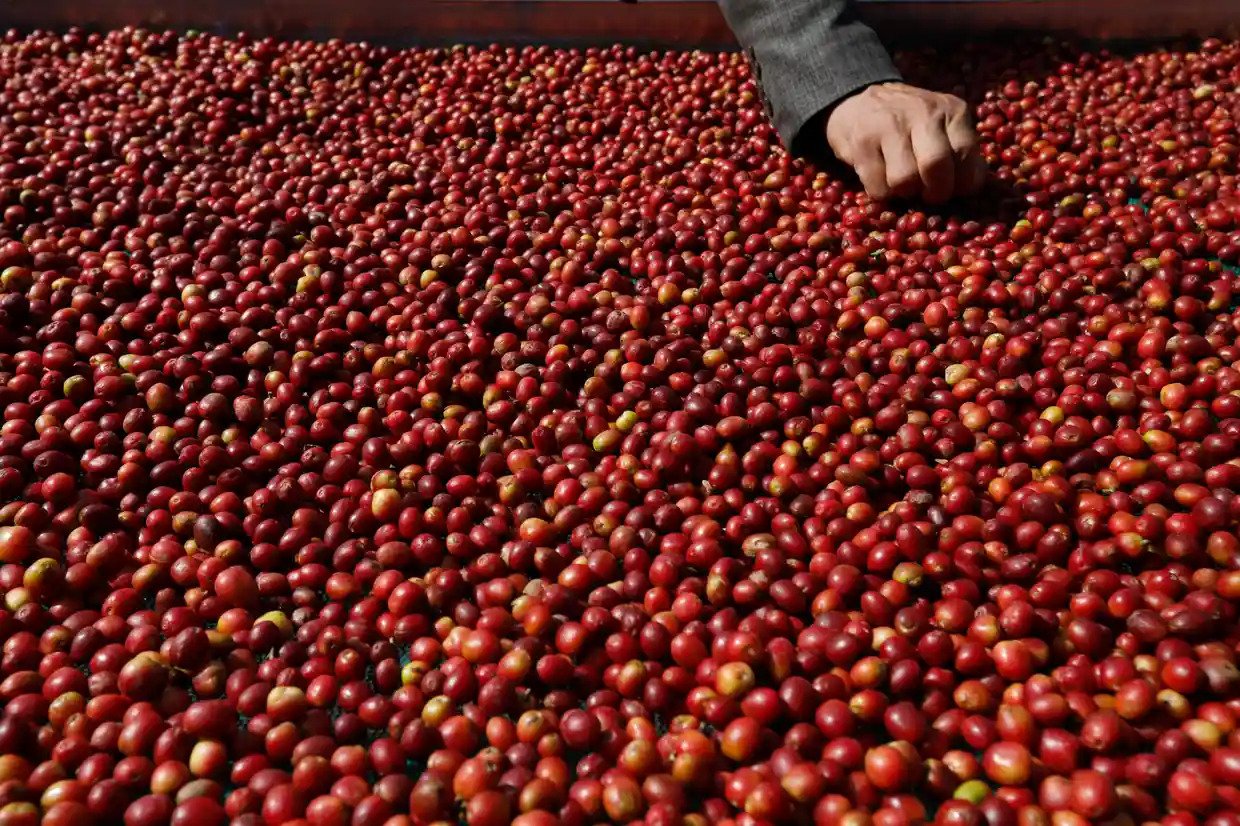
Only fully ripe red cherries are selectively picked, while unripe or green fruit is deliberately excluded. This strict selection ensures that each harvest reflects the true expression of altitude, soil, and climate.

In Jabalbon Estate in Haraz, there is complete reliance on manual labor.
  • Agricultural Ethics at the Core

Jabalbon Estate operates on principles that define traditional Yemeni coffee farming: manual cultivation, respect for natural rhythms, and refusal to force productivity at the expense of tree health.
Here, quality is not engineered through shortcuts. It is earned through time, restraint, and commitment to the land.

In Yemen’s high mountains, coffee is not grown to be harvested quickly — it is grown to endure.

In Jabalbon Estate in Haraz, irrigation holds special importance and follows precise schedules.

Haraz: A Journey into the Heart of Yemeni Coffee

In the rich tapestry of coffee’s history, Yemen holds a special place. It was from Yemen that the world first tasted coffee, and the roots of the global coffee trade dig deep into its soil. While historians debate the origin of coffee—Ethiopia or Yemen—one fact remains indisputable: without Yemen, coffee would be an unknown entity.

Historical records point to Yemeni Sufis in the early fifteenth century as the first to elevate coffee from a mere beverage to a social ritual, using it to stimulate their minds during nightly worship. Yemeni coffee stands as the epitome of quality and commands a staggering price, with a pound fetching $240 and a kilo commanding around $500. Europe and the United States are the primary importers, despite dwindling production.

Coffee thrives across Yemen, but certain regions have etched their names in coffee history. Among them, Haraz, renowned for its towering mountains, some reaching 3000 meters above sea level,Coffee is grown there at altitudes, some of which reach 2,600 meters above sea level and terraced gardens crafted by Yemeni hands, transforming the landscape into lush coffee farms.

Haraz is synonymous with picturesque houses rising above the clouds, their roofs adorned with vibrant hues mirroring the splendor of drying coffee berries scattered around. Historical accounts trace coffee cultivation in Haraz back over 500 years.

Our guide into the heart of Haraz was Abdul Latif Al-Jaradi, a certified coffee expert from quality coffee institute   and founding shareholder of “Mocha Story” and “Coffee Story” companies exporting Yemeni coffee. Al-Jaradi has not only preserved endangered coffee varieties but also propagated them on a private farm with 300 thriving trees.

Haraz, according to Al-Jaradi, is divided into four distinct coffee-producing sections: eastern Haraz, western Haraz, Saafan, and Bani Ismail. Each region boasts its unique character and coffee profile, shaped by differences in terrain, environment, water, and soil.

Eastern Haraz coffee captivates with its unparalleled sweetness and fruitiness. In contrast, western Haraz coffee stands out with tropical fruity overtones, unique incense notes, intense sweetness, and exceptionally hard beans. Saafan coffee charms with its floral and sugary notes, while Bani Ismail coffee, often likened to chocolate, offers a blend of nuts, caramelization, and distinctive circular beans.

Haraz’s elevation, ranging from 1,700 to 2,600 meters above sea level, produces dense and sweet coffee beans. Al-Jaradi emphasizes that these heights are not just numbers but a testament to the careful cultivation on ancestral terraces.

Al-Jaradi identifies Al-Jaadi Al-Shirqi and Al-Jaadi Al-Daariti as prevalent in Haraz, with Saafan favoring the apple variety. Meanwhile, Bani Ismail boasts the Al-Khattab variety, renowned globally for its unique characteristics.

Despite being one of Yemen’s leading coffee producers, Haraz faces challenges from climate change. Al-Jaradi notes the reliance on traditional farming methods, with no machines intervening in plowing or harvesting. Coffee, akin to a family member, receives meticulous care, and the return mirrors the attention invested.

Recent changes in post-harvest practices, including selective harvesting and meticulous drying methods, have revived Haraz coffee’s reputation on the global stage.

In conclusion, Haraz remains a captivating chapter in the saga of Yemeni coffee. Its unique terroir, diverse coffee varieties, and the dedication of its cultivators echo through the ages. As climate change poses challenges, the resilience of Haraz’s coffee farmers keeps this ancient tradition alive, ensuring the world continues to savor the magic of Yemeni coffee.


DMCC Coffee Centre Opens

DMCC – the world’s flagship Free Zone and Government of Dubai Authority on commodities trade and enterprise – inaugurated the ‘DMCC Coffee Centre’ 18 February 2019 , a state-of-the-art 7,500m² temperature-controlled facility, and the first of its kind in the Middle East. The Centre launched during Dubai’s Gulfood event, the world’s largest annual food and beverage trade exhibition.

From crop to cup, the Centre offers cost-effective logistical support and services that connect producers to buyers. Core services include warehousing, logistics, green coffee cleaning, contract roasting and packing, as well as more specialised offerings for re-bagging of green coffee, sample evaluation and training.

The Centre houses a coffee quality laboratory, cupping labs and a Specialty Coffee Association (SCA) Premier Training Campus, in addition to a range of commercial office space. Projected to handle up to 20,000 tonnes of green coffee bean annually – with an estimated annual trade value of around AED 367 million (USD 100 million) – the Centre is set to attract new trade flows to Dubai and boost the national economy.

A number of senior delegates including  H.E. Sultan Ahmed bin Sulayem, Group Chairman and CEO of DP World; H.E. Hamad Buamim, President and CEO Dubai Chamber of Commerce and Industry; H.E. Ahmed Mahboob Musabih, Director of Dubai Customs; H.E. Salem Rashid Al Owais, Ambassador of the UAE to Columbia; H.E. Eduardo Fonseca, Ambassador of Panama to the UAE; and H.E. Ridwan Hassan, Consul General of Indonesia to the UAE attended the official launch in Dubai, and joined a tour of the facility located adjacent to the DMCC Tea Centre in the Jebel Ali Free Zone (Jafza).

“Today represents a significant milestone, and one that places Dubai firmly at the heart of the global coffee trade. First conceptualised in 2016, it is promising to see our vision to serve the market in an entirely different way become a reality,” said Ahmed Bin SulayemExecutive ChairmanDMCC.

“Dubai is uniquely positioned to serve the significant emerging markets trade corridor of the Middle East, North Africa and South Asia, and well connected to the coffee-producing regions of Africa, China, India, Latin America and South East Asia. The DMCC Coffee Centre will connect international coffee traders with sophisticated logistics, and a host of value-add services, providing operational excellence to meet growing global demand. Until now, the region simply did not have the capacity, equipment or expertise to facilitate global coffee trade on this scale, and we look forward to seeing the impact of our Centre on the industry going forward,” he added.

Dubai’s strategic geographic location offers connectivity between the fast-growing and high-value consumer markets in the Middle East and Europe, to some of the world’s major coffee producing nations such as Ethiopia, India, Indonesia, Uganda and Vietnam. Operational since November 2018, the Centre is set to become the preferred hub for speciality coffee buyers, traders, roasters and producers.

Other services offered by the DMCC Coffee Centre include: three fully outfitted cupping rooms with water to SCA standards; a coffee quality laboratory; a sample (Probat and Ikawa) and small batch (Diedrich) roasters – to assist customers in quality assessment, and shipments of roast and green coffee samples to buyers –; and two Brambati production roasters (30kg and 60kg) – which can accommodate specialty and commercial coffee roasting.

Coffee is one of the world’s most widely consumed hot beverages. The global coffee industry is worth an estimated AED 367.3 billion (USD 100 billion), with the industry in the Middle East expected to climb to AED 16.2 billion (USD 4.4 billion) by 2021, according to Euromonitor.

Yemeni Coffee: History and Fame

Historically, Yemen has been associated with coffee for centuries, particularly with the city of Mocha, which represented the starting point for the fame of this beverage locally and globally. Yemeni coffee is known in many cultures as “Mocha,” referring to the port of Mocha, which was a hub for coffee exports.

Origin of the Coffee Tree:

The coffee tree is evergreen, reaching heights of approximately 4.5 to 6 meters, with deep roots and soft leaves. Coffee is used as a hot or cold beverage, prized for its stimulating effect due to its caffeine content.

Origin and History of Coffee:

Opinions vary regarding the origin of the coffee tree and its wild existence. Some believe it originated in the Arabian Peninsula and was transported to Ethiopia. Some suggest that coffee first appeared wild in the Kaffa region of southern Ethiopia, while others propose that it was likely brought to Ethiopia from Yemen due to environmental similarities between the two countries.

Yemeni Connection to Coffee:

It is believed that Yemenis became acquainted with the coffee tree in the early 5th century AD when it was planted in the Al-Dain region. Some accounts credit the Arab physician Al-Razi as the first to mention Yemeni coffee in 900 AD.

Agricultural and Commercial Development:

Coffee cultivation in Yemen has witnessed significant development since the Middle Ages, making Yemeni coffee a prominent symbol of high quality. Yemeni coffee became synonymous with the port of Mocha, renowned for its high quality, and was traded to several countries.

Coffee Growing Regions:

Coffee shrubs thrive in various regions of Yemen, including Sana’a, Hajjah, Al-Dain, Yafi, due to the considerable similarity in climatic conditions between these areas.

Coffee Varieties Cultivated in Yemen:

Yemen cultivates three varieties of coffee known as the Al-Daini, Tufahi, and Dwayri, named after the regions where they are cultivated, such as Al-Hamadi, Al-Yafi, Al-Burai, Al-Harazi, Al-Mutri, and Al-Haimi.